Paris · 9th arrondissement · Historic opera house
Palais Garnier: Opéra Garnier Tickets and Tips
The most opulent building of nineteenth-century Paris — a marble-and-gold opera house with a grand staircase, a Chagall-painted ceiling and the setting that inspired The Phantom of the Opera.
By the AllTrips Editorial Team ·
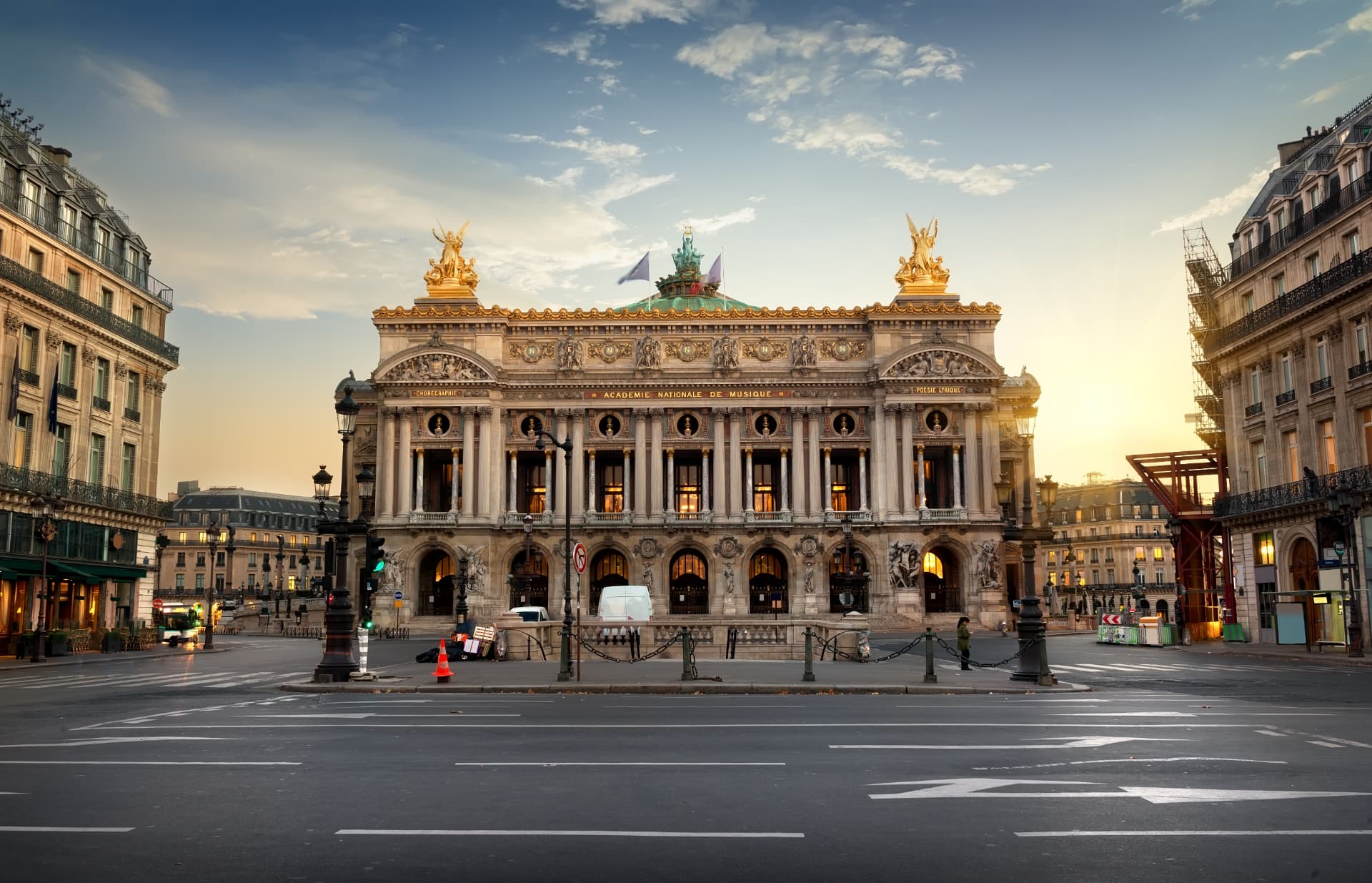
Palais Garnier at a glance
Area: 9th arrondissement, Place de l'Opéra. Allow: 1–1.5 hours for a visit. Entry: paid admission ticket for self-guided or guided visits; performance tickets sold separately. Nearby: Galeries Lafayette, the Madeleine and the Grands Boulevards.
The Palais Garnier — often simply called the Opéra Garnier — is one of the two homes of the Paris Opera and one of the most lavish interiors in Europe. Even if you never attend a performance, the visitor route through its staircases, foyers and auditorium is among the best-paid entries in Paris.
What is there to see?
The Grand Staircase is the first highlight: a sweeping double staircase in white marble, red and green stone, built as much for watching the audience as for reaching the seats. Above it, the Grand Foyer stretches like a hall of mirrors — a gilded, painted gallery comparable to Versailles.
The auditorium, when open to visitors, is the climax: red velvet, gold stucco and the great chandelier, beneath the ceiling painted by Marc Chagall in 1964 — a modern burst of colour over the nineteenth-century house. The visit also includes the library-museum with set models and costumes, and temporary exhibitions. Note that the auditorium can close to visitors on rehearsal and performance days.
A palace for the opera
Napoleon III commissioned a new opera house as the centrepiece of Haussmann's rebuilding of Paris, and the young architect Charles Garnier won the 1861 competition to design it. Construction was interrupted by the Franco-Prussian War and the fall of the Empire, and the house finally opened in 1875.
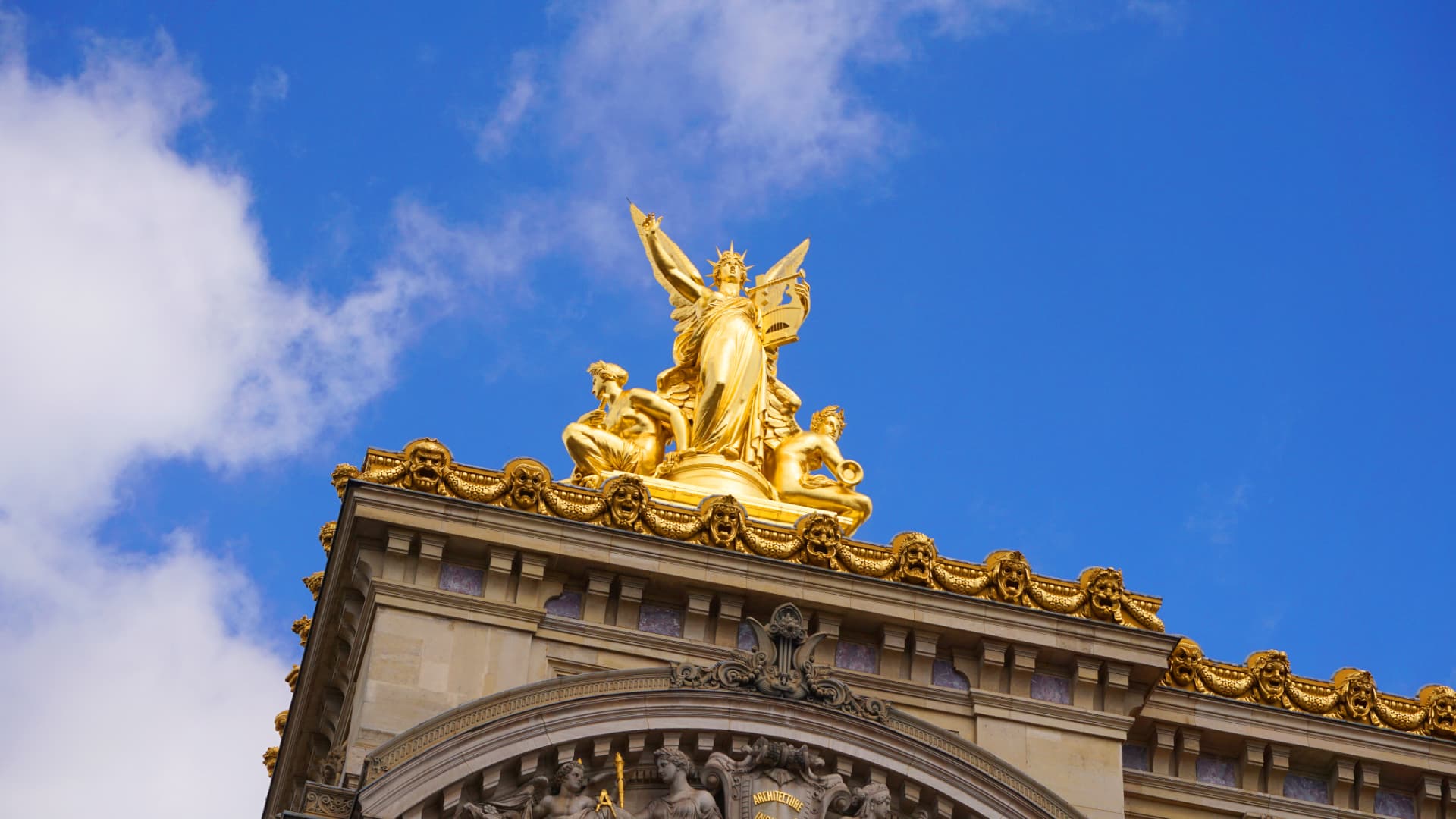
Garnier's design became the defining example of the Beaux-Arts style: every surface decorated, from the gilded figure groups on the roofline to the mosaics and caryatids inside. The building later became world-famous as the setting of Gaston Leroux's 1910 novel The Phantom of the Opera — the chandelier accident of 1896 and the water tank beneath the stage both fed the legend.
Tickets
Visits are paid, with self-guided and guided options; concessions and free-entry categories are listed on the official site. Booking a dated ticket in advance is recommended in high season, as daily visitor numbers are limited. Performance tickets for ballet and opera are sold separately through the Paris Opera and often sell out well ahead.
Book your visit · affiliate link
Palais Garnier tickets on Tiqets
Compare availability and book a dated admission ticket for the Palais Garnier. Check what the offer includes and whether auditorium access is expected on your date before booking.
Book on TiqetsOfficial site
Paris Opera — visits and performances
The official Paris Opera site sells visitor tickets at the base price and is the only source for performance tickets, visitor notices and auditorium closure dates.
Visit the official siteThe Tiqets link is an affiliate link: AllTrips may earn a commission at no extra cost to you. You can also buy directly from the Paris Opera's official site.
Planning your visit
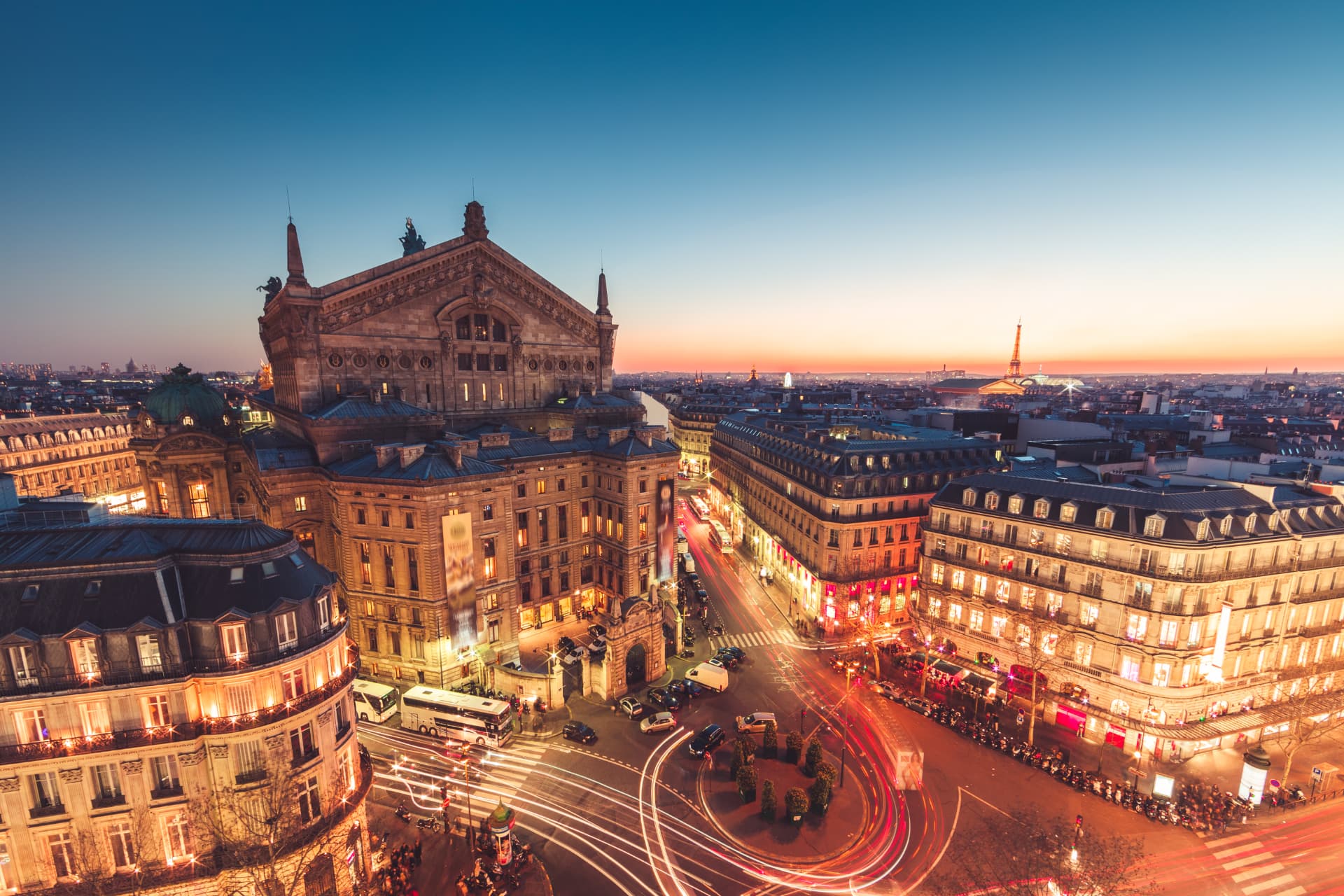
The opera house stands at the head of Avenue de l'Opéra, a short walk from the Louvre. The nearest metro station is Opéra (lines 3, 7 and 8); Auber (RER A) is just behind the building.
Visits use the entrance at the corner of Rue Scribe and Rue Auber, not the main facade. Large bags are not permitted inside. Photography without flash is generally allowed on the visitor route. If you want to see the building at its best, combine a daytime visit with an evening ballet or opera performance — the foyers at interval are an experience in themselves.
The Palais Garnier in photos
What is nearby?
The Galeries Lafayette and Printemps department stores — including the free Galeries Lafayette rooftop terrace — are a few minutes away. The Madeleine church, the covered passages of the Grands Boulevards and the Louvre Museum down Avenue de l'Opéra are all within easy walking distance. See their locations on our Paris attractions map.
Frequently asked questions
Is the Palais Garnier free to visit?
No. Visiting the interior of the Palais Garnier requires a paid admission ticket (self-guided or guided). Admiring the facade from Place de l'Opéra is, of course, free.
What is the difference between the Palais Garnier and the Opéra Bastille?
They are the two homes of the Paris Opera. The Palais Garnier (1875) is the historic opera house, used mainly for ballet and some opera; the Opéra Bastille (1989) is the modern house staging most large opera productions. Visitor tickets apply to the Palais Garnier.
Do I need to book Palais Garnier tickets in advance?
Booking ahead is the practical choice, especially in high season and on weekends — the opera house limits daily visitor numbers, and the auditorium can close to visitors when rehearsals or performances are scheduled.
Can I see the auditorium on a visit?
Usually yes, but access to the auditorium is not guaranteed every day: it can be closed to visitors for rehearsals, technical work or performances. If seeing the auditorium and the Chagall ceiling matters to you, check the official site's visitor notices for your date.
How much time should I spend at the Palais Garnier?
Allow roughly 1–1.5 hours for a self-guided visit covering the grand staircase, foyers, library-museum and (when open) the auditorium; longer if you join a guided tour or attend a performance.
Is the Palais Garnier the opera house from The Phantom of the Opera?
Yes. Gaston Leroux's novel — and the musical it inspired — is set in the Palais Garnier. The underground 'lake' of the story is based on the real water tank beneath the building, though it is not open to visitors.
Official sources
Reviewed September 2026. Opening days, prices and auditorium access change; check the official site before travel.