Paris · Le Marais, 3rd & 4th arrondissements · Free square and garden
Place des Vosges: The Oldest Square in Paris
A perfectly symmetrical 17th-century square of red-brick façades and stone arcades, with a quiet garden of fountains and lime trees at its heart. Entry to the Place des Vosges is free.
By the AllTrips Editorial Team ·
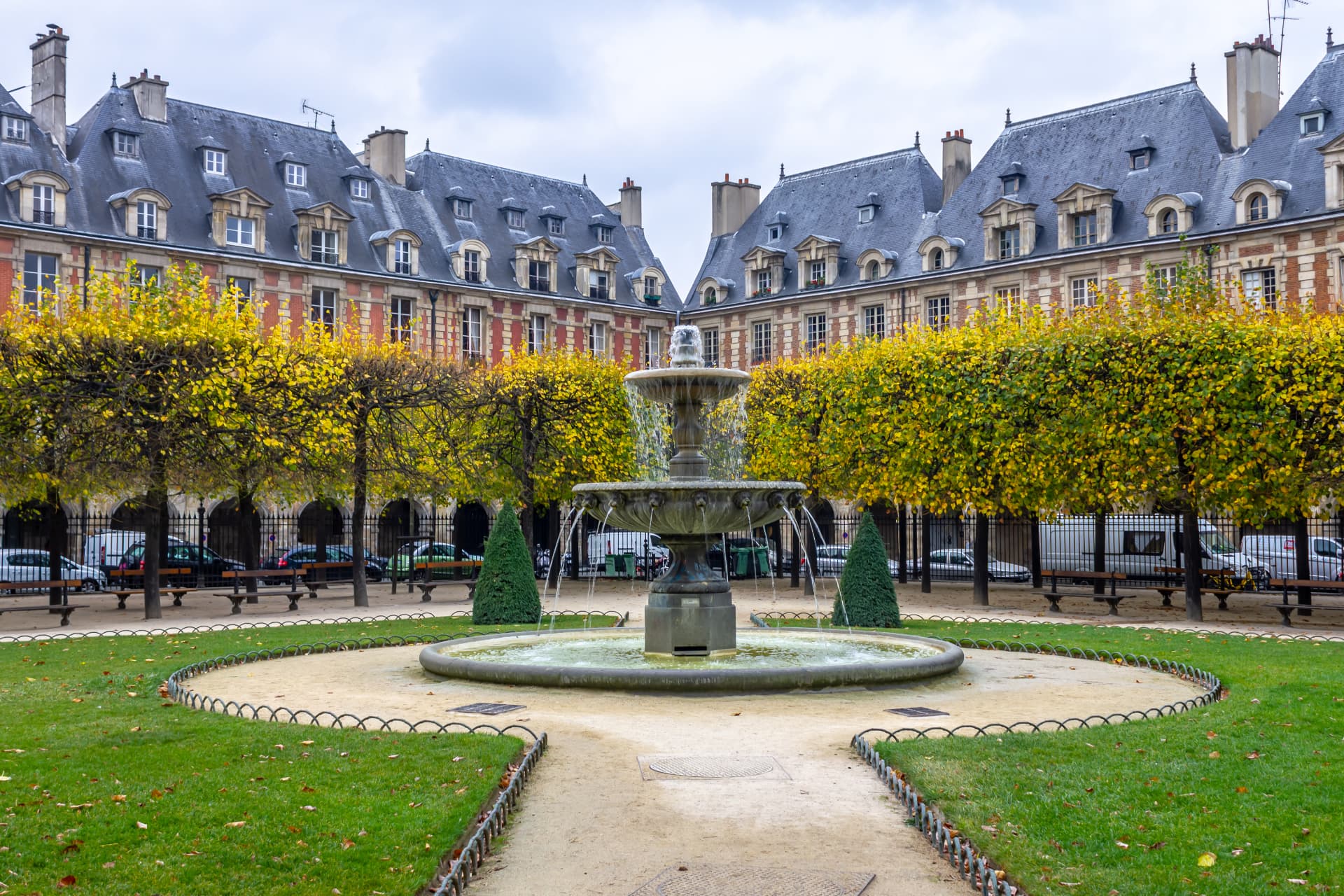
Place des Vosges at a glance
Area: Le Marais, on the border of the 3rd and 4th arrondissements. Allow: 30–45 minutes. Entry: the square and its central garden are free, with no admission ticket. Nearby: the Maison de Victor Hugo inside the square, the free Musée Carnavalet, and the Picasso Museum.
The Place des Vosges is the oldest planned square in Paris, built in the early 1600s and framed on all four sides by matching brick-and-stone façades with ground-floor arcades. Its fenced garden of lawns, fountains and clipped trees is one of the calmest free pauses in the Marais.
What is there to see?
The arcades. All four sides of the square run behind continuous stone arcades — galleries of cafés, galleries and boutique windows that stay pleasant in rain or summer heat. Walk the full circuit; each corner pavilion carries a steep slate roof and tall chimney stacks.
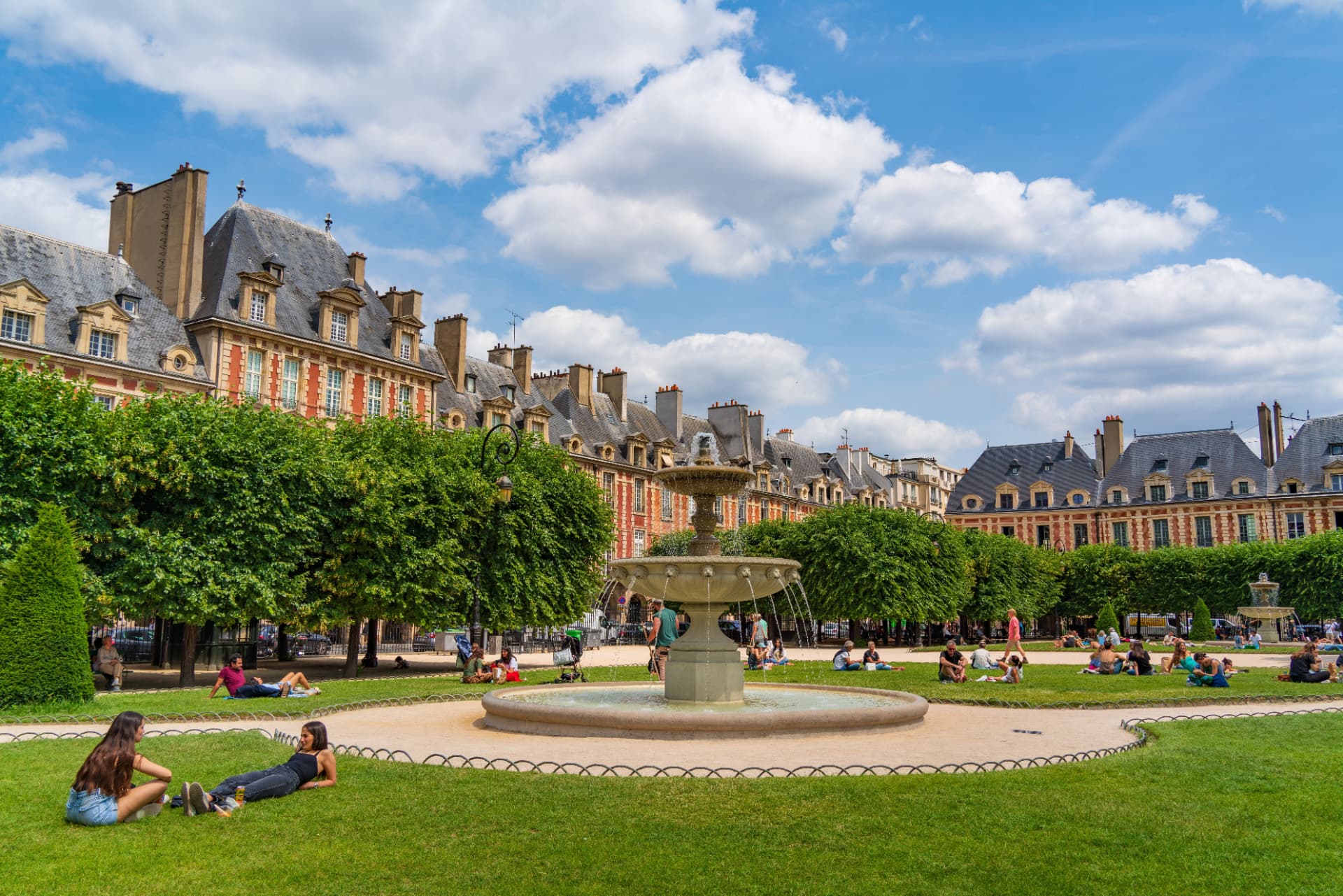
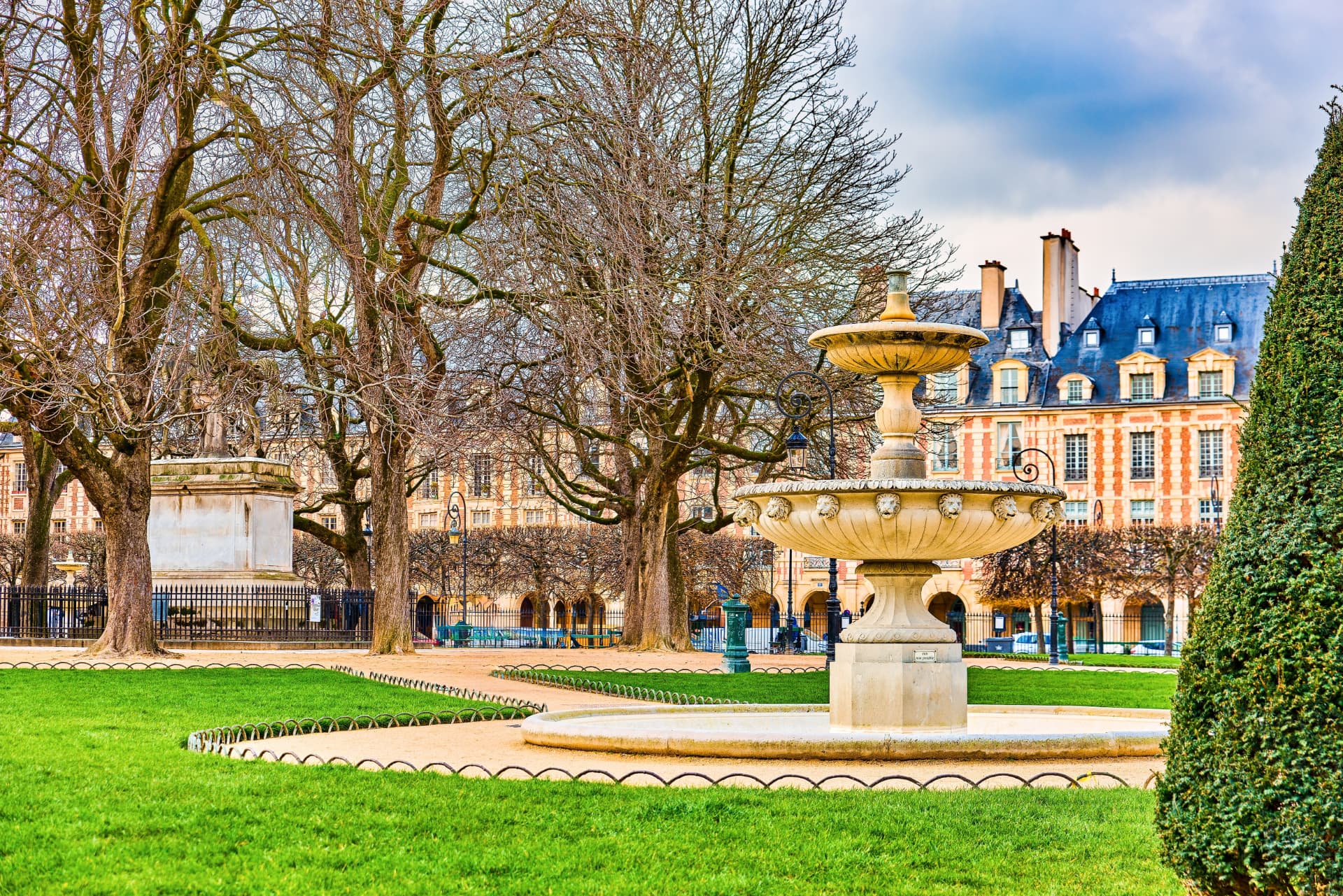
The garden (Square Louis XIII). The centre of the square holds a formally laid out garden with four lawns, tree-lined gravel paths and ornamental fountains. On sunny days Parisians picnic on the grass between the trimmed hedges.
The pavilions. The King's Pavilion closes the square to the north and the Queen's Pavilion to the south — both slightly raised and the only ones to span the street behind them. In the No. 6 pavilion on the south-west side sits the Maison de Victor Hugo, the museum of the writer's apartment, with a free permanent collection.
A little square history
The square was commissioned by Henri IV and inaugurated in 1612 for the betrothal celebrations of Louis XIII and Anne of Austria. It was first called the Place Royale, and the identical façades — brick with stone quoins over stone arcades — set the template for aristocratic town planning in Paris for the next two centuries.
Its early residents read like a who's-who of the age: Cardinal Richelieu lived at No. 21, and Madame de Sévigné, Paris's great letter-writer, was born on the square. In 1832 Victor Hugo moved into the No. 6 pavilion, where he wrote much of Les Misérables during sixteen years here. The square's current name dates from 1800, when revolutionary France renamed the Place Royale after the Vosges department.
Free entry and optional activities
The Place des Vosges and its garden are free. There is no entrance ticket for the square, the arcades or the garden, at any time of day. The Maison de Victor Hugo's permanent collection is also free (it is a City of Paris museum); its special exhibitions are paid separately.
Optional nearby experiences · affiliate link
Explore around the Place des Vosges on Tiqets
Browse guided tours and paid attractions listed around the Place des Vosges and the Marais. This is not an admission ticket for the free square and garden; check the chosen offer's location and inclusions.
See nearby activities on TiqetsThis Tiqets link is an affiliate link: AllTrips may earn a commission at no extra cost to you. Entering the Place des Vosges and its garden is free.
Planning your visit
The square and garden are public space and stay open daily; the garden keeps the City of Paris's seasonal park hours, generally from early morning until dusk, with later closing in summer. The arcades and cafés are liveliest mid-morning and at lunchtime; the quietest light for photographs is early morning or golden hour, when the brick façades glow.
The Maison de Victor Hugo (No. 6) is open Tuesday to Sunday, 10:00–18:00, and closed Mondays. The nearest metro stations are Saint-Paul (line 1), Bastille (lines 1, 5 and 8) and Chemin Vert (line 8) — each is a five-minute walk.
The Place des Vosges in photos
What is nearby?
The Musée Carnavalet, the free museum of Paris history, is a five-minute walk west, and the Picasso Museum is just beyond it. Rue des Francs-Bourgeois and Rue des Rosiers carry you towards the Marais shops and falafel stands. See the whole neighbourhood on our Paris attractions map.
Frequently asked questions
Is the Place des Vosges free to visit?
Yes. The square and its central garden are a free public space, open daily. The permanent collection of the Maison de Victor Hugo, the museum inside the square's No. 6 pavilion, is also free.
Does the Tiqets link buy admission to the Place des Vosges?
No. The link opens Tiqets' Place des Vosges destination page for optional guided tours and nearby paid attractions. The square and garden themselves need no entrance ticket; check the specific offer before booking.
Why is it called Place des Vosges?
The square was opened in 1612 as the Place Royale. It was renamed Place des Vosges in 1800, after the Vosges department in eastern France — reputedly the first region in France to pay its new revolutionary taxes in full.
What is the Maison de Victor Hugo?
It is the City of Paris museum inside the pavilion at No. 6, where Victor Hugo lived from 1832 to 1848 and where he wrote part of Les Misérables. It is open Tuesday to Sunday, 10:00–18:00, and the permanent collection is free.
How much time should I spend at the Place des Vosges?
Allow roughly 30–45 minutes to enjoy the arcades, the fountains and the garden; longer if you visit the Victor Hugo museum, browse the galleries under the arcades or stop at a café.
Official sources
Reviewed September 2026. Garden hours change with the season and museum exhibitions are paid separately; check the official site before travel.