Paris · Montmartre · Free (dome paid)
Sacré-Cœur Basilica: Montmartre's White Domes Above Paris
Free to enter, crowning the highest hill in Paris, and visible from half the city — Sacré-Cœur is where most visitors get their first big panorama of Paris. Here is how to visit it well, and what to look for once you are up there.
By the AllTrips Editorial Team ·
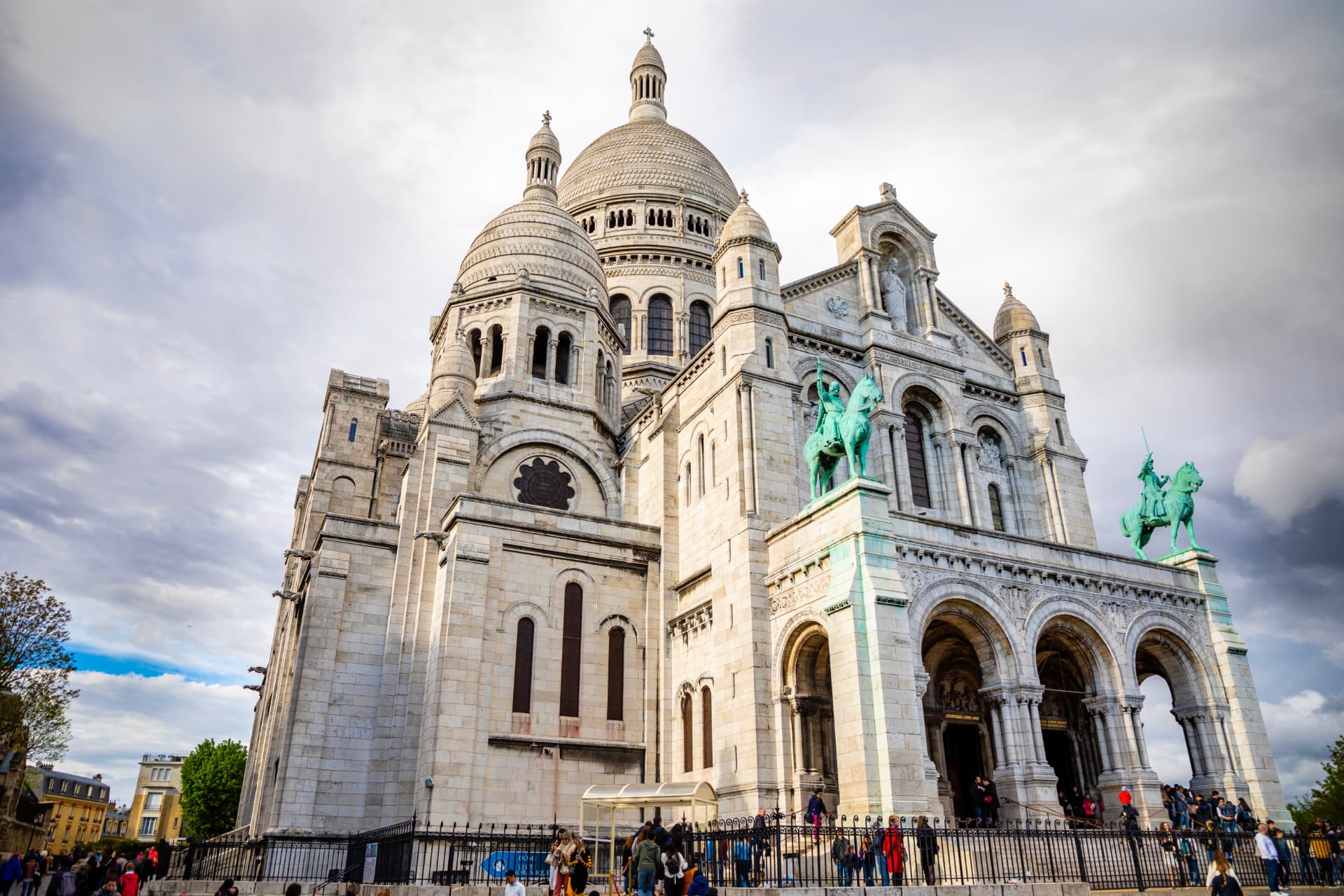
Sacré-Cœur at a glance
Area: Montmartre, 18th arrondissement. Allow: 45–90 minutes, more with the dome. Entry: basilica free; dome climb paid. Nearby: Place du Tertre, Musée de Montmartre, Moulin Rouge at the foot of the hill.
The Basilica of the Sacred Heart of Montmartre sits on the summit of the Butte Montmartre, about 130 metres above sea level — the highest natural point in Paris. It is a working church rather than a museum, which shapes the visit: entry is free, there is no ticket queue for the nave, and visitors are asked to keep quiet and not to photograph inside.
Visiting: basilica and dome
The basilica is free and opens early and closes late — the official site publishes current hours. Security checks at the door can create a short line at busy times, but it moves quickly. Services take place throughout the day, and the basilica has held uninterrupted day-and-night prayer (perpetual adoration) since 1885.
The dome is the paid part, with its own entrance on the left side of the building and tickets bought on site. Expect about 300 steps on a narrow spiral staircase, no lift, and a walkway around the outside of the dome with views reaching far across Paris on a clear day. Dome hours and price change seasonally, so check the official site before you go.
A note on the forecourt: the steps and square in front of the basilica are among the most crowded spots in Paris. Keep valuables zipped away and politely decline anyone offering to tie a "friendship bracelet" on your wrist — it is a well-known pressure sale.
A national vow on a martyr's hill
Montmartre has been a sacred place for centuries — tradition connects its name to the martyrdom of Saint Denis, first bishop of Paris. The basilica itself was born after France's defeat in the Franco-Prussian War of 1870–71, when Catholic laymen made a "national vow" to build a church dedicated to the Sacred Heart as an act of penance and hope. The National Assembly declared the project of public utility in 1873.
The foundation stone was laid in 1875, and construction, funded largely by public subscription, took almost four decades. The building was finished in 1914, but the First World War delayed its consecration until 1919. Its origins make Sacré-Cœur politically charged for some Parisians, as the hill was also where the Paris Commune uprising began in March 1871. The basilica was listed as a historic monument in 2022.
White stone and Romano-Byzantine domes
Architect Paul Abadie won the design competition with a Romano-Byzantine plan inspired by churches such as Saint-Front in Périgueux: a great central dome ringed by four smaller domes, rather than the Gothic spires of Notre-Dame. The famous brightness comes from travertine stone quarried at Château-Landon, which releases calcite when it rains, so the basilica cleans and whitens itself with every shower.
Above the entrance porch, two bronze equestrian statues by Hippolyte Lefebvre represent France's two national saints: Joan of Arc and King Saint Louis. Behind the main dome, a square bell tower holds the Savoyarde, one of the heaviest bells in France at around 19 tonnes, a gift from the dioceses of Savoy.
Inside: the mosaic and the Savoyarde
Look up at the apse: the mosaic of Christ in Majesty, designed by Luc-Olivier Merson and completed in the 1920s, covers about 475 square metres and is one of the largest mosaics in the world. Christ is shown with arms wide open and a golden heart, surrounded by the Virgin Mary, Joan of Arc, Saint Michael and figures representing France's devotion. The rest of the interior is fairly restrained by comparison, which makes the mosaic even more striking.
The crypt, which follows the plan of the church above, opens only occasionally — check the official site if you want to see it.
Getting up the hill
The classic approach is from métro Anvers (line 2): walk up rue de Steinkerque to the Square Louise-Michel gardens below the basilica. From there you can climb the roughly 220 steps or ride the Montmartre funicular on the west side of the gardens, which uses a standard métro ticket. Métro Abbesses (line 12) is a prettier alternative, arriving through village streets from the other side of the hill. The Montmartrobus minibus also climbs the hill.
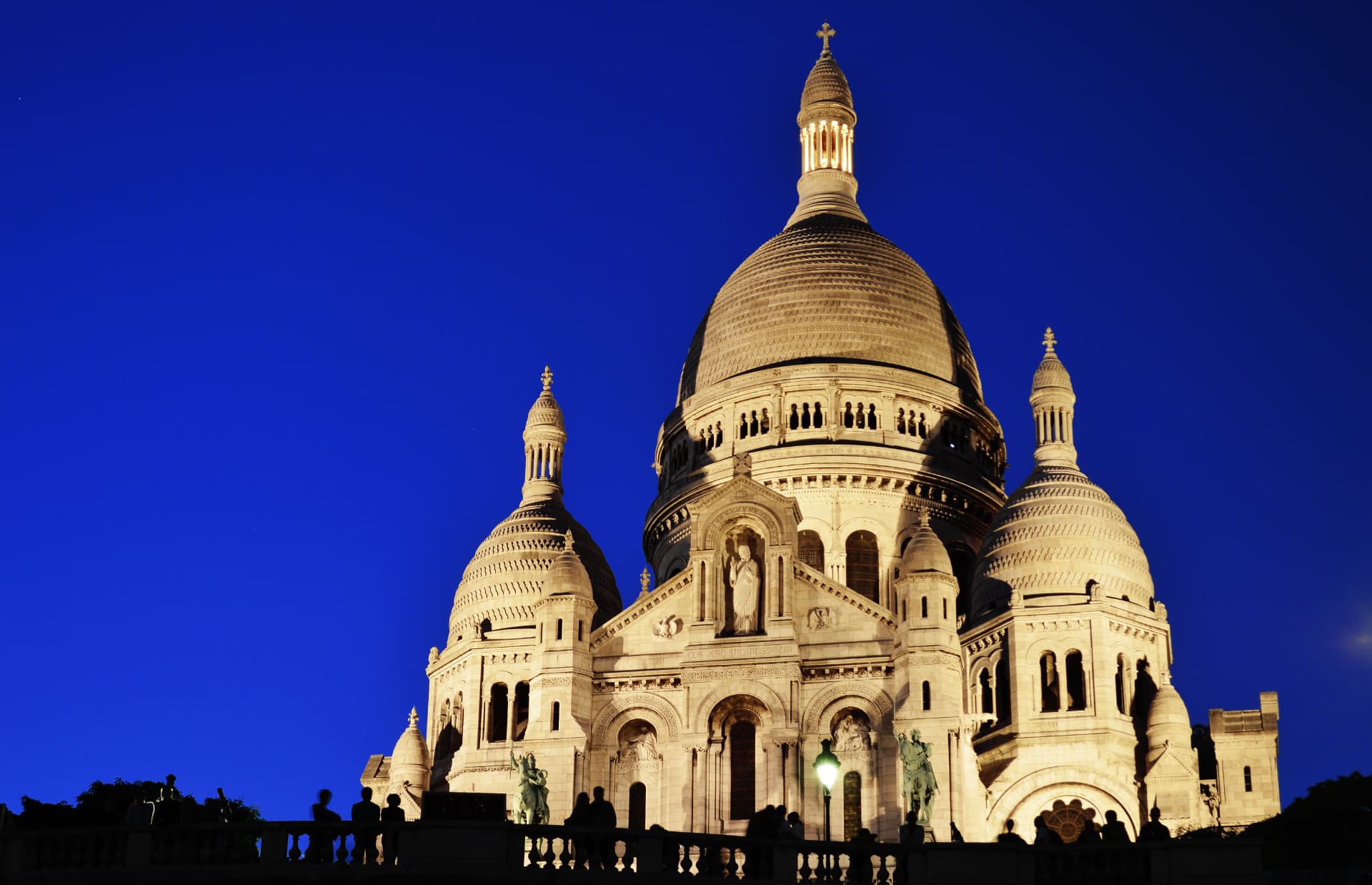
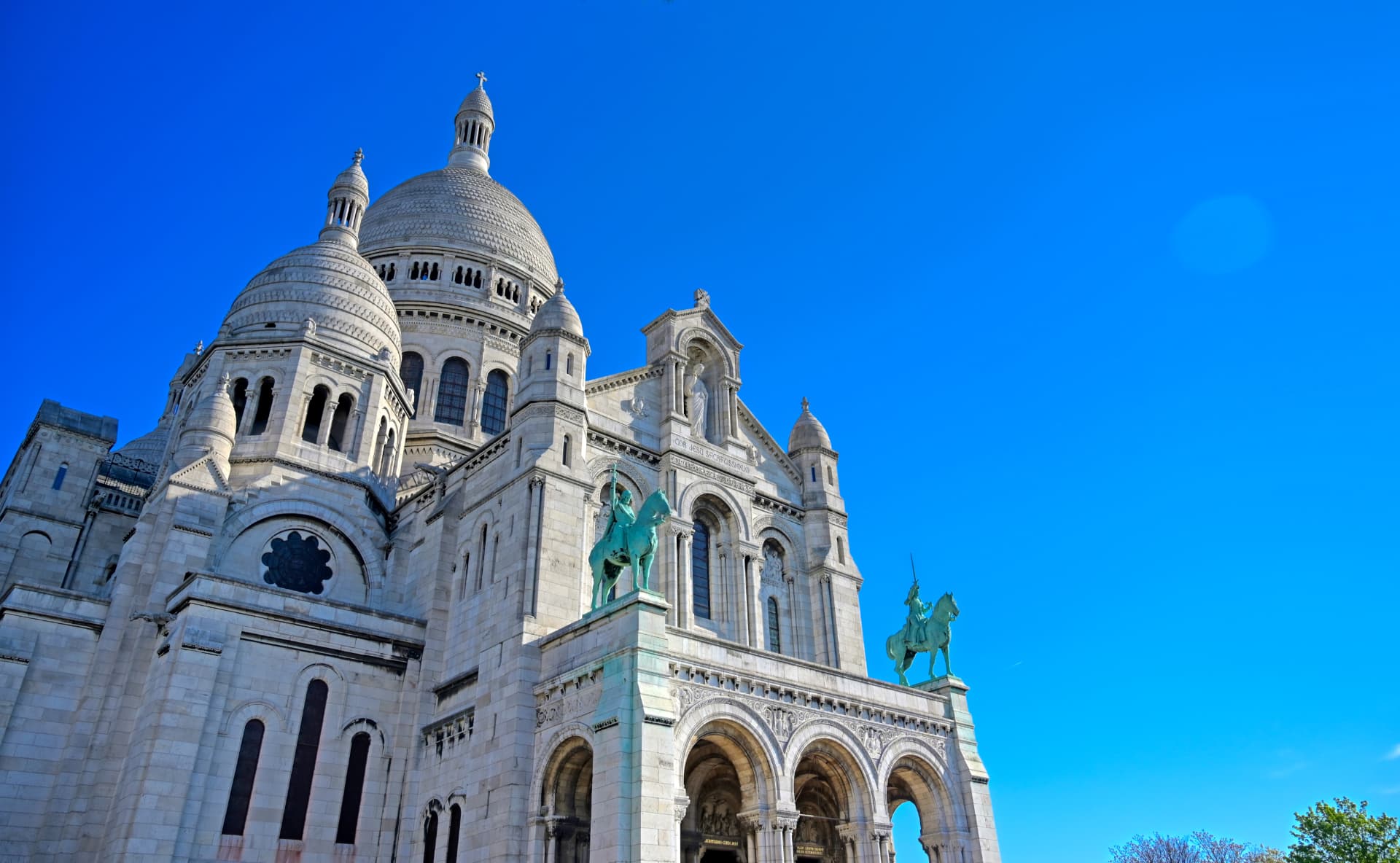
Sacré-Cœur in photos
What is nearby?
Two minutes' walk west is Place du Tertre, the little square filled with portrait painters, and a few streets north the Musée de Montmartre with its Renoir gardens. Walk downhill through Abbesses to reach the Moulin Rouge on Boulevard de Clichy. See how Montmartre fits with the rest of Paris on our Paris attractions map, or browse all Paris attraction guides.
Frequently asked questions
Is Sacré-Cœur free to visit?
Yes. Entry to the basilica itself is free and no booking is needed. Only the dome climb is paid, with tickets sold on site at the dome entrance on the left side of the basilica.
How many steps are there to the top of the dome?
About 300 steps up a narrow spiral staircase, with no lift. The reward is one of the highest viewpoints in Paris, since the dome sits on top of Montmartre hill — the city's highest natural point.
Can I take photos inside Sacré-Cœur?
No. Sacré-Cœur is an active place of worship with perpetual prayer, and photography and filming inside the basilica are not allowed. Photos are fine outside, on the steps and from the dome.
What is the easiest way up to Sacré-Cœur?
Take the Montmartre funicular from the bottom of the gardens near métro Anvers (line 2); it runs up the slope in under two minutes and accepts a standard métro ticket. Otherwise, it is roughly 220 steps up through the gardens.
When is the best time to visit?
Early morning for a quiet basilica and clear views, or around sunset when the steps fill with people watching the light over Paris. Avoid Sunday mid-morning if you want to wander, as Mass is in progress.
Official sources
Reviewed September 2026. Dome hours and prices change seasonally; check the official site before travelling.