Table of Contents
- 1. Two shortlists: very selective or full highlights
- 2. Bernini: marble in motion
- 3. Caravaggio: from youth to confession
- 4. Raphael, Titian and the Renaissance rooms
- 5. Canova’s Pauline Borghese
- 6. How to see the highlights without rushing
- 7. Room-by-room orientation
- 8. Details to look for beyond the main subject
Two shortlists: very selective or full highlights
These are editorial priorities, not an official or guaranteed route.
| Level | Works |
|---|---|
| Very selective (3–5 works) | Apollo and Daphne, then two to four from: Rape of Proserpina, David, Caravaggio’s David with the Head of Goliath, Pauline Borghese |
| Full highlights visit | All three Bernini sculptures, two or three Caravaggios, Canova’s Pauline Borghese, Raphael’s Deposition and Titian’s Sacred and Profane Love |
Look up each work in the official collection catalogue. Want commentary while you look? Compare the options in our guided vs self-guided guide.
Bernini: marble in motion
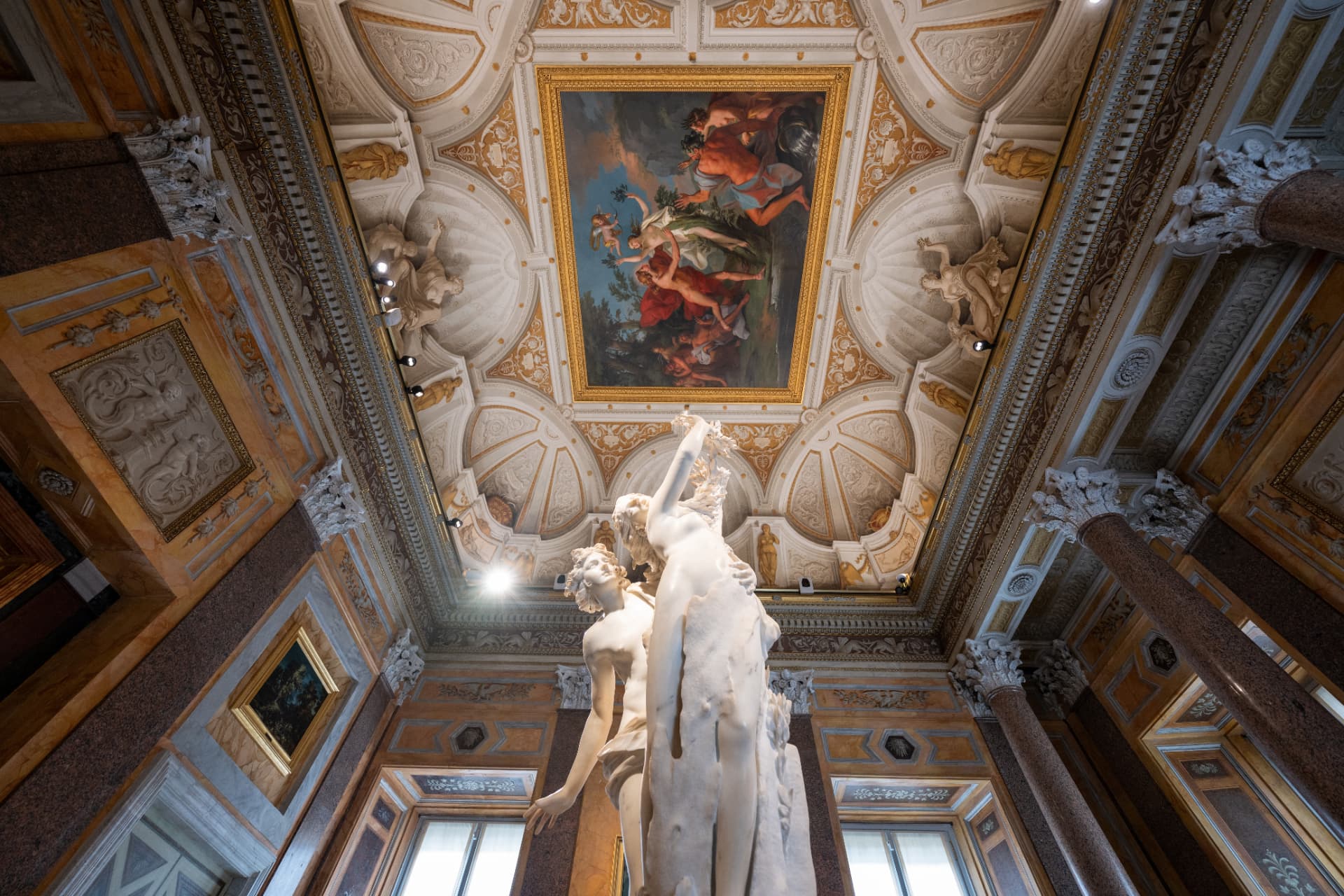
Apollo and Daphne (Room 3)
Ovid’s nymph turns into a laurel tree at the moment Apollo reaches her. Notice her fingers becoming leaves and bark climbing over her legs. It is the work most often treated as the collection’s signature.
The Rape of Proserpina
Pluto carries Proserpina to the underworld. Notice his fingers pressing into her thigh and the tears on her cheek. The subject is violent; the technical marvel is the illusion of soft flesh in stone.
David
David twists and braces himself just before launching the stone at Goliath. Notice the bitten lip and the coiled torso. The official catalogue explains it was originally intended for a frontal viewpoint, so compare how the composition reads from the front and from the sides.
Caravaggio: from youth to confession
The collection allows an unusually concentrated comparison of six Caravaggio works across his career.
Boy with a Basket of Fruit
An early Roman painting. Notice the bruised leaves and the precise still-life detail that rivals the boy’s face for attention.
Sick Bacchus
The wine god appears pale and unwell, often read as a self-portrait. Compare the greenish skin with the fresh grapes.
Saint Jerome Writing
The scholar-saint bends over his book beside a skull. Notice how the bald head and the skull echo each other across the dark ground.
Madonna and Child with Saint Anne
Painted for St Peter’s and soon removed. Notice the Virgin and Child crushing a serpent together while Saint Anne watches.
Saint John the Baptist
A late, quiet work showing a youthful saint with a ram. Notice the red cloak against the dim background.
David with the Head of Goliath
Dark and psychologically charged. David looks at the head with something closer to pity than triumph, and the severed head is widely read as Caravaggio’s self-portrait.
Loans or conservation can alter the group on view; a catalogue record does not confirm that a work is on display on a given day.
Raphael, Titian and the Renaissance rooms
Raphael, Deposition (1507)
The painting traditionally called the Deposition actually shows Christ’s body being carried to the tomb. Notice the strain of the bearers and the fainting Virgin on the right. Its removal from Perugia into Scipione Borghese’s collection is part of the work’s history.
Titian, Sacred and Profane Love
Two women sit at a carved sarcophagus-fountain in a landscape. Its meaning has prompted different interpretations, so focus on the contrast between the clothed and the nude figure and on the relief carvings.
Canova’s Pauline Borghese
Pauline Borghese as Venus Victrix turns Napoleon’s sister into a reclining classical goddess holding Venus’s apple. Notice the polished marble and the carved mattress. The base contains a mechanism designed to rotate the sculpture (restored to working order in 1997), though you should not expect it to turn during your visit. Compare Canova’s controlled finish with Bernini’s action.
How to see the highlights without rushing
- Follow the museum’s current visitor flow rather than an old room-by-room map.
- Examine sculptures from the permitted viewpoints and see how the composition changes; not every work was designed to be viewed from all sides.
- Choose two or three Caravaggios for close comparison.
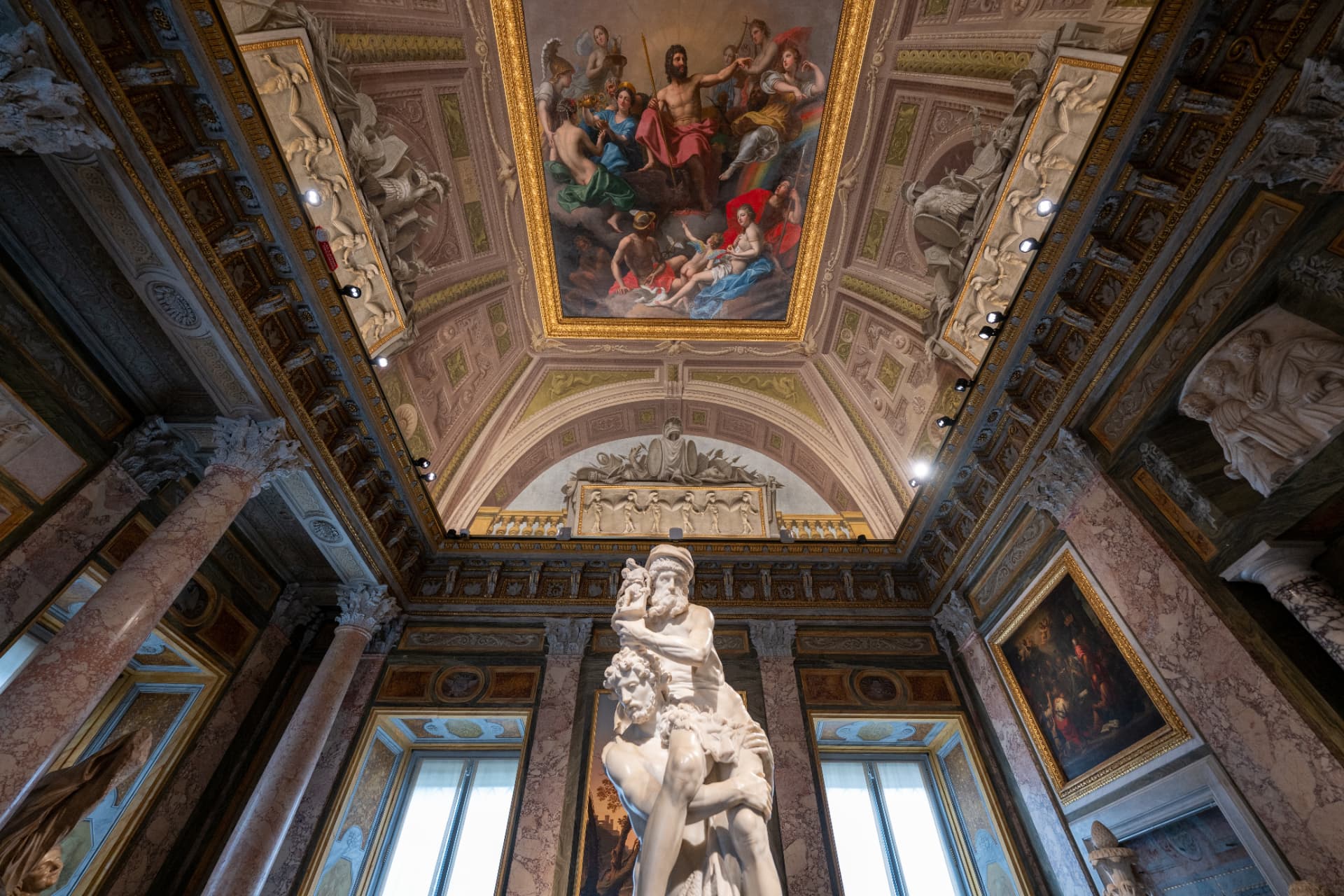
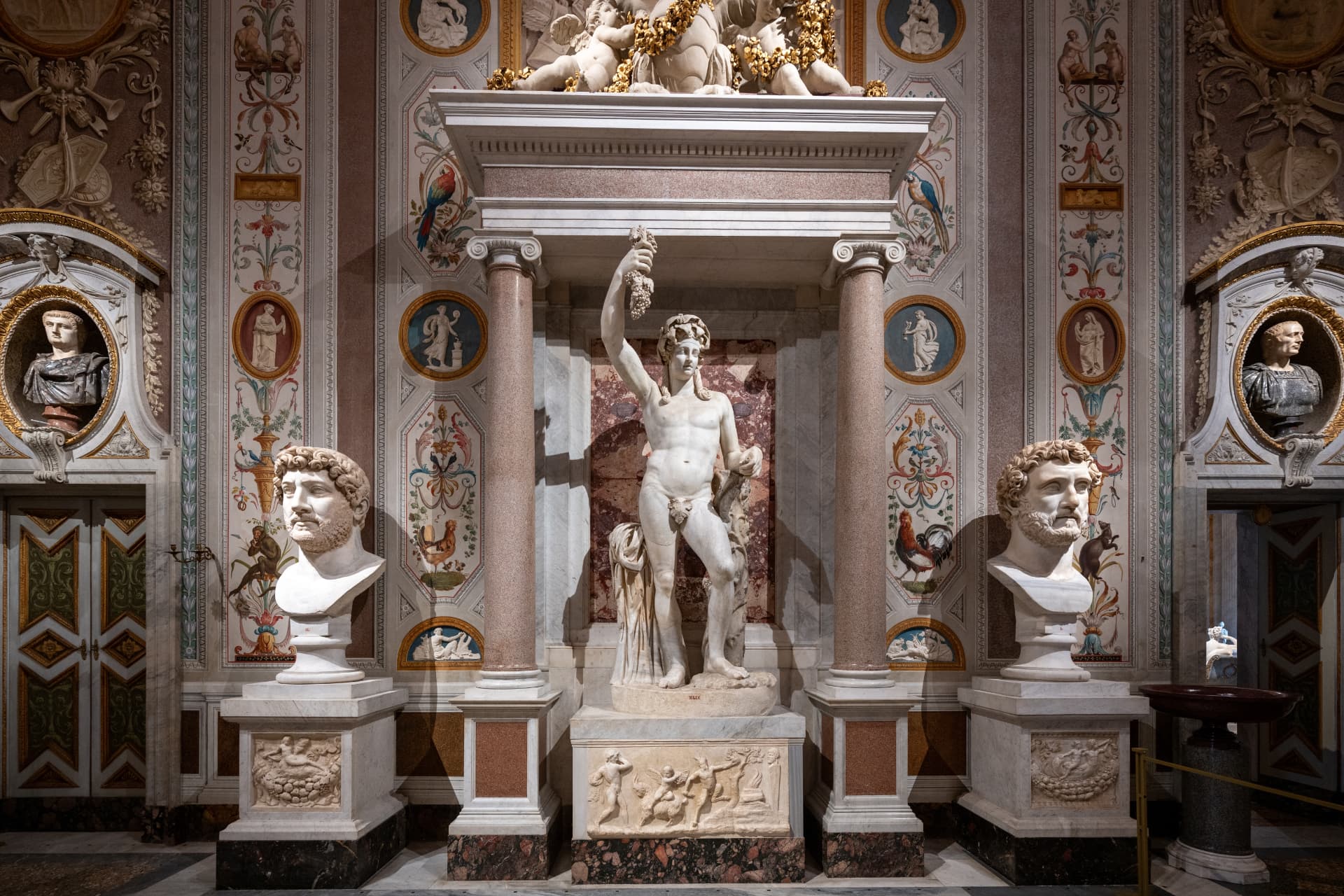
- Look up: ceilings, wall decoration and ancient sculpture form part of each room.
- Keep the final part of the visit free to return to one favourite work, if staff flow permits.
Room-by-room orientation
The Gallery is arranged over two floors: the ground floor concentrates on sculpture, including the Bernini and Canova works, while the picture gallery on the upper floor holds most of the paintings, including the Caravaggio and Raphael works. This general layout has held for a long time, but exhibitions, conservation and room renumbering can shift individual pieces, so treat any room number as a starting point rather than a guarantee.
Before your visit, check the current room assignments in the official collection catalogue and look at the gallery map provided with your ticket or at the entrance, since it reflects the arrangement on the day.
Details to look for beyond the main subject
Slowing down on a handful of secondary details can make a short visit feel richer without adding time.
- On Bernini's sculptures, look at the transitions between materials and textures, such as where marble becomes "hair," "cloth," or "bark," since this is where his technical virtuosity is most visible.
- On Caravaggio's paintings, compare the direction and quality of light across different works, and notice how still-life details (fruit, leaves, drapery) are painted with the same intensity as the faces.
- In the decorated rooms, look up: many ceilings and wall frescoes relate thematically to the sculpture or painting displayed below them.
- Where ancient and later sculpture are displayed together, compare restoration choices, since many ancient pieces have later additions or repairs that are worth noticing rather than assuming are original.
These are suggestions for close looking, not an official interpretive guide; captions in the gallery and the official catalogue remain the authoritative source for attributions and dates.
Artwork descriptions and room information checked against the official collection catalogue, October 2026. Loans, conservation and room work can change what is on view.
Frequently Asked Questions
What is the most famous work in the Borghese Gallery?
Bernini's Apollo and Daphne is often treated as the signature work, though the collection also holds his David and Rape of Proserpina and a major group of Caravaggio paintings.How many Caravaggio paintings are at the Borghese Gallery?
The collection is known for six Caravaggio works. Display can change because of loans or conservation.Where is Apollo and Daphne?
The official catalogue lists Apollo and Daphne in Room 3. Follow current museum signage, as temporary arrangements can affect access.What should I see if I have limited time?
For a very selective visit, choose three to five works starting with Apollo and Daphne. For a full highlights visit, add the other Bernini sculptures, two or three Caravaggios, Canova, Raphael and Titian.Can the masterpieces move?
Yes. Loans, conservation, exhibitions and room work can affect display. A catalogue location does not guarantee a work is on view on a particular day.How is the Borghese Gallery laid out?
Broadly, the ground floor concentrates on sculpture and the upper floor on paintings, but room numbers and groupings can change, so check the official catalogue and the map given with your ticket.What small details are worth looking for?
Look at the transitions in Bernini’s marble, the direction of light and still-life detail in Caravaggio’s paintings, the decorated ceilings relating to the art below them, and restoration choices on ancient sculpture.Related Borghese Gallery guides
Borghese Gallery guide
What to see and whether it suits your Rome trip
Borghese Gallery tickets
Official booking, prices and reductions
Tickets sold out?
Legitimate last-minute checks and alternatives
Guided or self-guided?
Choose the right way to use your visit
Practical visitor guide
Entrance, check-in, bags and rules
How to get to the Gallery
Walking, Metro, bus and taxi
Villa Borghese tickets explained
Free park access and paid attractions
Villa Borghese walking map
Lake, gardens and Pincio route
Explore Villa Borghese park Compare Borghese with the Vatican