Yucatán archaeological guide
Chichén Itzá Equinox Shadow: When to See It and How to Visit
The famous serpent is made from sunlight and shadow, not a projection or a daily show. Here is when it appears, what current tickets cost, how special equinox hours work, and how to plan the rest of the city around it.
By the AllTrips Editorial Team · Published · 13 min read
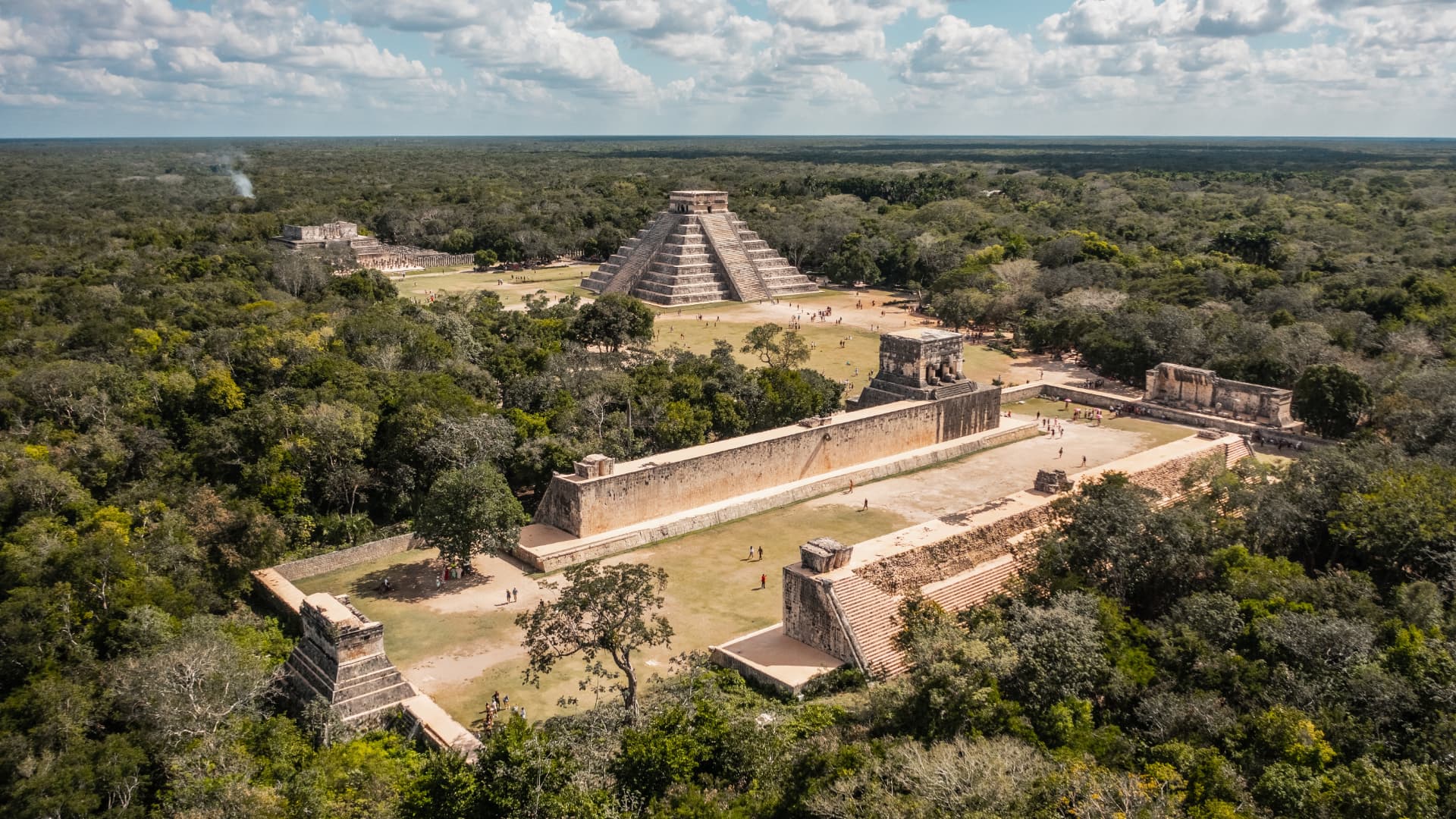
Chichén Itzá rewards preparation. The monumental core is large, hot and visually overwhelming; the most photographed structure, El Castillo, is only one part of a city shaped by Maya religious practice and political power, astronomy, trade and engineering. You cannot climb the monuments, and the experience is strongest when you understand what you are looking at.
The equinox shadow is real, but it is also frequently oversold. It depends on late-afternoon sun, can appear on several days around the equinox, and draws intense crowds. A standard morning visit is usually better for exploring the whole site; an equinox visit is a specialised event built around one changing view.
Chichén Itzá at a glance
- Admission (foreign visitor)
- MXN 653 total — MXN 105 INAH + MXN 548 CULTUR (September 2026)
- Admission (Mexican national)
- MXN 295 total — MXN 105 INAH + MXN 190 CULTUR
- Ordinary hours
- 08:00–16:00; last access 15:00
- Equinox effect
- Roughly 15:00–17:00; special INAH hours may apply
- Recommended visit
- About 3 hours
- Climbing
- Not permitted
- Shade
- Limited across the main plazas
- Guide
- Optional, valuable for context
- Nearest town
- Pisté (beside the site)
- Nearest convenient tourist base
- Valladolid
Important: ordinary hours may end before the shadow does
Normal admission hours do not automatically guarantee that you can remain inside long enough to see the complete shadow effect, which develops roughly between 15:00 and 17:00. INAH normally issues special equinox hours and crowd-control arrangements: during the March 2026 operation it closed admission at 16:00, allowed visitors to stay until 17:30, and concentrated people near El Castillo once other areas closed. Check the current INAH bulletin before travelling; without an announced extension, do not assume you can remain after the normal 16:00 closing time.
How the equinox shadow works
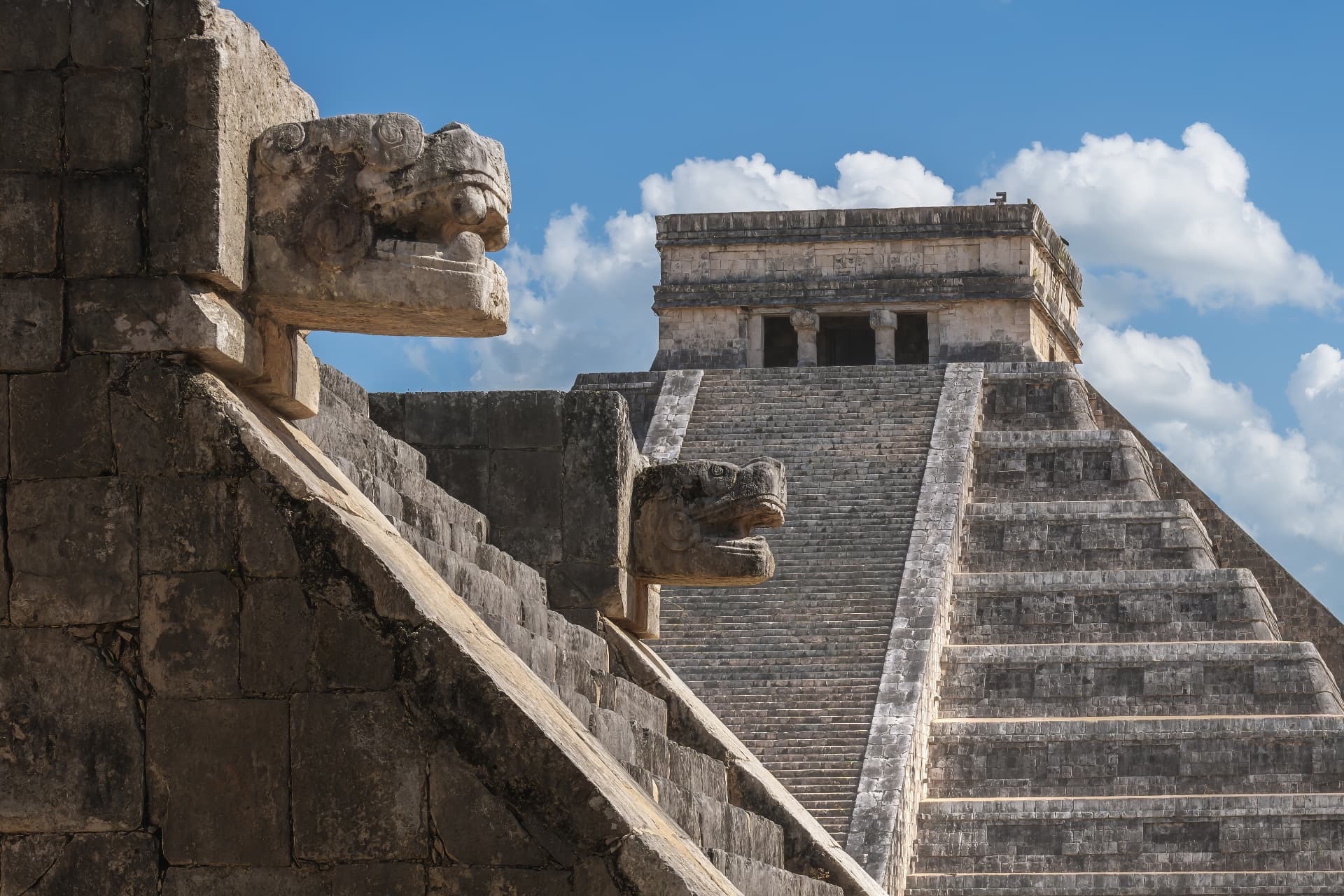
Near the March and September equinoxes, the late-afternoon sun casts a sequence of triangular shadows across the north balustrade of El Castillo. As the light changes, those triangles appear to join the carved serpent head at the base, producing the impression of Kukulkán descending the staircase.
This is not a performance with a fixed start time. The exact astronomical equinox and the best visible shadow are different things. The best-known seven-triangle form occurs around the equinoxes, but INAH's own archaeoastronomy work describes illumination on the balustrade changing across a much longer part of the year: the pattern shifts through spring and summer, the seven triangles return around the September equinox, and traces can continue into late October. Researchers continue to interpret how intentionally the architecture marked particular calendrical dates.
Clouds, rain and crowd-control arrangements can all obscure the view. Visit for the architecture and cultural meaning first; treat a clear serpent as a weather-dependent bonus.
Why a good guide matters
A guide does not unlock climbing or secret areas. The value is interpretation: the proposed calendrical associations in El Castillo's design, the Ball Court's scale, reliefs and unusual acoustic effects—and which interpretations remain debated—what the Temple of the Warriors communicated, and how later restoration affects what you see today. Popular claims such as "the pyramid is literally a 365-day calendar" are often stated with far more certainty than the evidence allows.
Choose a qualified guide and ask what the tour includes. On equinox days, a good guide also helps with timing and positioning, but nobody can promise sunlight, a crowd-free view or special monument access. Tours from Cancún, Playa del Carmen, Tulum, Mérida and Valladolid differ widely in transport, site time, cenote stops, meals and government-fee inclusions.
Official information or guided tour?
Check INAH for current entry conditions. Use a paid tour if you value historical interpretation or bundled transport—not because a tour is required to enter.
OfficialINAH visitor informationCurrent hours, federal admission, services and site rules.Check Official Details PartnerTiqets guided experiencesCompare guided visits and day trips. Transport, admission, state fees, meals and cenote stops vary by listing.Compare Chichén Itzá ToursThe Tiqets link is an affiliate link. We may earn a commission at no extra cost to you. Cancellation and amendment conditions vary; check the individual listing before booking.
Tickets, fees and booking
Chichén Itzá's entry cost is not one simple admission price: the total admission combines a federal INAH charge and a separate Yucatán state CULTUR charge. As checked in September 2026, the published total is MXN 653 for foreign visitors (MXN 105 INAH + MXN 548 CULTUR) and MXN 295 for Mexican nationals (MXN 105 INAH + MXN 190 CULTUR). Yucatán residents are exempt from the CULTUR charge; other concessions and exemptions depend on eligibility and current conditions. The two charges are updated independently, so confirm the current breakdown before visiting.
The official INAH listing currently links to online ticket sales. Equinox operations may apply separate entry or purchase rules—the March 2026 operational notice, for example, stated that archaeological-zone tickets would be sold at the site ticket offices—so check the latest INAH bulletin instead of relying on an ordinary-day ticket alone. No tour operator or resale platform is the official admission seller.
Do not assume an advertised tour price includes every government charge. Read the inclusions for phrases such as “entrance included,” “local tax,” or “government fee payable on arrival.” If anything is unclear, ask the operator before booking.
What to see and how to route your visit
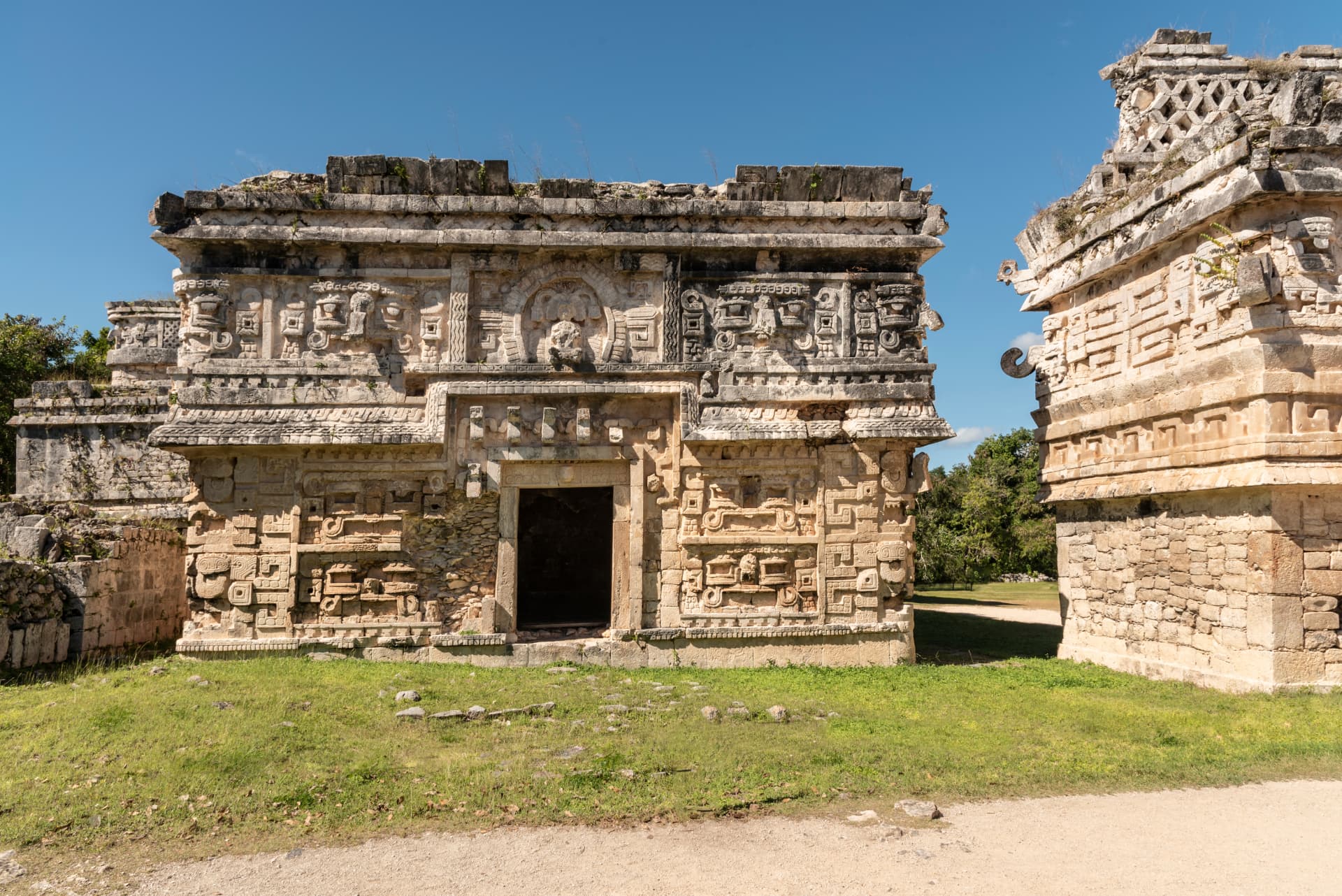
Start with El Castillo while the central plaza is manageable, then study the Great Ball Court, Temple of the Jaguars and nearby platforms. Continue toward the Temple of the Warriors and Group of a Thousand Columns. If heat and time allow, walk to the Sacred Cenote and explore the more detailed architecture away from the central pyramid.
Three hours is a sensible first visit. Rushing a huge site into ninety minutes often means missing the Ball Court's scale and the carved buildings that explain why Chichén Itzá mattered.
Lesser-known option: Chichén Viejo
The official Spanish INAH listing describes visits to Chichén Viejo (the Initial Series group) on Fridays and Saturdays in escorted groups, with advance reservation at the archaeological-zone ticket office. Availability is limited and can change, so confirm on the day you plan to visit.
The museum keeps its own hours
The Gran Museo de Chichén Itzá can open and close at different times from the archaeological zone—during the March 2026 equinox operation it closed at 15:00. Check the current museum listing rather than assuming it follows site hours.
Best time, heat and equinox crowds
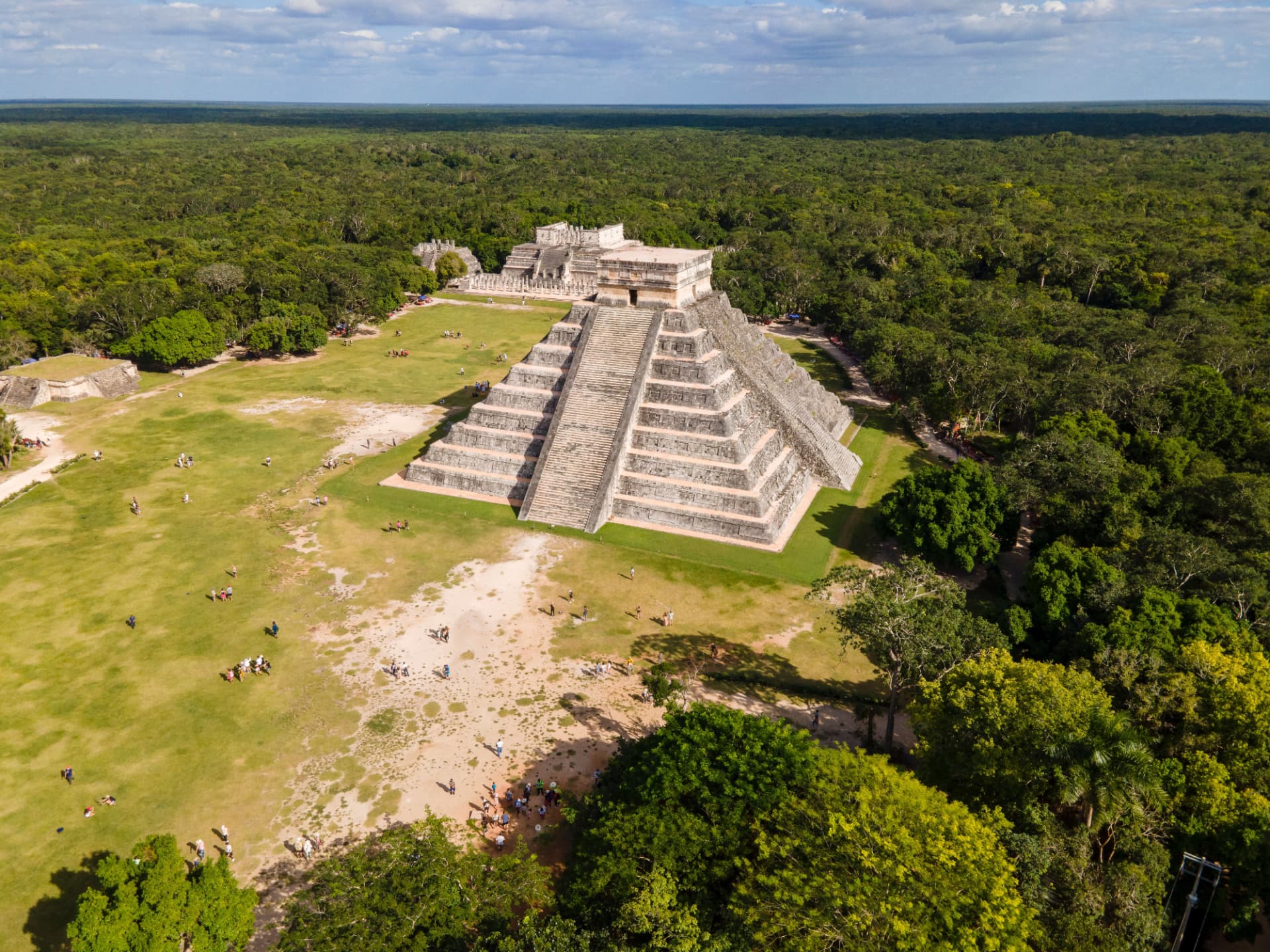
For a normal visit, arrive near opening. This is editorial guidance rather than a crowd guarantee, but it usually gives you the best chance of lower temperatures and space before the largest day-trip groups arrive. The exposed plazas become punishing later in the day.
For the equinox shadow, the trade-off reverses: you need late-afternoon light and must accept larger crowds. INAH can introduce special operations, closures and equipment restrictions for equinox periods. Check its current bulletins, carry water, and never plan the day around a guaranteed photograph.
Getting there
From Valladolid: this is the easiest independent base and keeps the road journey short. Confirm current bus or colectivo departure points locally.
From Mérida: buses, rental cars and guided day trips are practical. An early departure helps avoid the hottest hours.
From Cancún, Playa del Carmen or Tulum: expect a long day. Organised tours simplify transport but can include shopping, meal or cenote stops that reduce archaeological-site time. Compare the itinerary, not just the headline price.
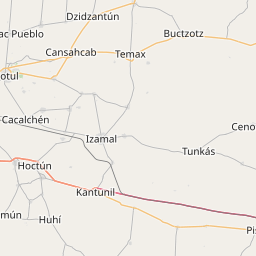
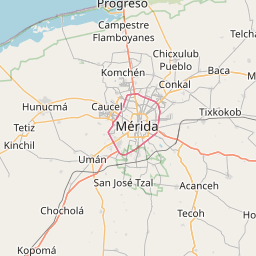
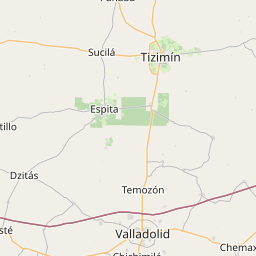
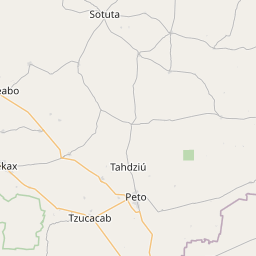
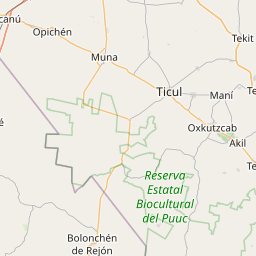
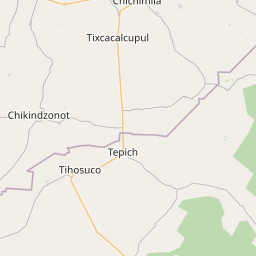
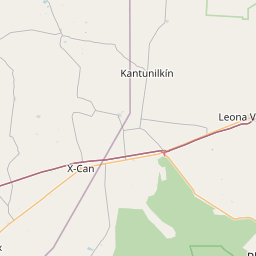
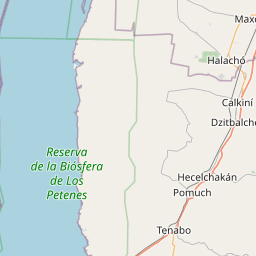
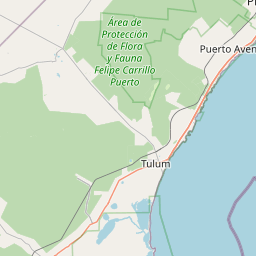
Map: Chichén Itzá and gateway cities
The site is inland in northern Yucatán. Valladolid is the closest practical base; Mérida and the Caribbean coast require longer journeys.

 📍
📍
📍
📍
+− Leaflet | © OpenStreetMap contributors
📍
📍
📍
📍
+− Leaflet | © OpenStreetMap contributors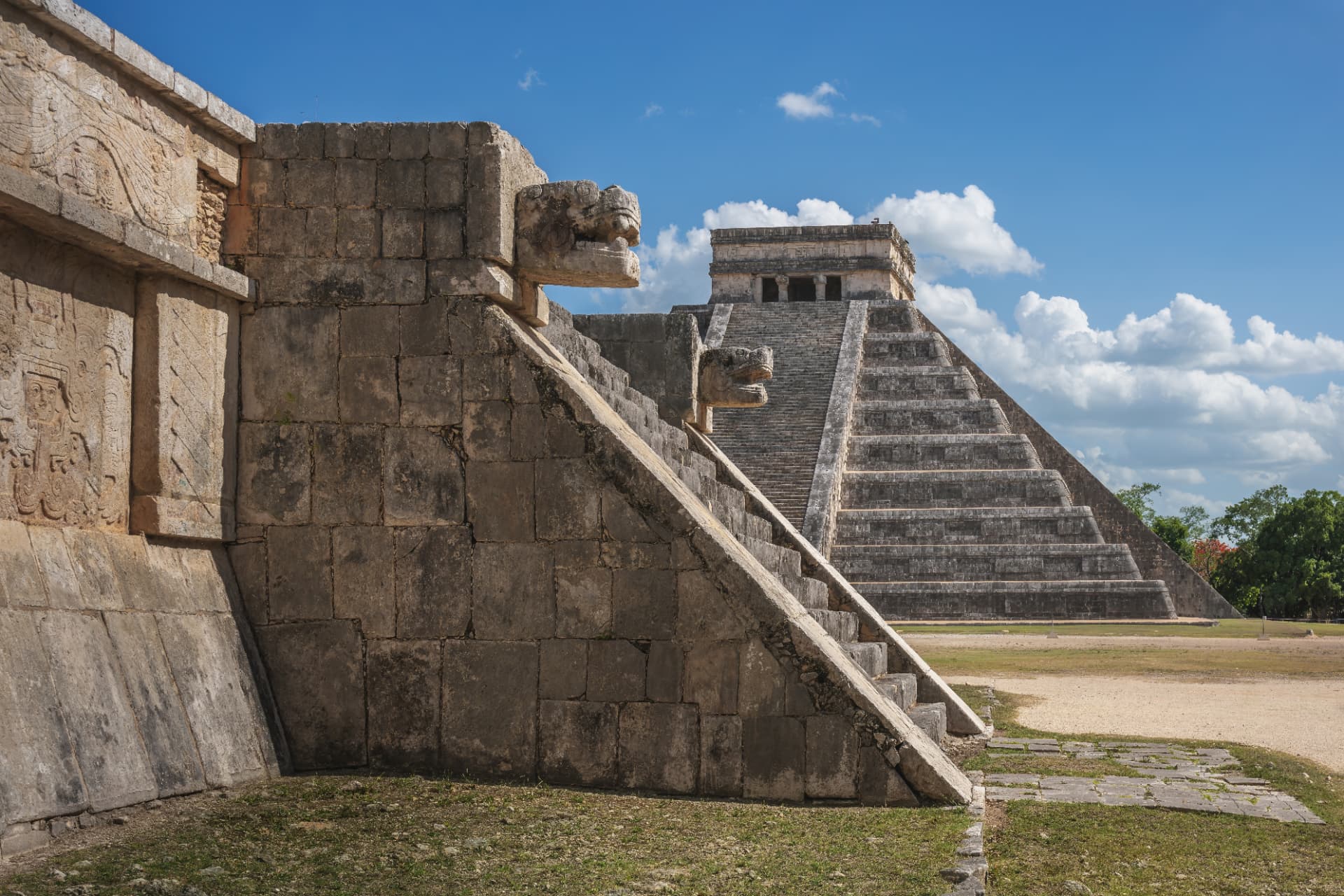
Access, photography and practical rules
- Do not climb. Monument access is restricted for conservation and safety.
- No food, smoking, pets or flash photography inside the archaeological zone.
- Expect exposed ground. Bring water, a hat, sun protection and shoes suitable for uneven paths.
- Camera and equipment rules. Drones are prohibited during equinox operations. Professional photography or video equipment requires prior authorization (and can carry a fee), and tripods or interchangeable professional lenses may be refused during special operations. Ordinary personal photography is allowed without flash, subject to current staff instructions.
- Use official services. The INAH listing identifies toilets, parking, lockers and cloakroom services, accessibility services, information and guided tours; availability can change.
- Keep your ticket. Follow staff instructions and current barriers throughout the zone.
Common mistakes
- Visiting only for one pyramid and ignoring the Ball Court and carved complexes.
- Assuming the equinox shadow appears only on one exact date—or that clear weather is guaranteed.
- Arriving at midday without enough water or sun protection.
- Booking a tour without checking whether government charges and site admission are included.
- Believing a guide provides climbing or restricted access.
- Trying to combine too many distant cenotes and towns with a short site visit.
FAQ
When can you see the equinox shadow at Chichén Itzá?
The descending-serpent effect appears in late-afternoon sunlight around the March and September equinoxes. It can develop on several nearby days rather than only at the exact astronomical equinox. Clouds, rain and operational controls can obscure it, so no visit guarantees a clear display.
Do I need a guide at Chichén Itzá?
No. You can visit independently, but a qualified guide adds context to the architecture, Maya history, astronomy and symbolism that signs alone cannot fully explain. A guide is especially useful on a first visit or when you have limited time.
Can visitors climb El Castillo?
No. Climbing El Castillo and the other principal monuments is prohibited. Visitors follow ground-level paths and must remain behind current protective barriers.
How much does Chichén Itzá cost in 2026?
As checked in September 2026, the published total admission is MXN 653 for foreign visitors and MXN 295 for Mexican nationals. Both combine the MXN 105 federal INAH charge with the applicable Yucatán CULTUR charge (MXN 548 or MXN 190). Yucatán residents are exempt from the CULTUR charge, and other concessions depend on eligibility, so confirm the current breakdown before visiting.
What are the opening hours for Chichén Itzá?
Ordinary public hours are 08:00–16:00 with last access at 15:00. Those hours do not automatically allow you to stay for the complete equinox shadow, which develops roughly between 15:00 and 17:00. For the March 2026 equinox operation INAH closed admission at 16:00 and let visitors remain until 17:30, but that was a special arrangement. Check the current bulletin before travelling.
How long should I spend at Chichén Itzá?
Allow about three hours for the principal monuments at a comfortable pace. A guided visit often takes two to three hours; add time if you want to walk to the Sacred Cenote or visit the Gran Museo de Chichén Itzá, whose opening hours can differ from the archaeological zone.
What should I bring to Chichén Itzá?
Bring water, sun protection, breathable clothing and comfortable shoes. Much of the ceremonial centre is exposed, heat builds quickly, and shade between monuments is limited. Check current rules before bringing professional camera equipment, a tripod or a drone.
Is Chichén Itzá accessible?
The official listing notes accessibility services, but the archaeological zone covers long outdoor distances on uneven, exposed ground. Ask staff about current assistance and route conditions; visitors with limited mobility may benefit from an early arrival and a shorter guided route.
Official sources
- INAH — official Chichén Itzá visitor listing in English
- INAH — official visitor listing in Spanish
- INAH bulletins — equinox operations and temporary notices
Visitor information checked September 2026. Fees, hours, special-event controls and open sections can change; verify official sources shortly before travel.