Paris · 7th arrondissement · Art museum
Musée d'Orsay: Tickets, Must-Sees and Tips
The world's greatest Impressionist collection — Monet, Van Gogh, Degas, Renoir — inside a Beaux-Arts railway station crowned by its famous clock.
By the AllTrips Editorial Team ·
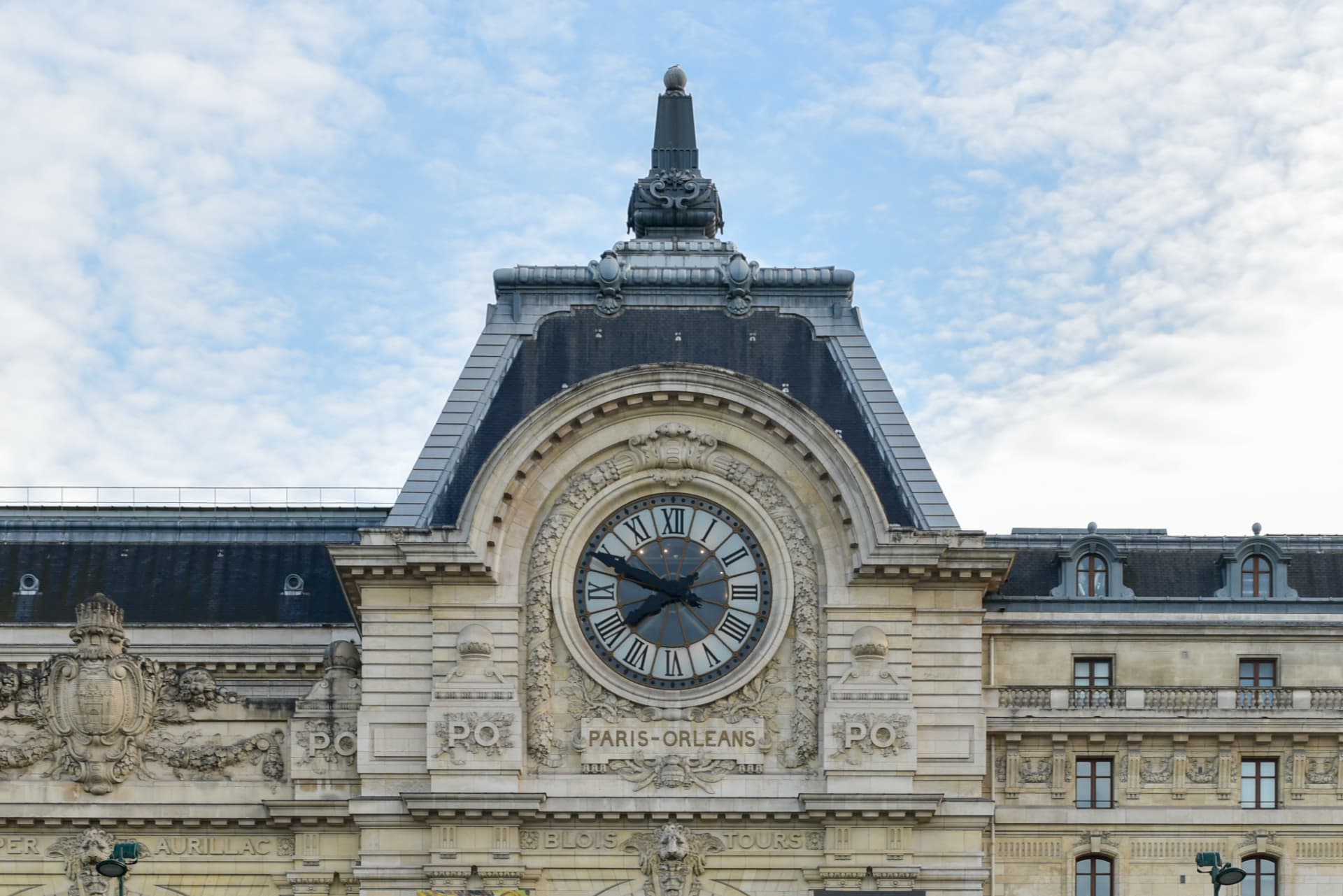
Musée d'Orsay at a glance
Area: 7th arrondissement, on the Left Bank of the Seine opposite the Tuileries Garden. Allow: 2–3 hours. Entry: paid admission; booking a timed ticket ahead is strongly recommended. Nearby: Tuileries Garden, Musée de l'Orangerie, Saint-Germain-des-Prés.
The Musée d'Orsay covers French art from 1848 to 1914 — the years between the Louvre and the Pompidou. For most visitors it is the Impressionist museum: if you have time for only one art museum in Paris and you love Monet or Van Gogh, this is the one.
What is there to see?
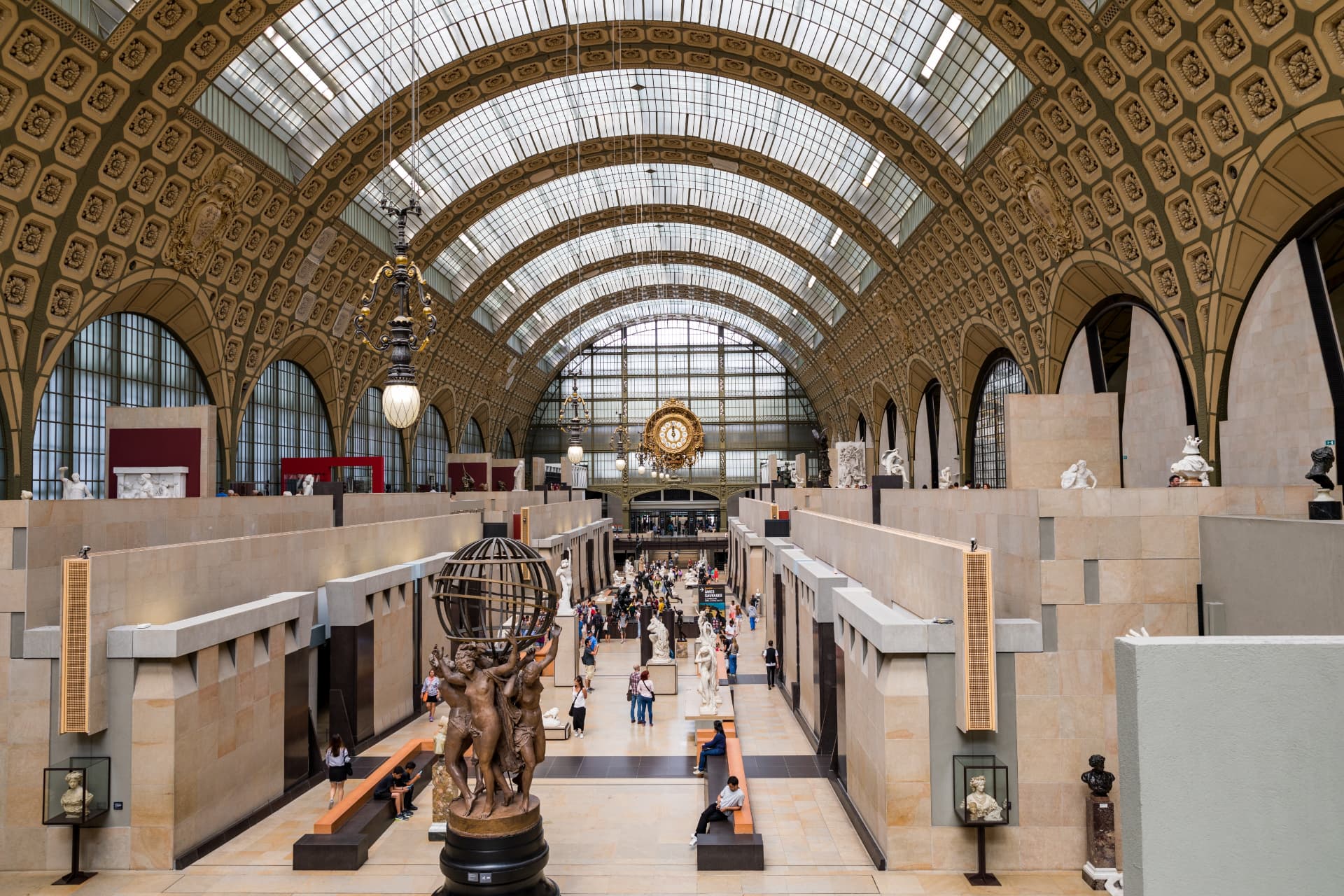
The great hall is the first spectacle: the station's barrel-vaulted nave, 32 metres high, now lined with nineteenth-century sculpture beneath the gilded clock. From the ground floor, galleries of academic painting and sculpture lead toward the star holdings.
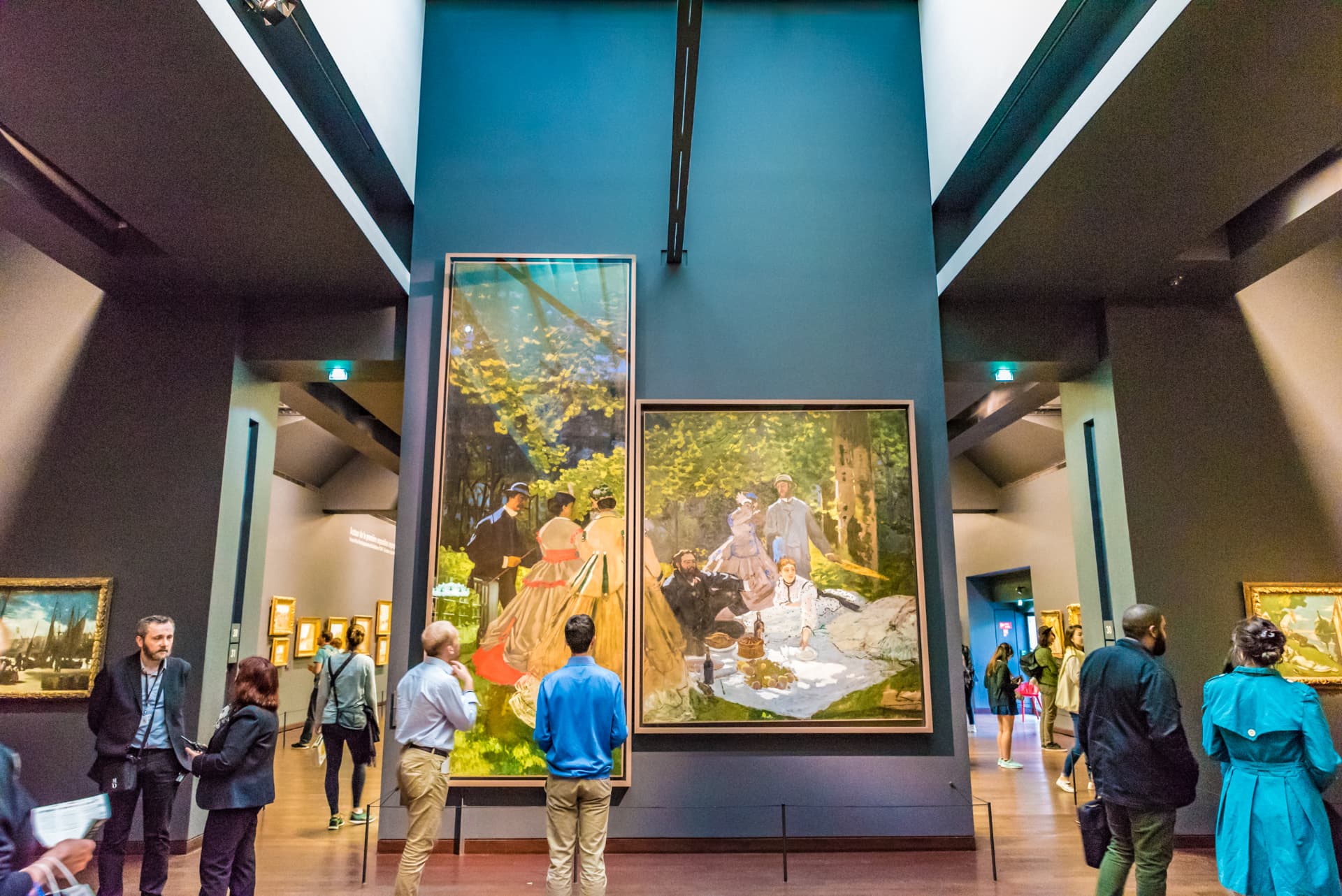
The upper level (level 5) is the reason most people come: room after room of Monet, Manet, Renoir, Degas, Cézanne, Pissarro and Sisley, including Monet's Blue Water Lilies, Renoir's Bal du moulin de la Galette and Manet's Luncheon on the Grass. The same level holds the clock viewpoint — you stand behind the giant clock face and look out over the Seine toward the Louvre and Montmartre. Level 2 adds Van Gogh and Gauguin, including Van Gogh's Starry Night Over the Rhône and his self-portraits.
From railway station to museum
The building opened as the Gare d'Orsay for the 1900 Universal Exhibition — a stone Beaux-Arts palace built to hide its iron-and-glass train shed, serving the Paris–Orléans railway (the 'PO' monograms and destination names are still carved into the facade). By 1939 its platforms were too short for modern trains, and the station faded into a mail centre and film location.
Listed as a historic monument in 1978, it was converted into a museum and opened in 1986, gathering the national collections of the period 1848–1914 that had been scattered across the Louvre, the Jeu de Paume and the Musée d'Art Moderne.
Tickets
Admission is paid, with free entry for under-18s, EU residents aged 18–25, and everyone on the first Sunday of the month. A dated, timed ticket booked in advance uses the reserved entrance and saves the longest queue — essential in high season. The museum is typically closed on Mondays, with a late opening on Thursdays; confirm on the official site.
Book your visit · affiliate link
Musée d'Orsay tickets on Tiqets
Compare availability and book a timed admission ticket for the Musée d'Orsay. Check what the offer includes and the entry conditions before booking.
Book on TiqetsOfficial site
Musée d'Orsay — official tickets
The museum's official site sells tickets at the base price and lists current exhibitions, late openings and closure notices.
Visit the official siteThe Tiqets link is an affiliate link: AllTrips may earn a commission at no extra cost to you. You can also buy directly from the museum's official site.
Planning your visit
The museum faces the Seine at 1 Rue de la Légion d'Honneur. The RER C stops directly underneath (Musée d'Orsay station); the nearest metro is Solférino (line 12), and the Tuileries and Saint-Germain-des-Prés are across the pedestrian Passerelle Léopold-Sédar-Senghor.
Enter with a timed ticket through the reserved entrance; walk-up visitors use a separate, slower queue. Large bags are not allowed. A practical route: go straight to level 5 for the Impressionists while the crowds are thin, then work down through Van Gogh and the great hall. The café behind the clock on level 5 is one of the most atmospheric museum cafés in Paris.
The Musée d'Orsay in photos
What is nearby?
The Tuileries Garden and the Musée de l'Orangerie (Monet's Water Lilies rooms) are directly across the river — the two museums share a combined ticket. Saint-Germain-des-Prés and the Musée Rodin are a short walk along the Left Bank. See their locations on our Paris attractions map.
Frequently asked questions
Is the Musée d'Orsay free?
No, admission is paid. Entry is free for under-18s and for 18–25-year-old residents of the EU, and for everyone on the first Sunday of the month — but free days are extremely busy. Concessions and the current price list are on the official site.
Do I need to book Musée d'Orsay tickets in advance?
Strongly recommended. The Orsay is one of the most visited museums in the world, and a dated, timed ticket lets you use the reserved entrance instead of the long walk-up queue. Book on the official site or through a reseller such as Tiqets.
What is the Musée d'Orsay famous for?
The world's greatest collection of Impressionist and Post-Impressionist art — Monet, Manet, Degas, Renoir, Cézanne, Van Gogh, Gauguin — shown inside a spectacular converted Beaux-Arts railway station with its giant clock.
How much time should I spend at the Musée d'Orsay?
Allow 2–3 hours for the highlights: the great hall, the upper-level Impressionist galleries and the clock viewpoint. Art lovers can easily spend half a day.
Which day is the Musée d'Orsay closed?
The museum is typically closed on Mondays (the Louvre closes on Tuesdays, so the two complement each other). Confirm current opening days and late openings on the official site before you go.
Musée d'Orsay or the Louvre — which should I choose?
If you love Impressionism, choose the Orsay; if you want antiquities, the Mona Lisa and the sheer scale of a palace, choose the Louvre. The Orsay is more compact and easier to cover in one visit. With two or more days in Paris, do both.
Official sources
Reviewed September 2026. Opening days, prices and exhibitions change; check the official site before travel.