Acropolis Tickets and Entry Guide: How to Plan Your Visit
By AllTrips · Updated · Prices and rules checked September 14, 2026 · 10 min read
The Acropolis is not a difficult site to visit, but it is a difficult site to visit badly. There is no shade on the rock, entry runs in reserved time slots, and in extreme heat the site can close for several midday hours. Book the first slot after opening or a late-afternoon slot, carry more water than feels necessary, and keep the air-conditioned Acropolis Museum — a separate attraction with its own ticket — for the hottest part of the day.

Quick answers
- Admission: €30 full, €15 reduced, booked for a specific entry slot.
- Book with: the official Greek ticketing service, etickets.tap.gr.
- Best time: the first slot after opening, or roughly two hours before last entry.
- Entrances: west/main near Theorias Street, or south-east (South Slope) near Akropoli metro.
- Acropolis Museum: separate attraction, separate ticket (€20 / €10 reduced), separate hours.
- Allow: about 1.5–2 hours on the rock, longer with the South Slope, queues and photo stops.
Acropolis tickets and prices in 2026
The Acropolis uses timed entry: you reserve a specific arrival slot rather than a whole day. The permitted arrival window and any grace period are shown during official checkout and enforcement can change, so read the window printed on your own ticket. Once you are inside, you can stay until closing.
Buy directly from the official state ticketing service, etickets.tap.gr, at face value. Resellers and tour operators charge more because they add handling, a guide or hosted entry — that is a legitimate service, but it is not the same as the admission price.
| Ticket | Price | Covers | Best for |
|---|---|---|---|
| Acropolis archaeological site | €30 full / €15 reduced | The rock and its slopes, one timed entry | Most visitors with one Athens day |
| Acropolis Museum (separate attraction) | €20 general / €10 reduced | The museum only — not the site | Pairing with the site, ideally at midday |
| Other Athens sites (Agora, Kerameikos, Roman Agora) | Own ticket each | That site only | Anyone planning several ancient sites |
| Guided tour or hosted-entry product | Varies, above face value | Admission plus a guide or ticket handling | Visitors who want the site explained |
There is no longer a five-day multi-site combined ticket. That product was discontinued in 2025, so do not plan around it: the Ancient Agora, Kerameikos, the Roman Agora and Hadrian's Library generally require separate tickets now.
Reduced and free admission depend on age, nationality or residency and supporting documents — it is not simply "under 25s go free". EU citizens and non-EU visitors are treated differently in several categories, and staff check original identification, not photocopies or photos. Several days each year are free for everyone, traditionally including 6 March, 18 April, 18 May, the last weekend of September, 28 October and the first Sunday of each month from November to March. Free days are the busiest days, and free entry does not always come with a reservable slot. Check the current conditions on the Greek Ministry of Culture pages before planning around them.
Opening hours are seasonal and change without much notice: broadly around 8am to 8pm at the height of summer and around 8am to 5pm in winter, with last entry about 30 minutes before closing. Hours can also be altered for public holidays, strikes, official ceremonies and extreme heat, so recheck the official listing shortly before you visit rather than trusting any single published closing time.
The heat is the real planning problem
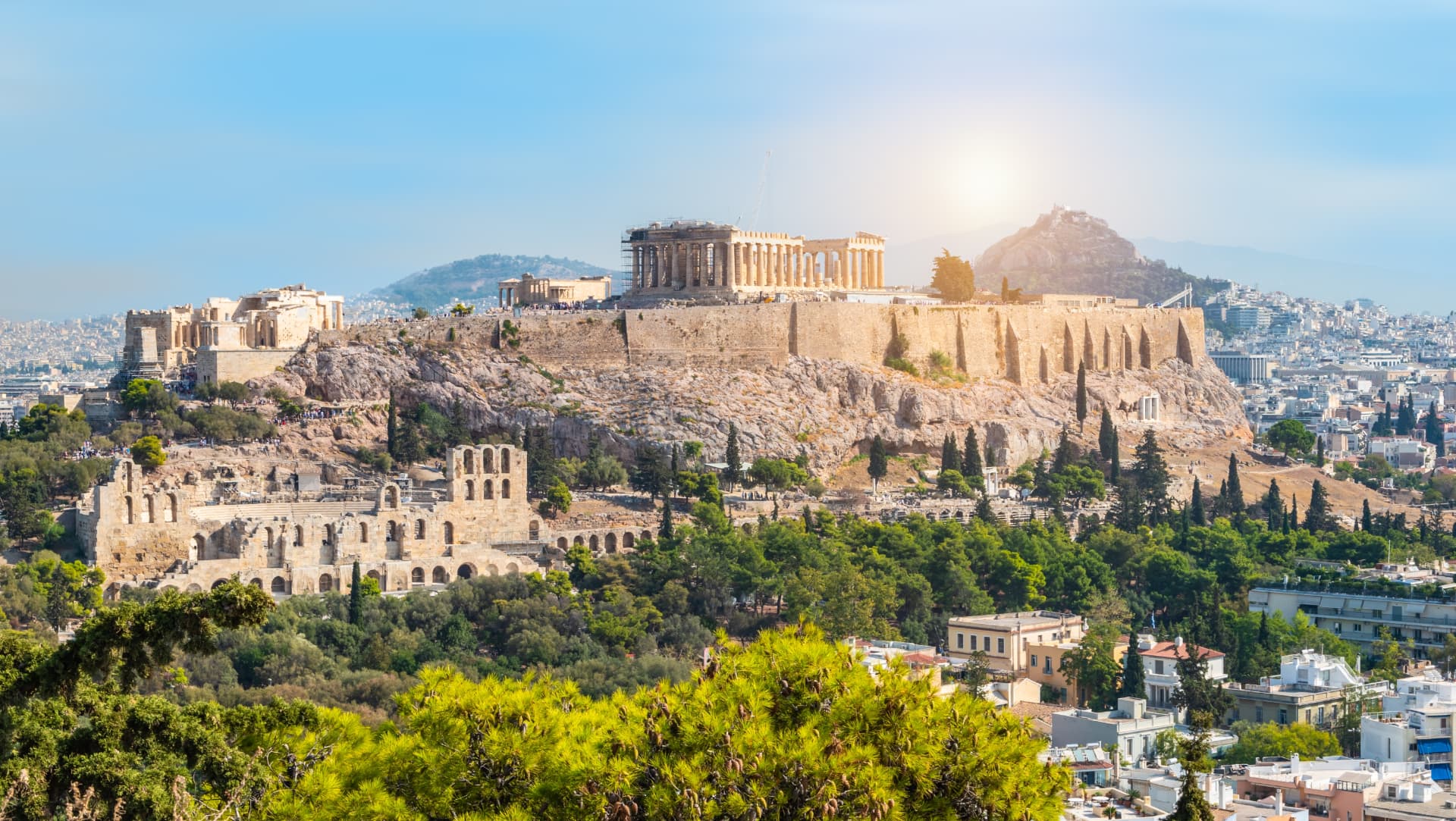
Athens summers regularly run above 35°C, and the Acropolis offers no meaningful shade. The approach ramp, the Propylaea steps and the plateau are exposed marble and limestone that reflect heat back at you. Marble that thousands of feet have polished is also slippery, which matters more when you are tired and dehydrated.
Midday heat closures
During heatwaves the Greek authorities have repeatedly closed the Acropolis for several hours in the middle of the day, commonly around noon until late afternoon, to protect visitors and staff. These closures are announced at short notice, sometimes the same morning. If you hold a midday slot during a heatwave, check the official announcements before setting off and ask your seller about rebooking or refund terms.
Red Cross teams are often stationed near the entrances during extreme heat, and water points exist, but they are limited. Treat a summer Acropolis visit like a short hike rather than a museum trip.
The best entry time — and the worst
There are only two good slots in summer, and one of them requires an early alarm.
| Slot | Temperature | Crowds | Verdict |
|---|---|---|---|
| First slot, around 8am | Coolest of the day | Lightest, before coach groups | Best overall in summer |
| 9am–11am | Rising fast | Peak group arrivals | Avoid if you can |
| 11am–4pm | Hottest, closure risk | Heavy | Worst window; use the museum instead |
| Two hours before last entry | Falling | Thinning | Best light, good second choice |
An early slot has a second advantage: the light is soft from the east, which suits photographs of the Parthenon’s north side. A late slot gives warmer light on the west front, but you are working against last entry, so do not cut it fine.
In spring and autumn the calculation relaxes. Between November and March the heat is not the issue — short opening hours, rain on slick marble and strong wind on the rock are.
Book the official ticket first. Face-value admission is sold at etickets.tap.gr. If the slot you want is gone there, or you would rather have a guide or a hosted entry handled for you, a commercial seller is a reasonable fallback at a higher price.
Affiliate disclosure: the card below is an affiliate link. AllTrips may earn a commission if you book through it, at no extra cost to you.
Compare guided and hosted-entry Acropolis tickets
via Tiqets
A commercial alternative when official slots are sold out, or when you want a guide. Products vary: some are admission only, others are guided or hosted entry, and prices sit above the €30 official admission. Check exactly what each listing includes, plus the cancellation terms — useful if a heat closure affects your slot.
Check Acropolis entry timesWhich entrance to use
The Acropolis has two entrances, and choosing the right one changes the visit.
West/main entrance (near Theorias Street, below the Propylaea). The shortest route to the top and normally the busiest. Expect a queue in the open with little shade, particularly between 9am and 11am. Use it if you have an early slot or limited time, and if you need the lift on the north side.
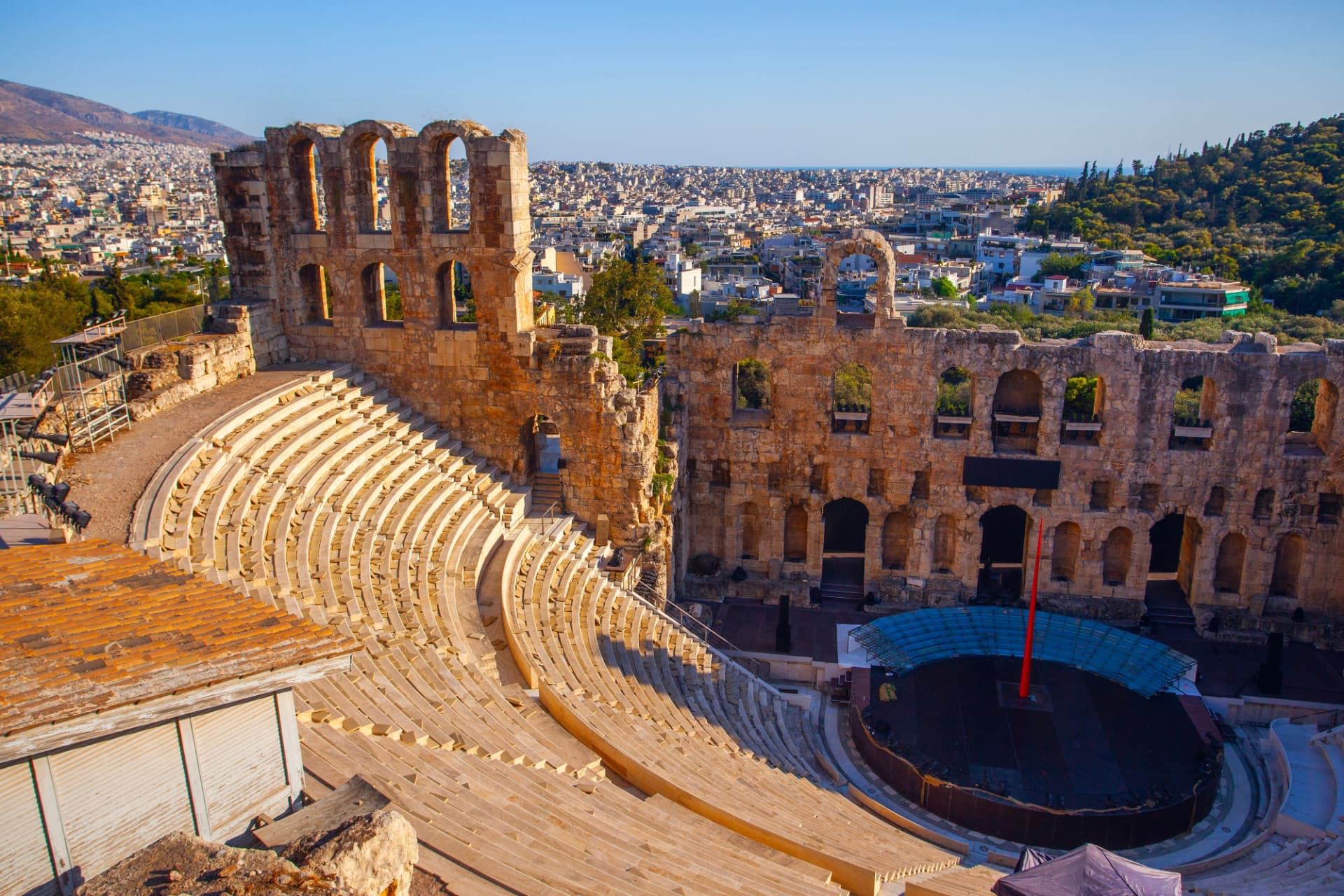
South-east entrance (South Slope, near Akropoli metro and the Theatre of Dionysus). It tends to be quieter, though that is a tendency rather than a guarantee — tour groups use it too. You climb through the south slope, passing the Theatre of Dionysus and the Odeon of Herodes Atticus, with patches of shade and benches on the way. It takes longer but is a more pleasant walk and better sequenced if you are also visiting the museum.
Both entrances run security and ticket checks. A "skip the line" product does not remove those checks or the congestion at the gate; at most it saves you the ticket-office queue, which you also avoid by buying online officially.
What to see once you are up there
You cannot enter the buildings on the plateau. The visit is about approach, scale and views, so walk it in a sensible order rather than heading straight for the Parthenon.
Propylaea. The monumental gateway. Pause on the steps — this is where the view over Athens first opens up, and it is the single most congested point on the rock.
Temple of Athena Nike. Small, on the right as you climb, and easy to walk past. Worth thirty seconds of attention.
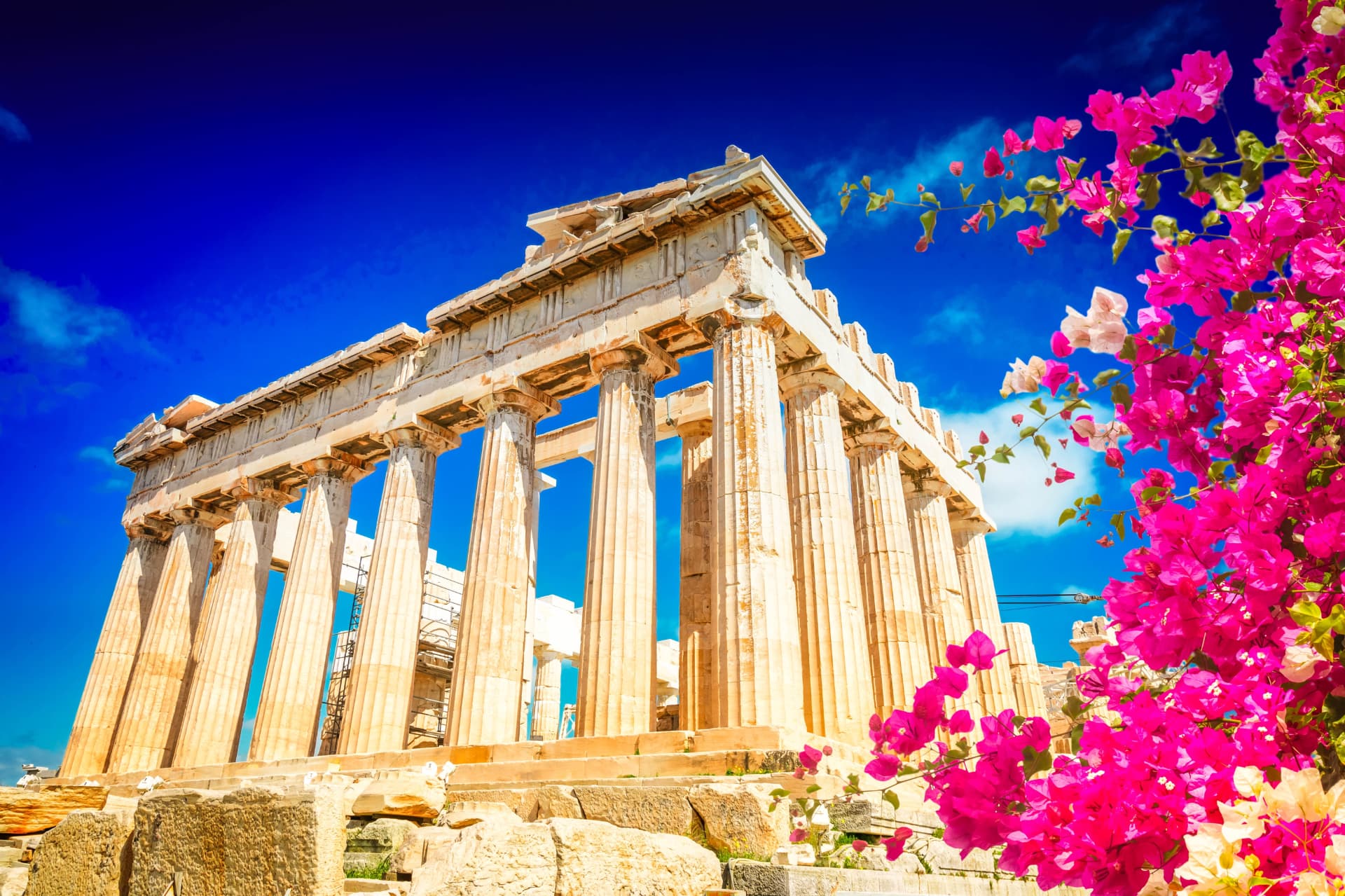
Parthenon. Permanently under conservation, so expect cranes and scaffolding in your photographs. That is not a bad day; it is the normal state of an ongoing restoration programme.
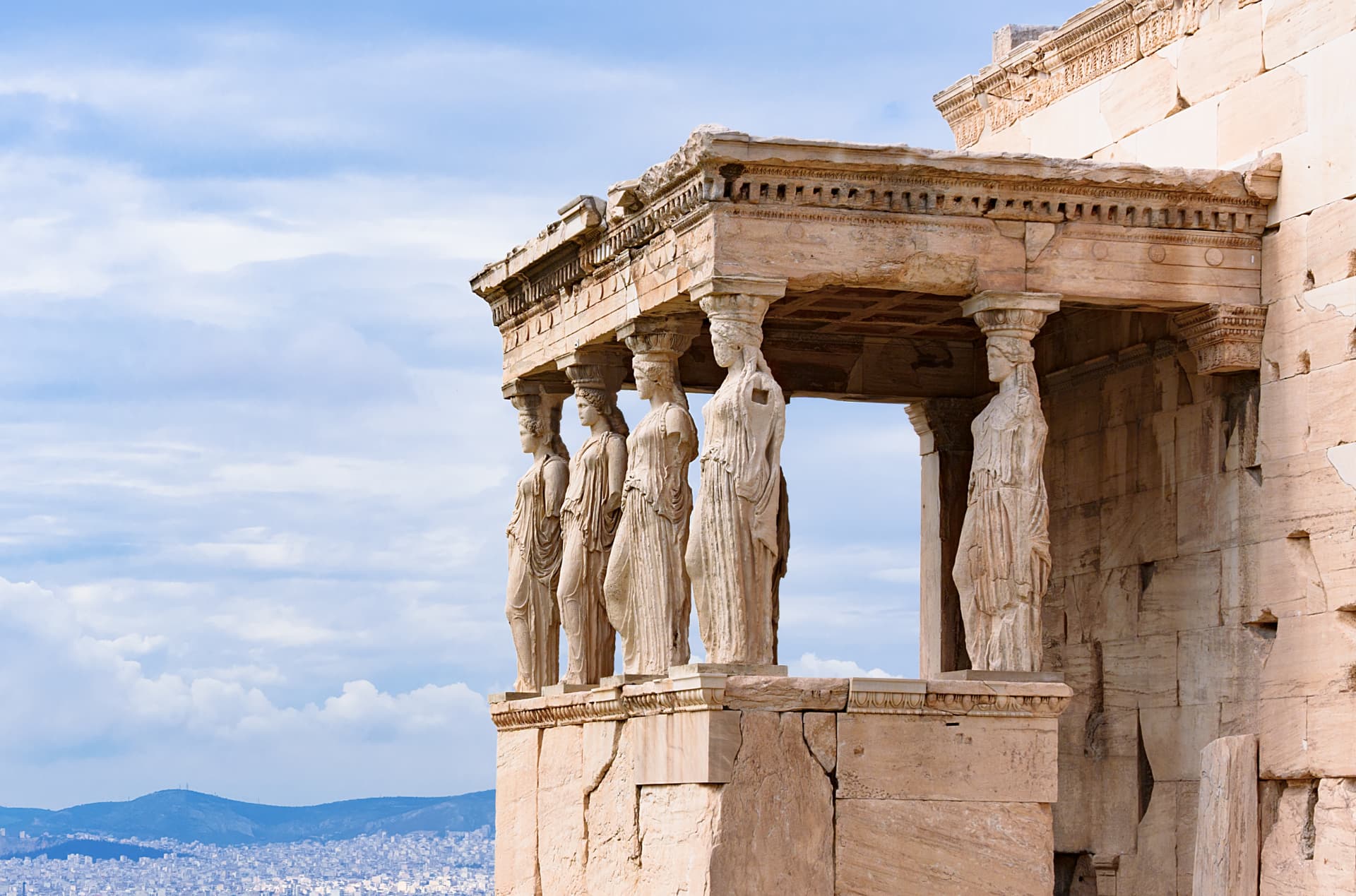
Erechtheion and the Caryatid porch. For many people the most memorable structure on the hill. The figures on site are replicas; the originals are in the Acropolis Museum, which is a good reason to visit both.
The east end and the belvedere. Walk to the far end for views towards Lycabettus Hill and the sea. Most groups turn back early, so this corner is often the calmest spot up there.
How long to allow. Around 1.5 to 2 hours is a sensible planning estimate for the rock itself. Security queues, a busy Propylaea, photography stops and the South Slope route can push that towards three hours, so do not schedule anything tight immediately afterwards.
Accessibility and mobility limits
The Acropolis is partly accessible, not fully accessible. A lift on the north side, reached from the west entrance, carries visitors with reduced mobility to the plateau, where a marked route avoids the worst of the steps.
Several caveats matter in practice. The lift and the accessible route can be suspended for maintenance, strong winds or other operating restrictions, sometimes at short notice. Surfaces on top are uneven rock and polished marble, and parts of the site remain unreachable on wheels. The South Slope approach is a sloping walk and is not the accessible option.
If accessibility is essential to your visit, contact the site in advance to confirm the lift is operating on your date, and have a fallback plan — the Acropolis Museum is fully accessible and air-conditioned.
What to bring for a hot-weather visit
- More water than you think. At least a litre per person in summer; refill points are limited and there is no café on the rock.
- Shoes with grip. The marble is polished and slippery. Smooth soles and sandals are a genuine hazard on the descent.
- Hat, sunglasses, high-factor sunscreen. There is nowhere to hide from the sun between the entrance and the exit.
- A small folding fan or cooling towel. Cheap, and far more useful than it sounds at 34°C.
- Your ticket on your phone and on paper. Phone screens wash out in glare and batteries drain in heat.
- Nothing bulky. Large bags and backpacks are restricted, and there is no cloakroom on the hill.
Drones and tripods need permission. Selfie sticks are discouraged in the crowded gateway area.
A comfortable one-day Athens plan
If you have a single summer day in Athens, sequence it around the heat rather than around the map:
- 8am: Acropolis, first slot, entering from the south-east and walking up the slopes.
- 10am: Ancient Agora or Kerameikos, which have more shade than the rock.
- 12pm–4pm: Lunch in Plaka or Monastiraki, then the air-conditioned Acropolis Museum. This is the window in which heat closures occur on the hill.
- Late afternoon: Filopappou Hill or Areopagus for a view of the Acropolis from outside, at no cost.
Planning a longer Mediterranean trip? Our guide to attractions worth booking in advance covers the same logic for Rome, and how to plan a trip walks through building an itinerary around opening hours.
The Acropolis Museum is a separate ticket
This is the most common and most expensive mistake visitors make. The Acropolis Museum is an independently operated attraction, about ten minutes' walk downhill from the south-east entrance, next to Akropoli metro. It is not the archaeological site, and the two share nothing operationally.
- Its ticket is separate: currently €20 general and €10 reduced, bought from the museum, not from the site.
- Its hours are its own and differ from the archaeological site's, including late openings on some evenings.
- Its free and reduced-admission days are its own too — do not assume a free day on the rock applies to the museum, or the reverse.
What you get for it: the Caryatid originals, the Parthenon frieze gallery on the top floor with the temple framed through the glass, and an excavated ancient neighbourhood beneath the building. It is indoors and air-conditioned, which is why it belongs in the middle of a hot day.
Frequently asked questions
How much is an Acropolis ticket in 2026?
Standard admission to the archaeological site is listed at €30, with €15 reduced for eligible visitors. The old five-day multi-site combined ticket was discontinued in 2025, so other Athens archaeological sites generally need their own tickets. Prices checked September 14, 2026; confirm on the official ticketing system before booking.
What is the best time of day to visit the Acropolis in summer?
The first slot after opening, around 8am, is the coolest and usually the least crowded on the rock. The late afternoon, roughly two hours before last entry, is the second-best option: still warm, but with softer light and thinning crowds.
Does the Acropolis close in extreme heat?
Yes. During heatwaves the site has repeatedly closed during the hottest hours, commonly in the middle of the day, on the instruction of the culture ministry. Closures are announced at short notice, so check the official site and local news on the morning of your visit.
Is there shade on the Acropolis?
Almost none. The path up, the Propylaea and the plateau around the Parthenon are open marble and rock with no trees. The shaded areas are on the slopes below, near the south entrance and the Odeon, not on top.
Are Acropolis tickets timed?
Yes. You reserve a specific entry slot rather than simply a day. The permitted arrival window is shown during official checkout and enforcement details can change, so read the window printed on your own ticket instead of assuming you can turn up at any time.
Which entrance should I use?
The west/main entrance near Theorias Street is the shortest route up and normally the busiest. The south-east (South Slope) entrance near Akropoli metro and the Theatre of Dionysus tends to be quieter, though that is a tendency rather than a guarantee.
Is the Acropolis Museum included in the ticket?
No. The Acropolis Museum is a separate, independently run attraction with its own tickets, prices and opening hours — currently €20 general and €10 reduced. An Acropolis site ticket does not admit you, and the museum's free days and hours differ from the archaeological site's.
Is the Acropolis wheelchair accessible?
Partly. There is a lift on the north side reached via the west entrance and an accessible route on the plateau, but the site is not fully accessible: surfaces are uneven, and the lift and accessible route can be suspended for weather, maintenance or operating restrictions. Confirm arrangements with the site before you travel.
How long does an Acropolis visit take?
Allow about 90 minutes to two hours for the rock itself, or three hours if you walk the south slope, the Odeon of Herodes Atticus and the Theatre of Dionysus on the way up.
Can I visit the Acropolis without booking ahead?
Tickets are sold on site, but popular summer slots sell out and the queue at the west entrance can be long in the sun. Booking a specific slot online is the lower-risk option between May and October.
Sources, corrections and updates
Written and reviewed by the AllTrips editorial team. Prices, hours, ticket structure and closure practice were checked on against the Greek Ministry of Culture, the official ticketing service etickets.tap.gr and the Acropolis Museum.
Archaeological site tariffs, free-admission days, opening hours and heat-related closures are set by the ministry and can change at short notice — confirm on the official pages on the day you travel. We recheck this guide when prices or entry rules change and correct errors as soon as they are reported; if you find something out of date, tell us and we will update it and note the change here.