Assisi and Orvieto Day Trip From Rome: Tours, Timing & Tips
Updated · 12 min read · By the AllTrips Rome editorial team
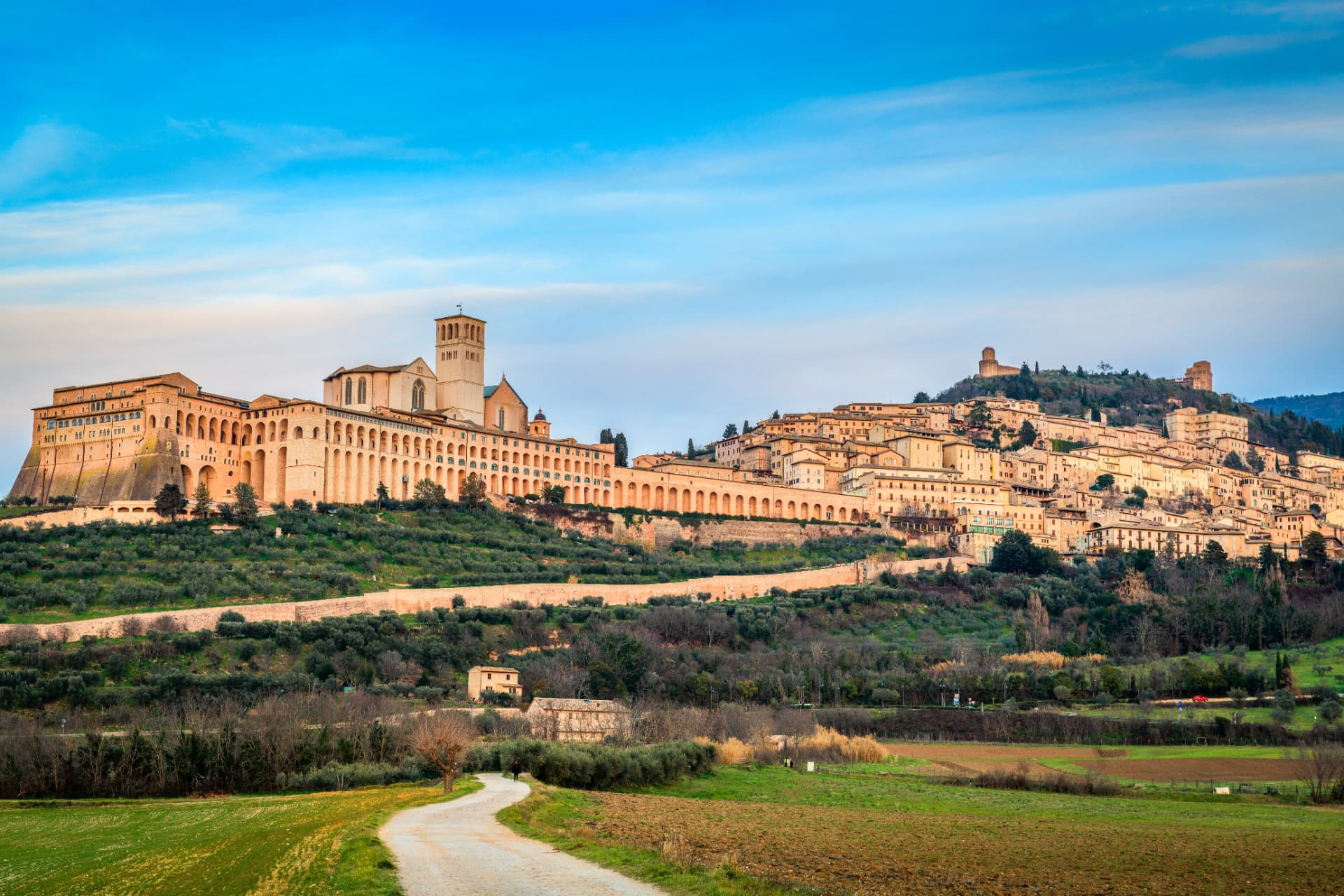
Combining Assisi and Orvieto is worthwhile if you care about churches, Christian history and well-preserved medieval towns. It is a long day, and joining the two destinations by public transport on the same day is generally inefficient — which is why almost everyone who does both uses an organised tour or a car.
Is an Assisi and Orvieto Tour From Rome Worth It?
It is worth it for a specific kind of traveller. If the Giotto frescoes, the story of Francis and Clare, and the great Gothic facades of central Italy are what draw you north of Rome, this pairing delivers two of the strongest examples in a single day — and it removes the transport problem that makes the combination awkward on your own.
It is less worthwhile if you want to linger. Assisi rewards slow walking: the upper town, the Rocca Maggiore fortress, San Damiano below the walls and the Eremo delle Carceri in the woods above all take time you will not have. Orvieto has an underground world of Etruscan caves and St Patrick’s Well that a two-hour stop cannot cover. If either town is a genuine priority rather than a highlight reel, go there alone by train and give it the full day it deserves.
A useful test: if you have one spare day in Rome and want breadth, take the combined tour. If you have two, split them — see our Assisi day trip from Rome guide and Orvieto day trip from Rome by train.
Is an Assisi and Orvieto tour from Rome worth it?
| Duration | Typically 11–13 hours door to door |
|---|---|
| Departure | Early morning coach from a central Rome meeting point, usually between 07:00 and 08:00 |
| Guide | Live multilingual guide or tour leader on the coach; in-church commentary varies by operator |
| Religious-site access | Entry to the Basilica of Saint Francis and the Basilica of Saint Clare is free; tours normally give you time inside rather than a ticketed visit |
| Lunch | Sometimes included as a fixed group meal, sometimes free time — always confirm on the listing |
| Time in each town | Not published by the operators we checked; the linked Green Line tour gives a 12-hour total without stop lengths |
| Walking difficulty | Moderate. Assisi is a continuous hillside climb; both centres are cobbled |
| Dress requirements | Shoulders and knees covered for the basilicas; no beachwear or bare midriffs |
Details differ between operators. Treat this as a planning baseline and confirm each point on the listing you book.
What Will You See in Assisi?
Basilica of Saint Francis. The centrepiece. Two churches stacked on each other: the Lower Basilica, dim and low-vaulted, with frescoes by Cimabue, Simone Martini and Pietro Lorenzetti, and the Upper Basilica, tall and light, holding the famous cycle of the life of Francis long attributed to Giotto. The crypt below the lower church contains the tomb of Francis. Entry is free; expect security checks and queues in high season.
Basilica of Saint Clare. At the other end of the town, a pink-and-white striped church with flying buttresses, holding the tomb of Clare and the Byzantine crucifix of San Damiano. Smaller and quieter than the Basilica of Saint Francis, and often skipped by rushed groups — which is exactly why it is worth your free time.
Central squares. Piazza del Comune sits on the old Roman forum, with the columned facade of the Temple of Minerva from the first century BC still standing in the square. The main street connecting the two basilicas runs through it, so you pass this way regardless of your route.
Religious and artistic significance. Assisi is a UNESCO World Heritage Site for its art, architecture, cultural landscape and its role as a centre of the Franciscan spiritual tradition. The basilica’s fresco cycles are one part of that: they marked a shift from flat Byzantine convention towards naturalism and human emotion. You do not need to be a believer to see why art historians treat this church as a turning point.
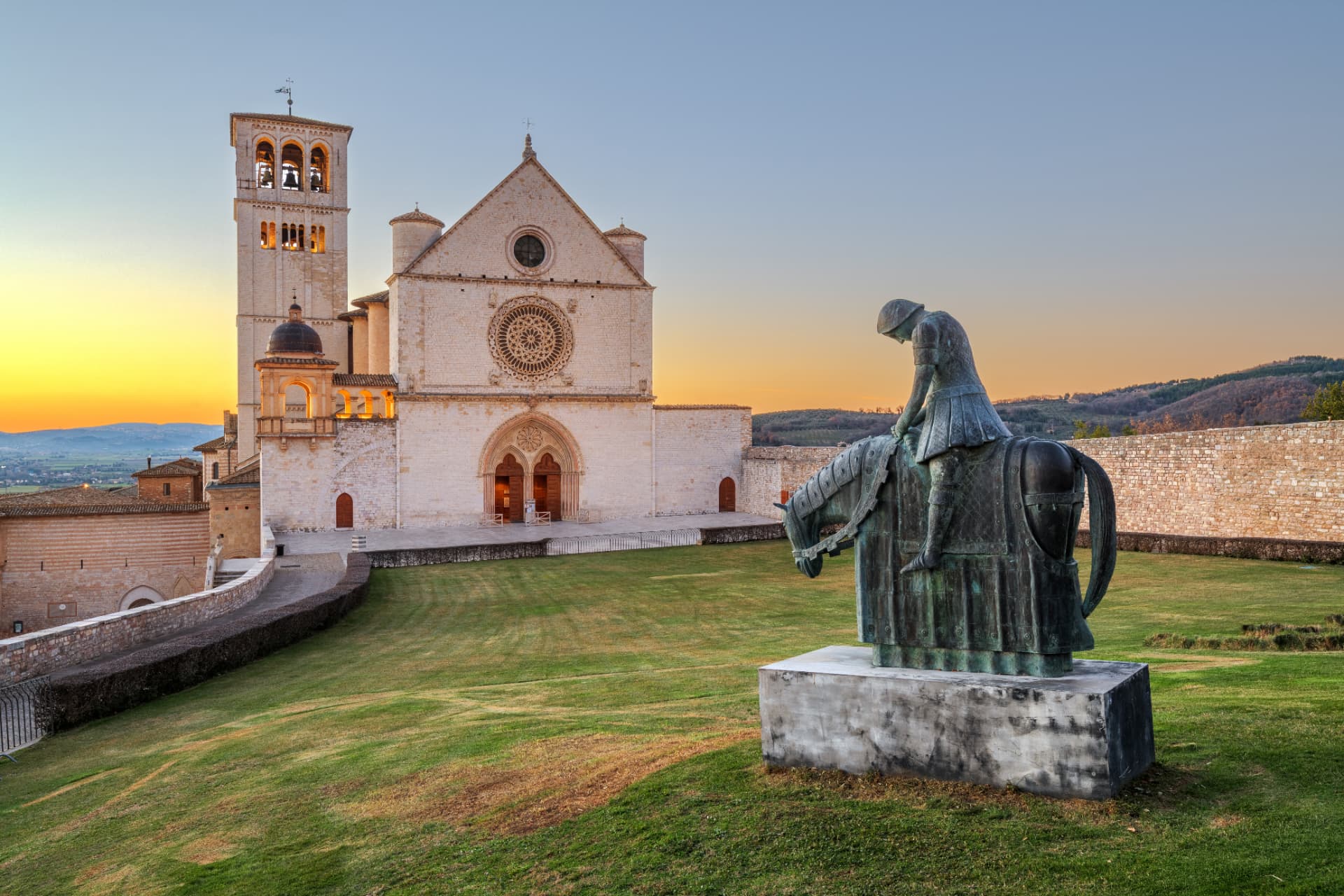
Does the guide come inside? It depends on the visit. The basilica runs its own guided visits, and arrangements for outside groups can differ by date and by church, so some tours brief you outside and release you to walk through independently, sometimes with an audio device. Check the basilica’s current visitor rules and look for a listing that states an accompanied interior visit explicitly if that matters to you.
What Will You See in Orvieto?
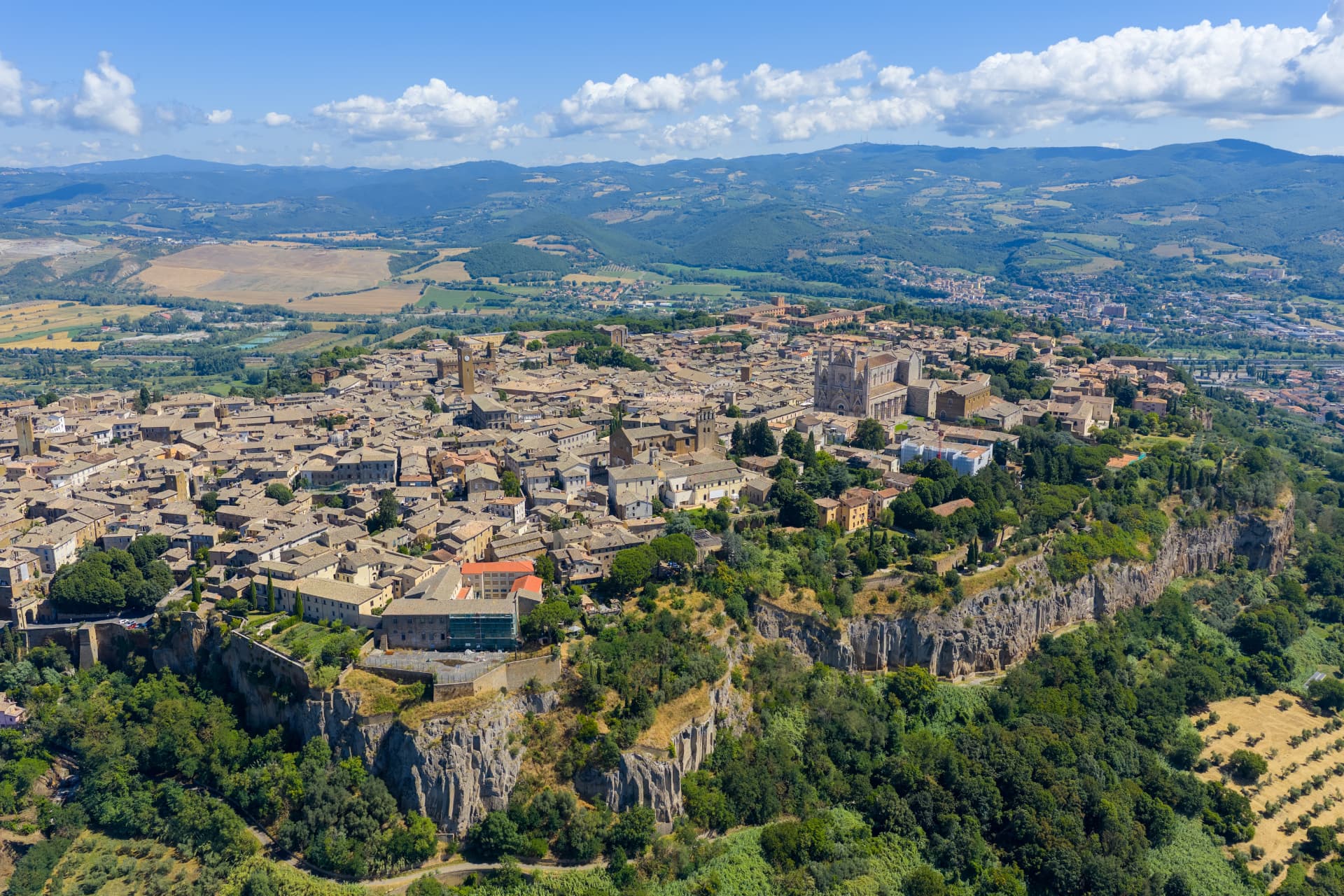
The cathedral. Orvieto’s Duomo has one of the most extraordinary facades in Italy — gold mosaics, carved marble reliefs and rose window stacked into a striped Gothic front that changes colour with the light. Inside, the Chapel of San Brizio holds Luca Signorelli’s Last Judgement frescoes, which influenced Michelangelo. Tourist entry to the cathedral requires a ticket; the current individual Cathedral ticket is €8 on the official Opera del Duomo ticket site. Check whether your tour includes it.
The historic centre. Compact, walkable and built on a single tufa plateau. Corso Cavour is the spine, with ceramic workshops, wine bars pouring the local Orvieto Classico, and side lanes that empty out within a minute of leaving the main street.
Viewpoints. The town ends in cliffs on every side. Walk to the edge near Piazza Cahen or along the northern walls for long views over vineyards and the valley — five minutes of effort for the best photographs of the day.
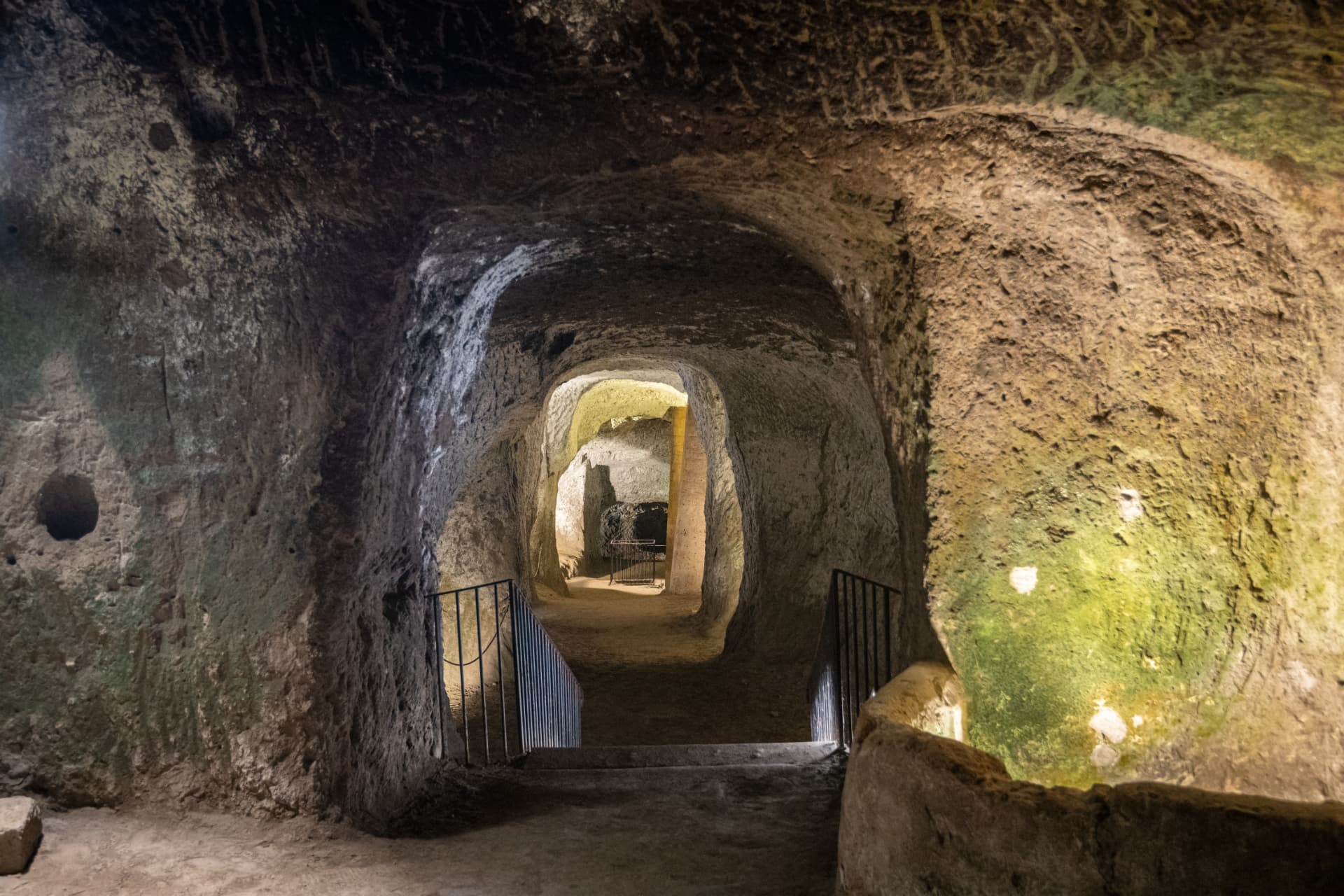
Underground attractions — realistically? Usually not. The Orvieto Underground caves and St Patrick’s Well are timed, ticketed visits that take 45–60 minutes each, plus stairs. On a short combined stop, fitting one in means skipping the cathedral interior or the viewpoints. Assume they are out of reach unless the listing names them, and save them for a dedicated Orvieto day.
What types of Assisi and Orvieto tours are there?
These are general formats, not named products: operators rotate these itineraries seasonally and the details below are typical rather than sourced from specific listings. The fact box under the table covers the one product we checked. Confirm every point on the live listing for your date.
| Tour format | Group size | Language | Duration | Lunch | Hotel pickup | Entrance tickets | Free time |
|---|---|---|---|---|---|---|---|
| Full-day coach tour (large group) | Up to 40–50 people | English, often plus Spanish or Italian | About 12 hours | Usually optional or not included | Rarely — central meeting point instead | Basilicas are free entry; cathedral and paid sites vary | Varies by operator |
| Small-group tour (minivan) | Typically 8–16 people | English | 10–12 hours | Sometimes an included Umbrian lunch | Sometimes offered in central Rome | Included where applicable; basilicas remain free | More flexible; guide adapts the pace |
| Private tour with driver-guide | Your group only | Your choice of available languages | Flexible, typically 10–12 hours | Your choice of restaurant or a booked meal | Yes, from your hotel | Any optional sites arranged on request | Flexible within the booked duration |
The one product we checked (25 September 2026)
- Green Line full-day coach tour, starting 07:15 at Via Giovanni Amendola 32 in Rome.
- Order of stops: Orvieto first, then a lunch and wine stop, then Assisi.
- Includes a guided walking tour of both towns, lunch and earphones; up to 38 people.
- Excludes drinks and entrance fees that are not specified in the listing.
- Cancellation: the listing states the booking is nonrefundable with no rescheduling. Recheck the terms at checkout before you pay.
Affiliate link. You pay the same price and we may earn a small commission, which funds this site's research.
Compare current Assisi and Orvieto tours from Rome
See live availability, group sizes, inclusions and the cancellation terms shown at checkout on Tiqets before you commit to a date.
Compare Assisi and Orvieto tours from RomeHow Much Time Will You Get in Each Town?
A twelve-hour tour does not mean six hours in each town. Rome to Assisi is roughly two and a half hours by road, Assisi to Orvieto around an hour and a half, and Orvieto back to Rome close to two hours. That is about six hours of driving before anything else. Add the meeting and boarding window, a motorway comfort stop, and the walk from coach parking up into each hill town, and the sightseeing budget lands closer to five hours split unevenly between the two.
No operator we checked publishes how long each town stop lasts. The Green Line listing states a twelve-hour total but does not break it down, so do not plan a specific sight around a guessed split, and remember that a fixed group lunch comes out of the same five hours.
Start07:15 departure from Via Giovanni Amendola 32 in Rome, close to Termini.
First stopOrvieto: guided walk in the historic centre, including the cathedral square.
MiddayLunch and a wine stop, as described in the listing.
Second stopAssisi: guided walk and time around the Basilica of Saint Francis.
ReturnBack to Rome the same evening; the listing gives a 12-hour total duration.
Order of stops as described on the linked Green Line listing, checked 25 September 2026. The listing does not publish arrival times for each town, so no clock times are given here beyond the stated 07:15 start. Timings change with traffic on the A1 and the pace of your group.
Can You Visit Assisi and Orvieto Independently?
Each town works beautifully on its own by train. Orvieto is on the main Rome–Florence line, about an hour from Roma Termini, with a funicular or shuttle up to the historic centre. Assisi is on a different line via Foligno, roughly two to two and a half hours from Rome, with a local bus from Santa Maria degli Angeli station up to the old town.
The problem is joining them. The two lines diverge north of Orte, so travelling between Assisi and Orvieto by rail generally means backtracking and changing trains, with a journey time of around two hours or more depending on the connection — and connections are infrequent. Doing both in one day by train means you spend most of the daylight in stations and carriages, with an hour or so in each town and no margin if a regional train runs late.
A car makes the link easy — the two towns are about ninety minutes apart by road — but you then drive roughly 400 km round trip and deal with limited-traffic zones and hillside parking in both towns. For most visitors without a car, a coach tour is the only sensible way to combine them in a single day.
Religious Tour or General Sightseeing Tour?
Assisi is a pilgrimage destination, but it is not only that. Most combined tours are sold as cultural sightseeing rather than pilgrimage, and the balance suits different travellers in different ways.
Practising Christians
A standard tour normally includes the Basilica of Saint Francis; the Basilica of Saint Clare and her tomb depend on the itinerary, so check. It is not a pilgrimage programme: no scheduled Mass, no San Damiano, no Eremo delle Carceri. If prayer time or a service matters, look for a dedicated pilgrimage itinerary or visit Assisi alone with an overnight stay.
Art and architecture enthusiasts
This is arguably the strongest case for the pairing. Giotto and the Assisi Master in one town, Signorelli and a Gothic facade in the other — two landmark moments in Italian art in one day.
Non-religious travellers
Entirely appropriate. Both towns are medieval urban landscapes with views, wine, ceramics and food, and the churches read as museums as much as sanctuaries. You will still be asked to dress and behave respectfully inside them.
Families
Workable for older children, tough for toddlers. The coach hours and quiet church interiors are the limiting factors, not the towns themselves. Short breaks for a gelato or a viewpoint help; a fortress visit or funicular ride is only possible if the itinerary includes it.
What should you wear in Assisi and Orvieto?
Church dress code. Both basilicas in Assisi and the cathedral in Orvieto expect shoulders and knees covered. Sleeveless tops, short shorts, short skirts and beachwear can be refused at the door. A light scarf or a packable long-sleeve layer solves it in summer without making you overheat outdoors.
Shoes. Closed, cushioned shoes with grip. Assisi climbs constantly and both towns are paved in worn, polished stone that becomes slippery in rain. Smooth-soled sandals are a poor choice here.
Seasonal weather. Midsummer afternoons on the exposed hillsides can be very hot, and winter can be cold, when Assisi can be windy and damp. Spring and autumn are ideal, but bring a compact rain layer — hilltop weather turns quickly.
Is Lunch Included?
Sometimes. It is one of the biggest differences between listings and it changes the shape of the day, so read the inclusions carefully before booking. Check these five things:
- Fixed group lunch: a set menu at a restaurant chosen by the operator, usually two or three courses, served to the whole coach at once.
- Free time instead: you are released for 60–90 minutes to eat where you like. Cheaper and more flexible, but you spend part of your sightseeing window finding a table.
- Drinks: water and wine are frequently excluded from an “included” lunch, or limited to a set amount. This is the most common small surprise.
- Dietary requirements: vegetarian, gluten-free and other needs usually have to be declared at booking, not on the day. Group kitchens rarely improvise.
- Impact on sightseeing: a seated group meal costs roughly 90 minutes of a day that already has limited time in each town. If you prefer monuments to a long lunch, choose a tour with free time and buy a panino.
Assisi and Orvieto or Orvieto and Civita?
| Assisi + Orvieto | Orvieto + Civita |
|---|---|
| Religious history and major churches | Dramatic scenery and hill-town atmosphere |
| More substantial monuments and art | More visually distinctive and photogenic |
| Long transfer day, mostly seated travel | Shorter drives but a physical bridge crossing |
| Best for history and faith | Best for photography and scenery |
Full comparison of the second option in our Orvieto and Civita di Bagnoregio day trip guide.
FAQ
Are tickets required for the Basilica of Saint Francis?
No. Entry to the Basilica of Saint Francis is free, as it is an active church and a place of worship. Some tours add an optional guided commentary or a reserved group visit, and a small donation or a fee for a specialist guided explanation may apply, but there is no standard admission ticket.
Can non-Catholics visit the basilicas?
Yes. Both basilicas are open to everyone regardless of faith, and a large share of visitors come for the Giotto and Lorenzetti frescoes rather than for religious reasons. The only expectations are the ordinary ones for an Italian church: covered shoulders and knees, quiet behaviour and no photography where it is prohibited.
Is the tour suitable with children?
It can be, but it is a long day with several hours on a coach and a lot of walking on sloping streets. Children who enjoy stories and art usually do fine in Assisi; younger children may find the church visits slow. If your group tires easily, a single-destination day trip is kinder.
How much walking is involved?
Expect several kilometres in total. Assisi is built on a hillside, so the route between the Basilica of Saint Francis, Piazza del Comune and the Basilica of Saint Clare involves continuous gentle climbing. Orvieto sits on a plateau and is flatter once you are up, but the surfaces are cobbled in both towns.
Are guided visits allowed inside the basilicas?
Rules vary and can change. The Basilica of Saint Francis restricts group commentary inside the church, so many guides give their explanation outside on the terrace or in the lower square and then let you enter quietly on your own. Check the listing to see whether your tour promises a guided visit inside or free independent entry.
Which destination is the highlight?
Assisi, for most people. The Basilica of Saint Francis is one of the great fresco cycles in Europe and the hill town around it is exceptionally well preserved. Orvieto is smaller in its impact but its cathedral facade is arguably the most spectacular in Umbria, and it makes a strong second stop.
Should you book the tour or go independently?
Take the combined tour if you want the art and the churches and you only have one day: it solves a transport problem you cannot solve cheaply yourself, and you will see two genuinely major sites.
Skip it if you want depth, if long coach days exhaust you, or if the Orvieto underground and Assisi’s outlying hermitages are on your list. Those need a single-destination day.
Affiliate link. You pay the same price and we may earn a small commission, which funds this site's research.
Ready to book your Umbria day?
Check live dates, prices and inclusions for Assisi and Orvieto tours departing from Rome.
See Assisi and Orvieto tour availability