Beyond Cartagena: 5 Lesser-Known Places to Visit in Colombia
Published · 14 min read · By AllTrips
Cartagena is beautiful, but it is not the only Colombia worth planning a trip around. These five places are not all direct substitutes for the walled city — they are spread across the Caribbean coast, Antioquia, Huila and the Amazon. What they share is that each rewards a slower, better-planned visit than a rushed day boat or a screenshot from a short video.
Choose your destination
| Place | Best for | Natural base | Allow | Main planning issue |
|---|---|---|---|---|
| Capurganá | Remote coast and jungle | Necoclí | 3–4 nights | Travel advisories; no road access |
| San Bernardo Islands | Reefs and small-island stays | Tolú | 2–4 nights | Protected marine park; busy at holidays |
| Santa Fe de Antioquia | Colonial streets and history | Medellín | 1 day or 1 night | Hot, low-elevation climate |
| Tatacoa Desert | Landscapes and stargazing | Neiva / Villavieja | 1–2 nights | Heat, exposure and local transport |
| Aguas Claras | Amazon forest and natural water | Leticia | Half or full day | Remote from every other place here |
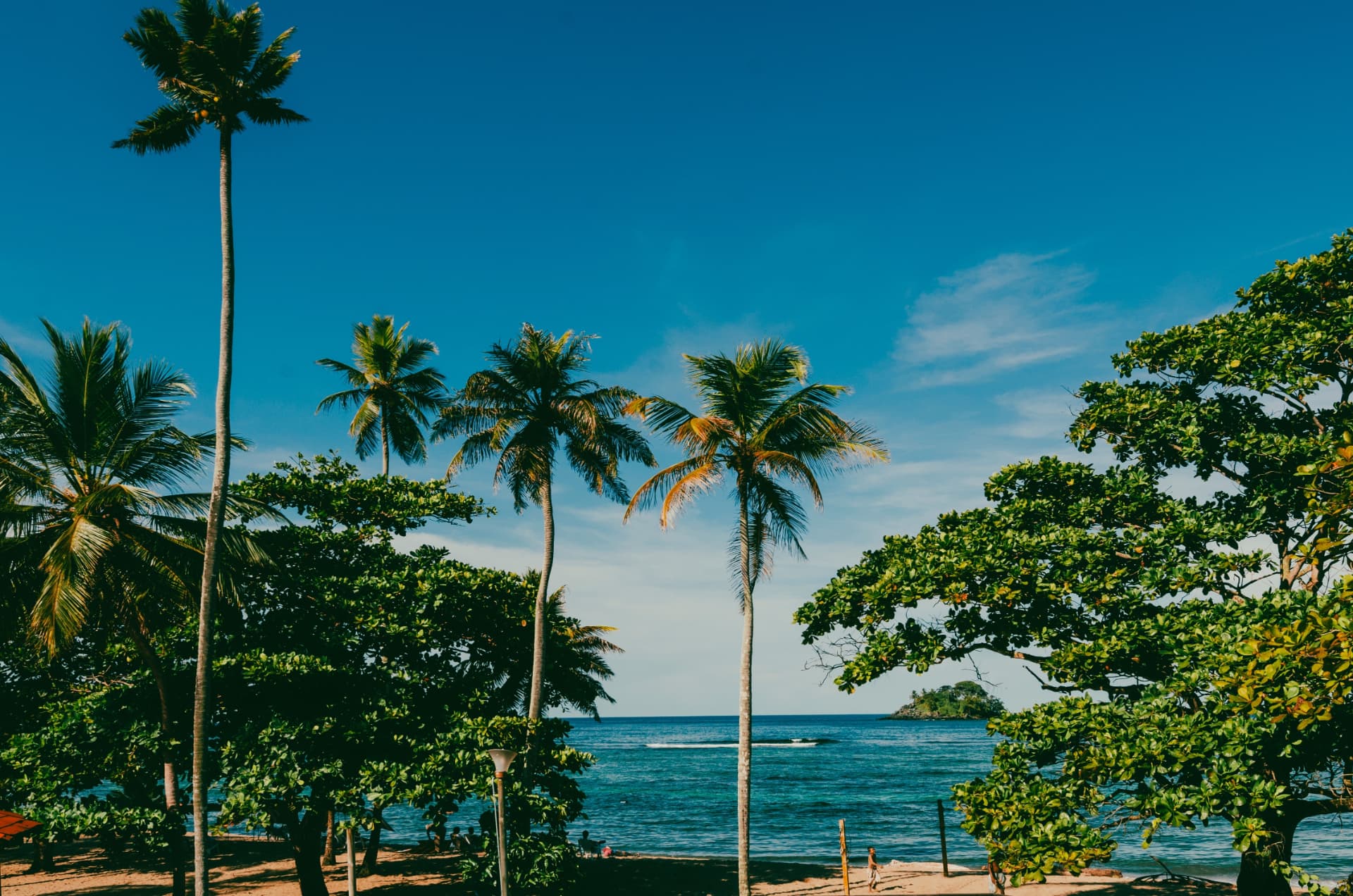
1. Capurganá: The Caribbean Village With No Road In
Check travel advice before booking
Security conditions in Chocó and around the Darién border can change. As of September 2026, some governments, including the UK FCDO, advise against all but essential travel to Capurganá and parts of Chocó. Travelling against official advice may invalidate some insurance policies. Check guidance issued by your own government before booking transport or accommodation.
Capurganá sits in Chocó near the Panama border, where rainforest reaches the Caribbean. The lack of road access is not a marketing line. Most visitors arrive by boat from Necoclí; limited flights or charter services may occasionally operate, but schedules change and should not be relied upon without direct confirmation.
Come for simple beach days, snorkelling or diving, forest walks and a trip to neighbouring Sapzurro. Sapzurro can be reached by boat or by a marked jungle-and-coastal trail: confirm current trail and security conditions locally, avoid walking alone and do not continue toward informal Darién border routes.
Practical planning
| Main gateway | Necoclí (boat); flights are limited and unreliable |
|---|---|
| Typical crossing | Open-sea launch; confirm times with the operator |
| Recommended stay | 3–4 nights, plus buffer days |
| Book ahead? | Yes in high season; verify travel advice first |
| Cash needed? | Essential — assume no working ATM or card terminal |
| Main risk | Travel advisories, rough seas and cancelled boats |
| Best for | Experienced, flexible travellers, not first trips |
Plan around the sea. Small-boat departures and journey comfort depend on weather and water conditions. Confirm the current departure point and time with your accommodation or operator, protect electronics from spray and leave slack before onward flights.
2. San Bernardo Islands: A Slower Alternative to Cartagena's Rosario Islands
The San Bernardo Islands sit within the protected Corales del Rosario y de San Bernardo National Natural Park. They lie farther south than the Rosario Islands, and many travellers reach them from Tolú. They are quieter in the sense of being less of a mass day-trip circuit, but resorts, landing points and beaches can still fill up on weekends and Colombian holidays.
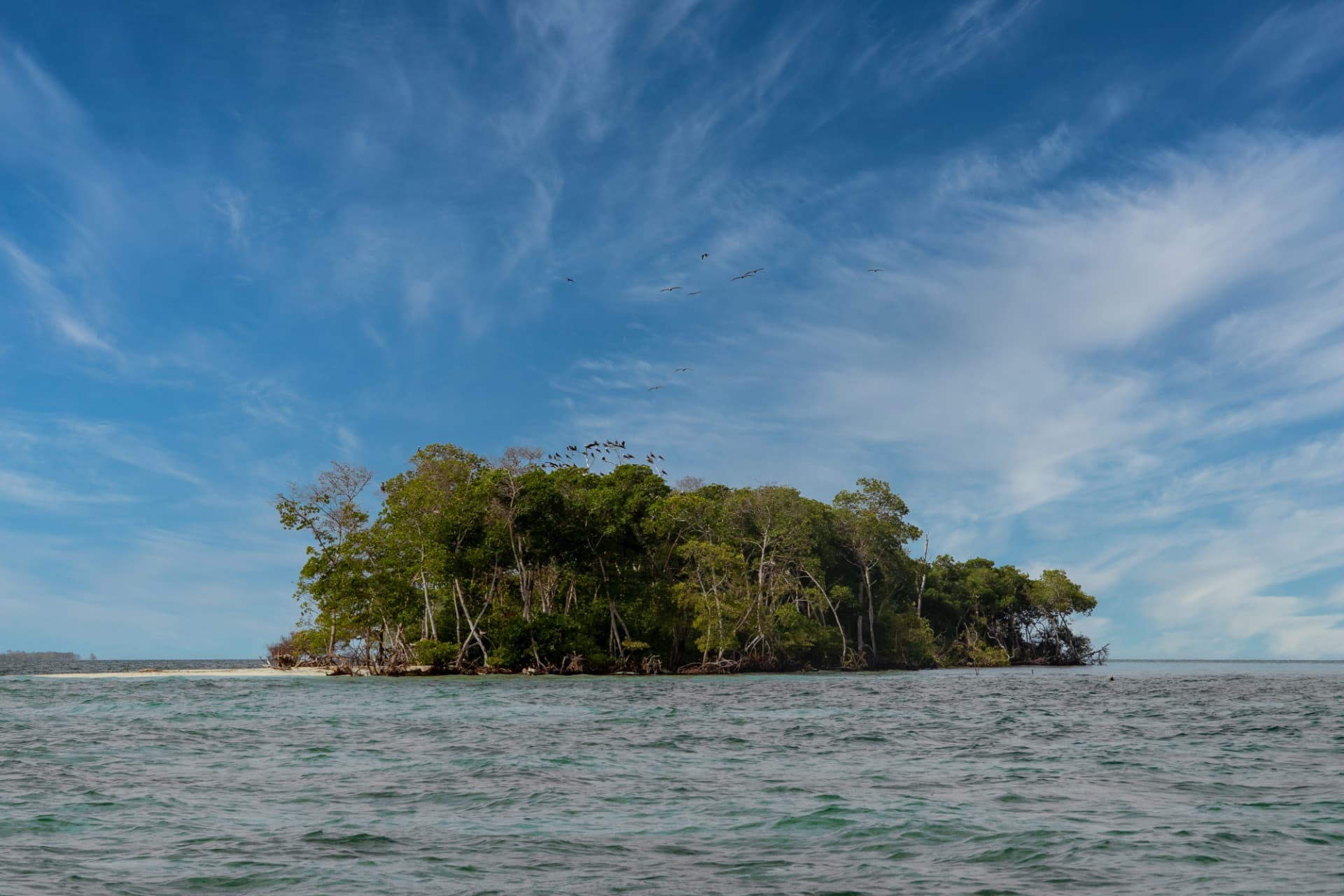
The main islands travellers choose between are Isla Múcura, with most of the hotel and hostel options; Tintipán, the largest island, with mangroves and scattered stays; Santa Cruz del Islote, a densely inhabited fishing community rather than a tranquil resort island, usually visited briefly; and several privately operated resort islands that sell all-inclusive packages.
Stay overnight if you can. Day travel consumes valuable hours, while two or three nights give you time for swimming, snorkelling and an unhurried boat outing. Before comparing room prices, ask whether drinking water, electricity hours, meals, pier transfers and the national-park or port fee are included — several islands run generators and ship in fresh water.
Practical planning
| Main gateway | Tolú (also reachable via Cartagena transfers) |
|---|---|
| Typical boat time | Confirm with your operator; sea state varies |
| Recommended stay | 2–3 nights |
| Book ahead? | Yes, especially weekends and Colombian holidays |
| Cash needed? | Strongly recommended |
| Main risk | Rough crossings and limited island services |
| Best for | Snorkelling and slow island stays |
Travel gently: never stand on or touch coral, keep distance from wildlife, carry reusable water where your accommodation permits it, and follow park and operator rules.
3. Santa Fe de Antioquia: Colonial Colombia Beyond the Caribbean
Santa Fe de Antioquia is the easiest place on this list to add to a conventional itinerary. The heritage town lies west of Medellín and is connected by road, making it suitable for a day trip or a slow overnight stay. Whitewashed houses, tiled roofs, shaded courtyards and old churches create the colonial atmosphere many visitors seek in Cartagena, but on a smaller scale. Colombia's official tourism portal covers the town's heritage sites.
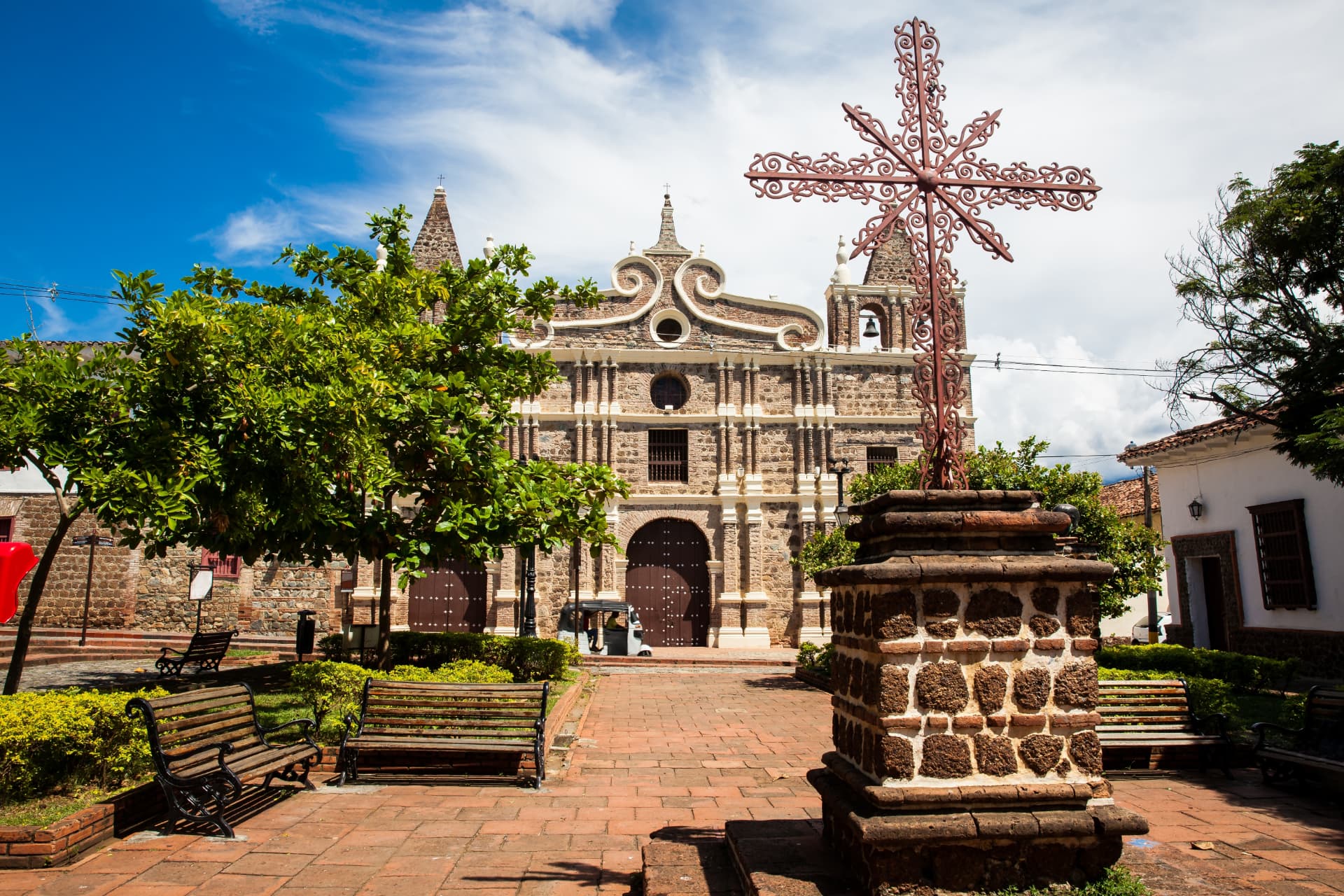
Buses depart from Medellín's Terminal del Norte, and the road journey commonly takes around 1.5–2 hours depending on traffic and road conditions. The Puente de Occidente, the historic suspension bridge over the Cauca River, sits outside the historic centre and normally requires a taxi, local vehicle or organised excursion rather than a walk.
The town is much lower and hotter than Medellín; mountain-city weather is a poor guide to what you will feel here. Walk the historic centre early, pause through the hottest part of the day, and stay for lunch and the late-afternoon light — or spend one night so the visit does not become a sequence of quick photographs from a car.
Practical planning
| Main gateway | Medellín, Terminal del Norte |
|---|---|
| Typical road time | Around 1.5–2 hours each way, traffic dependent |
| Recommended stay | Day trip, or 1 night for evening streets |
| Book ahead? | Only for weekends, holidays and pool hotels |
| Cash needed? | Useful; ATMs exist but can be busy |
| Main risk | Midday heat and slow return traffic |
| Best for | Colonial architecture without a domestic flight |
4. Tatacoa Desert: Red Canyons and Dark Skies
Tatacoa is called a desert, although geographically it is a tropical dry forest and semi-arid zone. Near Villavieja in Huila, its eroded red formations at El Cuzco and grey labyrinths at Los Hoyos look unlike Colombia's Caribbean and Andean cities. The two areas are separated by several kilometres of road — they are not one continuous walking circuit, so plan a tuk-tuk, taxi, private driver or organised tour between them.
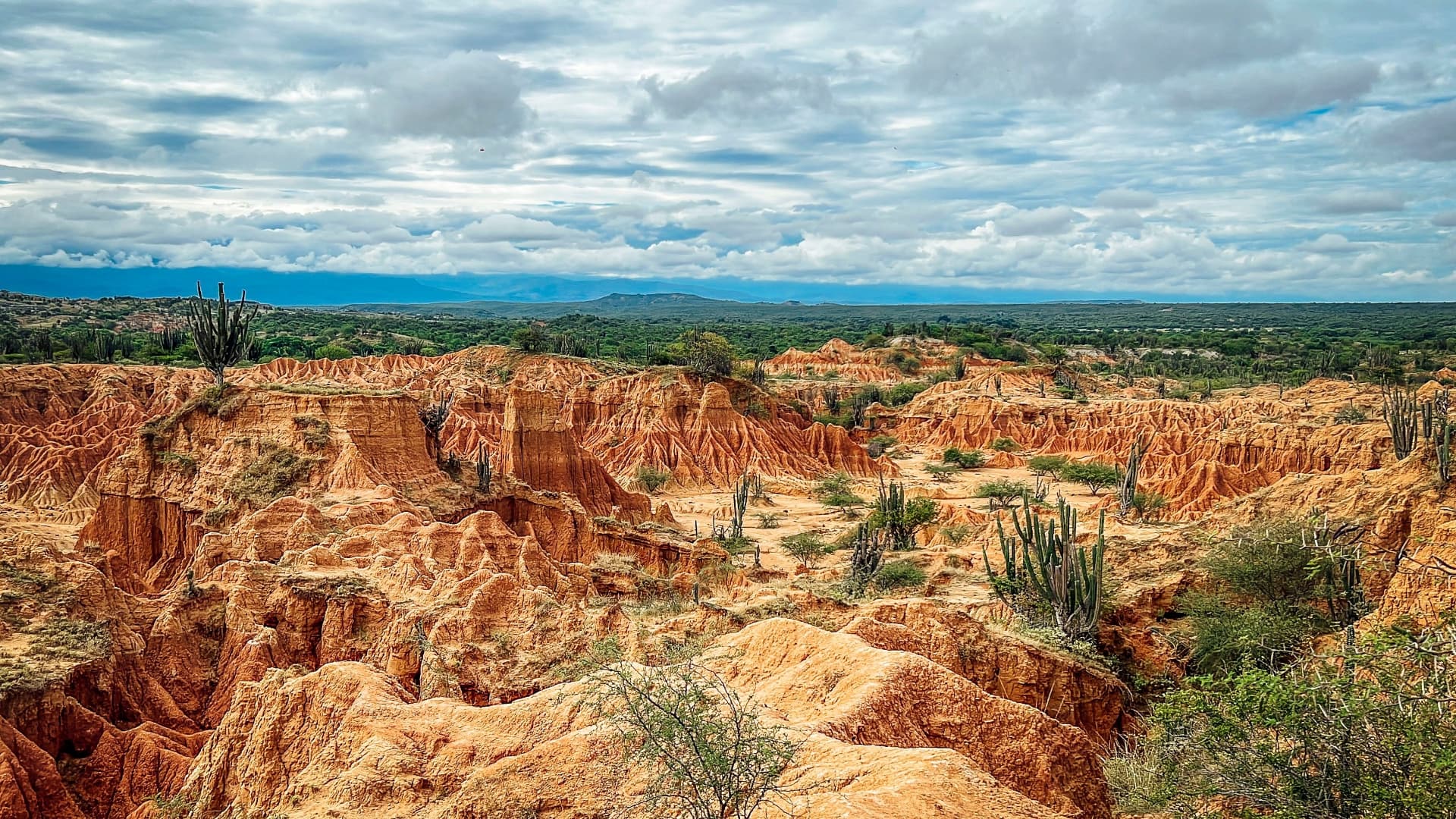
Reach the region through Neiva, the principal regional transport base, then continue by road to Villavieja and your accommodation; allow roughly an hour for that final leg and confirm it before arriving late. One overnight is the minimum for a sunset and stargazing; two nights allow a calmer visit and some weather flexibility. Colombia's tourism portal also highlights hiking, fossil landscapes and wildlife here.
Avoid long exposed walks in the middle of the day — there is almost no shade. Bring far more water and sun protection than a city day requires, walk early or late, use a local guide when conditions warrant it, and do not climb fragile ridges for a photograph. Several observatories and informal astronomy hosts operate in the area, so you are not tied to one official site; clouds, moonlight and rain can all affect what you see, and no operator can guarantee a perfect sky.
Practical planning
| Main gateway | Neiva, then Villavieja |
|---|---|
| Typical road time | Around 1 hour Neiva to Villavieja |
| Local transport | Tuk-tuk, taxi, driver or tour between El Cuzco and Los Hoyos |
| Recommended stay | 1–2 nights |
| Book ahead? | Yes for holidays and moonless-weekend stargazing |
| Cash needed? | Yes — limited card acceptance in Villavieja |
| Main risk | Heat, sun exposure and cloudy night skies |
5. Aguas Claras: An Amazon Reserve Near Leticia
Reserva Natural Aguas Claras is an ecotourism reserve around 20 kilometres from Leticia in the Colombian Amazon, along the road toward Tarapacá. Colombia's official tourism portal describes forest walks, birdwatching, fishing and bathing in the stream.
The attraction is the forest itself: trails, clear natural water and the chance to experience the Amazon with local guidance. Independent visits along the road are possible, but final access, opening arrangements and water conditions vary — contact the reserve or a Leticia operator shortly before you go rather than following an old pin or short-form video.
Practical planning
| Main gateway | Leticia, Amazonas |
|---|---|
| Distance | Around 20 km along the road toward Tarapacá |
| Recommended stay | Half or full day within a 3–5 night Amazon trip |
| Book ahead? | Contact the reserve or a local operator to confirm access |
| Cash needed? | Yes |
| Main risk | Variable access, weather, insects and river conditions |
Important reality check
Do not add Aguas Claras as a spare afternoon during a Caribbean trip. Reaching Leticia normally means a separate flight and an Amazon stay. Give the region several days and follow local guidance for weather, insects, water safety and forest access.
How to Combine These Colombian Destinations
These five places are spread across a very large country. The best itinerary is regional, not a checklist.
- Caribbean route, 5–7 days: travel through Tolú for the San Bernardo Islands and pair it with coastal towns rather than chaining small boats in a single day. Add Capurganá only if current travel advice supports it.
- Antioquia break, 1–2 days: add Santa Fe de Antioquia to a Medellín stay. This is the simplest option if you mainly want preserved colonial streets without another domestic flight.
- Southern landscapes, 2–3 days: base the Tatacoa visit around Neiva and Villavieja, with at least one night for the sky.
- Amazon journey, 4–5 days: fly to Leticia and treat Aguas Claras as one locally arranged experience within a broader rainforest visit.
If your holiday is shorter than two weeks, choose one of these routes. Colombia's distances, mountains and weather make rushed multi-region itineraries look far easier on a map than they feel on the ground.
What Social-Media Shorts Usually Leave Out
- Lesser-known does not mean empty. Weekends, Colombian holidays and dry-season dates can be busy even in smaller destinations.
- Remote means fewer backups. Missed boats, rough seas, delayed flights and cash shortages matter more away from major cities.
- Check current travel advice. Border, jungle and coastal conditions change. Read your own government's advisory and ask trusted local hosts about the exact route you plan to take.
- Carry cash and offline details. Do not assume card terminals, mobile data or ATMs will work on islands or in remote villages.
- Do not geotag fragile spots carelessly. Follow marked paths, use established operators and leave coral, rock formations and forest pools as you found them.
Official Planning Sources
Use these starting points, then confirm local transport directly shortly before travel:
- UK FCDO travel advice for Colombia (including Chocó and Capurganá)
- US State Department Colombia travel advisory
- Colombia Travel: Santa Fe de Antioquia
- Colombia Travel: Tatacoa Desert
- Colombia Travel: Rosario and San Bernardo islands
- Colombia National Parks: Corales del Rosario y San Bernardo
- Colombia Travel: Reserva Natural Aguas Claras
Frequently Asked Questions
Are these places day trips from Cartagena?
No. The San Bernardo Islands are the most natural Caribbean addition, normally reached via Tolú rather than Cartagena. Capurganá requires its own boat journey, Santa Fe de Antioquia fits a Medellín itinerary, Tatacoa belongs with Neiva, and Aguas Claras is near Leticia in the Amazon.
Is Capurganá safe to visit right now?
Security conditions in Chocó and near the Darién border can change quickly, and as of September 2026 some governments, including the UK FCDO, advise against all but essential travel to Capurganá and parts of Chocó. Travelling against official advice can invalidate some insurance policies, so check your own government's current guidance before booking.
Which is easiest to add to a first Colombia trip?
Santa Fe de Antioquia is the simplest if you are already visiting Medellín. Buses leave from Terminal del Norte and the road journey commonly takes around 1.5 to 2 hours depending on traffic, so it works as a day trip.
Is the Tatacoa Desert a real desert?
Tatacoa is commonly called a desert, but it is technically a tropical dry forest and semi-arid landscape. Its eroded red and grey formations, open horizons and dark skies create the desert-like experience visitors come for.
Where is Aguas Claras in Colombia?
Reserva Natural Aguas Claras is an ecotourism reserve roughly 20 kilometres from Leticia in the Colombian Amazon, reached along the road toward Tarapacá. It is not close to Cartagena or the other stops in this guide.
How long would it take to visit all five places?
Allow roughly three weeks once travel days are included. A better first trip is to choose one region: the San Bernardo Islands for the Caribbean, Santa Fe with Medellín, Tatacoa with Bogotá or Neiva, or Aguas Claras with an Amazon stay in Leticia.
Do I need cash in these destinations?
Yes. Card terminals, mobile data and ATMs are unreliable on the islands and in smaller villages. Withdraw cash in Cartagena, Medellín, Neiva or Leticia before you travel on, and carry enough for boats, entrance fees, meals and tips.
When is the best time to go?
Drier months generally make boat crossings and desert walks more comfortable, while Colombian holidays and weekends fill accommodation in smaller places. Conditions vary sharply by region, so check the forecast for your specific destination rather than the country as a whole.