Where to buy Colosseum tickets
Start with the official Colosseum site, then compare Tiqets, Klook, and Trip.com — trusted booking partners — if official tickets are sold out.
OfficialColosseum SiteFace-value timed tickets from the official source.Official TicketsPartnerTiqetsTours and skip-the-line tickets when official slots are gone.Check PricesPartnerKlookAnother strong backup for sold-out dates and tours.Check PricesPartnerTrip.comUseful for comparing availability and bundles.Check PricesThe myth to discard first
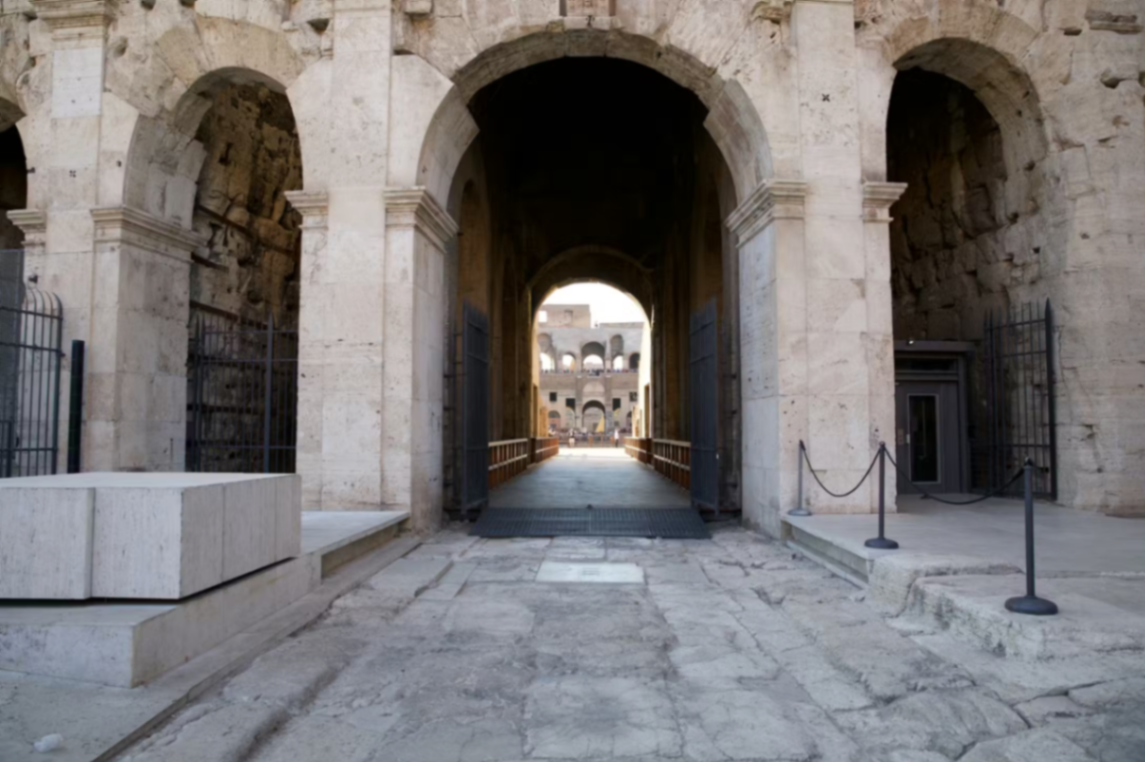
Sperone Valadier is not the modern name for Porta Libitinaria. They are different locations. The archaeological park's own evening itinerary has visitors enter through the Valadier gate and then, later in the tour, stop at the entrance to Porta Libitinaria as a point of interest inside the monument.
So the premise that a hidden second visitor gate is simply the ancient death gate under a new name is incorrect — and any advice built on it (queue shortcuts, "gate closes strictly at", "reduced tickets must use the other gate") is unreliable.
How the modern entrances work
The Colosseum is entered through a small number of controlled access points operated by the Parco archeologico del Colosseo. Official visitor information refers to the entrance near the Arch of Constantine as the Sperone Valadier entrance — named after the nineteenth-century buttress built by Giuseppe Valadier to stabilise the monument's western end. It is a normal, signed entrance, not a shortcut.
Which access point you use is determined by the ticket product you bought, its time slot and the park's operational arrangements on the day — not by choosing a faster-looking gate.
Your booking confirmation and ticket state the entrance and the meeting arrangements. Those instructions override anything written on a blog, including this one.
Every visitor passes a security check. There is no published data showing that one entrance is consistently faster, and we do not publish queue-time estimates for individual gates.
Guided products set their own meeting points, which may be away from the entrance itself. Check the operator's instructions rather than assuming.
Which tickets include arena access
| Product | What it covers |
|---|---|
| Standard 24-hour ticket | Colosseum tiers plus the Roman Forum–Palatine Hill within the 24-hour window set out in the ticket conditions. No arena floor or underground. |
| Arena access product | Adds the reconstructed arena-floor level. Sold as a separate, limited official product with its own conditions. |
| Underground / full-experience product | Adds the hypogeum, normally with an accompanied itinerary. Limited release, sells out earliest. |
| Evening programme | A separate ticketed event on specified evenings in its published season — not ordinary extended admission. Its itinerary is where Porta Libitinaria appears as a stop. |
Tickets are nominative and you must carry identification. From 9 May 2026 a name change may be requested once only, by midnight seven days before the visit, and only for specified reasons such as a clerical error or a serious documented circumstance; some special products, including night visits, do not allow changes at all.
What Porta Libitinaria actually was
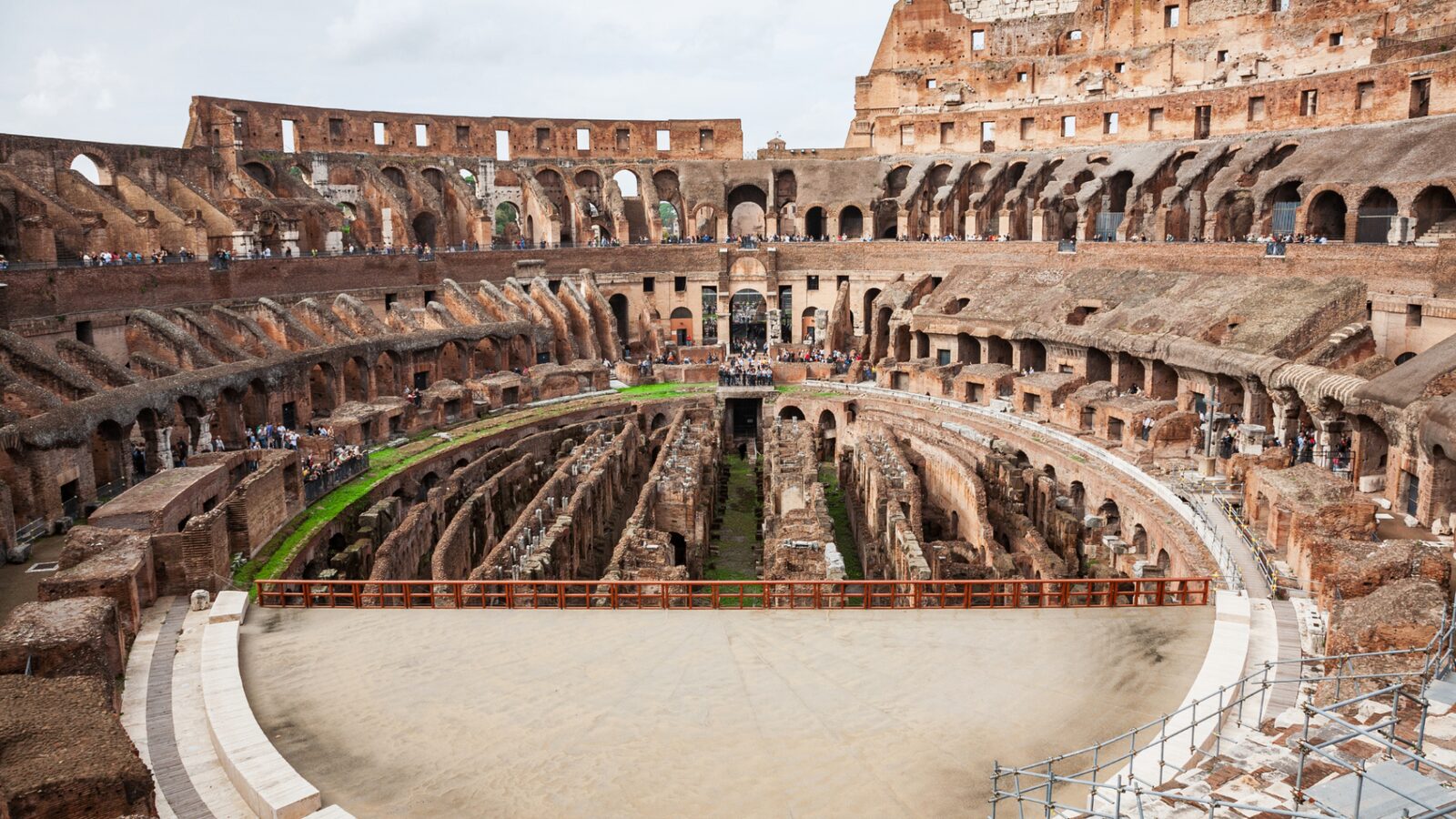
Porta Libitinaria is an ancient passage associated with the western end of the amphitheatre. Its name derives from Libitina, the Roman goddess connected with death and funerary rites, and it is commonly linked with the removal of dead or badly wounded combatants from the arena.
That association is widely repeated, but it belongs to scholarly interpretation of the building's circulation and of Roman funerary vocabulary rather than to a securely documented ceremonial record. We present it as the prevailing interpretation, not as an established fact — and the popular English label "Gate of Death" is a modern nickname rather than an ancient title.
Can you see it? Porta Libitinaria features as a stop on the park's evening itinerary. It is not a visitor entrance you can choose, and standard daytime tickets do not include it.
Practical rules that actually hold
Go to the entrance named on your ticket, at the time slot named on your ticket.
Bring the identity document matching the name on the ticket.
Allow extra time for security, especially in peak season and around midday slot changes.
If your product is guided, follow the operator's meeting instructions, which may differ from the entrance you would otherwise use.
If anything on your booking contradicts a third-party guide, trust the booking.
Frequently asked questions
Is there a secret second entrance to the Colosseum?
No. There are several controlled access points, all signed and operated by the archaeological park. The entrance near the Arch of Constantine is officially the Sperone Valadier entrance and is part of normal visitor arrangements.Is Sperone Valadier the Gladiator's Gate?
No. The park's own evening itinerary distinguishes them: visitors enter through the Valadier gate and separately stop at the entrance to Porta Libitinaria inside the monument.Which entrance is fastest?
We do not claim one. All visitors pass security and queue conditions vary by day, hour and slot. Use the entrance on your ticket.Do reduced-price tickets use a different entrance?
Entrance assignment follows the product and operational instructions, not the price band. Read your booking.Can I see Porta Libitinaria on a normal visit?
It appears on the park's evening itinerary rather than on standard daytime admission.Related Colosseum guides
Colosseum Tickets Guide 2026
Every official product, price and condition.
Common Colosseum Booking Mistakes
Name rules, validity windows and free-day realities.
Sources and further reading
- Parco archeologico del Colosseo — official visitor information
- Parco archeologico del Colosseo — plan your visit (entrances, rules, services)
- Parco archeologico del Colosseo — official ticketing portal
- Parco archeologico del Colosseo — evening programme (A Night at the Colosseum)
Facts on this page last checked: August 2026. Opening hours, prices and access rules in Rome and Vatican City change — always confirm on the official site before booking.