Ostia Antica vs Pompeii: Which Day Trip Is Better?
Updated · 9 min read · By the AllTrips Rome editorial team
Travellers in Rome often debate whether to spend a full day travelling to Pompeii or stay closer to the city for Ostia Antica. Both are remarkably preserved Roman cities, but they demand very different levels of effort.
Ostia Antica
Easier half-day trip, €18 full ticket, ~45 minutes from central Rome.
Check Ostia Antica ticketsPompeii
Full day trip, ~€20 entry plus high-speed rail, world-famous preservation.
Check Pompeii day tripsOstia Antica vs Pompeii at a glance
| Factor | Ostia Antica | Pompeii |
|---|---|---|
| Total travel time from Rome | 40–60 minutes from central Rome via Metro B and the Metromare train | 2–3 hours each way. High-speed train to Naples plus local rail, or a direct coach tour |
| Arrival station | Ostia Antica (Metromare): a 5-minute walk to the entrance | Pompei Scavi–Villa dei Misteri (Circumvesuviana) is near the entrance; Pompei (Trenitalia) is in the modern town, requiring a 15–20 min walk |
| Ticket cost 2026 | €18 full ticket (valid 8 days). Check official links for reduced/free categories | From €20 (Pompeii Express). Add Rome–Naples rail and Naples–Pompeii local fares |
| Site size | 34 hectares excavated; 2–3 hours for a good overview of main streets | 44 hectares excavated (66 total); 3 hours for highlights, 5–6 for a thorough visit |
| Preservation | Stronger on multi-storey brickwork, warehouses, and ground-level mosaics | Vivid interiors, wall paintings, casts, and household objects preserved by ash |
| Crowds | Quiet; you can often walk ancient streets without encountering crowds | Very busy; major highlights are congested during peak season mornings |
| Heat and shade | Some shade from pines and tall brickwork, but many areas are exposed; sea breeze is not guaranteed | Highly exposed with little shade; stone streets radiate heat in summer |
| Accessibility | Partial step-free routes; permitted vehicle access by arrangement. Station access is separate | Signposted 'Pompeii for All' route (>3.5 km); arrival station access varies |
| Suitability for children | Short journey and space to explore under supervision; easier for a half-day | Better for older children; the long travel day and heat can be taxing for younger kids |
| Guided-tour value | Useful extra; prepared independent visitors do well with official signage | Adds significant value for scale/detail, though prepared visitors can manage independently |
What your day costs
Total expenditure depends on your booking time and travel style. Use official links to confirm current pricing for your dates.
Ostia Antica Components
- • Local Rail: Standard Metromare journey (check ATAC for fares)
- • Site Ticket: Official entry fee (see Official Tickets)
- • Food: On-site café or nearby Ostia village restaurants
- • Optional: Audio guide or map at the entrance
Pompeii Components
- • High-Speed Rail: Rome to Naples (check Trenitalia or Italo)
- • Local Transfer: Naples to Pompei Scavi or Pompei station
- • Site Ticket: Official entry fee (see Official Tickets)
- • Optional: Professional guide or audio guide
Travel and Arrival
Ostia Antica is within Rome's local transport zone. Take Metro B to Piramide and transfer to the Metromare train. The Ostia Antica station is a 5-minute walk from the entrance.
Pompeii requires a 240 km trip. The fastest route is high-speed rail to Naples, then a transfer to local services. Pompei Scavi–Villa dei Misteri (Circumvesuviana) is right by the Porta Marina gate. The Pompei (Trenitalia) station in the modern town is roughly a 15–20 minute walk to the park entrance.
Heat, Shade and Comfort
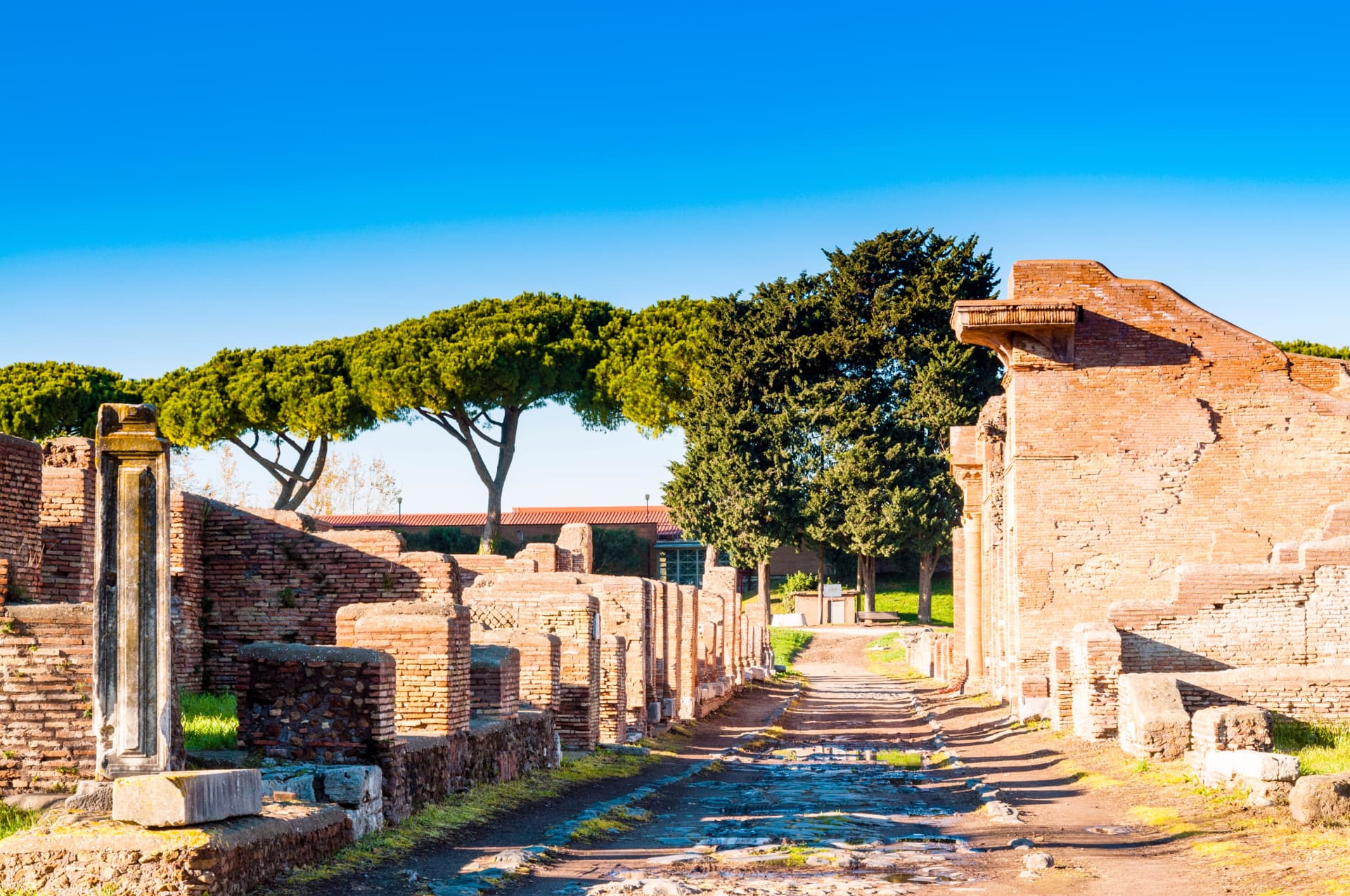
Ostia has umbrella pines and tall brick walls that offer some shade, though large parts of the site remain exposed. While its coastal location can bring a breeze, this is not guaranteed during summer heatwaves.
Pompeii is notoriously exposed. Its wide streets and low-walled ruins offer minimal shade, and the volcanic stone radiates heat. Midday visits in July and August can be physically demanding.
Accessibility
Pompeii offers the "Pompeii for All" itinerary, a signposted route of over 3.5 km designed for visitors with reduced mobility. However, access at arrival stations varies. Ostia Antica publishes specific accessible routes and vehicle access arrangements. Note that the transition from the Metromare station to the Ostia site involves navigating public stairs/ramps which may present separate challenges.
Exploring with Children
Ostia's low crowds and shorter journey make it the more forgiving choice for families. It offers plenty of space to explore under supervision without the density of Pompeii. For Pompeii, the long travel day and intense heat are better suited to older children or teenagers with a specific interest in archaeology.
Guided vs. Independent Visits
A guide adds significant value at Pompeii by navigating the vast grid and identifying functional buildings (like bakeries or laundries) that look similar to the untrained eye. However, prepared independent visitors using official maps can still have a great experience. At Ostia, the site is easier to navigate independently, making a professional guide a nice extra rather than a core recommendation.
The Verdict
Choose Ostia Antica if:
- You want a low-stress, half-day trip (45 mins travel).
- You prefer quiet ruins where you can walk alone.
- You are travelling with young children.
- You want to stay within the Rome transport network.
Choose Pompeii if:
- Seeing the world's most famous Roman city is a priority.
- You are willing to commit 10–12 hours to a round trip.
- Vivid wall paintings and plaster casts are essential to you.
- You are prepared for crowds and heat.
Visiting both is recommended only for archaeology enthusiasts with a longer itinerary. For a standard 4-day Rome stay, Pompeii's travel time may be better spent enjoying the city's own layers.
Book Ostia AnticaBook Pompeii Day TripFrequently asked questions
Is Ostia Antica as good as Pompeii?
It is less famous but offers a genuine Roman city experience with warehouses, apartment blocks, and a theatre. It is much quieter and easier to reach from Rome. For many, Ostia delivers a comparable archaeological experience without the 5-hour round-trip travel to Pompeii.
Can you visit Pompeii as a day trip from Rome?
Yes, but expect a full 10–12 hour day. Use a high-speed train to Naples and transfer to local rail. The Pompei Scavi station is closest to the park; the Trenitalia Pompei station in the modern town requires a 15–20 minute walk to reach the ruins.
How much does it cost to visit Ostia Antica from Rome?
A full ticket is €18 in 2026. Travel requires a standard Rome city transport ticket (Metromare is included in the city zone). Budget for lunch and optional audio guides or site maps.
Which is better with children — Ostia Antica or Pompeii?
Ostia is generally easier due to the shorter travel time and space to explore under supervision. Pompeii is a massive, crowded site that suits older children and teenagers who can handle a long day in the sun.
Do you need a guide for Pompeii?
A guide adds significant value by helping you navigate the 44-hectare site and find key houses. However, prepared independent visitors with official maps and apps can also have a successful visit.
Can you do both Ostia Antica and Pompeii on the same trip?
Visiting both is recommended only for archaeology enthusiasts with a longer stay. It is not an automatic recommendation for a standard 4-day Rome trip, as Pompeii alone requires a very long travel day.
Some links on this page are affiliate links. If you book through them we may earn a commission at no extra cost to you.