What kind of garden visit is this?
Villa Medici is a historic estate, not a public park. Its gardens and historic apartments are explored on a guided visit, while temporary exhibitions can be visited independently with the relevant ticket. The official FAQ describes a seven-hectare estate with areas reserved for artist and researcher residencies and events.
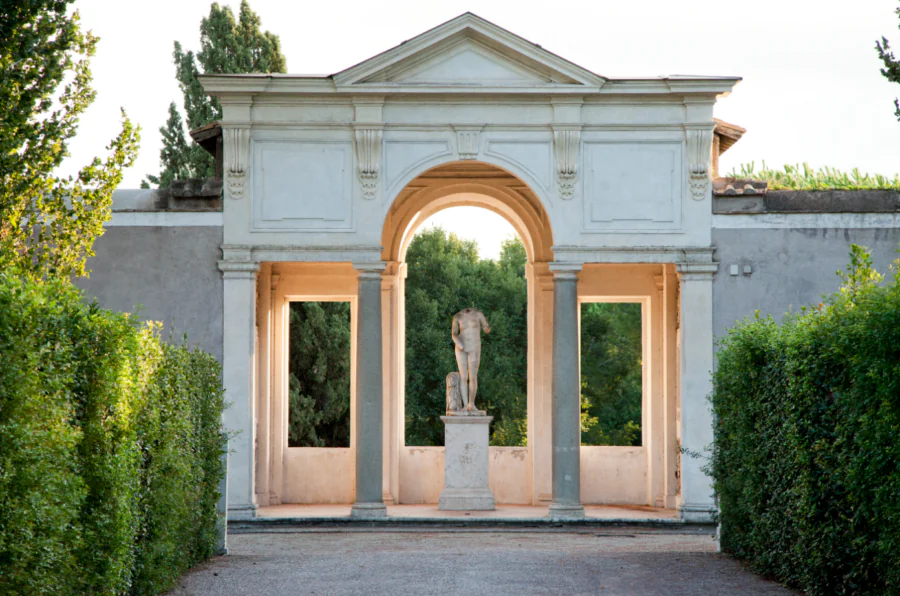
The interest lies in the way architecture, planting, sculpture and decorated rooms belong together. Rather than counting attractions, notice how a doorway frames a statue, how the façade faces the garden, and how the hillside offers views of Rome. Your guide sets the route and pace.
The garden façade: look beyond the twin towers
The garden-facing façade is one of the villa’s most recognisable features. Reliefs, sculpture niches and architectural detail give it a different character from the entrance seen from the street. Step back where the guide permits and look at the whole composition first, then compare individual panels and figures.
The façade took its present form after Cardinal Ferdinando de’ Medici bought the villa in 1576; the architect Bartolomeo Ammannati completed the building begun for Cardinal Ricci by Nanni di Baccio Bigio and his son Annibale Lippi. Ferdinando, a passionate collector, had ancient Roman reliefs and garlands set into the wall like a stone album of his collection, so the house itself announced his taste for antiquity. The lions by the loggia are copies; the originals went to Florence’s Loggia dei Lanzi in the 18th century. Some pieces on view today are later replacements or casts.

Historic planting, framed views and the belvedere
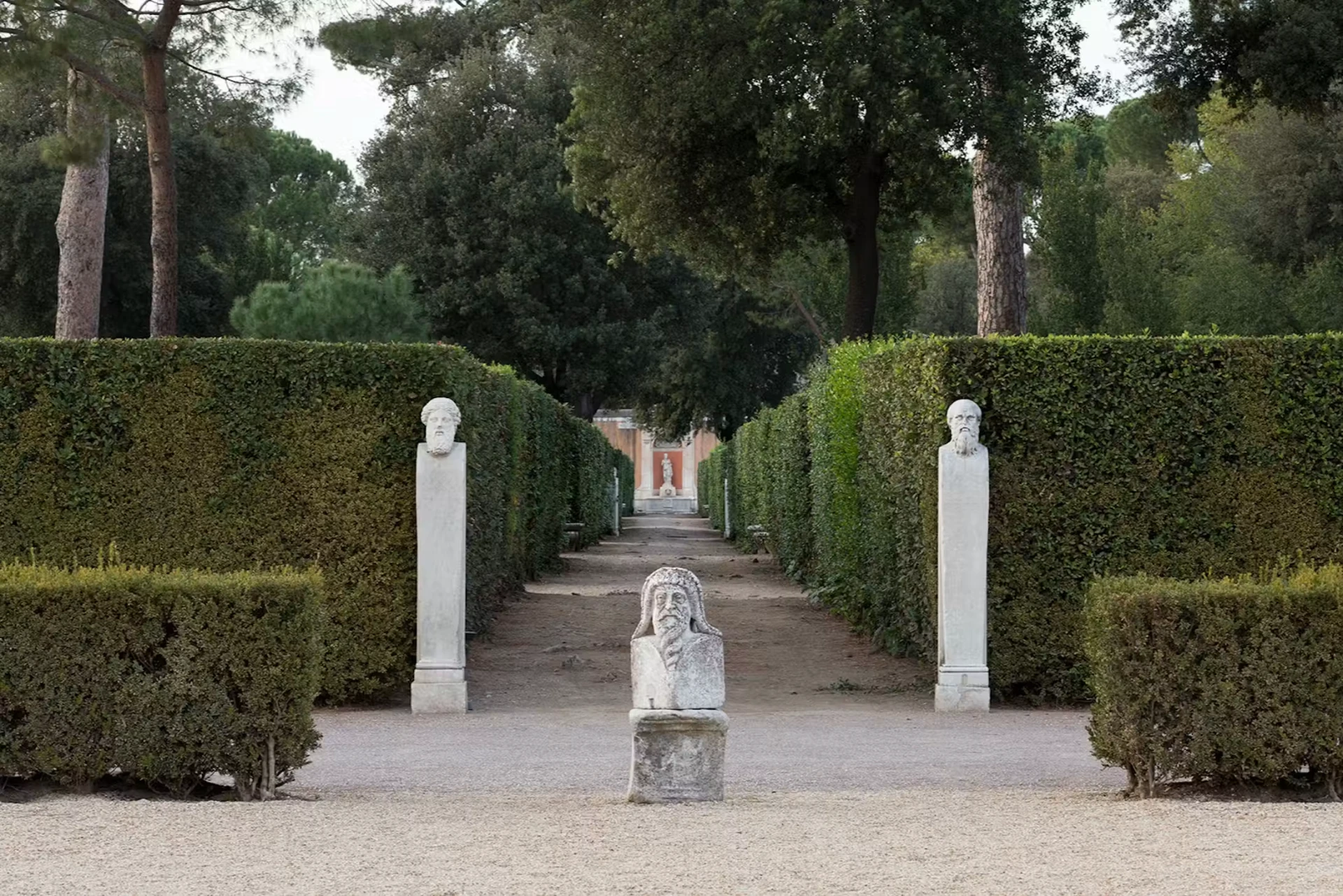
The gardens combine formal planting with mature trees and architectural viewpoints. The official FAQ names umbrella pines, holm oaks and elms among the historic tree heritage, and discusses the regeneration of species such as boxwood and laurel. The layout is a grid: straight gravel avenues divide the ground in front of the façade into square hedged compartments, while herms and statues mark the axes and the wooded bosco rises behind. The effect is to lead your eye along each avenue to a sculpture or a view.
The villa also describes an ongoing conservation project for its citrus collection, including oranges, lemons, bitter oranges and citrons. These details connect the gardens to living horticulture: maintenance, disease prevention and renewal are part of preserving the place.
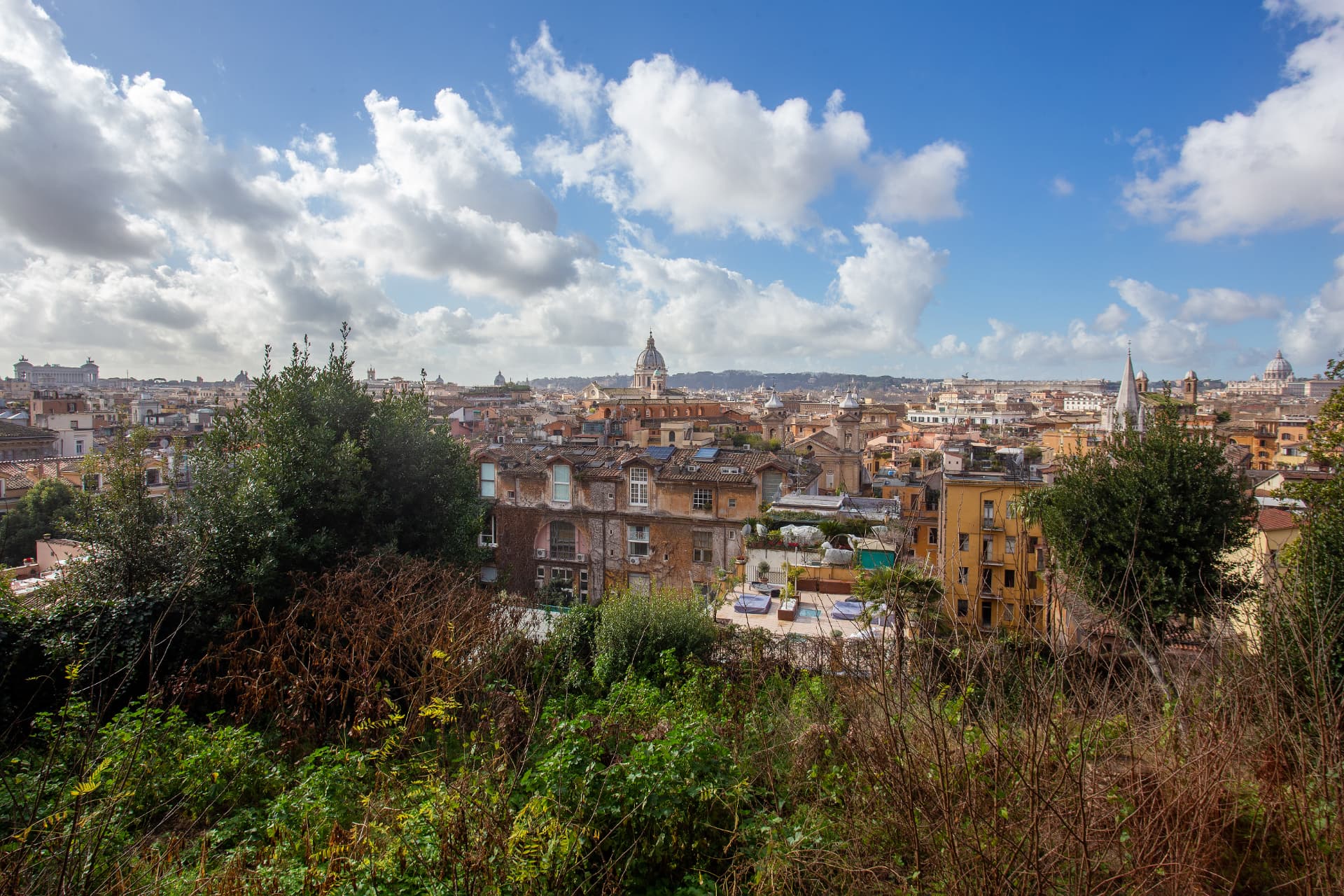
The belvedere gives a wide outlook across central Rome. The visit page names Cleopatra’s loggia and other garden features.
Historic apartments and the Bird Room
The guided visit includes the historic apartments of Cardinal Ferdinando de’ Medici, with painted ceilings among the features shown on the official Visit page. Look up as well as at furnishings or objects: room decoration explains the residence in a different way from a sequence of museum masterpieces. Do not expect a complete inventory of rooms or entry into the Academy’s residential areas.
Ferdinando’s studiolo, also called the Bird Room, is a specifically named highlight of the tour. A studiolo is an intimate study rather than a grand reception hall; the smaller scale changes how visitors engage with its painted decoration. Jacopo Zucchi painted it in 1576–77 as a garden pergola: the walls and vault show a trellis with dozens of birds, plants and small animals, so the room feels open to the sky. Interior photos appear on the villa’s own Visit page.
Casts, sculpture and a restoration to know about
The gypsotheque is the villa’s collection of casts. It belongs to the Academy’s history of studying and reproducing artworks, a different purpose from displaying only unique originals. Academy residents drew from casts of famous ancient statues to learn anatomy and proportion, so a room of copies shows how artists were trained in Rome.
The Niobid group illustrates the myth of Niobe, who boasted that her many children made her greater than the goddess Leto; Apollo and Artemis killed them in revenge. The ancient statues found in Rome were moved to Florence in the 18th century, and the garden group today is a set of copies. The official Visit page marked it as under restoration at our October 2026 check.

Enjoying the visit without assuming unrestricted access
Much of the standard 90-minute tour is outdoors. Bring clothing for rain or heat and shoes suitable for paths and stairs. Stay with the guide, avoid touching sculpture or planting, and follow posted signs and staff directions about photography.
The historic apartments are not wheelchair accessible, the garden is reached by a steep ramp and there are no public lifts. Contact Villa Medici before booking; full details are in our ticket guide.
Choose the ticket for the spaces you want: see guided tours and exhibition access. If gardens are your main interest but controlled access does not suit you, the free Pincio promenade or Villa Borghese park is a different kind of outing, not an equivalent visit to this estate.
Official sources
Visitor rules, rates and inclusions checked October 9, 2026. Programme and access arrangements can change.
Frequently asked questions
- Can I walk around Villa Medici gardens independently?
- Ordinary garden and historic-room visits are guided. Exhibition-only tickets do not give unrestricted garden access; event arrangements may differ.
- What is the Bird Room?
- It is Ferdinando de’ Medici’s studiolo, a historic study specifically named among the official guided-tour highlights.
- Will I see the Niobid group?
- The official Visit page marked the group as undergoing restoration when checked October 9, 2026. Confirm current access rather than expecting an unobstructed display.
- Are the historic apartments wheelchair accessible?
- No. The official accessibility information lists them as inaccessible and says there are no public lifts. Contact the villa about other accessible spaces.