Viterbo Day Trip From Rome: Train, Walking Route & Costs
Updated · 11 min read · By the AllTrips Rome editorial team
Verdict: Viterbo rewards a specific kind of traveller — the one who wants medieval streets without crowds, papal history away from the Vatican, and a walled city that still feels lived in rather than curated. It is not the fastest or most famous excursion from Rome: the regional train takes around two hours each way, so plan a full day. If you have one day to spare and want a famous cathedral with a simpler journey, Orvieto is the better choice. If you have already done the obvious trips, Viterbo is the more interesting one.
Is Viterbo worth visiting from Rome?
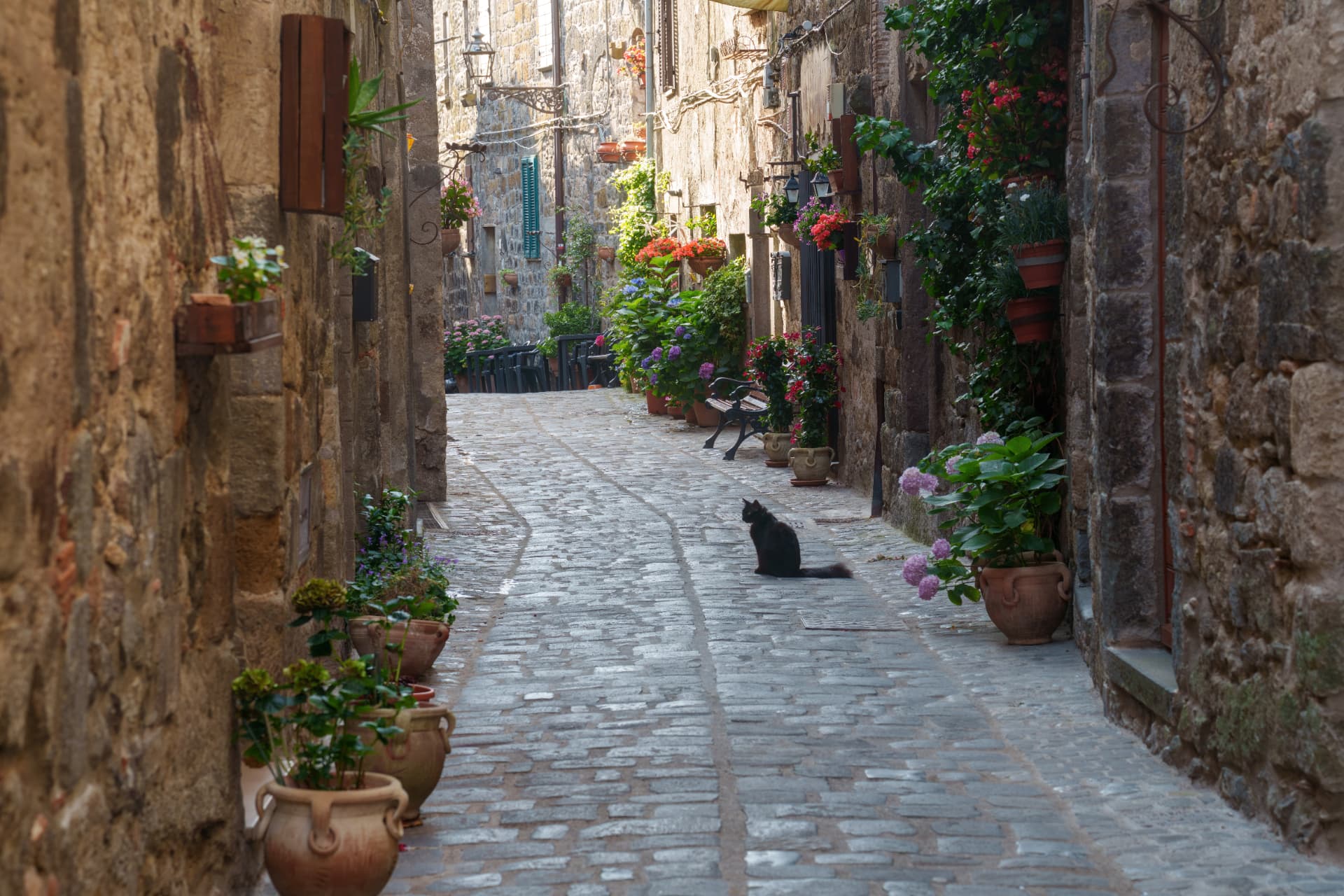
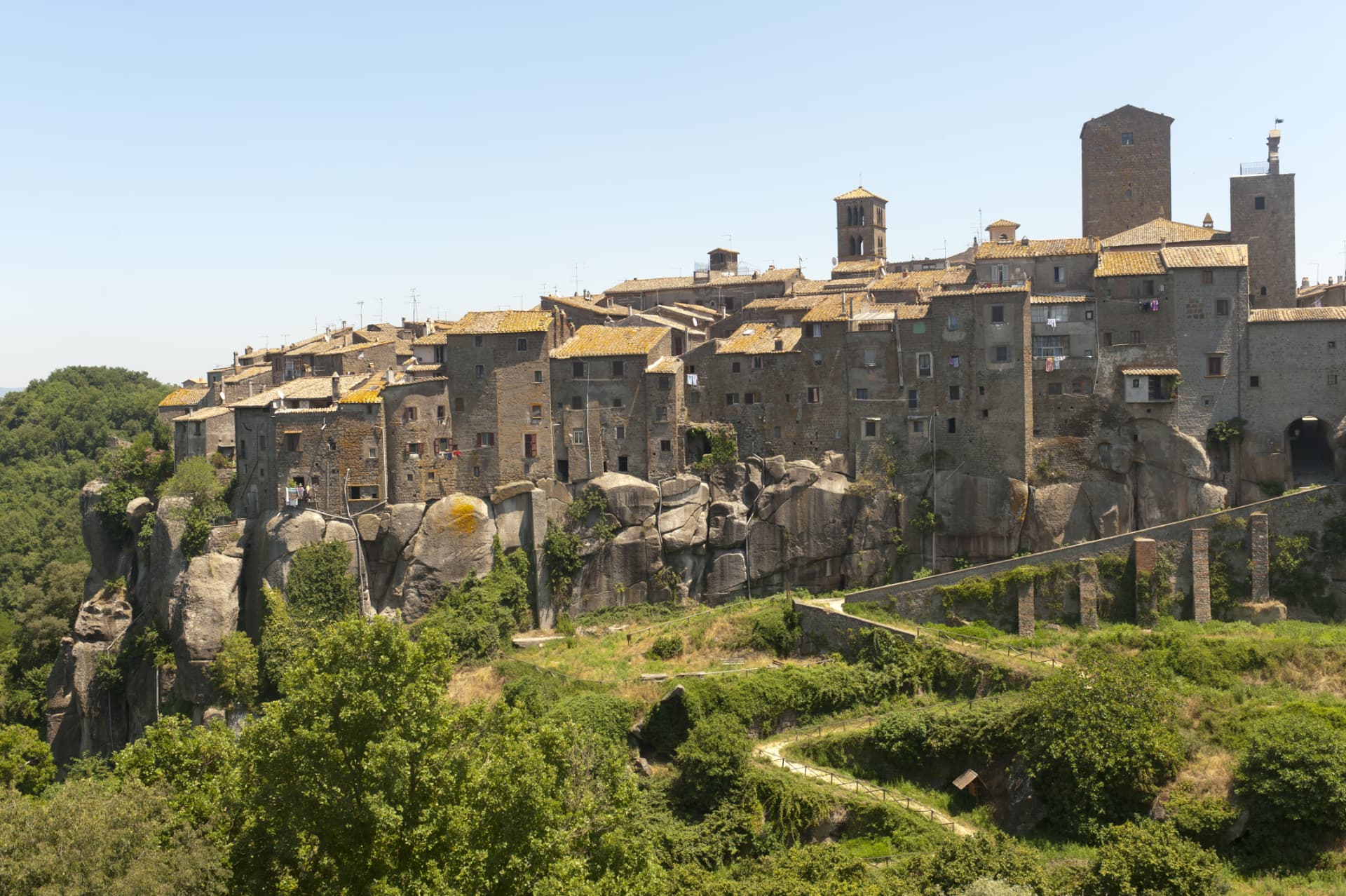
Viterbo has one of the best-preserved medieval quarters in Lazio. The San Pellegrino district is a dense grid of dark peperino stone houses with external staircases, covered passageways and arches thrown between buildings — a few streets long, but continuously medieval in a way almost nothing near Rome is.
The Palace of the Popes is the other reason to come. For two decades in the 13th century the papal court was based in Viterbo rather than Rome, and its Gothic loggia and great hall are where the longest papal election in history took place — the 1268–1271 election that helped produce the formal conclave system. Next to it, the cathedral of San Lorenzo sits on a quiet square beside a striking Gothic bell tower built in alternating bands of stone.
Add the fountains — Viterbo's squares are punctuated by spiky medieval fountains that are a local architectural signature — the intact ring of city walls, and the thermal springs outside town, used since Roman times. Queues are normally far shorter than at Rome's major attractions, especially on weekdays: on a quiet weekday, parts of San Pellegrino can feel almost empty.
Rome to Viterbo at a glance
| Travel time | Roughly 1h45–2h each way by regional train |
|---|---|
| Stations | Porta Romana (south, best for San Pellegrino) and Porta Fiorentina (north) — compare both |
| Trip length | Full day; 4–5 hours inside the walls |
| Difficulty | Easy once there — compact centre, but cobbles, steps and slopes |
| Best for | Repeat visitors, medieval architecture, papal history, crowd-free days |
| Advance booking | Not usually needed for the city; restaurants on Sundays are worth reserving; check the spa's Tuesday outdoor-pool closure |
Checked September 2026. Confirm timetables with Trenitalia and Cotral before travelling.
How to get from Rome to Viterbo
Regional train (recommended). Search Trenitalia for your date using either Viterbo Porta Romana or Viterbo Porta Fiorentina as the destination. Useful services commonly call at Roma Ostiense, Roma Trastevere, Roma San Pietro and Valle Aurelia. A journey shown from Roma Termini may involve a connection, so inspect the complete itinerary rather than assuming it is a direct train. There is no high-speed option — this is a regional line the whole way, and the timetable is the main constraint on your day. Buy the ticket at a machine or in the app, follow the validation instructions attached to your ticket, and photograph the return departures when you arrive.
Choosing your departure station. If you are staying near the Vatican, Trastevere or southern Rome, boarding at San Pietro, Trastevere or Ostiense may save time. Pick whichever stop on your chosen service is easiest from your accommodation rather than travelling to a single station by default.
The Roma Nord line. A separate suburban railway runs from Roma Piazzale Flaminio to its own Viterbo terminus. It is not the Trenitalia FL3 service: different tickets, many stops, occasional replacement or altered services, and a slower run overall. It is generally not the best choice for a straightforward tourist day trip.
Bus. Cotral coaches serve Viterbo from the Saxa Rubra area on the northern edge of Rome. Because you first have to get out to the departure point, it rarely beats the train for a day trip, though it can be useful for onward travel within northern Lazio.
Which Viterbo station should you use?
Choosing the wrong station can add unnecessary walking and create confusion on the return. Not every station with "Viterbo" in the name serves the same side of the medieval centre, and one of them is not even on the same railway.
Porta Romana
Usually the most atmospheric arrival for this itinerary. Enter through Porta Romana and walk through San Pellegrino before continuing towards the cathedral and the Palace of the Popes. The approach into the centre is uphill. Not every service calls here, so check the stops listed for your train.
Porta Fiorentina
Convenient for the northern side of the centre and for some train schedules, and it is where most FL3 services terminate. Allow roughly 10–20 minutes on foot to Piazza del Plebiscito, depending on the route and your pace. It works well as the return station after walking through the city from south to north.
The Roma Nord terminus
The separate Roma Nord suburban railway from Roma Piazzale Flaminio ends at its own Viterbo terminus north-east of the centre, labelled differently by different maps and journey planners. It is not the Trenitalia FL3 service, it uses different tickets, it makes many stops, and it can run altered or replacement services — check the operator's own information rather than assuming it is interchangeable.
Compare both Trenitalia stations when searching. A useful route is to arrive at Porta Romana and return from Porta Fiorentina, avoiding unnecessary backtracking — but confirm that your chosen trains actually call at each station before relying on it.
One-day Viterbo itinerary
| Time | Step |
|---|---|
| Around 08:00 | Regional journey from the most convenient Rome station; check the actual service and any required connection |
| Around 10:00 | Arrive Viterbo Porta Romana; walk in through the gate |
| 10:15 | San Sisto and the southern walls just inside Porta Romana |
| 10:35 | Fontana Grande, the large medieval fountain on the way into the old quarter |
| 10:55 | San Pellegrino quarter — the medieval streets, arches and staircases |
| 11:45 | Santa Maria Nuova and the lanes towards the cathedral hill |
| 12:15 | Cathedral of San Lorenzo and the Palace of the Popes (Colle del Duomo complex) |
| 13:30 | Lunch near the cathedral quarter or Piazza delle Erbe |
| 15:00 | Piazza del Plebiscito and the northern centre |
| 16:15 | Walk beside a surviving section of the city walls, then coffee |
| Late afternoon | Train back from Porta Fiorentina, at the northern edge of the centre |
Arrive south, leave north. Walking Porta Romana → San Pellegrino → cathedral → Piazza del Plebiscito → Porta Fiorentina avoids backtracking. Only plan it this way once you have checked that trains actually call at both stations at the times you need; otherwise use one station in both directions.
Seasonal closures: opening days and hours at the Palace of the Popes vary seasonally and can include a weekly closing day. Check the official calendar before using this itinerary.
Illustrative timings. Check actual departures on the day — the gaps between regional trains can be long.
Palace of the Popes: is it worth visiting?
Yes, and mostly for one room. Between 1257 and 1281 the papal court was based in Viterbo, and the palace's great hall hosted the election that dragged on for nearly three years — the prolonged election that helped lead to formal rules requiring cardinals to remain enclosed during future papal elections. Standing in that hall, with the celebrated openwork loggia and its fountain outside, gives the story a physical place.
The visit is short: 45 minutes to an hour for the palace, longer with the cathedral and the museum. Admission is generally sold as a Polo Monumentale Colle del Duomo complex ticket covering the Palace of the Popes and associated cathedral and museum areas. Inclusions and exhibitions can change, so check the current official product before visiting. Advance booking is normally unnecessary on an ordinary weekday, but check availability for weekends, holidays and special events. As checked in October 2026, the adult ticket is €10 and includes the Palace, cathedral sacristy, museum and audio guide. April to October it opens daily 10:00–19:00; November to March it closes on Tuesdays and has split weekday hours. Confirm on the official Colle del Duomo site before you travel.
Prices and opening hours are set locally and change with the season; verify before travelling — checked September 2026. Background on the site is in our Palace of the Popes guide.
Can you visit Viterbo's thermal baths on a day trip?
Only if you make them the point of the day. The springs are outside the city, not in it, and there are two different propositions.
Organised thermal facilities. Spa complexes with pools, changing rooms, loungers and treatments, sold by the day or half day — Terme dei Papi is the best-known commercial option near the city. Comfortable and reliable, normally requiring a booking at weekends, and located a few kilometres from the walls.
Outdoor thermal pools. Open-air sulphur pools in the countryside outside town, in the Bullicame area and at the Piscine Carletti, with no staff, no lockers and minimal facilities. Some have historically been free to access, but availability, water conditions and municipal restrictions can change — verify that a specific pool is officially open before travelling. Bring flip-flops, leave valuables behind, and expect a strong sulphur smell that stays on swimwear.
Without a car, commercial spas may offer transport information, while public transport to the outdoor pools can be limited; a taxi or a prearranged transfer is often the practical option. Realistically: medieval city or baths on a day trip from Rome, not both. Combining them properly is the best argument for staying overnight in Viterbo.
Viterbo or Orvieto from Rome?
| Factor | Viterbo | Orvieto |
|---|---|---|
| Journey | Regional only, around 2 hours | Direct regional or Intercity service, commonly around 1h15–1h30 |
| Arrival | Walk straight in through the gate | Funicular from the station up to the town; check for any temporary suspension notices before travelling |
| Headline sight | Palace of the Popes | One of Italy's great cathedral facades |
| Atmosphere | Working city, few tourists | Polished, more visited |
| Best for | Medieval streets, repeat visitors | First-timers, easiest logistics |
Short version: choose Orvieto for a first, easier day trip; choose Viterbo if you have already visited the better-known destinations and want fewer tourists. Full details in our Orvieto day trip guide.
How much does a Viterbo day trip cost?
| Regional train | A fixed regional fare each way; the largest unavoidable cost of the day |
|---|---|
| Colle del Duomo complex ticket | €10 adult admission (checked October 2026) covering the Palace of the Popes, cathedral sacristy, museum and audio guide |
| Lunch | Generally better value than central Rome, though restaurants on the main squares charge more |
| Thermal baths | A commercial spa is a separate day-entry charge; outdoor pools that are open have historically been free |
| Local transport | Nothing inside the walls; a bus or taxi fare only if you go out to the springs |
| Guided tour instead | A single per-person price that normally bundles transport and admissions |
Cost structure checked September 2026. Fares, admissions and seasonal charges change — confirm live prices before booking.
Practical advice
- Sundays and holidays run a reduced timetable. Fewer trains in both directions, and longer gaps in the middle of the day. Check the return before you commit to a late lunch.
- The cobbles are serious. Worn basalt paving, stepped lanes and short slopes. Not a place for smooth soles, and hard work with a pushchair.
- Lunch closures are real. Kitchens typically stop serving mid-afternoon, and smaller churches and museums often close for a couple of hours in the middle of the day. Eat by 13:30 and save the outdoor wandering for the closure window.
- Plan the return with a buffer. With trains spaced an hour or more apart, missing one costs you an evening. Be at your departure station 15 minutes early.
- Summer heat. Summer days are hot and the stone streets hold the heat. In summer, prioritise indoor sights during the hottest open hours, but confirm midday closures before arranging the sequence.
Affiliate link. You pay the same price and we may earn a small commission, which funds this site's research.
Want a guided introduction to Viterbo?
Compare available Viterbo walking tours and attraction tickets, checking the meeting point and which admissions are included before you book.
Compare Viterbo tours and ticketsFrequently asked questions
How long do you need in Viterbo?
Four to five hours inside the walls covers the Palace of the Popes, the cathedral, the San Pellegrino quarter and a proper lunch. With around two hours of travel in each direction, that makes a full day out of Rome rather than a half day.
Is Viterbo walkable?
Yes — the walled historic centre is compact and almost everything of interest is within 15 minutes on foot. The surfaces are the issue rather than the distances: worn basalt cobbles, stepped lanes and short slopes down to the cathedral quarter. Flat shoes make a real difference.
Porta Romana or Porta Fiorentina?
Both Trenitalia stations are walkable. Porta Romana is convenient for San Pellegrino and a south-to-north route through the medieval centre; Porta Fiorentina is convenient for the northern centre and may offer a better return time. Compare both before booking, and note that the separate Roma Nord railway has its own Viterbo terminus with different tickets.
How much does a Viterbo day trip cost?
It is one of the cheaper day trips from Rome: a fixed regional train fare each way, a single Colle del Duomo complex admission (€10 for adults, checked October 2026) covering the Palace of the Popes and associated cathedral and museum areas, and lunch. A commercial thermal spa or a guided tour is a separate cost. Confirm live prices before booking.
How long is the train from Rome to Viterbo?
Generally around 1 hour 40 minutes to two hours each way, depending on the Rome station you board at and the service pattern. There is no faster option — the whole route is regional.
Can you visit Viterbo's thermal baths without a car?
Not easily. The springs sit a few kilometres outside the walls, so you need a local bus with a thin timetable, a taxi or a pre-arranged transfer. Terme dei Papi sells several pool packages online or on site without a reservation (treatment packages are booked separately), and its outdoor pool normally closes on Tuesdays for maintenance. The free natural pools have no facilities or staff. For a relaxed day we recommend choosing either the medieval centre or the baths; doing both is possible but rushed.
Can you visit Viterbo without a car?
The city itself, yes — the walled centre is entirely walkable from either Trenitalia station. The thermal springs are the exception: the main spa areas lie a few kilometres outside town and need a local bus or taxi, which is the part most day-trippers underestimate.
Can you combine Viterbo and Civita di Bagnoregio?
Not comfortably in one day by public transport. Civita has no railway station and is reached by a sparse regional bus to Bagnoregio, then a walk across the footbridge. The connection from Viterbo exists but the timetable is built for residents, and you would spend the day watching the clock. Take a car or a tour if you want both.
Is Viterbo better as an overnight stay?
It is if the thermal baths interest you, or if you want to use it as a base for northern Lazio — Civita, Bomarzo's monster park, Lake Bolsena and Tarquinia's Etruscan tombs are all nearby and awkward as day trips from Rome. For the medieval centre alone, one day is enough.