Where to Stay in Venice: Hotels for Couples, Families and First-Timers
Updated · 10 min read · By the AllTrips editorial team
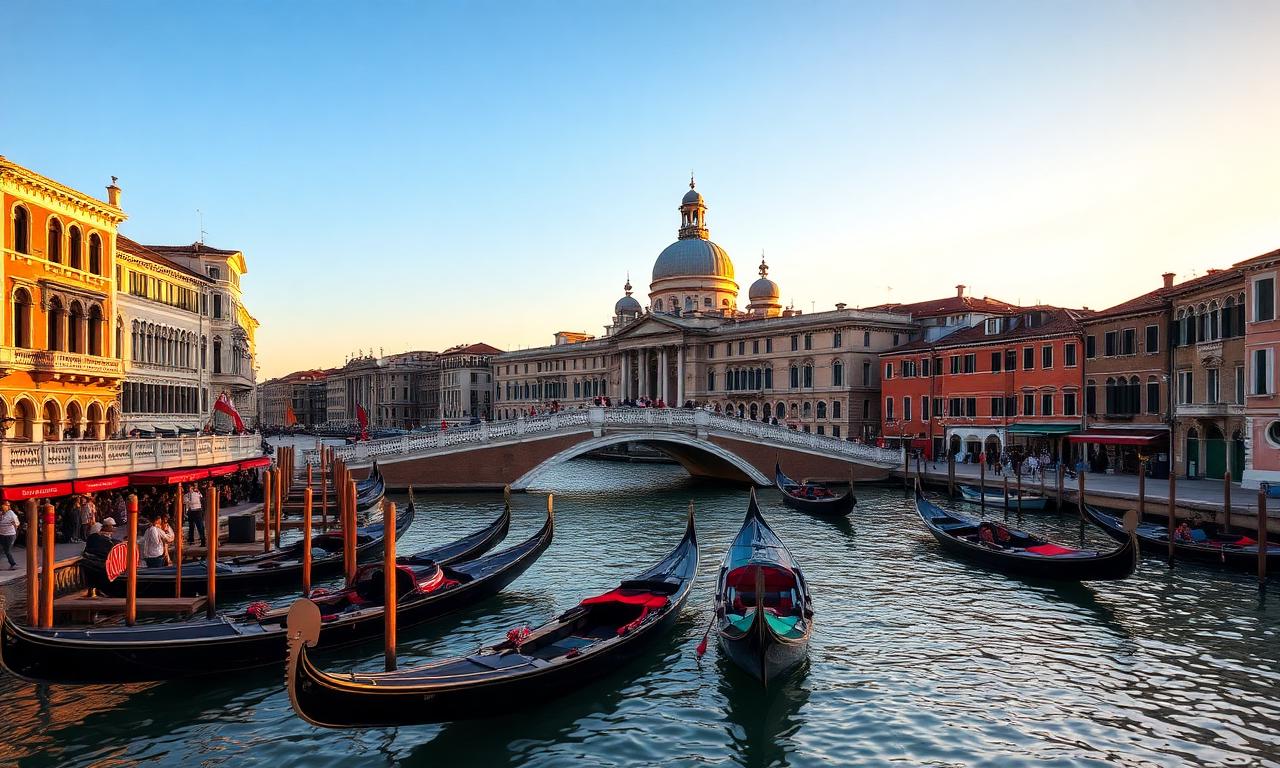
Short answer: couples love Dorsoduro, families do best in Cannaregio or Castello, first-timers should stay near San Marco or the Rialto, and Mestre is the budget choice. Whatever you pick, check three things before booking: a lift, the number of bridges from the nearest waterbus stop, and the tourist tax.
Which Venice area suits you?
Venice is small, so every central district is walkable to the main sights. The real difference is atmosphere, price and how easy it is to arrive with luggage. Price levels below are general patterns, not quotes — check live rates for your dates.
| Area | Best for | Feel | Price level | Luggage arrival |
|---|---|---|---|---|
| San Marco | First-timers, short stays | Busy by day, calm late | Highest | Waterbus or water taxi; bridges likely |
| San Polo / Rialto | First-timers, food lovers | Lively market area | High | Rialto waterbus stop nearby |
| Dorsoduro | Couples, art lovers | Quiet, local evenings | Mid to high | Waterbus along the Grand Canal or Zattere |
| Cannaregio | Families, train arrivals | Local, relaxed | Mid | Easiest from Santa Lucia station |
| Castello | Families, repeat visitors | Residential, green spaces | Mid | Waterbus along the waterfront |
| Giudecca | Couples wanting calm | Peaceful island, city views | Mid to high | Waterbus every trip |
| Lido | Summer families | Beach resort | Mid | Waterbus or water taxi |
| Mestre | Budgets, road trips | Mainland city | Lowest | Car, bus or train; no bridges |
Where should couples stay in Venice?
Stay in Dorsoduro for quiet evenings and sunsets on the Zattere, or in a quieter lane of San Marco to be close to everything. Giudecca suits couples who want calm and views back to St Mark's and don't mind a short boat ride.
Best areas: Dorsoduro, quieter corners of San Marco, Giudecca
What to look for: A canal or rooftop view, a small boutique hotel or a converted palazzo, and a central but quiet lane so evenings feel romantic rather than crowded.
- "Canal view" can mean a side canal; check photos and the room type, not just the hotel description.
- Breakfast on a terrace or altana (wooden rooftop deck) is a real highlight — filter for it.
- Giudecca is across the water from St Mark's: calmer, with sunset views back over the city, but you'll ride a waterbus each time.
Where should families with kids stay in Venice?
Cannaregio and Castello are the easiest family bases: more local, a little cheaper and with some open space. Pick a hotel near a waterbus stop with few bridges on the way. The Lido adds beaches in summer, and Mestre is the budget fallback.
Best areas: Cannaregio, Castello, the Lido, or Mestre for tighter budgets
What to look for: Family rooms or apartment-style suites, a lift, an easy walk from a waterbus stop and few bridges between you and the stop.
- Count bridges between the waterbus stop and the hotel — each one means carrying a stroller up and down steps.
- Castello has some of Venice's few playgrounds and green spaces; the Lido adds beaches in summer.
- Rooms with a kitchenette help with early dinners; many Venetian kitchens open around 19:00.
- Children under 10 pay no tourist tax in Venice; ages 10–16 get a reduction.
Where should first-time visitors stay in Venice?
Stay in San Marco or San Polo near the Rialto Bridge, within 10–15 minutes' walk of the main sights. That lets you see St Mark's Square early and late, when day-trip crowds have gone. Expect higher prices and smaller rooms in return.
Best areas: San Marco, San Polo near the Rialto
What to look for: A location within 10–15 minutes' walk of St Mark's Square and the Rialto Bridge, so you can see them early and late without day-trip crowds.
- The most central hotels are often the most expensive and smallest; a few minutes away you usually get more space for the price.
- Check the nearest waterbus stop name before booking — it matters on arrival day.
Where should you stay in Venice on a budget?
Mestre and Marghera on the mainland are the cheapest, with trains to Venezia Santa Lucia in about 10 minutes. Simple guesthouses in Cannaregio near the station are the best-value way to sleep in the historic centre itself.
Best areas: Mestre, Marghera, or Cannaregio near the station
What to look for: Mainland hotels with a direct train or tram to Venice, or simple guesthouses near Santa Lucia station.
- Mestre to Venezia Santa Lucia is roughly 10 minutes by train, and the tram also runs to Piazzale Roma.
- You lose the magic of Venice at night, but you can often get a much larger room for the same money.
- Mainland stays pay a lower tourist tax than the historic centre.
Where should travellers with reduced mobility stay in Venice?
Choose a hotel on the Grand Canal with its own water landing, or one near Piazzale Roma or Santa Lucia station. Confirm there is a lift and a step-free entrance, and ask how many bridges lie between the hotel and the nearest waterbus stop.
Best areas: Hotels on the Grand Canal or near Piazzale Roma and Santa Lucia station
What to look for: A lift, a step-free entrance or private water landing, and a short route to a waterbus stop.
- Ask the hotel directly how many steps or bridges are on the route from the nearest stop.
- A water taxi to a hotel with its own landing avoids most bridges.
What are the most popular hotel types in Venice?
The five main types are palazzo hotels, boutique hotels, guesthouses, apartments and Lido or island resorts. Couples tend to pick palazzos and boutiques; families usually do best with apartments or resort-style hotels with family rooms.
Palazzo hotels occupy historic palaces, often on the Grand Canal, with painted ceilings and Venetian glass chandeliers. They're the classic splurge for couples and special occasions.
Boutique hotels are small, design-led and usually tucked into quieter lanes. Expect personal service and fewer facilities.
Guesthouses and B&Bs (locande) are the best-value way to sleep in the centre. Rooms can be simple and reception hours limited, so tell them your arrival time.
Apartments suit families and longer stays thanks to kitchens and extra space; check how check-in works, as many have no 24-hour desk.
Lido and island resorts add gardens, pools or beaches — popular with families in summer — in exchange for a waterbus ride into the centre.
What should you expect from a Venice hotel?
Expect character over space: older buildings, compact rooms, sometimes no lift, and a walk or boat ride with your bags. Add a nightly tourist tax paid at the hotel. Plan for these and a Venice hotel is a highlight, not a surprise.
Are Venice hotel rooms small?
Often, yes. Many hotels occupy old palaces and townhouses, so rooms and bathrooms are often compact and layouts are irregular. Check the room size in square metres when it's listed.
Do all Venice hotels have a lift?
No. Historic buildings can have steep staircases. If stairs are a problem, filter for a lift or ask before booking.
How do you get to your hotel with luggage?
On foot or by boat — there are no cars in the historic centre. You'll walk or take a boat, then cross a few bridges with your luggage. Some hotels arrange porters for a fee.
Do you pay a tourist tax at Venice hotels?
Yes. In the historic centre it ranges from about €1 to €5 per person per night depending on the hotel's stars, for up to 5 consecutive nights; it's usually paid at the hotel and not included in the booking price.
Do Venice hotels have water taxi entrances?
Only some. Some hotels have their own landing for water taxis. It's a great arrival, but most guests arrive on foot.
Are Venice hotels noisy or hot?
They can be. Summers can be hot and humid; check for air conditioning from June to September. Rooms facing busy lanes, squares or the Grand Canal can be noisy early in the morning with deliveries and boats.
Does high water (acqua alta) affect hotels?
Occasionally. From late autumn to winter, some low-lying areas can flood briefly at high tide. Hotels are used to it; ground-floor rooms are the most affected.
When are Venice hotels most expensive?
During big events. Carnival, the Biennale, the Film Festival and summer weekends push prices up. Weekday stays and November–March (outside Carnival) are usually cheaper.
Tourist tax rates and exemptions: City of Venice tourist tax information (checked October 2026). The tourist tax is separate from the day-trip access fee; overnight guests are generally exempt from the access fee but should check the official access fee website for their dates.
What should you check before booking a Venice hotel?
- Name of the nearest waterbus stop and the walk from it
- Lift or stairs — and how many floors
- Room size, and whether "canal view" means the Grand Canal or a side canal
- Air conditioning for June–September stays
- Family rooms or connecting rooms for kids; cots and extra beds
- Reception hours and luggage storage after check-out
- Free-cancellation rate for peak dates
Plan the rest of your Venice trip
- Venice Weekend Escape: a 3-day plan — airports, transfers, an hour-by-hour itinerary and day maps.
- Venice as a day trip from Rome — if you only have one day.
Frequently asked questions
What is the best area to stay in Venice for couples?
Dorsoduro is a favourite for couples: quieter evenings, the Zattere waterfront for sunsets and short walks to the main galleries. Quieter lanes of San Marco suit couples who want to be at the heart of things, while Giudecca offers calm and views back over the city in exchange for a short waterbus ride.
Where should families stay in Venice?
Cannaregio and Castello are good family bases: more local, a little more affordable and with some open spaces. Choose a hotel close to a waterbus stop with few bridges on the way. The Lido works well in summer for beach time, and Mestre is the budget option with easy train access.
Is it better to stay in Venice or Mestre?
Stay in Venice itself if you can — mornings and evenings without day-trip crowds are the best part of the city. Mestre is cheaper and roomier and only about 10 minutes away by train, so it makes sense for tight budgets, late arrivals or road trips.
How much is the Venice tourist tax?
In historic-centre hotels the tourist tax ranges from about €1 to €5 per person per night depending on star rating, charged for up to 5 consecutive nights. Children under 10 are exempt and there are reductions for ages 10–16 and for mainland and island stays. Check the City of Venice website for current rates.
Do Venice hotels have lifts?
Many do, but not all. Older buildings, small guesthouses and some boutique hotels have only stairs. If you have heavy luggage, children in strollers or reduced mobility, filter for a lift and ask the hotel about steps and bridges from the nearest waterbus stop.
How far in advance should I book a Venice hotel?
For Carnival, Biennale opening weeks, the Film Festival and summer weekends, book several months ahead. For quieter months, a few weeks is often enough. Free-cancellation rates let you lock in a room early and keep comparing.
Some links on this page are affiliate links. If you book through them we may earn a commission at no extra cost to you.