Amsterdam · Landmark bridge
Magere Brug: Amsterdam's Skinny Bridge Over the Amstel
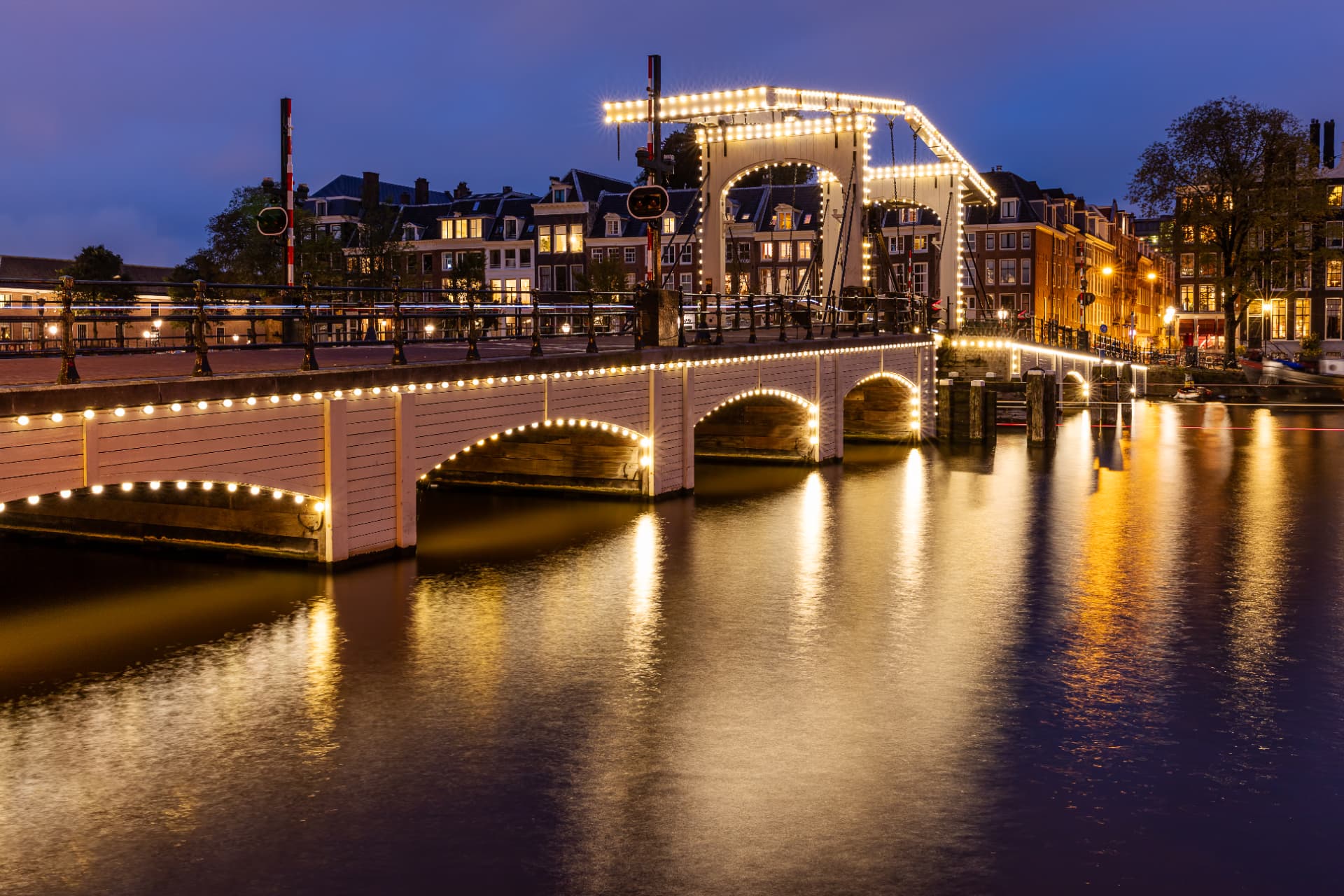
The Magere Brug — the Skinny Bridge — is Amsterdam's most famous bridge: a white wooden double drawbridge across the river Amstel, built in 1934 in the style of its 17th-century predecessors and outlined by some 1,200 light bulbs after dark. It is the most romantic spot on the river, and one of the city's essential photo stops. Here is its story and how to see it at its best.
By the AllTrips Editorial Team ·
The Magere Brug at a glance
Where: across the river Amstel, between the Keizersgracht and the Prinsengracht, a short walk east of the canal ring. Allow: 15–30 minutes, longer if you wait for the evening lights. Entry: free — it is a public bridge. Nearby: the canal ring, Rembrandtplein, the Hermitage Amsterdam and the Carré theatre on the Amstel.
The story of the Skinny Bridge
The first bridge here was built in 1691, when the city was expanding eastwards along the Amstel. It was famously narrow — locals said two pedestrians could barely squeeze past each other — which earned it the name Magere Brug, the Skinny Bridge. A beloved legend tells of two wealthy sisters named Mager who lived on opposite banks and commissioned the bridge so they could visit each other for tea; romantic, but the name almost certainly just describes the slender crossing.
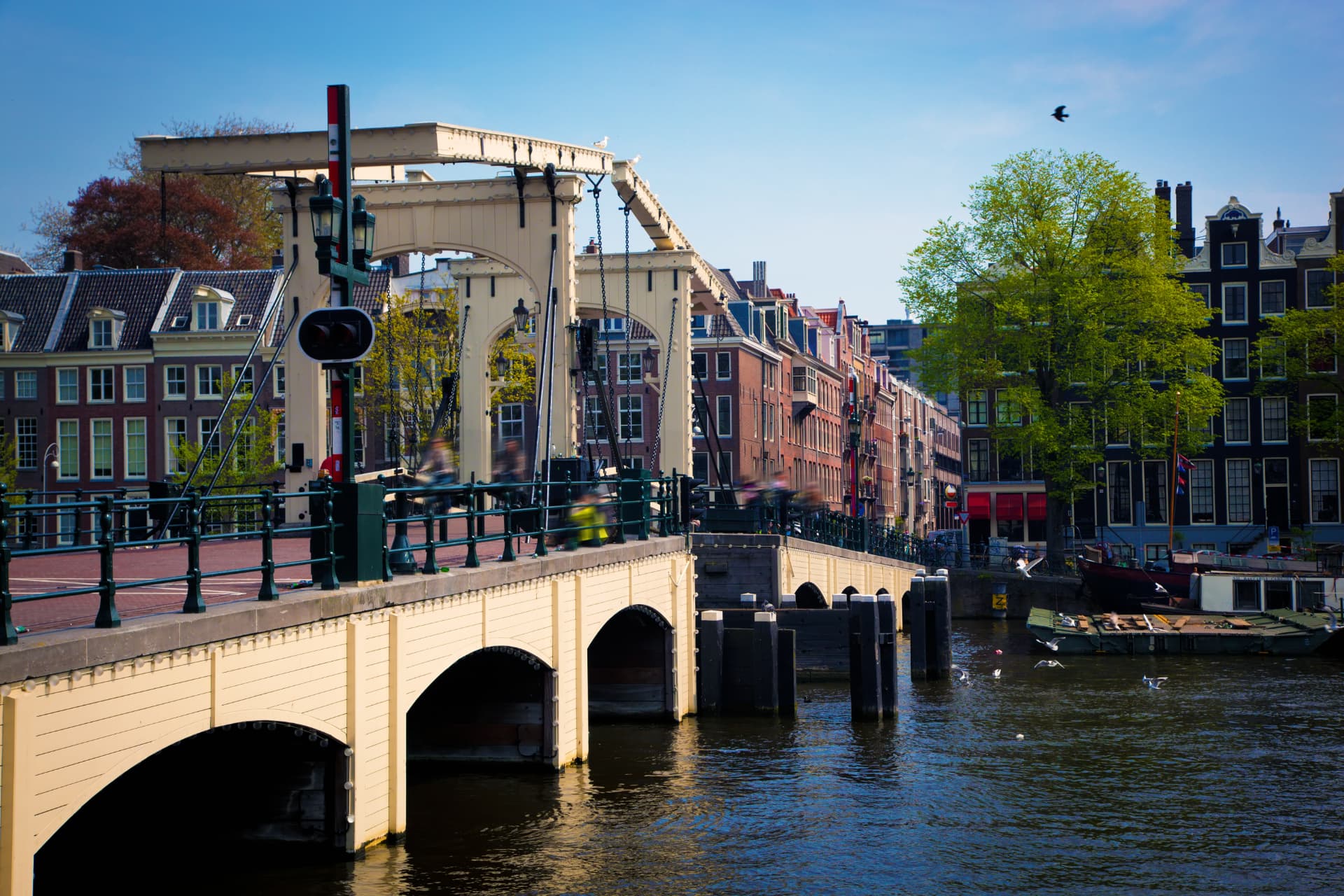
As traffic grew, the narrow original was replaced several times. The bridge you see today dates from 1934 and was deliberately built in the old style: white-painted timber, two counterbalanced drawbridge leaves, and the elegant curved arches of a classic Amsterdam ophaalbrug. It is now a protected municipal monument, still opened by a bridge keeper several times a day — and since its illumination was installed, it has become the most photographed bridge in the Netherlands.
What you will see
- The bridge itself — white-painted wood, twin drawbridge leaves, and the curved ironwork of a traditional Dutch double-beam drawbridge.
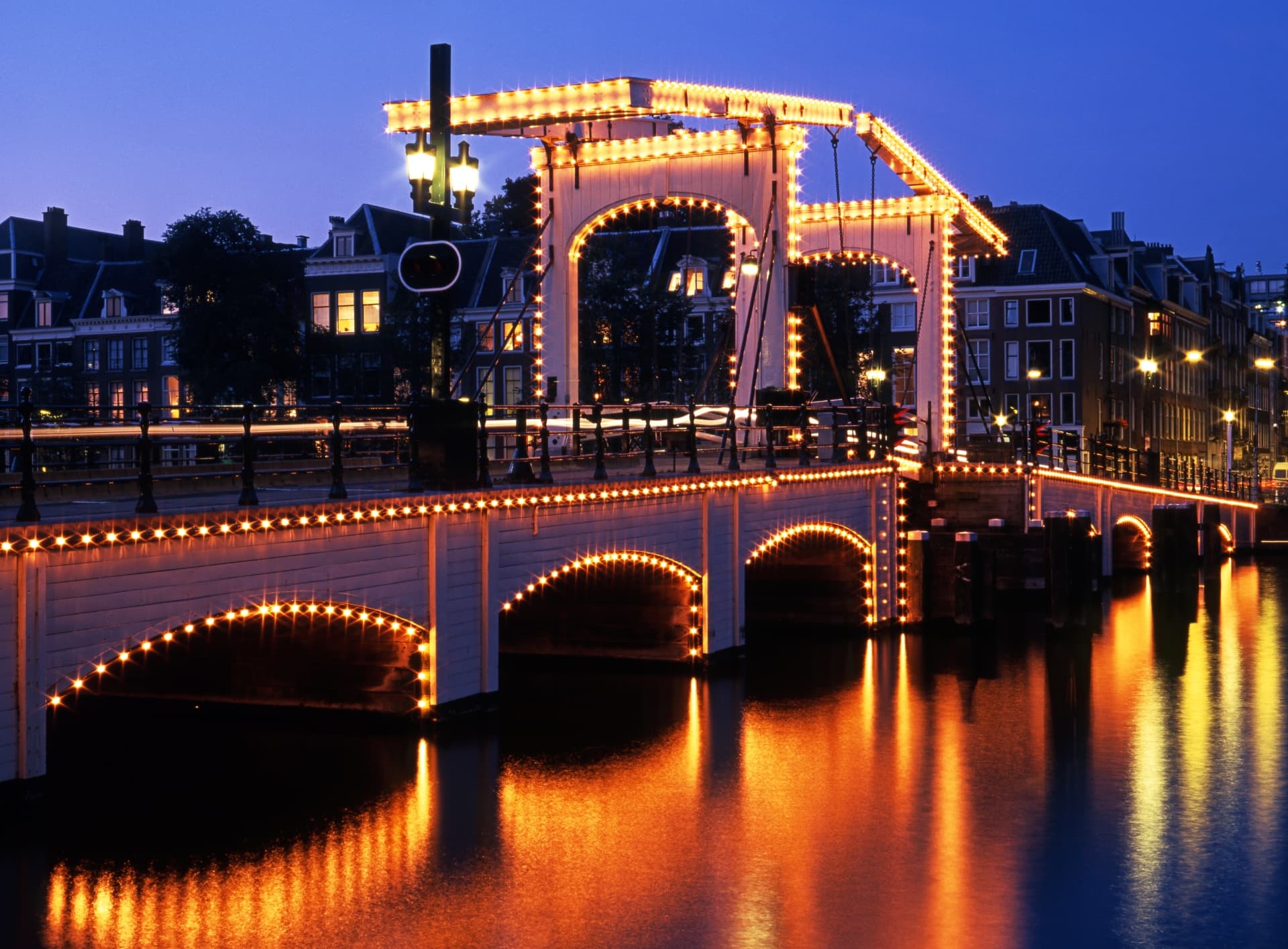
- The evening illumination — around 1,200 bulbs switch on at dusk, tracing the whole structure and doubling it in the dark water of the Amstel.
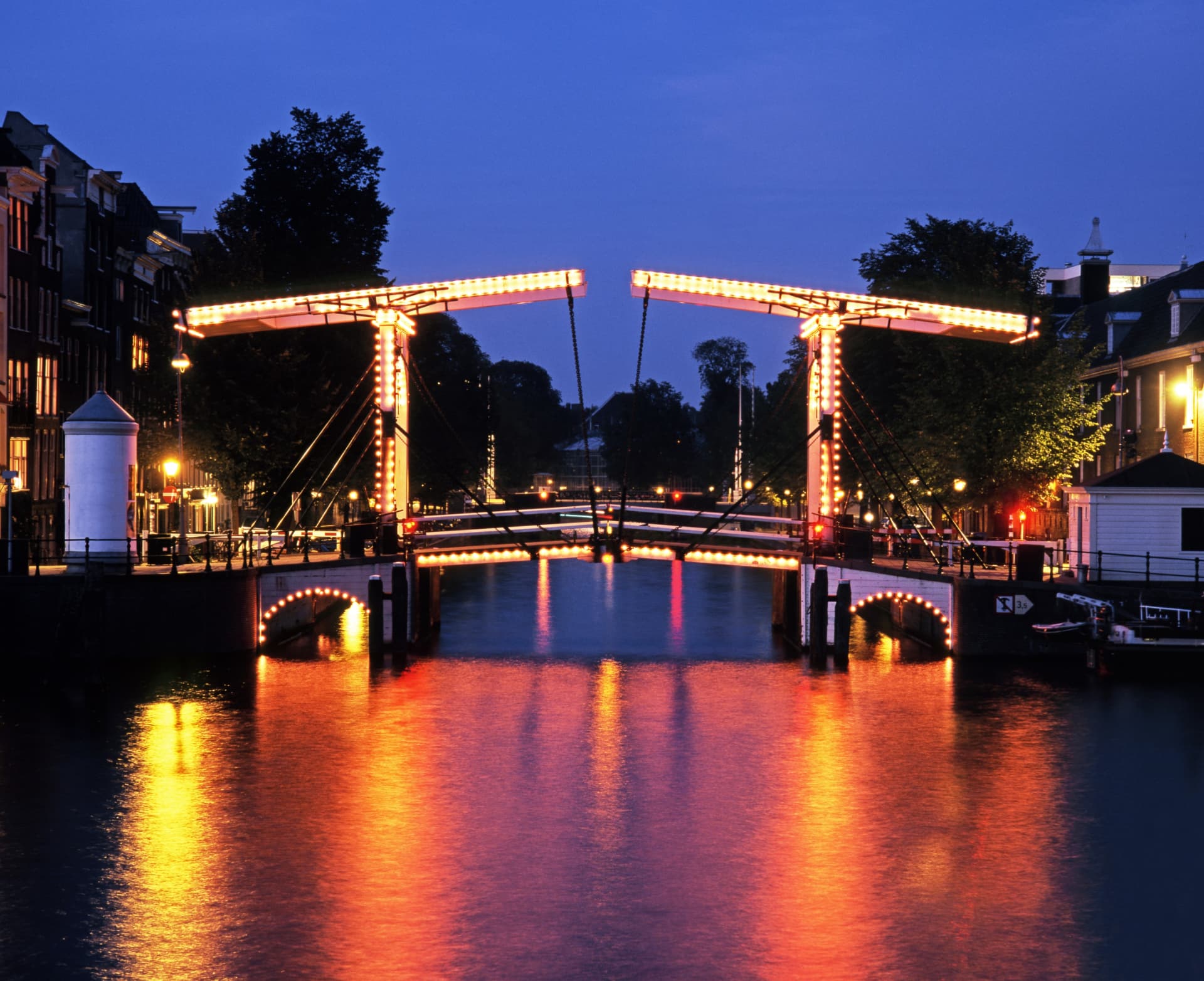
- The bridge opening — if your timing is lucky, the bridge keeper raises both leaves for passing boats, just as has happened here for over three centuries.
- Amstel river views — the wide, open river is a contrast to the intimate canals; look west towards the canal ring and east towards the modern waterfront.
- Grand neighbours — the Amstel Hotel, the Carré theatre and the Hermitage museum all stand a short stroll away along the river.
Getting there
The Magere Brug crosses the Amstel where the Kerkstraat meets the river, about a 15-minute walk south-east of Dam Square and five minutes from Rembrandtplein. From the canal ring, simply follow the Keizersgracht or Prinsengracht east until they end at the Amstel — the bridge is right in front of you. Evening canal cruises that include the Amstel pass directly beneath it.
Practical tips
- Come twice if you can: once by day to appreciate the white timberwork, and once after dark for the lights.
- The best photos are from the quays just north and south of the bridge — bring a tripod or steady your phone on the railing for night shots.
- The bridge is a working cycle route — stand clear of the bike lane when taking photos.
- Bridge openings happen several times a day but to no fixed tourist schedule; consider it a bonus if you catch one.
- An evening canal cruise on the Amstel is the classic way to see the bridge lit up from the water.
- Combine it with a walk along the Amstel to the Hermitage, or back into the canal ring.
- See every stop on our Amsterdam attractions map.
Frequently asked questions
Is the Magere Brug free to visit?
Yes — the Skinny Bridge is a working public bridge over the Amstel, so you can walk or cycle across it and admire it from the quays at any hour, free of charge.
Why is it called the Skinny Bridge?
Magere Brug means 'Skinny Bridge' in Dutch. The name goes back to the original 1691 bridge, which was so narrow that two pedestrians could barely pass each other. A popular legend says it was built by two sisters named Mager who lived on opposite banks of the Amstel and wanted an easier way to visit each other — a charming story, though the name more likely simply describes the bridge's slender design.
When does the Magere Brug light up?
The bridge is outlined by around 1,200 light bulbs that switch on at dusk and glow through the evening. The illuminated bridge reflected in the Amstel is one of Amsterdam's most romantic night-time sights, so plan a visit after dark if you can.
Does the Magere Brug still open for boats?
Yes — it is a working double-leaf drawbridge and still opens several times a day for river traffic, operated by a bridge keeper. If you are lucky you will see the two white leaves rise to let a boat through.
Where is the best view of the Magere Brug?
The classic view is from the quays along the Amstel just north or south of the bridge, where you can frame the whole white structure with its lights reflected in the water. Evening canal cruises on the Amstel also sail right past it — the bridge is a highlight of every night cruise.