Amsterdam · UNESCO World Heritage
The Canal Ring (Grachtengordel): Amsterdam's Golden Age Masterpiece
The Grachtengordel — Amsterdam's canal ring — is the elegant belt of 17th-century waterways that wraps around the old centre: four grand canals, hundreds of gabled merchant houses, and more bridges than you can photograph in a day. A UNESCO World Heritage site since 2010, it is the Amsterdam of every postcard — and it is completely free to explore. Here is its story, the prettiest stretches, and how to see it best.
By the AllTrips Editorial Team ·
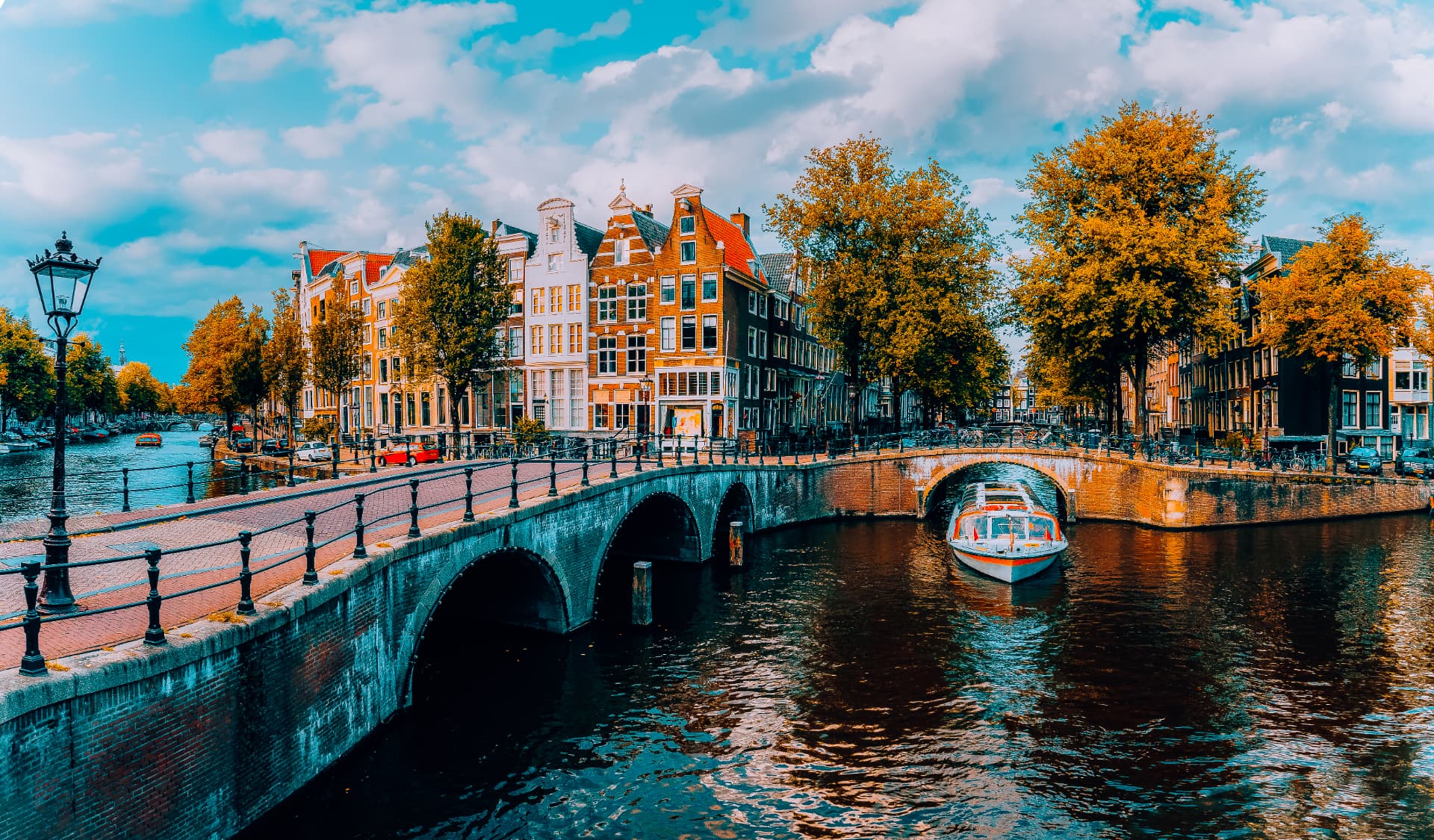
The canal ring at a glance
Area: the concentric canals — Singel, Herengracht, Keizersgracht and Prinsengracht — plus cross canals such as the Brouwersgracht and Leidsegracht, wrapping around the medieval centre. Allow: 1–2 hours for a single stretch, half a day for a full loop. Entry: free — it is a living city district, not a ticketed sight. Nearby: De Negen Straatjes, the Jordaan, Anne Frank House and Dam Square.
The story of the canal ring
In the early 1600s Amsterdam was booming — its merchants dominated world trade, and the medieval city was bursting at the seams. So the city council approved one of the most ambitious urban plans in history: a ring of three great new canals dug in concentric arcs around the old town, with plots sold to wealthy merchants who built tall, narrow houses along the water. Work started around 1613 and took half a century.
The result was a city within a city. The Herengracht (Gentlemen's Canal) attracted the richest regents; the Keizersgracht (Emperor's Canal, named after Emperor Maximilian) and the Prinsengracht (Prince's Canal, after the Prince of Orange) followed. Warehouses, workshops and modest homes filled the cross streets and the Jordaan beyond. In 2010 the whole seventeenth-century canal ring was inscribed on the UNESCO World Heritage List — recognition that this is not just a pretty backdrop but one of the best-preserved planned cities of the Golden Age.
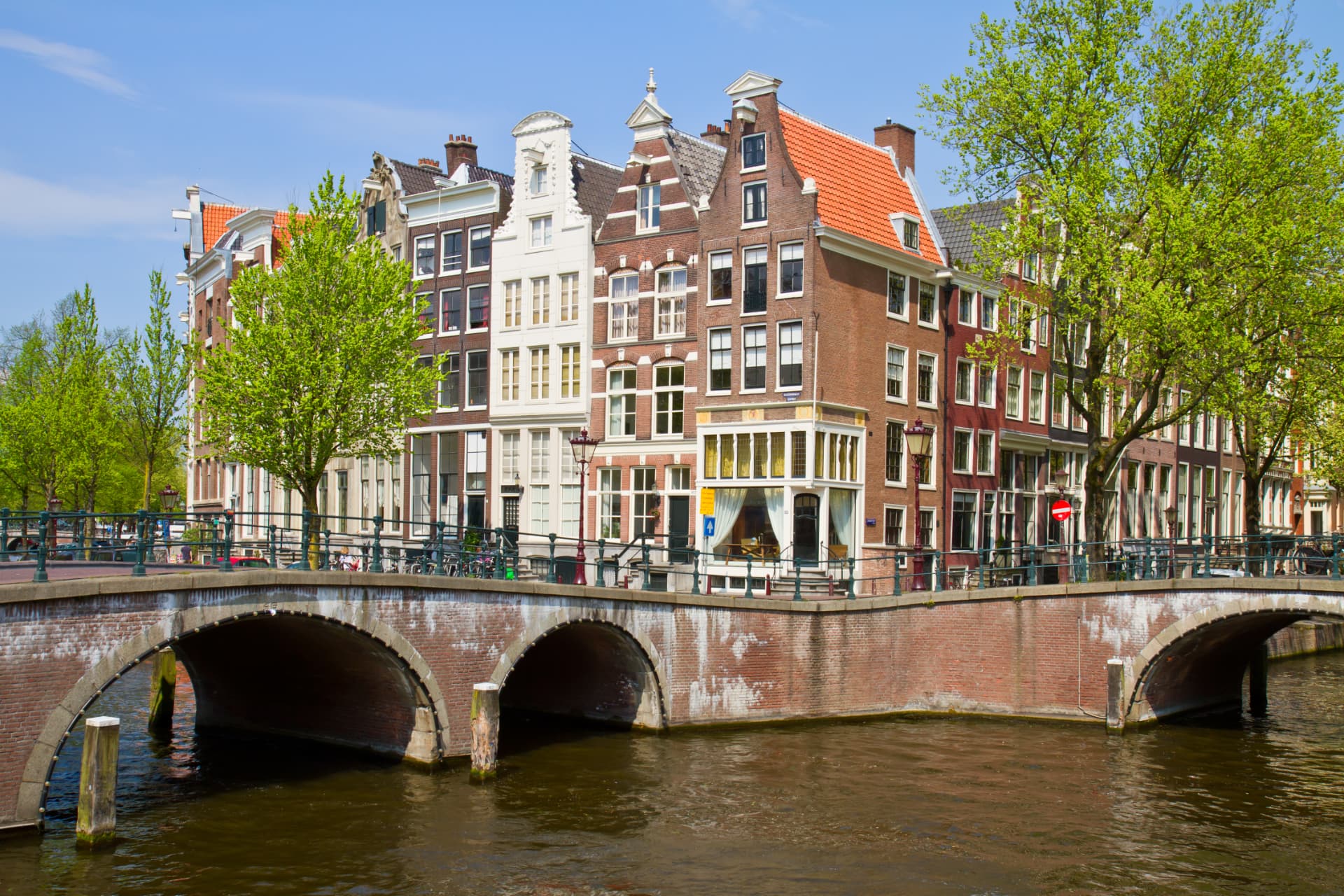
What you will see
- The Golden Bend (Gouden Bocht) — the grandest stretch of the Herengracht, between the Leidsestraat and Vijzelstraat, where the city's wealthiest families built double-wide mansions.
- Gabled houses — look up for the neck gables, bell gables and step gables, and for the hoist beams at the top once used to haul furniture and goods to upper floors.
- Houseboats — around 2,500 people live on the canals; the Houseboat Museum on the Prinsengracht shows you inside one.
- The Brouwersgracht — the former brewers' canal on the ring's northern edge, regularly voted Amsterdam's most beautiful street.
- Bridge views — the classic shot is from the bridge where the Keizersgracht meets the Reguliersgracht: on a clear day you can see through seven bridges in a row.
- Canal-side churches and museums — the Westerkerk and its crown-topped tower rise over the Prinsengracht, and grand canal houses host the Museum of the Canals (Grachtenmuseum) and Museum Van Loon.
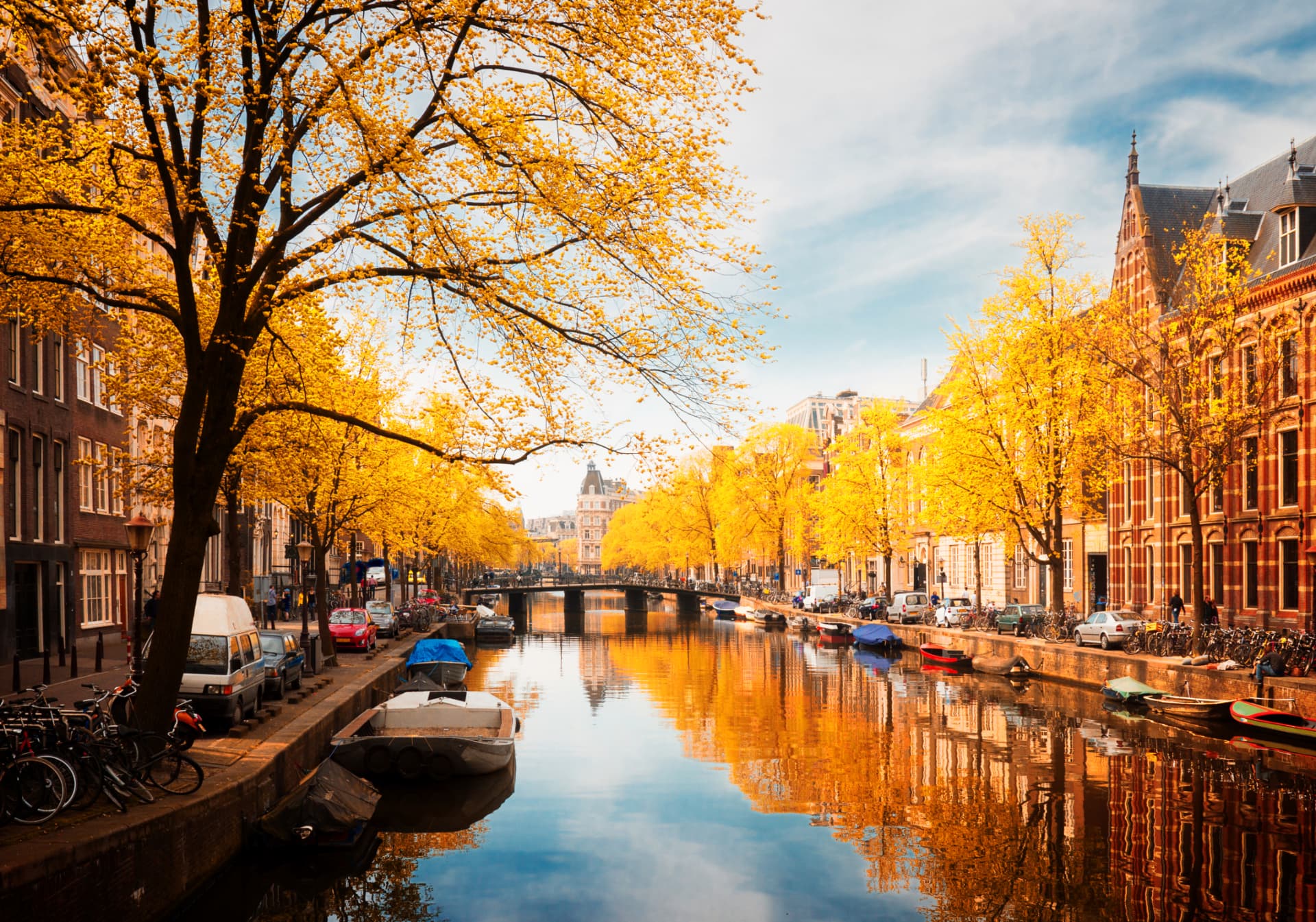
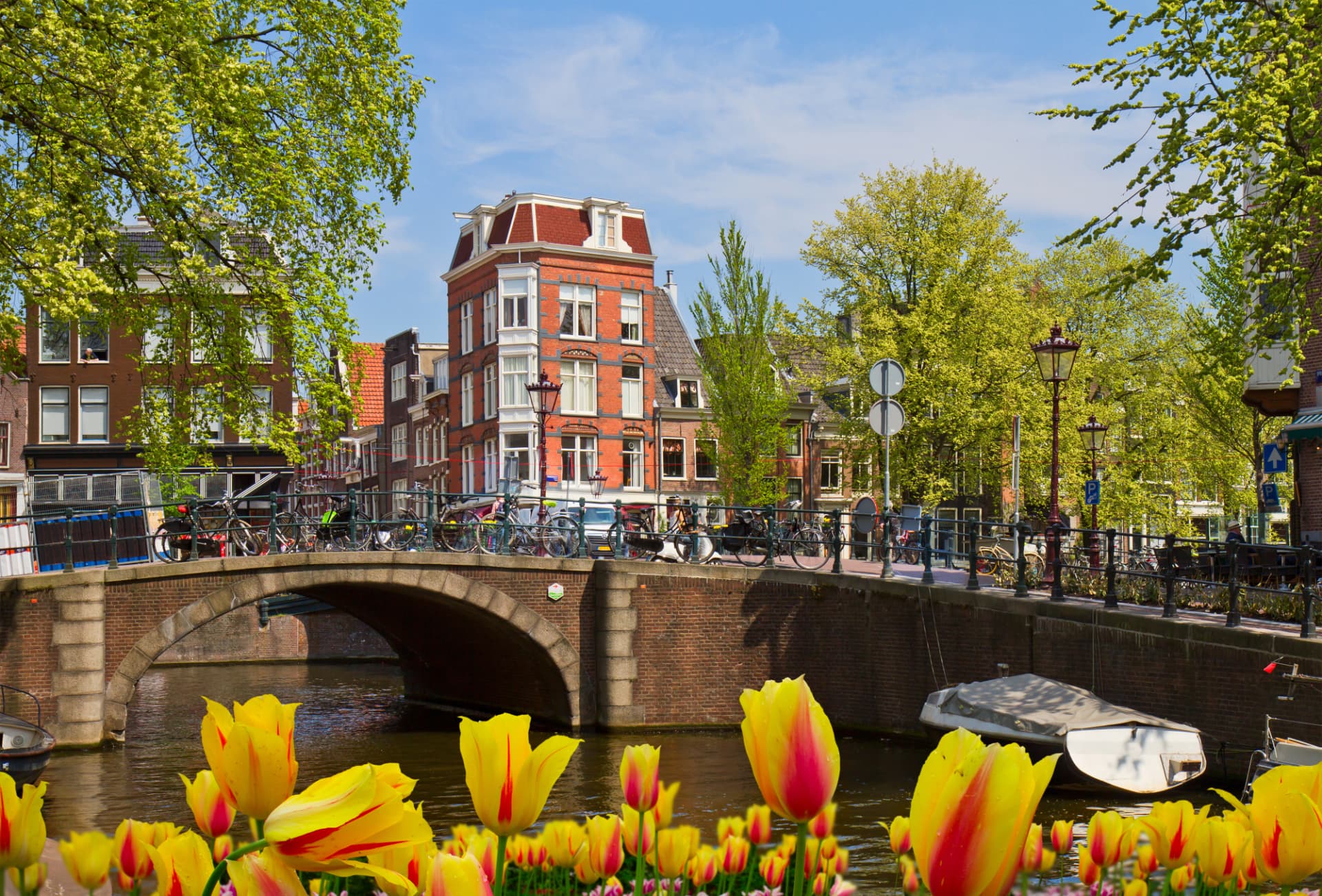
Getting there
The canal ring starts right outside Centraal Station — walk south and you are on the Singel within minutes. From Dam Square it is a five-minute walk west to the Herengracht. Trams along the Raadhuisstraat, Leidsestraat and Vijzelstraat all cross the ring, so you can hop off at any canal. The whole district is best explored on foot or by bicycle — and, of course, by boat.
Practical tips
- Walk one canal, not all four: the Herengracht from the Brouwersgracht to the Golden Bend is the classic one-hour stretch.
- Come at different times of day — early morning for empty bridges, late afternoon for golden light on the gables, evening for the illuminated bridges.
- A one-hour canal cruise is the best complement to walking; open boats run from several quays in good weather.
- Watch the cycle lanes: they run along most quays and locals ride fast.
- The quays have low railings or none at all — keep an eye on children near the water.
- Combine the ring with the 9 Streets, which cross it, and the Jordaan on its western edge.
- See every stop on our Amsterdam attractions map.
Frequently asked questions
Is the Amsterdam canal ring free to visit?
Yes — the Grachtengordel is a living city district of public quays, bridges and streets, so walking it costs nothing. You only pay if you take a canal cruise, visit a museum or stop at a café.
What is the Grachtengordel in Amsterdam?
The Grachtengordel (canal ring) is the belt of concentric canals dug around Amsterdam's old centre in the 17th century: the Singel, Herengracht, Keizersgracht and Prinsengracht, crossed by radial canals like the Brouwersgracht and Leidsegracht. Lined with Golden Age merchant houses, it has been a UNESCO World Heritage site since 2010.
How long does it take to walk the canal ring?
A full loop of all four main canals is roughly 10 kilometres and takes half a day at a strolling pace. Most visitors pick a stretch — for example from Centraal Station along the Herengracht to the Leidsegracht — which takes one to two hours with photo stops.
What is the prettiest canal in Amsterdam?
The Herengracht is the grandest, with the widest mansions — especially the 'Golden Bend' between the Leidsestraat and Vijzelstraat. The Brouwersgracht is often voted the most beautiful by locals, and the view along the Leidsegracht from the Keizersgracht bridge is the classic postcard shot.
Is a canal cruise worth it?
Yes — the canal ring was designed to be seen from the water, and a one-hour cruise shows you the gables, houseboats and bridges from the angle the merchants intended. Book ahead in high season; open boats are best in good weather, covered glass-top boats in the cold.