Paris · 6th arrondissement · Garden
Luxembourg Garden: What to See and Do
Paris's most beloved park — the Medici Fountain, the Senate palace, sailboats on the Grand Basin and the famous green chairs, all free.
By the AllTrips Editorial Team ·
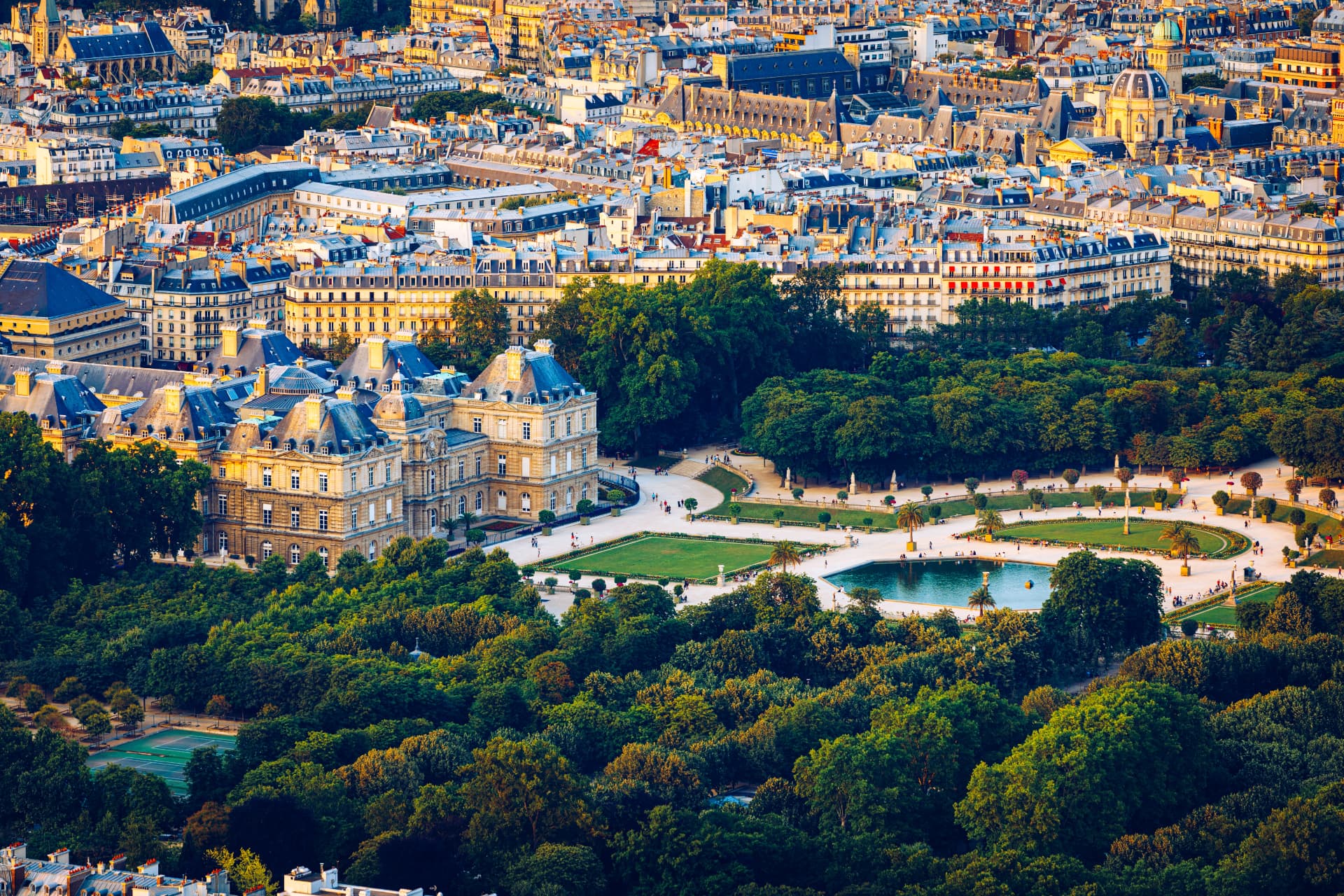
Luxembourg Garden at a glance
Area: 6th arrondissement, on the edge of Saint-Germain-des-Prés and the Latin Quarter. Allow: 1–2 hours. Entry: free; the garden opens early and closes at dusk. Nearby: Panthéon, Saint-Germain-des-Prés, Saint-Sulpice.
The Jardin du Luxembourg is where Parisians themselves come to read, jog, play chess and sail toy boats. Created for a queen in the 17th century, it mixes formal French parterres, English-style lawns, an orchard and more than a hundred statues — and it costs nothing to enjoy.
What is there to see?
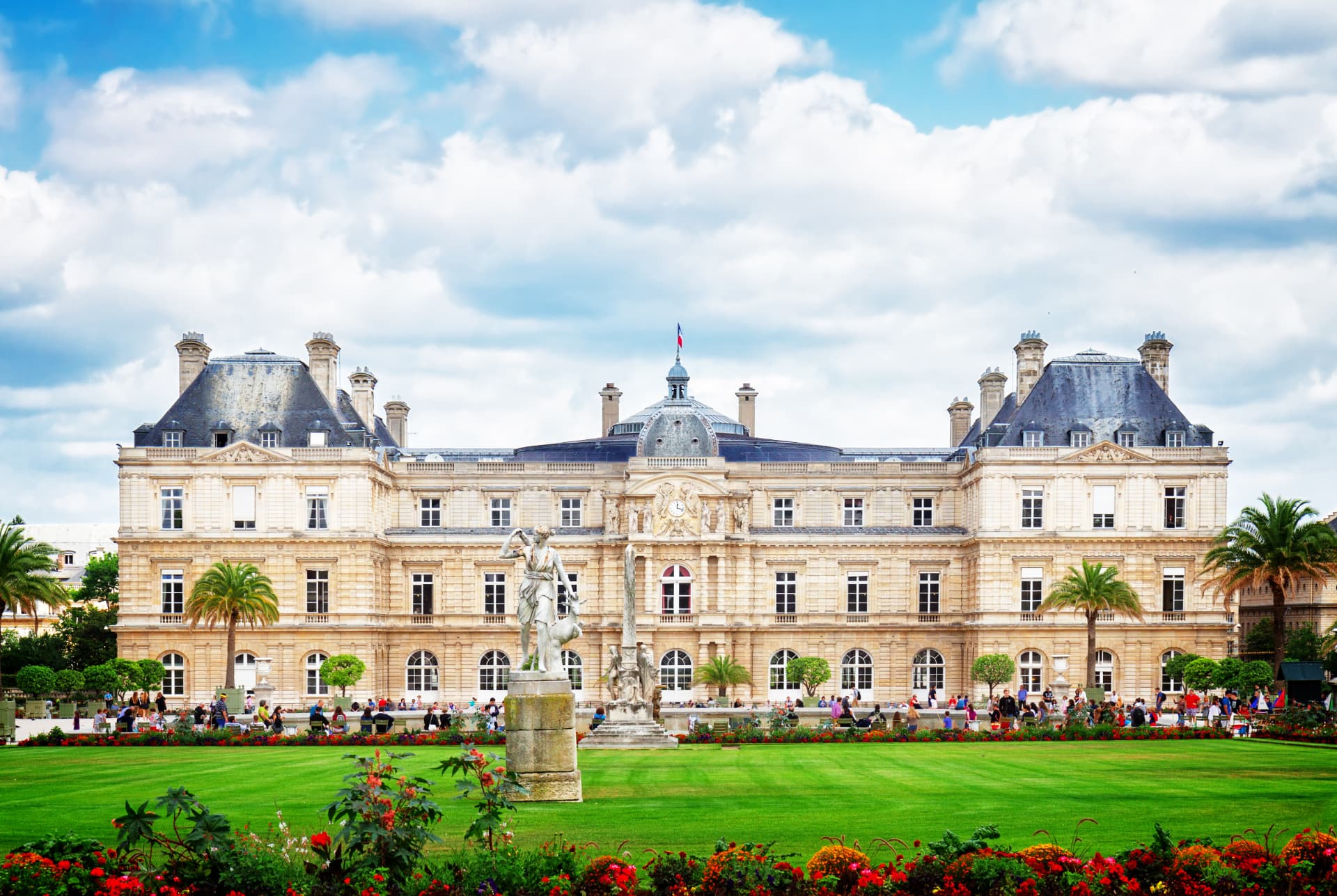
The Luxembourg Palace, built from 1615 for Marie de' Medici and modelled on Florence's Pitti Palace, anchors the garden; today it houses the French Senate and is not open to the public except on special open days. In front of it, the Grand Basin is the garden's social heart — children rent wooden model sailboats here as they have for a century.
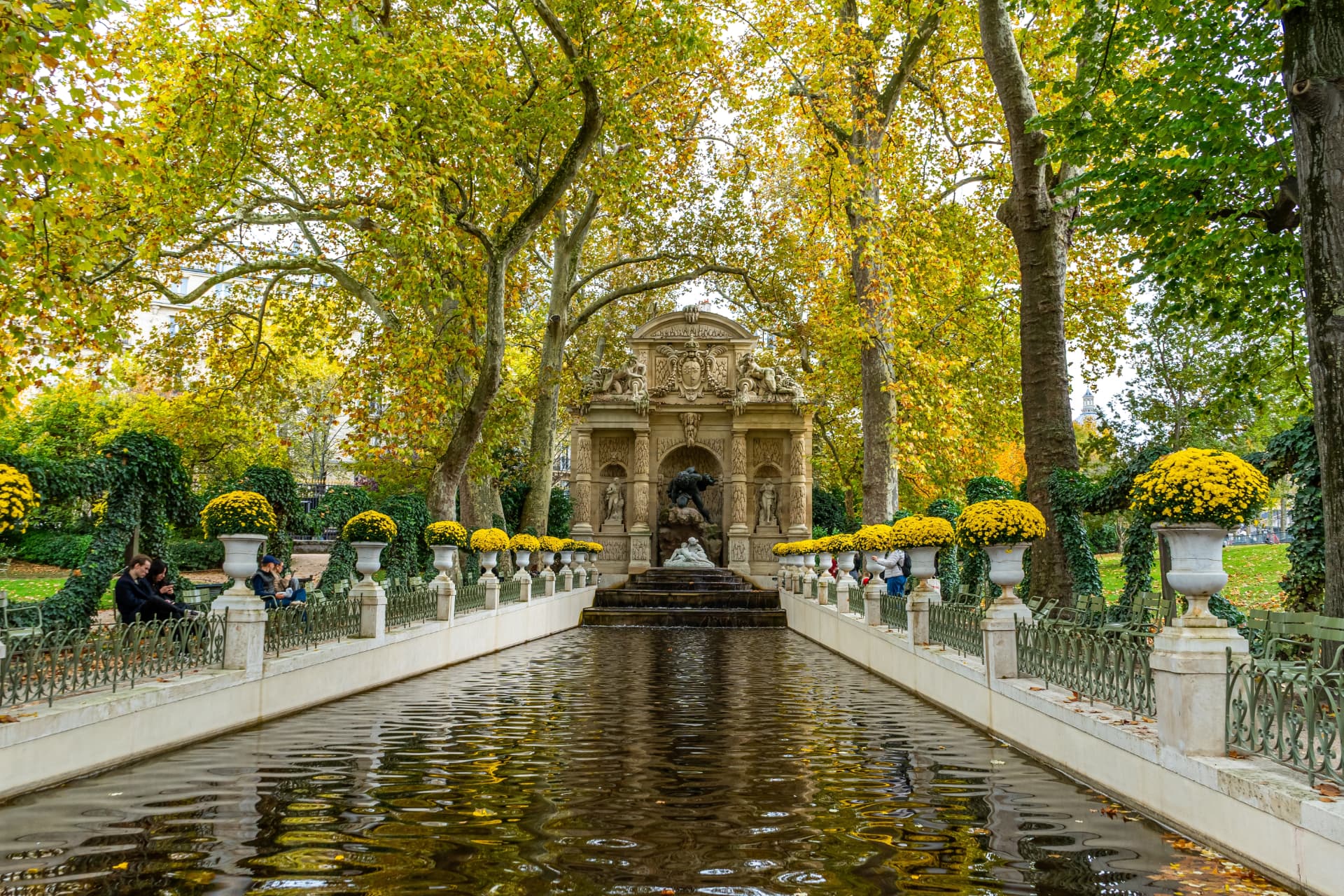
A short walk east, the Medici Fountain is the garden's most romantic corner: a long, still basin leading to a sculpted grotto from around 1630, shaded by plane trees. Elsewhere look for the orchid and rose collections, the beehives and orchard in the southwest corner, the statues of queens of France lining the terraces, and the free-to-move green chairs that have become a symbol of Paris park life.
A short history
Marie de' Medici, widow of Henry IV, bought the Hôtel du Luxembourg in 1612 and had a palace and gardens laid out to remind her of her native Florence. After the Revolution the garden was expanded and opened to the public, and in the 19th century it took its current form with the English garden, the orchards and the statues.
The garden has been the Senate's front yard since 1879, when the upper house of parliament moved into the palace. Writers from Baudelaire to Hemingway walked and wrote here — Hemingway famously described it in A Moveable Feast.
Planning your visit
Entry is free through several gates; the RER B stops at Luxembourg station by the eastern gate, and Odéon (metro lines 4 and 10) is near the northern entrance. The garden opens around 7:30–8:15 and closes at dusk — as early as about 16:30 in midwinter and as late as about 21:30 in summer, so check seasonal times.
The green chairs are free to move and use — take one to the basin edge. Picnicking on the main lawns is restricted in places; the benches and chairs are the practical option. Inside the garden, the puppet theatre, carousel, pony rides and tennis courts charge small fees. The museum in the orangery wing (Musée du Luxembourg) hosts paid temporary exhibitions with its own tickets.
Optional paid activities · affiliate link
Tours and activities near the Luxembourg Garden
The garden itself is free and needs no ticket. If you'd like to add a guided Left Bank walk or another paid activity nearby, Tiqets lists options in this part of Paris. Check what each offer includes before booking.
Browse activities on TiqetsThe Tiqets link is an affiliate link: AllTrips may earn a commission at no extra cost to you. Entry to the garden remains free.
The Luxembourg Garden in photos
What is nearby?
The Panthéon is a five-minute walk east, and Saint-Germain-des-Prés with its church and literary cafés begins just north of the gates. The Musée d'Orsay is about 20 minutes away on foot through Saint-Germain. See their locations on our Paris attractions map.
Frequently asked questions
Is the Luxembourg Garden free?
Yes, entry to the garden is completely free, including the Medici Fountain, the Grand Basin and the lawns. A few activities inside — the puppet theatre, pony rides and tennis courts — charge a small fee.
What are the Luxembourg Garden opening hours?
The garden opens early in the morning and closes at dusk, with exact times varying by season — roughly 7:30–8:15 opening and closing between about 16:30 in winter and 21:30 in summer. Check the City of Paris page for current times.
What is the Luxembourg Palace?
The palace was built from 1615 for Marie de' Medici, widow of Henry IV, modelled on the Pitti Palace in Florence. Today it houses the French Senate, so the interior is not open to the public except on special open days.
What is there to do in the Luxembourg Garden?
Watch the model sailboats on the Grand Basin, find the Medici Fountain, stroll the tree-lined promenades and orchards, and use the famous green chairs — you can move them anywhere. Children have a large playground, a vintage carousel and the puppet theatre.
How much time should I spend in the Luxembourg Garden?
Allow 1–2 hours for a relaxed circuit of the palace esplanade, the Grand Basin and the Medici Fountain, longer if you picnic or stop at a café kiosk. It pairs naturally with Saint-Germain-des-Prés or the Panthéon on the same day.
How do I get to the Luxembourg Garden?
The RER B stops at Luxembourg station right by the eastern gate. Metro Odéon (lines 4 and 10) and Cluny–La Sorbonne (line 10) are a short walk from the western and northern entrances.
Official sources
Reviewed September 2026. Opening hours vary by season; check the City of Paris page before travel.