Paris · Montmartre, 18th arrondissement · Ticketed
Musée de Montmartre: Renoir's Studio and the Soul of the Butte
In the house where Renoir painted the Moulin de la Galette, Montmartre's own museum tells the story of the hill — the cabarets, the artists, the vineyard — with gardens that feel a world away from the crowds on the Place du Tertre.
By the AllTrips Editorial Team ·
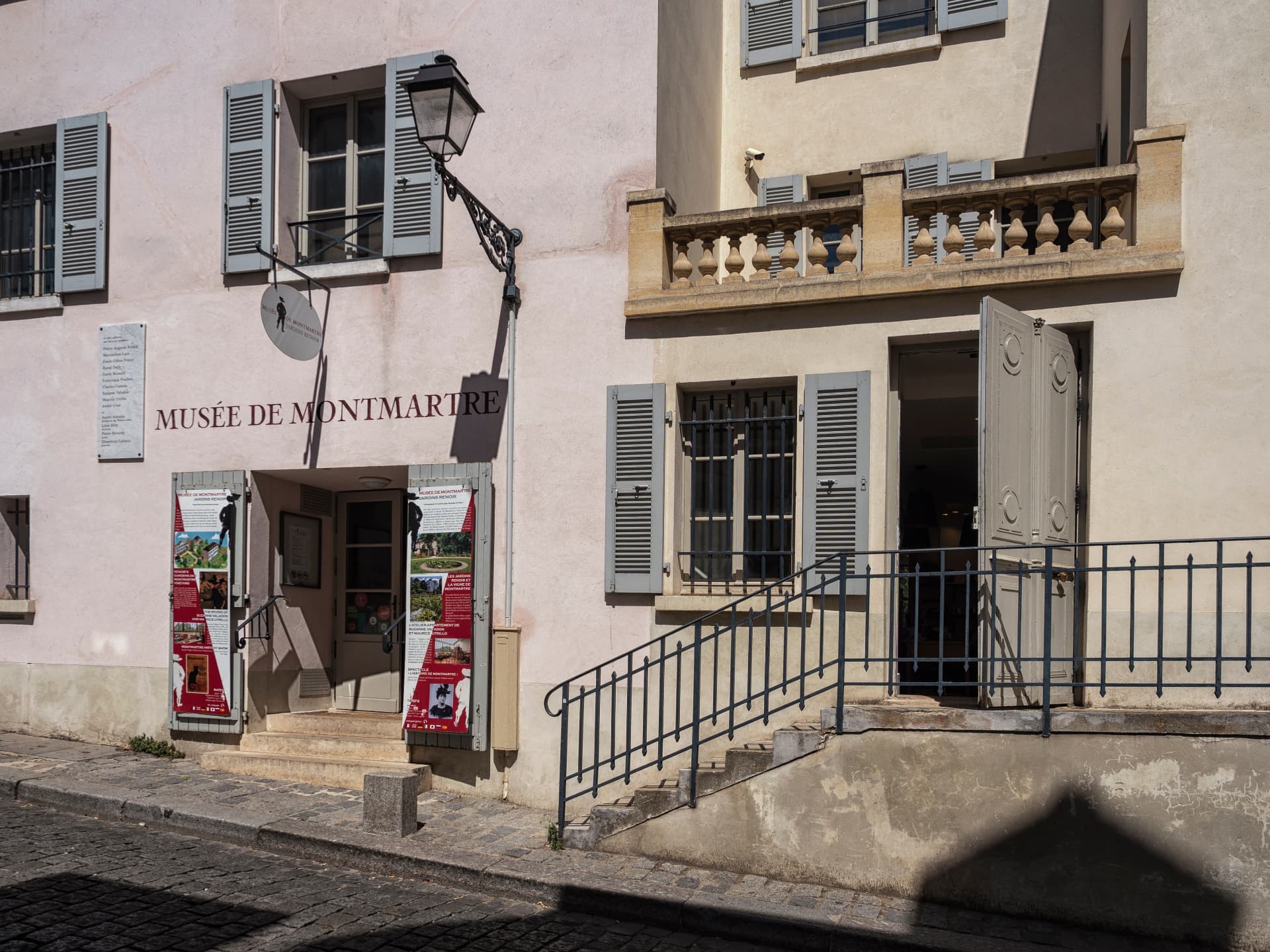
Musée de Montmartre at a glance
Area: Montmartre, 18th arrondissement — 12 rue Cortot. Allow: 1.5–2 hours. Entry: ticketed, children free. Nearby: the Place du Tertre two minutes away, Sacré-Cœur five minutes, the Clos Montmartre vineyard next door.
The oldest house on the Butte
The museum occupies one of the oldest buildings in Montmartre, a 17th-century house that was once home to Rosimond, an actor in Molière's troupe. When the hill was still a village of windmills and vineyards, this was one of its finest addresses — and it kept its garden when almost everything around it was built over.
The museum itself was founded in 1960 by the Vieux Montmartre society, which had been fighting to save the neighbourhood's memory since 1886. Its collections cover the whole story: the abbey, the gypsum quarries, the cabarets — above all the Chat Noir, with its famous posters by Steinlen and Toulouse-Lautrec — and the Bateau-Lavoir studios where Picasso and his circle reinvented painting.
Renoir, Valadon and Utrillo
The house's claim to fame is real, not marketing: Renoir rented a studio here in 1875–1877 and painted some of his best-known canvases on this spot, including the Bal du moulin de la Galette and The Swing — the latter painted in the very garden you can still walk through.
A generation later the same rooms housed Suzanne Valadon, her son Maurice Utrillo and her partner André Utter. Valadon — model, then painter, then the first woman admitted to the Société Nationale des Beaux-Arts — is the museum's presiding spirit, and her studio-apartment has been recreated with her furniture and her view over the rooftops.
The Renoir Gardens and the vineyard view
The gardens are half the reason to come. Restored along the lines of Renoir's paintings of them, they descend in terraces behind the house with views over the Clos Montmartre — the last working vineyard in Paris, whose grapes are still harvested and fermented each autumn. The vineyard itself is closed to the public except on rare open days, so this garden terrace is the best view of it most visitors will ever get. In season, the Café Renoir serves drinks among the flowerbeds.
Tickets and opening times
Entry is ticketed, with reduced rates and free admission for children. Prices and opening hours change with the seasons and temporary exhibitions, so confirm them before you go — the museum is usually open daily, but the garden café and some spaces are seasonal.
Official site
Musée de Montmartre — official website
Current prices, opening hours, temporary exhibitions and the museum's own online ticketing.
Visit museedemontmartre.frBook ahead · affiliate link
Musée de Montmartre tickets on Tiqets
Book entry in advance — useful in high season, when the Butte is at its busiest. Check what the ticket includes (permanent collection, temporary exhibition, gardens) before booking.
Check tickets on TiqetsThe Tiqets link is an affiliate link: AllTrips may earn a commission at no extra cost to you.
Getting there
The museum is at 12 rue Cortot, a two-minute walk from the Place du Tertre. The closest métro stations are Lamarck-Caulaincourt and Abbesses (line 12) and Anvers (line 2) with the funicular; the Montmartrobus also stops nearby. Expect slopes and steps whichever way you come — this is the steepest part of Paris.
What is nearby?
The Place du Tertre and its painters are two minutes away, Sacré-Cœur five, and the little Saint-Pierre church beside it. The Clos Montmartre vineyard is directly below the gardens, and the Moulin Rouge is a downhill stroll away in Pigalle. See the whole neighbourhood on our Paris attractions map.
Frequently asked questions
Is the Musée de Montmartre worth visiting?
Yes, especially if the Place du Tertre leaves you wanting the real story. This is the house where Renoir actually worked, with the recreated studio of Suzanne Valadon and Maurice Utrillo, the history of the Chat Noir cabaret, and quiet gardens overlooking the Clos Montmartre vineyard — the most authentic corner of the hill.
How much does the Musée de Montmartre cost?
Entry is ticketed, with reduced rates and free admission for children. Prices change, so check the museum's official website or the Tiqets listing for the current rate before you go.
How long does the Musée de Montmartre take?
Allow 1.5 to 2 hours for the collections, the Valadon-Utrillo studio and a stroll through the Renoir Gardens. Add time for a drink at the Café Renoir in the garden when it is open.
Can you see the Montmartre vineyard from the museum?
Yes. The Renoir Gardens look directly onto the Clos Montmartre, the last working vineyard in Paris, which still produces wine each autumn. The vineyard itself is closed to the public except on special open days, so the garden view is the best most visitors get.
Is the Musée de Montmartre suitable for children?
The museum is calm and compact, and children enter free. The gardens are the highlight for younger visitors; the steep streets and steps around the museum are the main challenge with a pushchair.
Sources
Reviewed September 2026. Confirm current prices, hours and exhibition dates on the official site before visiting.