Capri Day Trip From Rome: Train, Ferry or Organised Tour?
Updated · 13 min read · By the AllTrips Rome editorial team
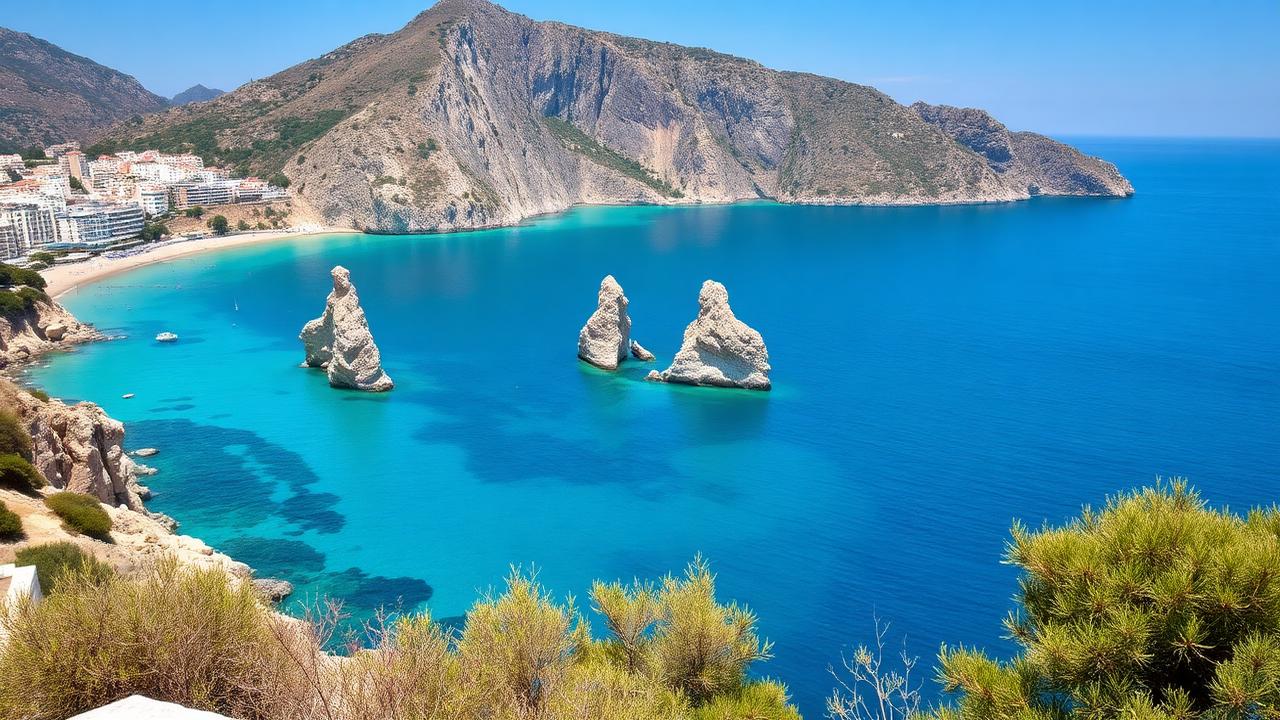
Verdict first: Capri from Rome in a single day is possible, but it is the most fragile day trip in this part of Italy. You are chaining a high-speed train, a port transfer and a sea crossing in each direction, which leaves roughly five to six hours between arrival and departure — typically about four to five usable sightseeing hours once island transport and boarding are taken out — and no slack if a ferry is delayed or cancelled. Do it if Capri is a genuine bucket-list item and you accept a 14-hour day. If you mainly want coastline, a road-based Amalfi Coast tour removes the sea-crossing dependency, though coastal traffic creates a different risk, and an overnight in Sorrento or on the island itself turns Capri from a sprint into a proper visit.
Is Capri worth a day trip from Rome?
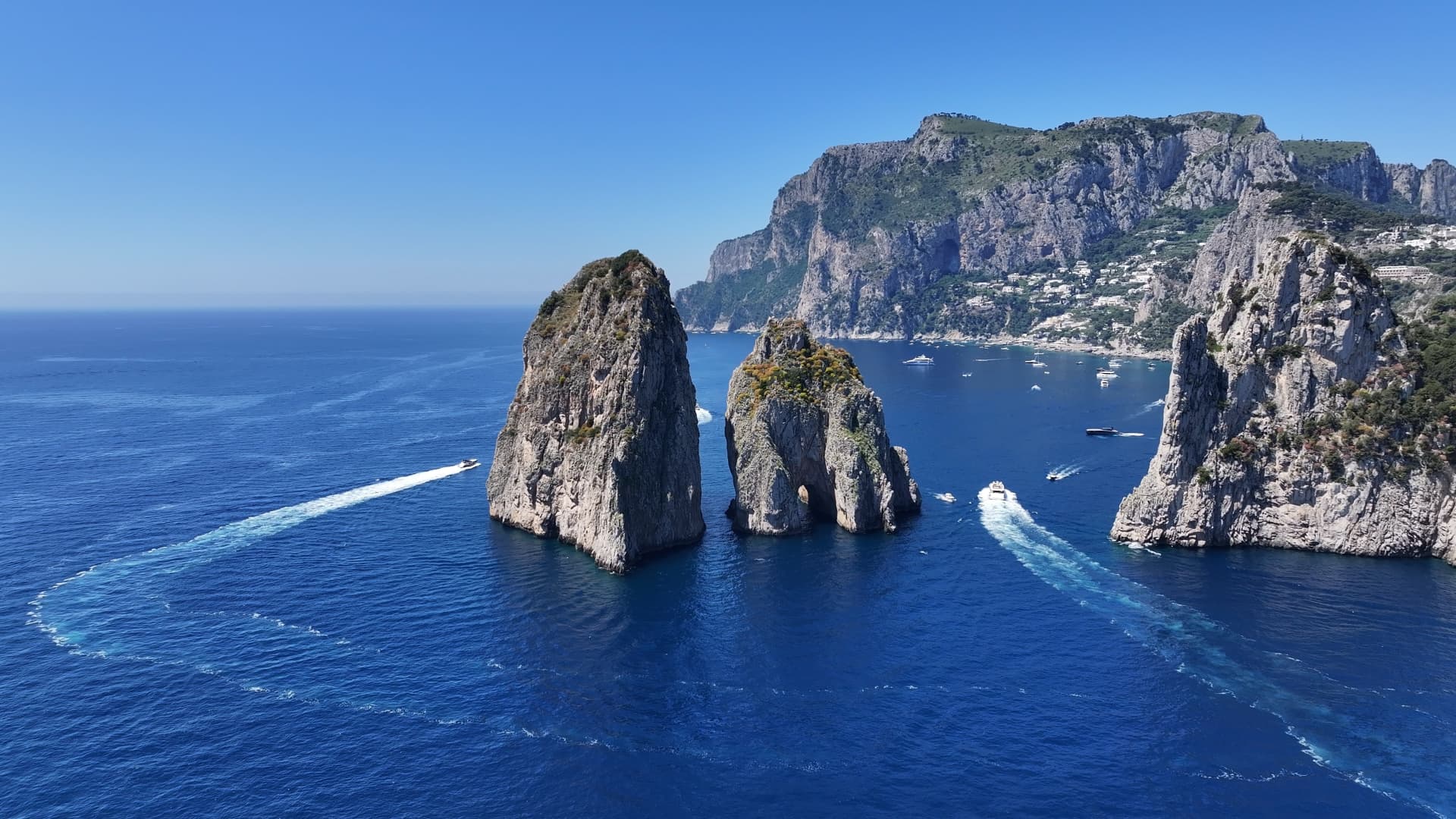
It is worth it for a specific kind of traveller: someone who has already seen the main Rome sights, travels light, is comfortable with connections and wants one spectacular Mediterranean day. Capri delivers on scenery immediately — the harbour, the funicular up to Capri Town, the Gardens of Augustus looking down on the Faraglioni, the chairlift over Anacapri's lemon groves.
It is not worth it if your day depends on the Blue Grotto, or if you are the kind of traveller who finds tight connections stressful. It is a difficult choice with small children or anyone with limited mobility, because the day involves an early start, several transfers, crowded boats, steep ground and very little flexibility. The island is steep, the ferries are busy, and a missed return sailing has real consequences: the last high-speed trains back from Naples leave in the evening, and a hotel night in Naples is the fallback.
It is also expensive relative to what you get. Between two high-speed fares, two ferry crossings, island transport and a Capri lunch, the day costs more than most Rome excursions — and a substantial part of the day, often six to eight hours, is spent travelling, transferring or waiting.
Rome to Capri at a glance
| Option | Time on Capri | Total day | Main risk |
|---|---|---|---|
| Independent train and ferry | About 5–6 hours | Roughly 14 hours | You carry all the connection risk yourself |
| Organised day tour from Rome | Typically 4–5 hours | 13–15 hours | Less planning, but weather can still change or cancel the itinerary |
| Overnight (Capri, Sorrento or Naples) | A full day plus an evening | Two days | Cost of the extra night — but the only relaxed version |
Durations checked September 2026 and vary by season and departure. Confirm train and ferry timetables for your travel date before committing.
How to get from Rome to Capri independently
1. Rome to Naples by high-speed train. Frecciarossa and Italo both run Roma Termini to Napoli Centrale in around 1 hour 10 minutes. Take an early departure — something leaving Rome by about 06:30–07:00 — because everything downstream depends on catching a morning ferry. High-speed services are reservation-only, so book the seat, not just the fare.
2. Napoli Centrale to the port. Allow at least 30–45 minutes. The fastest public-transport option is usually Metro Line 1 from Garibaldi (under Napoli Centrale) to Municipio, followed by a short walk to Molo Beverello — it avoids road traffic entirely. A taxi can be easier with luggage or a group, but it is exposed to Naples traffic. Do not plan a 15-minute connection: you still have to cross the station, find the metro or the rank, reach the right terminal and board.
3. Ferry to Capri. Fast hydrofoils and catamarans take roughly 45–55 minutes from Naples; conventional car ferries take longer, around 80 minutes. Conventional ferries may feel steadier and sometimes operate in conditions that disrupt smaller fast craft, but no sailing is guaranteed in poor weather. Several operators share the route with different times and prices.
4. Island transport. You arrive at Marina Grande, at sea level, and immediately have to choose: funicular to Capri Town, bus to Anacapri, a taxi, or straight onto a boat excursion. In peak day-trip hours the funicular and bus queues can be long enough to eat half an hour, so decide before you step off the ferry. Taxis are open-topped and expensive. From Anacapri, the Monte Solaro chairlift is one of the island's most rewarding short experiences.
Choose one island plan. From Rome you have time for roughly one of these: Capri Town and the Gardens of Augustus; Anacapri and Monte Solaro; or an island boat trip with a short look at Capri Town. Trying to combine all of them, plus the Blue Grotto, does not work on a day trip.
5. The return buffer. This is the part people get wrong. Take a ferry back from Capri that lands in Naples at least 90 minutes before your train, and book a train that is not the last one of the evening. If the sea turns and a sailing is cancelled, that buffer is the difference between a long day and an unplanned hotel.
Ferry ports and tickets explained
Naples has more than one departure point for Capri, and the ticket you buy determines which one you need. Molo Beverello is the main fast-ferry terminal, closest to the city centre and used by most hydrofoils and catamarans. Calata Porta di Massa, farther east along the waterfront, handles the slower conventional and vehicle ferries. They are not interchangeable, moving between them takes real time, and turning up at the wrong one with 20 minutes to spare is the classic way to lose a Capri day.
Check the actual departure point printed on your ticket, not the port name in the search results. If you are coming from Sorrento rather than Naples the crossing is shorter, around 20–25 minutes, which is why many organised tours route that way.
Ferry timetables are seasonal: the summer schedule is dense, the winter one much thinner, and sailings can be suspended in bad weather at any time of year. Operators publish cancellations on the day, so check the morning of travel rather than assuming the printed timetable holds.
One-day Capri itinerary from Rome
| Time | Step |
|---|---|
| 06:40 | High-speed train from Roma Termini |
| 07:55 | Arrive Napoli Centrale; Metro Line 1 (Garibaldi to Municipio) or taxi to Molo Beverello |
| 09:00 | Fast ferry to Capri |
| 09:55 | Marina Grande; funicular up to Capri Town |
| 10:20 | Piazzetta, Via Camerelle, then the Gardens of Augustus for the Faraglioni view |
| 11:30 | Bus to Anacapri along the cliff road |
| 12:00 | Monte Solaro chairlift — 13 minutes up, the best view on the island |
| 13:15 | Lunch in Anacapri, away from the harbour prices |
| 14:30 | Villa San Michele or time in Anacapri. If you want an island boat tour, restructure the day around it and drop Anacapri or Monte Solaro |
| 15:30 | Back down to Marina Grande with time in hand |
| 16:15 | Ferry to Naples |
| 19:00 | Train from Napoli Centrale; Roma Termini by around 20:30 |
In July and August, queues for the funicular, the buses and the chairlift can make this schedule too ambitious. If you fall more than 30 minutes behind, skip Villa San Michele or head straight back to Marina Grande.
These times are illustrative and built around one plausible pair of connections — use them to sanity-check your own bookings, not as a timetable. Choose a return ferry scheduled to reach Naples at least 90 minutes — and preferably two hours — before your train: ferry delays and city traffic can quickly consume the buffer. Note what is missing: the Blue Grotto, a full boat tour and the Via Krupp walk. Adding any of them means dropping something else.
How much does a Capri day trip from Rome cost?
There is no single price, because the two big items — the high-speed train and the ferry — are both dynamic or seasonal. What matters more than a number is knowing how many separate payments the day contains, because that is where an "affordable" day trip quietly becomes an expensive one.
| Expense | How it is priced |
|---|---|
| Rome–Naples train (return) | Dynamic high-speed fare; usually cheapest booked well in advance, and normally tied to a specific departure |
| Naples–Capri ferry | Priced each way or as a return; fast hydrofoils cost more than conventional ferries and vary by season |
| Naples station to the port | Metro Line 1 ticket, or a taxi fare exposed to traffic |
| Island transport | Funicular and local bus tickets, each bought per journey; taxis are a premium option |
| Attractions | Gardens of Augustus, Monte Solaro chairlift, Villa San Michele or a boat excursion — each paid separately |
| Food and drink | Capri is noticeably more expensive than Naples, and the harbour is the most expensive part of Capri |
| Organised tour instead | One combined price covering transport and the ferry; compare it against the sum of the rows above rather than against the train fare alone |
Cost structure checked September 2026. Prices change by season, operator and booking date — confirm live prices before booking.
Should you visit the Blue Grotto?
Not on a day trip, unless everything aligns. The Blue Grotto is genuinely remarkable — a low sea cave lit an unreal blue from below — but the access is the problem. Entry is by small rowing boat through a very low cave entrance, and it may close when waves, swell or wind make that entrance unsafe. Closures are common and decided on the day.
When it is open, expect a queue of boats waiting their turn, a transfer at sea from your boat into the rowing boat, a few minutes inside and separate payments for the boat and the entry. In peak season the whole process can absorb two to three hours of a five-hour island visit.
Treat it as a bonus. If you arrive, the sea is flat and the queue is short, go. If it is closed — and it often is — you should still have a full day of Capri planned without it. Never build the trip around a cave that may not open.
Capri attraction tickets and boat trips
If you are travelling independently, the parts worth booking ahead are the island experiences: a boat trip around the island, a Blue Grotto attempt, or a guided visit in Anacapri. Sea-dependent activities can be cancelled in rough weather, so check each listing's cancellation terms before you pay.
Affiliate link. You pay the same price and we may earn a small commission, which funds this site's research.
Sorting your own train and ferry?
Book Capri island experiences ahead — boat trips, the Blue Grotto attempt and guided visits — with live availability and cancellation terms.
See Capri tickets and boat tripsBest Capri tours from Rome
Organised Capri days from Rome bundle the parts that are awkward to coordinate: the transfer to the port, the ferry seats in both directions, and usually island transport or a boat tour. Some run by coach to Sorrento or Naples, others use the high-speed train with a guide. When you compare them, check four things specifically — the departure point and hour, whether the ferry is included in both directions, how much free time you actually get on the island, and whether any Blue Grotto element is described as "subject to conditions" (it always should be).
Best for the easiest day: a guided tour includes round-trip transport and removes the need to coordinate train, transfer and ferry connections yourself — which is exactly where an independent Capri day breaks down.
Affiliate link. You pay the same price and we may earn a small commission, which funds this site's research.
Prefer the train, transfer and ferry handled for you?
Compare Capri day tours and island tickets from Rome and Naples, with live prices, departure points and available dates.
Compare Capri tours and ticketsIndependent trip vs organised tour
Go independently if…
You are a confident traveller, you want the maximum hours on the island, and you would rather choose your own lunch and pace than follow a group. You are comfortable booking a train, a ferry and a fallback, and you accept that a cancelled sailing is your problem to solve.
Take a tour if…
It is your first trip to Italy, you are travelling as a family or group, or the idea of a four-stage connection chain in a foreign language is unappealing. You will get less island time, but the operator coordinates the transport and handles itinerary changes — though bad sea conditions can still mean Capri is replaced or the excursion is cancelled.
What can go wrong?
- Sea conditions. Wind and swell can reduce or suspend sailings with little notice, particularly outside high summer.
- Ferry delays and full boats. In August a "next departure" can be an hour away and already sold out.
- Blue Grotto closure. Frequent, weather-driven and decided on the day.
- Port confusion. Molo Beverello and Calata Porta di Massa are different terminals; arriving at the wrong one is a lost crossing.
- Missed Rome connection. High-speed fares are usually tied to a specific train, so a late ferry can mean buying a new ticket — or a night in Naples.
- Island crowds. Between roughly 11:00 and 15:00 in summer, Capri Town and the funicular queue are at their worst.
Frequently asked questions
How long does it take to get from Rome to Capri?
Realistically three to four hours each way. Roughly 1 hour 10 minutes on a high-speed train from Roma Termini to Napoli Centrale, 20–30 minutes to reach the ferry port, a wait for the boat, then 45–80 minutes at sea depending on whether you take a hydrofoil or a car ferry. Add walking and queueing and the door-to-door figure rarely comes in under three hours.
Can you book the Capri ferry on the day?
Usually yes outside peak summer, but it is a gamble on a day trip. In July and August, on weekends and on public holidays, sailings sell out and the next departure may be an hour later — which on a same-day return can cost you the island. Book the outbound crossing in advance and keep the return flexible if the operator allows it.
Which Naples port goes to Capri?
Two of them, and they are not interchangeable. Molo Beverello handles the fast hydrofoils and catamarans and is closest to the city centre; Calata Porta di Massa, further along the waterfront, handles the slower conventional and vehicle ferries. Go by the terminal printed on your own ticket, not by the port name in a search result — arriving at the wrong one with twenty minutes to spare is the classic way to lose the day.
Is Capri possible in winter?
It is possible, but the island runs on a reduced timetable: fewer sailings, many hotels and restaurants closed, the Monte Solaro chairlift subject to weather closures and the Blue Grotto frequently inaccessible. Winter Capri is beautiful and empty, but as a day trip from Rome the shorter daylight and thinner ferry schedule make it tight.
Capri or the Amalfi Coast from Rome?
Capri if you want one place and are content to spend the day on a single island; the Amalfi Coast if you want scenery, villages and a road trip. Both are long days. Capri adds sea-crossing risk; Amalfi adds coastal traffic risk. Neither is relaxing as a day trip from Rome.
Is one day enough for Capri?
One day gives you roughly five to six hours between arrival and departure, which usually leaves about four to five usable sightseeing hours once island transport and boarding are taken out — enough for Capri Town, the Gardens of Augustus, a chairlift up Monte Solaro from Anacapri and a late lunch. It is not enough for the Blue Grotto plus a boat tour plus both towns. Choose two or three things and let the rest go.
What is the cheapest way to travel from Rome to Capri?
The cheapest combination is usually a regional or early-booked high-speed train to Naples, Metro Line 1 from Garibaldi to Municipio, and a conventional ferry from Calata Porta di Massa rather than a fast hydrofoil from Molo Beverello. The trade-off is time: slower trains and slower boats eat into an already tight island day, so the cheapest routing is rarely the best one for a single day from Rome.