Great Wall Sections: Which to Walk and Which to Skip
Published · Last verified · 12 min read
Fact-checked by the AllTrips editorial team against the scenic areas' own visitor information. General price ranges and access information reviewed September 2026. Confirm the exact ticket, transport and lift prices for your chosen section.
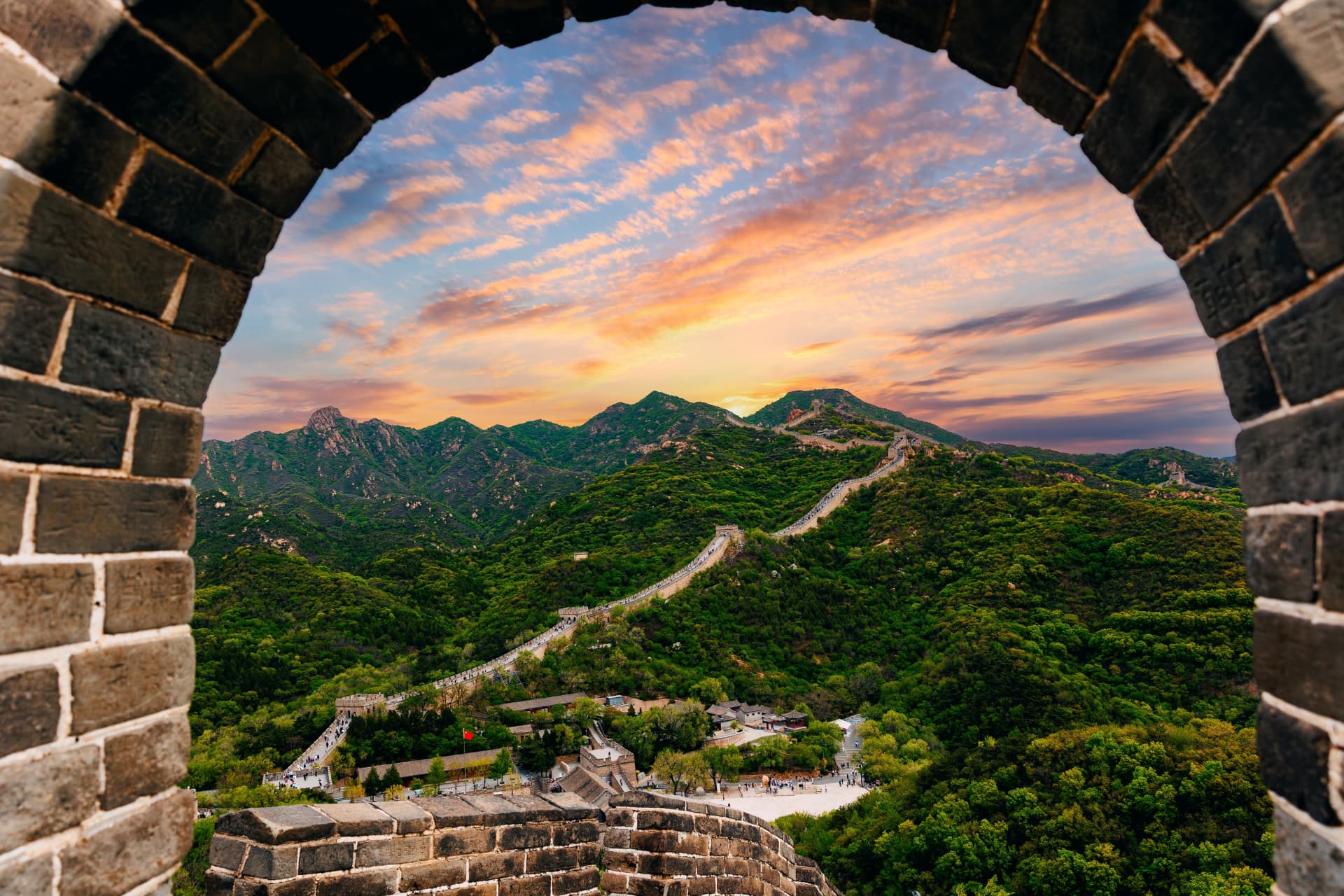
The Great Wall runs for thousands of kilometres, but for visitors it means a handful of restored and semi-restored Ming-dynasty sections within one to three hours of Beijing. They are not interchangeable. One is a heavily rebuilt, coach-packed showpiece; another is a quiet ridge walk with towers crumbling into the hillside. Picking the wrong one is the single most common way to come away underwhelmed by one of the great sights on earth.
This guide sorts the main sections into the ones worth walking and the ones most travellers should skip, then covers tickets, transport and a day plan that works.
One section per day. The drives are long and the walking is on steep, uneven steps. Trying to collect two sections in a day gives you a rushed hour at each and a great deal of time in a vehicle.
Quick answer: which section to pick
If you want the best Great Wall section from Beijing in one line: Mutianyu for a first visit, Jinshanling for hiking.
- First visit, easiest Great Wall section: Mutianyu
- Best Great Wall section for hiking and photography: Jinshanling
- Evening visit: Simatai, with Gubei Water Town
- Lake and water scenery, relaxed day: Huanghuacheng
- Only if transport time decides it: Badaling (the Mutianyu vs Badaling question in one line)
- Quiet unrestored hiking: Gubeikou, preferably with a guide or a thoroughly checked route
- Not recommended for ordinary visitors: Jiankou, due to dangerous terrain and changing access restrictions
Sections compared
| Section | Approx. travel time from central Beijing | Condition | Crowds | Best for |
|---|---|---|---|---|
| Mutianyu | ~1.5–2 h | Well restored | Moderate | First visits, families |
| Badaling | ~1–1.5 h | Heavily rebuilt | Very high | Tight schedules, easy transport |
| Jinshanling | ~2–3 h | Part restored, part weathered | Low | Hiking, photography |
| Simatai | ~2–2.5 h | Steep, partly restored | Controlled by timed entry | Evening visits, overnight |
| Huanghuacheng | ~1.5–2 h | Mixed | Low to moderate | Lakeside scenery, slower day |
| Gubeikou | ~2–2.5 h | Mostly unrestored | Very low | Quieter historical hikes, moderate to demanding |
| Jiankou | ~2–3 h | Unrestored, steep and partly collapsed | Very low | Very demanding and exposed; subject to access restrictions |
Times are approximate and can change significantly with traffic, departure point and transport method.
Sections worth walking
Mutianyu — the default choice
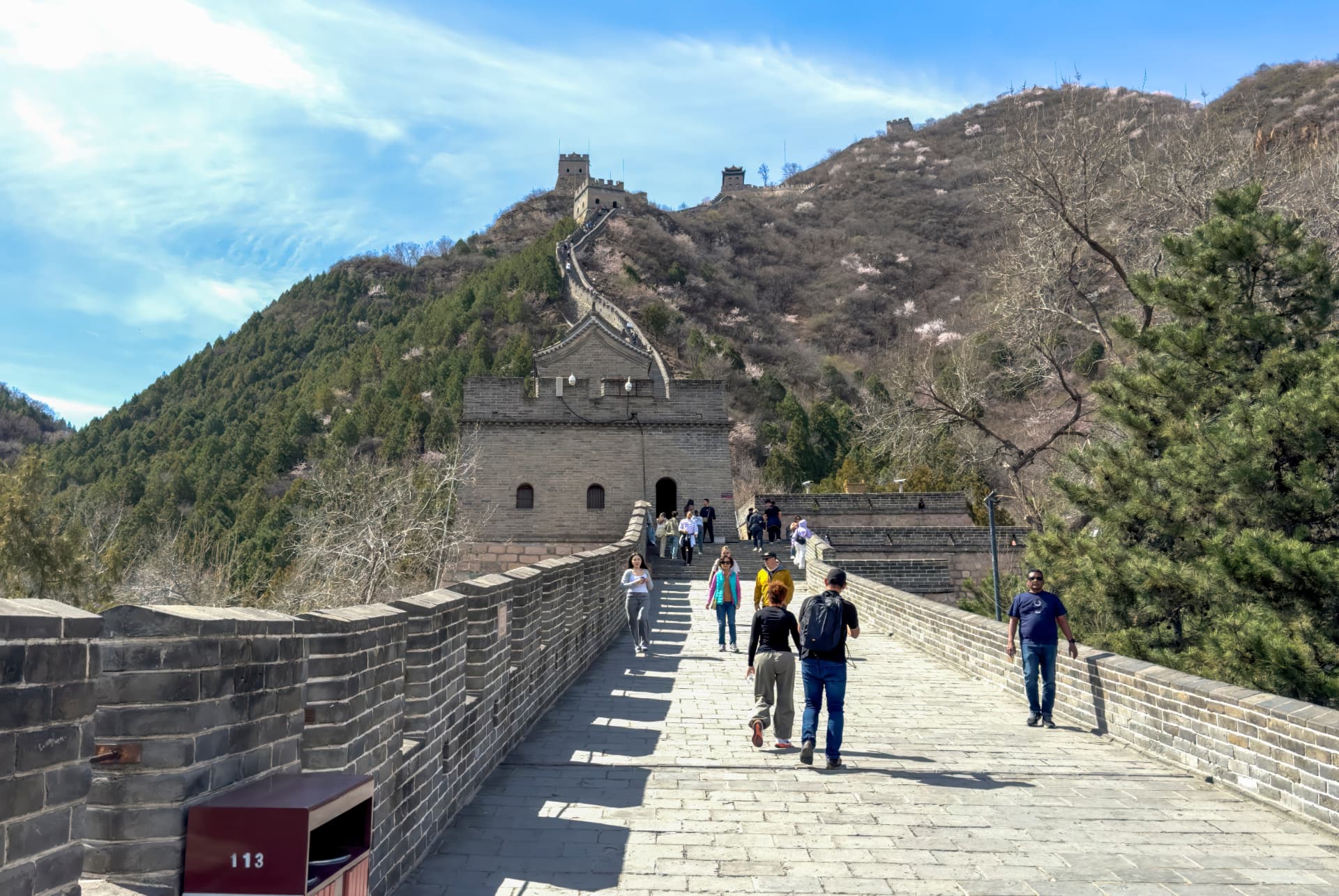
Around 70 km north-east of the city, Mutianyu gives you a long stretch of restored wall with watchtowers spaced for walking rather than queuing, climbing through forest that turns gold in late October. A cable car takes you up, a chairlift and toboggan bring you down, and there is a shuttle between the entrance and the lifts. It is developed, and that is the point: you spend your energy on the wall instead of on logistics. Two to three hours on the ramparts is enough to reach the quieter towers at either end.
Jinshanling — the walker's wall
Further out and far quieter, Jinshanling runs along an open ridge where restored stretches give way to weathered towers with grass growing out of the brickwork. It is the best section for photography and the best for the feeling that the wall goes on forever. Expect three to four hours on uneven steps with real ascent and descent, little shade and few facilities. It is a full day out from Beijing and worth it if you can walk.
Simatai — for the evening
Simatai is steep and dramatic, and it is the one section with an established evening visit, run on limited timed entries next to Gubei Water Town. Staying overnight in Gubei Water Town lets you combine the established Simatai evening visit with a slower visit to the surrounding area, rather than travelling back to Beijing immediately. Book the correct day or night admission product in advance; accommodation in Gubei Water Town is optional. Evening hours are seasonal, so confirm the current arrangements before you plan around them.
Huanghuacheng — the quiet alternative
The wall here meets a reservoir, with sections running down to the waterline. It is scenic, comparatively little visited and a good choice if you have already seen a classic restored section, or simply want a calmer day with a walk and a lakeside lunch.
Gubeikou — the quiet unrestored option
Gubeikou is mostly unrestored, but it is a far more conventional hiking destination than Jiankou. Established moderate routes run through it, including walks towards Jinshanling, and a typical loop is roughly 6–8 kilometres over three to four hours rather than scrambling over collapsed masonry. It is the quiet Great Wall section for people who want history and solitude over restored ramparts — go with a guide, or with a route you have checked thoroughly, and confirm current access before setting out.
Sections most people should skip
Badaling — unless the clock decides
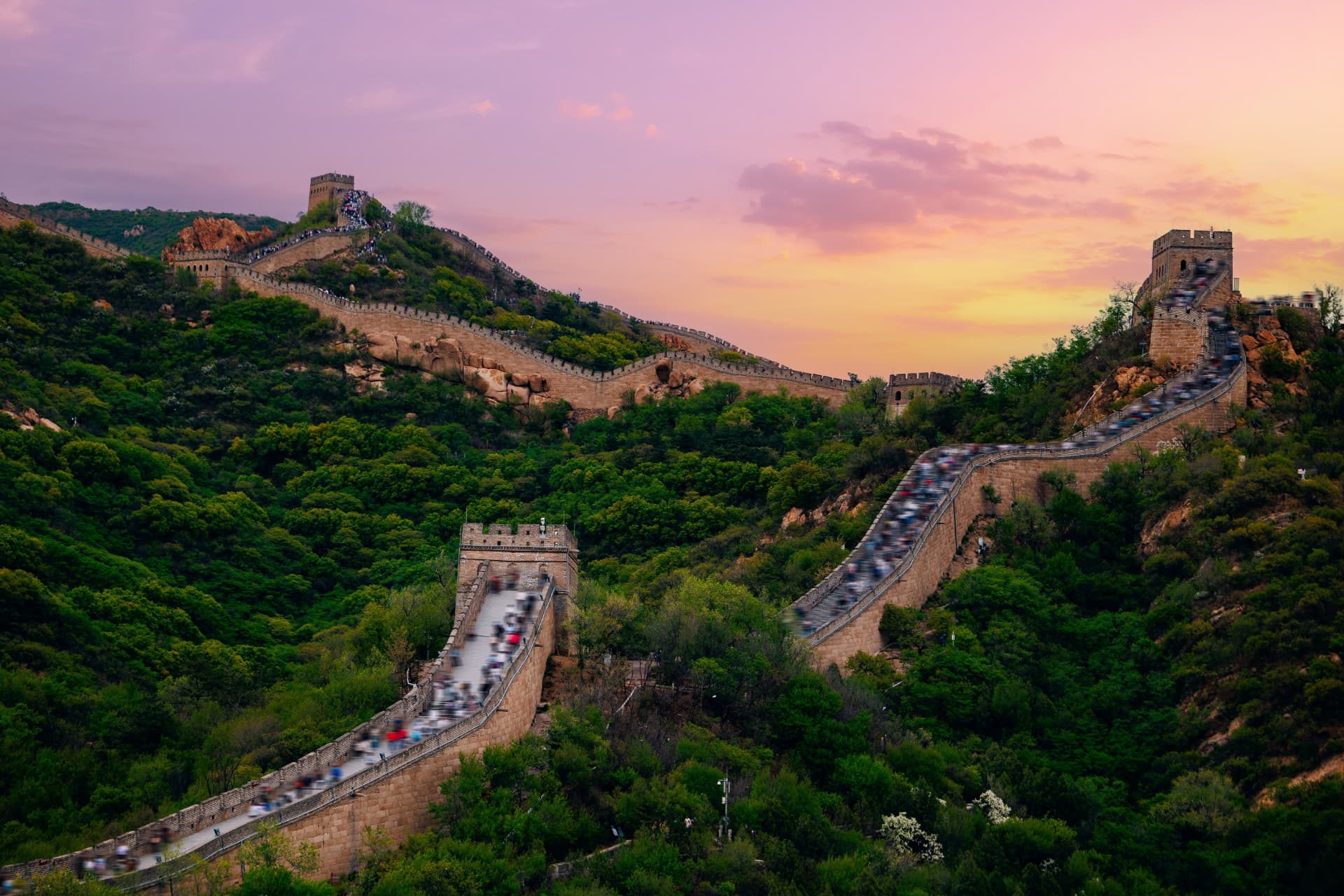
Badaling is the closest, the easiest to reach by train or bus, and the most rebuilt. It is the busiest and most heavily visited Great Wall section near Beijing: coaches arrive in waves from mid-morning and the narrow stretches become a slow shuffle. If your schedule genuinely cannot absorb the extra hour to Mutianyu, go — but visit at opening or later in the afternoon, allowing enough time before the published final admission and closing times, and walk away from the cable car in the less popular direction.
Jiankou — not an ordinary visitor attraction
Jiankou is the wild wall of the photographs: collapsed parapets, knife-edge ridges and no handrails. It is an unrestored and exceptionally hazardous section with collapsed masonry, exposed scrambling and changing access restrictions, and it is not an ordinary visitor attraction. Falls and rescue incidents have occurred on the unrestored wall. Check the current legal access situation before considering any route, and do not enter prohibited or closed areas.
Two sections in one day
Not a place, but the mistake that most often ruins a wall day. Add up the driving, the entrance walks and the lift queues and you get two hurried visits instead of one good one.
Tickets, prices and booking
There is no single Great Wall ticket. Each scenic area sets its own prices, opening hours and booking rules. Online reservations may require real-name identification details; international visitors should carry the original passport used for the booking and check the admission instructions for their chosen section. Admission itself is inexpensive, broadly in the region of ¥40–70 depending on section and season; the add-ons are where the money goes. Cable cars, chairlifts, toboggan rides and the internal shuttle buses are charged separately and can easily exceed the entrance fee.
General price ranges and access information reviewed September 2026 against the official Mutianyu and Badaling scenic-area information. Confirm the exact ticket, transport and lift prices for your chosen section shortly before travelling — see the official sources below. Weekends, Chinese public holidays and the summer peak are when advance booking matters most.
Where to book
If you have your own transport or a driver, buy admission from the scenic area itself. If you would rather not arrange a car, a return-transport package or a guided day trip is usually the simpler option for visitors without Mandarin.
OfficialMutianyu scenic areaAdmission, cable car and shuttle information direct from the section, with current opening hours and reservation rules.Official information PartnerKlookCompare the three products most visitors choose: transport-only return packages, admission plus transfer, and guided Great Wall day tours from Beijing.Compare optionsBefore you book: check the exact section, time on the wall, admission inclusion and whether cable-car or toboggan tickets cost extra.
The Klook link is an affiliate link — if you book through it we may earn a small commission at no extra cost to you. The scenic-area link is not monetized.
Getting there from Beijing
- Mutianyu — depending on the season, direct tourist buses or private shuttle services may operate from central Beijing or the Dongzhimen area. The more permanent independent option is public transport to Huairou followed by a local transfer. Roughly 1.5–2 hours each way.
- Badaling — the quickest by public transport, with rail and bus links from the city, around 1–1.5 hours. Note that a train ticket and wall admission are separate reservations.
- Jinshanling and Simatai — two to three hours each way; a car, a scheduled bus with a transfer, or an organised trip. Least practical to improvise.
- Huanghuacheng and Gubeikou — considerably less convenient by public transport. A driver or organized hiking transfer is usually the practical choice for international visitors.
- Jiankou — no ordinary visitor transport; see the warning above before considering it at all.
Ride-hailing works for the outbound journey but return pickups from remote scenic areas can be slow or unavailable in the late afternoon. Do not assume that an outbound DiDi journey guarantees an available return vehicle. If you use one, agree a return with the same driver or check the last scheduled bus before you start walking.
A realistic Mutianyu day plan
This is a Great Wall day trip from Beijing built around Mutianyu, the easiest Great Wall section for most visitors. Jinshanling and Simatai need different schedules because they are farther from central Beijing and have different admission and transport arrangements.
- 06:30–07:00 — leave central Beijing. The single biggest improvement you can make to a wall day is starting before the coaches.
- 08:30–09:00 — arrive at the scenic area, buy or collect admission, take the shuttle to the lift station.
- 09:00–12:00 — walk. Head away from the busiest access tower and keep going until the crowd thins; it usually does within two or three towers.
- 12:00–13:30 — descend by toboggan, chairlift or cable car at Mutianyu, depending on your chosen route and operating conditions, then eat in the village below. At Jinshanling, descend on foot or use the available cableway where appropriate.
- Mid-afternoon — travel back, allowing for weekend traffic on the return into Beijing.
Best time to go
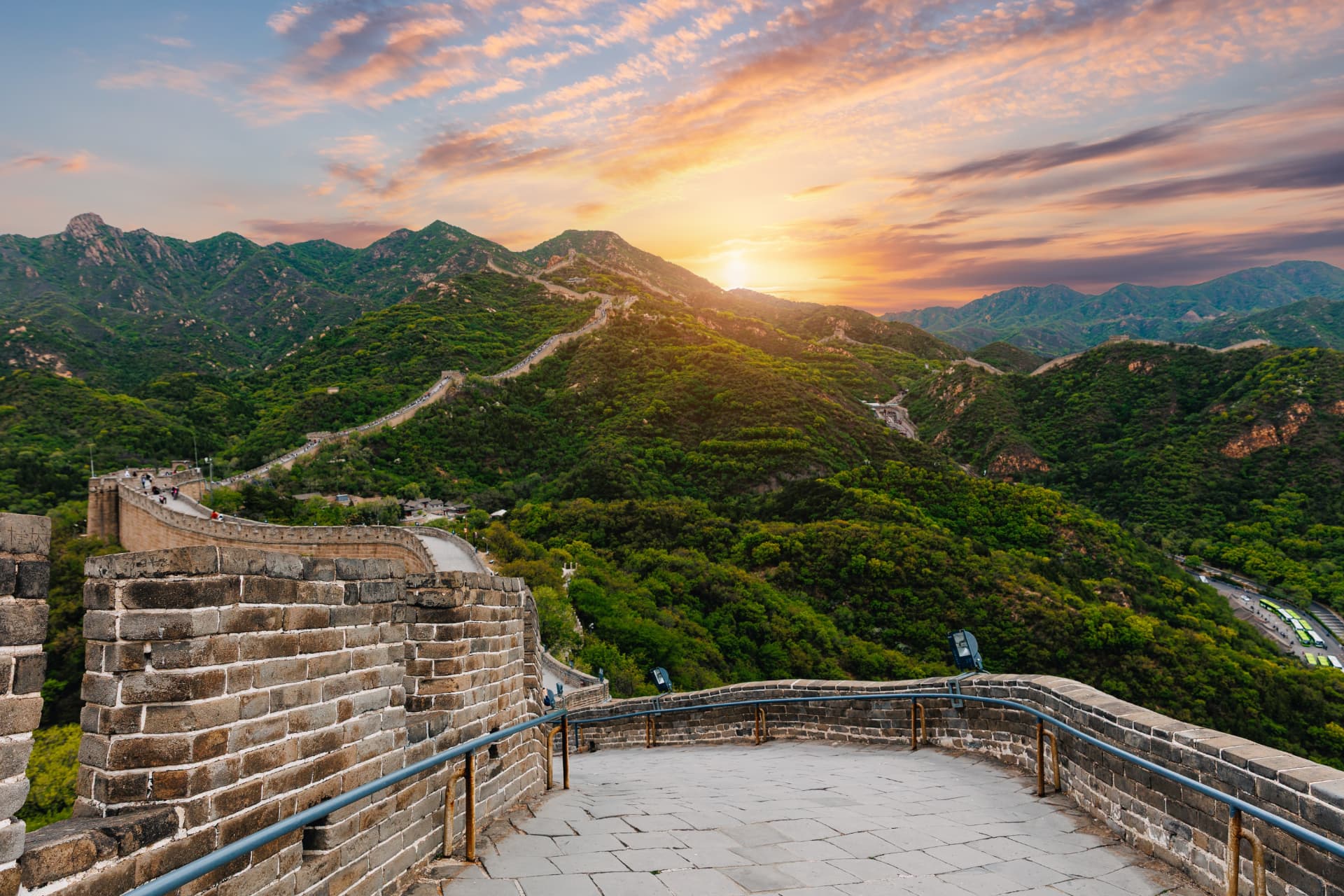
Late September to early November brings the clearest air, the best colour and comfortable walking temperatures. April and May are the other good window. July and August are hot, humid and often hazy, with afternoon thunderstorms that can close lifts. Winter is quiet and genuinely beautiful, but the steps ice up and some facilities run reduced hours. Avoid National Day Golden Week (the first week of October) if you possibly can. Around Spring Festival, check the holiday calendar, transport availability and scenic-area notices, because crowd levels and operating arrangements vary from day to day.
Common mistakes
- Defaulting to Badaling because it is the name everyone knows.
- Arriving between 10:00 and 14:00, when coach groups are at their thickest.
- Booking a "Great Wall tour" without checking which section it visits or how long you get on the wall.
- Planning a wild-wall hike at Jiankou as a first Great Wall visit.
- Turning up without the passport used for a real-name reservation.
- Underestimating the steps — they are steep, uneven and unforgiving on knees.
- Trying to fit two sections, or the wall and the Ming Tombs, into one afternoon.
FAQ
Which Great Wall section is best for a first visit?
Mutianyu, for most people. It is restored enough to walk comfortably, set on a wooded ridge with long views, has a cable car up and a toboggan down, and takes a far smaller share of visitors than Badaling. It suits families, older travellers and anyone who wants good photographs without a demanding hike.
Should I skip Badaling?
Not automatically, but it is the section most likely to feel crowded and commercial at peak times. It is the closest and easiest to reach by public transport, and the most heavily rebuilt and most heavily visited Great Wall section near Beijing — domestic coaches arrive in waves from mid-morning. Go only if transport time is the deciding factor, and visit at opening or later in the afternoon, allowing enough time before the published final admission and closing times.
Which section is best for hiking and photography?
Jinshanling is the best Great Wall section for hiking. Long ridgelines, a mix of restored and weathered towers and comparatively few people. Expect a three to four hour walk on uneven steps and a longer drive from Beijing — realistically a full day. Gubeikou is the other option for a quiet Great Wall section, with moderate unrestored routes of roughly 6–8 kilometres.
How much does a Great Wall ticket cost?
Admission is modest by European standards — broadly in the region of ¥40–70 depending on the section and season — but the extras add up: cable cars, chairlifts, toboggans and shuttle buses inside the scenic area are usually charged separately and can cost more than entry. Each scenic area sets its own prices, so confirm the exact amounts on the official page for your section shortly before you travel.
Do I need to book Great Wall tickets in advance?
Rules are set section by section, not centrally. Online reservations may require real-name identification details, so international visitors should carry the original passport used for the booking and check the admission instructions for their chosen section. On weekends, Chinese public holidays and through the summer, advance booking is the safer choice everywhere.
Can I hike Jinshanling to Simatai?
The traverse between the two is a classic long wall walk, but access arrangements, permitted routes and closures change and some links have been restricted in recent years. Treat it as a planned hike with a local operator or a checked current route rather than something to improvise on the day.
Is Jiankou worth it?
Jiankou is an unrestored and exceptionally hazardous section with collapsed masonry, exposed scrambling and changing access restrictions. It is not an ordinary visitor attraction and it is a poor choice for a first Great Wall visit. Falls and rescue incidents have occurred on the unrestored wall. Check the current legal access situation before considering any route, and do not enter prohibited or closed areas. If you want unrestored wall without that risk, Gubeikou is the more conventional hiking choice.
Can I see the Great Wall at night?
Simatai is the section with an established evening visit, next to Gubei Water Town, with seasonal evening hours that generally start in the late afternoon. Evening entry runs on limited timed slots and needs booking ahead; accommodation in the water town is optional. Check current arrangements before building a trip around it.
How long does a Great Wall day trip from Beijing take?
Mutianyu is roughly 1.5 to 2 hours each way, so allow seven to nine hours door to door. Badaling is faster, around 1 to 1.5 hours. Jinshanling and Simatai are two to three hours each way and fill a long day. One section per day is enough — combining two is a common planning mistake.
When is the best time of year to walk the wall?
Late September to early November for clear air and colour, and April to May for green ridges and mild temperatures. July and August are hot, hazy and thundery; deep winter is spectacular and quiet, but steps can be icy and some facilities close. Avoid National Day Golden Week if possible, and around Spring Festival check the holiday calendar, transport availability and scenic-area notices.
Official sources
Each section below is managed separately, so check the one you plan to visit rather than assuming rules carry across.
- Mutianyu scenic area (English) — admission, opening hours, cable car, chairlift and toboggan.
- Mutianyu official ticket booking
- Badaling scenic area — reservation rules and opening times.
- Jinshanling Great Wall
- Gubei Water Town / Simatai — day and evening admission, cable car and combined products.
- Beijing official tourism information — Huanghuacheng, Gubeikou and general visitor guidance.
- Beijing Subway — city transport to the suburban bus and rail departure points.
Prices, opening hours, reservation rules and access between sections are set locally and change. Confirm the details for your section and date before travelling.