Rome Attractions Map: Trastevere
Updated July 2026 · 8 min read
By AllTrips Rome Editorial Team · Last verified July 2026
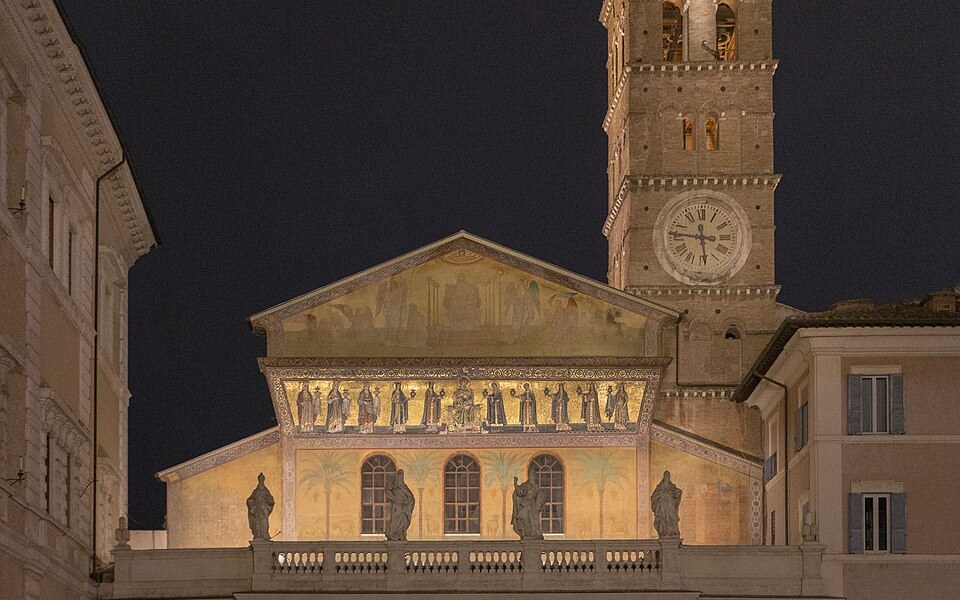
Trastevere is Rome's most photogenic central neighbourhood — narrow cobbled lanes, ivy-covered houses, small piazzas with fountains, and one of the city's densest concentrations of traditional trattorias. It sits across the Tiber from the historic centre, just south of the Vatican, and feels like a village inside the capital.
It is low on museum-style 'sights' — you come here to walk, eat, drink and climb up to Gianicolo for the view. Many of Trastevere's churches, piazzas and viewpoints are free, while Villa Farnesina, Palazzo Corsini and the Botanical Garden are paid attractions. Bigger ticketed sights such as the Vatican Museums and Colosseum are outside the neighbourhood.
Interactive Trastevere map
Tap a pin for sights, trattorias, gelato and the Gianicolo viewpoint. Two Google Maps routes below: the flat neighbourhood loop and the uphill Gianicolo extension.


 💎
💎
💎
💎
🏺
⛪
💎
📍
📍
📍
📍
📍
📍
📍
⛪
📍
💎
🏺
⭐
⭐
⭐
⭐
⭐
⭐
⭐
⭐
⭐
💎
⭐
+− Leaflet | © OpenStreetMap contributors
💎
💎
💎
💎
🏺
⛪
💎
📍
📍
📍
📍
📍
📍
📍
⛪
📍
💎
🏺
⭐
⭐
⭐
⭐
⭐
⭐
⭐
⭐
⭐
💎
⭐
+− Leaflet | © OpenStreetMap contributorsTwo walks: the flat loop and the Gianicolo climb
Trastevere splits into two very different walks. The neighbourhood loop is flat cobbles, about 2 km, 1.5–2.5 hours with stops. The Gianicolo extension is roughly 1.5 km uphill one way — around 3 km if you walk back down into central Trastevere — with about 80 m of climbing on Via Garibaldi, so allow another 1–1.5 hours and treat it as a separate outing — ideally at sunset.
Open the flat Trastevere loop in Google Maps →
Open the Gianicolo uphill extension in Google Maps →
Eating your way round instead? Open our Rome food, gelato and rooftop map.
Must-see in Trastevere
- Piazza Santa Maria in Trastevere — the heart of the neighbourhood, anchored by a 12th-century basilica and a central fountain that's the local meeting point at all hours.
- Basilica di Santa Maria in Trastevere — glowing Byzantine mosaics on the façade and inside the apse. Free.
- Santa Cecilia in Trastevere — free basilica with Maderno's famous reclining statue of St Cecilia. Access to Cavallini's frescoes is limited and separate, so check current convent visiting arrangements before you go.
- Villa Farnesina — Renaissance villa frescoed by Raphael (Triumph of Galatea, Loggia of Cupid and Psyche). €12 full admission; from 16 February 2026 opening hours are Monday–Saturday 09:00–14:00 (last admission 13:15), plus a special opening on the second Sunday of each month.
- Palazzo Corsini (Galleria Nazionale d'Arte Antica) — Caravaggio, Rubens and Murillo in a quiet noble palace. €15 combined ticket with Palazzo Barberini (currently valid for 20 days) — book the combined ticket on Tiqets.
- Orto Botanico — Rome's botanical garden tucked behind Palazzo Corsini at the foot of the Janiculum. €5 full admission (€4 reduced), open daily including Sundays and holidays.
- San Pietro in Montorio — free to enter when open; check the Real Academia de España's current access arrangements for Bramante's Tempietto in the courtyard.
- Fontana dell'Acqua Paola (Fontanone) — monumental fountain with a sweeping city view, on the climb up to the Gianicolo.
- Gianicolo (Janiculum Hill) — one of Rome's best-known free panoramic viewpoints, with the city's domes spread below.
- Villa Doria Pamphilj — the largest park in Rome (184 hectares), just west of Trastevere.
- Tiber Island (Isola Tiberina) — small boat-shaped island between Trastevere and the Jewish Ghetto, with two ancient bridges.
- Porta Portese — Rome's best-known Sunday-morning flea market along Via Portuense. Free entry; hours and vendor numbers vary.
The streets & squares to actually walk
- Vicolo del Cinque — classic ivy-covered Trastevere lane running off Piazza Trilussa.
- Via della Lungaretta — the main east–west artery through the neighbourhood, linking Viale Trastevere to Piazza Santa Maria.
- Piazza Trilussa — evening meeting point on the Trastevere side of Ponte Sisto.
- Ponte Sisto — pedestrian bridge from Campo de' Fiori into Trastevere.
- Piazza dei Mercanti — small, atmospheric square in the southern half of Trastevere.
- Piazza San Cosimato — neighbourhood square with a longstanding local market and cafés.
Tickets & nearby bookings
You can enjoy much of Trastevere without a ticket, but several worthwhile cultural sights are paid. None requires the same booking strategy as the Colosseum or Vatican Museums.
- Villa Farnesina — €12. Tickets are available online and onsite; online purchase is recommended by the villa. 2026 schedule: Mon–Sat 09:00–14:00 (last admission 13:15), plus a special opening on the second Sunday of each month.
- Orto Botanico — €5 full, €4 reduced. Open daily; current summer opening around 09:30–18:30 (check on the day).
- Galleria Corsini — €15 combined ticket with Palazzo Barberini, currently valid for 20 days. Book the combined ticket on Tiqets.
- Vatican Museums + Sistine Chapel — official admission is €20 without an online reservation or €25 with the official online timed reservation (€20 + €5). Book your preferred timed entry in advance, especially for busy dates — check timed tickets on Tiqets.
- Castel Sant'Angelo — €18 full admission (since 1 July 2026), a short walk north along the river. Book on Tiqets.
- Colosseum + Forum + Palatine — timed admission; check your chosen product's current release window. See our Colosseum tickets guide, or book on Tiqets.
A Trastevere afternoon & evening route
This route assumes you've already covered Villa Farnesina earlier in the day (its morning/early-afternoon opening schedule means it doesn't fit into a late-afternoon start). If you want Farnesina, do it in the late morning and start the walk below afterwards.
- 15:30 — Cross Ponte Sisto from Campo de' Fiori into Piazza Trilussa.
- 15:45 — Wander Vicolo del Cinque, Via della Lungaretta and the smaller lanes toward Piazza Santa Maria.
- 16:30 — Piazza Santa Maria in Trastevere and the basilica mosaics.
- 17:00 — Head south to Santa Cecilia in Trastevere for the basilica and the reclining statue.
- 17:45 — Climb Via Garibaldi up to San Pietro in Montorio, then Fontana dell'Acqua Paola.
- 18:30 — Continue up to the Gianicolo terrace for one of Rome's best-known free panoramas at sunset.
- 19:45 — Walk back down for aperitivo at Freni e Frizioni or Ma Che Siete Venuti a Fà.
- 21:00 — Dinner at a Trastevere trattoria such as Da Enzo al 29 or Tonnarello.
- 23:00 — Optional nightcap at Bar San Calisto on the piazza of the same name.
Where to eat in Trastevere
- Da Enzo al 29 — famous traditional Roman trattoria near Santa Cecilia; doesn't normally take reservations, so queues are common.
- Tonnarello (Via della Paglia, next to Piazza Santa Maria) — reliable classic Roman pastas in a busy central location.
- Antica Pesa (Via Garibaldi) — upscale Trastevere dining with a garden.
- Trapizzino (Piazza Trilussa) — Roman street-food pockets, casual lunch or evening snack.
- Suppli (Via San Francesco a Ripa) — long-running Trastevere takeaway known for fried suppli.
- Otaleg (Via di San Cosimato) — one of Rome's better-known gelaterie, with rotating creative flavours.
- La Tavernaccia da Bruno — Roman-Umbrian cooking near Porta Portese / Testaccio-edge (not central Trastevere). Worth the walk if you're staying in the south of the neighbourhood.
- Restaurants directly on the busiest piazzas often charge a premium for the location; check the current menu and reviews rather than choosing solely for the terrace.
Aperitivo & nightlife
- Freni e Frizioni (Via del Politeama) — converted mechanic's shop and one of Trastevere's most recognisable aperitivo bars.
- Bar San Calisto (Piazza San Calisto) — long-running old-school bar, popular with locals.
- Ma Che Siete Venuti a Fà (Via di Benedetta) — small craft-beer pub with a rotating tap list.
- Trastevere is a busy nightlife district well into the night on weekends — see the safety note below.
Where to stay in Trastevere
Trastevere suits travellers who prioritise atmosphere and food over proximity to major sights. There's no metro station, so most visitors rely on walking, buses and Tram 8 — but you'll wake up in some of the prettiest streets in Rome.
South Trastevere (Viale di Trastevere, Piazza Mastai) — quieter and often better value, still a short walk to the main piazzas.
North Trastevere (around Santa Maria) — most atmospheric but noisiest at weekends; light sleepers should ask for a courtyard-facing room.
Jewish Ghetto (just over Ponte Garibaldi) — a short walk to Trastevere, far quieter at night and inside the historic centre — a solid compromise.
Trastevere practical tips
- No metro station — Trastevere has no metro, so most visitors rely on walking, buses and Tram 8.
- Temporary service update, verified 3 August 2026: Tram 8 is currently replaced by buses during ATAC network modernisation works. Replacement buses still serve central Trastevere, Via Arenula and Largo Argentina. Check ATAC before travelling, because the tram may resume once the works finish.
- Cobblestones and uneven kerbs — comfortable shoes strongly recommended.
- Early morning is best if you want quieter streets and softer light for photography.
- Cars, scooters and delivery e-bikes share the lanes — stay alert, especially after dark.
- Trastevere is a busy central nightlife district. Use normal city precautions and keep valuables secure in crowded squares and on public transport.
- Carry a little cash for markets and small purchases, but cards are widely used.
- Sunday morning = Porta Portese flea market — go early for a calmer browse and fewer crowds.
Frequently asked questions
Is Trastevere worth visiting?
Yes — even on a short Rome trip. It's one of the most atmospheric central neighbourhoods, has a dense cluster of traditional trattorias, and the Gianicolo viewpoint above it is one of Rome's best-known free panoramas.
When is the best time to visit Trastevere?
Late afternoon into evening is a great time because you can combine the streets and piazzas with aperitivo and dinner. Earlier in the day is better if your priority is churches and quieter streets.
Is Trastevere safe at night?
Trastevere is a busy central nightlife district. It generally feels lively and well-populated in the evenings, but as anywhere in Rome, use normal city precautions and keep valuables secure in crowded squares and on public transport.
How do I get to Trastevere from the centre?
There's no metro in Trastevere itself. Tram 8 normally runs from central Rome along Viale Trastevere, but as of 3 August 2026 the tram is fully replaced by buses during ATAC network modernisation works and may resume when they finish — check ATAC on the day. Walking over Ponte Sisto from Campo de' Fiori is a scenic alternative.
What's the best free thing to do in Trastevere?
Climb up to the Gianicolo (Janiculum Hill) toward sunset — one of Rome's best-known free panoramas. Combine with Fontana dell'Acqua Paola and San Pietro in Montorio on the way up.
Do I need reservations for Trastevere restaurants?
Popular trattorias fill up on Friday and Saturday evenings; reserve ahead if there's somewhere specific you want. Some well-known places (such as Da Enzo al 29) don't normally take reservations, so expect a queue.
Is Trastevere a good area to stay in Rome?
Yes if you prioritise atmosphere and food, and don't mind that there's no metro. Second-time visitors often prefer it; first-timers sometimes prefer a base closer to Termini or the Pantheon.
How long do I need in Trastevere?
A half-day afternoon plus dinner is the standard. Add Villa Farnesina earlier in the day and the Gianicolo climb to turn it into a fuller visit.