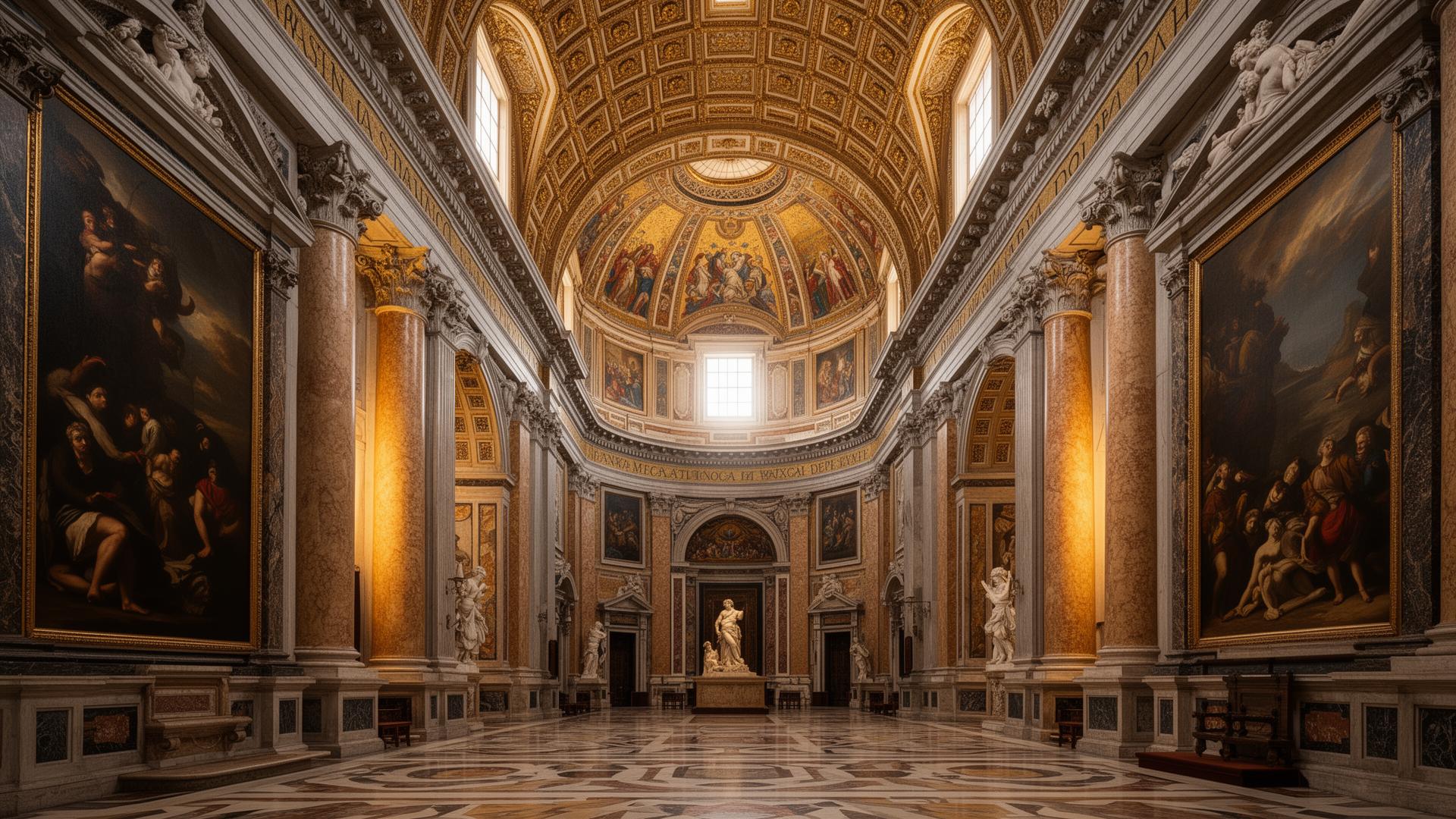
 Free Renaissance Basilica · 2 Caravaggios
Basilica Santa Maria del Popolo
Two Caravaggios, a Raphael chapel finished by Bernini, Pinturicchio frescoes and Bramante's apse — Rome's most concentrated free art-church, one minute from Metro Flaminio.
30–45 minNormally free2 CaravaggiosRaphael + BerniniPiazza del Popolo, 12, 00187 RomaOpen on MapPlan Your Visit
Compare tickets, tours and stays — booking ahead usually gives more choice
Book a TourHotels NearbyBy AllTrips Editors••9 min readSanta Maria del Popolo is the Renaissance and Baroque basilica tucked into the north-east corner of Piazza del Popolo, one minute from Metro Flaminio. Behind its quiet façade sits one of the most extraordinary concentrations of art in Rome: two Caravaggio masterpieces in the Cerasi Chapel (the Crucifixion of Saint Peter and the Conversion of Saint Paul, both 1601), Raphael's Chigi Chapel with its mosaic dome — substantially modified and completed by Gian Lorenzo Bernini between 1652 and 1656 — Pinturicchio frescoes in the Della Rovere Chapel, and Bramante's apse. Entry is normally free, in the same chapels they have occupied since the 1500s and 1600s. Bring a euro in coins for the chapel lights.
📋 In This Guide
Duration
30–45 min
Cost
Free (+€1 lights)
Photos
Yes — no flash
Highlight
2 Caravaggios
Why Visit Santa Maria del Popolo?
The Borghese Gallery makes you book three weeks in advance and pay €15 to see one Caravaggio. Santa Maria del Popolo, ten minutes' walk away, has two — facing each other in the same chapel — for free, no booking, no queue. Add Raphael's Chigi Chapel completed by Bernini, Pinturicchio's frescoes, Bramante's apse and a pair of Sansovino tombs, and you have probably the densest free art experience in the whole city.
Two Caravaggios in One Chapel
The Cerasi Chapel is the only place in Rome where two Caravaggios face each other — the Crucifixion of St Peter and the Conversion of St Paul, both 1601.
Raphael Meets Bernini
The Chigi Chapel was designed by Raphael in 1513 and substantially modified and completed by Bernini between 1652 and 1656 — a unique collaboration between the two greatest artists of the Renaissance and the Baroque.
Pinturicchio + Bramante
The Della Rovere Chapel holds Pinturicchio's luminous Nativity (1488), and the apse behind the altar is one of Bramante's earliest Roman works — early Renaissance at its most refined.
Normally Free, No Booking
Entry is normally free with no ticket and no reservation — but the church can close for services, weddings, restoration or security reasons, so it is worth checking before a special trip. Bring €1 in coins for the Cerasi illumination box.
What to See Inside
Cerasi Chapel — the Caravaggios
In the left transept beside the high altar. Drop a coin for the lights: facing the altar, Caravaggio's Crucifixion of Saint Peter hangs on the left wall and the Conversion of Saint Paul on the right, with Annibale Carracci's Assumption between them on the central altar — the clash of late-Renaissance idealism and Baroque realism that gave European painting its modern direction.
Chigi Chapel — Raphael & Bernini
Second chapel on the left aisle. Designed in 1513 by Raphael for the banker Agostino Chigi: pyramidal tombs, classical pilasters, a spectacular mosaic dome of God creating the planets. Substantially modified and completed between 1652 and 1656 by Bernini under Pope Alexander VII (a Chigi) with the marble Daniel in the Lions' Den and Habakkuk and the Angel.
Della Rovere Chapel — Pinturicchio
First chapel on the right. Pinturicchio's Nativity (1488–1490) glows above the altar, surrounded by a fresco cycle on the life of St Jerome — early-Renaissance painting of breathtaking delicacy.
Bramante's Apse
Walk behind the high altar to admire the deep semicircular apse designed by Donato Bramante for Pope Julius II — one of his earliest Roman works, a few years before he started St Peter's.
The Sansovino Tombs
Flanking the apse, the magnificent wall tombs of cardinals Ascanio Sforza and Girolamo Basso della Rovere, carved by Andrea Sansovino (1505–1507) — High-Renaissance funerary sculpture at its most refined.
The Bernini Façade Touches
Look up at the gilded stucco on the nave vault and the organ lofts — Bernini's restrained Baroque restyling of 1655–1660 under Alexander VII, designed not to overwhelm the older Renaissance bones of the church.
The Caravaggios — A Closer Look
In 1600 the papal Treasurer-General Tiberio Cerasi bought the chapel in the left transept beside the high altar and commissioned the two hottest painters in Rome — the late-Renaissance master Annibale Carracci for the altarpiece, and the dangerous, brilliant Caravaggio for the side walls. The contract is dated September 1600. Caravaggio delivered both paintings within a year.
The Crucifixion of Saint Peter (left wall) shows three labourers heaving the cross upright, Peter already nailed and crucified upside down at his own request. There is no theology in their faces — just the physical effort of the work. The light falls from the upper left, exactly matching the chapel's real window.
The Conversion of Saint Paul on the Road to Damascus (right wall) is even more radical: most of the canvas is taken up by the back of a horse. Saul lies on the ground, blinded, arms flung up to a divine light only he can see. No sky, no soldiers, no rhetoric — the entire spiritual event happens inside one man's head.
Carracci's Assumption on the altar is the only traditional element: a beautifully composed late-Renaissance Virgin rising into a sky of angels. The deliberate contrast — old style vs new — is the chapel's whole point. After 1601 European painting would never be the same.
Raphael's Chigi Chapel — Across Two Centuries
In 1513 the Sienese banker Agostino Chigi — the richest man in Rome and Pope Julius II's personal banker — commissioned Raphael to design his family chapel here. Raphael produced a complete classical scheme: a square plan covered by a perfect dome, four pyramidal tombs at the corners, paired Corinthian pilasters, and at the apex a mosaic of God the Father creating the planets, designed by Raphael and executed by the Venetian mosaicist Luigi de Pace in 1516.
Raphael died in 1520 with the chapel only partly built. Agostino Chigi died the year after. The chapel sat unfinished for 135 years.
In 1655 Pope Alexander VII — born Fabio Chigi, of the same Sienese family — gave Gian Lorenzo Bernini the job of finishing his ancestor's chapel. Bernini added two new sculptures in the empty corner niches: Daniel in the Lions' Den (twisting in prayer) and Habakkuk and the Angel (the angel grabbing Habakkuk by the hair to fly him to Daniel) — a single Baroque action sweeping across the whole chapel. He also redesigned the floor, with its famous winged skeleton and the inscription Mors ad caelos — death rising to heaven.
The result is the only chapel in Rome where you can see Raphael and Bernini directly collaborating — a 130-year handshake between the Renaissance and the Baroque.
Santa Maria del Popolo Through History
1099Paschal II's Chapel
Pope Paschal II builds a small chapel on the spot where, according to legend, the emperor Nero was buried under a walnut tree haunted by demons. Funded 'by the people' (de populo) — giving the church its name.
1227Augustinian Order
Pope Gregory IX entrusts the church to the Augustinians, who still run it today. The chapel is enlarged in Romanesque style.
1472–1477Renaissance Rebuilding
Pope Sixtus IV (della Rovere) commissions a complete rebuilding in early Renaissance style — one of the first true Renaissance churches in Rome.
1488–1490Pinturicchio Frescoes
Pinturicchio decorates the Della Rovere Chapel with the Nativity and a fresco cycle on the life of St Jerome — luminous early-Renaissance painting.
c. 1500Bramante's Apse
Donato Bramante is called by Pope Julius II to extend the apse — one of his earliest Roman commissions before St Peter's.
1513–1516Raphael's Chigi Chapel
Raphael designs the Chigi Chapel for the Sienese banker Agostino Chigi: pyramidal tombs, mosaic dome of the Creation of the World, classical pilasters.
1600–1601Caravaggio's Cerasi Masterpieces
Tiberio Cerasi commissions Caravaggio for two side panels of his chapel: the Crucifixion of St Peter and the Conversion of St Paul on the Road to Damascus, with Annibale Carracci's Assumption on the altar — Roman Baroque is born.
1655–1657Bernini Completes the Chigi
Pope Alexander VII (a Chigi) commissions Gian Lorenzo Bernini to substantially modify and complete Raphael's chapel between 1652 and 1656 — Bernini adds the marble sculptures of Daniel in the Lions' Den and Habakkuk and the Angel.
1658Bernini Restyles the Façade
Bernini also restyles the church's interior in Baroque taste under Alexander VII — adding stucco, gilding and the existing organ lofts.
1822The Grand Tour Era
By the early 19th century, Santa Maria del Popolo is a fixed stop on the Grand Tour, drawing artists and travellers eager to see its Renaissance and Baroque masterpieces.
1944World War II
Rome's open-city status spares the church from bombing damage; the Caravaggios remain in place throughout the war.
2009Cerasi Restoration
A meticulous restoration of the Cerasi Chapel cleans the Caravaggios and the Carracci altarpiece, recovering colours hidden under centuries of candle smoke.
2026Free Caravaggio in 2026
While the Borghese Gallery requires booking and a ticket to see one Caravaggio, Santa Maria del Popolo offers two — for free, in the same chapel setting they have occupied for centuries.
Entry & Hours 2026
🕐 Opening Hours
- Mon–Sat (indicative): 07:30 – 12:30 · 16:00 – 19:00
- Sun (indicative): 07:30 – 13:30 · 16:30 – 19:30
- Typically closed: midday, during Mass and on feast days
- These hours are indicative only — official sources direct visitors to check at the church for current visiting conditions.
💶 Cost
- Entry: Normally free
- Booking: Not required
- Chapel lights: €0.50–€1 coins (essential for Caravaggios)
- Audio guide: Not provided — bring your own app
Best Time to Visit
Best of Day
09:00–11:00 for Caravaggios in original morning light from the chapel window. 17:00–18:30 also excellent and quietest.
Best Day
Tue–Fri are quietest. Saturdays may have weddings; Sunday mornings are dominated by Mass.
Best Season
Year-round indoor stop — perfect rainy-day refuge and blissfully cool in August.
Dress Code & Etiquette
Dress: Shoulders and knees covered for both men and women. A light scarf is enough.
Silence: Speak in whispers. The Augustinians live next door and take quiet seriously.
Photography: Allowed without flash. No tripods, no commercial photography.
Mass: If a service is in progress, sit quietly at the back or come back later — no tourist circulation during the liturgy.
Coins: Always carry €0.50 and €1 coins — chapel lights take exact change and there is no change machine inside.
Vs Other Roman Art Churches
| Church | Star Artist | Cost | Booking | Best For |
|---|---|---|---|---|
| Santa Maria del Popolo | 2 Caravaggios + Raphael + Bernini | Free (€1 lights) | Never | Densest free art chapel in Rome |
| San Luigi dei Francesi | 3 Caravaggios (Contarelli) | Free (€1 lights) | Never | Caravaggio's St Matthew cycle |
| Sant'Agostino | Caravaggio + Raphael | Free | Never | Madonna of the Pilgrims |
| Borghese Gallery | Caravaggio + Bernini + Raphael | €15+ | Required (weeks ahead) | Bernini's Apollo & Daphne, Pluto & Proserpina |
| Santa Maria sopra Minerva | Michelangelo + Filippino Lippi | Free | Never | Christ the Redeemer + Carafa Chapel |
Common Mistakes to Avoid
Coming at midday
The church closes 12:30–16:00 every day. Plan for morning or late afternoon — never lunchtime.
Forgetting coins
Without €0.50–€1 coins, the Cerasi Chapel stays dark and the Caravaggios are invisible. Stop at a bar for change first.
Using flash on the Caravaggios
Flash is forbidden and damages the pigments. Bump up your ISO and shoot when the chapel light is on.
Skipping the Chigi Chapel
Most visitors rush in for the Caravaggios and out again. The second chapel on the left — Raphael completed by Bernini — is just as important.
Wearing shorts or tank tops
You will be turned away or asked to cover up. Pack a scarf — it works for every Roman church.
Not walking behind the altar
Bramante's apse and the Sansovino tombs hide behind the high altar — don't leave without doing the full loop.
Borghese & Colosseum Tickets Nearby
Santa Maria del Popolo is a perfect free warm-up before the timed-entry giants. Borghese Gallery is a 15-minute walk uphill through Villa Borghese; the Colosseum takes Metro Line A from Flaminio to Termini, then a transfer to Line B — about 15–20 minutes in total.
Colosseum Priority Entrance
Best for: First-time visitors
~2 hoursSkip-the-line access to the Colosseum with entry to Roman Forum and Palatine Hill included. Perfect for first-time visitors.
- Skip-the-line entry
- Colosseum access
- Roman Forum included
- Palatine Hill included
🎟️ Compare Prices:
TiqetsKlookTrip.comColosseum Guided Tour
Best for: History enthusiasts
~3 hoursExpert-led tour with professional guide sharing gladiator history, architecture secrets, and ancient Roman stories.
- Professional English-speaking guide
- Skip-the-line entry
- In-depth historical commentary
- Small group experience
🎟️ Compare Prices:
TiqetsKlookTrip.comColosseum Arena & Underground
Best for: Unique experience seekers
~3.5 hoursWalk where gladiators fought on the arena floor and explore the underground chambers where they awaited their fate.
- Arena Floor access
- Underground chambers access
- Roman Forum & Palatine Hill
- Expert guided tour included
🎟️ Compare Prices:
TiqetsKlookTrip.comPair Your Visit With
Piazza del Popolo
The grand neoclassical piazza outside the church door — twin churches, Egyptian obelisk, Pincio ramps.
Villa Borghese & Pincio
5 min uphill to the Pincio terrace, then Rome's biggest park — sunset, lakes, museums.
Spanish Steps
10-min flat walk down Via del Babuino — Rome's most famous staircase and Bernini's Barcaccia fountain.
Highlights at a Glance
- Two Caravaggio masterpieces in the Cerasi Chapel — the only place in Rome with two Caravaggios facing each other
- Raphael's Chigi Chapel with mosaic dome, completed by Bernini 130 years later
- Bernini's marble Daniel and Habakkuk — the only twin Bernini sculptures still in their original chapel
- Pinturicchio frescoes in the Della Rovere Chapel (1488–1490)
- Bramante's apse — one of his earliest Roman works
- Sansovino tombs of cardinals Sforza and Della Rovere
- Annibale Carracci's Assumption on the Cerasi altar
- Normally free entry, one minute from Metro Flaminio
How to Get There
By Metro
- Flaminio (Line A): 1-min walk through the Porta del Popolo — easiest option from Termini, the Vatican or the Spanish Steps
- Spagna (Line A): 10-min flat walk along Via del Babuino
By Tram
Tram 2 terminates at Flaminio (1-min walk), connecting from Piazzale Flaminio to the northern suburbs.
By Bus
Lines 61, 89, 117 (electric), 119, 160, 490, 495 all stop at Piazza del Popolo or Flaminio.
On Foot
From the Spanish Steps: 10 min along Via del Babuino. From the Pantheon: 15 min via Via di Ripetta. From St Peter's Square: 25 min across Ponte Cavour and along Via di Ripetta.
Where to Stay Near Santa Maria del Popolo
Looking for convenient accommodation near Santa Maria del Popolo? Stay within walking distance to make the most of your visit.
Hotels Near This AttractionTop Rated HotelsBudget-Friendly OptionsLuxury HotelsCentral locations with easy access to Santa Maria del Popolo and other attractionsFrequently Asked Questions
Is Santa Maria del Popolo free to enter in 2026?
Entry is normally free, with no ticket and no booking required. The basilica is an active parish church run by the Augustinian Order, so it can close for services, weddings, restoration or security reasons — check at the church for current visiting conditions. Bring €0.50–€1 coins for the chapel illumination boxes (especially the Cerasi Chapel) — without lights the Caravaggio paintings are almost invisible.
What are the opening hours?
Indicatively, Monday–Saturday 07:30–12:30 and 16:00–19:00, and Sunday 07:30–13:30 and 16:30–19:30, with the church typically closed at midday and during religious services. These hours are not officially confirmed and can change, so check at the church for current visiting conditions before you go.
Which Caravaggios are inside?
Two of his greatest works hang in the Cerasi Chapel, in the left transept beside the high altar: Caravaggio's <em>Crucifixion of Saint Peter</em> hangs on the left wall and the <em>Conversion of Saint Paul</em> on the right, with Annibale Carracci's 'Assumption' on the central altar — a deliberate three-way conversation of late-Renaissance versus early-Baroque painting.
What is the Chigi Chapel?
The second chapel on the left, designed in 1513–1516 by Raphael for the wealthy Sienese banker Agostino Chigi. Raphael laid out the architecture, the mosaic dome (Creation of the World) and two of the four pyramidal tombs. The chapel was substantially modified and completed between 1652 and 1656 by Gian Lorenzo Bernini under Pope Alexander VII (a Chigi), who added the marble sculptures of Daniel and Habakkuk and the Angel — a unique collaboration across two centuries.
How long do I need for a visit?
30–45 minutes for the major works (Cerasi, Chigi, Della Rovere chapels and the Bramante apse). 60–75 minutes if you read every chapel label, study the Pinturicchio frescoes and want to see the Carracci altarpiece in good light. Easily combined with Piazza del Popolo, the Pincio terrace and Villa Borghese.
Is there a dress code?
Yes — it is an active parish church. Shoulders and knees must be covered for both men and women. Sleeveless tops, shorts above the knee and short skirts may be refused. A light scarf is enough.
Can I take photos inside?
Yes, photography without flash is permitted. Tripods, video and commercial photography require written permission from the parish. Be silent if Mass is being celebrated, and never use flash on the Caravaggios — flash is normally prohibited or inappropriate.
What's the connection with Nero?
Medieval legend held that the wicked emperor Nero was buried under a walnut tree on this exact spot and that demons haunted the site. In 1099 Pope Paschal II is said to have cut down the tree, exorcised the area and built the first chapel here — funded 'by the people' (de populo), which gives the church its name.
How do I get to Santa Maria del Popolo?
Metro Line A to Flaminio (1-min walk through the Porta del Popolo). Trams 2 stops at Flaminio. Buses 61, 89, 117, 119, 160, 490 stop at Piazza del Popolo. From Piazza di Spagna it is a flat 10-minute walk along Via del Babuino. From Termini, take Metro A direct (10 min).
Related Attractions
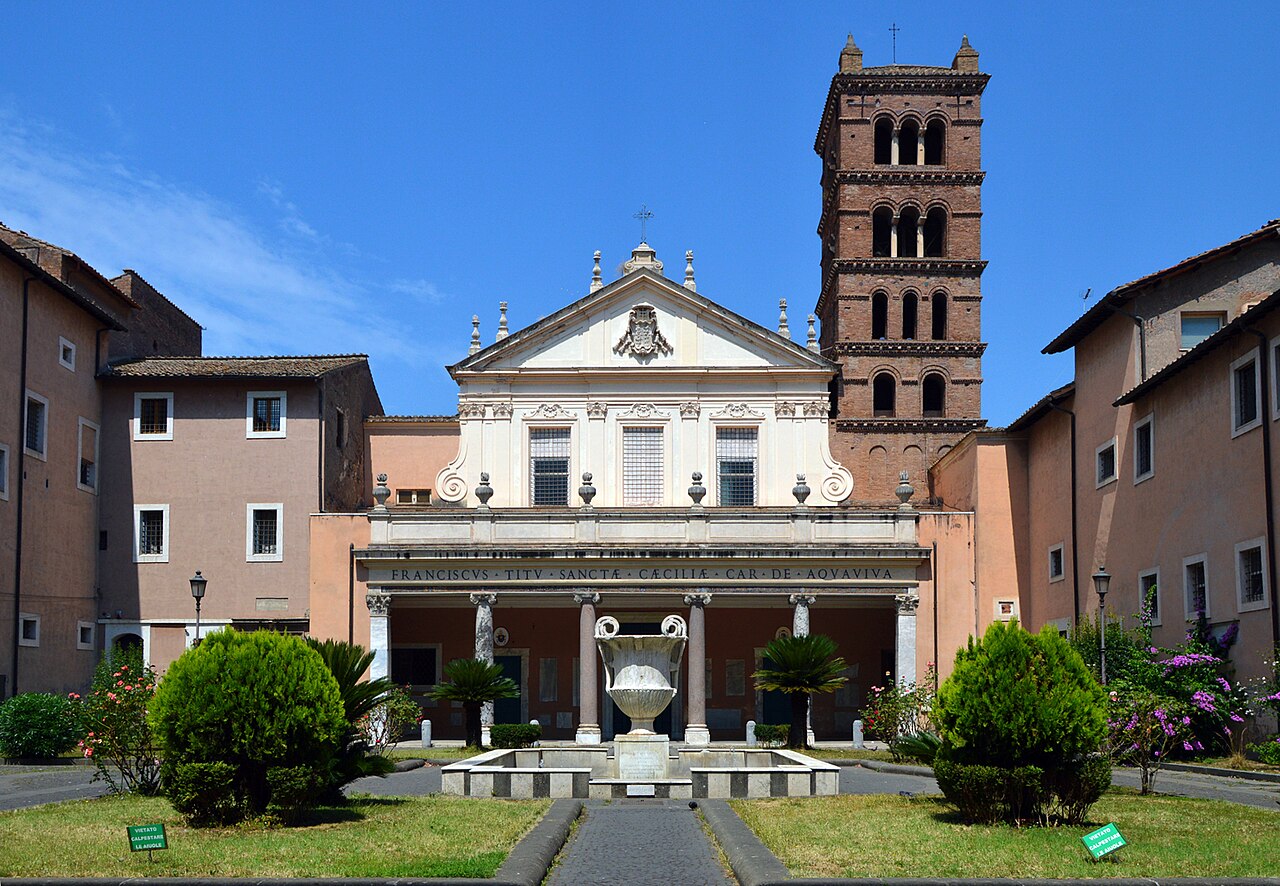
Santa Cecilia in Trastevere
Beautiful basilica with Maderno's sculpture and ancient remains
Explore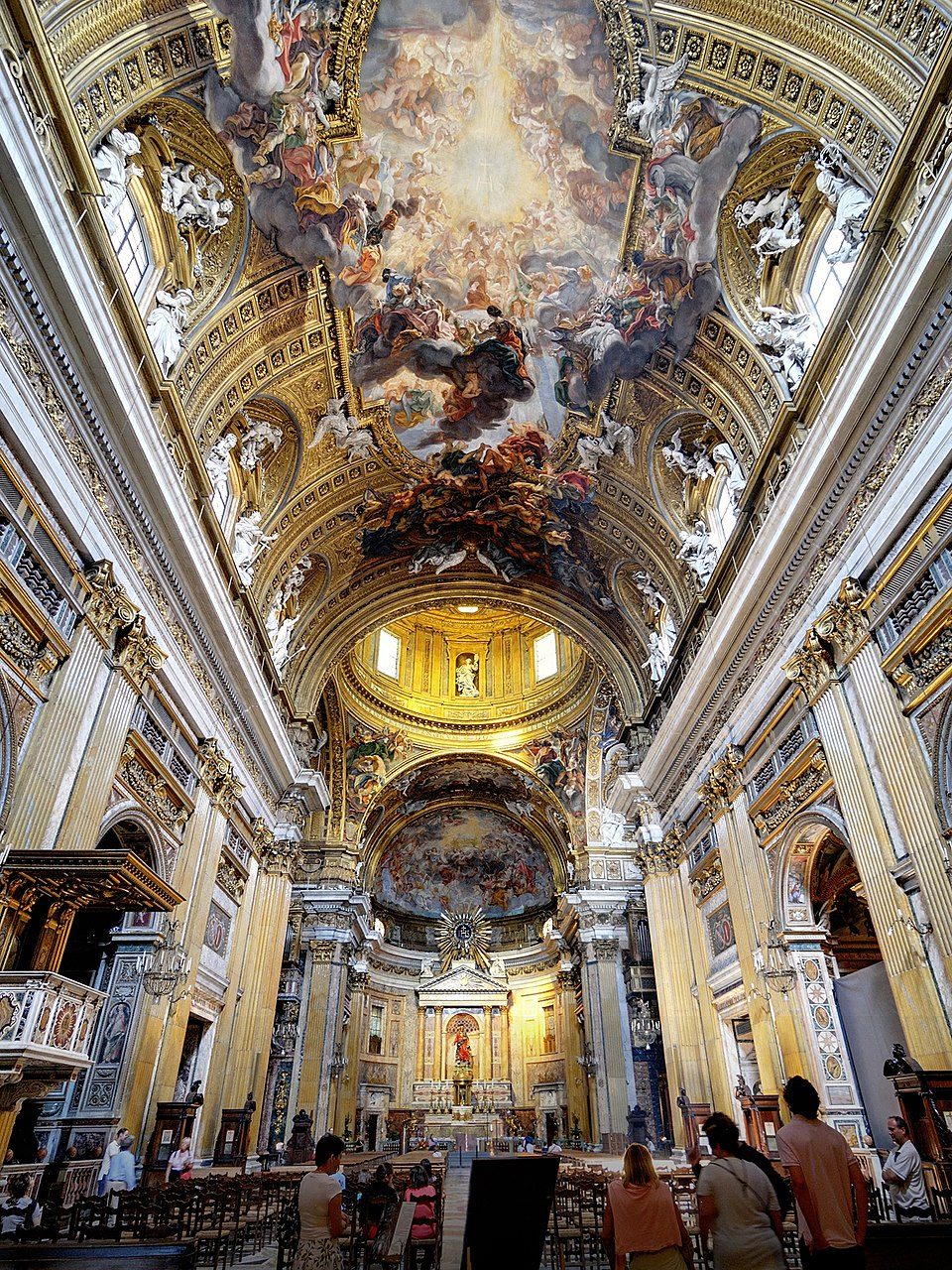
Chiesa del Gesù
Mother church of the Jesuits with stunning ceiling fresco
Explore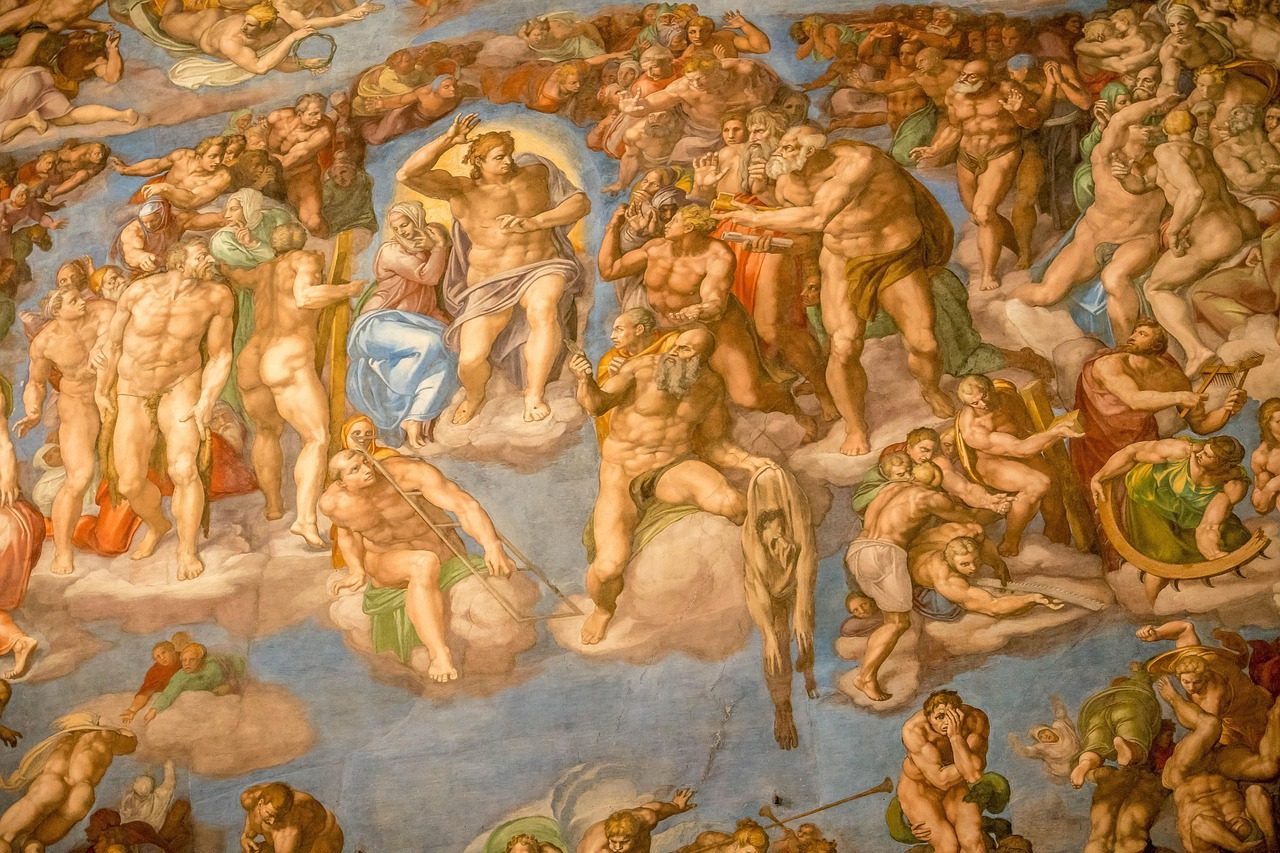
Vatican Museums
World's most visited cultural attraction—home to Sistine Chapel
Explore
Basilica di San Paolo fuori le Mura
Rome's second largest church over St. Paul's tomb
Explore
Catacombs of Domitilla
Rome's oldest catacombs—17km of tunnels and underground basilica
Explore
Museum of Illusions Rome
70+ mind-bending optical illusions and holograms
ExploreQuick Planning Guide
⏱️ Time Needed
30–45 minutes
💰 Cost
Free (€1 coins for chapel lights)
🎫 Reservation
Not required — occasional closures possible
♿ Accessibility
Step-free main entrance from piazza
📅 Best Time
09:00–11:30 or 16:30–18:30
👨👩👧👦 Family Friendly
Yes — short, dramatic, free
🌡️ Weather
Indoor — perfect rainy-day stop
Nearby Attractions
Piazza del Popolofront door
Pincio Terrace5-min walk uphill
Villa Borghese Gardens10-min walk
Borghese Gallery15-min walk
Spanish Steps10-min walk
Ara Pacis Museum10-min walk
You May Also Like
Piazza del PopoloPincio TerraceVilla Borghese GardensFeatured In These Itineraries
Classic Rome 3-DayHidden Gems of RomeFree Things to Do in RomeEssential Tips
- ✓ Bring €0.50–1 coins for the Cerasi Chapel lights
- ✓ Cerasi Chapel is in the left transept beside the high altar
- ✓ Chigi Chapel is the second chapel on the left aisle
- ✓ Visit early morning before tour groups arrive
- ✓ Closes 12:30–16:00 — never come at midday