Aventine Hill Attractions: Orange Garden, Keyhole, Churches and Map
Updated · 10 min read
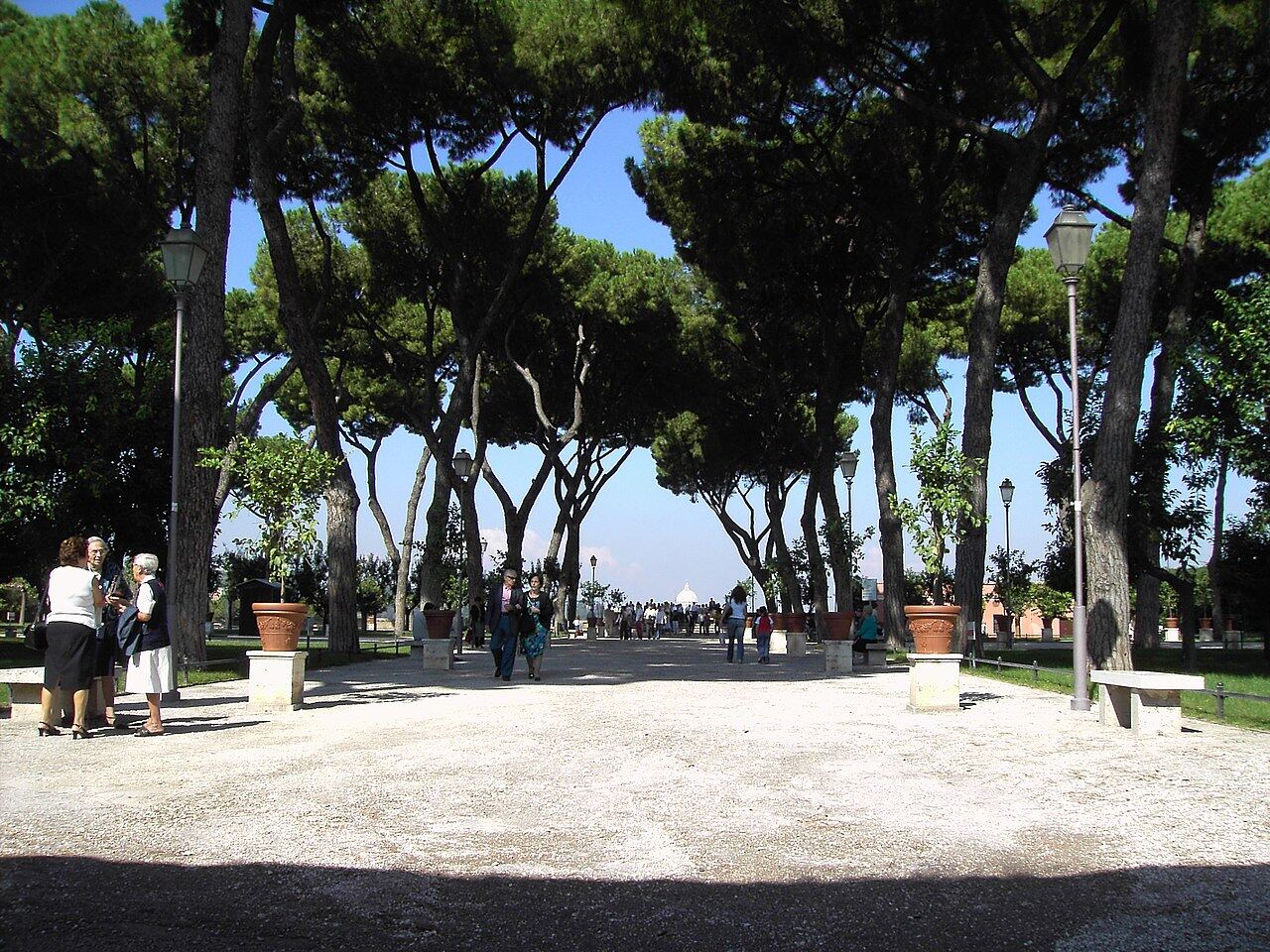
The Aventine is one of Rome’s seven hills, but its appeal is less about monumental ruins than the contrast between gardens, churches and unexpected views. The Orange Garden, Santa Sabina and the Knights of Malta keyhole are the headline sights. Look a little further and you find Piranesi’s decorated square, a Benedictine church and another small garden overlooking the city.
Is Aventine Hill worth visiting?
Choose the Aventine if you want a panoramic view without buying a viewpoint ticket, or if you enjoy architecture that spans very different periods. Santa Sabina offers an unusually clear sense of an early Christian basilica; the piazza near the keyhole turns an ordinary streetscape into an eighteenth-century architectural composition.
The hill is not an undiscovered secret: the keyhole can have a queue, and the Orange Garden terrace attracts visitors in good evening light. If you only want a quick photograph, focus on the garden and square. If churches interest you, Santa Sabina is the most substantial reason to linger. The Rose Garden and Circus Maximus belong to the lower slopes and surroundings, rather than the hilltop core.
Aventine Hill attractions map
The numbered pins locate the sights described below. The square and keyhole share one pin because the viewing point is at the square’s villa gate. The Rose Garden and Circus Maximus markers are below the hill; the latter marks a public view, not the archaeological ticket entrance.


 12345678+− Leaflet | © OpenStreetMap contributors
A hill with layered history
The Aventine’s role in Roman legend reaches back to the city’s founding story: in one tradition, Remus watched for omens from the Aventine while Romulus watched from the Palatine, and the outcome decided which brother would found the city. In the Republic the hill became associated with Rome’s plebeians, and temple foundations stood here — one long linked with the goddess Diana. None of that survives as a monumental site to walk through, which is why the Aventine today reads as a green, residential hill rather than an archaeological one.
Later centuries filled it with monasteries, convents and the walled compounds of religious orders, many of which still occupy large parts of the hilltop. That pattern of enclosed land is why the keyhole works at all: the view aligns through a private garden avenue, and the hill stays quiet because so much of it sits behind walls.
Orange Garden: the Aventine’s panoramic terrace
The Giardino degli Aranci is also called Parco Savello. It occupies part of the former Savelli fortress, whose medieval walls still enclose the garden. The present park was laid out by Raffaele De Vico in 1932: the symmetrical central avenue is designed to pull your eye towards the belvedere.
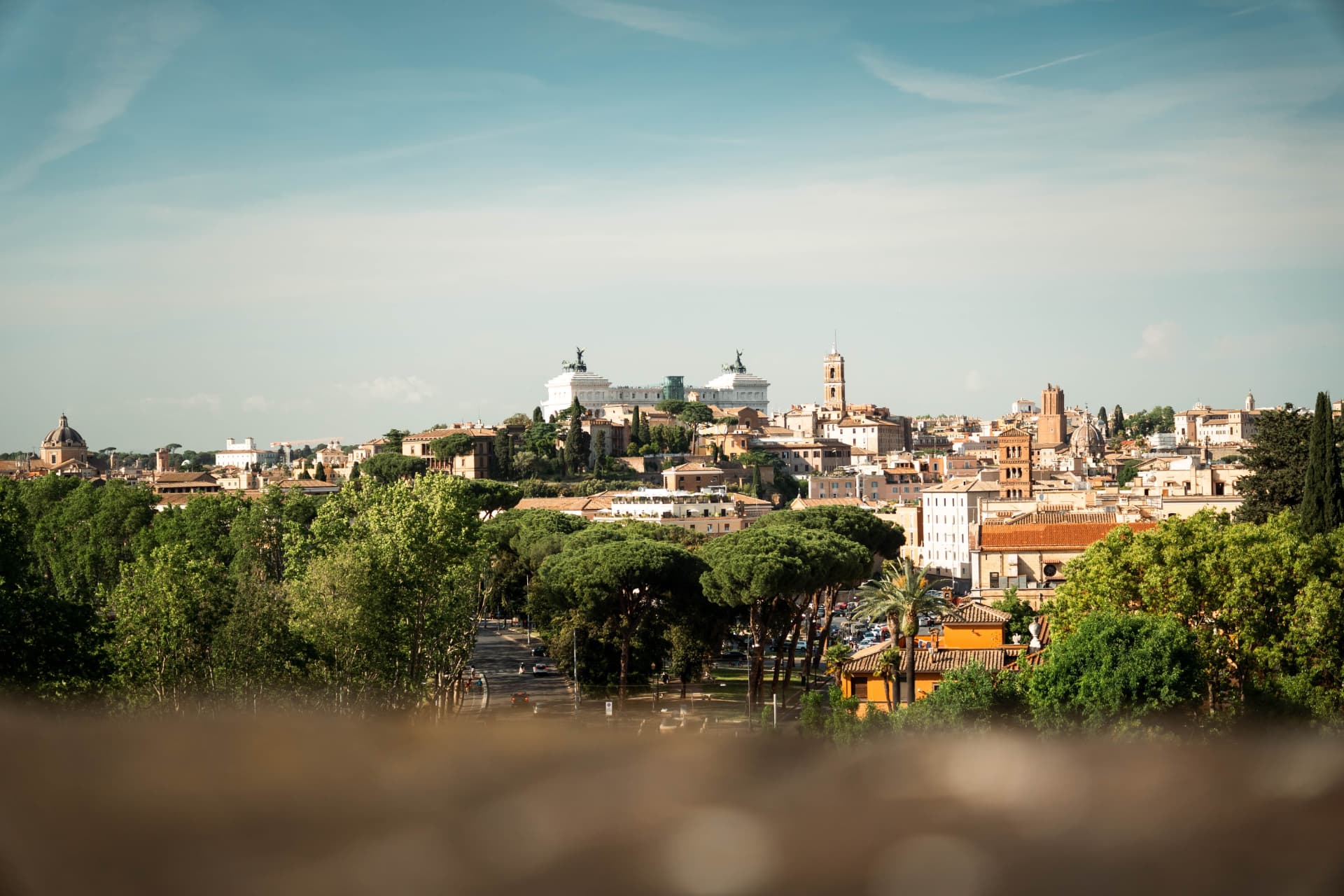
Go beyond the entrance to the terrace. The view opens across the Tiber towards the city and St Peter’s Basilica, with the river bend giving the panorama its shape. The garden takes its name from the orange trees planted in association with the Dominican tradition at neighbouring Santa Sabina; it is not a pick-your-own orchard.
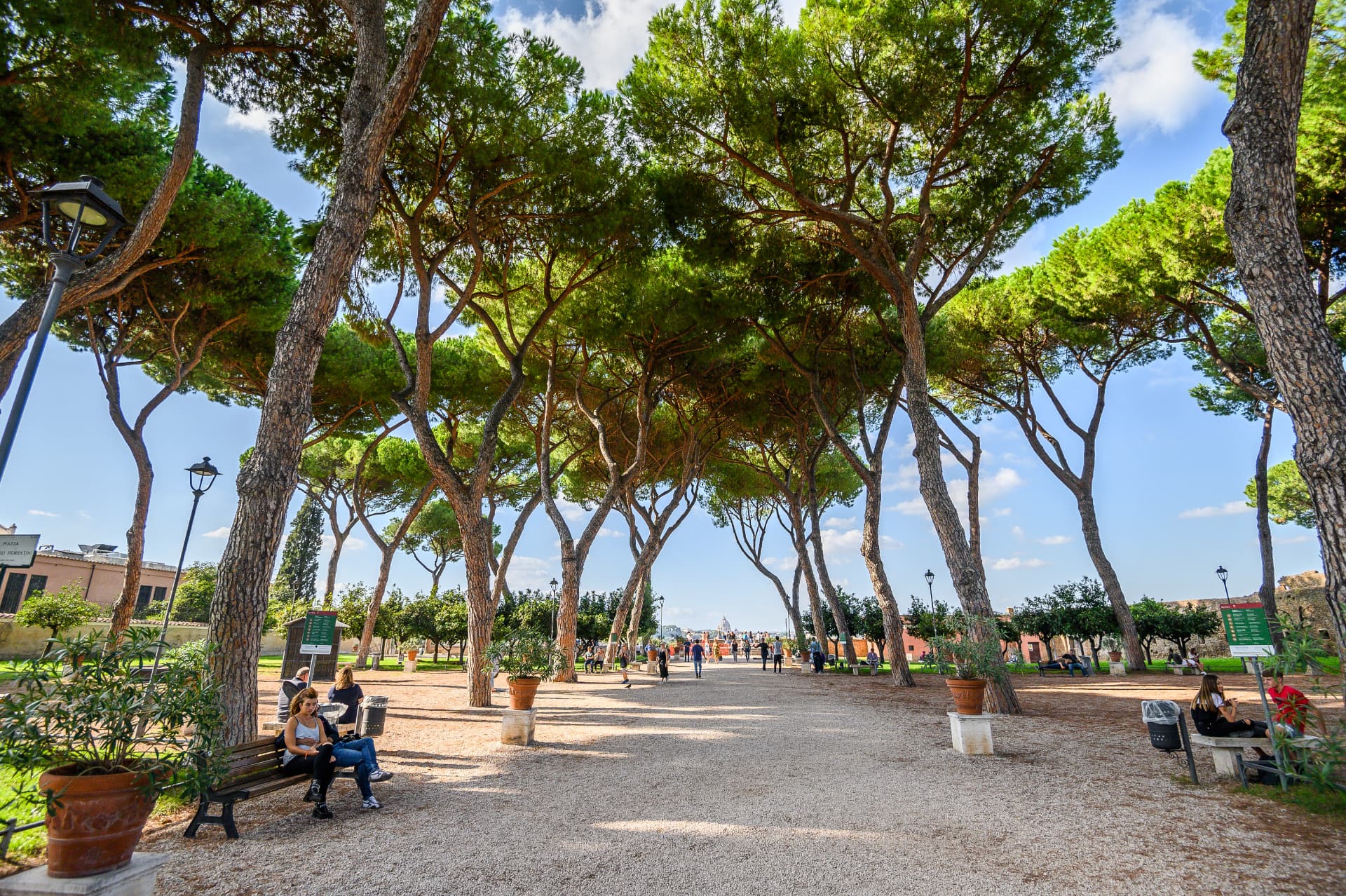
Entry is free, but the gates have seasonal closing times. For an evening visit, compare the current official schedule with the day’s sunset rather than assuming you can remain until dark. Read the full Orange Garden guide.
Santa Sabina: early Christian Rome
Santa Sabina was built in the fifth century and is the Aventine’s essential church visit. Its long nave, rows of ancient columns and restrained interior make its basilican plan much easier to read than in many richly decorated Roman churches. Look up at the light through the high windows, then back along the nave to understand the building’s proportions.
The surviving carved wooden door is particularly important. Its panels include an early depiction of the Crucifixion and other biblical scenes; it rewards close looking rather than a hurried glance. The basilica’s association with the Dominican Order adds another layer of history, but the church, convent and excavations should not be treated as one unrestricted visitor complex.
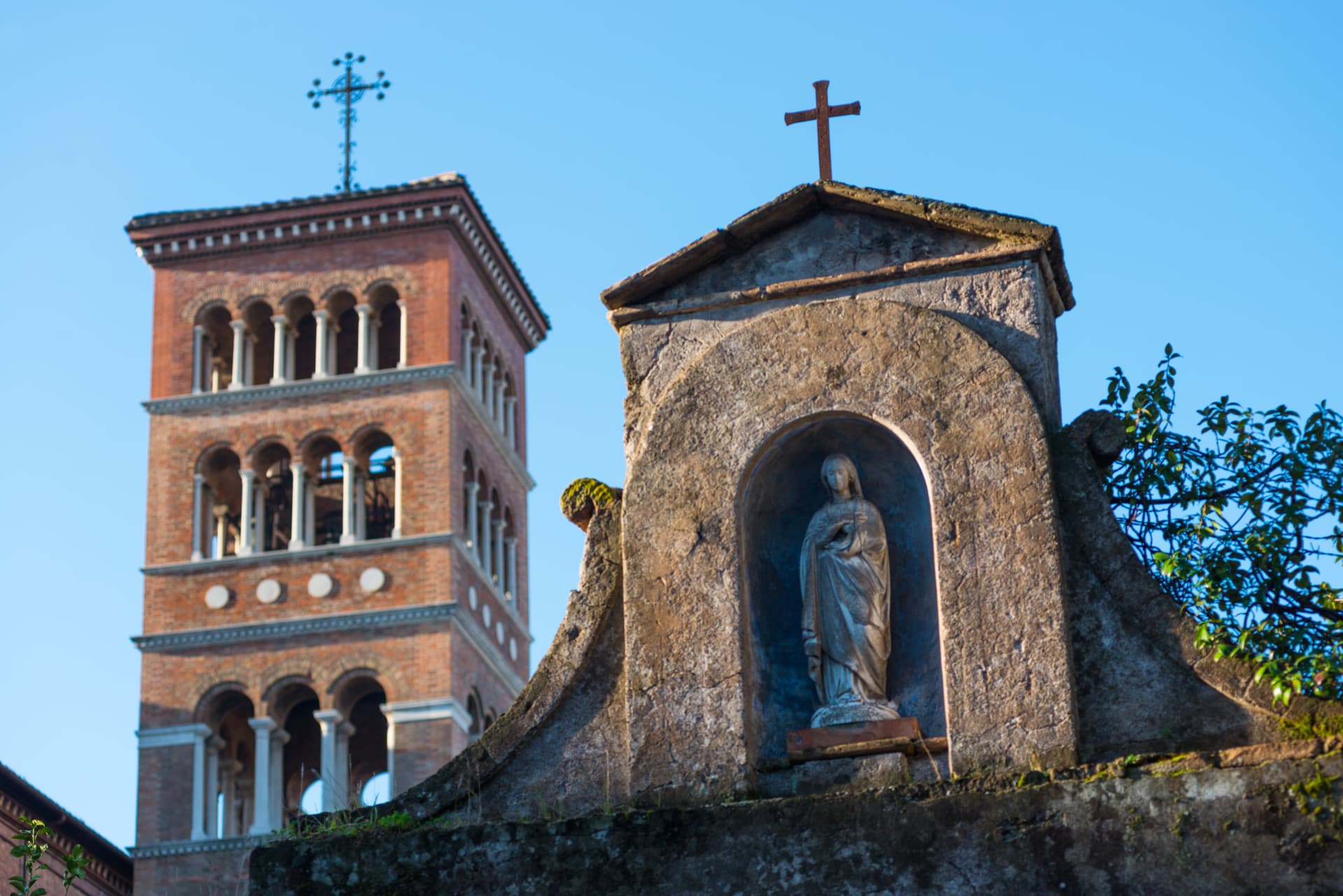
Inside, look for details most visitors walk past. The columns along the nave were reused from an earlier Roman building, so the arcade itself is a piece of recycled antiquity. The carved wooden door panels are the real rarity: a large part of the original fifth-century set survives, and among its scenes is one of the earliest surviving depictions of the Crucifixion. On the porch, a dark stone disc is tied by tradition to a legend about St Dominic; treat it as legend rather than documented history.
The official basilica page confirms free entry without an advance reservation. Posted visiting hours are noon–19:00 on Sunday and Monday, and 08:00–19:00 Tuesday–Saturday; holy days follow the Sunday arrangements. Visits stop during services, including unscheduled celebrations, and the excavations are not accessible. Check Santa Sabina’s official visiting hours (checked October 2026).
Piazza dei Cavalieri di Malta and the keyhole
Do not rush straight to the gate. Piazza dei Cavalieri di Malta is itself an attraction: Giovanni Battista Piranesi designed the square in the eighteenth century, using obelisks, trophies and symbolic decoration to give this small hilltop space a theatrical character. Compare the reliefs and repeated forms on the enclosure walls before joining any queue.
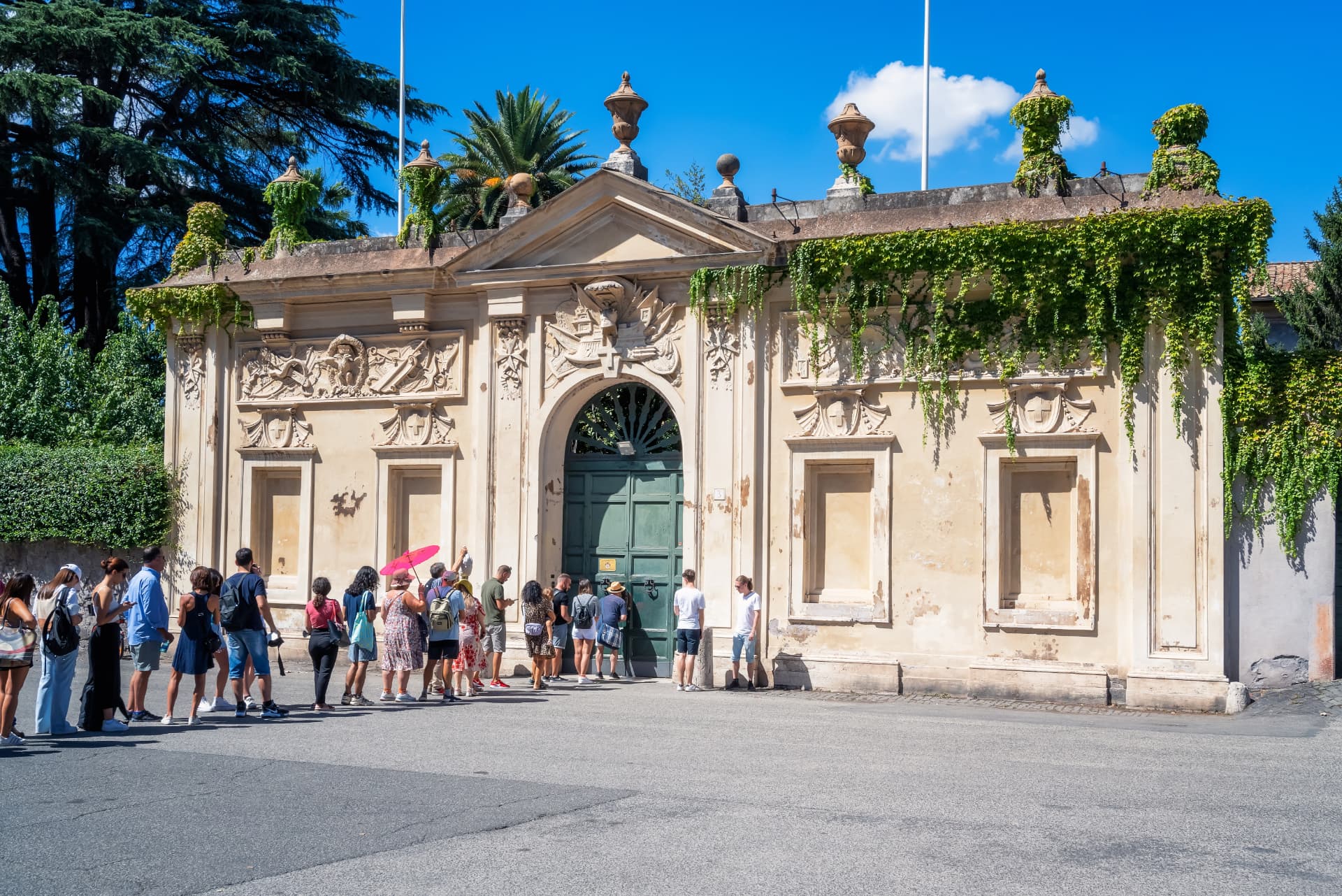
The famous keyhole is in the entrance gate to the Order of Malta’s Magistral Villa. Looking through it aligns a garden avenue with St Peter’s dome in the distance. It is a deliberately framed, narrow view, not a broad panorama like the Orange Garden’s terrace.
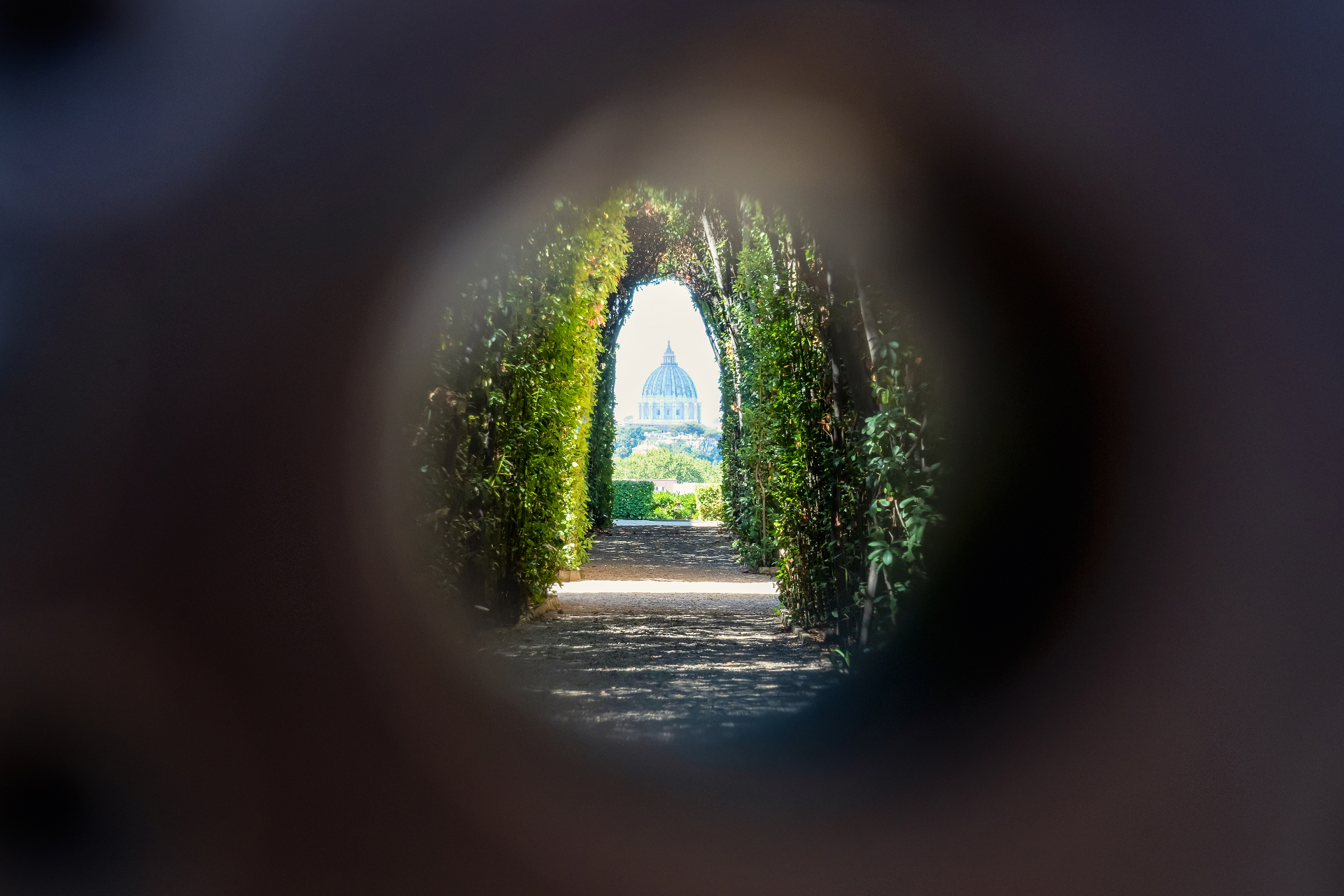
Looking through the keyhole from the square is free. A visit inside the property is a separate arrangement, so do not assume that an open gate or a tour group means general public admission. Avoid the often-repeated claim that you are “standing in three countries”: the Order’s legal status and the villa’s extraterritorial privileges are more nuanced than that slogan. More about the Aventine keyhole.
For a photograph, try focusing on the distant dome rather than the nearby metalwork. Results depend on light and your camera; there is no guarantee of a sharp phone image. Keep your turn brief if others are waiting.
Other important Aventine attractions
Santi Bonifacio e Alessio
This basilica adds a very different interior to the hill’s church visits. The building has a medieval bell tower and later decorative layers, while the story of Saint Alexius is represented by the staircase traditionally associated with his life. Treat that association as religious tradition, not an independently proven biographical detail. The church is a place of worship; ceremonies may take priority over sightseeing.
Sant’Anselmo all’Aventino
The Benedictine church and adjoining academic complex bring you into a later chapter of the Aventine’s religious history. Its neo-Romanesque architecture contrasts with Santa Sabina’s ancient basilica. Sant’Anselmo is known for its liturgical music, but Gregorian chant belongs to worship rather than a performance put on for visitors. Consult the college’s current service schedule if attending a liturgy matters to you, and remain quiet during prayer.
Parco di Sant’Alessio
This smaller public garden sits beside the Sant’Alessio complex, on the side of the hill overlooking the river. It is worth knowing about if you appreciate another green pause rather than adding another church interior. It is a separate garden from the Orange Garden: do not confuse the entrances or assume their access arrangements are identical.
Municipal Rose Garden: a seasonal stop below the hill
The Roseto Comunale occupies the Aventine’s lower slope near Circus Maximus. Its collection and views make it a worthwhile addition when it is officially open, but it should never be the essential stop in a year-round plan. The site was formerly a Jewish cemetery; the menorah-shaped paths preserve that memory.
Opening periods are announced by Rome’s municipality. Check the notice for your actual travel year and dates, rather than borrowing an old autumn schedule. When closed, choose the hilltop gardens instead.
Circus Maximus: the ancient landscape at the foot of the Aventine
The long open space below the hill was Rome’s great chariot-racing stadium. From the public edge on Via del Circo Massimo, its scale is easier to understand, with the Palatine rising beyond it. This is a nearby attraction, not a hilltop stop. Ancient authors describe a stadium built for vast crowds; modern estimates usually land somewhere in the six figures and should be read as approximations rather than a settled number. The public view is separate from ticketed archaeological areas and any paid experience. See the Circus Maximus guide.
How long to allow, and when to go
As an unverified planning estimate, most visitors see the hilltop core — the Orange Garden, Santa Sabina, the Piranesi square and the keyhole — in roughly 90 minutes to two hours, including time to look around each stop. Add more if you step inside Sant’Alessio or Sant’Anselmo, or continue down to the Rose Garden and Circus Maximus, which turn the visit into a longer outing.
As a general pattern rather than a rule, early mornings are the quietest for the keyhole, and late afternoon gives the Orange Garden terrace the warm light it is known for. Events, season and day of the week all change how busy the hill feels, and the garden closes on a seasonal schedule — check the official gate times before planning your day around an evening visit.
Free entry, opening times and practical details
| Sight | Entry distinction | Check before visiting |
|---|---|---|
| Orange Garden | Free public garden | Seasonal gate-closing times |
| Santa Sabina | Free; no advance reservation | Official hours and services |
| Piazza and keyhole | Free outside view | Queue and any temporary restrictions |
| Magistral Villa interiors | Separate arranged visit | Official access arrangements |
| Sant’Alessio / Sant’Anselmo | Church visit, not a museum ticket | Worship and current visitor access |
| Rose Garden | Free during announced openings | Current seasonal notice |
| Circus Maximus | Public view distinct from paid areas | Which experience or area you want |
The hill involves slopes, and gardens can have gravel or uneven surfaces. Do not read “free public garden” as a guarantee of step-free access from your starting point. For wheelchairs or pushchairs, confirm the specific entrance and surfaces with the venue or Rome’s accessibility service. Dress appropriately for the churches and put food away before entering.
For the strongest combination of sights, give priority to the garden view, Santa Sabina’s interior and Piranesi’s square. Choose the other places according to your interests and what is open, rather than trying to tick every pin off the map.
Common mistakes to avoid
- Only seeing the keyhole. Santa Sabina and the Orange Garden offer much more than a fleeting photograph.
- Assuming the villa garden is a public park. The keyhole view is from outside a separately managed property.
- Using sunset as the park’s closing time. Published seasonal hours and sunset are different things.
- Planning around an old Rose Garden notice. Check current dates; the garden is not open throughout the year.
- Treating a church service as a tourist show. Prayer takes priority over photography and sightseeing.
Frequently asked questions
Is Aventine Hill worth visiting?
Yes, especially for a free panorama, early Christian architecture and the unusual keyhole view. It suits a quieter sightseeing break, but it is not a substitute for Rome’s major archaeological sites.
Are the Orange Garden and the Aventine keyhole the same attraction?
No. The Orange Garden is a public park and panoramic terrace beside Santa Sabina. The keyhole is in the Magistral Villa gate at Piazza dei Cavalieri di Malta, farther along the hill.
Do you need a ticket for the Aventine keyhole?
No ticket is needed to look through the keyhole from the public square. Entry into the Magistral Villa and its gardens is separate and is not included in this free view.
Is Santa Sabina free, and do you need a reservation?
The basilica’s official visitor page states that entry is free and no advance reservation is needed. Visits are not allowed during liturgical celebrations, and the excavations are not accessible.
Is the Orange Garden open after sunset?
Do not assume so. The park follows seasonal gate-closing times, which are not the same as the day’s sunset. Check the official park information before planning an evening visit.
Is the Rome Rose Garden open all year?
No. The Roseto Comunale opens for announced seasonal periods. Check the current municipal notice; an older spring or autumn announcement does not establish this year’s dates.
How long do you need on the Aventine Hill?
As a rough estimate, allow around 90 minutes to two hours for the hilltop sights, and longer if you add the Rose Garden and Circus Maximus. Actual time depends on queues and how many churches you want to enter.
When is the best time to visit the Aventine?
Early mornings are generally the quietest for the keyhole, and late afternoon gives the Orange Garden terrace its well-known light. These are general patterns; the garden closes on a seasonal schedule, so check the official times before an evening visit.
Official sources
Visitor information checked October 2026. Temporary closures, service times and seasonal openings can change; use the current venue notice for your visit.