Table of Contents
Where to buy Vatican Museums tickets
Try the official Vatican Museums site first, then compare Tiqets, Klook, and Trip.com — trusted booking partners — if official slots are sold out.
OfficialVatican MuseumsFace-value timed tickets from the Vatican's official ticketing site.Official TicketsPartnerTiqetsSkip-the-line tickets and guided tours when official slots are gone.Check PricesPartnerKlookCheck alternative ticket and tour availability.Check PricesPartnerTrip.comBundle Vatican tickets with hotels and city passes.Check PricesWhat it is
Founded in 1837 by Pope Gregory XVI to house Etruscan material excavated in papal territory north of Rome. The official museum comprises 22 rooms of gold, bronze, ceramics, sarcophagi and mirrors, largely from tombs at Cerveteri, Vulci and Tarquinia, together with the Antiquarium Romanum rooms (XV–XVII), which form part of the same numbered sequence rather than a separate museum.
Who were the Etruscans?
The dominant culture of central Italy from roughly the eighth century BC. Their political power declined progressively as Rome expanded, particularly from the fourth century BC onward, and their cities were absorbed into the Roman state over the following centuries. They spoke a non-Indo-European language written in an alphabet derived from Greek: the script is readable and much of the grammar is understood, though vocabulary and longer texts remain incompletely understood. They traded widely across the Mediterranean and were exceptional metalworkers in gold and bronze. Etruscan culture significantly influenced early Roman religion, ritual practice, architecture and political symbolism.
What to see
- Regolini-Galassi tomb material — seventh-century BC gold from a princely tomb at Cerveteri, including the large pectoral and fibulae. Among the finest ancient goldsmithing anywhere.
- Mars of Todi — a large Etruscan bronze warrior figure, one of the few of its scale to survive.
- The engraved mirror of Calchas — a bronze mirror with the seer examining a liver, in the same bronze rooms.
- Oval cista with an Amazonomachy — an engraved bronze container among the museum's bronze holdings.
- Painted terracotta and stone sarcophagi with reclining figures on the lids.
- Bucchero pottery — the distinctive burnished black ware associated with Etruria.
- Attic Greek vases found in Etruscan tombs — imported pottery in large quantities, including major painted pieces.
- Antiquarium Romanum (Rooms XV–XVII) — Roman material within the museum's own sequence, worth a short loop.
The Ficoroni Cista, often listed with Etruscan bronzes, is held by the Museo Nazionale Etrusco di Villa Giulia in Rome, not by the Vatican Museums.
Crowds and atmosphere
The Etruscan wing sits away from the signposted funnel towards the Sistine Chapel, and many groups pass it by, so it is often calmer than the Candelabra and Maps corridors. That is a tendency rather than a guarantee — conditions vary with the day, the hour and how the one-way flows are set. If the main route feels overwhelming, it is a reasonable place to slow down for ten or fifteen minutes.
How to find it
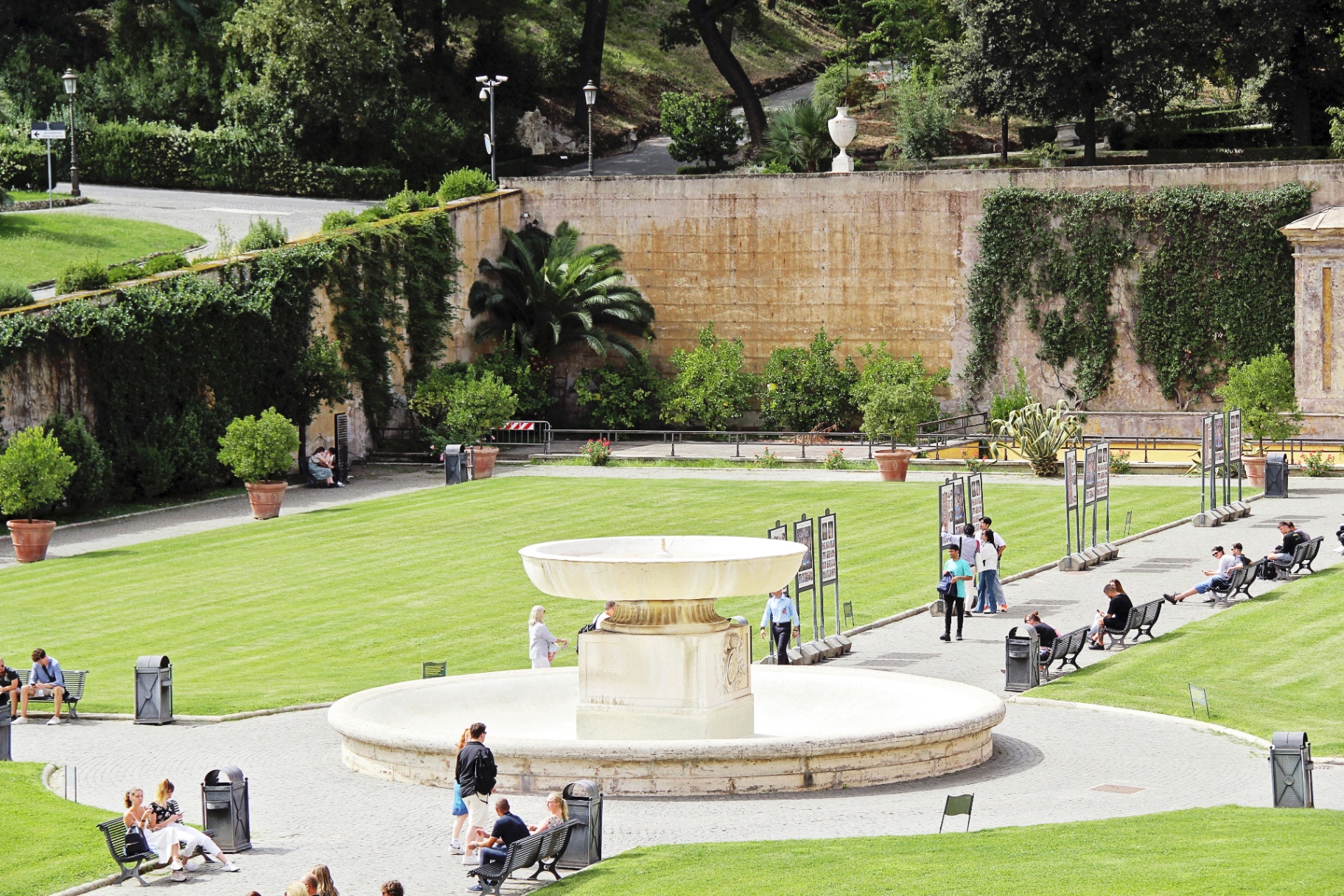
- Cross the Pinecone Courtyard and enter the Pio-Clementino wing.
- Head upstairs, following signage to "Museo Gregoriano Etrusco".
- Work through the room sequence, including the Antiquarium Romanum rooms.
- Rejoin the main route via the connecting galleries towards the Candelabra corridor.
Frequently Asked Questions
Where are the Etruscan rooms?
Upstairs from the Pio-Clementino wing, on the same upper level as the route towards the Candelabra gallery. Signage reads 'Museo Gregoriano Etrusco'.Is it worth the detour?
If you are interested in pre-Roman Italy, goldwork or Greek vases found in Etruscan tombs, yes. It is also usually calmer than the main corridors, though this varies by day and hour.Is it included in the ticket?
Yes — no extra charge.How long does it take?
20–45 minutes depending on interest. The official museum comprises 22 rooms, including the Antiquarium Romanum rooms.Are the exhibits in English?
Many interpretive labels and panels include English, though coverage varies from room to room.Related Vatican guides
Egyptian Museum
The sister ancient collection.
Vatican Hidden Gems
Other quiet corners.
Avoid Overwhelm
Why quiet detours help.
Route Guide
Where the Etruscan wing fits.
Full Vatican Museums attraction guide See Rome attractions by area on the map