Ostia Antica Day Trip From Rome: Complete Independent Guide
Updated · 11 min read · By the AllTrips Rome editorial team
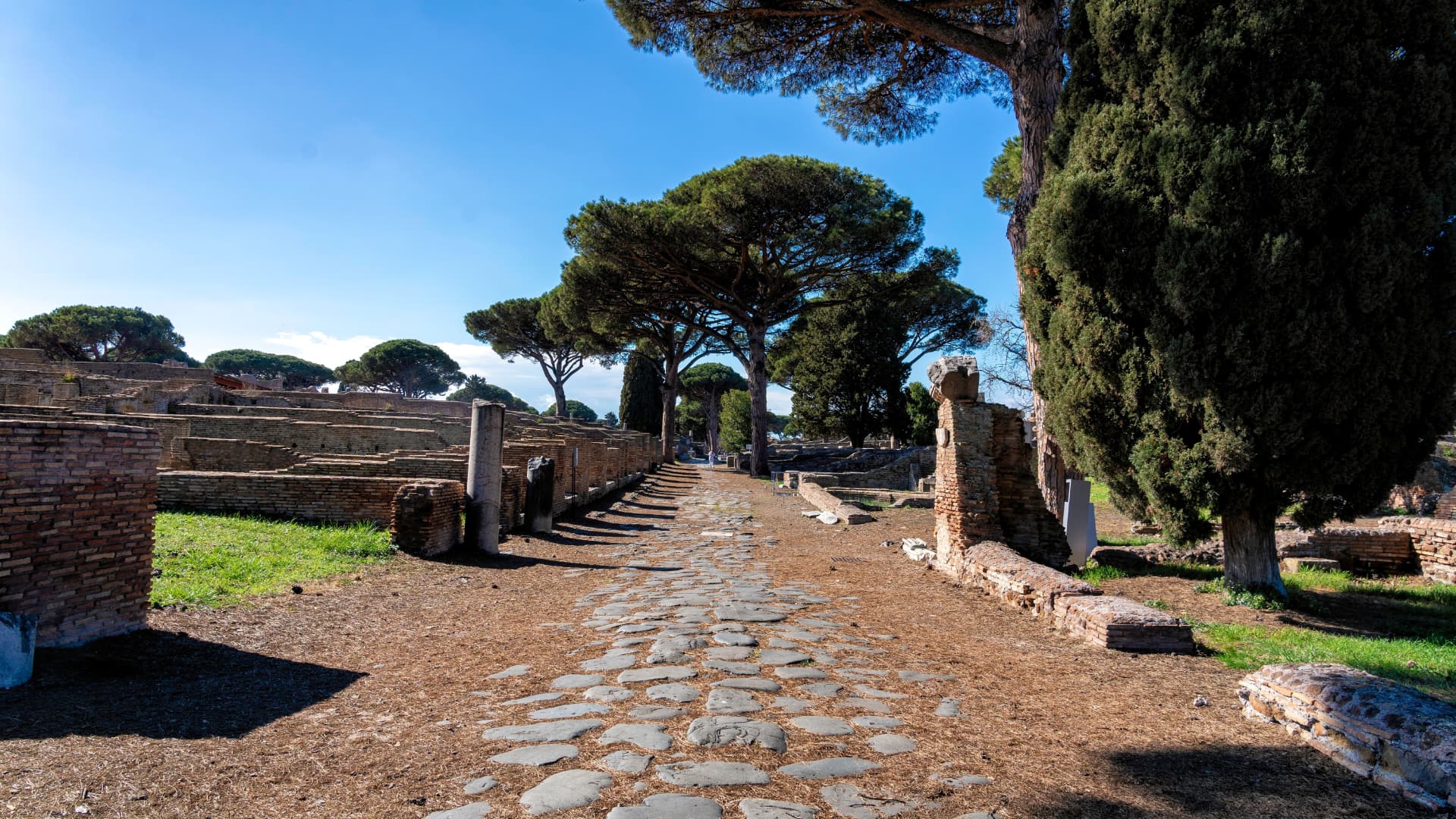
Ostia Antica is the one Rome day trip that does not need managing. One train from Piramide, a standard Rome public-transport ticket valid on Metromare, a five-minute walk at the other end, and you are inside a Roman town with streets, shops, flats, baths and a theatre still standing. Most people change once, from Metro B to Metromare at Piramide, but nothing needs a reserved departure. You can explore for two hours, stay for most of the day or add the medieval village and coast without worrying about a reserved return train. This guide covers the journey, the tickets, how long you actually need and the route that makes the site make sense.
Why visit Ostia Antica from Rome?
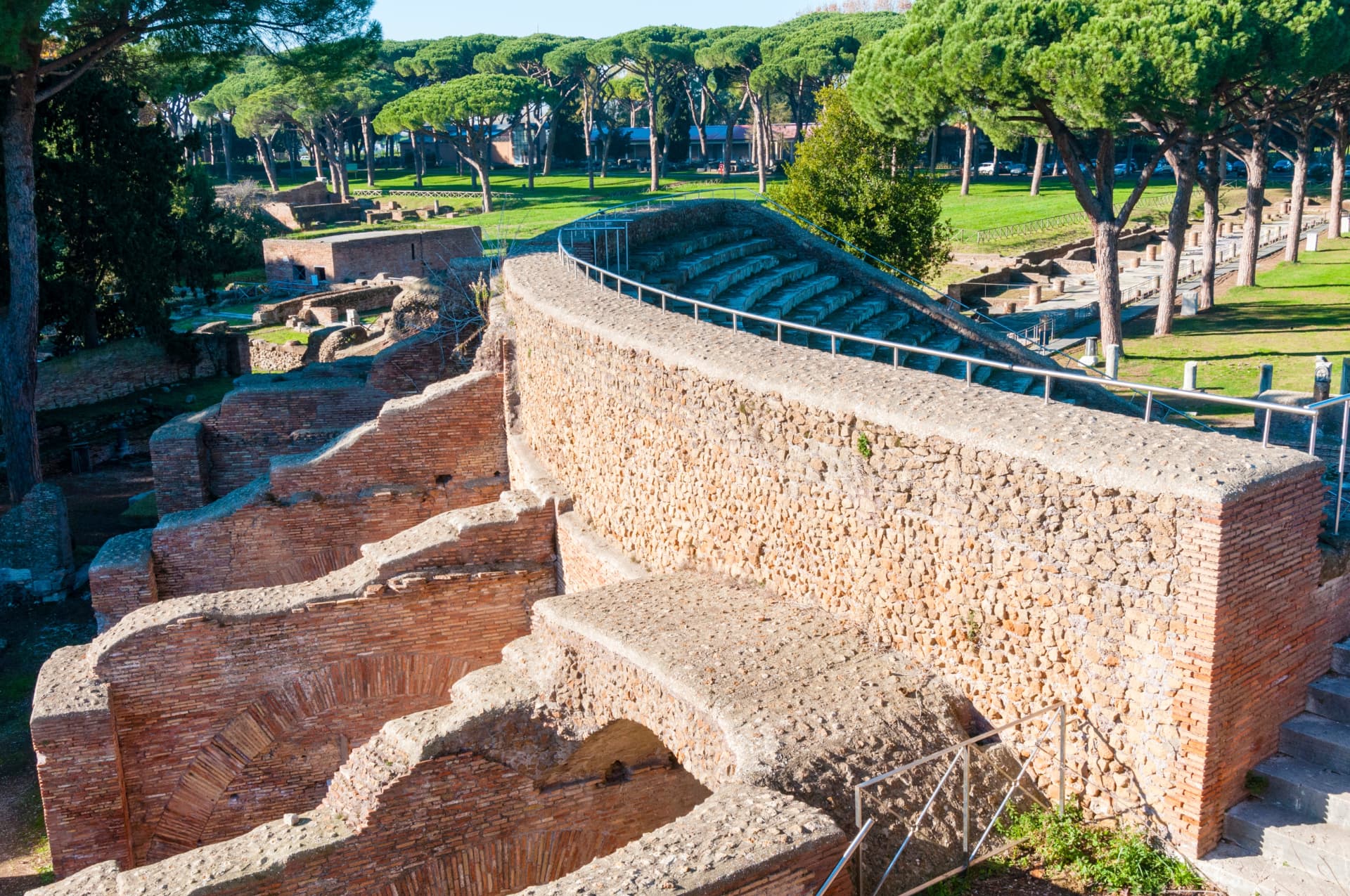
Ostia was Rome's port and commercial suburb: the place where grain arrived, where dockworkers lived and where shipping firms kept offices. That is what makes it valuable. Central Rome preserves monuments — imperial forums, temples, an amphitheatre. Ostia, which has a remarkably preserved Roman theatre of its own, preserves ordinary life instead: apartment blocks several storeys high, bars with marble counters, communal latrines, a bakery with its millstones, and mosaic emblems identifying shipping offices, merchant associations, ports and the goods they handled.
Compared with Pompeii, Ostia is smaller, closer, cheaper and far quieter, but it was abandoned slowly rather than buried in an afternoon, so you see standing brick architecture instead of frozen domestic interiors. There are fewer painted rooms, and it is generally far less crowded than Pompeii, although free Sundays, school-group mornings, spring weekends and public holidays can still be busy. For most visitors, the honest trade is atmosphere and ease against the drama of Vesuvius. We compare the two in detail in our Ostia Antica vs Pompeii guide.
Ostia Antica day trip at a glance
| Journey time | About 30–40 minutes from Piramide, plus travel to Piramide |
|---|---|
| Transport cost | A standard Rome public transport ticket each way |
| Admission | €18 integrated ticket, valid 8 days from first entry; €2 eligible reduced admission, free under 18 |
| Time on site | 2 hours for the highlights (roughly 2–3 km on foot), 3–4 hours comfortable (roughly 4–5 km), a full day for enthusiasts. The suggested itinerary below runs from about 08:30 to 14:45 including lunch |
| Difficulty | Easy logistics; moderate walking on uneven ancient paving |
| Booking needed | Rarely for entry; worth booking a guided tour if you want context |
Ticket price and inclusions checked September 25, 2026. Public-transport fares and archaeological-park admission can change; check Cotral and the official Ostia Antica website before travelling.
How to get from Rome to Ostia Antica
- Get to Piramide. Take Metro Line B to Piramide. The Metromare platforms are inside the adjoining Roma Porta San Paolo station, signposted from the metro exit and reached without leaving the paid area in most cases.
- Activate or validate your ticket. Metromare is a suburban railway covered by Rome's integrated fare system rather than a Metro line, and it runs on ordinary Rome urban fares as far as Ostia — so a single BIT ticket, a 24/48/72-hour pass or a Roma Pass all work. You must activate or validate according to the purchase method before travelling. A 100-minute BIT normally covers Metro B and the onward Metromare journey within its validity period, subject to metro-entry rules. It will expire during a normal park visit, so you need another ticket for the return; follow the instructions for paper, digital or contactless travel.
- Take the Metromare towards Cristoforo Colombo. Services run regularly through the day and the ride is roughly 25–30 minutes, but engineering works and temporary disruptions are possible, and not every train necessarily runs through to every coastal station. Check the current Cotral timetable before departure.
- Get off at Ostia Antica. Not Ostia Lido, not Lido Centro. The station is small and clearly named.
- Walk to the entrance. Cross the raised blue footbridge over the road outside the station, continue straight ahead and you reach the park gate in about five to ten minutes. The footbridge has steps: the park's 2023 accessibility assessment listed it as a barrier with no lift or stairlift, so check for any improvement before relying on a step-free arrival.
Metromare occasionally runs reduced services or replacement buses during engineering work. We do not list current disruptions here because they change constantly — check the official Cotral Metromare page or station notices the day before you travel.
Ostia Antica tickets and opening hours
The integrated ticket costs €18 full price or €2 for eligible reduced admission and is valid for eight days from first entry. It covers the archaeological area and Museo Ostiense, Castle of Julius II, Imperial Harbours of Claudius and Trajan, Museum of the Roman Ships in Fiumicino, Necropolis of Portus on Isola Sacra and the S. Ippolito basilica complex, subject to each site’s opening arrangements. These are spread across the wider park, not all inside the main excavation. The usual Italian state-museum reductions apply: reduced admission for qualifying EU citizens aged 18–25 (bring accepted identification and verify current eligibility) and free entry for under-18s. Opening hours are seasonal — the park closes earlier in winter and later in high summer, with last admission roughly an hour before closing, and the site is normally closed on Mondays. Entry is free on the first Sunday of each month, when the park is at its busiest. Because both price and timetable are adjusted periodically, confirm on the official Parco Archeologico di Ostia Antica website before you go. We checked the ticket price and inclusions on September 25, 2026.
Official integrated ticket prices, inclusions and booking. Check each site’s visitor information before travelling.
Queues are rarely a problem. Unless you are visiting on the free first Sunday of the month, you can normally buy at the gate and walk straight in. Booking ahead matters only if you want a guided tour, which is where most of the value is.
Affiliate link. You pay the same price and we may earn a small commission, which funds this site's research.
Want a guide to read the ruins for you?
Check Ostia Antica admission and guided-tour options, with live prices and availability.
See Ostia Antica tickets and toursHow much time do you need?
Two hours: highlights only
Walk the Decumanus Maximus from the gate, stop at the Baths of Neptune, visit the theatre (upper tiers only when open), look into the Square of the Corporations and turn back at the forum. Enough to understand the shape of the town, not enough to wander. Works if Ostia is squeezed into a half-day.
Three to four hours: the comfortable visit
The same spine plus the residential side streets, the bakery, the Thermopolium bar, the House of Diana and the museum. Add a sit-down break in the pine shade. This is what we recommend for a first visit.
A full day: archaeological visit
Six hours or more, including the far western quarters, the synagogue near the old shoreline, the Christian basilica and a slow pass through the museum. Bring lunch, water and a site plan; the outer areas are quiet and poorly signed.
Best route through Ostia Antica
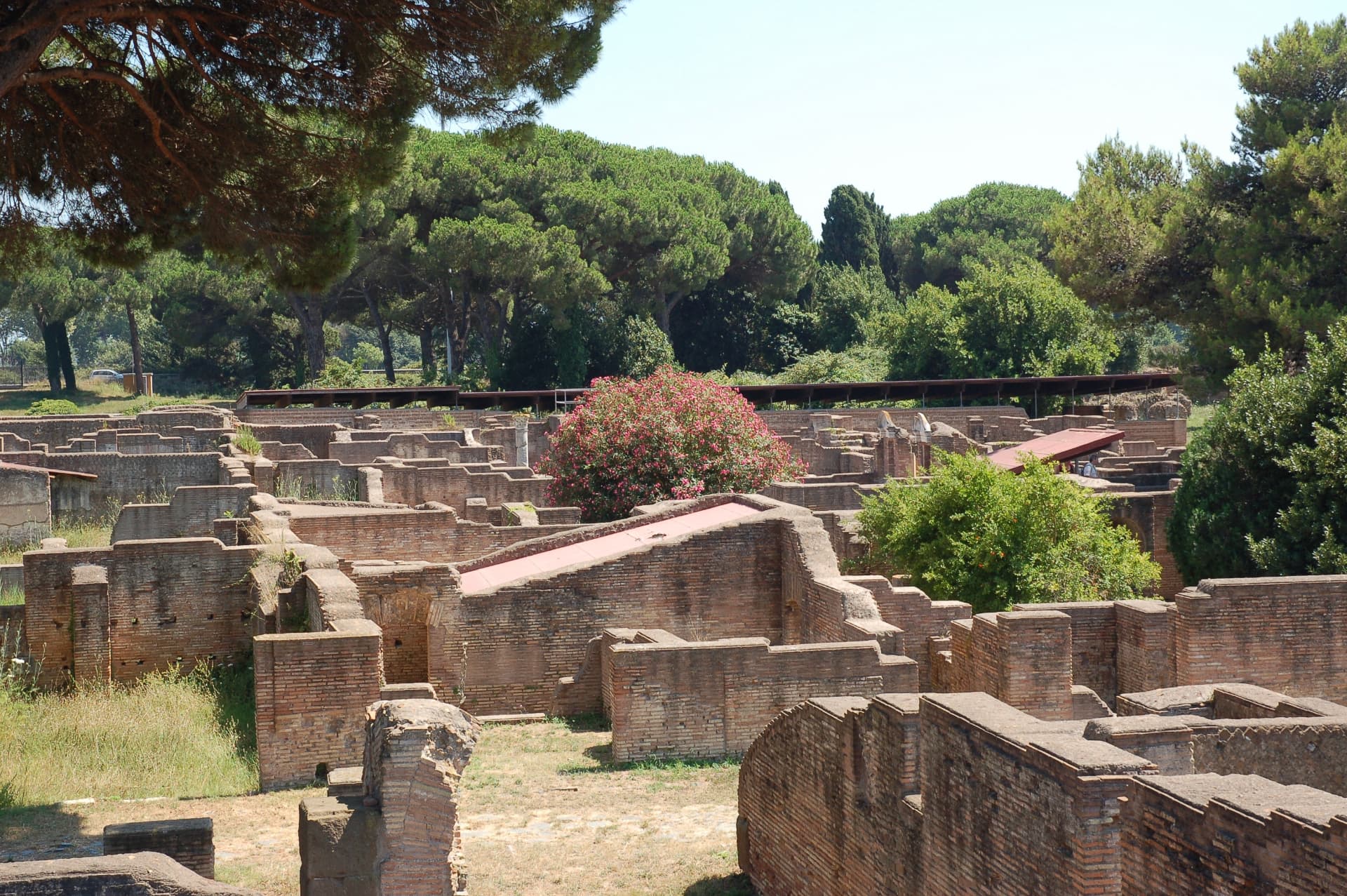
The site is essentially one long street with everything hanging off it, so a there-and-back loop works well. Follow this order and the town reads as a place rather than a series of ruins. Individual buildings and elevated viewpoints may close temporarily for conservation or safety, so treat this as a sequence rather than a guarantee that every structure will be open.
- Necropolis and Porta Romana. Tombs line the approach road, as they did outside every Roman town.
- Baths of Neptune. When open, use the terrace for the black-and-white sea-god mosaics from above.
- The theatre. Restored Roman theatre, with views from its upper rows when accessible.
- Square of the Corporations. Mosaic panels in front of each office showing what the firm shipped and from where — one of the most vivid surviving records of Roman maritime commerce.
- The Thermopolium. A bar with counter, shelving and a painted menu fresco.
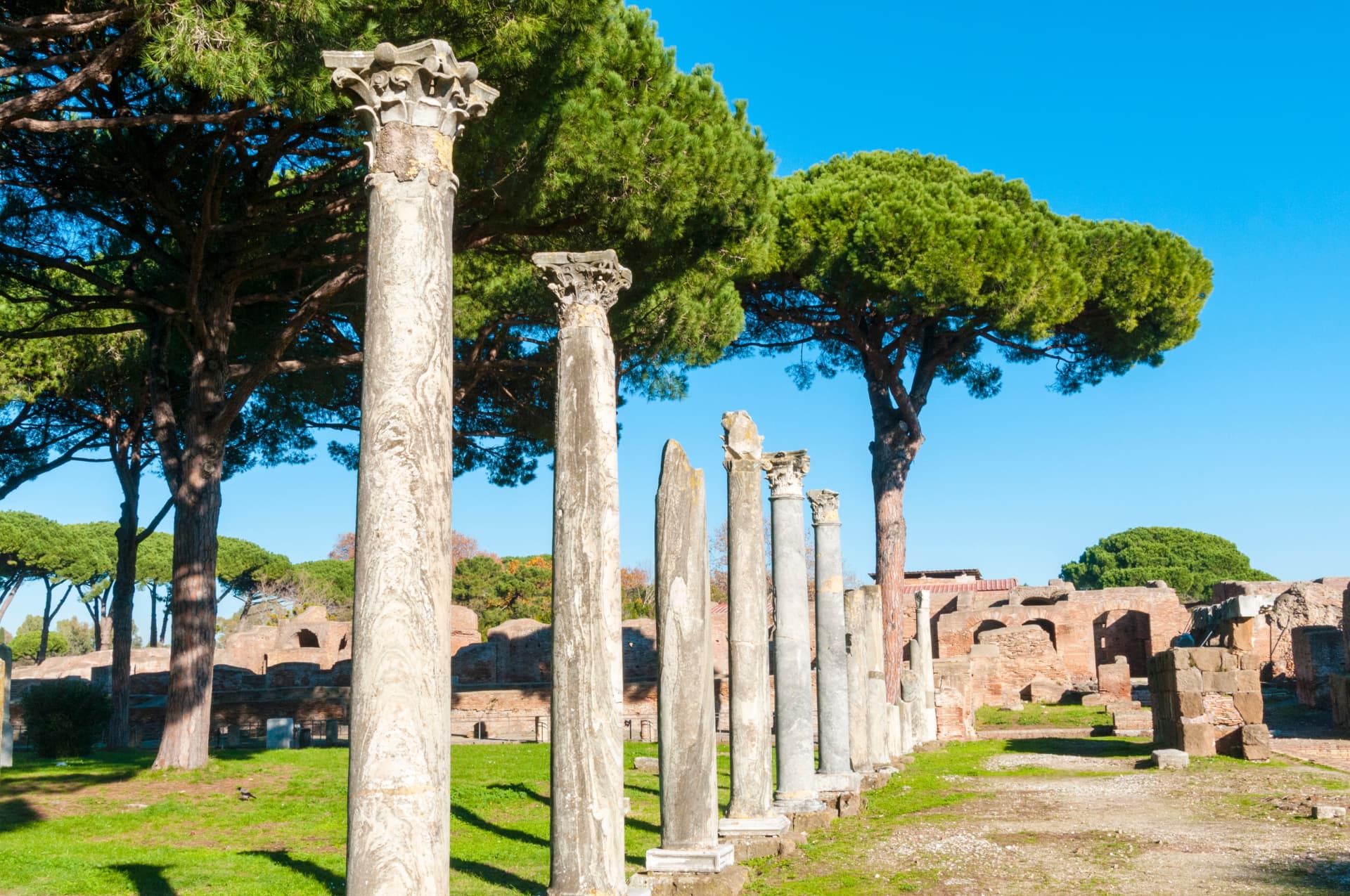
- The forum, Capitolium and Temple of Roma and Augustus. The civic centre, with the tallest surviving structure on site.
- Forum Baths and the latrine. The famous row of marble seats, still in place.
- House of Diana and the insulae. Multi-storey apartment blocks — the housing most Romans actually lived in.
- The bakery (Molino). Millstones and ovens for the town's bread.
- Museum, then back along the Decumanus. Sculpture and finds in a cool building, a useful last stop before the walk out.
Half-day Ostia Antica itinerary
| Time | Step |
|---|---|
| 08:30 | Metro Line B to Piramide |
| 08:50 | Metromare train towards Cristoforo Colombo |
| 09:20 | Arrive Ostia Antica, walk over the footbridge to the gate |
| 09:30 | Enter the park; necropolis, Baths of Neptune, theatre |
| 10:30 | Square of the Corporations, Thermopolium, forum |
| 11:30 | Insulae, bakery, latrine, museum |
| 12:45 | Lunch in a designated park rest area if available, or leave for Ostia Antica village |
| 14:00 | Train back to Piramide, in central Rome by around 14:45 |
An optional extra after lunch: the medieval Borgo of Ostia Antica, a small fortified village with the 15th-century Castle of Julius II, sits a few minutes from the station on the other side. A walk around the village lanes is always possible, but entering the castle is a separate matter: admission is included in the integrated park ticket, yet the castle keeps its own opening hours, which differ from the excavations and vary by season — from mid-June through October the listed opening starts at 13:30. Check the official park website for the castle's current hours before planning an interior visit.
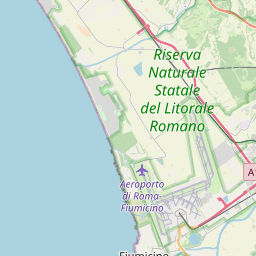
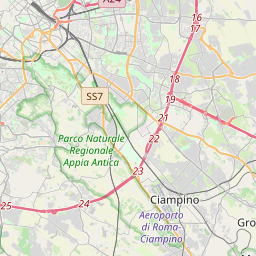
Map of the half-day route
Every stop in the schedule above, from Piramide in Rome to the museum inside the archaeological park. Click a pin for the timing. Positions inside the park are approximate — the site has no street addresses.



 📍
📍
📍
🏛
🏛
🏛
🏛
🏛
🏛
🏛
🏛
🏺
☕
📍
📍
+− Leaflet | © OpenStreetMap contributors
📍
📍
📍
🏛
🏛
🏛
🏛
🏛
🏛
🏛
🏛
🏺
☕
📍
📍
+− Leaflet | © OpenStreetMap contributorsMap data © OpenStreetMap contributors.
Can you combine Ostia Antica with the beach?
Yes, though not on the same ticket. A standard BIT has limited validity, so after several hours in the ruins you will need a new public-transport ticket, activated or validated according to how you purchased it. Stay on Metromare past Ostia Antica for another 10–15 minutes to Lido Centro or Stella Polare and you reach Ostia Lido, Rome's nearest stretch of sea. Between June and early September this makes a genuinely good combination: ruins in the morning, a swim and a seafood lunch in the afternoon, back in Rome for the evening.
Outside summer it is less compelling. Ostia Lido is a working suburb with a long, developed seafront rather than a resort; out of season many beach clubs are shut and the promenade is windswept. If you are visiting between October and April, spend the extra hours in the archaeological park or return to Rome early instead.
Ostia Antica vs Pompeii
Short version: Ostia is the better day, Pompeii is the better site. Ostia costs you a standard Rome transport ticket each way and a half-day (two hours for the highlights, or a longer morning with lunch), is generally much quieter than Pompeii, including during the summer, and shows how a Roman town worked. Pompeii normally requires most of a full day from Rome, is considerably more expensive and much busier, but it preserves painted interiors, a full forum with Vesuvius behind it and a scale nothing else matches.
If you have three days in Rome, choose Ostia. If Roman archaeology is the reason you came to Italy, give Pompeii its own day — see our full comparison and our Pompeii day trip guide.
Practical tips
- Shade is patchy. Umbrella pines cover parts of the site, but the main street and the forum are open. In July and August start at opening and be out by early afternoon.
- Bring water. There are drinking fountains, but far fewer than in central Rome, so do not rely on food services being open.
- Wear proper shoes. Basalt paving, kerbs and low walls throughout. Sandals are a bad idea; trainers are ideal.
- Food is limited. Food options inside the park are limited and opening can vary. If you bring food, use designated rest areas and follow current park rules. Check the official park visitor information for current services; there are also places to eat in the village.
- Accessibility is mixed. There is a marked accessible route on flatter surfaces, but much of the site is ancient paving, steps and thresholds. Wheelchair users can see a meaningful part of the town but not all of it.
- Take something to read the site with. A guide, an audio guide or a downloaded plan. Without one, the labelling is thin.
Frequently asked questions
Is Ostia Antica free?
Not usually. The integrated park ticket costs €18 (€2 for eligible reduced admission), is valid for eight days from first entry and covers the park’s archaeological sites and museums, including the Castle of Julius II. Individual sites have separate opening schedules. Reduced admission is available to qualifying EU citizens aged 18–25; bring accepted identification and verify current eligibility. Under-18s enter free. The park takes part in the national free-admission scheme on the first Sunday of each month, when entry costs nothing but the site is at its busiest. Prices change, so check the official Parco Archeologico di Ostia Antica website before you travel — we last checked in September 2026.
Is Ostia Antica included in a Rome transport pass?
The train ride is. The Metromare (former Roma–Lido) line is part of the Rome integrated transport network as far as Ostia, so a standard Rome ticket or travel pass covers the journey from Piramide to Ostia Antica station. Park admission is a separate product: a BIT or Roma transport ticket covers the train, not park entry. If you are using a Roma Pass, Ostia Antica appears among its participating sites, so check whether it qualifies as one of your pass’s included site admissions before buying a separate ticket.
Do you need a guide at Ostia Antica?
No, but you need something. The ruins are barely labelled and it is easy to walk past a bakery, a laundry or a block of flats without realising what you are looking at. A guided tour, an audio guide or even a downloaded site map with notes turns an attractive field of brick into a readable Roman town. If you are visiting with children, a guide often makes the difference.
Is Ostia Antica suitable for children?
Yes, more than most Roman sites. There is space to run, a theatre to explore where access permits, mosaics at ground level and shaded pine groves for breaks. The main hazards are uneven basalt paving and heat in summer. Prams are hard work; a carrier is easier for toddlers.
Is Ostia Antica worth visiting?
Yes, especially if you want to understand everyday Roman life without a long-distance journey. The streets, baths, theatre and trading offices reward a three-to-four-hour visit. It is generally much quieter than Pompeii, although free Sundays, school-group mornings and spring weekends can be busy.