Table of Contents
- 1. What it is
- 2. The candelabra themselves
- 3. The painted ceiling
- 4. Sculptures to spot
- 5. How long to spend
Where to buy Vatican Museums tickets
Try the official Vatican Museums site first, then compare Tiqets, Klook, and Trip.com — trusted booking partners — if official slots are sold out.
OfficialVatican MuseumsFace-value timed tickets from the Vatican's official ticketing site.Official TicketsPartnerTiqetsSkip-the-line tickets and guided tours when official slots are gone.Check PricesPartnerKlookCheck alternative ticket and tour availability.Check PricesPartnerTrip.comBundle Vatican tickets with hotels and city passes.Check PricesWhat it is
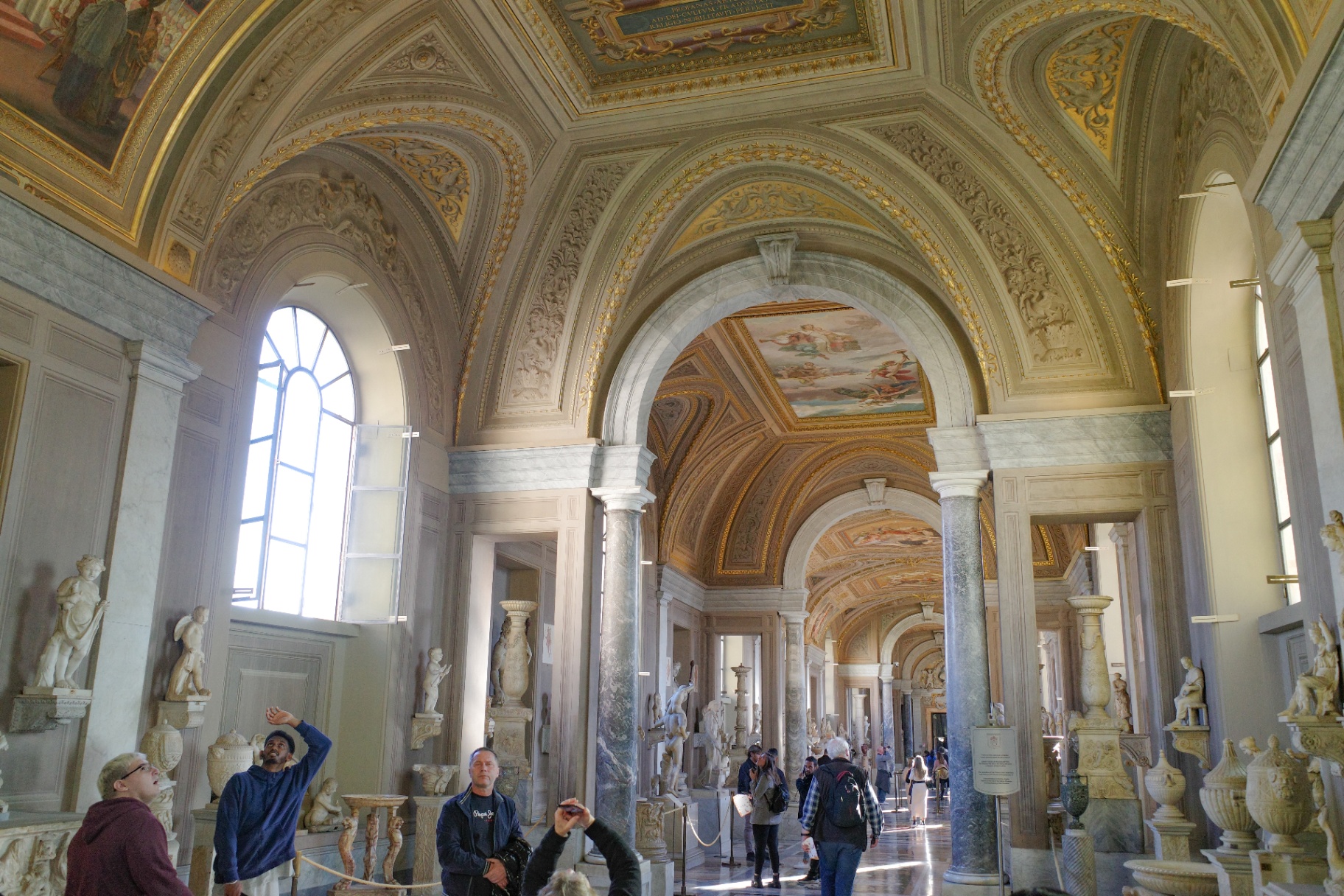
A long corridor that the Vatican Museums describe as divided into six sections by massive candelabra and coloured columns. Ancient sculpture and sarcophagi line the walls, and the vault carries late-19th-century painting from the pontificate of Leo XIII. It is the first of three consecutive galleries — followed by the Tapestries and then the Maps — that form part of a common route toward the Sistine Chapel.
The candelabra themselves
The gallery takes its name from the monumental ancient marble candelabra — lampstands, not chandeliers — placed along its length together with coloured columns to mark the six divisions of the corridor. They are richly carved, with foliage, animals and mythological motifs on the bases and shafts. Individual pieces have their own findspots and dates, so treat blanket claims about a single uniform set, a single century or a single excavation site with caution; the museum labels are the reliable source for each object.
The painted ceiling
The decorative renovation of the vault was carried out in the 1880s under Pope Leo XIII. Annibale Angelini oversaw the work, with paintings by Domenico Torti and Ludwig Seitz. The programme celebrates the Church and the pontificate, and includes references to earlier events in Church history rather than only to Leo XIII's own acts — the definition of the Immaculate Conception, for example, was proclaimed by Pius IX in 1854, decades before this ceiling was painted. Most visitors walk the corridor without ever looking up.
Sculptures to spot
- • A Roman copy of the Artemis of Ephesus. The rows of ornaments across her chest are often described as breasts, but their meaning is still debated by scholars.
- • The Persian Warrior — a Roman marble copy dated by the Vatican Museums to approximately 110–120 AD, showing a Persian warrior raising a sword in defence. It is marble, not bronze, and not an archer.
- • Ganymede carried off by the eagle of Zeus.
- • Sarcophagi with mythological reliefs — battles, sea creatures and the seasons.
How long to spend
Eight to ten minutes is enough to take in the candelabra, the main sculptures and the vault. Most visitors pass through in around three. Slowing down here also sets up what follows — Tapestries, Maps, the Raphael Rooms and the Sistine Chapel.
Frequently Asked Questions
Where is the Gallery of Candelabra?
It is the first of three consecutive galleries — Candelabra, Tapestries, then Maps — that form part of a common route toward the Sistine Chapel, after the Pio-Clementino sculpture wing. Route flows can change.What divides the gallery into sections?
The Vatican Museums describe massive candelabra and coloured columns dividing the gallery into six sections.Is the ceiling ancient?
No. The vault decoration dates from the 1880s, carried out under Pope Leo XIII, overseen by Annibale Angelini with paintings by Domenico Torti and Ludwig Seitz.Is this a required stop?
You normally walk through it on the way to the Sistine Chapel. Ten unhurried minutes will show you far more than a fast walk-through.Are photos allowed?
Yes, without flash.Related Vatican guides
Gallery of Tapestries
The corridor immediately after.
Gallery of Maps
The third corridor in the sequence.
Pio-Clementino Museum
The sculpture wing before it.
Route Guide
How the corridors fit together.
Full Vatican Museums attraction guide See Rome attractions by area on the map