When Was the Colosseum Built?
•6 min readBuy Colosseum TicketsAffiliate link — we may earn a commission. Availability varies.The Colosseum was built between AD 72 and AD 80 — roughly eight years of construction under three Flavian emperors. It opened with 100 days of games hosted by Titus in AD 80, then was completed with a fourth storey under Domitian a few years later.
Here is the full year-by-year timeline of how Rome's most iconic monument was raised.
 Tiqets
Skip-the-line and last-minute tickets — resellers may still have availability; prices are usually higher.
Check prices Klook
KlookGuided tours with entry included — compare with official dates first; prices are usually higher.
Check prices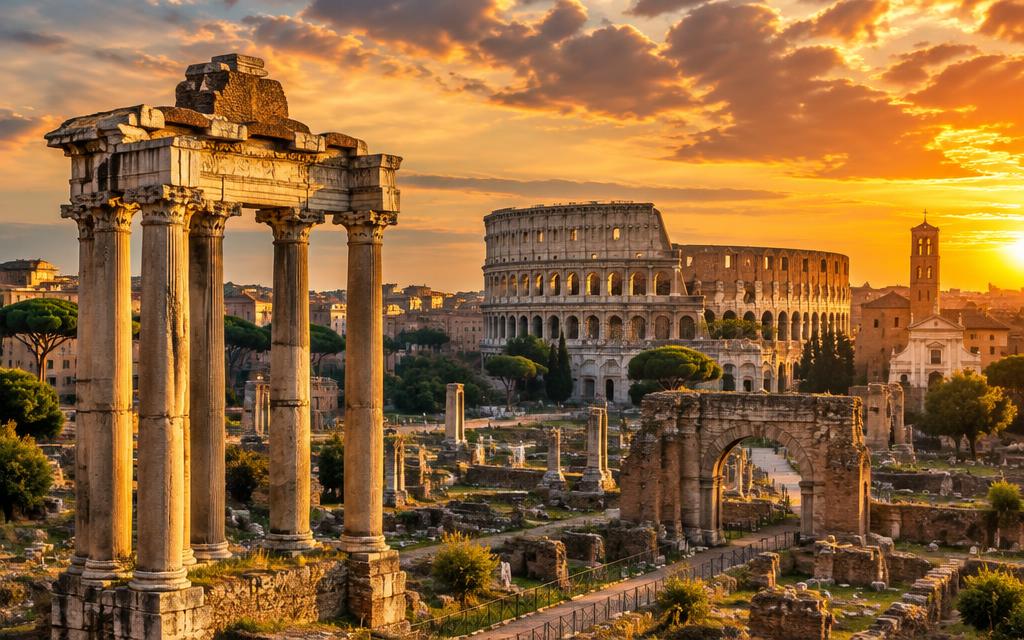 Trip.com
Compare bundles and combo tickets — Colosseum plus Forum, Vatican or hop-on buses in one booking.
Check pricesAffiliate links: we may earn a commission at no extra cost to you. Check each listing's cancellation terms before paying.
Quick answer
The Colosseum was built between AD 72 and AD 80. Construction was financed by spoils from the Roman sack of Jerusalem (AD 70) and completed in roughly 8 years — a staggering pace for a 189 m × 156 m amphitheatre seating 50,000 spectators.
AD 72 — Vespasian breaks ground
Vespasian chose the site of Nero's drained Stagnum (artificial lake) inside the hated Domus Aurea palace. The choice was pure propaganda: where Nero's private vanity once stood, Vespasian gave Rome a public arena. Foundations of travertine were sunk up to 13 m deep.
AD 79 — Vespasian dies, Titus continues
By the time Vespasian died in June AD 79, the first three storeys were complete. His son Titus added the upper tier and finished the seating, racing to inaugurate the building. The same year, Vesuvius erupted and destroyed Pompeii — Titus paid for relief from the same Flavian treasury funding the Colosseum.
AD 80 — inauguration & 100 days of games
The Colosseum (then called the Amphitheatrum Flavium) opened with 100 consecutive days of games. Roman historian Cassius Dio records 9,000 animals killed and gladiator combats every day. A commemorative coin was struck showing the building's exterior.
Where to buy Colosseum tickets
Start with the official Colosseum site, then compare Tiqets, Klook, and Trip.com — trusted booking partners — if official tickets are sold out.
OfficialColosseum SiteFace-value timed tickets from the official source.Official TicketsPartnerTiqetsTours and skip-the-line tickets when official slots are gone.Check PricesPartnerKlookAnother strong backup for sold-out dates and tours.Check PricesPartnerTrip.comUseful for comparing availability and bundles.Check PricesAD 81–96 — Domitian's additions
After Titus died in AD 81, his brother Domitian added the hypogeum — the underground network of corridors, lifts and animal pens beneath the arena floor — and built the topmost gallery for standing spectators. Only after these additions was the structure truly "finished" around AD 96.
What happened after
The Colosseum hosted games for nearly 400 years. Major repairs followed earthquakes in AD 217, 442 and 1349, the last of which collapsed the entire south outer wall. Despite the damage, two-thirds of the original structure survives today — a 1,946-year-old engineering marvel.
The Flavian dynasty's political motive
The Colosseum was not just an arena; it was a powerful political instrument designed to legitimise the Flavian dynasty. After the chaotic "Year of the Four Emperors" and the suicide of Nero, Vespasian needed to distance himself from the previous regime's extravagance. By building the amphitheatre on the site of Nero's private lake, he literally returned the city to its people. This "bread and circuses" strategy provided a massive public amenity that distracted the populace from political instability while showcasing the wealth and power of the new emperors. The sheer scale of the project served as a permanent advertisement for Flavian stability and Roman dominance over the rebellious provinces, particularly following the successful campaign in Judea.
Where to buy Colosseum tickets
Start with the official Colosseum site, then compare Tiqets, Klook, and Trip.com — trusted booking partners — if official tickets are sold out.
OfficialColosseum SiteFace-value timed tickets from the official source.Official TicketsPartnerTiqetsTours and skip-the-line tickets when official slots are gone.Check PricesPartnerKlookAnother strong backup for sold-out dates and tours.Check PricesPartnerTrip.comUseful for comparing availability and bundles.Check PricesEngineering innovations that enabled 8-year construction
Completing a 50,000-seat stone monument in just eight years required revolutionary engineering and project management. The Romans utilised a standardized "assembly line" approach, using pre-cut travertine blocks and standardized arch designs. The use of Roman concrete (opus caementicium) allowed for faster construction than solid stone, while the invention of complex wooden cranes and treadmills enabled workers to lift heavy blocks to the upper tiers. Furthermore, the foundations were a masterpiece of hydrologic engineering; the site was a drained lake, requiring a massive elliptical ring of concrete 13 metres deep to support the weight. This combination of modular design, innovative materials, and a massive, disciplined workforce allowed the Flavians to achieve in a decade what would have taken other civilizations centuries.
Continue reading about the Colosseum
ColosseumRoman Engineering: How the Colosseum Was Built
Concrete, arches, hoists — the technologies that built a wonder.
ColosseumComplete History of the Colosseum
From inauguration in AD 80 to UNESCO World Heritage today.
ColosseumHow Big Is the Colosseum? Dimensions Explained
Length, width, capacity — and how it compares to modern stadiums.
ColosseumRome Attractions Map: Colosseum & Ancient Rome
Every ancient-Rome site around the Colosseum, ranked by walking time, with a one-day plan.
Continuing to the Vatican?
- Doing both in one day? Colosseum and Vatican in one day
- Only time for one? Colosseum vs Vatican compared
- Heading over next? How to get to the Vatican Museums
- Haven't booked the Vatican yet? Can you buy Vatican tickets at the door?
- Packing for the visit? Vatican Museums security rules
Frequently Asked Questions
What year was the Colosseum built?
Construction began in AD 72 under Emperor Vespasian and the building was inaugurated in AD 80 under his son Titus. Final modifications by Domitian completed the structure around AD 96.
How long did it take to build the Colosseum?
About 8 years from groundbreaking (AD 72) to opening (AD 80) — extraordinary speed for a 50,000-seat stone amphitheatre and a testament to Roman engineering and slave labour.
Who started building the Colosseum?
Emperor Vespasian, the founder of the Flavian dynasty. He chose the site of Nero's drained artificial lake as a deliberate political statement of returning land to the Roman people.
When did the Colosseum officially open?
AD 80, inaugurated by Emperor Titus with 100 consecutive days of gladiator combat, animal hunts, and mock naval battles funded by spoils from the Jewish-Roman War.