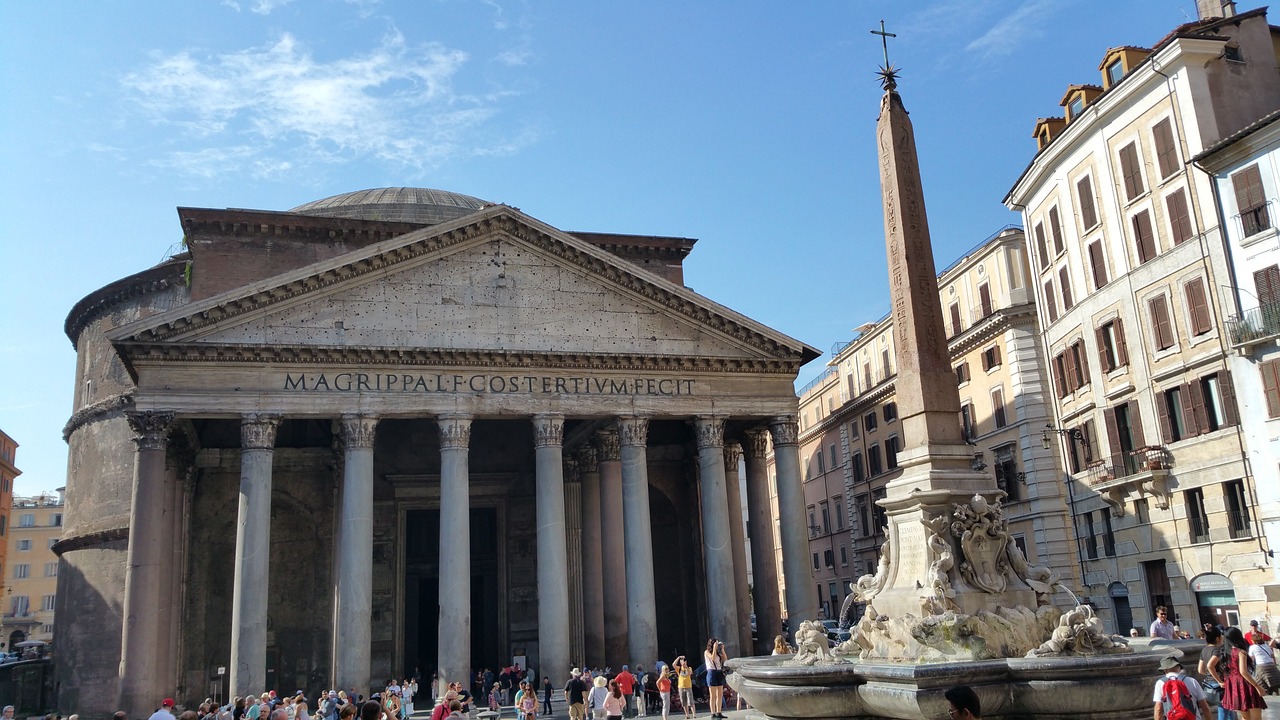
Quick Definition
Etymology: Greek pán ("all") + theós ("god") → pántheion ("of all the gods")A temple dedicated to every deity in a religionThe full set of gods within a mythology (e.g. "the Greek pantheon")By extension: the most celebrated figures in a discipline (e.g. "the pantheon of jazz")Pronunciation: PAN-thee-on (US) / PAN-thee-uhn (UK)Etymology: Word by Word
πᾶν (pán)
"all", "every"
θεός (theós)
"god", "deity"
πάνθειον (pántheion)
"of all the gods"
The word entered Latin as Pantheum, and from there English (via French) in the 14th century. It first meant a physical temple; by the Renaissance it also meant an entire religion's collection of gods; by the 19th century writers used it metaphorically for any group of the most admired figures.
The Three Modern Meanings
1. A temple to all the gods
The oldest meaning. The Pantheon in Rome (completed under Hadrian, around 126 AD) is the most famous, but the Paris Panthéon — completed as the Church of Sainte-Geneviève around 1790 and converted into a national mausoleum in 1791 — also carries the name — although it now serves as a mausoleum for French national heroes rather than a religious temple.2. The collective gods of a religion
Used lowercase in phrases like "the Greek pantheon", "the Norse pantheon", or "the Hindu pantheon". It refers to the full roster of deities worshipped in that tradition — Zeus and Athena for the Greeks; Odin, Thor and Freya for the Norse.3. A metaphor for the greatest in a field
A 19th-century extension. Example uses: "she belongs in the pantheon of American writers", "Federer is in the pantheon of great tennis players". It signals the top tier of achievement, treated with quasi-sacred respect.Heads up: the Pantheon does not offer an official skip-the-line entrance. Everyone uses the same access procedure. Third-party products may bundle the official €7 admission with a guide or audio experience — check exactly what's included before booking.
Pantheon Entry + Audio Guide
Best for: Independent visitors
~30–45 minOfficial €7 admission with a digital audio guide covering the dome, Raphael's tomb and details most visitors miss. Timed entry, explored at your own pace.
- Timed entry + audio guide
- Self-paced exploration
- Raphael's tomb & oculus details
- Cancellable per vendor's terms
🎟️ Compare Prices:
TiqetsKlookTrip.comPantheon Guided Tour
Best for: History enthusiasts
~45 min – 1 hourSmall-group tour with a licensed guide who explains Hadrian's engineering, the Agrippa inscription and the artists and kings buried inside.
- Professional live guide
- Timed entry included
- In-depth commentary
- Multiple languages available
🎟️ Compare Prices:
TiqetsKlookTrip.comPantheon + Attraction Bundles
Best for: Full-day explorers
~2–3 hoursCombine Pantheon entry with Castel Sant'Angelo, Navona Underground or other nearby sights. May offer convenience, but compare the total price with booking separately.
- Pantheon timed entry
- Second attraction included
- Compare against separate bookings
- Flexible scheduling
🎟️ Compare Prices:
TiqetsKlookTrip.comWhy the Rome Building Got the Name
The first building on the site was Marcus Agrippa's, dated to around 27–25 BC; the inscription "M·AGRIPPA·L·F·COS·TERTIVM·FECIT" reproduced across the portico refers to him. That first Pantheon burned in the fire of AD 80 and a later rebuilding was again damaged. The structure standing today was begun under Trajan and completed under Hadrian, generally dated to about 113–126 AD, and it kept the older name: Pantheum.
What the name meant to a 2nd-century Roman is debated, and even the "all the gods" reading is not certain — the building doesn't have the twelve niches you'd expect if it literally housed twelve Olympian statues. Some scholars think it was symbolic rather than functional; others believe it originally held statues of Rome's most important gods (Jupiter, Mars, Venus, and the deified emperors).
In 609 AD it was consecrated as a Christian church, Santa Maria ad Martyres, which helped preserve it through continuous use, although maintenance, later patronage and its engineering also contributed, at a time when nearly every other Roman temple was stripped for materials. It's still a working church today.