Table of Contents
- 1. The big picture in 60 seconds
- 2. The nine central panels
- 3. Prophets, sibyls, ignudi and corners
- 4. The story it tells
- 5. Where to actually look
- 6. Sources
Where to buy Vatican Museums tickets
Try the official Vatican Museums site first, then compare Tiqets, Klook, and Trip.com — trusted booking partners — if official slots are sold out.
OfficialVatican MuseumsFace-value timed tickets from the Vatican's official ticketing site.Official TicketsPartnerTiqetsSkip-the-line tickets and guided tours when official slots are gone.Check PricesPartnerKlookCheck alternative ticket and tour availability.Check PricesPartnerTrip.comBundle Vatican tickets with hotels and city passes.Check PricesThe big picture in 60 seconds
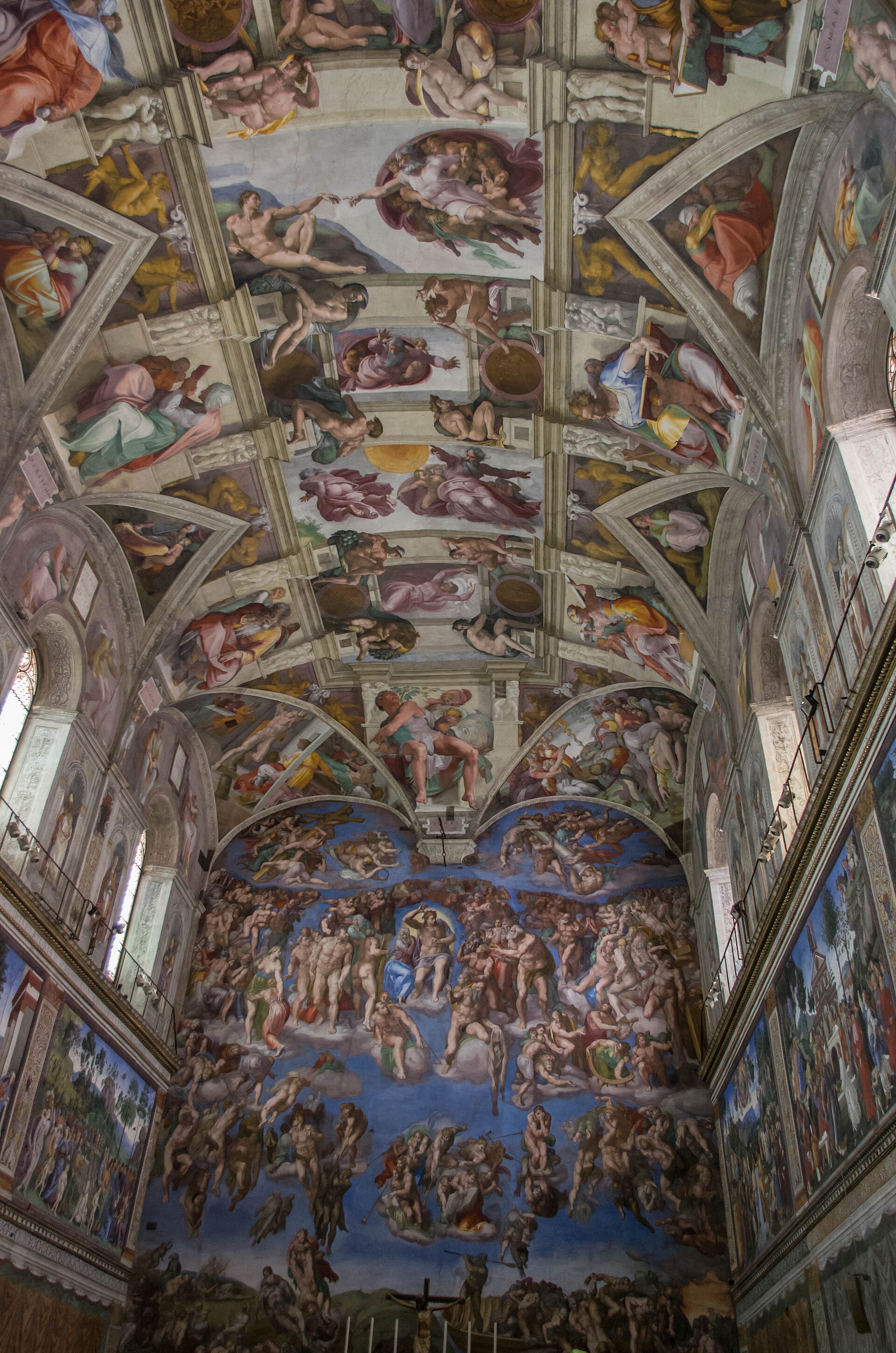
What you are looking at: Michelangelo designed and painted the vast ceiling programme between 1508 and 1512, working with assistants on preparation and parts of the technical process. Estimates of the painted area vary with which surfaces are counted, but it is commonly described as around 12,000 square feet.
The core: nine rectangular panels along the spine of the vault, telling the Book of Genesis.
What surrounds them: twelve monumental prophets and sibyls on painted thrones, twenty nude youths, the ancestors of Christ in the triangular spandrels above the windows, and four Old Testament salvation scenes in the corner pendentives.
Two facts people confuse: the narrative runs from Creation near the altar toward Noah near the entrance — but Michelangelo worked broadly in the opposite direction, beginning at the entrance end with the Noah scenes and progressing toward the altar.
The nine central panels
Listed in narrative order, from the altar end toward the entrance:
1. Separation of Light from Darkness
God's first act of creation. Among the last painted, and the handling is notably freer.
2. Creation of the Sun, Moon and Plants
God appears twice within one panel, showing successive moments.
3. Separation of Land from Sea
God sweeps forward with arms outstretched, strongly foreshortened.
4. Creation of Adam
The famous one. The gap between the fingers is the composition's whole point of tension.
5. Creation of Eve
Eve emerges beside the sleeping Adam. It follows the Adam panel along the central spine.
6. Fall of Man and Expulsion
Two moments in one field: the serpent at the tree, and the exile from Eden.
7. Sacrifice of Noah
Placed out of strict biblical sequence. Twentieth-century cleaning revealed colours that had long been obscured by grime and earlier interventions.
8. The Great Flood
One of the earliest panels painted, and visibly the most crowded in composition.
9. Drunkenness of Noah
The humbling human ending, nearest the entrance.
Prophets, sibyls, ignudi and corners
Seven prophets of the Old Testament (Isaiah, Ezekiel, Daniel, Jeremiah, Jonah, Joel, Zechariah) and five sibyls — prophetic figures from the classical world — sit on monumental painted thrones around the central Genesis scenes. Jonah, above the altar, is among the largest figures on the ceiling.
Twenty ignudi — nude male youths holding garlands and medallions — sit between the story panels. Their meaning remains debated: readings range from purely ornamental to angelic or neo-Platonic, and no single interpretation is settled.
The triangular spandrels above the windows contain the ancestors of Christ. The four corner pendentives hold Old Testament salvation episodes: David and Goliath, Judith and Holofernes, the Brazen Serpent, and Esther and Haman.
The story it tells
Read from the altar toward the entrance, the ceiling moves through creation of the universe, creation of humanity, the fall from grace, and the flood that resets the world through Noah. The prophets and sibyls flanking the narrative point toward a promised saviour. The altar wall, painted around twenty-five years later, delivers that saviour in judgment. The chapel works as a single extended visual argument.
Where to actually look
- Use a side bench if one is available — seating is limited and often occupied.
- Find the Creation of Adam near the middle of the vault to orient yourself.
- Work altar to entrance to follow the narrative in sequence.
- Look for Jonah above the altar, among the largest figures up there.
- Pick out the ignudi between the panels — most visitors never notice them.
- Finish with the corner pendentives, where David and Goliath is the most dramatic of the four.
Sources and further reading
- Vatican Museums — Sistine Chapel collection pages (ceiling, wall frescoes, restoration)
- Vatican Museums — official visitor rules and conduct regulations
- Vatican Museums — official opening hours and tickets
Facts on this page last checked: August 2026. Opening hours, prices and access rules in Rome and Vatican City change — always confirm on the official site before booking.
Frequently Asked Questions
Did Michelangelo paint lying on his back?
No — that is a myth. He worked from custom scaffolding, craning upward, which he complained about bitterly in his own writing.How long did it take?
Roughly four years, from 1508 to 1512. Michelangelo designed and painted the programme, with assistants involved in preparation, plaster and parts of the technical process.What are the nude figures between the panels?
Twenty male nudes known as the ignudi, holding garlands and medallions. Their meaning is still debated by art historians.Are the colours original?
They are restored. The 1980–1994 cleaning removed centuries of soot and candle deposit and revealed a far brighter palette than the version earlier generations knew.Can I bring binoculars?
A small pair helps, since the vault is high above you. Photography, however, is not permitted inside the chapel.Related Vatican guides
Sistine Chapel Art Guide
The deeper decode of every panel.
Sistine Chapel Paintings Explained Simply
Both ceiling and walls in plain English.
Why Is the Sistine Chapel So Famous?
The context that makes it matter.
Visitor Logistics
Tickets, rules, timing before you go.
Full Vatican Museums attraction guide See Rome attractions by area on the map