In This Guide
Quick Overview: The Colosseum's Layout
The Colosseum isn't a single room — it's a massive, multi-level amphitheatre that originally held 50,000–80,000 spectators. Understanding the layout helps you appreciate what you're seeing instead of wandering aimlessly.
The Levels
- Underground (Hypogeum): tunnels, holding areas and animal lifts beneath the arena — Full Experience with Underground ticket or a guided educational tour
- Arena Floor: reconstructed wooden platform where fights took place — separate special-access ticket (short ~20-minute "Only Arena" €18, or Full Experience Arena €24) or guided tour
- Level 1 (ima cavea): seats closest to the arena — senators nearest the podium, imperial balcony on the short axis at the southern entrance
- Level 2 (media cavea): equestrian order (equites) in antiquity — home today to the Colosseum Museum and current exhibitions
- Attic (upper belvedere): panoramic third-level / attic route — separate special-access ticket
Time Inside per Ticket
- Standard (€18): up to 75 minutes inside the monument
- Full Experience products (€24): up to 90 minutes — applies to Full Experience Arena, Underground + Arena, and Attic
- Only Arena (€18): a short ~20-minute Arena-floor visit only
- Colosseum Museum: allow ~15–30 minutes on top, included with Standard and Full Experience products
Ground Level & Arena Floor
The arena floor is where the spectacles took place — gladiatorial combat, wild-animal hunts and public executions. Aquatic spectacles (naumachiae) are documented for the inauguration period, before the permanent masonry hypogeum was built and made large-scale water displays impossible. The original wooden floor was covered in sand (Latin arena = "sand") to absorb blood.
What You'll See on the Arena Floor
Reconstructed Wooden Stage
A partial wooden platform built over the south side gives you a sense of the original surface. You can stand at the centre and look up at the towering walls — the same view gladiators had.
Exposed Hypogeum Below
From the arena floor, you look directly down into the underground tunnel network. You can see the corridors, holding cells, and the grooves where mechanical elevators lifted animals into the arena through trapdoors.
The Christian Cross
A large wooden cross stands at one end of the arena. The Colosseum developed a major Christian devotional role from the 17th–18th centuries onwards; the present cross reflects that later history rather than the ancient Roman arena.
Scale & Perspective
Standing at floor level gives you the most powerful sense of the Colosseum's scale. The walls rise four stories around you. This is the perspective gladiators had — and it's unforgettable.
⚠️ Ticket Required
Arena Floor is not included in the standard €18 ticket. You need the "Only Arena" (€18) or Full Experience Arena (€24) ticket from the official site, or a guided tour that includes arena access. See our comparison →
The Underground (Hypogeum)
The underground level is the Colosseum's most extraordinary area — a labyrinth of tunnels, cages, and mechanical systems that made the spectacles above possible. It was hidden beneath the arena floor and invisible to spectators, like the backstage of the world's most violent theatre.
Underground Highlights
1Tunnel Network
A grid of corridors running the full length and width of the arena. Gladiators, animals, and stage equipment moved through here before emerging into the arena above. You can walk through preserved sections of these tunnels.
2Animal-lift system
Animals were held below the arena and raised in cages using mechanical lifts and trapdoors. Look for the shaft alignments in the stonework where these lifts once operated.
3Elevator Shafts & Trapdoors
During one Flavian phase, 28 freight elevators — operated by ropes and pulleys — were used to raise caged animals and stage machinery through trapdoors in the arena floor. Some shaft grooves are still visible in the stone walls.
4Ludus Magnus connection
An eastern cryptoporticus connected the Colosseum directly to the Ludus Magnus, the main gladiatorial training school just east of the amphitheatre. It let gladiators reach the arena without crossing the surrounding streets.
📌 Access Info
Underground access requires a Full Experience with Underground ticket or a guided educational tour. You can buy the special-access product without adding a paid educational tour — you just follow the controlled route and staff instructions. Entry is time-slotted.
First Tier — The Ringside Seats
The first tier (ima cavea) held the seats closest to the arena. Senators sat here nearest the podium, with the imperial balcony (pulvinar) on the short axis at the southern entrance. The section immediately behind the senators (maenianum primum) accommodated the equestrian order (equites), before the tiers stepped upwards through the rest of Roman society.
What to Look For
- Original marble seat fragments: some carved stone seating survives, including inscriptions where senators' names were carved to reserve their places
- The podium wall: a tall barrier separating spectators from the arena, originally topped with additional protection to prevent animals reaching the seating
- Numbered entrances and vomitoria: the internal routes and access corridors were designed to move huge crowds efficiently to and from their seats
- The imperial balcony: located on the short axis at the southern entrance — a wider, more elevated platform area facing the arena
- The Christian cross: the monument developed a major Christian devotional role from the 17th–18th centuries onwards; the present cross reflects that later history rather than the ancient arena. See our Colosseum history for detail
💡 The first tier is accessible with all standard and Full Experience ticket types. It's the level you'll spend the most time on.
Second Tier — Best Views & Exhibition Gallery
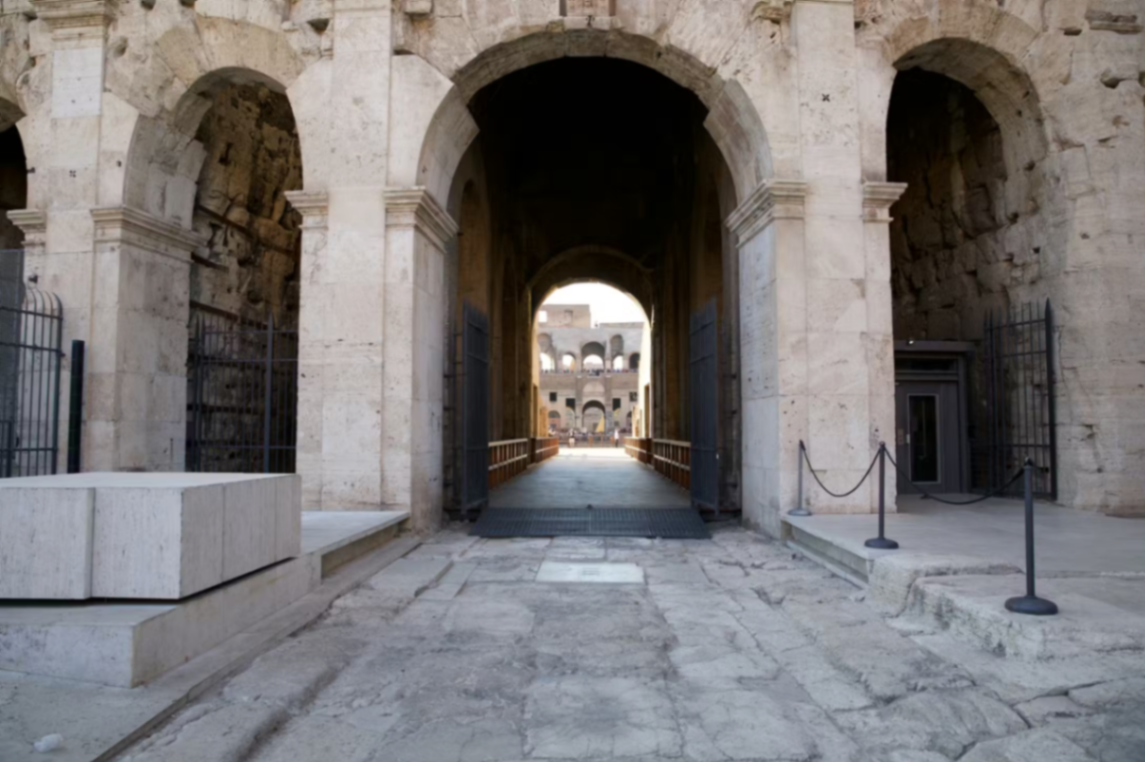
The second tier (media cavea) was originally reserved for the equestrian order (equites), with the two maenianum secundum sectors above it accommodating progressively lower social groups. Today it combines some of the best interior views of the arena and exposed hypogeum with access to the Colosseum Museum.
The Views
Level 2 gives some of the most recognisable Colosseum photographs — high enough to capture the elliptical shape and the exposed hypogeum, close enough to see detail. Late-afternoon light from the west can be dramatic.
Colosseum Museum & Exhibitions
Displays change, but the Colosseum Museum uses archaeological finds, inscriptions, spectator graffiti, models and objects from the amphitheatre to explain spectators, gladiators, architecture and the monument's later history.
What the Museum Typically Covers
- • How the amphitheatre worked — architecture, structure and the systems that made the games possible
- • Spectators & everyday life — inscriptions and graffiti left by ordinary Roman visitors
- • Gladiators & the games — objects and iconography from the arena
- • Later history — the Colosseum's Christian re-use, quarrying and restoration
Check the current PArCo exhibition programme before your visit — specific objects and temporary shows change.
💡 The Colosseum Museum is included with the Standard and current Full Experience products. The €18 Only Arena ticket is a short 20-minute Arena-floor visit and does not provide the normal Museum / level route.
The Attic (Upper Belvedere)
The Attic is the modern visitor product for the upper tiers. The current route runs through the intermediate gallery, then up to the third level, before reaching the Attic itself. In antiquity the upper seating (summa cavea) was where ordinary Romans and women sat — furthest from the arena but with the most commanding views of the surrounding city.
What You'll See from the Top
Roman Forum — the entire ancient city centre spread below youPalatine Hill — the imperial palaces rising behind the ForumArch of Constantine — directly beside the Colosseum, best viewed from aboveTemple of Venus and Roma — the largest temple in ancient Rome, just east of the ColosseumCity skyline — Rome's domes and rooftops stretching to St Peter'sInterior panorama — the full elliptical shape is most visible from this height📌 Access Note
The Attic is a separate special-access ticket — not part of the Standard or Full Experience Arena tickets. The route is barrier-free to the intermediate gallery, and a dedicated hoist improves access to the third level, but reaching the Attic itself still requires steep stairs.
The Exterior — What Most People Miss
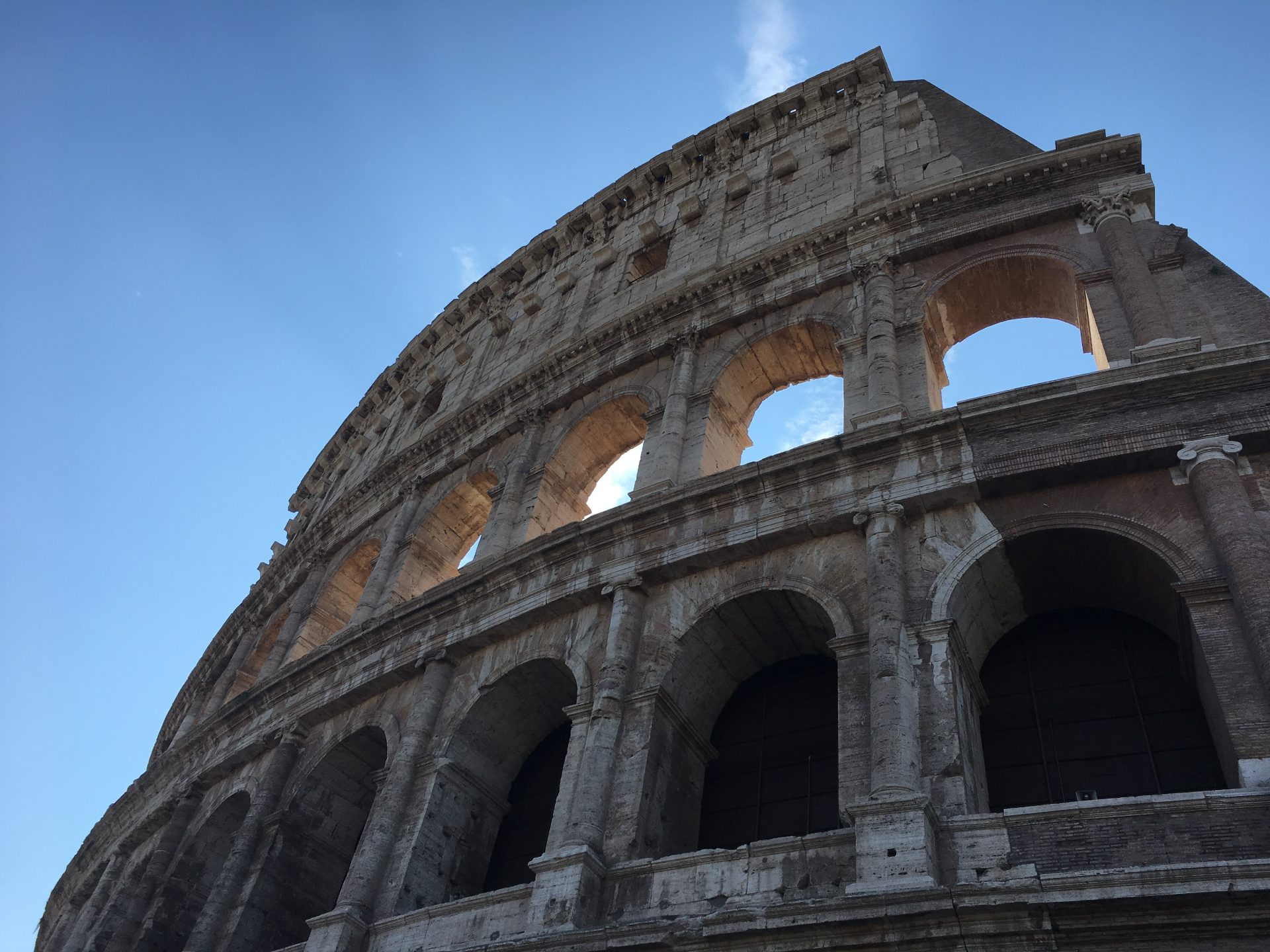
Before or after your interior visit, take 10–15 minutes to walk around the outside. The exterior tells its own story — and most visitors rush right past it.
The Four Storeys
Each level uses a different architectural order:
- • Ground: Tuscan / Roman Doric half-columns
- • Second: Ionic half-columns
- • Third: Corinthian half-columns
- • Fourth (attic wall): solid wall with Corinthian pilasters and mast brackets for the velarium
Missing South Side
The missing southern outer rings are the result of centuries of earthquakes, structural collapse, demolition and stone-robbing — a slow process from the early medieval period onwards. Much of the fallen and quarried stone was reused elsewhere in medieval and Renaissance Rome. The clean cross-section on the south side lets you read the internal structure.
Numbered Entrance Arches
Walk around the northern side and look for Roman numerals carved above the arches. Of the 80 façade arches, 76 were public entrances and were numbered; 29 of those numerals still survive on the northern side, and spectators used ticket-tokens (tesserae) matching their gate number.
Velarium Brackets
At the very top, look for protruding stone brackets with holes. These held the wooden masts that supported the enormous retractable velarium — a canvas sun-shade operated by sailors from the imperial fleet stationed at Misenum.
Nearby: Roman Forum & Palatine Hill
Your Colosseum ticket also includes access to the Roman Forum and Palatine Hill; the exact validity period depends on the ticket type (standard and Only Arena use a 24-hour window, while Full Experience products are valid for two consecutive days). These sites are directly adjacent and take 1.5–2.5 hours combined.
Roman Forum Highlights
- • Temple of Saturn — iconic eight columns
- • Arch of Titus — depicts the sack of Jerusalem
- • Via Sacra — the ancient processional road
- • Senate House (Curia Julia) — remarkably intact
Palatine Hill Highlights
- • Domus Augustana — the Emperor's private palace
- • Farnese Gardens — Renaissance gardens with Forum views
- • Palatine Museum — frescoes and sculptures
- • Stadium of Domitian — the imperial private arena
Best Photo Spots
📸 Level 2 — south side
The classic interior shot: full ellipse with exposed hypogeum. Best in morning light.
📸 Arena floor — centre
Looking up at the surrounding walls. Powerful perspective. Available with any Arena-access ticket (Only Arena €18 or Full Experience Arena €24).
📸 Underground tunnels
Moody, atmospheric shots through stone corridors. Low light — use your phone's night mode.
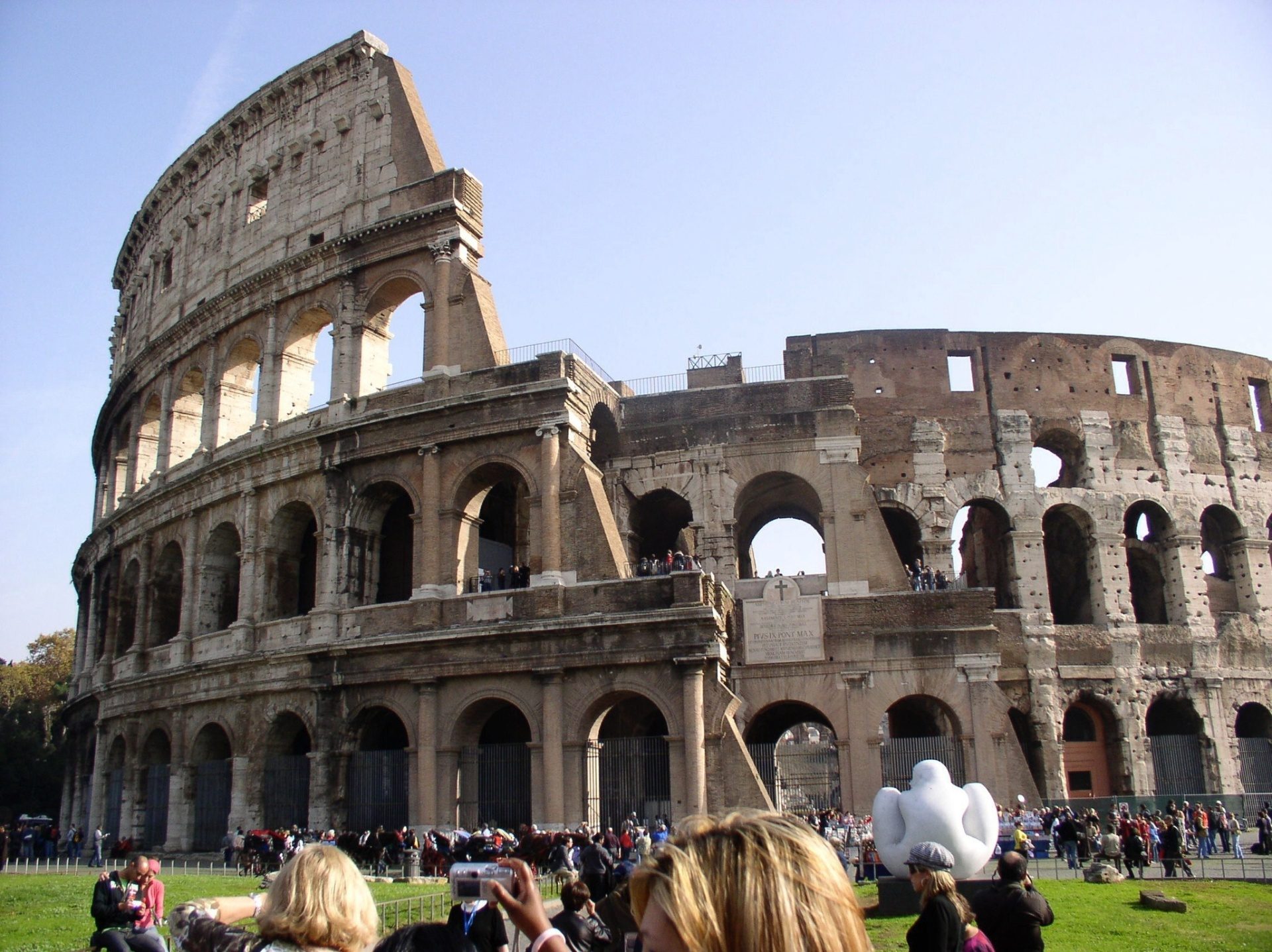
📸 Exterior — Via dei Fori Imperiali
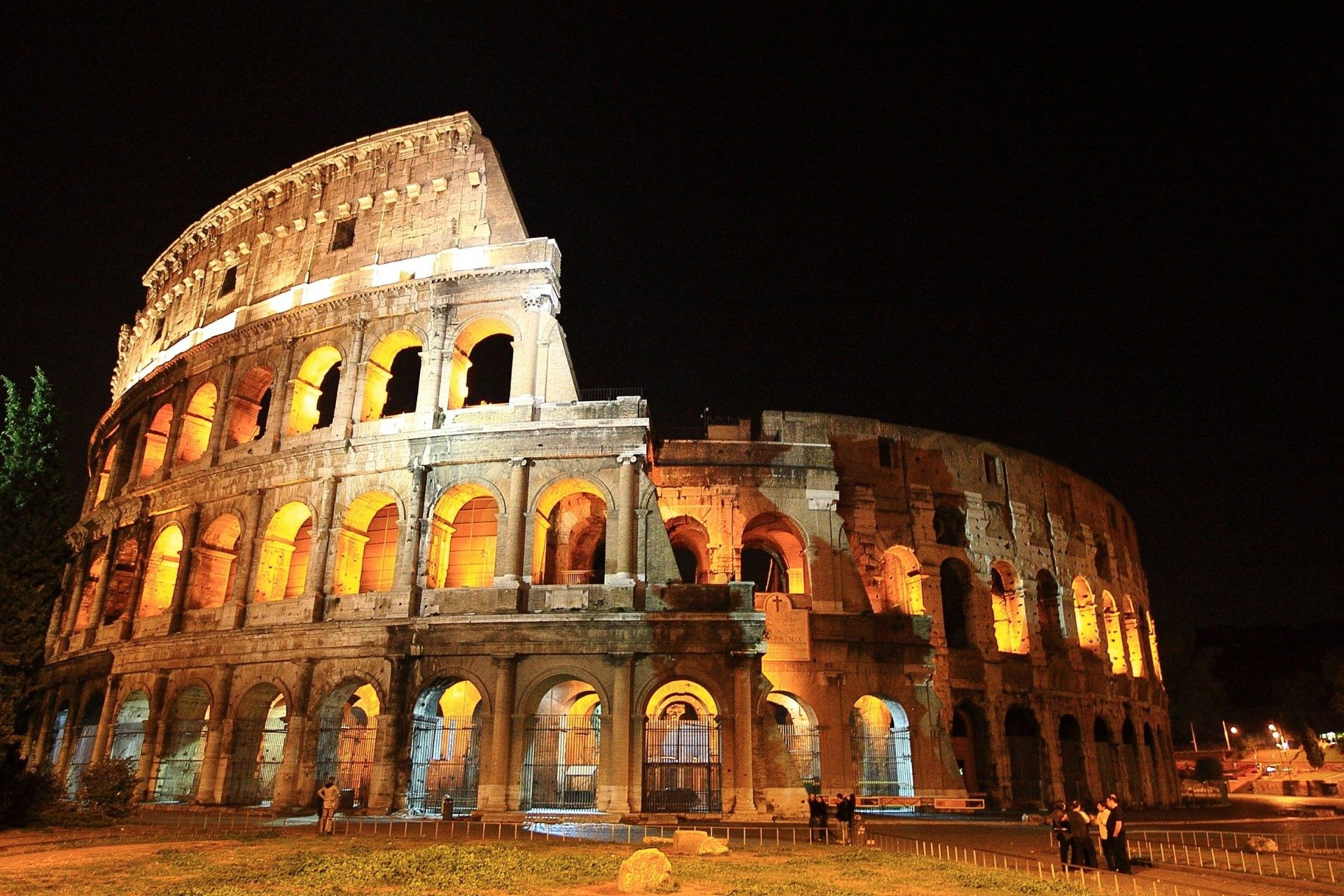
The classic postcard angle from the northeast. Best at sunrise or late afternoon.
📸 Upper belvedere (when open)
Panoramic Rome with the Forum below. Sunset golden hour is extraordinary.
📸 Arch of Constantine frame
Use the arch as a natural frame with the Colosseum behind. Walk 50m south of the entrance.
Which Ticket Shows You What
Your ticket type determines which areas you can access. Here's a clear breakdown:
| Ticket | What you get inside the Colosseum |
|---|---|
| Standard (€18) | Regular first & second tier route + Colosseum Museum. Includes Forum/Palatine within 24h. |
| Only Arena (€18) | Short ~20-minute Arena Floor visit only. Does not include the normal Colosseum route or Museum. |
| Full Experience Arena (€24) | Levels 1–2 + Arena Floor + Colosseum Museum. Longer validity for Forum/Palatine (SUPER sites). |
| Full Experience Underground + Arena (€24) | Underground + Arena Floor + Colosseum Museum. Longer validity for Forum/Palatine (SUPER sites). |
| Attic (€24) | Regular route + intermediate gallery + third level + Attic (belvedere) + Colosseum Museum. |
For a detailed comparison, see our Arena Floor vs Standard ticket guide or the best tickets overview.
Where to buy Colosseum tickets
Start with the official Colosseum site, then compare Tiqets, Klook, and Trip.com — trusted booking partners — if official tickets are sold out.
OfficialColosseum SiteFace-value timed tickets from the official source.Official TicketsPartnerTiqetsTours and skip-the-line tickets when official slots are gone.Check PricesPartnerKlookAnother strong backup for sold-out dates and tours.Check PricesPartnerTrip.comUseful for comparing availability and bundles.Check PricesCompare Third-Party Booking Platforms
These are booking marketplaces, not PArCo-accredited operators. Product availability, supplier, cancellation and access vary — check the exact listing before you book.
Tiqets
Browse listingsKlook
Browse listingsTrip.com
Browse listingsVisitor Tips for Seeing Everything
Don't rush past Level 2
When your route reaches the second tier, slow down — it combines some of the best arena views with the Colosseum Museum and current exhibitions.
Visit the museum & exhibitions
The Colosseum Museum uses inscriptions, graffiti, models and finds from the amphitheatre to explain spectators, gladiators and architecture. Displays change, so check what's on before you go.
Walk the full perimeter outside
The 29 surviving numbered arches on the northern side, the missing southern outer rings and the velarium brackets are free to see and tell a story most visitors never learn.
Add a special-access ticket if you can
Underground, Arena Floor and the Attic are the most memorable areas. You can buy official special-access products without adding a paid educational tour — you just follow the controlled route and staff instructions.
Pick your slot around opening hours
Opening time or a later-afternoon slot usually work well. Seasonal hours change through the year — from 25 October 2026 the last admission is 3:30 PM.
Use the free MyColosseum app
There's interpretation on site, but the free MyColosseum app (iOS/Android) adds interactive audio content and much more context as you move through the monument.
Frequently Asked Questions
What are the main things to see inside the Colosseum?
The key highlights include the regular first and second tier route (surviving marble seat fragments, podium wall, the Christian cross), the exposed hypogeum visible from above, and the Colosseum Museum with rotating exhibitions. Special-access products add the Arena Floor, the Underground itself, or the Attic (belvedere).
Can you go underground at the Colosseum?
Yes. The official Full Experience with Underground ticket includes a controlled Underground + Arena route, and there are also guided educational tours. You can buy the special-access product without adding a paid educational tour — you just follow the managed route and staff instructions.
Can you walk on the Colosseum arena floor?
Yes, on a special-access ticket. 'Only Arena' (€18) is a short ~20-minute Arena-floor visit and does not include the normal Colosseum route or Museum. Full Experience Arena (€24) adds the Arena to the regular levels and Museum. Choose Full Experience Arena if you also want the standard interior route.
Which level of the Colosseum has the best views?
The second tier normally gives the best combination of arena views and access to the Colosseum Museum. The Attic (upper belvedere), sold as a separate special-access ticket, adds sweeping panoramas of the Roman Forum, Palatine Hill and the city skyline.
Are there exhibitions inside the Colosseum?
Yes. Standard and current Full Experience products include the Colosseum Museum and ongoing exhibitions, which use archaeological finds, inscriptions, graffiti, models and objects from the amphitheatre. Displays change, so check the current exhibitions before visiting.
How long do you need to see everything in the Colosseum?
Official stay caps inside the monument are 75 minutes on a Standard ticket and 90 minutes on Full Experience products (Underground + Arena, Arena, or Attic). 'Only Arena' is a separate ~20-minute Arena-floor visit. Add roughly 1–2 hours for the Roman Forum and Palatine Hill on your combined ticket.
Related Colosseum Guides
Colosseum Tickets 2026Underground GuideArena Floor GuideArena Floor vs StandardBest Time to VisitHow Long Does a Visit Take?First-Time Visitor GuideSkip the Line TipsBest Tickets Overview🏨 Staying Near the Colosseum?
We researched and ranked the 10 best hotels within walking distance of the Colosseum — from luxury boutiques to affordable gems, all rated 9.0+ by guests.
All rated 9.0+ Within 200m–1.8kmRead: 10 Best Hotels Near the Colosseum