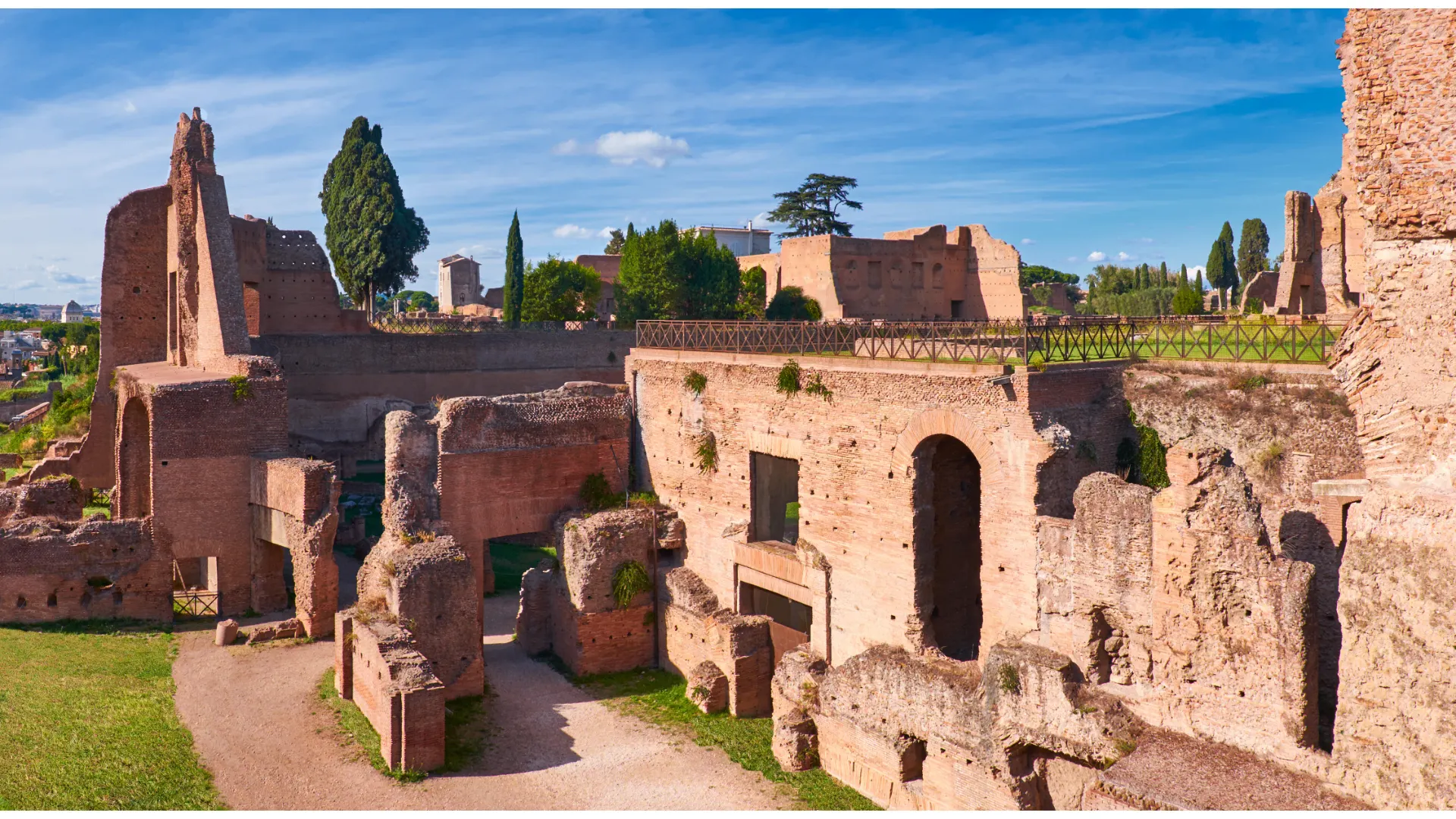
 UNESCO World Heritage Site
Palatine Hill
The legendary birthplace of Rome and luxurious home of emperors for over 400 years
1-1.5 hours€18 standard / €24 Full ExperienceAncient RuinsVia di San Gregorio, 30, 00186 RomaOpen on MapHotels NearbyPlan Your Visit
Compare tickets, tours and stays — booking ahead usually gives more choice
Get TicketsBook a TourHotels NearbyBy AllTrips Editors·Last updatedPalatine Hill (Colle Palatino) is the legendary birthplace of Rome and the residential heart of the empire — the hill where Augustus, Tiberius and Domitian built their palaces above the bustling Roman Forum. It shares a single combined ticket with the Colosseum and Forum, overlooks the Circus Maximus chariot track and the Arch of Constantine, and faces the Capitoline Hill across the valley. This 2026 guide covers tickets, the best entrance, what to see, photo spots and the mistakes most first-time visitors make.
Duration
1-1.5 hours
Cost
€18 standard / €24 Full Experience
Founded
753 BC (legend)
Type
Ancient Ruins
Why Visit Palatine Hill?
According to Roman mythology, Palatine Hill is where Romulus founded Rome in 753 BC. This most central of Rome's Seven Hills became the exclusive neighborhood of emperors and aristocrats.
Imperial Palaces
Walk through the ruins where Augustus, Tiberius, and Domitian once lived in splendor
Beautiful Gardens
Stroll through the Farnese Gardens, described as one of Europe's earliest private botanical gardens
Panoramic Views
Enjoy breathtaking vistas over the Roman Forum and Circus Maximus
Ancient Frescoes
See remarkably preserved wall paintings in the House of Livia and Augustus
The word 'palace' derives from Palatine Hill (Latin: Palatium), testament to its legendary luxury.
History of Palatine Hill
Archaeological evidence shows human habitation on Palatine Hill dating back to 1000 BC. According to legend, this is where Romulus and Remus were raised by a she-wolf in the Lupercal cave.
Founded
753 BC (legendary)
Height
40 meters above Forum
Historical Role
Imperial residence
Status
UNESCO World Heritage Site
From the 1st century BC the hill became Rome's most exclusive address. Augustus chose it for his deliberately modest house; his successors expanded with ever-grander palaces, culminating in Domitian's vast Domus Flavia and Domus Augustana, which served as the imperial residence for three centuries. After the fall of Rome the palaces were stripped, buried and forgotten — until the Farnese family laid out Renaissance gardens on top in the 16th century, and 19th-century archaeologists rediscovered the imperial city beneath.
Timeline Highlights
From legendary founding to Renaissance gardens, Palatine Hill has witnessed Rome's entire history.
753 BCLegendary Founding
According to myth, Romulus founds Rome on Palatine Hill after killing his twin brother Remus. The Lupercal cave, where the she-wolf nursed them, was believed to be here.
1st century BCAugustus's Residence
Emperor Augustus builds his modest home here, establishing the hill as the imperial residence. The House of Livia, his wife, still displays beautiful frescoes.
81-96 ADDomitian's Palace
Emperor Domitian constructs the massive Domus Augustana and Domus Flavia, creating a sprawling palace complex that served emperors for 300 years.
16th centuryFarnese Gardens
Cardinal Alessandro Farnese creates the famous botanical gardens atop the ruins, described as one of Europe's earliest private botanical gardens and a model for Renaissance landscape design.
19th centuryArchaeological Excavations
Systematic excavations begin, uncovering the buried palaces and revealing the full extent of imperial luxury. The Palatine Museum opens to display discoveries.
Palatine Hill Tickets & Entry
Palatine Hill is part of the Colosseum archaeological park. A single combined ticket covers Palatine Hill, the Colosseum and the Roman Forum, valid for 24 hours: one timed Colosseum admission plus one combined admission to the Roman Forum–Palatine area, rather than separate scans for the Forum and the Palatine. Compare prices across our partners below.
Forum & Palatine Hill Entry
Best for: Self-guided explorers
~2 hoursStandard entry to the Roman Forum and Palatine Hill with multimedia video. Explore at your own pace among ancient ruins.
- Roman Forum access
- Palatine Hill included
- Multimedia video guide
- Flexible self-guided visit
🎟️ Compare Prices:
TiqetsKlookTrip.comColosseum + Forum Combo
Best for: First-time visitors
~3 hoursThe most popular option! Combined entry to the Colosseum, Roman Forum, and Palatine Hill with audio guide included.
- Colosseum entry included
- Roman Forum access
- Palatine Hill included
- Audio guide included
🎟️ Compare Prices:
TiqetsKlookTrip.comForum Expert Guided Tour
Best for: History enthusiasts
~2.5 hoursExpert-led tour bringing ancient Rome to life. Includes Palatine Hill and Roman Domus entry with live commentary.
- Professional live guide
- In-depth historical commentary
- Palatine Hill & Roman Domus
- Small group experience
🎟️ Compare Prices:
TiqetsKlookTrip.comWhat to See at Palatine Hill
Must-See Features
- Domus Augustana - Private residence of emperors for 300 years
- Farnese Gardens - Renaissance gardens with stunning Forum views
- Hippodrome of Domitian - Emperor's private stadium
- House of Livia - Well-preserved frescoes from Augustus's era
- Palatine Museum - Ancient artifacts and sculptures
- Panoramic overlook - Views over Roman Forum and Circus Maximus
- Cryptoporticus - Underground corridor connecting palaces
Nearby Attractions
- Roman Forum (directly adjacent)
- Colosseum (5-minute walk)
- Circus Maximus (visible from hill)
- Arch of Constantine (5-minute walk)
Best Photo Spots
Farnese Gardens terrace
The classic panoramic shot of the entire Roman Forum below, with the Vittoriano on the horizon. Best at golden hour.
Stadium of Domitian
Stand at the curved north end of Domitian's private hippodrome for a symmetrical shot of the elongated oval lined with columns.
Circus Maximus overlook
The southern edge of the hill drops directly to the ancient Circus Maximus chariot-racing track — an unmatched viewpoint, especially at sunset.
House of Augustus frescoes
Inside the SUPER-ticket rooms, the second-style Pompeian frescoes are some of the finest surviving Roman wall paintings (no flash).
Palatine Hill vs Roman Forum vs Capitoline Hill
First-time visitors often confuse the three hills and the Forum below. Here's how they compare.
| Site | Era / Role | Ticket | Best For |
|---|---|---|---|
| Palatine Hill | 8th c. BC – 4th c. AD · imperial residence | Standard combo €18 / Full Experience €24 | Imperial palaces, panoramic views, gardens |
| Roman Forum | 7th c. BC – 4th c. AD · civic plaza | Standard combo €18 / Full Experience €24 | Republican history, Senate, temples |
| Capitoline Hill | 6th c. BC – today · religious & civic | Free (square) | Michelangelo's piazza, free Forum overlook |
| Capitoline Museums | Founded 1471 · world's oldest public museum | €16 | Roman sculpture, Tabularium Forum view |
Common Mistakes to Avoid
Buying a separate ticket
Your Colosseum ticket already includes Palatine Hill and the Roman Forum — don't pay twice.
Skipping the SUPER sites
The House of Augustus and House of Livia hold some of Rome's best surviving frescoes. If you care about ancient art, the SUPER upgrade is the single best add-on in the park.
Climbing in midday heat
The hill is exposed and the climb from Via di San Gregorio is steep. In summer, go before 10 AM or after 4 PM and bring water.
Missing the Circus Maximus view
Most visitors leave from the same entrance they arrived at. Walk to the southern edge of the hill first — the view down to the ancient chariot track is unforgettable.
Where to Stay Near Palatine Hill
Looking for convenient accommodation near Palatine Hill? Stay within walking distance to make the most of your visit.
Hotels Near the Colosseum & PalatineCentral locations with easy access to Palatine Hill and other attractionsBest Time to Visit
Early Morning
09:00 opening — cooler temperatures and softer light
Late Afternoon
4:00 PM - golden hour for photos
Avoid Midday
11 AM - 3 PM: Intense sun, limited shade
Palatine Hill Throughout the Day
The hill feels like a different place hour by hour. Pick the slot that matches your priorities.
9:00–10:00 AM (opening)
The Forum–Palatine area opens at 09:00. Temperatures are cool and the Farnese Gardens have soft side-light before groups climb up from the Colosseum.
10:00 AM–12:00 PM (Colosseum overflow)
Tour groups finish the Colosseum and pour onto the hill via the Arch of Titus. Still manageable, but the imperial palaces start to feel busy.
12:00–3:00 PM (peak heat)
Worst window. The hill has almost no shade, the ruins reflect heat, and there are no covered rest areas. Avoid in summer unless this is your only option.
3:00–5:00 PM (afternoon dip)
Crowds thin as visitors leave for the Vatican. Light is warm and ideal for photos of the Domus Augustana and the Stadium of Domitian.
Last 90 minutes before closing
A favourite window for photographers: late light falls across the Forum below, the Vittoriano catches the sun and the Farnese Gardens warm up. Check the closing time for your date, as the area shuts before sunset for much of the year.
After closing (exterior views)
Walk down to Circus Maximus or Via dei Cerchi at dusk for floodlit views of the imperial palaces from below — Rome's most underrated free evening sight.
Palatine Hill by Season
The hill is open year-round, but the visit changes dramatically with the seasons — it's an open-air site with almost no shade.
| Season | Crowds | Conditions | Best For |
|---|---|---|---|
| Spring (Mar–May) | Heavy from late March | Mild, blooming gardens | Farnese Gardens at peak bloom, perfect picnic weather, golden light over the Forum |
| Summer (Jun–Aug) | Peak — extremely heavy | Brutal heat, no shade | Best at the 09:00 opening or in the last hour before closing — bring water, hat, SPF 50 |
| Autumn (Sep–Nov) | Heavy Sep, easing by Nov | Warm-mild, soft light | Best balance of weather and crowds, perfect golden-hour photography from the Belvedere |
| Winter (Dec–Feb) | Light (except Christmas/Epiphany) | Crisp, occasional rain | Walk-up entry possible, dramatic low sun across the ruins, contemplative empty palaces |
Our pick: Late October or early November. Crowds drop sharply, the Italian holiday on November 1 thins them further, and the lower sun angle creates dramatic shadows across the Domus Flavia ruins.
How the Imperial Palaces Were Built — An Engineering Deep-Dive
The Domus Flavia and Domus Augustana weren't just opulent residences — they were one of the most ambitious engineering projects of the ancient world, transforming an entire Roman hill into a single integrated palace complex.
Reshaping the hill itself
Domitian's architect Rabirius literally re-engineered the Palatine. Workers cut into the bedrock on the north side and built up massive concrete vaults on the south, creating an artificial plateau roughly 200 m × 150 m to host the new palace.
Concrete vaulting at scale
The substructures of the Domus Augustana use opus caementicium (Roman concrete) vaults up to 12 m wide — the same technology that made the Pantheon dome possible, deployed here on a horizontal scale to support multi-story palace wings.
Hydraulic engineering
Water from the Aqua Claudia was raised onto the hill via a custom branch aqueduct, feeding fountains, the sunken garden of the Domus Augustana, baths, and a private nymphaeum — all by gravity, with no pumps.
The Stadium of Domitian
The 160 m × 50 m sunken hippodrome wasn't for chariot racing — it was a private ornamental garden shaped like a stadium, terraced into the hill with a curved imperial box overlooking it. Pure architectural theater.
Polychrome marble veneer
Walls were faced in giallo antico (Tunisia), pavonazzetto (Turkey) and porfido rosso (Egypt) — marble shipped from across the empire as a deliberate display of imperial reach. Most was stripped in the Middle Ages and reused in Roman churches.
Why it survived 2,000 years
The concrete substructures were so massive that medieval Romans built houses, gardens and even monasteries on top of them rather than demolishing them — which is why the Farnese Gardens (1550s) sit directly above Tiberius' palace today.
Pair Your Palatine Visit With…
Your Palatine ticket already covers the Forum and Colosseum. These nearby sites complete the perfect ancient-Rome day:
- → Roman Forum — included with your ticket; descend via the Arch of Titus straight into the political heart of ancient Rome.
- → Colosseum — also included; visit last so you don't fight the morning entry queues.
- → Temple of Venus and Roma — directly between the Forum and Colosseum, often deserted.
- → Circus Maximus — visible from the Palatine's southern Belvedere; walk down for sunset views back up at the imperial palaces.
- → Pantheon — 25-minute walk through the Forum; pair both for Rome's ultimate ancient-architecture day.
Frequently Asked Questions
Is Palatine Hill included with Colosseum tickets?
Yes — the standard 24-hour combination ticket (€18) gives one timed Colosseum admission plus one combined admission to the Roman Forum–Palatine area, so Palatine Hill needs no separate ticket. The Forum Pass SUPER (€18) covers the Forum–Palatine area without the Colosseum, and Full Experience products (€24) add the Colosseum and SUPER sites over two consecutive days.
How long should I spend at Palatine Hill?
Allow 1.5 hours for the main palace ruins and Farnese Gardens, or 2.5 hours if you also visit the Palatine Museum and the SUPER sites (House of Augustus, House of Livia, Aula Isiaca). History buffs can easily spend 3 hours.
Which entrance should I use for Palatine Hill?
Via di San Gregorio (south side) typically has the shortest queues. The Roman Forum entrance from Largo della Salara Vecchia is best if you want to walk the Forum first and climb up. The Arch of Titus entrance, shared with the Colosseum, is most convenient if you start at the amphitheatre.
Is Palatine Hill accessible for wheelchairs?
Accessibility is limited — the hill has steep ramps, gravel paths and stepped terraces. A partially accessible route exists from Via di San Gregorio with some adapted viewpoints. Free entry is provided for visitors with disabilities and one companion. Contact the Parco archeologico del Colosseo in advance for an accessible itinerary.
Can you visit Palatine Hill for free?
Yes — entry is free on the first Sunday of every month and on official free days including April 25, June 2 and November 4. Visitors under 18 enter free, subject to official eligibility and document rules, and 18–25 year-olds get reduced tickets. Free days are popular, so arrive close to the 09:00 opening.
What is the SUPER ticket and is it worth it?
Two different products are often confused. The Forum Pass SUPER (€18) covers the Forum–Palatine area plus SUPER sites but not the Colosseum; the Full Experience ticket (€24) includes the Colosseum and SUPER sites and is valid over two consecutive days. The standard €18 combination ticket does not automatically include every SUPER location. SUPER sites such as the House of Augustus and House of Livia have their own closing days, limited capacity and conservation closures, so check which are open on your date.
What's the difference between Palatine Hill and the Roman Forum?
Palatine Hill is the elevated residential and imperial-palace zone — the legendary birthplace of Rome and home of emperors from Augustus onward. The Roman Forum is the low-lying civic plaza below it, where politics, religion and commerce happened. They share the same combined ticket and connect via the Arch of Titus.
Is Palatine Hill good for kids?
Yes — it's the most kid-friendly of the three Colosseum-park sites. Children love the Romulus and Remus she-wolf legend, the open Farnese Gardens for running around, and the Stadium of Domitian's enormous oval racetrack. The hill is shadier than the Forum and has benches and grassy areas for breaks.
Related Attractions
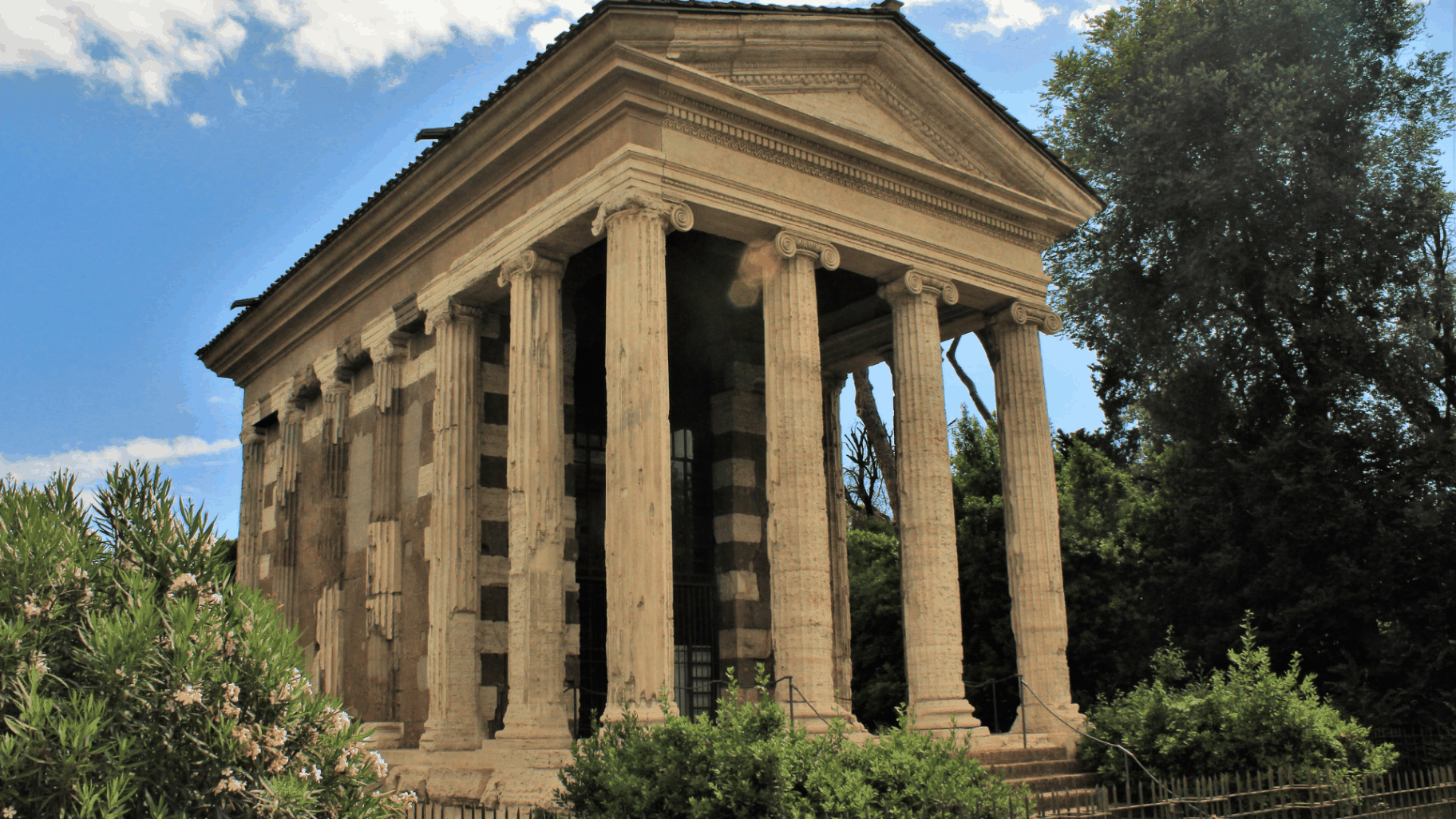
Temple of Portunus
Remarkably intact Republican-era temple to the god of harbors
Explore
Circus of Maxentius
One of the best-preserved Roman circuses, with the Mausoleum of Romulus nearby
Explore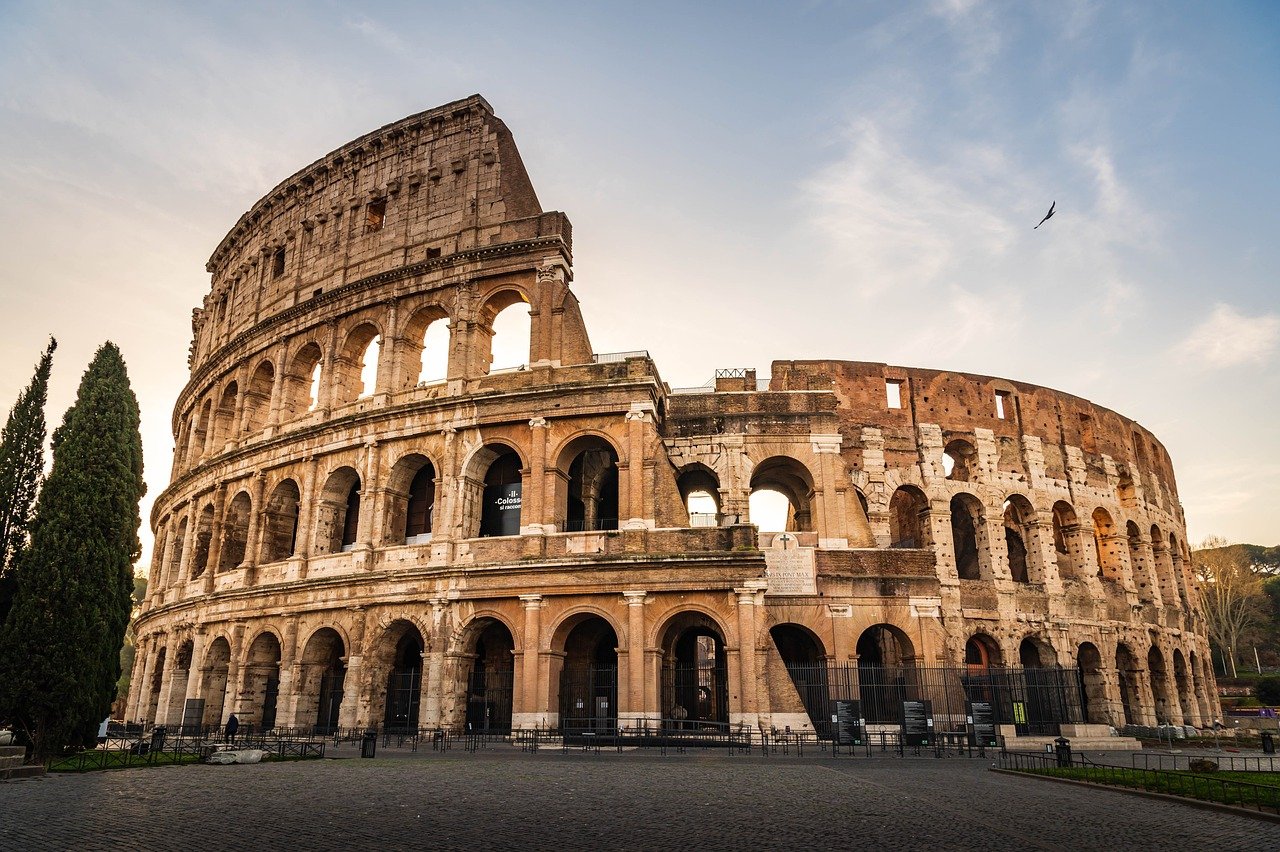
Colosseum
Iconic amphitheater and symbol of Imperial Rome, one of the New 7 Wonders
Explore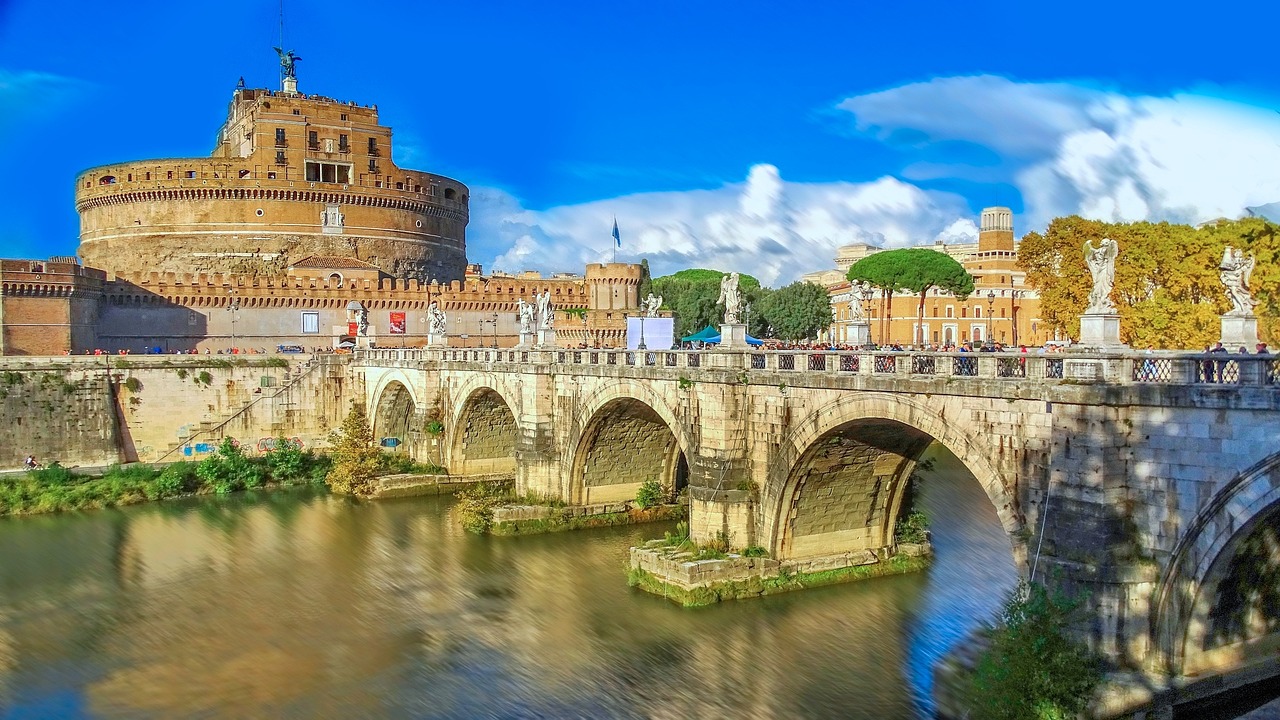
Castel Sant'Angelo
Ancient mausoleum turned papal fortress with panoramic city views
Explore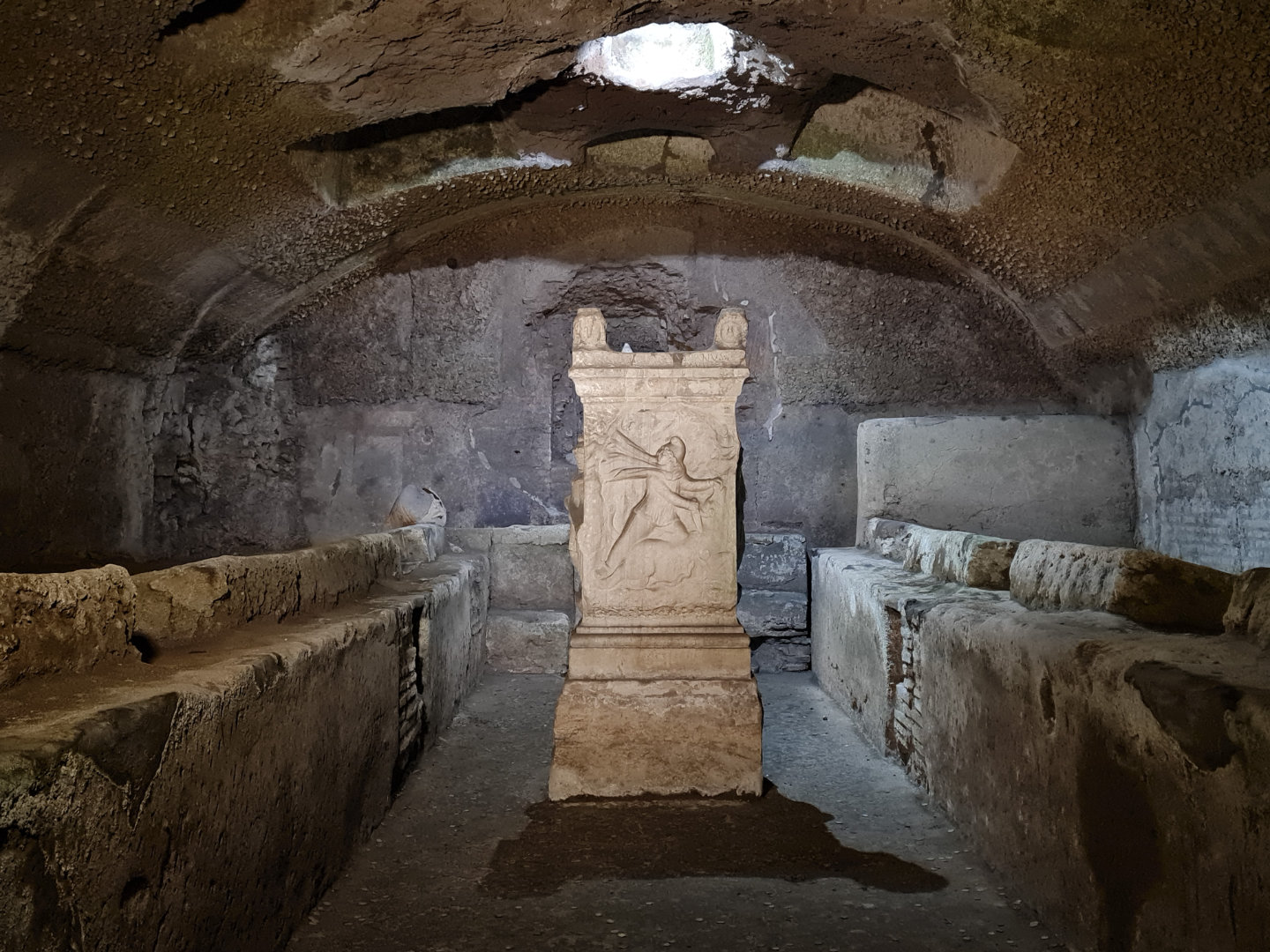
Mithraeum under San Clemente
Ancient Roman temple to Mithras hidden three levels below
Explore
Capitoline Museums
World's oldest public museum (1471)—ancient sculptures
ExploreQuick Planning Guide
⏱️ Time Needed
1-1.5 hours
💰 Cost
€18 standard combination ticket; €18 Forum Pass SUPER; €24 Full Experience
🎫 Reservation
Highly recommended - book online in advance
♿ Accessibility
Limited - steep paths and uneven ground
📅 Best Time
Early morning or late afternoon
👨👩👧👦 Family Friendly
Yes - kids love the myth of Romulus and Remus
Nearby Attractions
Roman Forumdirectly adjacent
Colosseum5-minute walk
Circus Maximusvisible from hill
Arch of Constantine5-minute walk
You May Also Like
Roman ForumColosseumCircus MaximusFeatured In These Itineraries
5 Day Rome Itinerary2-Day Rome4-Day RomeEssential Tips
- ✓ Bring water and a hat - limited shade during midday
- ✓ Wear comfortable shoes for uneven ancient paths
- ✓ Start here early before climbing in the heat
- ✓ Don't miss the views over Circus Maximus