 Best-preserved Roman circusFree Entry
Circus of Maxentius
Emperor Maxentius's 309 AD chariot-racing stadium on the Appian Way — approximately 500 metres of preserved arena, unusually well-preserved carceres (starting gates), and the Mausoleum of his deified son Romulus.
60–90 minFreeBus 118309 ADVia Appia Antica, 153, 00179 RomaOpen on MapPlan Your Visit
Compare tickets, tours and stays — booking ahead usually gives more choice
Book a TourHotels NearbyThe Circus of Maxentius is one of the best-preserved Roman circuses — an arena approximately 500 metres long built by Emperor Maxentius in 309 AD on the Appian Way, as part of a unified villa complex with the circular Mausoleum of his deified son Valerius Romulus and an imperial palace overlooking the racetrack. Unlike the Circus Maximus, where almost nothing remains above ground, here the site is an open archaeological area with paths around the arena, an unusually well-preserved set of carceres (starting gates), and a surviving section of the original seating embankment — access to specific structures can vary. Despite being only 4.5 km from the Colosseum, the site receives far fewer visitors — you will often have much of the arena to yourself.
Why visit the Circus of Maxentius?
While the Circus Maximus is famous and the Colosseum is unmissable, neither lets you actually understand how a Roman circus worked. The Circus of Maxentius does — and it gives you the experience in near-solitude.
- One of the best-preserved Roman circuses: approximately 500 m of intact arena, surviving spina, and unusually well-preserved carceres.
- Unified imperial dynastic monument: circus + mausoleum + palace conceived as one — the only complete example outside Hadrian's Villa.
- Frozen in time: Maxentius died at the Milvian Bridge three years after construction; the site was never reused, preserving the 309 AD layout almost intact.
- Surprise Bernini connection: the Egyptian obelisk that crowned the spina now stands atop Bernini's Fountain of the Four Rivers in Piazza Navona.
- Free entry, far fewer crowds: the site receives a small fraction of the Colosseum's visitors, so you will likely have much of the approximately 500 m arena to yourself.
Quick facts
Built
309 AD by Maxentius
Entry
Free entry
Visit time
60–90 minutes
Bus
118 from Piramide metro
Length
approximately 500 m — longest preserved circus
Location
Via Appia Antica 153
Table of Contents
Jump to any section of the itinerary
A brief history
Marcus Aurelius Valerius Maxentius (c. 278–312 AD) became Roman Emperor in October 306, when the Praetorian Guard proclaimed him Augustus in Rome. His six-year reign was extraordinarily ambitious in monumental construction: the colossal Basilica of Maxentius in the Forum, the Temple of Romulus on the Sacred Way, and — on the Appian Way — a unified suburban villa complex unlike anything in the Roman world.
The trigger was personal tragedy. In 309 AD his young son Valerius Romulus, aged about 14 and already designated heir, died unexpectedly. Maxentius had him deified — divus Romulus — and reorganised the entire Appian Way property around his cult. In a single rapid building campaign he constructed three monuments: the circular Mausoleum of Romulus, a approximately 500-metre chariot-racing circus for funerary games (ludi funebres), and an imperial palace on the slope above with a private box (pulvinar) overlooking the arena.
The Circus was probably used only once — for the funerary games of 309 AD itself. Three years later, on 28 October 312 AD, Maxentius marched out to face Constantine at the Milvian Bridge, was defeated and drowned in the Tiber. Constantine completed Maxentius's other Forum projects but ignored this one. The villa complex was abandoned within months and never reused.
That accidental abandonment is why the site survives so well. Through the medieval centuries the arena was ploughed for agriculture; the Mausoleum of Romulus was converted into the Casale di Massenzio farmhouse (medieval brickwork still visible above the original Roman cylinder); the carceres became animal pens. Nothing was demolished, nothing was reused — the 309 AD layout was preserved by neglect.
In 1649 Pope Innocent X had the Egyptian obelisk that crowned the central spina (Domitian's Obelisk, late 1st century AD) removed and re-erected by Bernini on top of the new Fountain of the Four Rivers in Piazza Navona — where it still stands. The site itself was correctly identified as the Circus of Maxentius (rather than 'of Caracalla') in 1825 by the archaeologist Antonio Nibby, who found brick stamps dated 309 AD inside the carceres masonry.
Systematic excavation began only in 1960 ahead of the Rome Olympics, and the first stable visitor route opened in the 1990s. The Sovraintendenza Capitolina continues periodic conservation work on the carceres and embankment; hours are seasonal, so check the official Musei in Comune / Villa di Massenzio page before visiting.
The Circus of Maxentius through the centuries
312 BCAppian Way begins
Censor Appius Claudius Caecus inaugurates the Via Appia, Rome's first long-distance paved road. The villa-and-circus site stands on what becomes the most prestigious suburban address in the empire.
1st–2nd c. ADEarlier villa on the site
A wealthy senatorial villa occupies the location for two centuries — its foundations are visible beneath Maxentius's imperial palace, with intact mosaic fragments still on display.
306 ADMaxentius proclaimed emperor
On 28 October 306 AD, the Praetorian Guard proclaims Marcus Aurelius Valerius Maxentius emperor in Rome — beginning a six-year reign of monumental construction.
309 ADDeath of Valerius Romulus
Maxentius's young son Valerius Romulus dies aged about 14. Deified by his father, his cult becomes the centrepiece of the new Appian Way villa complex.
309 ADCircus, Mausoleum & palace built
In a single rapid building campaign Maxentius constructs the approximately 500 m chariot circus, the circular Mausoleum of Romulus and the imperial palace — a unified dynastic monument.
309 ADFunerary games for Romulus
The Circus is inaugurated with a single great set of funerary games (ludi) honouring the deified Romulus. Probably the only chariot races ever held in the arena.
28 Oct 312 ADBattle of the Milvian Bridge
Constantine defeats Maxentius at the Milvian Bridge; Maxentius drowns in the Tiber. The villa complex is abandoned within months. Constantine completes Maxentius's other projects but ignores this one.
5th–10th c.Medieval abandonment & farming
The Circus arena is ploughed for centuries. The Mausoleum of Romulus is converted into a farmhouse (Casale di Massenzio); the carceres become animal pens.
1649Domitian's Obelisk removed
Pope Innocent X has the Egyptian obelisk that crowned the spina removed and re-erected by Bernini on top of the Fountain of the Four Rivers in Piazza Navona — where it still stands.
1825Antonio Nibby identifies the site
The archaeologist Antonio Nibby correctly identifies the 'Circus of Caracalla' (as it was then known) as the Circus of Maxentius, based on fragments of inscriptions found inside the arena.
1960First systematic excavation
Excavations by the Sovrintendenza ahead of the Rome Olympics expose the full perimeter, the carceres and the imperial palace, opening the site to scholarly study.
OngoingConservation & site management
The Sovraintendenza Capitolina continues conservation work on the carceres and embankment as part of routine site management. Hours are seasonal — check the official Musei in Comune / Villa di Massenzio page for current details.
Architecture & how a Roman chariot circus worked
The seven-lap race (sette giri)
Roman chariot races consisted of seven laps around the central spina (≈ 4 km total). Lap counters — bronze dolphins and marble eggs — were lowered one by one as each lap was completed. Up to twelve four-horse chariots (quadrigae) raced simultaneously.
The carceres mechanism
Twelve starting stalls aligned along an arc — geometrically calculated so that all chariots had an equal distance to the first turn. A spring-loaded gate system released all twelve simultaneously when the magistrate dropped the white cloth (mappa). Maxentius's are the only intact set surviving anywhere.
The spina & metae
A 296 m brick barrier divided the track. It carried the obelisk (now in Piazza Navona), shrines to Cybele and Sol, the lap counters and water basins. The two turning posts (metae) at each end were the most dangerous corners — chariot crashes (naufragia) were routine.
What to see at the Circus of Maxentius
The arena approximately 500 metres long & spina
- The longest preserved Roman racetrack on earth: approximately 500 metres long × 79 m wide, originally seating about 10,000 spectators along earth-and-brick embankments.
- The central spina (barrier) is almost entirely preserved — a 296 m brick spine that divided the track and formed the axis of the seven-lap race (sette giri).
- The brick foundations of Domitian's Obelisk are still visible in the centre of the spina. The obelisk itself was moved by Bernini in 1649 to Piazza Navona's Fountain of the Four Rivers.
- The two metae (turning posts) at each end of the spina survive at foundation level — the most dangerous corners of any Roman race, where chariots regularly crashed.
The carceres (starting gates)
- The complete south-east end of the Circus: twelve original starting-gate stalls between two flanking towers, designed for simultaneous release using a complex spring-loaded mechanism.
- This is the only intact set of carceres surviving from a Roman circus anywhere in the world — at the Circus Maximus, Lyon, Tyre and Constantinople they are completely lost.
- The two towers (oppidum) on either side held judges, musicians and the magistrates who dropped the white cloth (mappa) to start the race.
- Brick stamps (bolli laterizi) dating to 309 AD, found in the carceres masonry, definitively confirm the construction date and Maxentius's patronage.
Mausoleum of Romulus
- A circular brick mausoleum 33 m in diameter, built in 309 AD for Maxentius's deified son Valerius Romulus — the architectural focus of the entire villa complex.
- Originally crowned by a hemispherical dome (now lost) and surrounded by a large rectangular portico (quadriportico) with travertine columns, of which the foundations remain.
- The underground crypt is still accessible: a circular chamber with a central pillar and radial niches for funerary urns (likely intended for Maxentius's whole family).
- Heavily reused in the Middle Ages — converted into the Casale di Massenzio farmhouse, with medieval brickwork still visible above the original Roman cylinder.
Imperial palace ruins
- On the slope above the Circus stand the rambling foundations of Maxentius's imperial residence — never finished, abandoned at his death in 312 AD.
- Includes a large basilical hall, a private bath complex, residential wings and — crucially — a private box (pulvinar) overlooking the Circus arena, allowing the emperor to watch races without leaving the palace.
- Mosaic fragments from the earlier 1st-century villa beneath the imperial palace are visible in situ — geometric black-and-white designs typical of the high Empire.
- A panel display reconstructs how the unified villa-circus-mausoleum complex would have looked, the only complete imperial dynastic showpiece outside Hadrian's Villa.
The Appian Way setting
- The complex sits directly on the Appian Way (Via Appia Antica), Rome's most prestigious ancient road — the 'Queen of Roads' (Regina Viarum) inaugurated in 312 BC.
- Original 1st-century BC basalt paving slabs are visible 100 m north of the entrance, in front of the Tomb of Cecilia Metella — still showing the wear-grooves of two millennia of cart wheels.
- Traffic restrictions apply to particular sections of the Appian Way at certain times, including some Sundays — check current signage, as arrangements may change.
- From the seating embankment you see the Alban Hills (35 km south-east), the volcanic crater of Lake Albano and — on clear days — the medieval town of Castel Gandolfo, the papal summer residence.
The Mausoleum of Romulus
The first monument you encounter inside the entrance is also the architectural and emotional centre of the entire complex: the circular brick Mausoleum of Romulus, built by Maxentius in 309 AD for his deified son Valerius Romulus, dead at about 14.
The architecture is deliberately reminiscent of the great Augustan and Hadrianic dynastic mausolea (the Mausoleum of Augustus, the Castel Sant'Angelo): a 33-metre-diameter cylindrical drum, originally crowned by a hemispherical dome (now lost), surrounded by a large rectangular portico (quadriportico) of which the foundations remain. The inscription naming Romulus and recording his deification was found in fragments inside the drum and is now in the on-site museum.
Inside, an underground crypt — still accessible — features a circular chamber with a central pillar and radial niches, almost certainly intended for the funerary urns of Maxentius and his entire family. None of them ever made it: Maxentius drowned at the Milvian Bridge three years later, his body was decapitated by Constantine's troops, and his family fled into oblivion.
In the medieval period the mausoleum was converted into the Casale di Massenzio — a fortified farmhouse with crenellations and a barn. The medieval brick courses are still visible above the original Roman cylinder, making this one of the few Roman monuments where you can read 1,700 years of continuous reuse in a single elevation.
The Imperial Palace ruins
On the slope immediately north of the Circus stand the foundations of Maxentius's imperial palace — never finished, abandoned at his death in 312 AD and largely robbed for building material in the medieval centuries. What survives is enough to read the unified dynastic plan.
The complex includes a large basilical hall (probably the throne room), a private bath suite with intact hypocaust pillars, residential wings around peristyle courtyards, and — most importantly — a private box (pulvinar) directly overlooking the racetrack. Maxentius could watch the funerary games for his deified son without ever leaving his palace, with the Mausoleum of Romulus visible in the distance at the far end of the spina. The view-line is intentional.
Beneath the imperial palace, excavations have exposed the foundations of an earlier 1st–2nd-century senatorial villa, with intact black-and-white geometric mosaics still visible in situ. The site has been continuously prestigious for two thousand years.
Circus of Maxentius walking itinerary
A 2.5-hour, 7-stop walk covering the Mausoleum of Romulus, the carceres, the paths around the spina, the imperial palace and the Tomb of Cecilia Metella next door. Total distance ~1.5 km, mostly flat, with a short climb to the imperial palace (access to specific structures may vary).
Walking route map


 📍
📍
📍
📍
📍
📍
📍
+− Leaflet | © OpenStreetMap contributors
📍
📍
📍
📍
📍
📍
📍
+− Leaflet | © OpenStreetMap contributorsClick on markers for stop details. Numbers indicate the walking order.
1StartBus 118 stop 'Cecilia Metella/Appia Antica'
Easy starting pointGet off Bus 118 from Piramide metro at the Cecilia Metella/Appia Antica stop — the Circus entrance is 50 m further south on the right.
220 minMausoleum of Romulus
Maxentius's deified sonBegin at the circular mausoleum just inside the entrance. Visit the underground crypt and circle the surviving brick drum, originally crowned by a dome.
315 minCarceres (starting gates)
Unusually well-preservedWalk to the south-east end of the arena to see the unusually well-preserved carceres (starting gates). Look up at the flanking judges' towers.
430 minWalk the spina
Longest preserved racetrack on earthWalk the full approximately 500 m length of the central spina from south-east to north-west. Look for the brick obelisk foundations (Domitian's Obelisk now stands in Piazza Navona).
515 minSeating embankment & panoramic view
Best photo spotClimb the small surviving section of the south seating bank for a panoramic view across the arena and out to the Alban Hills. Best photo spot on the site.
620 minImperial palace ruins
Emperor's private boxWalk uphill to the imperial palace ruins on the slope. See the basilical hall, the bath complex and the private box (pulvinar) overlooking the arena.
730 minTomb of Cecilia Metella
Separate admissionWalk 8 minutes north on the Appian Way to the cylindrical 1st-century BC Tomb of Cecilia Metella. It is separately administered and ticketed from the Villa of Maxentius complex.
Circus of Maxentius vs Circus Maximus — which to visit?
| Feature | Circus of Maxentius | Circus Maximus |
|---|---|---|
| Date built | 309 AD (Maxentius) | 6th c. BC, monumentalised under Caesar & Trajan |
| Length | approximately 500 m | 621 m |
| Capacity | ~10,000 spectators | ~150,000 spectators |
| Surviving today | Almost complete (perimeter, spina, carceres) | Earth depression only — virtually nothing above ground |
| Entry cost | Free | Free (open public park) |
| Crowds | Much lower than major sites | Very high (jogging route + tourist site) |
| Carceres preserved | Yes — unusually well-preserved | No |
| Best for | Understanding how a Roman circus actually worked | Sense of the original scale & central location |
Verdict: do both. The Circus Maximus for the original scale and central location; the Circus of Maxentius to actually understand how a Roman chariot circus worked.
Best time to visit
Time of day
Morning (10:00–12:00)
Best — soft south-east light hits the carceres and the Mausoleum of Romulus. You will likely have the entire arena to yourself.
Late afternoon (14:30–16:00)
Good for the imperial palace ruins (north-facing slope) and for warm light on the spina.
Avoid August midday
No shade across the open arena and temperatures exceed 38°C. Visit before 11:00 or wait for September.
Best days & seasons
Sundays
Traffic restrictions apply to particular sections of the Appian Way, which can make parts of the area feel like a peaceful park. Restrictions vary and may change — check current signage.
Entry is always free
The site is a municipal free site. Arrive 10:00 to have the place to yourself.
March–May & October–November 2026
Ideal weather, soft light, full opening hours, almost zero crowds.
Avoid Mondays
Site closed. Plan Tuesday–Sunday 10:00–16:00. Hours are seasonal — check the official site.
Getting there
Bus 118 (best from city centre)
From Piramide metro (Line B) board Bus 118 direction Villa dei Quintili. 25 minutes, €1.50. Get off at 'Cecilia Metella/Appia Antica' — the Circus entrance is 50 m further south.
Bus 660 (alternative)
From Colli Albani metro (Line A) board Bus 660 — 15 minutes, drops you at Cecilia Metella. Useful if coming from the south or from Cinecittà.
Bicycle from Porta San Sebastiano
Rent a bike near the Aurelian Walls and cycle south on the original Appian Way — 4 km, completely flat, 25 minutes. Some sections have traffic restrictions on certain days — check current signage.
Archeobus (hop-on hop-off)
The 110/Archeobus tourist bus (€15 day ticket) runs from Termini along the Appian Way every 30 minutes, stopping at all major sites including the Circus.
Common mistakes to avoid
Visiting on Monday
The Circus of Maxentius is closed Mondays. Plan Tuesday–Sunday 10:00–16:00. Hours are seasonal — verify on sovraintendenzaroma.it before travelling.
Confusing it with the Circus Maximus
These are two different circuses 4 km apart. Circus Maximus is bigger but virtually nothing survives; Circus of Maxentius is smaller but almost complete. Both are worth visiting — for opposite reasons.
Looking for the original obelisk
Domitian's Obelisk was removed in 1649 and is now atop Bernini's Fountain of the Four Rivers in Piazza Navona. Only the brick foundations remain in the centre of the spina.
Skipping the Mausoleum of Romulus
Many visitors photograph the Circus and leave without entering the circular mausoleum at the entrance — yet it is the architectural and historical heart of the entire complex.
Driving to the site
Parking on the Appian Way is very limited and traffic restrictions apply to particular sections at certain times. Use Bus 118 from Piramide metro, Bus 660 from Colli Albani, or a bicycle from Porta San Sebastiano.
Assuming the Circus needs a ticket
Admission to the Villa of Maxentius complex, including the circus and Mausoleum of Romulus, is free. Nearby Appian Way attractions such as the Tomb of Cecilia Metella have separate admission arrangements.
Insider tips from locals
Visit on a Sunday morning
Traffic restrictions apply to particular sections of the Appian Way on some Sundays, and arrangements can change — check current signage. Combined with free admission to the Villa of Maxentius, you can enjoy a peaceful, almost empty archaeological park.
Admission is always free
Admission to the Villa of Maxentius complex, including the circus and Mausoleum of Romulus, is free every day of operation. Arrive 10:00 to avoid the modest queue.
Cycle from Porta San Sebastiano
Rent a bike at Roma Termini or near Porta San Sebastiano and cycle the original Appian Way south. 4 km, completely flat, 25 minutes — and you arrive without ever taking a bus.
Read the panels at the imperial palace
The most informative interpretive panels are at the imperial palace ruins, not the Circus arena. Read them first to understand the unified villa-circus-mausoleum dynastic plan.
Combine with the Catacombs of San Sebastiano
Walk 600 m south on the Appian Way to the Catacombs of San Sebastiano (€10, English-language tours every 30 min). The combination of pagan dynastic monument and early Christian burial complex is unique to this stretch of road.
Best photo: spina view at 11:00
From the surviving section of seating embankment (south side), around 11:00 the morning sun lights the approximately 500 m spina and the carceres towers from the south-east — postcard composition, access permitting.
Where to Stay Near Circus of Maxentius
Looking for convenient accommodation near Circus of Maxentius? Stay within walking distance to make the most of your visit.
Hotels Near This AttractionTop Rated HotelsBudget-Friendly OptionsLuxury HotelsCentral locations with easy access to Circus of Maxentius and other attractionsFrequently Asked Questions
Related Attractions
Roman Forum
The beating heart of ancient Rome where politics and daily life flourished
Explore
Pantheon
Best-preserved Roman building with the world's largest unreinforced concrete dome
Explore
Centrale Montemartini
Ancient sculptures among industrial machinery—Rome's most unique museum
Explore
Baths of Diocletian
Ancient Rome's largest baths, now housing the National Roman Museum
Explore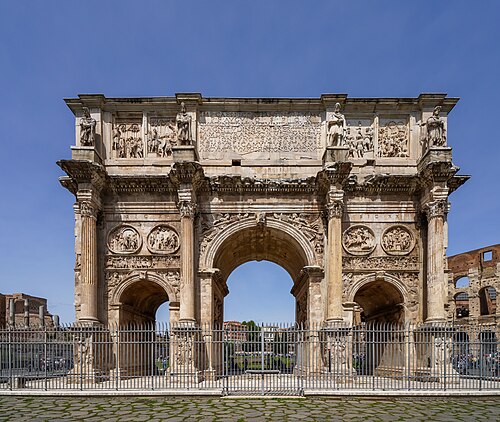
Arch of Constantine
Rome's largest triumphal arch (315 AD) next to the Colosseum
Explore
Palace of the Popes Viterbo
Medieval papal residence—site of longest papal conclave
ExploreQuick Planning Guide
⏱️ Time Needed
60–90 minutes
💰 Cost
Free
🎫 Reservation
Not needed
♿ Accessibility
Partial — main path accessible
📅 Best Time
Tuesday/Wednesday morning, 10:00–12:00
👨👩👧👦 Family Friendly
Yes — open arena, room to run
🌡️ Weather
Outdoor archaeological site
Nearby Attractions
Tomb of Cecilia Metella8 min walk
Capo di Bove archaeological area10 min
Catacombs of San Sebastiano12 min
Catacombs of San Callisto15 min
Tomb of the ScipiosPorta San Sebastiano
Featured In These Itineraries
Hidden Gems of RomeFree Rome Itinerary5 Day Rome ItineraryEssential Tips
- ✓ Closed Mondays — visit Tue–Sun 10:00–16:00
- ✓ Entry is free
- ✓ Check traffic restrictions on the Appian Way before visiting
- ✓ Domitian's Obelisk now stands in Piazza Navona