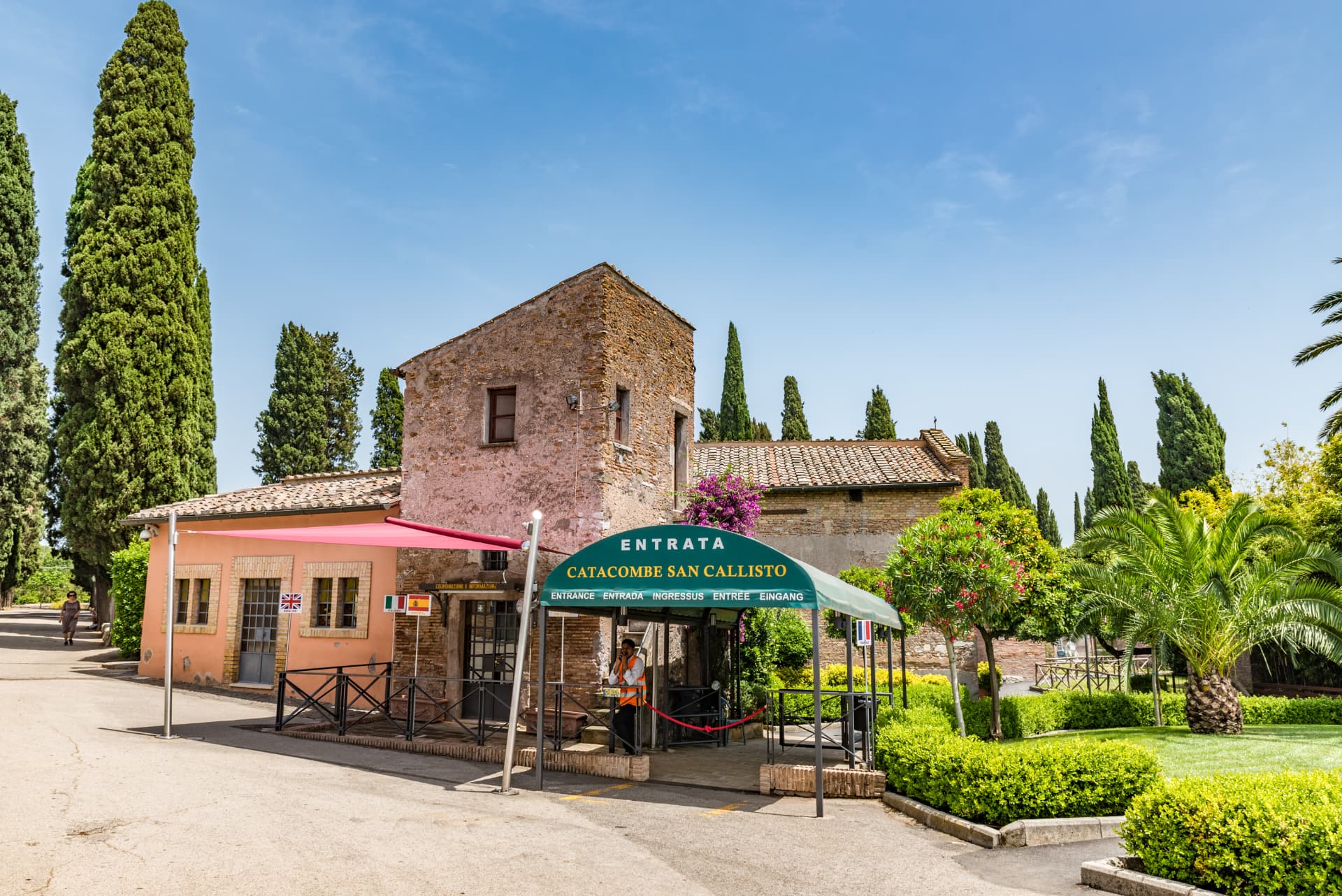
 Ancient Christian Site
Catacombs of Saint Callixtus
One of Rome's largest and most historically significant Christian catacomb complexes — 20 km of tunnels on five levels, the Crypt of the Popes, and the original tomb of Saint Cecilia.
1–1.5 hours€10 entry2nd c. ADAppian WayVia Appia Antica, 110/126, 00179 RomaOpen on MapPlan Your Visit
Compare tickets, tours and stays — booking ahead usually gives more choice
Get TicketsBook a TourHotels NearbyBy AllTrips Editors••8 min readThe Catacombs of Saint Callixtus (Italian: Catacombe di San Callisto) are one of Rome's largest and most historically significant Christian catacomb complexes — 20 kilometres of tunnels carved into soft tufa rock on five underground levels beneath the Appian Way. Named for Pope Callixtus I (217–222 AD), who as a deacon administered the cemetery before becoming bishop of Rome, they served as the official burial ground of the early Church for over two centuries. Sixteen popes are said to be buried across the wider complex, including nine 3rd-century popes together in the Crypt of the Popes, alongside dozens of martyrs and an estimated half a million early Christians — among them Saint Cecilia, patron saint of music, in her original 3rd-century niche.
📋 In This Guide
Duration
1–1.5 hr
Cost
€10
Photos
Outside only
Type
Christian catacomb
Why Visit the Catacombs of Saint Callixtus?
Of Rome's five publicly accessible catacombs, San Callisto is among the most historically significant — the official cemetery of the early Church, the burial place of nine 3rd-century popes in the Crypt of the Popes (part of 16 popes said to be buried across the wider complex), and the original resting place of Saint Cecilia. It is also one of the largest, with 20 km of tunnels on five levels reaching depths of 20 metres. The Appian Way gate opens straight onto the most famous ancient road in Europe, and the whole visit is reachable on a €1.50 city bus.
The Crypt of the Popes
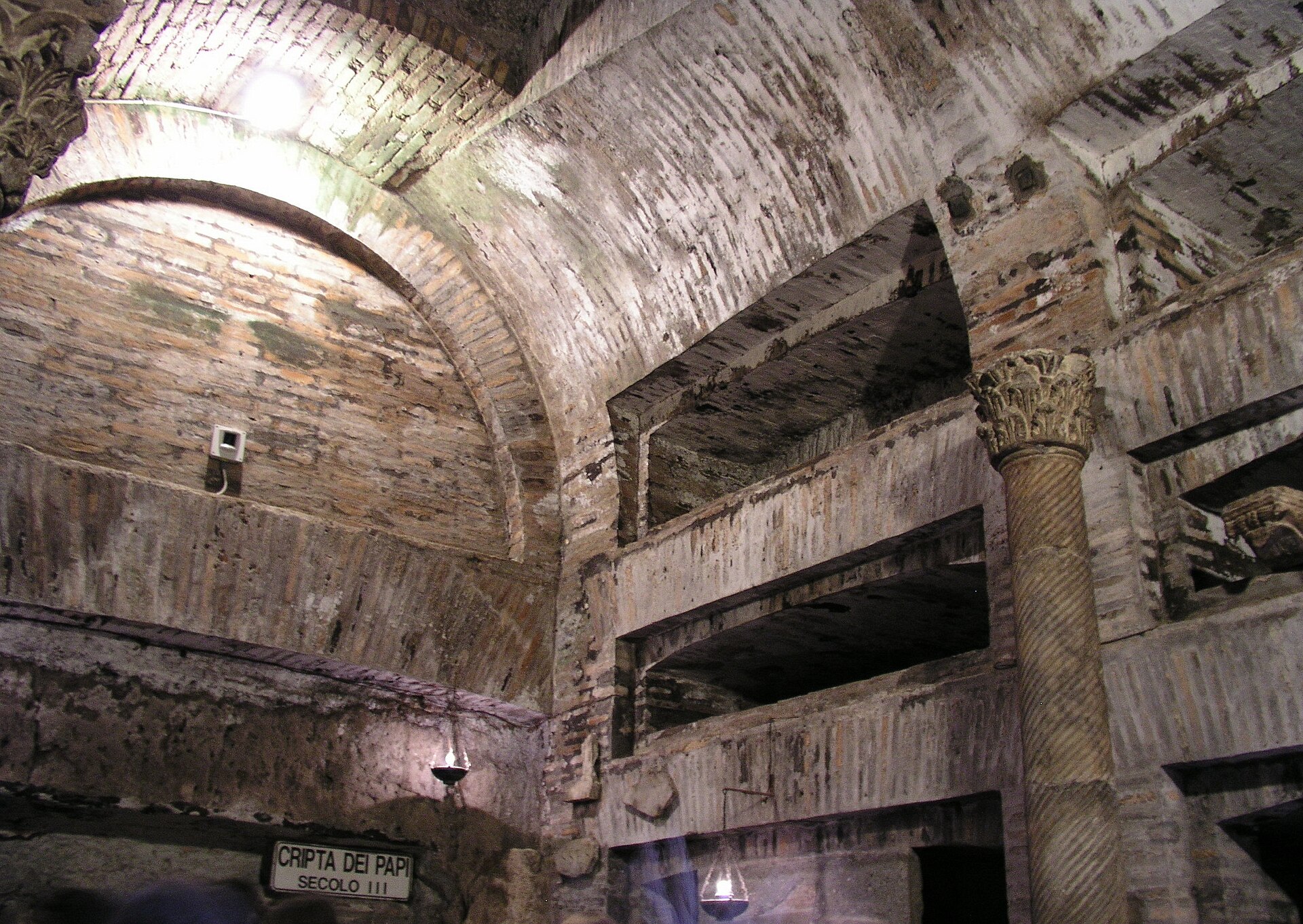
Nine bishops of Rome from the 3rd century — including Pontian, Anterus, Fabian and Sixtus II — lie in a single small chamber. The spiritual heart of early papal Rome.
Saint Cecilia's Original Tomb
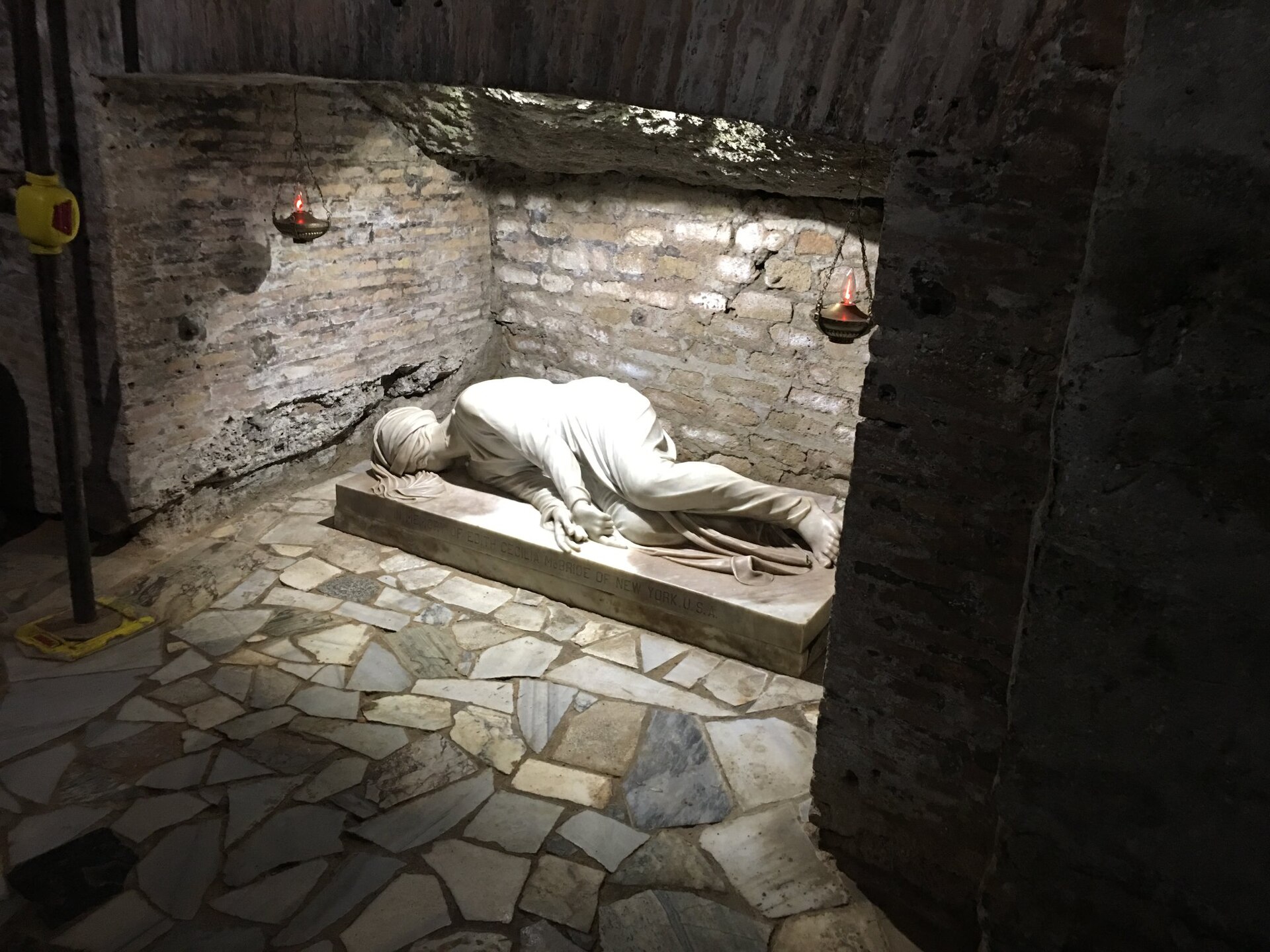
Patron saint of music, martyred in the 3rd century. Her niche bears 9th-century Byzantine frescoes — the body was moved to Trastevere in 821, the spot remains.
Among the Largest Anywhere
20 km of tunnels on five levels, an estimated half a million graves — one of the largest Christian catacomb complexes known.
Earliest Christian Art
The Cubicula of the Sacraments preserve the oldest known frescoes of baptism and Eucharist — the visual birth of Christian iconography.
What to See on the Tour
Crypt of the Popes
The Cappella dei Papi — nine popes from the 3rd century in one chamber, with original Greek inscriptions by Pope Damasus carved by the master calligrapher Filocalus.
Crypt of Saint Cecilia
Adjacent to the Popes' Crypt. The original loculus where Cecilia was buried in the 3rd century, with later Byzantine frescoes of Christ, Cecilia and Pope Urban I.
Cubicula of the Sacraments
Five small chambers with the earliest known frescoes of Christian sacraments — baptism, Eucharist, the resurrection of Lazarus. Painted around 220 AD.
The Underground Galleries
Narrow corridors lined with thousands of 'loculi' — burial niches stacked four to six high, originally sealed with marble or terracotta slabs bearing the deceased's name.
Damasian Inscriptions
Pope Damasus (366–384 AD) commissioned monumental marble plaques in honour of the martyrs — an early and influential example of papal commemoration of the site.
Early Christian Symbols
Fish (ichthys), anchor (hope), dove (peace), the Good Shepherd, the Chi-Rho monogram — the visual code of the persecuted Roman church.
The Catacombs in Photos
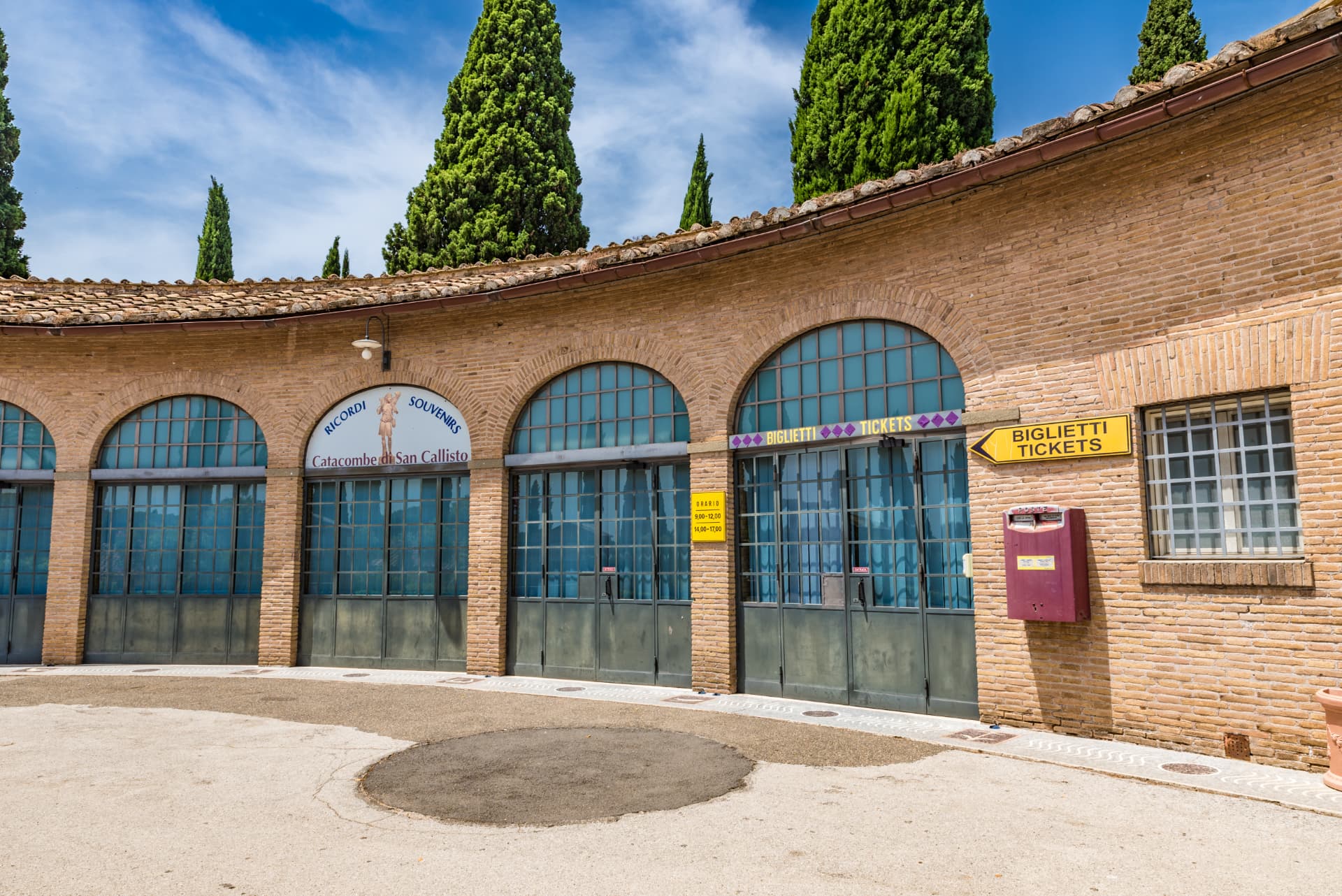
Photography is forbidden underground, so the two images below the entrance shots are archive photographs of chambers you will see on the guided tour.
Two Thousand Years of the Roman Church
From private burial ground to official cemetery of the popes, lost for a thousand years and rediscovered in the 19th century — the most significant Christian archaeological site in the world.
Late 2nd c. ADPrivate Burial Ground
The complex begins as a private Christian cemetery on the Caecilii family estate, just off the Appian Way.
c. 200 ADDeacon Callixtus Takes Charge
The future Pope Callixtus I, then a deacon under Pope Zephyrinus, is appointed administrator. The cemetery becomes the official property of the Roman Church — the first such institutional burial ground in Christian history.
3rd c. ADCrypt of the Popes
Nine consecutive 3rd-century popes are buried in a single chamber: Pontian, Anterus, Fabian, Lucius I, Stephen I, Sixtus II (martyred mid-mass), Dionysius, Felix I and Eutychian.
230 ADSaint Cecilia Buried
The patron saint of music, martyred in the Trastevere persecutions, is laid in a niche next to the Popes — the chamber that would later draw centuries of pilgrims.
366–384 ADPope Damasus Restores
Pope Damasus I commissions monumental Latin inscriptions to honour the martyrs, carved in his signature 'Damasian' script by Filocalus — an early and notable effort to preserve and commemorate the site.
8th–9th c.Relics Removed
Cecilia's body is moved to Trastevere in 821 AD by Pope Paschal I. By the end of the 9th century, most relics have been transferred into Rome's walls and the catacombs are abandoned.
1854Rediscovered by De Rossi
Archaeologist Giovanni Battista de Rossi identifies the lost Crypt of the Popes by matching a fragment of inscription — launching modern Christian archaeology.
PresentSalesians of Don Bosco
Managed since 1930 by the Salesian order. Guided tours run continuously in six languages.
Tickets & Tours
🎟️ Standard Ticket — €10
Includes 30–45 min guided tour of the catacombs. €7 reduced for ages 7–15 and students under 25. Free for under-7s and disabled visitors.
⚡ Skip-the-Line Online
Pre-booked online tickets let you reserve an entry time in advance and improve your odds of a tour in your preferred language — useful in summer when walk-up waits hit 60+ minutes for an English tour.
⏰ Opening Hours
Thursday–Tuesday 09:00–12:00 and 14:00–17:00. Closed every Wednesday, December 25, January 1 and Easter Sunday. Ticket office closes at 16:50; final guided tours start at 12:00 and 17:00. The catacombs also close for an annual winter period; check the official website for the current year's dates.
🌐 Tour Languages
English, Italian, French, German, Spanish and Polish run regularly. Other languages on request — pre-booking is the only way to guarantee them.
Best Time to Visit
Time of Day
09:00–11:00 ⭐ Best: Smallest tour groups, freshest guides, no coach overlap.
14:00–15:30: Quieter again right after the lunch closure.
Avoid 11:00–12:00: Peak coach-tour rush from cruise excursions and group bookings.
Closed Wednesdays: The single most-missed detail — verify before you travel.
Season
Spring (Mar–May) ⭐ Best: Pleasant Appian Way walking weather, manageable crowds.
Autumn (Sep–Nov): Soft golden light, mild temperatures, umbrella pines at their best.
Summer: The 15°C underground is a relief from the heat — but tour groups peak.
Winter: Quiet, but check the official website for the annual winter closure dates.
Rules & What to Bring
📵 No Photography Underground
Strictly forbidden — no flash, no phones. The rule is enforced for preservation of the ancient frescoes and out of respect for the sacred burial site. The grounds and gardens above are fine for photos.
🧥 Bring a Light Layer
The site reports around 15°C / 59°F year-round underground — many visitors welcome a light layer even in July, and it's recommended in winter.
👟 Flat, Comfortable Shoes
Uneven tufa floors and reportedly over 30 stairs to descend. No heels, no flip-flops.
👗 Modest Dress
Cover shoulders and knees out of respect for the sacred burial site. Enforced loosely but appreciated.
San Callisto vs Other Roman Catacombs
| Catacomb | Cost | Size | Highlight | Crowds |
|---|---|---|---|---|
| San Callisto | €10 | Largest (20 km) | Crypt of the Popes, Saint Cecilia | High (coach tours) |
| San Sebastiano | €10 | Medium (12 km) | Triclia of Peter & Paul, basilica above | Medium |
| Domitilla | €10 | Vast (17 km) | Intact 4th-century underground basilica | Medium |
| Priscilla | €10 | Medium | Earliest known image of the Madonna | Low |
| Sant'Agnese | €8 | Small | Tomb of St. Agnes, intimate scale | Very low |
San Callisto wins on scale and historical weight (16 popes buried across the complex, including nine together in the Crypt of the Popes, plus Saint Cecilia and the official Church cemetery). San Sebastiano wins on intimacy and includes the basilica free. Both are 500 m apart — many visitors do both in one Appian Way day, mind the different closure days (Wed for Callisto, Sun for Sebastiano).
Common Mistakes to Avoid
Showing up on a Wednesday
Closed every Wednesday. The single most common error — many visitors arrive to a locked gate. Plan Thursday–Tuesday.
Assuming San Callisto + San Sebastiano are one ticket
They're 500 m apart but completely separate — €10 each, two separate tours. Budget time for both if you want both.
Walking up without booking in summer
In peak season the next English tour can be 60+ minutes away. Pre-booking secures an entry time and improves your chances of a tour in your language.
Sneaking a phone photo
Guides watch closely and the rule is enforced — protecting 1,800-year-old plaster from camera light is non-negotiable.
Arriving 12:00–14:00
The site closes for lunch every day — five hours of opening time wasted if you don't check first.
Taking a taxi out and back
€25+ each way. Bus 118 from central Rome (via Piazza Venezia or Circo Massimo) costs €1.50 and stops at the door — just check current ATAC routing before you go. The Appian Way is easier and cheaper than it looks.
Nearby Colosseum & Forum Tickets
Bus 118 connects the catacombs directly to the Colosseum area — pair an Appian Way morning with a Colosseum afternoon for the perfect ancient Rome day. Skip-the-line options below.
Colosseum Priority Entrance
Best for: First-time visitors
~2 hoursSkip-the-line access to the Colosseum with entry to Roman Forum and Palatine Hill included. Perfect for first-time visitors.
- Skip-the-line entry
- Colosseum access
- Roman Forum included
- Palatine Hill included
🎟️ Compare Prices:
TiqetsKlookTrip.comColosseum Guided Tour
Best for: History enthusiasts
~3 hoursExpert-led tour with professional guide sharing gladiator history, architecture secrets, and ancient Roman stories.
- Professional English-speaking guide
- Skip-the-line entry
- In-depth historical commentary
- Small group experience
🎟️ Compare Prices:
TiqetsKlookTrip.comColosseum Arena & Underground
Best for: Unique experience seekers
~3.5 hoursWalk where gladiators fought on the arena floor and explore the underground chambers where they awaited their fate.
- Arena Floor access
- Underground chambers access
- Roman Forum & Palatine Hill
- Expert guided tour included
🎟️ Compare Prices:
TiqetsKlookTrip.comPair Your Visit With
Catacombs of San Sebastiano500 m down the Appian Way. The original 'catacomb' by name, Peter & Paul's Triclia, and a free basilica with Bernini's last sculpture.
Appian WayThe catacomb gate opens straight onto the most evocative ancient road in the world. Walk or rent a bike.
Tomb of Cecilia Metella25-minute walk south on the original Roman basalt — the iconic gateway to the most beautiful stretch of Appian Way.
Must-See Highlights
Crypt of the Popes (Cappella dei Papi) — nine 3rd-century popes buried in a single chamberCrypt of Saint Cecilia — original burial niche of the patron saint of music, with 9th-century frescoes20 kilometers of tunnels on five underground levels — one of the largest Christian catacomb complexes knownCubicula of the Sacraments — five small rooms with the earliest baptism and Eucharist frescoes (3rd c.)Greek inscriptions of Pope Damasus — 4th-century papal epigraphy carved by FilocalusHalf a million Christian tombs — the official cemetery of the Church of Rome for 200 yearsPapal authority origin point — the very ground that helped define the Roman bishop's primacyOriginal Appian Way location — gates open onto Europe's most famous ancient roadGetting There
🚍 Bus 118 (best)
Catch it from central Rome via Piazza Venezia or Circo Massimo — €1.50, stops directly at the catacomb gate, about 25 minutes from the centre. Check current ATAC routing before departure, as diversions on this line are common.
🚌 Archeobus
Hop-on-hop-off from Termini. Stops at the catacombs and continues to other Appian Way sites — best for visiting multiple monuments in one day.
🚲 Bike from the Centre
Hire at Porta San Sebastiano and ride out — about 40 minutes from the Colosseum, traffic-free past the catacombs. The most atmospheric arrival.
Where to Stay Near Catacombs of Saint Callixtus
Looking for convenient accommodation near Catacombs of Saint Callixtus? Stay within walking distance to make the most of your visit.
Hotels Near This AttractionTop Rated HotelsBudget-Friendly OptionsLuxury HotelsCentral locations with easy access to Catacombs of Saint Callixtus and other attractionsFrequently Asked Questions
Are the Catacombs of Saint Callixtus the same as San Callisto?
Yes — San Callisto is the Italian name and Saint Callixtus the English. Named for Pope Callixtus I (217–222 AD), who as a deacon administered the cemetery before becoming bishop of Rome. They are among the largest and most historically significant Christian catacombs in the city.
How much does it cost to visit in 2026?
Standard ticket €10 adults, €7 reduced (children 7–15, students under 25). Free for under-7s and disabled visitors. Skip-the-line online tickets cost slightly more and improve your chances of joining a tour in your preferred language, though a specific-language slot is not always guaranteed.
Is the visit always with a guide?
Yes — independent visits are not allowed. All entry is via a guided tour of about 40 minutes included in the ticket. Tours begin roughly every 30 minutes in English, Italian, French, German, Spanish and Polish, with the final tour of the morning starting at 12:00 and the final tour of the afternoon at 17:00 — you'll be matched to the next departing tour in your language on arrival.
Can I take photos inside?
No. Photography (including phones, with or without flash) is forbidden inside the catacombs, a rule the site attributes to preserving the ancient frescoes and to respect for the sacred burial site. The grounds, gardens and entrance basilica are fine for photos.
What's the temperature underground?
The site reports a fairly constant temperature of around 15–16°C (59–61°F) year-round. Many visitors find a light jacket useful even in summer, given the contrast with Rome's warmer surface temperatures, and it's worth bringing one in winter too.
Are the catacombs wheelchair accessible?
No. The route involves multiple staircases (reportedly over 30 steps down to the second level) and uneven tufa floors. Visitors with mobility issues should consider the Domitilla Catacombs, which have a partially accessible underground basilica.
How do I get there from central Rome?
Take Bus 118 from central Rome, picking it up near Piazza Venezia or Circo Massimo — it stops at the catacomb gate, though it's worth checking current ATAC routing before you travel, as diversions on this line are common. The Archeobus hop-on-hop-off from Termini also stops here. Bus 218 from San Giovanni is an alternative. By bike, it's a 40-minute ride from the Colosseum along Via di Porta San Sebastiano.
San Callisto or San Sebastiano — which one should I choose?
Both are 500 m apart and tickets are NOT combined. San Callisto is bigger, has the Crypt of the Popes (nine popes buried in that single chamber, part of 16 popes buried across the wider complex) and the original tomb of Saint Cecilia — the most historically significant. San Sebastiano is smaller, more intimate, and includes the basilica above for free. Many visitors do both in one Appian Way day. Closed Wednesdays at San Callisto, Sundays at San Sebastiano — plan accordingly.
Related Attractions
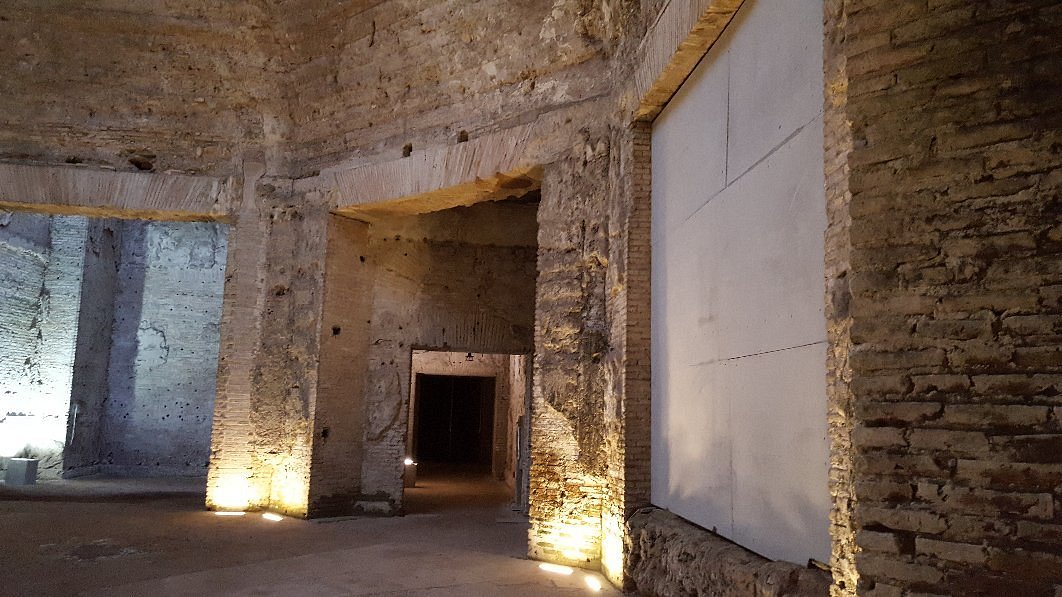
Domus Aurea
Nero's buried Golden House — Friday to Sunday visits, VR tour available
Explore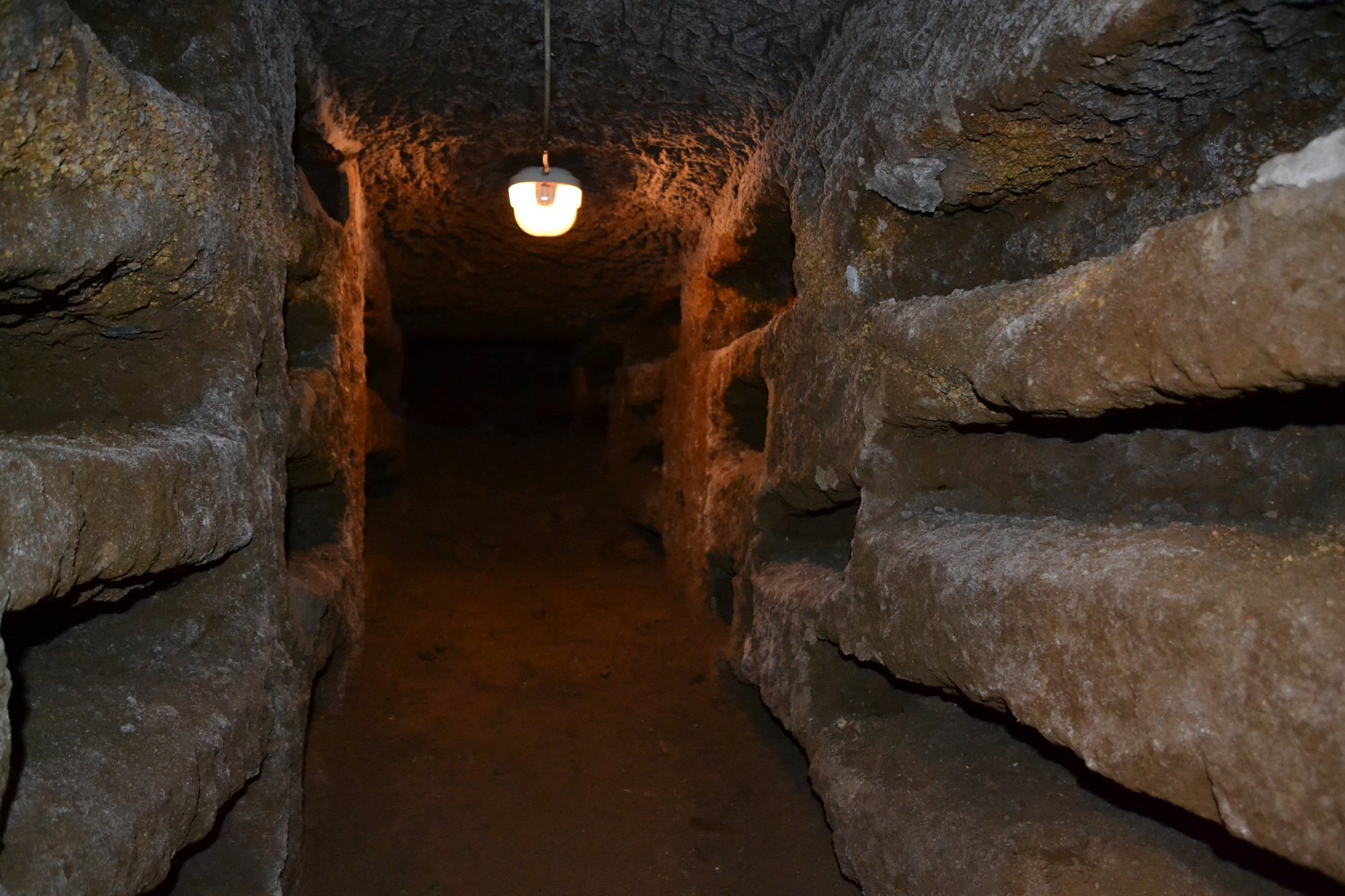
Catacombs of San Pancrazio
Intimate catacombs beneath Janiculum Hill with fewer crowds
Explore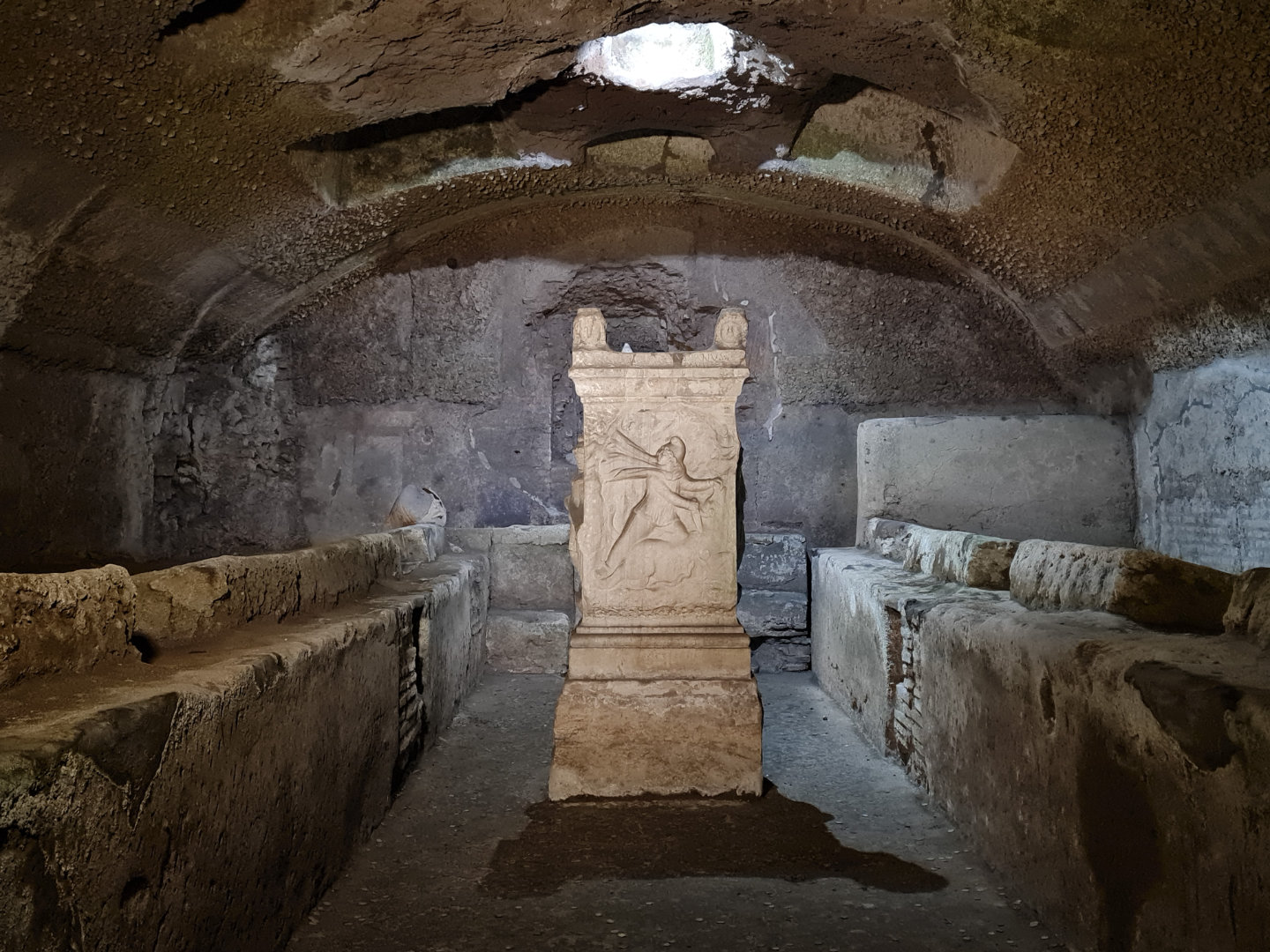
Mithraeum under San Clemente
Ancient Roman temple to Mithras hidden three levels below
Explore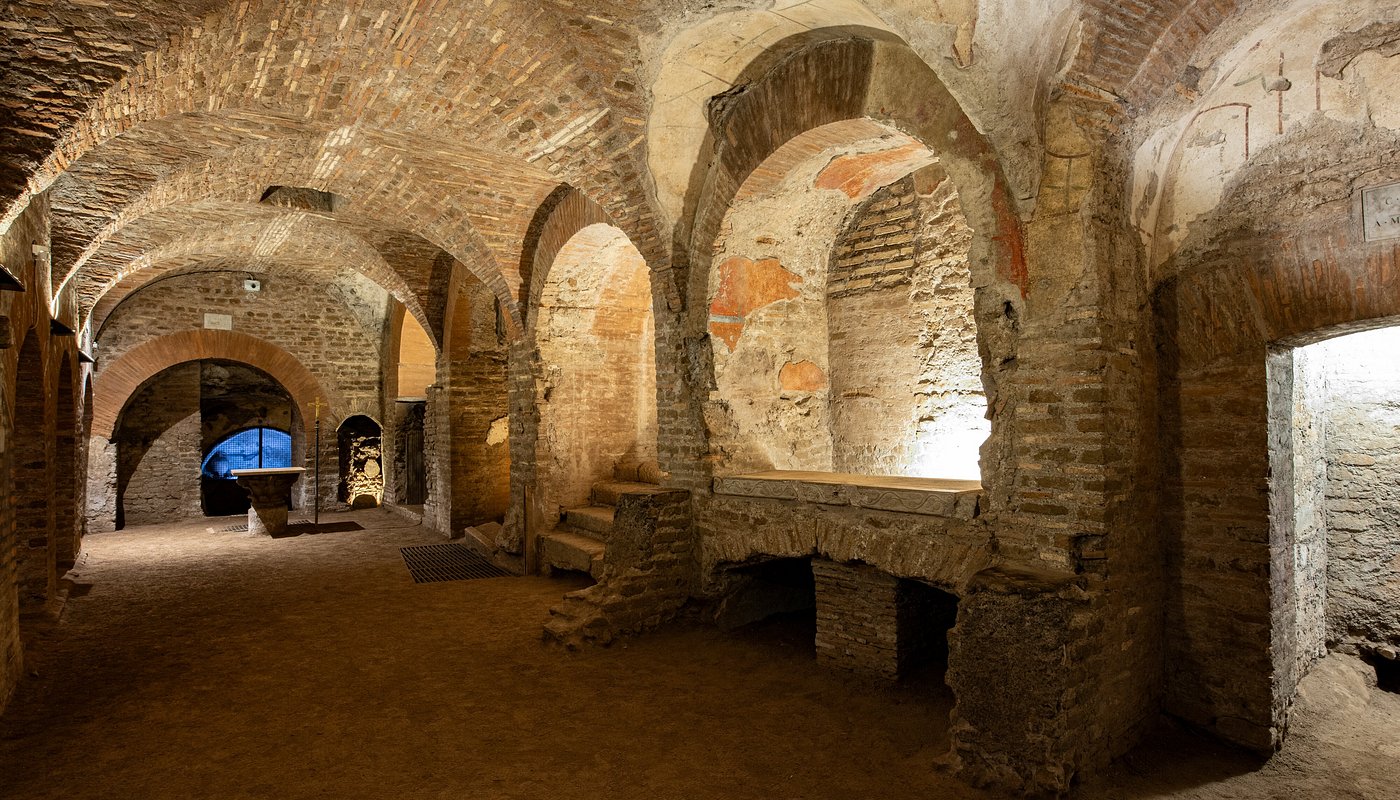
Catacombs of Priscilla
Rare early Christian frescoes including an early image identified as the Virgin and Child
Explore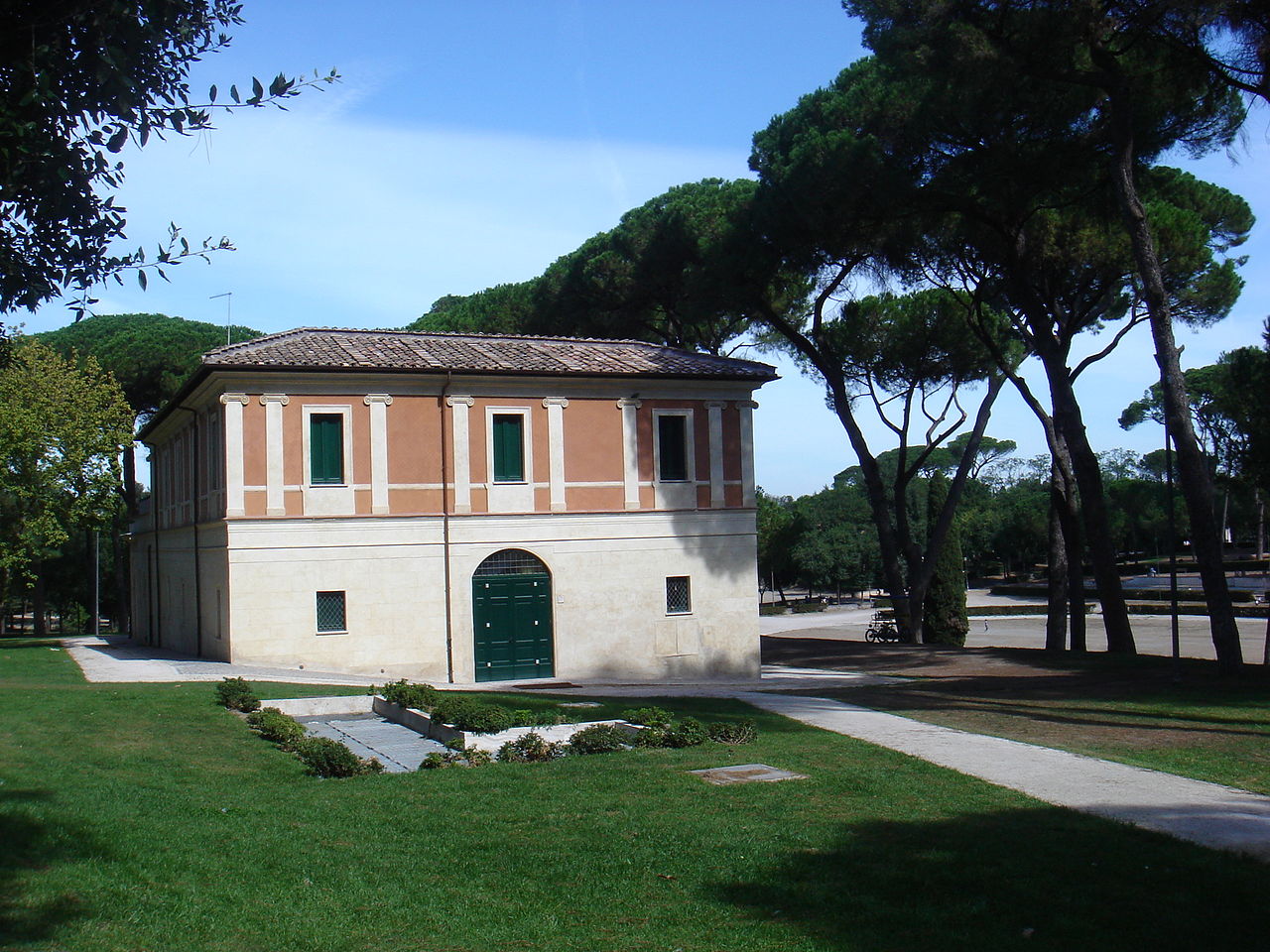
Casina di Raffaello
Magical children's cultural center in Villa Borghese
Explore
Temple of Venus and Roma
Rome's largest ancient temple—Emperor Hadrian's masterpiece
ExploreQuick Planning Guide
⏱️ Time Needed
1–1.5 hours
💰 Cost
€10 adults, €7 reduced
🎫 Reservation
Strongly recommended
♿ Accessibility
Not wheelchair accessible
📅 Best Time
Thu–Tue, 09:00–11:00
👨👩👧👦 Family Friendly
Recommended 7+
🌡️ Weather
Underground around 15°C year-round (per site info)
Nearby Attractions
Catacombs of San Sebastiano500 m
Tomb of Cecilia Metella25-min walk
Circus of Maxentius15-min walk
Appian Waygate to gate
Baths of CaracallaBus 118
Featured In These Itineraries
5 Day Rome ItineraryHidden Gems of RomeClassic Rome ItineraryEssential Tips
- ✓ Closed Wednesdays — plan around it
- ✓ Bring a light jacket — the site reports around 15°C underground year-round
- ✓ Wear flat shoes for uneven tufa floors
- ✓ All visits are guided — pre-book your language slot
- ✓ Combine with San Sebastiano for a full Appian Way day