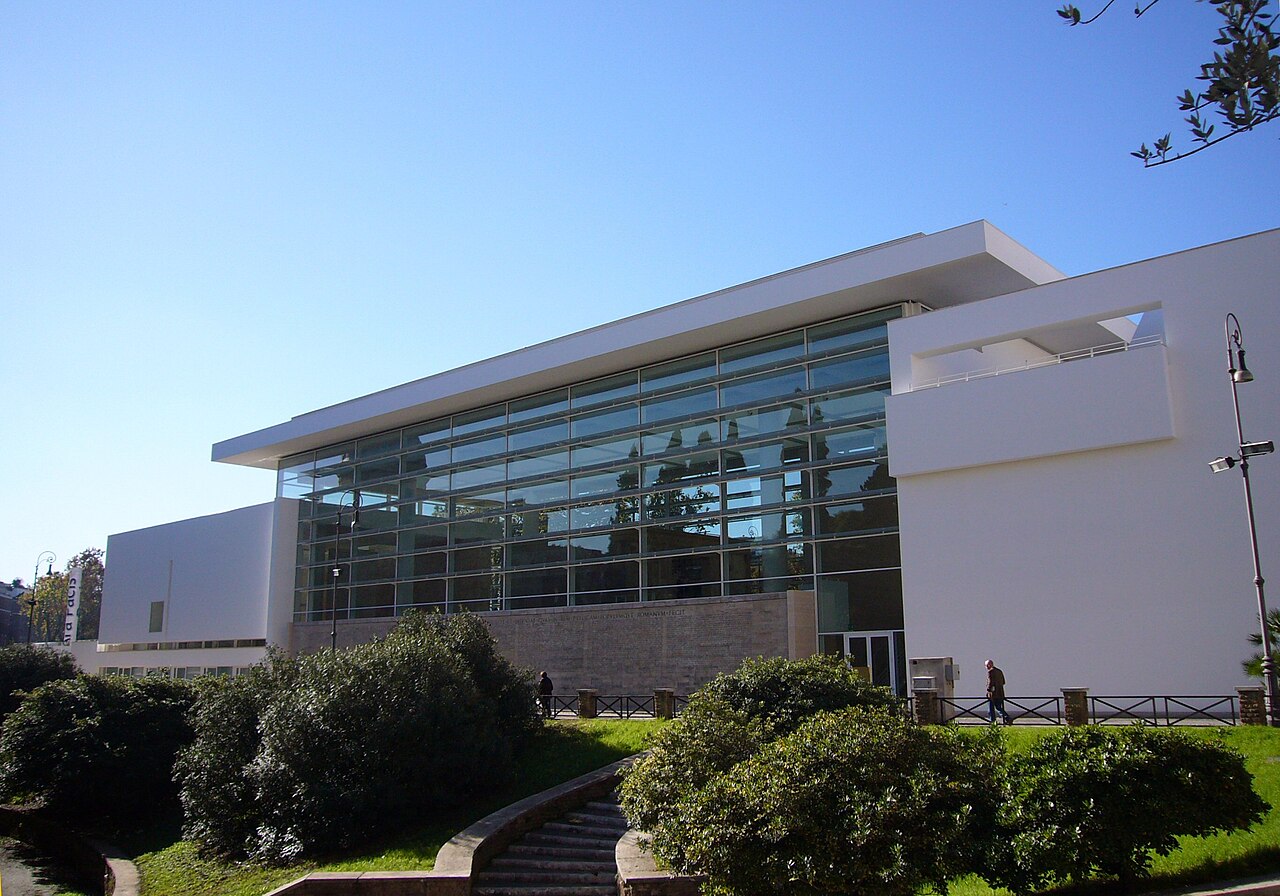
 Ancient Altar + Modern Museum
Ara Pacis Museum
Augustus's exquisite Altar of Peace — a 2,000-year-old masterpiece in a modern showcase
1–1.5 hoursSee official ticketsAugustan SculptureLungotevere in Augusta, 00186 Roma RMOpen on MapPlan Your Visit
Compare tickets, tours and stays — booking ahead usually gives more choice
Get TicketsBook a TourHotels NearbyWhy visit the Ara Pacis Museum?
The Ara Pacis Augustae is the single finest surviving piece of Augustan-era sculpture — a marble altar consecrated in 9 BC to celebrate Emperor Augustus's claim to have ended a century of civil war and inaugurated the Pax Romana. Its reliefs preserve the most detailed surviving portraits of the imperial family, the priests and the senators of the early Empire. Today it stands inside Richard Meier's striking 2006 pavilion on the Tiber — Rome's first major modernist building in the historic centre since WWII — and beside the Mausoleum of Augustus, whose public access remains limited and booking-dependent following its restoration. Together, when the Mausoleum can be booked, they form Rome's most coherent Augustan dynastic visit.
Masterpiece reliefs
Rome's finest Augustan sculpture
Modern architecture
Richard Meier's 2006 pavilion
Augustus's legacy
Symbol of the Pax Romana
Intimate experience
Rarely crowded, deeply rewarding
Quick facts
Altar Built
9 BC
Museum
Richard Meier (2006)
Type
Ancient altar + museum
Entry
Varies — see official ticket page
Visit Time
1–1.5 hours
Location
Campo Marzio (Tiber)
Metro
Spagna (A), 10 min
Best Time
Weekday morning / sunset
Crowds
Light — rarely busy
Table of Contents
Jump to any section of the itinerary
A brief history
On 4 July 13 BC, the Roman Senate voted to build an altar to Pax Augusta — the goddess Peace, in her Augustan form — to honour Emperor Augustus's safe return from three years of campaigns in Hispania and Gaul. The altar was consecrated four years later, on 30 January 9 BC (Livia's birthday), in the northern Campus Martius, alongside Augustus's massive solar clock (Horologium Augusti) and the Mausoleum of Augustus. Together they formed a coherent Augustan dynastic monument complex on the Tiber.
The altar was a sacrificial site for over four centuries. Annual sacrifices of an unblemished animal were performed by the magistrates, vestal virgins and priests of Rome. After the fall of the Western Empire, the Campus Martius was repeatedly flooded by the Tiber and gradually buried under metres of silt. The Ara Pacis disappeared from view, and its location was forgotten.
The first fragments were rediscovered in 1568 during construction of Palazzo Peretti on Via in Lucina. Further excavations in 1859 and 1903 recovered additional panels, scattered between collections across Europe. The complete excavation took place in 1937–1938 under Mussolini, using innovative ground-freezing techniques to safely tunnel beneath Palazzo Almagià-Fiano. The altar was reassembled for the bimillenary of Augustus's birth on 23 September 1938 in a new Fascist-era pavilion beside the Mausoleum of Augustus.
The 1938 pavilion proved disastrous for conservation — air pollution from heavy traffic, vibration and fluctuating humidity began to damage the marble. After international calls for a new home, American architect Richard Meier was commissioned, and his white travertine and glass pavilion opened in 2006. Sharply criticised by traditionalists at the time as Rome's first major modernist building in the historic centre since WWII, it has since been widely accepted — climate control, controlled lighting, a reflecting pool and a deliberate architectural dialogue with the ancient altar.
In 2021, after a long restoration, the adjacent Mausoleum of Augustus reopened, but public access has remained limited and programme-dependent, typically requiring advance booking. Today, in 2026, the Augustan complex on the Tiber — Mausoleum, Ara Pacis Museum and Piazza Augusto Imperatore — remains one of Rome's most rewarding dynastic-historical visits, though the Mausoleum requires checking current availability before visiting.
Two thousand years in ten dates
13 BCAltar commissioned
On 4 July 13 BC, the Roman Senate votes to build the Ara Pacis Augustae to honour Emperor Augustus's safe return from three years of campaigns in Hispania and Gaul. The altar will celebrate Pax — the goddess Peace — and Augustus's claim to have brought a new golden age to the Roman world.
9 BCConsecration
On 30 January 9 BC — Livia's birthday — the completed altar is consecrated in the northern Campus Martius, beside Augustus's massive solar clock (Horologium Augusti) and the Mausoleum of Augustus. The site forms a coherent Augustan dynastic monument complex.
1st–4th centuries ADActive cult site
Annual sacrifices of an unblemished animal are performed on the altar by the magistrates, vestals and priests of Rome. The altar functions as a key Imperial cult site for over 400 years.
5th–6th centuries ADBuried by Tiber floods
After the fall of the Western Empire, the Campus Martius is regularly flooded by the Tiber and gradually buried under metres of silt. The Ara Pacis disappears beneath the modern street level.
1568First fragments rediscovered
Construction of Palazzo Peretti (later Palazzo Almagià-Fiano) on Via in Lucina uncovers the first carved marble fragments of the altar. Scholars recognise their importance, but full excavation under the existing palazzo is impossible.
1859 & 1903Piecemeal recovery
Two further excavation campaigns recover additional panels, now scattered between the Vatican Museums, the Uffizi in Florence, the Louvre and Villa Medici. The full reconstruction seems impossible.
1937–1938Mussolini's reconstruction
For the bimillenary of Augustus's birth (23 September 1938), Mussolini orders a complete excavation using innovative ground-freezing techniques to safely tunnel beneath Palazzo Almagià-Fiano. The altar is reassembled in a new Fascist-era pavilion beside the Mausoleum of Augustus.
1990sPavilion fails
The 1938 Fascist pavilion proves disastrous for conservation — air pollution, vibration from traffic and fluctuating humidity damage the marble. International calls for a new home grow loud.
2006Richard Meier's modern museum opens
After years of design controversy, Richard Meier's striking white travertine and glass pavilion opens. Rome's first major modernist building in the historic centre since WWII is sharply criticised by traditionalists but successfully provides climate control, lighting and a contemporary architectural dialogue with the ancient altar.
2026A limited but coherent Augustan circuit
Since a 2021 restoration, access to the Mausoleum of Augustus has been limited and programme-dependent, typically requiring advance booking — it is not simply reopened for free walk-in visits. Alongside the Ara Pacis Museum and the rebuilt Piazza Augusto Imperatore, it remains one of Rome's most rewarding dynastic-historical visits when booked in advance; always check current availability.
What to see at the museum
The imperial procession
- Augustus himself leading the ceremony, veiled as Pontifex Maximus.
- Marcus Agrippa — Augustus's general and son-in-law — head also veiled.
- Livia (Augustus's wife) in elegant robes, with her son Tiberius behind her.
- Young Gaius and Lucius (Augustus's grandsons and chosen heirs) tugging at adults' togas.
- Priests of the four major colleges with distinctive ceremonial headgear (apex).
Mythological panels
- Roma seated on a pile of conquered weapons — military strength behind the peace.
- Tellus / Pax-Italia: a maternal goddess with twin children, ox, sheep, fruit and water — abundance of the Pax Romana.
- Aeneas sacrificing at Lavinium — Augustus's claimed Trojan ancestry (Julian dynasty).
- Romulus and Remus discovered by the shepherd Faustulus with the she-wolf (badly damaged).
Decorative details
- Lower acanthus-leaf scrollwork — a botanical fantasy of intertwined vines.
- Swans nesting among the foliage — birds of Apollo, Augustus's patron god.
- Floral garlands (ferula) hanging between bucrania (ox skulls) on the inner walls.
- Pinecones, fruit and small lizards hidden among the carved leaves.
- Original red, blue and gold paint traces — projected onto the altar in periodic exhibitions.
Photo opportunities
- The altar through the glass walls at sunset — golden light on travertine and marble.
- Reflection shots on the polished travertine floor of the pavilion.
- Close-ups of individual portrait faces — Livia and Agrippa are the most expressive.
- Modern travertine framing the ancient marble — Meier's deliberate dialogue.
- Views from Lungotevere toward the adjacent Mausoleum of Augustus.
Often-missed details
- The original inscription naming the altar (south wall, easy to walk past).
- Differences in carving quality — front panels are by master sculptors, sides by workshop hands.
- The chunks of original 1st-century BC marble vs the 1930s Mussolini-era reconstruction infill.
- The basement-level fragment gallery with smaller pieces and explanatory videos.
- Roman bronze panels of Augustus's Res Gestae on the museum's exterior wall (free to read).
Pavilion features
- Richard Meier's white travertine + glass pavilion (opened 2006) — Rome's first major modernist building in the historic centre since WWII.
- Reflecting pool along the Lungotevere façade mirrors the building.
- Climate-controlled glass enclosure protects the marble from Tiber humidity and pollution.
- Outdoor terrace facing the Mausoleum of Augustus across Piazza Augusto Imperatore.
- Rotating contemporary art exhibitions held in the lower level (separate ticket sometimes required).
Reading the reliefs — who's who
The exterior walls of the altar's outer enclosure carry two distinct programmes: the processional reliefs on the long north and south walls, and the mythological panels on the short east and west walls. Together they form the most carefully orchestrated piece of Augustan visual propaganda to survive from antiquity.
The south wall procession is the more important of the two. It shows the imperial family itself: Augustus at the front, veiled as Pontifex Maximus (his head covered with a fold of his toga); behind him senior priests and lictors with fasces; then Marcus Agrippa, Augustus's general, son-in-law and chosen heir, also veiled and carrying a scroll; behind Agrippa stands his small son Gaius Caesar tugging at his toga; then Livia, Augustus's wife, in elegant robes; then Tiberius (her son, the future emperor) and other members of the imperial dynasty.
The north wall procession is more damaged but shows senators, magistrates and the four major priestly colleges. The west wall mythological panels show Aeneas sacrificing at Lavinium (Augustus's claimed Trojan ancestor, founder of the Julian line) and the very damaged Romulus and Remus with the she-wolf. The east wall panels show Roma seated on a pile of conquered weapons (military strength as the foundation of peace) and the famous panel of Tellus / Pax-Italia — a maternal goddess with twin children, ox, sheep, fruit and water at her feet, surrounded by the breeze of land and sea — symbolising the abundance of the Pax Romana.
The lower zone of all four walls is covered in extraordinary acanthus-leaf scrollwork — a botanical fantasy of intertwined vines, with swans (birds of Apollo, Augustus's patron god), small lizards, frogs, snails and pinecones hidden among the leaves. The carving quality is the highest surviving from any Roman public monument.
The Meier pavilion — Rome's first modernist building
American architect Richard Meier was commissioned in 1996 to design a new home for the Ara Pacis after the 1938 Fascist-era pavilion proved disastrous for conservation. His white travertine and glass pavilion opened in 2006, after a decade of design controversy that briefly became a national political issue — Vittorio Sgarbi famously denounced it from the floor of the Italian parliament, and the design was modified several times before construction.
The result is Rome's first major modernist building in the historic centre since WWII, and one of the most discussed contemporary buildings in Italy. The exterior combines white Roman travertine (the same stone used for the Colosseum and the Theatre of Marcellus) with large glass walls that flood the altar with controlled natural light. A long reflecting pool on the Lungotevere side mirrors the pavilion. The interior is fully climate-controlled, removing the pollution and humidity damage of the previous building.
Meier's stated intention was a deliberate dialogue between ancient and contemporary: Roman travertine in modernist geometry, ancient marble in a modern shell. Twenty years on, the pavilion has aged well and is now widely regarded as one of the most successful contemporary museum buildings in Italy — protecting the altar while creating a building that does not pretend to be anything other than 21st century.
The lower level houses a fragment gallery, explanatory videos, temporary exhibition space and a bookshop. The outdoor terrace facing the Mausoleum of Augustus is freely accessible without a museum ticket — and is also where the bronze panels of Augustus's Res Gestae Divi Augusti are mounted on the museum's outer wall.
Augustus & the Pax Romana
The political message of the Ara Pacis is brilliantly orchestrated. After a century of civil wars (133 BC – 31 BC) that killed hundreds of thousands of Romans and destroyed the Republic, Augustus claimed to have brought a new golden age of peace. The altar was the visual centrepiece of this claim.
Every element reinforces the message. The mythological panels link Augustus to the deepest origins of Rome: Aeneas (the Trojan ancestor of Augustus's claimed Julian line), Romulus and Remus (the founders of the city), Roma (the city personified, seated victoriously on captured weapons), and Tellus / Pax-Italia (the abundance of the Italian land, with twin children, livestock and fruit — peace yields prosperity).
The processional reliefs show Augustus's family as the new dynastic centre of the Roman state — a radical political claim in a city that had recently overthrown its kings. By depicting himself, Livia, Agrippa, Tiberius, Gaius and Lucius together as a public ceremonial unit, Augustus was visually establishing the principle of hereditary succession that would govern Rome for the next four centuries.
The acanthus scrollwork below shows the natural abundance that peace brings — fruit, animals, birds, water — implicitly contrasting with the violence and famine of the civil war years. The whole altar is propaganda of the highest order — but propaganda whose visual quality is so extraordinary that it remains, two millennia later, one of the masterpieces of European art.
Suggested walking route
A 90-minute self-guided route from the Ara Pacis Museum through the Augustan complex on the Tiber, north into Piazza del Popolo, up onto the Pincio panoramic terrace, down through the Spanish Steps, and finishing (optionally) at the Trevi Fountain. Total walking distance: approximately 2.5 km, all flat except a 5-minute climb up the Pincio.
175 minAra Pacis Museum (full visit)
The altar itselfStart at the Meier pavilion. Walk the full perimeter of the altar — exterior reliefs first (the imperial procession on north and south, mythological panels on east and west), then step inside the enclosure to see the inner altar with bucrania and garlands. Use the audio guide.
210 minRes Gestae bronze inscription (outdoor)
Augustus's own voiceWalk around to the museum's exterior wall facing the Mausoleum. Bronze panels reproduce Augustus's first-person Res Gestae — his own account of his 41-year reign. Free to read in the open air.
345 minMausoleum of Augustus (across the piazza)
Augustus's tomb — booking requiredTwo minutes across Piazza Augusto Imperatore: Augustus's massive circular tomb, restored and access-limited since 2021 — advance booking required and subject to programme availability. Check the current schedule before planning this stop. One of Rome's largest and most under-visited monuments.
415 minPiazza del Popolo & the Egyptian obelisk
Twin churches + Augustus's obeliskEight minutes north up Via di Ripetta to Piazza del Popolo — Rome's most theatrical north entrance, with twin baroque churches, an Egyptian obelisk brought from Heliopolis by Augustus himself in 10 BC, and Bernini's Porta del Popolo gate.
520 minPincio panoramic terrace
Best free panorama in RomeClimb the ramp on the eastern side of Piazza del Popolo up to the Pincio terrace. One of Rome's best free panoramic views — over the historic centre, with the Ara Pacis pavilion visible below and St Peter's dome on the western horizon.
630 minVia del Corso & Spanish Steps
Rome's main shopping spineWalk south down Via del Corso (Rome's main shopping street since the 17th century) to the Spanish Steps and Trinità dei Monti at the top — one of the most famous staircases in the world. Plenty of cafés and shops along the way.
720 minTrevi Fountain (optional ending)
Baroque finaleTen minutes east of the Spanish Steps: the Trevi Fountain. Best seen at the end of the route as a baroque finale to a classical-Augustan walk. Always crowded — visit before 09:00 or after 22:00 for the best photographs.
Ara Pacis vs other Augustan / Imperial sites
| Feature | Ara Pacis | Mausoleum of Augustus | Forum of Augustus | Pantheon |
|---|---|---|---|---|
| Date | 13–9 BC | 28 BC | Dedicated 2 BC | Hadrianic 118–125 AD |
| Built by | Senate (commission) | Augustus (himself) | Augustus (vow at Philippi) | Hadrian (over Agrippa's earlier) |
| Function | Sacrificial altar to Pax | Imperial dynastic tomb | Imperial forum + Mars Ultor temple | Temple to all gods |
| Sculpture quality | Rome's finest Augustan reliefs | Architectural only (no surviving sculpture) | Excellent (statues in attic) | Architectural masterpiece (no sculpture inside) |
| Modern museum | Richard Meier pavilion (2006) | Restored; access limited and subject to current booking availability | Open archaeological area | Active church since 609 AD |
| Entry | See official ticket page (varies by exhibition) | Booking required — check current availability | Free (visible from street); paid Imperial Forums tour | Check official pricing |
| Visit time | 60–90 min | 45 min | 30–45 min (exterior) | 30–45 min |
Verdict: For the finest surviving Augustan-era sculpture, the Ara Pacis is unmatched. If you can secure a booking, pair it with the adjacent Mausoleum of Augustus (advance reservation required — check current availability) for the full dynastic complex on the Tiber. Walk on to the Forum of Augustus on the Imperial Fora for the political programme of his reign, and reserve the Pantheon for the Hadrianic engineering masterpiece that completes the Augustan-Imperial circuit.
Best time to visit
Time of day
09:30–11:00 — opening hours, fewest visitors
The pavilion is at its quietest in the first 90 minutes after opening. Soft north-east light through the glass walls.
17:00–19:00 — golden hour
The single best moment of the day. Low western sun pours through the glass and lights the white marble of the altar gold. Most tour groups have already left.
After 18:30 — last entry, near-empty pavilion
Last entry is 18:30. If you arrive at the very end you often have the altar almost to yourself for the final 60 minutes.
Avoid 13:00–15:00 in peak season
Cruise-ship tour groups concentrate in this window. Visit before or after for a calmer experience.
Best day & season
Tuesday–Thursday for fewest visitors
Weekday mornings (Tue–Thu) are the calmest windows. Sundays and Mondays after Vatican Museums closures see slightly more traffic.
Spring & autumn (peak)
April–May and September–October give the best Roman weather, soft light through the pavilion glass, and comfortable temperatures for the walking route afterwards.
January 30 — consecration anniversary
The anniversary of the altar's consecration in 9 BC. Special events and (occasionally) projected polychrome restorations of the original red, blue and gold paint scheme on the reliefs.
Closed days
Open daily 09:30–19:30 (last admission one hour before closing), with reduced hours 09:30–14:00 on 24 and 31 December and 11:00–20:00 on 1 January 2026. Closed 1 May and 25 December.
Getting there
Metro Line A — Spagna or Flaminio
Both stations are about a 10-minute walk. From Spagna walk west via Via dei Condotti and Via Tomacelli; from Flaminio walk south through Piazza del Popolo and down Via di Ripetta.
Bus to Ara Pacis / Augusto Imperatore
Lines 70, 81, 87, 117, 224, 492 and 628 all stop within two minutes of the museum. From Termini: 10–15 minutes. From Trastevere: 15 minutes.
From Piazza del Popolo on foot
10 minutes south down Via di Ripetta — Rome's most pleasant flat walk, lined with antique shops and wine bars.
From the Pantheon on foot
10 minutes north via Via in Lucina (where the original 1568 fragments were found beneath Palazzo Peretti) and Via di Campo Marzio.
Address
Lungotevere in Augusta, 00186 Rome. Entrance from the Lungotevere on the Tiber-facing side of the pavilion.
Common mistakes to avoid
Skipping the audio guide
The reliefs are extraordinary but absolutely opaque without context — without the audio guide (€5) or a printed gallery sheet, most visitors cannot identify any of the figures, miss the political message, and leave underwhelmed. The audio guide turns a 20-minute confused walkthrough into a 75-minute revelation.
Assuming the Mausoleum is freely walk-in
Many visitors assume that because the Mausoleum of Augustus was restored and reopened in 2021, it can simply be walked into like the Ara Pacis. In fact public access is limited and programme-dependent, and normally requires advance booking — check current availability before planning your visit. It stands two minutes from the Ara Pacis Museum, across Piazza Augusto Imperatore.
Missing the Res Gestae bronze inscription on the outer wall
Built into the museum's exterior wall (facing the Mausoleum) are bronze panels reproducing Augustus's Res Gestae Divi Augusti — his own first-person account of his 41-year reign, originally inscribed on bronze tablets at his Mausoleum. It's the closest you'll ever get to Augustus's own voice. And it's free to read from the piazza.
Not looking inside the altar enclosure
The famous reliefs are on the exterior walls of the altar's outer enclosure, and most visitors only walk around the outside. You can also walk inside the enclosure to see the sacrificial altar itself, with bucrania (ox skulls), garlands and the tiny inner relief of the original procession of priests. Don't miss it.
Dismissing the Meier pavilion as 'ugly'
Some visitors come predisposed to dislike the modern building. Give it 15 minutes — the climate-controlled glass walls, the way the natural light falls on the marble at different times of day, the reflecting pool outside, and the deliberate dialogue with the ancient altar are all part of a thoughtful design that has aged well into the 2020s.
Trying to combine with the Vatican on the same morning
The Vatican is a 25-minute walk west and a major half-day commitment. Don't try to see both in a morning — you will rush the Ara Pacis. Better pairings: the Mausoleum of Augustus (adjacent, booking required), Piazza del Popolo and the Pincio terrace (10 minutes north), Spanish Steps (10 minutes east), or Via del Corso shopping.
Insider tips from locals
Visit at sunset for the light show
From about 17:00 in winter and 19:00 in summer, the low western sun pours through the glass walls and lights the white marble of the altar gold. The polished travertine floor reflects the altar back. It's the single best moment of the day to visit, and most tour groups have already left.
Check ticket options for the Mausoleum and Ara Pacis
Ticket structures and pricing change with the exhibition programme, so check the official Museo dell'Ara Pacis ticket page for current options before you go. The Mausoleum of Augustus requires advance booking and timed entry — reserve that slot first, then plan your Ara Pacis visit around it.
Look for the painted-altar exhibitions
Periodically (usually around the consecration anniversary on 30 January, and during winter), the museum projects the original red, blue and gold paint scheme directly onto the altar's reliefs using digital projection. The transformation is astonishing — check the museum's events calendar before booking.
Use the outer terrace
Even without a museum ticket, the outdoor travertine terrace on the Lungotevere side (with the reflecting pool) offers excellent views of the building, the Mausoleum and the Tiber. A great 10-minute stop on a riverside walk.
Read the Res Gestae inscription
Walk to the museum's eastern exterior wall (facing the Mausoleum). Bronze panels reproduce Augustus's first-person Res Gestae Divi Augusti — his own account of his 41-year reign. Free to read in the open air. The most extraordinary autobiographical document of the ancient world.
Combine with the Pincio for the panorama
Ten minutes' walk north of the Ara Pacis, up Via del Babuino into Piazza del Popolo and up the ramp to the Pincio terrace, gives you one of Rome's best free panoramic views over the historic centre — including a fine high-angle look at the Ara Pacis pavilion below.
Practical visitor tips
Best time of day
Weekday mornings (09:30–11:00) for fewest visitors. Late afternoon to closing (17:00–19:00 in summer) for golden hour through the glass walls — the best light of the day on the altar.
Photography tips
Tripods are not allowed but the natural light through the glass rarely requires them. Sunset creates dramatic silhouettes of the altar against the glowing west wall. Phones perform very well in the bright pavilion.
Audio guide is essential
The €5 audio guide is the single most important purchase you can make. It identifies every figure in the procession, explains the mythological panels, and decodes the political message. Without it, the reliefs are beautiful but unreadable.
Combine your visit
The Mausoleum of Augustus is 2 minutes away, but access requires advance booking — check current availability. Continue to Piazza del Popolo (10 min), the Spanish Steps (10 min), Via del Corso shopping, or the Pincio panoramic terrace.
Where to Stay Near Campo Marzio
Looking for convenient accommodation near Campo Marzio? Stay within walking distance to make the most of your visit.
Hotels Near This AttractionTop Rated HotelsBudget-Friendly OptionsLuxury HotelsCentral locations with easy access to Campo Marzio and other attractionsFrequently Asked Questions
What is the Ara Pacis and why visit in 2026?
The Ara Pacis Augustae (Altar of Augustan Peace) is an ancient Roman altar dedicated to Pax — the Roman goddess of Peace — commissioned by the Senate in 13 BC and consecrated in 9 BC to honour Emperor Augustus's return from campaigns in Hispania and Gaul. It carries some of the finest sculptural reliefs to survive from ancient Rome, including portraits of Augustus, his family, his generals and his priests in extraordinary detail. In 2026 it is housed in Richard Meier's striking white-travertine and glass pavilion (2006) on the Tiber, beside the Mausoleum of Augustus, whose public access remains limited and booking-dependent since its restoration — together they form Rome's most coherent Augustan dynastic complex.
Where exactly is it?
On the Lungotevere in Augusta, on the eastern bank of the Tiber, in the Campo Marzio rione. Postal address: Lungotevere in Augusta (corner of Via di Ripetta), 00186 Rome. Two minutes' walk from the Mausoleum of Augustus across Piazza Augusto Imperatore. Ten minutes north of the Pantheon, ten minutes south of Piazza del Popolo.
How do I get to the Ara Pacis Museum?
Easiest by metro: Line A to Spagna or Flaminio, both about a 10-minute walk. By bus: 70, 81, 87, 117, 224, 492, 628 all stop at Ara Pacis or Augusto Imperatore. On foot: 10 minutes from Piazza del Popolo, 10 minutes from the Spanish Steps, 10 minutes from the Pantheon, 25 minutes from the Vatican.
How much are tickets?
Ara Pacis ticket prices vary by exhibition and visitor category (standard, reduced, free categories such as under-6s and disabled visitors with one companion), and temporary exhibitions or the immersive experience may be priced separately from the permanent collection. Always check the official Museo dell'Ara Pacis ticket page for current prices before travelling. From February 2026, residents of Rome and the metropolitan area are entitled to free entry to civic museums, including the Ara Pacis, on presentation of ID; non-resident and exhibition pricing varies. An audio guide is available for an additional fee and strongly recommended.
What are the opening hours?
In 2026: open daily 09:30–19:30, with last admission one hour before closing (18:30). Reduced hours on 24 and 31 December (09:30–14:00) and on 1 January 2026 (11:00–20:00). Closed 1 May and 25 December. Always check the official Museo dell'Ara Pacis website before travelling, as hours can vary during exhibitions.
Do I need to book in advance?
Booking is not strictly required — the museum is rarely sold out and walk-up tickets are normally available. That said, in peak season (April–June, September–October) and on Sundays, booking online a day or two ahead saves a short queue and guarantees your preferred time slot.
What can you see at the museum?
The reconstructed Altar of Peace itself — a marble enclosure roughly 11 × 10 metres, with four exterior walls covered in superb sculptural reliefs and an inner sacrificial altar with bucrania (ox skulls) and garlands. The exterior reliefs include the famous imperial procession (north and south walls — Augustus, Livia, Agrippa, the imperial family and the four major priestly colleges) and four mythological panels (east and west — Roma, Tellus/Pax-Italia, Aeneas, Romulus and Remus). The lower portions of all four walls are covered in extraordinary acanthus-leaf scrollwork.
Why is the building so modern?
American architect Richard Meier was commissioned to design the new pavilion after the 1938 Fascist-era building proved disastrous for conservation (pollution, vibration from traffic, fluctuating humidity). The new pavilion (opened 2006) was Rome's first major modernist building in the historic centre since WWII. The white travertine, glass walls, climate control and reflecting pool create a deliberate dialogue between ancient and contemporary — controversial at the time but now widely respected.
How was the altar rediscovered?
The first fragments were found in 1568 during construction of Palazzo Peretti on Via in Lucina. Two further excavations in 1859 and 1903 recovered additional pieces (now scattered in collections across Europe). The complete excavation and reconstruction took place in 1937–1938 under Mussolini, using innovative ground-freezing techniques to tunnel safely beneath the existing palazzo. The altar was reassembled for the bimillenary of Augustus's birth on 23 September 1938.
Is it worth visiting?
Absolutely. The Ara Pacis offers an intimate, uncrowded experience with some of Rome's finest ancient sculptural art. It's small enough to visit thoroughly in 75 minutes, and the modern architecture creates a beautiful contrast with the ancient marble. If you can book the adjacent Mausoleum of Augustus (access is limited and requires advance reservation), the two together make the most coherent Augustan dynastic visit anywhere in the city. With the audio guide, the Ara Pacis alone is one of Rome's most rewarding under-the-radar museums.
How long does the visit take?
Allow 60–90 minutes for a proper visit with the audio guide: 45 minutes for the altar itself (full perimeter outside, then inside the enclosure, then mythological panels), 15 minutes for the lower-level fragment gallery and explanatory videos, and 10 minutes for the outdoor terrace and Res Gestae bronze inscription on the museum's exterior wall.
Is photography allowed?
Yes — non-flash photography is allowed throughout the museum. Tripods and selfie sticks are not permitted. The natural light through the glass walls is excellent and rarely requires flash. Sunset hour gives the best photographs of the day.
Is the museum accessible?
Fully wheelchair accessible. Step-free entry from the Lungotevere, lifts to all levels, accessible toilets, and free admission for visitors with disabilities and one accompanying person. The altar itself is at ground level inside the pavilion.
What does the imperial procession show?
The procession on the north and south walls represents the original consecration ceremony of 4 July 13 BC, when the Senate voted to build the altar. It shows Augustus himself (veiled as Pontifex Maximus), his general and son-in-law Marcus Agrippa (also veiled), his wife Livia, his stepson Tiberius, his grandsons Gaius and Lucius (his chosen heirs, who both died young), priests of the four major colleges, lictors with fasces, and senators — together a complete portrait of the Augustan ruling class.
What is the political message of the altar?
The altar's message is brilliantly orchestrated propaganda for the Pax Augusta — Augustus's claim that he had ended a century of civil war and brought a new golden age. The mythological panels (Aeneas, Romulus and Remus, Roma, Tellus) link Augustus to the deepest origins of Rome. The processional reliefs show his family as the new dynastic centre of the state. The acanthus scrollwork below shows the natural abundance that peace brings. Every element reinforces the central political claim: peace through Augustan rule.
What's near the Ara Pacis worth combining?
Adjacent: Mausoleum of Augustus (2 min walk; advance booking required, check current availability). Within 10 minutes: Piazza del Popolo, the Pincio panoramic terrace, the Spanish Steps, Via del Corso shopping, the Pantheon, Piazza Navona. Within 20 minutes: the Vatican, Castel Sant'Angelo, Trevi Fountain. Best half-day pairing: Mausoleum (if booked) + Ara Pacis + Piazza del Popolo + Pincio terrace + Spanish Steps.
Related Attractions
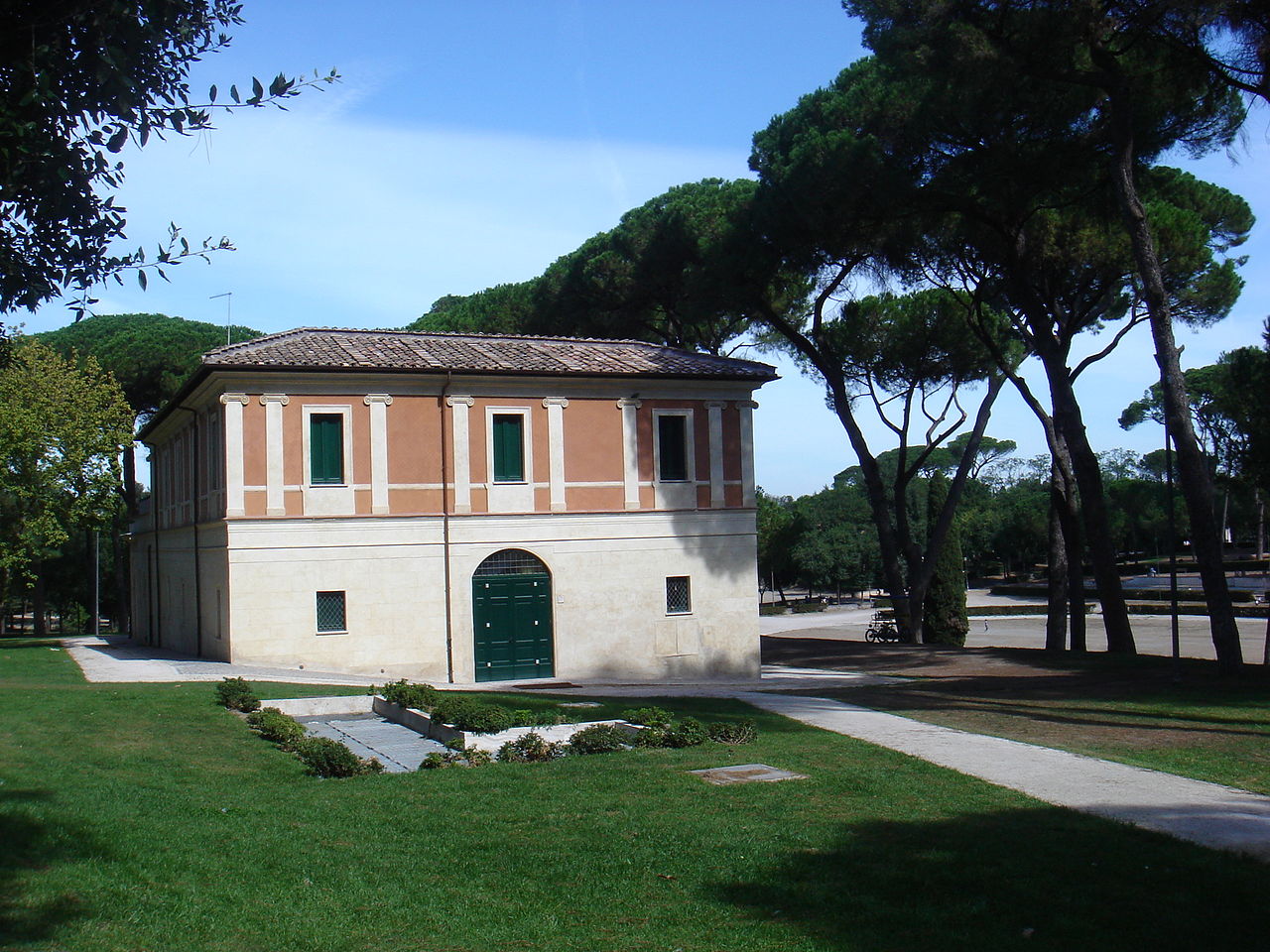
Casina di Raffaello
Magical children's cultural center in Villa Borghese
Explore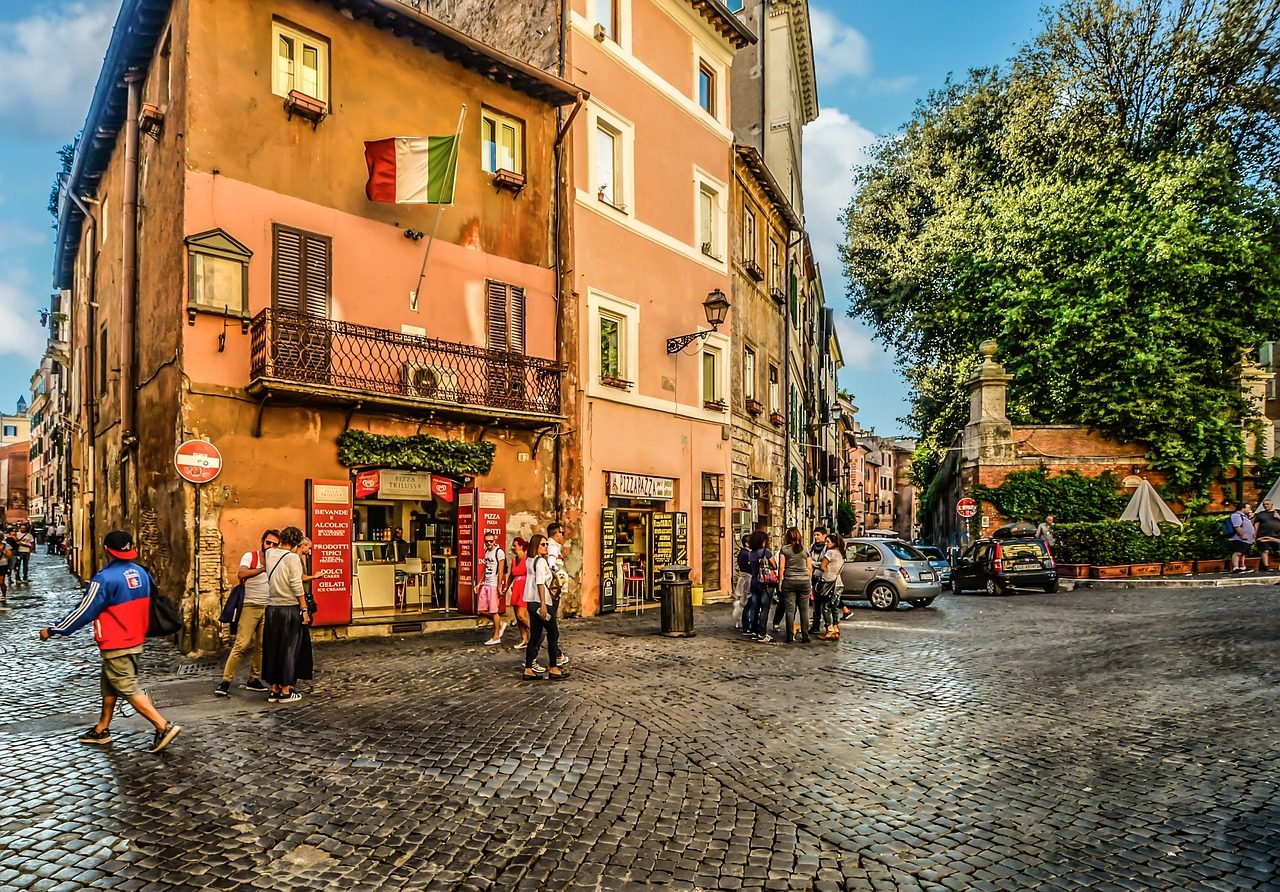
Trastevere
Rome's authentic bohemian heart with medieval streets
Explore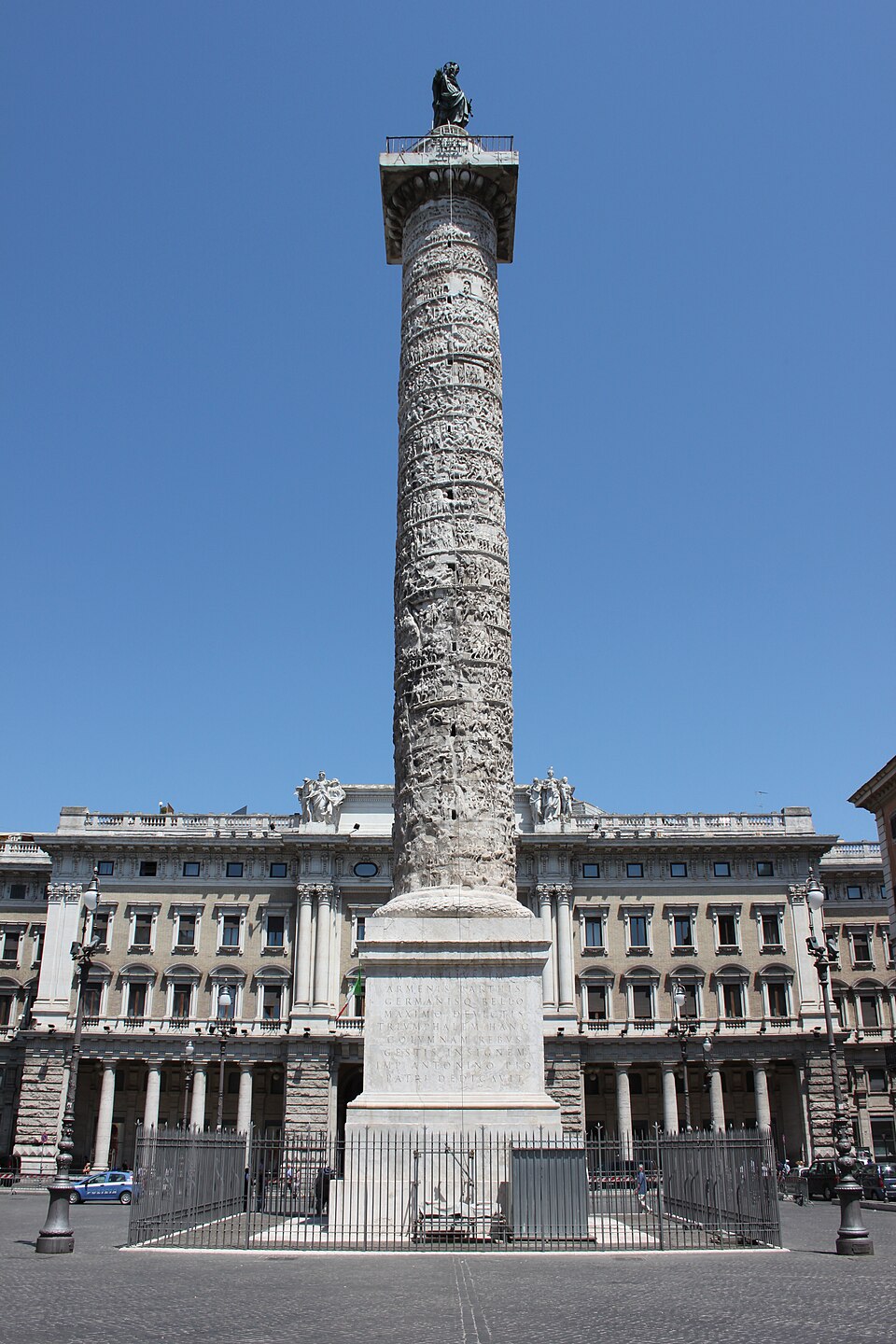
Column of Marcus Aurelius
Towering spiral column depicting Roman military campaigns
Explore
Piazza della Rotonda
Elegant square fronting the Pantheon
Explore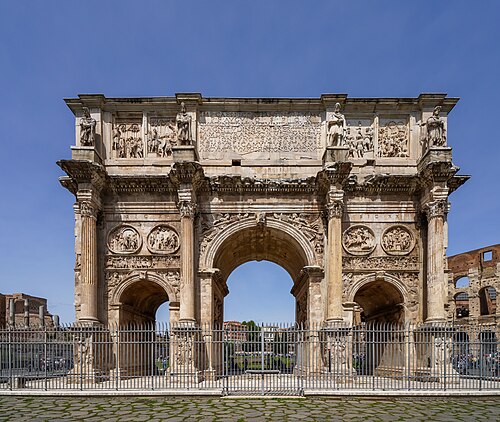
Arch of Constantine
Rome's largest triumphal arch (315 AD) next to the Colosseum
Explore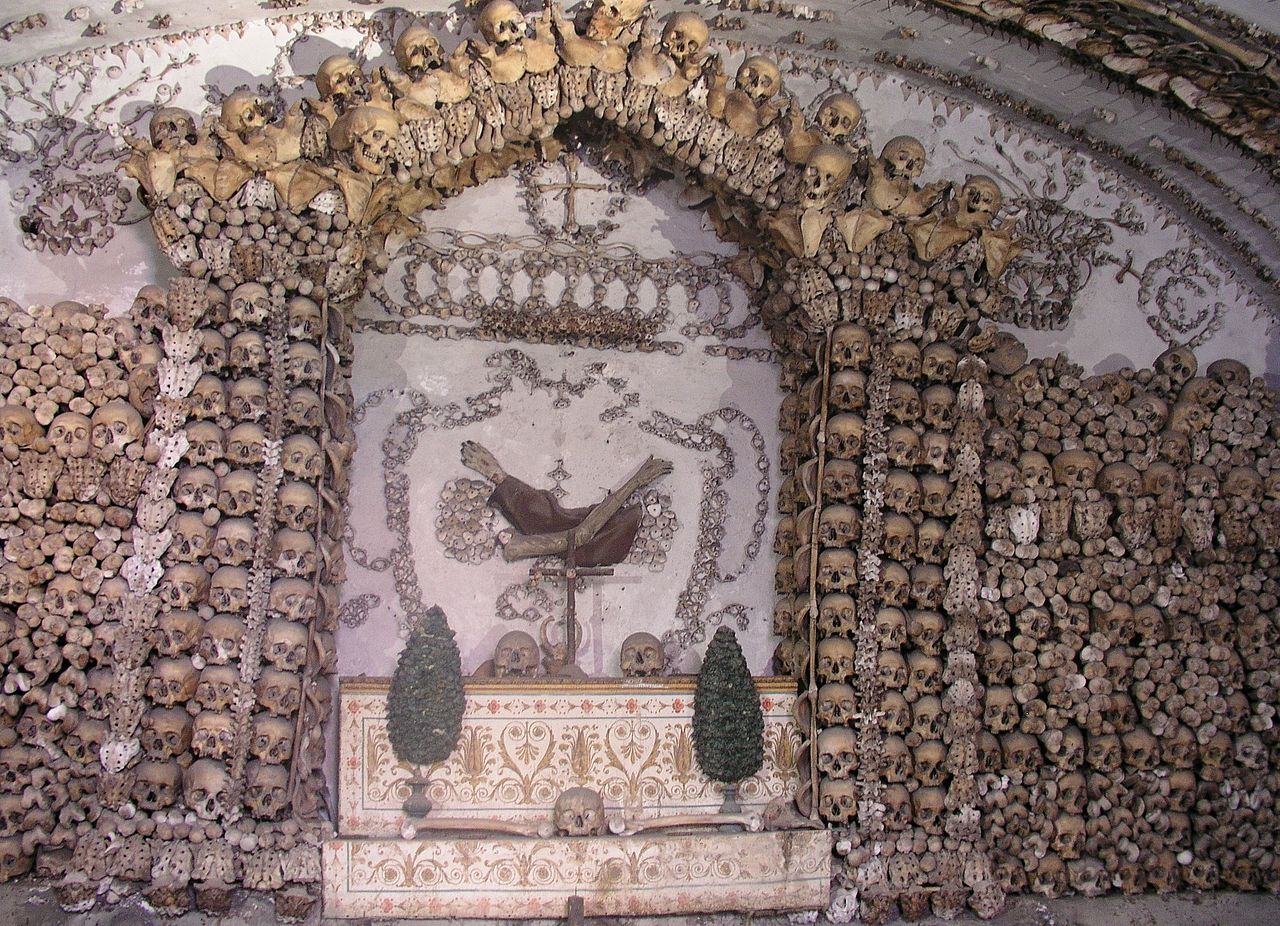
Capuchin Crypt
Haunting ossuary with 3,700 friars' bones arranged artistically
ExploreQuick Planning Guide
⏱️ Time Needed
1–1.5 hours
💰 Cost
Varies — check official ticket page
🎫 Reservation
Recommended in peak season
♿ Accessibility
Fully accessible
📅 Best Time
Weekday mornings or sunset
👨👩👧👦 Family Friendly
Yes
Nearby Attractions
Mausoleum of Augustusadjacent
Piazza del Popolo10-minute walk
Pincio terrace12-minute walk
Spanish Steps10-minute walk
Pantheon10-minute walk
Featured In These Itineraries
5 Day Rome ItineraryClassic Rome 3 DaysHidden Gems of RomeEssential Tips
- ✓ Audio guide is essential
- ✓ Check ticket page — Mausoleum needs booking
- ✓ Visit at sunset for the best light
- ✓ Read Res Gestae on outer wall