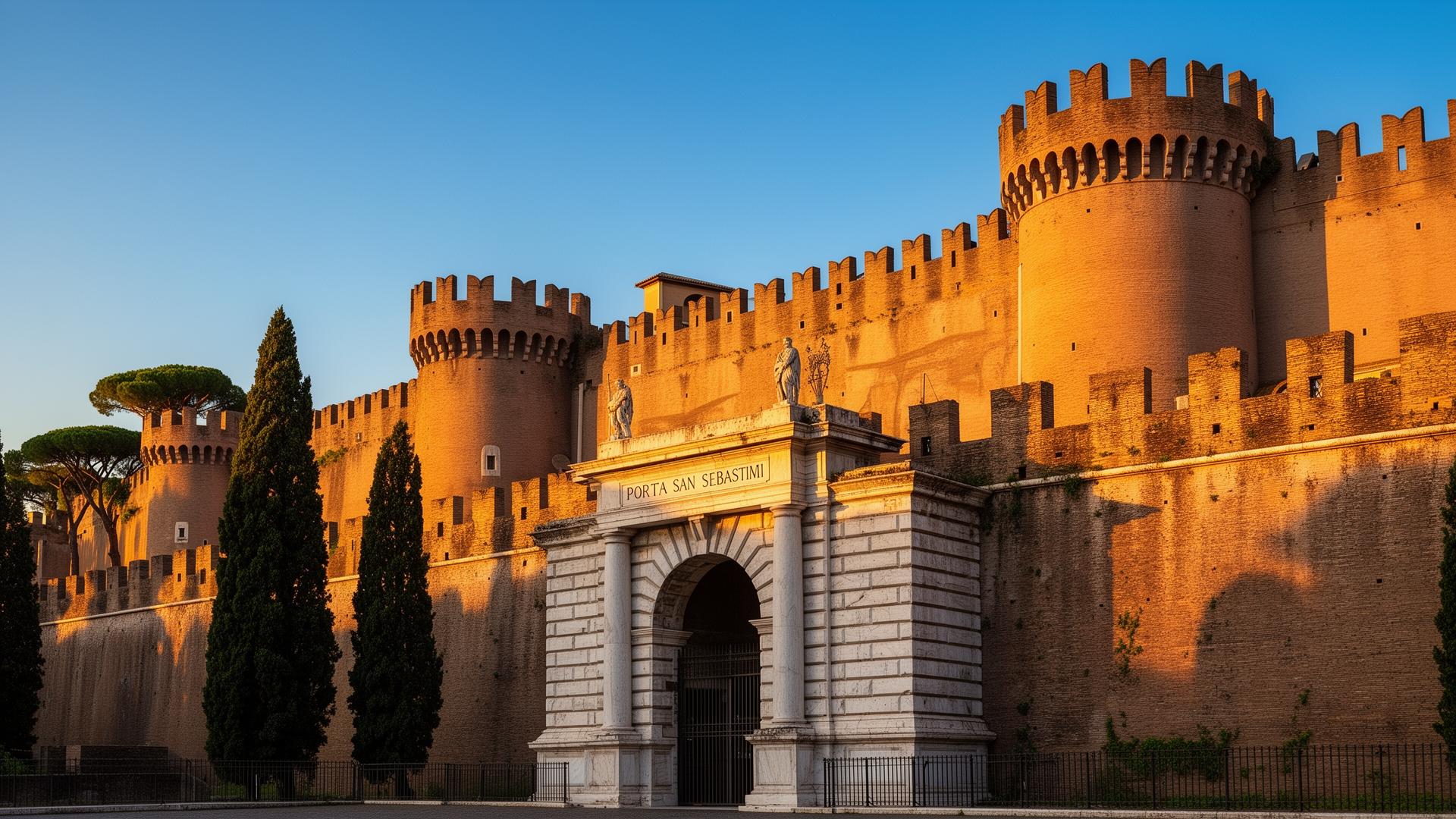
 Free street view
Aurelian Walls
Explore surviving sections of Rome's late-3rd-century defensive walls. The exterior can be seen throughout the city, while a limited rampart section is accessible through the free Museo delle Mura.
1–3 hoursFreeMetro B Circo Massimo271–275 ADVia di Porta San Sebastiano, 18, 00179 RomaOpen on MapPlan Your Visit
Compare tickets, tours and stays — booking ahead usually gives more choice
Book a TourHotels NearbyThe Aurelian Walls are Rome's most overlooked monumental complex — an original circuit of about 19 km, built with 3rd-century brick-faced concrete walls, 381 towers and 18 gates. Built by Emperor Aurelian in just five years (271–275 AD, completion date approximate) and doubled in height by Honorius around 401 AD, they defended Rome for centuries. Long stretches survive today, but the circuit is broken in several places and only a limited section is publicly walkable. The exterior can be seen throughout the city, while a limited rampart section is accessible through the free Museo delle Mura. Please note that substantial stretches of the walls remain inaccessible and the ramparts are not wheelchair accessible.
Why visit the Aurelian Walls?
While millions queue at the Colosseum, the Aurelian Walls — the largest single monument in Rome — stand in near-solitude. They are everywhere, free, and tell a continuous story from late antiquity to the founding of modern Italy.
- Largest ancient monument in Rome: 19 km of walls, 381 towers, 18 gates — a single integrated structure dwarfing the Colosseum and Forum combined.
- Walk on top of them: a section of original 5th-century rampart open to the public at the Museo delle Mura — Free, panoramic views (not wheelchair accessible) over the Appian Way.
- 1,500 years of history in one structure: from Aurelian's barbarian-era construction to the 1870 breach that founded modern Italy.
- Embedded monuments: the Pyramid of Cestius, Claudius's aqueduct arch and the Castrense Amphitheatre were absorbed wholesale into the circuit.
- Free, almost empty: the south-east stretch (Porta San Sebastiano → Porta Latina) is one of the most peaceful walks in central Rome.
Quick facts
Built
271–275 AD by Aurelian
Entry
Free
Visit time
1–3 hours
Metro
B Circo Massimo / B Piramide
Length
19 km, 381 towers, 18 gates
Best stretch
Porta San Sebastiano → Latina
Table of Contents
Jump to any section of the itinerary
A brief history
For 600 years Rome had no real walls. The 4th-century BC Servian Walls enclosed only the original seven hills — by the 3rd century AD vast populated districts lay outside, defenceless. Rome's invincibility was its army, not its masonry. That assumption shattered in 270 AD, when the Alamanni and Juthungi crossed the Alps and reached Plombino, just 80 km north of the city.
Emperor Aurelian reacted with extraordinary speed. In 271 AD he ordered a new 19 km defensive circuit and mobilised tens of thousands of workers across multiple stretches simultaneously. To save time, engineers absorbed every existing structure into the line: the Pyramid of Cestius, the Castrense Amphitheatre, the Castra Praetoria and Claudius's Aqua Claudia aqueduct arch. The walls were completed by Aurelian's successor Probus in 275 AD — 381 semi-circular towers, 18 monumental gates, 8 metres tall, all in just 5 years.
The Aurelian original was already impressive, but a generation later Rome faced an even greater threat: Alaric's Visigoths. Around 401–403 AD Emperor Honorius nearly doubled the walls to 16 metres, added a roofed sentry walk and arrow-slit galleries, walled up the minor gates and reinforced every tower. The Honorian heightening is what most visitors see today; it is the layer that defended Rome against the Goths in 537–538 AD (the famous defence by Belisarius), against the Lombards in 593, and against the Saracens in 846.
Through the medieval centuries the Popes maintained and modified the walls. Leo IV built the parallel Leonine Wall around the Vatican after the Saracen sack of 846; Urban VIII reinforced the Janiculum stretch in the 17th century; Pius IV commissioned Michelangelo in 1561 to redesign the northern gate — now Porta Pia, one of Michelangelo's last architectural works.
The walls' final military moment came on 20 September 1870. Italian troops under General Cadorna blew a 30-metre breach 50 metres west of Porta Pia; the Bersaglieri stormed through; the Pope withdrew to the Vatican; and Rome became the capital of unified Italy. The street name Via XX Settembre, the column at the breach site and the date itself are still woven into modern Rome's civic identity.
The walls were completed roughly 1,750 years ago (c. 275 AD, an approximate date), and various stretches continue to undergo periodic restoration. Check the Museo delle Mura's official listing for current opening hours.
The Aurelian Walls through the centuries
378 BCServian Walls — Rome's first circuit
After the Gallic sack of 387 BC, Rome builds the 11 km Servian Walls in tufa blocks. They protect only the original seven hills — leaving the imperial-era expansion defenceless 600 years later.
270 ADGermanic raids reach Italy
The Alamanni and Juthungi cross the Alps and reach Plombino, 80 km north of Rome. For the first time in 600 years the city itself is at risk.
271 ADAurelian begins the walls
Emperor Aurelian orders the construction of a new 19 km defensive circuit. Tens of thousands of workers begin simultaneously on multiple stretches, absorbing existing buildings to save time.
275 ADWalls completed under Probus
After Aurelian's assassination, Probus completes the circuit: 19 km, 381 towers, 18 gates, 8 m tall — built in just 5 years. One of the great construction feats of late antiquity.
309 ADMaxentius reinforces the gates
Emperor Maxentius adds the twin semi-circular towers to most main gates (Porta San Sebastiano, Porta Asinaria) and reinforces the masonry against early-4th-century unrest.
401–403 ADHonorius doubles the height
Facing Alaric's Visigoths, Emperor Honorius doubles the walls to ~16 m, adds a roofed sentry walk and arrow-slit galleries, and walls up minor gates. Most surviving height is Honorian.
408 ADFirst Gothic siege repelled
Alaric besieges Rome but the walls hold. He extracts a massive ransom and withdraws. (Two years later he returns and sacks Rome — but only after a slave opens Porta Salaria from the inside.)
537–538 ADBelisarius defends the walls
The Byzantine general Belisarius successfully defends the walls against the Ostrogoth Vitiges for 374 days — using the same fortifications 250 years after their construction.
9th centuryPope Leo IV major restoration
After the Saracen sack of St Peter's in 846 (which lay outside the walls), Pope Leo IV builds the Leonine Wall around the Vatican and restores damaged stretches of the Aurelian circuit.
1561Michelangelo designs Porta Pia
Pope Pius IV commissions Michelangelo to redesign the northern Porta Nomentana. Renamed Porta Pia after the Pope, it is one of Michelangelo's last works — completed after his death by Giacomo Della Porta.
20 Sep 1870Bersaglieri breach Porta Pia
Italian troops blow a 30 m hole in the wall 50 m west of Porta Pia. Rome falls to the Italian Kingdom; the Pope withdraws to the Vatican; the Risorgimento ends. The street 'Via XX Settembre' commemorates the date.
OngoingConservation continues
Restoration and conservation work on various stretches of the walls continues periodically. The walls were completed roughly 1,750 years ago (c. 275 AD, an approximate date); entry to the Museo delle Mura and its rampart remains free.
Construction & engineering
Opus latericium
Brick-faced concrete: an inner core of mortar + rubble (caementicium) faced with thin red bricks (lateres). Cheap, fast, immensely strong. The Aurelian Walls are the largest ancient structure ever built in this technique.
381 semi-circular towers
Spaced every ~30 m to allow overlapping crossfire from ballistae, slings and bows. Originally 4 m higher than the wall walk, with platforms for artillery. Honorius added a second floor to most towers in 401 AD.
Absorbed monuments
To save time the engineers incorporated existing structures into the line: the Pyramid of Cestius, Claudius's aqueduct (Porta Maggiore), the Castrense Amphitheatre, the Castra Praetoria and dozens of private mausolea. About 1.5 km of the circuit are pre-existing walls.
What to see along the Aurelian Walls
The walls themselves — brick-faced concrete
- 19 km circuit, of which ~12.5 km still stand in 2026 — most continuously between Porta San Sebastiano and Porta Latina along Viale di Porta Ardeatina.
- Original Aurelian height 8 m, doubled by Honorius around 401 AD to ~16 m. Construction technique: opus latericium (brick-faced concrete) with thick travertine foundations.
- 381 semi-circular towers spaced every 30 m — designed for crossfire from ballistae and archers. Many survive intact at full Honorian height.
- Two superposed sentry walks: an open lower walkway (Aurelian) and a covered upper one with arrow-slits (Honorian). Both are visible at the Museo delle Mura.
The 18 gates (11 still standing in 2026)
- Porta San Sebastiano (largest, hosts the Museo delle Mura): twin 4th-century semi-circular towers added by Maxentius, 17 m tall.
- Porta Maggiore (52 AD): not a defensive gate but Claudius's aqueduct arch, absorbed into the walls in 271 AD — the most spectacular survival.
- Porta Pia (1561, Michelangelo): the northern gate redesigned in the Renaissance and famously breached on 20 September 1870 to unite Rome with Italy.
- Porta del Popolo, Porta San Paolo, Porta San Giovanni, Porta Asinaria, Porta Latina, Porta Metronia, Porta Tiburtina, Porta Pinciana — each with its own story.
- Six minor posterns; Porta Salaria was demolished in 1921 — only its ground plan is now marked in cobblestones.
Embedded ancient monuments
- Pyramid of Cestius (12 BC): the 36 m white marble pyramid was the cheapest defensive wall section to build — Aurelian simply incorporated it whole at Porta San Paolo.
- Castrense Amphitheatre (3rd-century, near Santa Croce in Gerusalemme): half its outer ring still serves as a stretch of wall.
- Castra Praetoria (23 AD, Sejanus): the rectangular Praetorian camp was attached to the walls north-east of Termini — its three-metre-thick outer walls form 800 m of the Aurelian circuit.
- Aqua Claudia & Anio Novus (52 AD) at Porta Maggiore: the Claudian aqueduct arch was absorbed wholesale, with two water channels still visible on the attic.
- Tomb of Cecilia Metella style mausolea, baths, a stadium and dozens of private houses — all visible if you know where to look.
The walkable rampart at Porta San Sebastiano
- Enter the Museo delle Mura inside the twin-towered gatehouse (Free entry for both museum and walkway).
- Climb a steep 19th-century spiral staircase to the upper sentry walk — inside the original Honorian arrow-slit gallery.
- Walk on top of the ramparts with views down on the first kilometre of the Appian Way and across the Caffarella valley.
- Information panels explain construction techniques, military equipment and the gate's role in the 537 AD siege of Belisarius.
Porta Pia — the breach of 1870
- Michelangelo's last architectural commission (1561) for Pope Pius IV. Façade completed posthumously by Giacomo Della Porta.
- The actual 1870 breach is 50 m west of the gate, marked today by a stone column with a Latin inscription: 'Hic Bersaglieri intraverunt' ('Here the Bersaglieri entered').
- Free Museo Storico dei Bersaglieri inside the gatehouse: uniforms, rifles, photos and dramatic paintings of the 1870 assault. Tuesday–Sunday 09:00–13:00.
- Walk down Via XX Settembre — every street name in the area commemorates the date and the Risorgimento.
Museo delle Mura — walking on the ramparts
The Museo delle Mura is a small but exceptional civic museum housed inside the twin-towered Porta San Sebastiano — the largest and best-preserved gate of the entire Aurelian circuit. The ground-floor museum explains the construction techniques, military equipment, the great sieges (Alaric, Belisarius, the Saracens, Porta Pia 1870) and displays scale models of every gate.
The reason most visitors come, however, is the walkable rampart: a steep 19th-century spiral staircase climbs into the original Honorian arrow-slit gallery, where you walk on top of the walls with views down on the first kilometre of the Appian Way and across the green Caffarella valley. It is the only stretch of Aurelian Wall in Rome where you can walk on top.
2026 visiting essentials
- • Address: Via di Porta San Sebastiano, 18, 00179 Roma
- • Hours: Tuesday–Sunday 10:00–16:00; last admission 15:00. Closed Monday, 1 May and 25 December.
- • Cost (2026): admission is free. Capacity is limited, so immediate entry is not guaranteed.
- • Wall passage: can be visited during museum opening hours; the tower terrace is currently unavailable.
- • Booking: no ticket required, but capacity is limited (about 20 visitors at a time), so immediate entry is not guaranteed.
- • Duration: 45–60 minutes including the wall walk.
- • Accessibility: ground-floor museum yes; rampart no (steep spiral staircase).
- • Getting there: Metro B Circo Massimo + 15-min walk, or bus 118/218 from Piramide.
Gate-by-gate guide — the main surviving gates
Porta San Sebastiano
South — Appian Way
Largest gate, Museo delle Mura, walkable ramparts
Porta Latina
South-east
Original Aurelian gate, San Giovanni in Oleo church
Porta Metronia
South — Caelian
Walled up since 12th century, original arch visible
Porta Asinaria
South — Lateran
Where Belisarius entered Rome in 536 AD
Porta San Giovanni
East — Lateran
16th-century rebuild beside the Aurelian original
Porta Maggiore
East — Esquilino
Claudius's 52 AD aqueduct arch absorbed in walls
Porta Tiburtina
East — Tiburtino
3rd-century with intact aqueduct channels above
Porta Pia
North-east
Michelangelo 1561, breached 20 Sept 1870
Porta Pinciana
North — Villa Borghese
Elegant marble revetment, Renaissance modifications
Porta del Popolo
North — Piazza del Popolo
Bernini 1655 inner façade for Queen Christina
Porta San Paolo
South — Testaccio
Twin towers beside the Pyramid of Cestius
Aurelian Walls walking itinerary
A 3-hour, 7-stop walk covering the south-east stretch from Porta San Sebastiano through Porta Latina and Porta Metronia to the Caelian Hill basilicas — the most continuous and atmospheric section of the entire circuit. Total distance ~3 km, mostly flat, with one small uphill at the end.
Walking route map


 📍
📍
📍
📍
📍
📍
📍
+− Leaflet | © OpenStreetMap contributors
📍
📍
📍
📍
📍
📍
📍
+− Leaflet | © OpenStreetMap contributorsClick on markers for stop details. Numbers indicate the walking order.
1StartCirco Massimo metro (Line B)
Easy starting pointExit the metro and walk 15 minutes south-east along Via di Porta San Sebastiano. The flat tree-lined road is quiet, with archaeological sites on both sides.
260 minPorta San Sebastiano & Museo delle Mura
Best gate in RomeThe largest and best-preserved gate. Visit the free ground-floor museum, then climb to the walkable rampart (Free). Note: not wheelchair accessible. The view back over the Appian Way is unforgettable.
330 minViale di Porta Ardeatina — south-east stretch
Most continuous wall stretchWalk 1.2 km north-east along the wall on Viale di Porta Ardeatina. Towers every 30 m, full Honorian height, umbrella pines and Roman cats — Rome's most continuous intact stretch.
415 minPorta Latina
Original Aurelian gateA modest single-arched gate from the 271 AD original build, framed by a 1,000-year-old umbrella pine. Don't miss the tiny octagonal church of San Giovanni in Oleo (1509) just inside the gate.
510 minPorta Metronia
Walled-up medieval gateWalled up since the 12th century but with the original travertine arch still visible. Cross through the modern gap in the wall to enter the Caelian neighbourhood.
645 minCaelian Hill basilicas (San Clemente)
Three churches stackedWalk 10 minutes north to the 12th-century Basilica of San Clemente — three churches stacked on a Mithraic temple. Or stop at Santi Quattro Coronati for medieval frescoes.
7EndPorta San Giovanni — return
Easy return pointEnd at Porta San Giovanni (Lateran area) for Bus 218 or Metro Line A back to the centre, or combine with the Basilica di San Giovanni in Laterano.
Aurelian Walls vs Servian Walls — Rome's two great circuits
| Feature | Aurelian Walls | Servian Walls |
|---|---|---|
| Date built | 271–275 AD (Aurelian + Probus) | 378 BC (after Gallic sack) |
| Length | 19 km circuit | 11 km circuit |
| Material | Brick-faced concrete + travertine | Cappellaccio tufa blocks |
| Height | 8 m → 16 m (Honorius 401 AD) | 10 m + 30 m wide ditch |
| Gates / towers | 18 gates, 381 towers | 16 gates, no towers preserved |
| Surviving today | ~12.5 km (two-thirds) | ~10 fragments, longest 60 m |
| Where to see | Porta San Sebastiano, Porta Pia | Termini Station, Aventine Hill |
| Best for | Walking, gates, military history | Brief archaeological glimpses |
Verdict: the Aurelian Walls are unmissable; the Servian Walls are a brief curiosity. Most visitors should focus on Aurelian and pause briefly at the Servian fragment outside Termini Station.
Best time to visit
Time of day
Late afternoon (16:00–18:00 winter / 18:00–20:00 summer)
Best — warm side-light makes the brick glow orange-red and brings out the relief on every tower.
Early morning (07:30–09:00)
Good for Porta Pia (north-east-facing) and for empty wall photos before traffic intensifies.
Avoid noon
Harsh top-light flattens the brick texture. The south-east stretch on Viale di Porta Ardeatina exceeds 38°C in July afternoons.
Best days & seasons
Free every operating day
The Museo delle Mura and its wall-walk are free whenever the museum is open (Tuesday–Sunday). Capacity is limited, so arrive early.
March–May & October–November 2026
Ideal weather, soft light, full opening hours, very few crowds.
20 September
Anniversary of the 1870 breach: free Bersaglieri parades at Porta Pia, special openings of the Bersaglieri museum, civic celebrations.
Avoid Mondays
Museo delle Mura closed — no rampart access. Walking outside is fine but you miss the highlight.
Getting there
Metro (best)
For Porta San Sebastiano: Metro Line B to Circo Massimo, then 15-min flat walk south on Via di Porta San Sebastiano. For Porta Pia: Metro Line B to Castro Pretorio, 10-min walk. For Porta del Popolo: Metro Line A to Flaminio, 2-min walk.
Bus
Lines 118 and 218 stop at the Museo delle Mura — the most direct option from Piramide and the Lateran. Line 360 follows much of the eastern stretch.
Tram
For Porta Maggiore (incorporated in walls): trams 5, 14 and 19 from Termini. For Porta San Paolo: tram 3 from Trastevere.
On foot
20 minutes flat walk from the Colosseum to Porta San Sebastiano via Via di San Gregorio and the Baths of Caracalla — historic and easy.
Common mistakes to avoid
Going on Monday
The Museo delle Mura is closed Monday (and on 1 May and 25 December). Admission is free, but capacity is limited. Visit Tuesday–Sunday 10:00–16:00, last admission 15:00.
Visiting at noon in summer
The walls run east-west on the southern stretch — at noon there is no shadow on the brick and the temperature on Viale di Porta Ardeatina exceeds 38°C. Come at 16:00–19:00.
Trying to walk the entire 19 km
Stretches between gates are sometimes interrupted by busy junctions, modern buildings or active restoration. Plan three discrete loops (south-east, north, Vatican-area) on different days.
Missing the 1870 breach column
Most visitors photograph Porta Pia and miss the small column 50 m west marking the actual Bersaglieri breach. Walk west along Corso d'Italia until you see the inscribed Latin column.
Forgetting the embedded monuments
The Pyramid of Cestius, the Aqua Claudia at Porta Maggiore and the Castrense Amphitheatre near Santa Croce are all part of the wall circuit. Treat them as gates, not separate attractions.
Taking the wrong staircase at Porta San Sebastiano
Two staircases inside the gatehouse look identical — only one leads to the wall-walk. Ask the museum attendant or follow the 'Camminamento' signs.
Insider tips from locals
Museo delle Mura: free admission during regular opening hours
The Museo delle Mura and its wall-walk are free every operating day (Tuesday–Sunday). Capacity is limited (about 20 visitors at a time), so immediate entry is not guaranteed.
Best photo: Porta San Sebastiano from inside the city
Most tourists shoot the gate from outside (Appian Way side). The dramatic shot is from inside the city, on Via di Porta San Sebastiano, with the twin Maxentian towers framed by umbrella pines at sunset.
Combine with the first kilometre of the Appian Way
Exit the wall-walk through Porta San Sebastiano and you are immediately on the original 312 BC basalt paving of the Appian Way. Walk 1 km south to the church of Domine Quo Vadis — perfectly free.
Explore surviving stretches by bike
Rent a bike at Termini and follow cycle paths along stretches of the wall on Viale di Porta Ardeatina, Viale Manlio Gelsomini and Mura Latine. The surviving sections are interrupted by junctions, inaccessible areas and modern development, so plan a route between individual stretches rather than a continuous circuit.
Visit Porta Pia at sunrise
Michelangelo's gate faces north-east — at sunrise the travertine glows pink and the modern Bersaglieri statue casts a dramatic shadow across the Risorgimento breach. Almost zero traffic before 07:30.
Don't pay for a guided 'wall tour'
All informational panels at the Museo delle Mura are bilingual Italian/English, and free PDF guides exist on the Sovrintendenza Capitolina website. Save €30–€50 per person and self-guide.
Where to Stay Near Aurelian Walls
Looking for convenient accommodation near Aurelian Walls? Stay within walking distance to make the most of your visit.
Hotels Near This AttractionTop Rated HotelsBudget-Friendly OptionsLuxury HotelsCentral locations with easy access to Aurelian Walls and other attractionsFrequently Asked Questions
Related Attractions
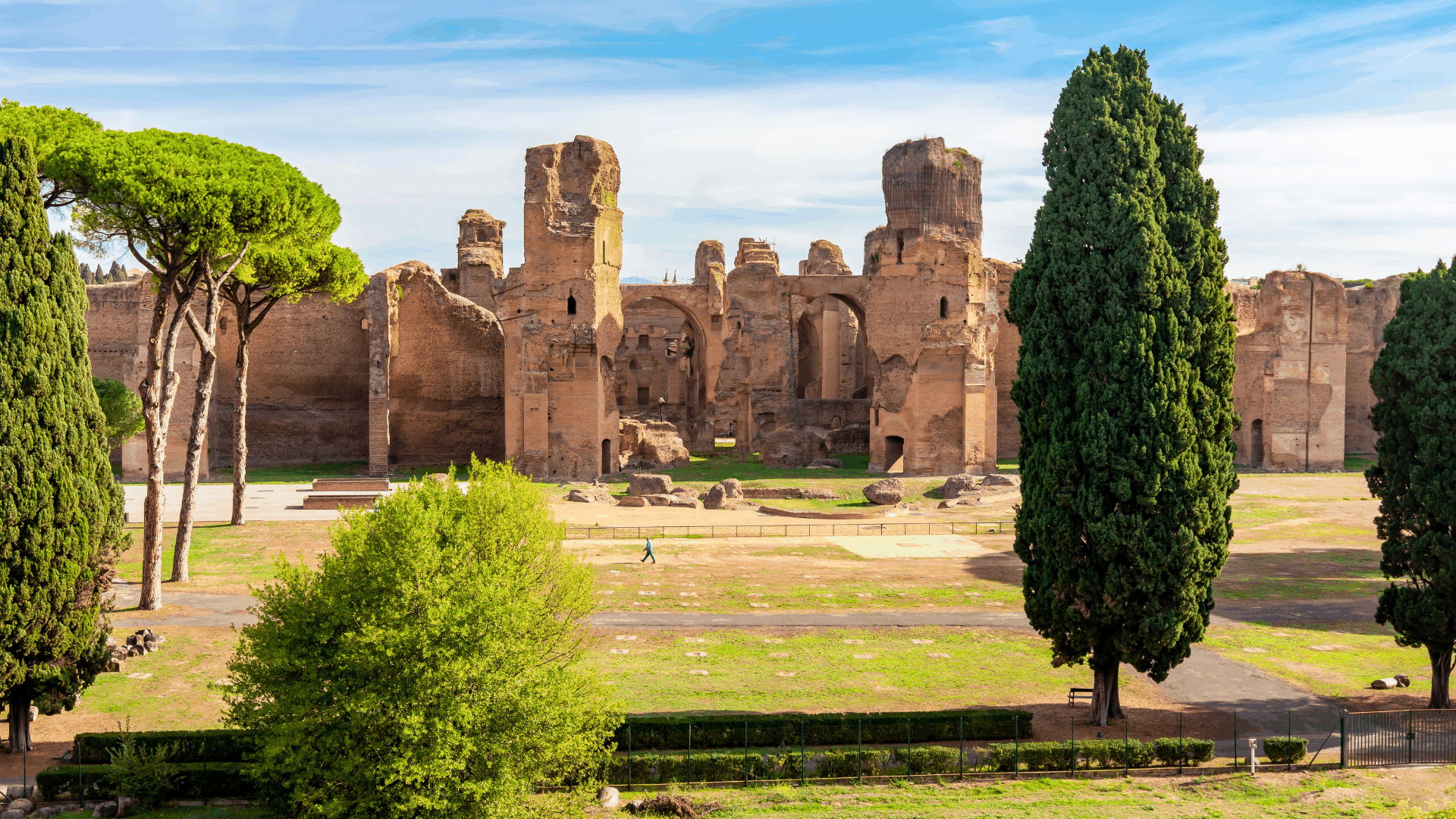
Baths of Caracalla
Ancient Rome's most magnificent public baths with towering ruins
Explore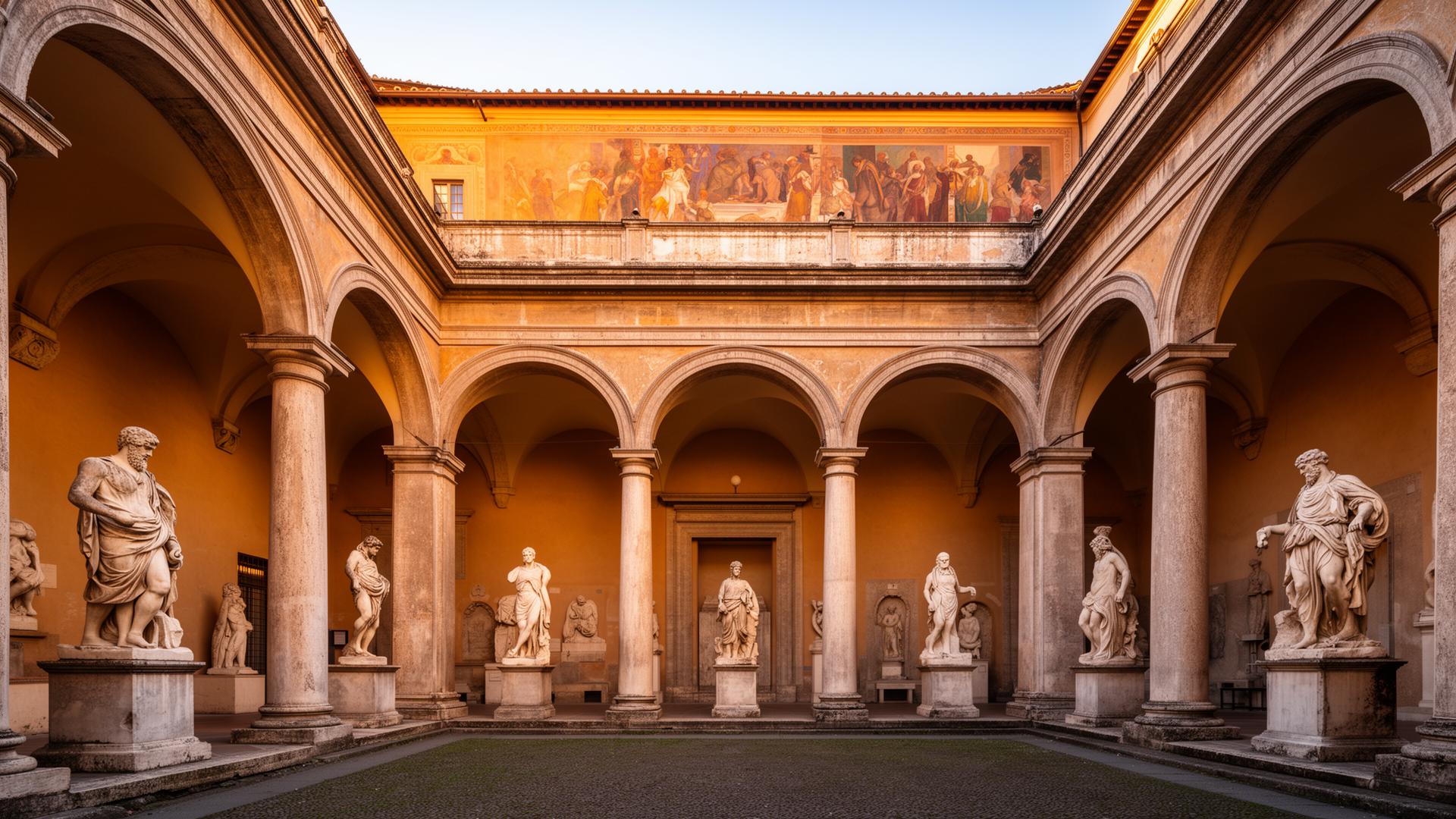
Palazzo Altemps
Renaissance palace with ancient sculptures and Ludovisi Collection
Explore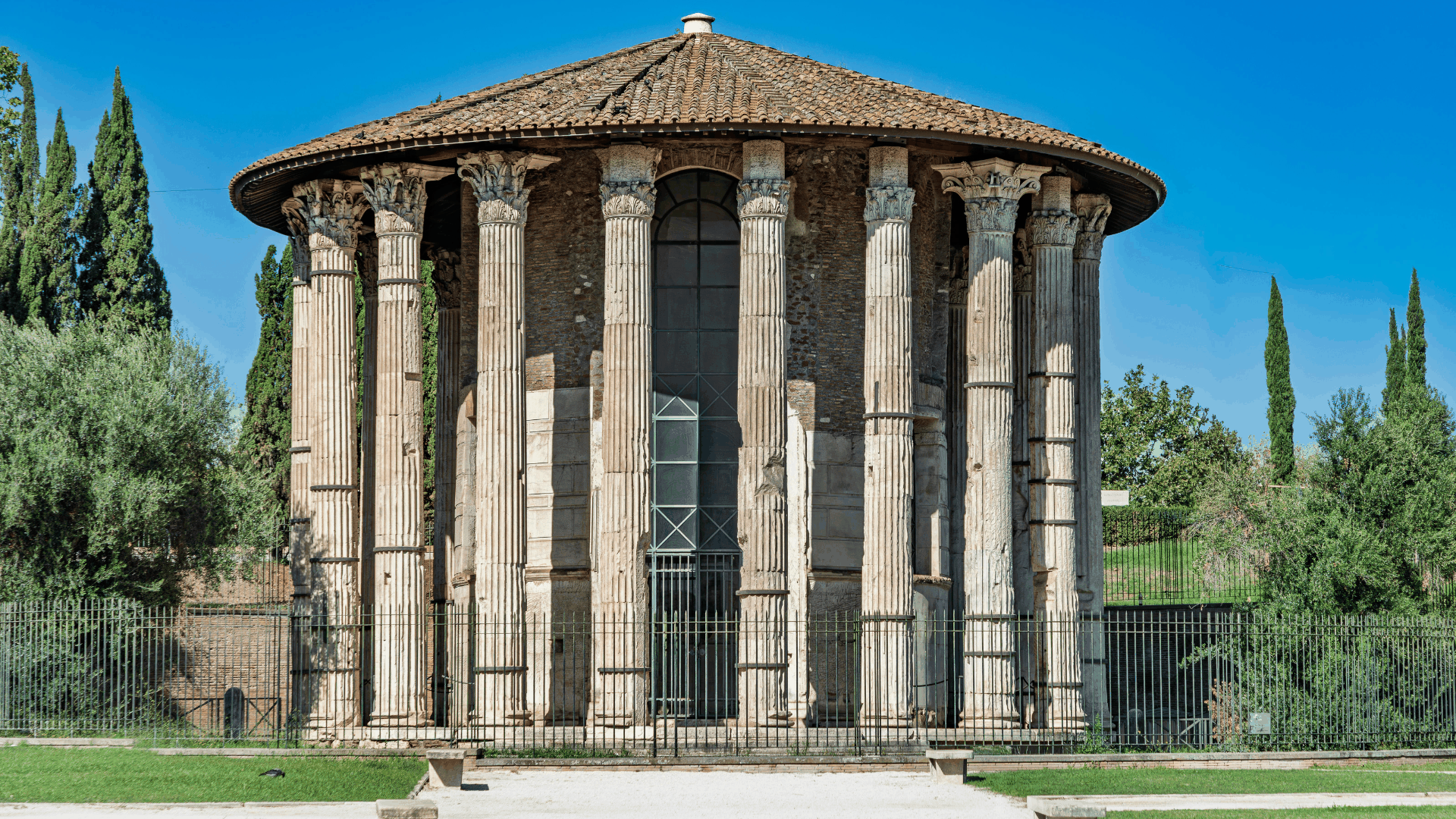
Temple of Hercules Victor
Rome's oldest surviving marble building—beautifully preserved round temple
Explore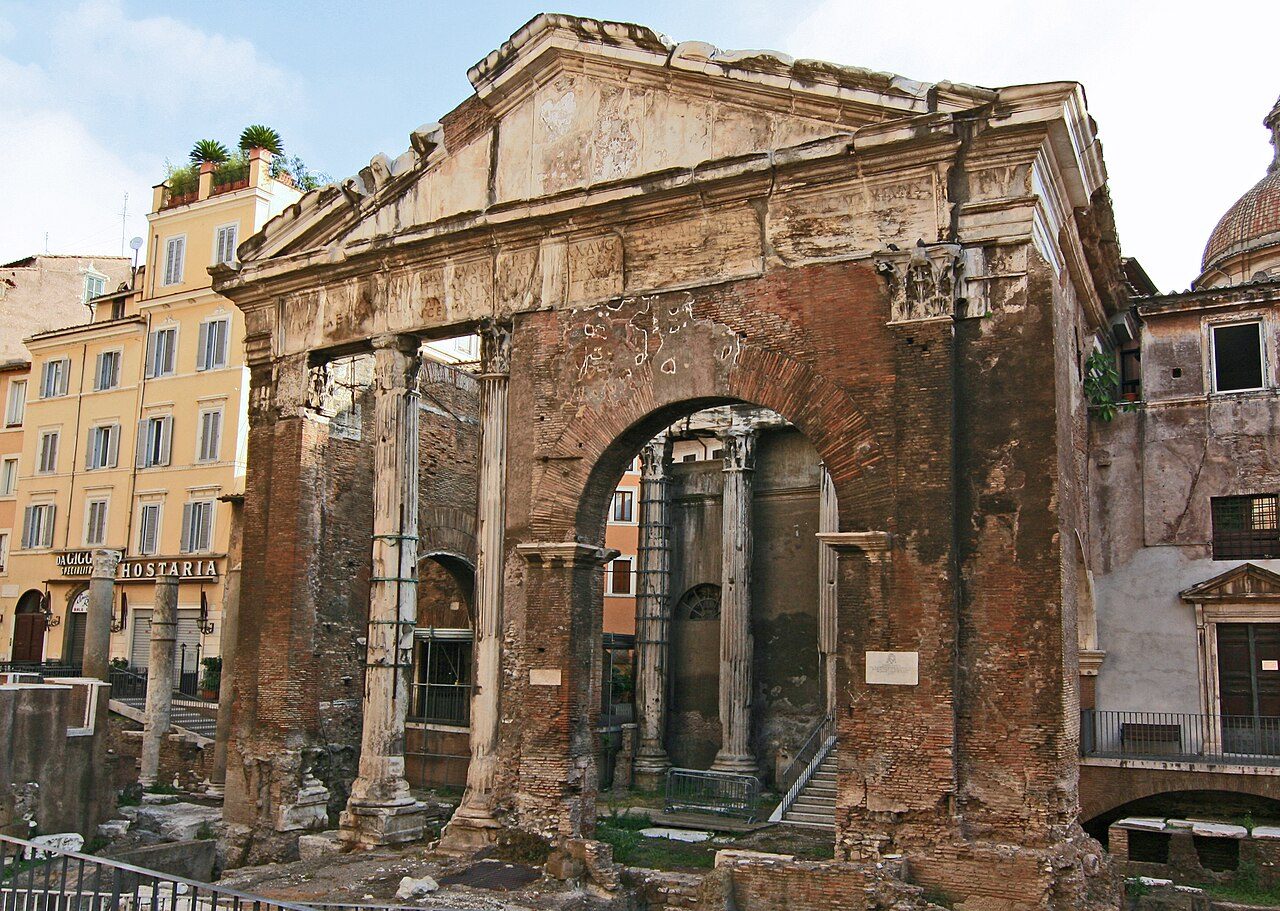
Portico of Octavia
Ancient Roman portico and gateway to the Jewish Ghetto
Explore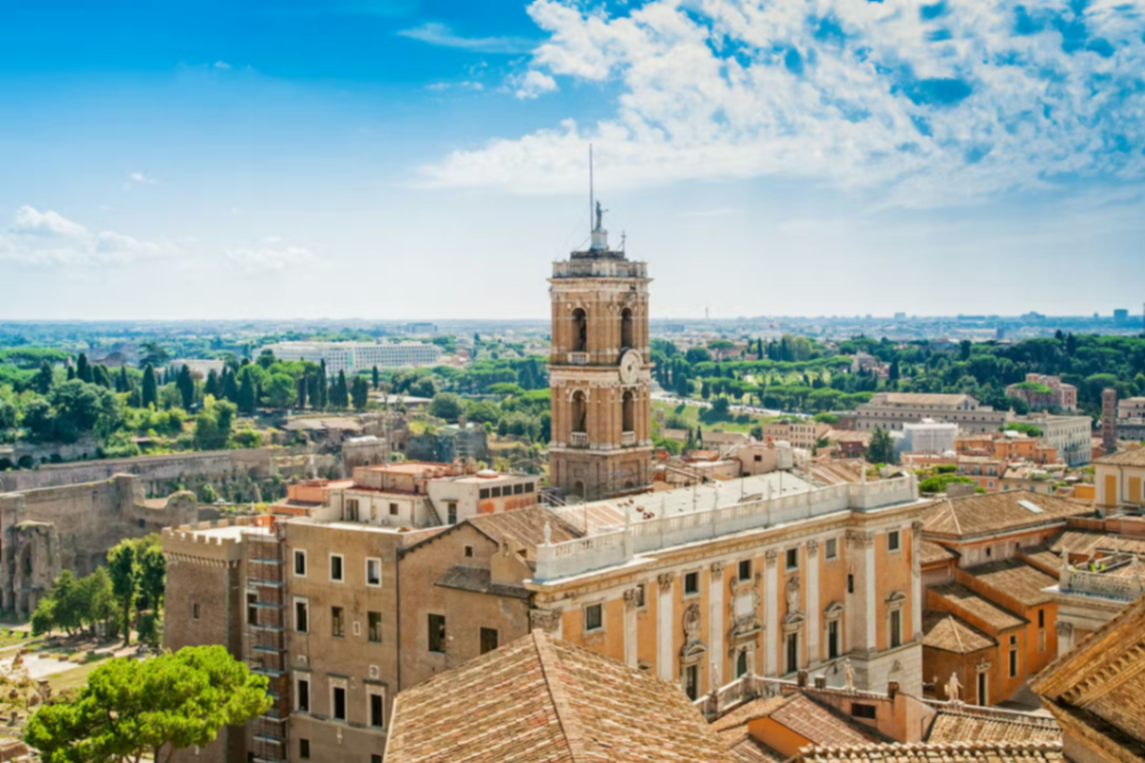
Capitoline Museums
World's oldest public museum (1471)—ancient sculptures
Explore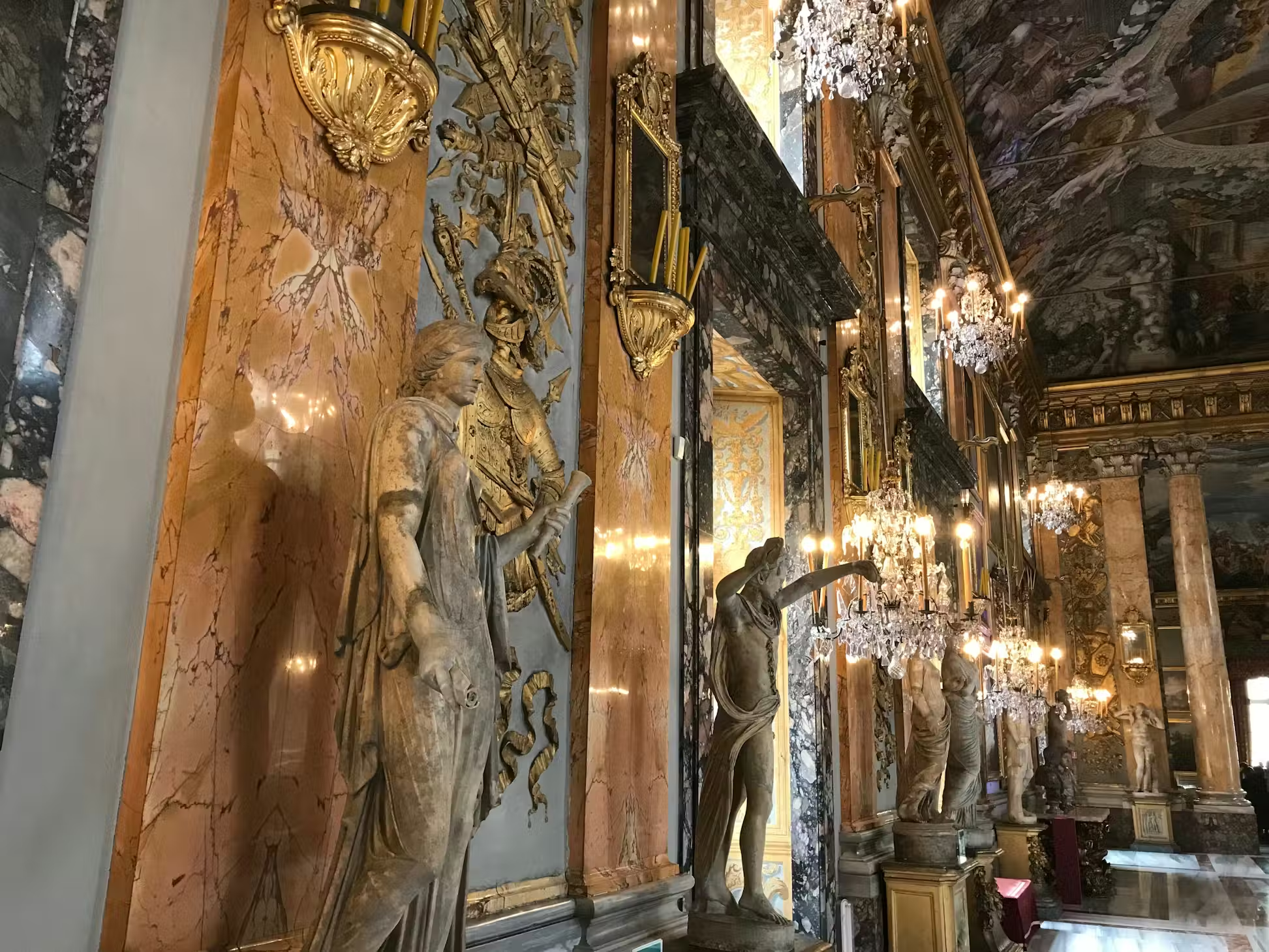
Galleria Colonna
Rome's most magnificent private Baroque gallery (open Friday and Saturday mornings; guided tour format)
ExploreQuick Planning Guide
⏱️ Time Needed
1–3 hours
💰 Cost
Free
🎫 Reservation
Not needed
♿ Accessibility
Street level fully accessible; ramparts not
📅 Best Time
Late afternoon for warm side-light
👨👩👧👦 Family Friendly
Yes — flat walking, ages 8+
🌡️ Weather
Outdoor monument
Nearby Attractions
Appian Way1 min from Porta San Sebastiano
Baths of Caracalla10 min walk
Pyramid of Cestiusincorporated in walls
Porta Maggioreincorporated in walls
Porta Pia & Bersaglieri Museumnorth
Featured In These Itineraries
Hidden Gems of RomeFree Rome Itinerary5 Day Rome ItineraryEssential Tips
- ✓ Closed Mondays — visit Tue–Sun 10:00–16:00
- ✓ Museo delle Mura: free admission during regular opening hours
- ✓ Best continuous stretch: Porta San Sebastiano → Porta Latina (1.2 km)
- ✓ Explore surviving stretches by bike — the circuit is interrupted, not continuous
- ✓ Combine with the first km of the Appian Way