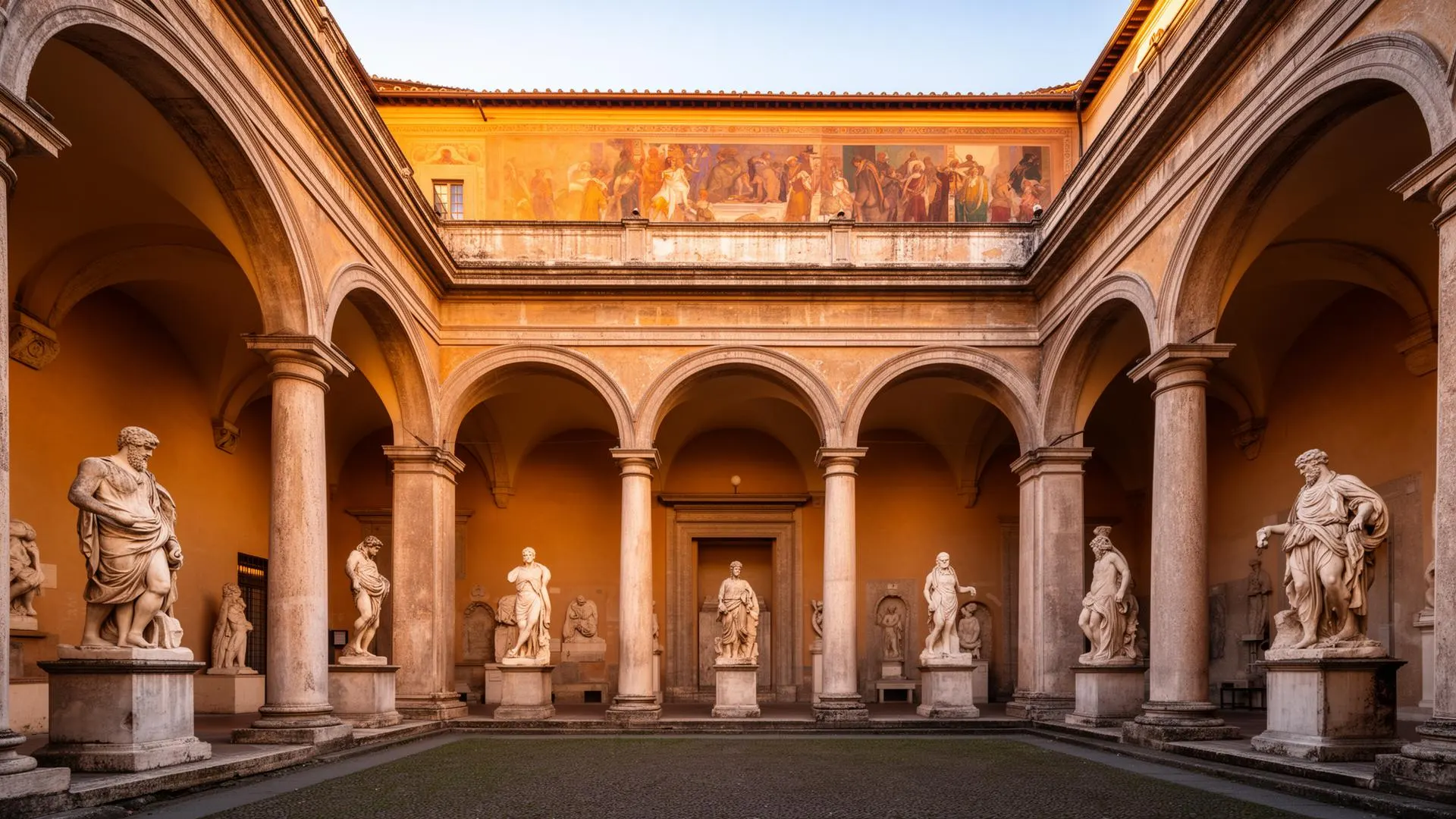
 National Roman Museum · Ludovisi Collection
Palazzo Altemps
The Ludovisi Collection of ancient sculpture — the Galatian Suicide, the Ludovisi Throne, Ares restored by Bernini — in a frescoed Renaissance palace one block behind Piazza Navona.
1–2 hours€15 combinedLudovisi CollectionBernini restorationsPiazza di Sant'Apollinare 46, 00186 RomaOpen on MapPlan Your Visit
Compare tickets, tours and stays — booking ahead usually gives more choice
Get TicketsBook a TourHotels NearbyBy AllTrips Editors••9 min readPalazzo Altemps is the most peaceful world-class sculpture museum in central Rome, hidden one block behind Piazza Navona. A late-15th-century palace bought by Cardinal Marco Sittico Altemps in 1568, it was opened in 1997 as the home of the Ludovisi Collection — over 100 ancient Greek and Roman sculptures assembled by Cardinal Ludovico Ludovisi in the 1620s. The headline pieces are the dramatic Galatian Suicide, the refined Ludovisi Throne with the Birth of Aphrodite, and the seated Ludovisi Ares — restored in 1622 by a young Gian Lorenzo Bernini, who added the foot, the sword hilt and the Eros at its base. €15 combined ticket covers the National Roman Museum sites (Crypta Balbi is temporarily closed); walk-up almost always works.
📋 In This Guide
Duration
1–2 hours
Cost
€15 combined
Photos
Yes — no flash
Highlight
Ludovisi Throne
Why Visit Palazzo Altemps?
The Vatican Museums make you queue an hour and shuffle past the Laocoön with a thousand other people. Palazzo Altemps, ten minutes away on the other side of the Tiber, gives you the Ludovisi Throne, the Galatian Suicide and a Bernini-restored Ares — in frescoed Renaissance rooms, in almost total silence, for €15. It is probably the best quality-to-crowd ratio in Rome.
The Ludovisi Collection
One of the greatest private collections of antique sculpture ever assembled — saved for Italy by the state purchase of 1901 and reunited here in 1997.
Bernini at 24
The Ludovisi Ares was restored in 1622 by a 24-year-old Gian Lorenzo Bernini — a striking example of ancient marble completed by the young Bernini.
Frescoed Renaissance Rooms
The painted loggia by Antonio Viviani (1595) and the Egyptian Hall of Cardinal Altemps make the palace as remarkable as the sculpture inside it.
Empty in High Season
Even in August you can be alone with the Galatian Suicide. No queues, no booking, no shuffle — €15 well spent.
What to See Inside
The Galatian Suicide
The museum's most photographed sculpture. A Roman marble copy of a Hellenistic bronze (c. 230 BC), part of a celebratory monument set up at Pergamon by King Attalos I after defeating the invading Gauls. The chieftain holds his collapsing wife with one arm and plunges the sword into his own collarbone with the other — proud, doomed, breathtaking.
The Ludovisi Throne
A 5th-century BC Greek marble relief, probably the side of an altar, showing the Birth of Aphrodite: the goddess rising from the sea, supported by two attendants whose drapery clings to their bodies in the famous "wet folds" technique. One of the most refined Greek originals to survive in Rome.
The Ludovisi Ares — Bernini's Restoration
Hellenistic marble of the seated god of war, head bowed in contemplation. In 1622 the 24-year-old Gian Lorenzo Bernini restored the missing parts — the foot, the sword hilt and the small Eros at its base. The young Bernini's playful angel humanises the warrior god.
Grande Ludovisi Sarcophagus
A spectacular 3rd-century AD battle sarcophagus, probably for a young Roman general. The deep, almost free-standing relief shows Romans crushing barbarians in a chaotic swirl — one of the densest pieces of carved marble that survives from antiquity.
Painted Loggia
The upper-floor loggia frescoed by Antonio Viviani in 1595 with classical landscapes, mythological vignettes and trompe-l'œil architectural views — one of the finest late-Renaissance loggias preserved in Rome.
Egyptian Hall
Cardinal Marco Sittico Altemps's "Egyptian Theatre" of the 1580s, later filled with genuine Egyptian sculptures from the collection — a rare survival of Renaissance Egyptomania.
Sala del Camino & Family Chapel
The Sala del Camino, with its monumental fireplace, displays the most important Ludovisi pieces. Don't miss the Altemps family chapel of Sant'Aniceto — a small, perfectly preserved Counter- Reformation interior.
The Ludovisi Collection — A Closer Look
In 1621 a 26-year-old Cardinal Ludovico Ludovisi, nephew of the newly elected Pope Gregory XV, used his sudden papal fortune to buy the vast Villa Montalto on the Pincian Hill. As workmen dug foundations and gardens, ancient sculptures kept surfacing — and Ludovisi turned the windfall into a deliberate project: assemble the greatest private antiquities collection in Europe.
Within five years he had over 100 first-rank Greek and Roman sculptures, including the Galatian Suicide (found in his garden), the Ludovisi Throne and the seated Ares. He commissioned the young Bernini to restore them and the painter Domenichino to display them in the villa.
The Ludovisi family kept the collection for nearly three centuries. In the 1880s, when the new Italian capital tore down the villa to build the Via Veneto district, the heirs began selling sculptures individually — pieces went to Berlin, Boston, Munich. To stop the haemorrhage, the Italian state bought the remaining 104 sculptures en bloc in 1901 for the National Roman Museum.
For nearly a century they were stored, partly displayed in the Baths of Diocletian, partly invisible. Only in 1997, with the opening of Palazzo Altemps, were they finally reunited in one building — and in a setting (a Renaissance cardinal's palace) very close to the one Cardinal Ludovisi had originally imagined.
Bernini at Palazzo Altemps
In 1622 — the year before he started the David — Gian Lorenzo Bernini, then 24, was hired by Cardinal Ludovisi to restore newly excavated ancient sculptures for his villa. It was a normal job for a sculptor of the time, but Bernini being Bernini, the restorations are anything but invisible.
On the Ludovisi Ares, Bernini added the right foot, parts of the sword hilt and the entire small Eros playing between the god's legs — a tender Baroque counterpoint to the Hellenistic warrior. The little angel, almost certainly entirely Bernini's invention, makes the whole composition click.
He also restored missing limbs on several other Ludovisi sculptures, and carved a new portrait bust of Cardinal Roberto Bellarmino — an early demonstration of the psychological intensity that would make him the greatest portraitist of the 17th century. All visible in the same museum, all covered by your combined ticket.
The Palace Itself
Most museums are buildings made to hold collections. Palazzo Altemps is the rare reverse: a Renaissance princely palace deliberately repurposed to recreate the world for which the Ludovisi sculptures were collected. The result is that here, alone in Rome, you see ancient marbles in something very close to the setting their 17th-century buyers imagined.
The arcaded courtyard by Martino Longhi the Elder (1570s), the painted loggia by Antonio Viviani (1595), the small theatre, the family chapel of Sant'Aniceto with the relics of an early Christian pope — all are essentially unaltered late- Renaissance interiors of Cardinal Marco Sittico Altemps. Allow time for the building, not only the sculptures.
Palazzo Altemps Through History
1477Palazzo Riario Built
Girolamo Riario, nephew of Pope Sixtus IV, builds the original palace on the site of an ancient Roman district near the Stadium of Domitian (today's Piazza Navona).
1568Cardinal Altemps Buys It
Cardinal Marco Sittico Altemps, nephew of Pope Pius IV, acquires the palace and commissions Martino Longhi the Elder to redesign it. The painted loggia and Egyptian Hall date from this campaign.
1595Painted Loggia
Antonio Viviani frescoes the upper loggia with classical landscapes and trompe-l'œil — one of the finest late-Renaissance loggias surviving in Rome.
1621–1623Ludovisi Begins Collecting
Cardinal Ludovico Ludovisi, nephew of Pope Gregory XV, begins assembling ancient sculptures excavated on the family villa on the Pincian Hill — the start of one of the greatest private antiquities collections.
1622Young Bernini Restores Ares
A 24-year-old Gian Lorenzo Bernini restores the Hellenistic statue of Ares for Cardinal Ludovisi — adding the sword hilt and the playful Eros at his feet, an early sign of his Baroque genius.
1885–1890Pincio Estate Sold Off
The Ludovisi heirs sell the great Villa Ludovisi estate for development into the modern Via Veneto district. The collection is at risk of dispersal abroad.
1901Italian State Acquires the Collection
To prevent the Ludovisi sculptures from leaving Italy, the new Italian state buys the entire collection — over 100 ancient statues — for the National Roman Museum.
1982Palazzo Altemps Acquired
The Italian state buys Palazzo Altemps from the Holy See, which had owned it since 1801, with the plan of restoring it as a museum venue.
1997Museum Opens
After fifteen years of restoration, Palazzo Altemps opens as the home of the Ludovisi Collection — a perfect marriage of Renaissance palace and ancient sculpture.
2014National Roman Museum Combined Ticket
The four sites of the Museo Nazionale Romano are unified under a single combined ticket, dramatically improving value and visitor flow.
2022New Lighting Installed
A complete LED relighting campaign transforms the Sala del Camino and the Sala di Galata, finally letting the Galatian Suicide and the Ludovisi Ares be photographed without flash.
2026Calm Among the Crowds
While Piazza Navona just outside is shoulder-to-shoulder, Palazzo Altemps remains the quietest world-class sculpture museum in central Rome — €15, one block away.
Tickets & Hours 2026
🕐 Opening Hours
- Tue–Sun: 09:00 – 19:00, last admission 18:00
- Closed: Mondays, 1 January, 25 December
- Free Sundays: First Sunday of each month
- Hours can vary on holidays — check the official Museo Nazionale Romano site (museonazionaleromano.beniculturali.it).
💶 Combined Ticket
- Full: €15 (valid one week from first admission)
- Reduced: €2 (eligible visitors, e.g. EU 18–25)
- Free: Under 18, 1st Sunday/month
- Roma Pass: Free as one of two attractions
- Audio guide: €5 (5 languages)
The combined ticket covers the National Roman Museum sites: Palazzo Altemps, Palazzo Massimo (the Discus Thrower, the Boxer at Rest, the Livia frescoes) and the Baths of Diocletian. Crypta Balbi is temporarily closed. The ticket is valid for one week from the date of first admission — not a single calendar day. Buy through the official ticket channel at museonazionaleromano.beniculturali.it. Note: the ground-floor Sala Gorga at Palazzo Altemps is temporarily inaccessible.
Information checked August 2026.
Best Time to Visit
Best of Day
09:00 right at opening — you can have entire rooms to yourself. Late afternoon (16:00–18:00) is also blissfully quiet.
Best Day
Tue–Fri are quietest. Avoid the first Sunday of the month (free entry brings local crowds). Closed Mondays.
Best Season
Year-round — perfect rainy-day stop in winter, blissfully cool refuge in August. Combine with nearby Caravaggio churches.
Visitor Tips
Bag check: Free cloakroom at reception — leave large bags and umbrellas there.
Photography: Allowed without flash, no tripods, no commercial use. Lighting is excellent since the 2022 LED upgrade.
Audio guide vs app: The €5 official audio guide is good but old. The free MNR Roma app on your phone gives a more modern tour.
Food: No café inside. Cross to Piazza Navona for coffee or to Via dei Coronari for excellent gelato.
Strollers: Allowed and easy thanks to the lift. Wheelchairs free at reception.
Combine smart: Use the same combined ticket for Palazzo Massimo (15-min Metro ride) the same day — together they form the best ancient sculpture itinerary in Rome.
Vs Other Sculpture Museums in Rome
| Museum | Star Pieces | Cost | Booking | Crowds |
|---|---|---|---|---|
| Palazzo Altemps | Ludovisi Throne, Galatian Suicide, Ares (Bernini) | €15 (combined) | Walk-up | Very low — calm even in August |
| Palazzo Massimo | Discus Thrower, Boxer at Rest, Livia frescoes | €15 (same ticket) | Walk-up | Low |
| Capitoline Museums | She-Wolf, Dying Gaul, Marcus Aurelius | €16 | Recommended | Medium–high |
| Vatican Museums | Laocoön, Apollo Belvedere, Belvedere Torso | €20+ | Required | Very high — long queues |
| Borghese Gallery | Bernini's Apollo & Daphne, Pluto & Proserpina | €15+ | Required (weeks ahead) | Capped — calm but timed |
Common Mistakes to Avoid
Coming on a Monday
Closed Mondays all year. Plan for Tue–Sun, ideally Tue–Fri for maximum calm.
Buying a single-site ticket
There isn't one — €15 is automatically the combined ticket for the National Roman Museum sites (Crypta Balbi temporarily closed). Use it for Palazzo Massimo the same day.
Skipping the upper floor
Most visitors stop at the Galatian Suicide. The painted loggia and Egyptian Hall upstairs are half the museum's magic.
Coming on free Sunday
First Sunday of the month is free — and crowded. Pay the €15 on a normal Tuesday and have the place to yourself.
Confusing it with Palazzo Massimo
Both are National Roman Museum sites. Altemps = behind Piazza Navona, Ludovisi sculptures. Massimo = near Termini, Discus Thrower and frescoes.
Using flash
Photography is allowed but flash is forbidden — and unnecessary since the 2022 lighting upgrade.
Colosseum & Forum Tickets Nearby
Palazzo Altemps is a perfect calm warm-up before the timed-entry giants. The Colosseum and Roman Forum are 15 minutes away by bus 87 along Corso Rinascimento — both require advance booking in 2026.
Colosseum Priority Entrance
Best for: First-time visitors
~2 hoursSkip-the-line access to the Colosseum with entry to Roman Forum and Palatine Hill included. Perfect for first-time visitors.
- Skip-the-line entry
- Colosseum access
- Roman Forum included
- Palatine Hill included
🎟️ Compare Prices:
TiqetsKlookTrip.comColosseum Guided Tour
Best for: History enthusiasts
~3 hoursExpert-led tour with professional guide sharing gladiator history, architecture secrets, and ancient Roman stories.
- Professional English-speaking guide
- Skip-the-line entry
- In-depth historical commentary
- Small group experience
🎟️ Compare Prices:
TiqetsKlookTrip.comColosseum Arena & Underground
Best for: Unique experience seekers
~3.5 hoursWalk where gladiators fought on the arena floor and explore the underground chambers where they awaited their fate.
- Arena Floor access
- Underground chambers access
- Roman Forum & Palatine Hill
- Expert guided tour included
🎟️ Compare Prices:
TiqetsKlookTrip.comPair Your Visit With
Piazza Navona
2-min walk — Bernini's Four Rivers Fountain on the site of the Stadium of Domitian, where Cardinal Altemps's father once jousted.
San Luigi dei Francesi
3-min walk — three free Caravaggios in the Contarelli Chapel, including the Calling of St Matthew. Bring €1 coins.
Pantheon
7-min walk — the best-preserved building of antiquity. Combine for an ideal half-day of ancient Rome and Renaissance Rome.
Highlights at a Glance
- The Ludovisi Throne — 5th-century BC Greek relief of the Birth of Aphrodite
- The Galatian Suicide — Roman copy of a Hellenistic bronze masterpiece
- The Ludovisi Ares — Hellenistic statue restored by a young Bernini in 1622
- Grande Ludovisi battle sarcophagus — 3rd-century AD high-relief virtuosity
- Frescoed Renaissance palace rooms with painted loggia by Antonio Viviani
- Egyptian Hall assembled by Cardinal Marco Sittico Altemps in the 1580s
- €15 combined ticket covers the National Roman Museum sites (Crypta Balbi temporarily closed)
- One of Rome's least-crowded major museums — peaceful, even in August
How to Get There
By Bus
Lines 30, 70, 81, 87, 130F, 186, 492, 628 stop on Corso Rinascimento (1-min walk). From Termini, bus 40 or 64 to Largo Argentina (8-min walk through Pantheon area).
By Metro
- Spagna or Barberini (Line A): 15-min walk through the Tridente
- No direct Metro — bus or walking is best from Termini
On Foot
From Piazza Navona: 2 min along Via di Sant'Apollinare. From the Pantheon: 7 min via Via Giustiniani. From Castel Sant'Angelo: 10 min across Ponte Umberto I. From Campo de' Fiori: 10 min via Corso Vittorio Emanuele.
Where to Stay Near Palazzo Altemps
Looking for convenient accommodation near Palazzo Altemps? Stay within walking distance to make the most of your visit.
Hotels Near This AttractionTop Rated HotelsBudget-Friendly OptionsLuxury HotelsCentral locations with easy access to Palazzo Altemps and other attractionsFrequently Asked Questions
What is Palazzo Altemps in 2026?
Palazzo Altemps is a 15th-century Renaissance palace one block behind Piazza Navona, one of the National Roman Museum sites (Crypta Balbi is temporarily closed). It houses the world-famous Ludovisi Collection of ancient Greek and Roman sculpture in beautifully frescoed rooms — far less crowded than the Vatican Museums or Capitoline.
How much does it cost in 2026?
€15 full / €2 reduced combined ticket valid one week from first admission across the National Roman Museum sites — Palazzo Altemps, Palazzo Massimo and the Baths of Diocletian; Crypta Balbi is temporarily closed. Free for under-18s and on the first Sunday of each month. Roma Pass holders enter free as one of their two free attractions.
What are the opening hours?
Tuesday–Sunday 09:00–19:00, last admission 18:00. Closed Mondays, 1 January and 25 December. Best visiting windows in 2026 are 09:00–11:00 and 16:00–18:00. Most visitors spend 1–2 hours; allow 2 hours if you read the labels.
What are the must-see sculptures?
The Galatian Suicide (Roman copy of a Hellenistic bronze, c. 230 BC) — a Gallic warrior killing himself after his wife to avoid capture; the Ludovisi Throne (5th century BC Greek relief of the Birth of Aphrodite); the Ludovisi Ares (Hellenistic, restored by Bernini, who added the foot, the sword hilt and the Eros at its base); the Grande Ludovisi battle sarcophagus (3rd century AD); and the Egyptian Hall and painted loggia upstairs. Note that the ground-floor Sala Gorga is temporarily inaccessible.
What is the Ludovisi Collection?
Cardinal Ludovico Ludovisi (1595–1632), nephew of Pope Gregory XV, assembled one of the greatest private collections of ancient sculpture ever — over 100 statues found on the family's vast estate on the Pincian Hill. The Italian state acquired it in 1901 to prevent dispersal abroad. It moved to Palazzo Altemps in 1997.
How is it different from Palazzo Massimo?
Both are National Roman Museum sites and share a ticket. Palazzo Altemps focuses on Renaissance princely collecting — the Ludovisi sculptures in frescoed palace rooms. Palazzo Massimo (near Termini) is the encyclopaedic site: the Discus Thrower, the Boxer at Rest, the Livia frescoes from Prima Porta, and the largest collection of ancient mosaics. Visit both with the same combined ticket.
Do I need to book in advance?
No, walk-up tickets are almost always available — Palazzo Altemps is one of Rome's least-crowded major museums. You can buy at the door or online through the official Museo Nazionale Romano ticket portal (museonazionaleromano.beniculturali.it). Booking is only useful on free Sundays (first of the month) when queues form.
Is Palazzo Altemps accessible?
Yes — there is a lift to all floors and step-free access throughout. Wheelchairs are available free at reception. Audio guides exist in English, Italian, French, Spanish and German for €5.
How do I get there?
Bus 30, 70, 81, 87, 130F, 186, 492, 628 to Corso Rinascimento (1-min walk) or 40, 64, H to Largo Argentina (8-min walk). Nearest Metro is Spagna or Barberini (Line A, 15-min walk). On foot: 2 min from Piazza Navona, 7 min from the Pantheon, 10 min from Castel Sant'Angelo.
Related Attractions

Temple of Venus and Roma
Rome's largest ancient temple—Emperor Hadrian's masterpiece
Explore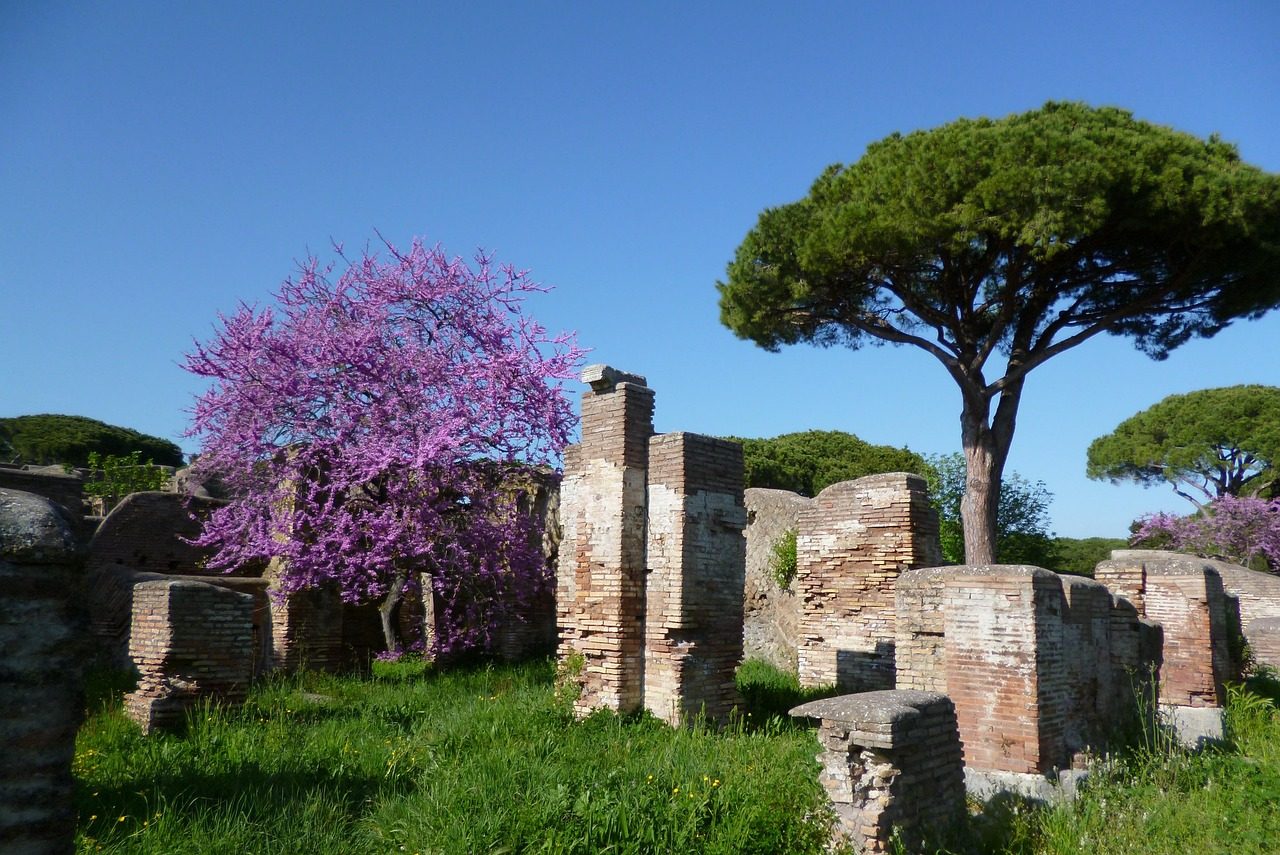
Ostia Antica
Rome’s ancient harbour city; €18 integrated park ticket valid eight days from first entry
Explore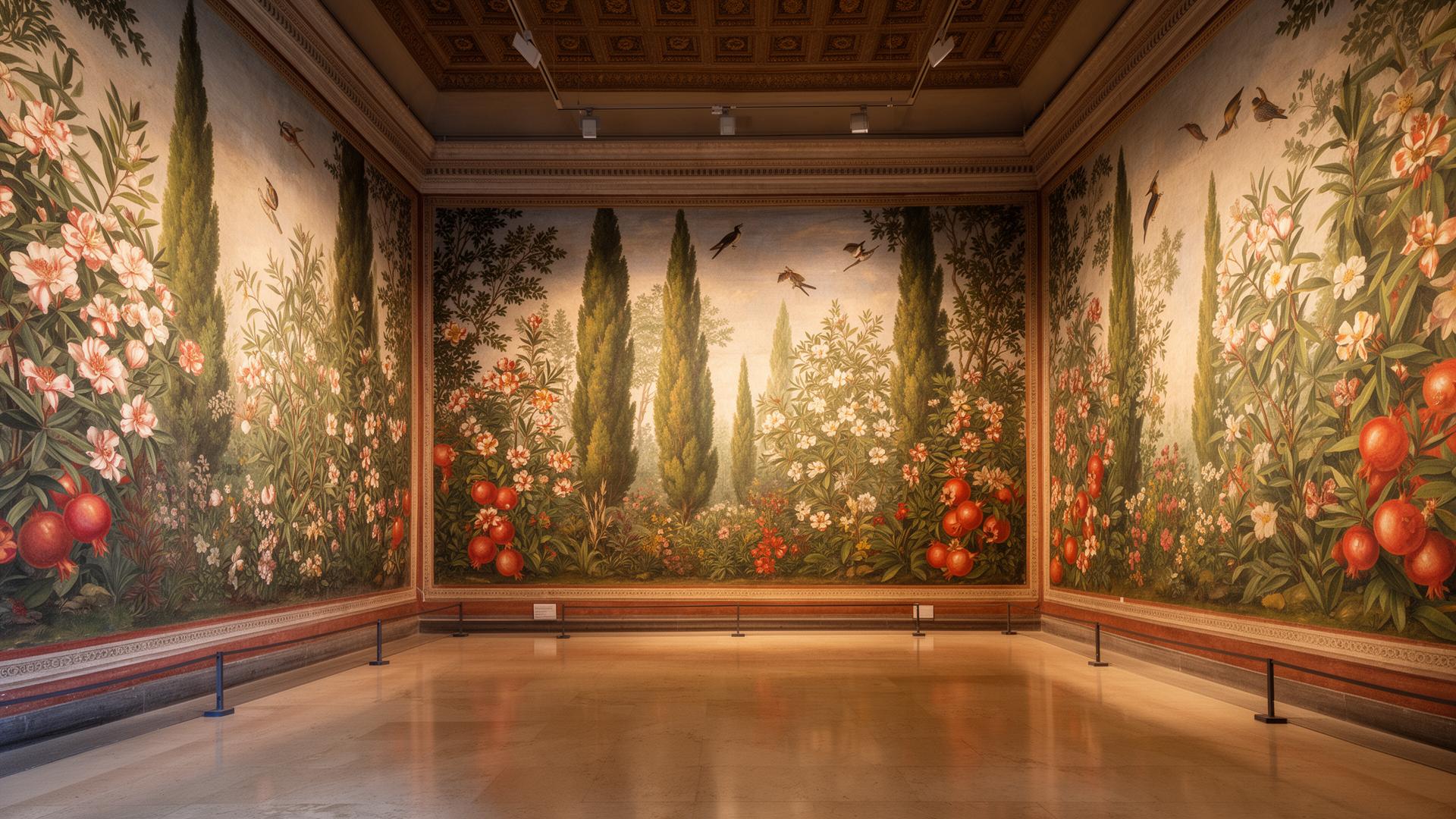
Palazzo Massimo alle Terme
Rome's finest ancient art museum with stunning frescoes and mosaics
Explore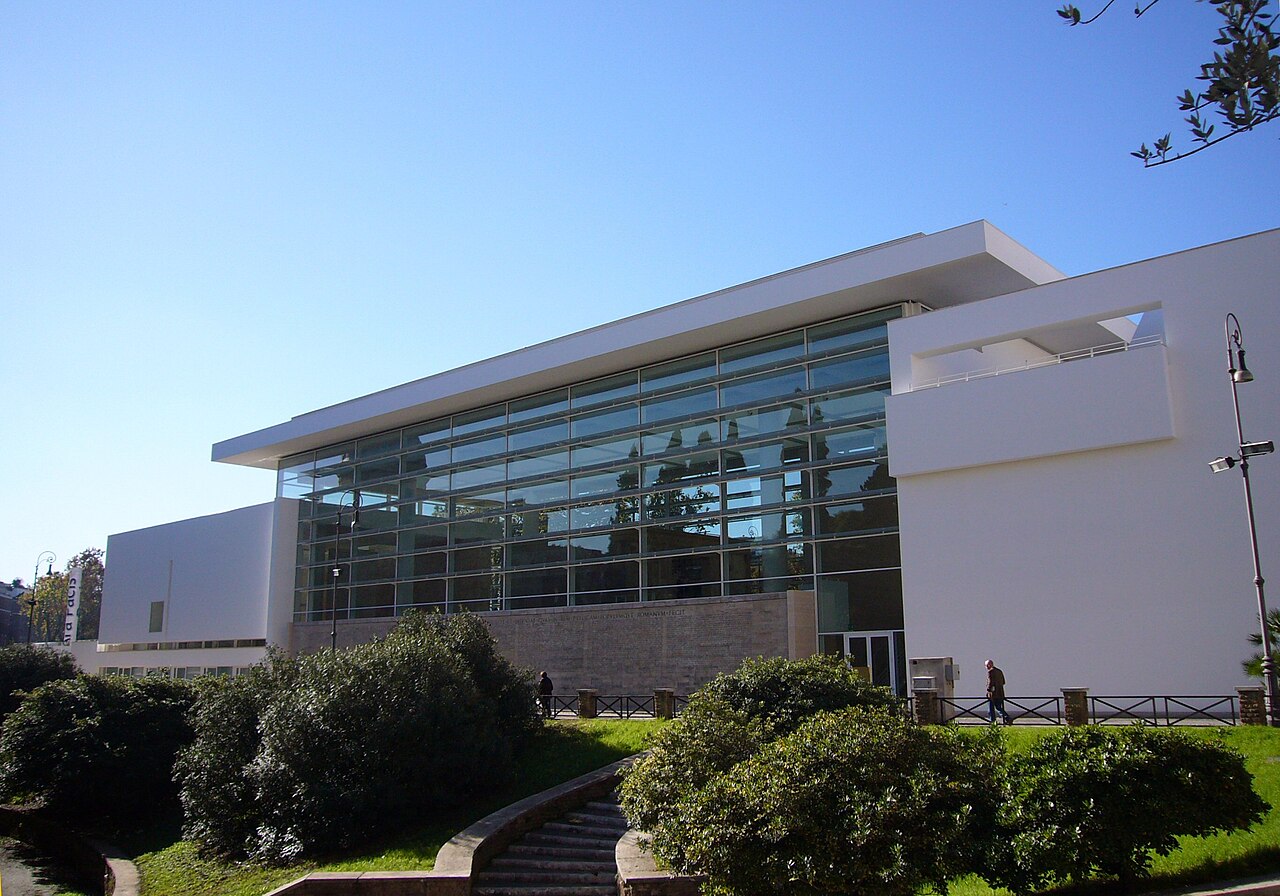
Ara Pacis Museum
Augustus's exquisite Altar of Peace in Richard Meier's modern museum
Explore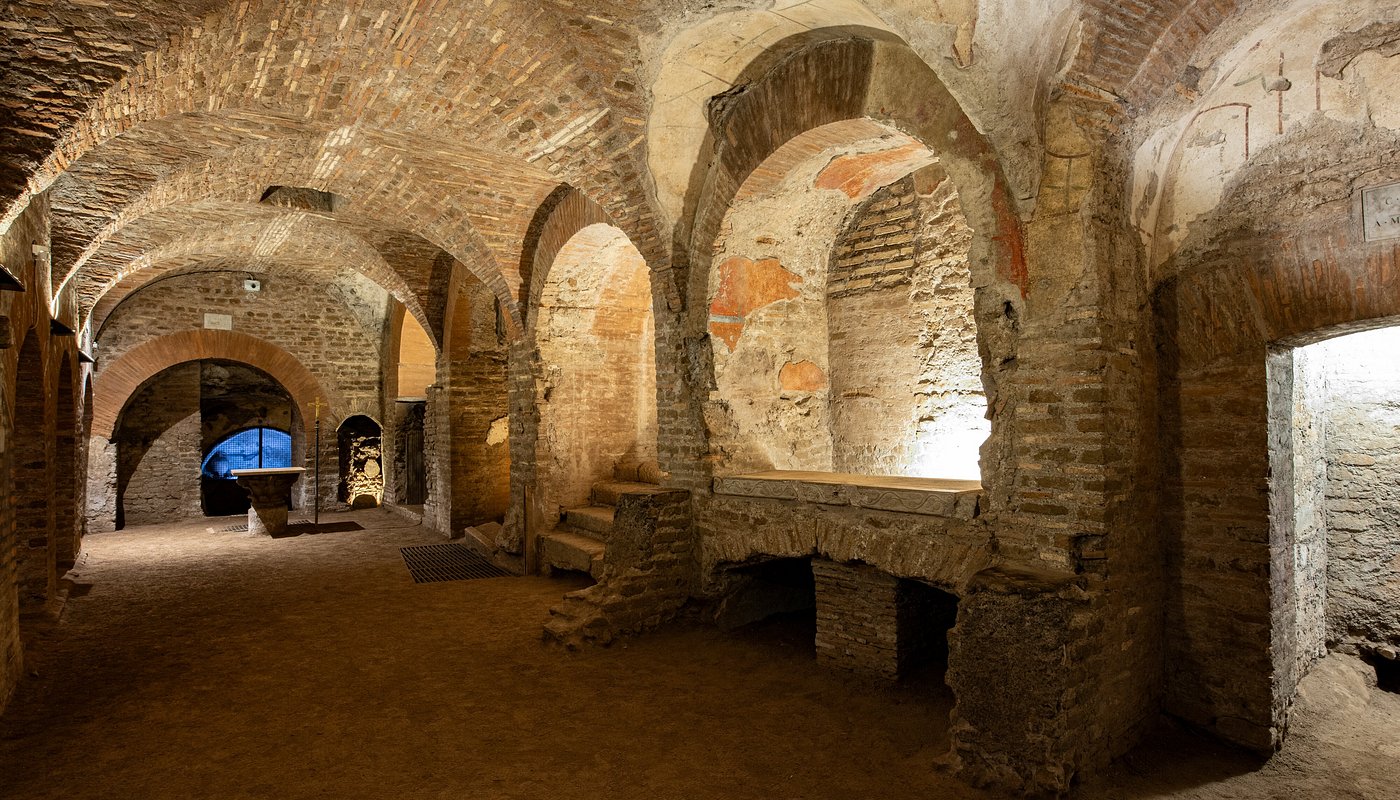
Catacombs of Priscilla
Rare early Christian frescoes including an early image identified as the Virgin and Child
Explore
Cinecittà Studios
Hollywood on the Tiber—legendary film studios
ExploreQuick Planning Guide
⏱️ Time Needed
1–2 hours
💰 Cost
€15 combined ticket (Crypta Balbi temporarily closed)
🎫 Reservation
Walk-up almost always works
♿ Accessibility
Lift, step-free, wheelchairs at reception
📅 Best Time
09:00–11:00 or 16:00–18:00
👨👩👧👦 Family Friendly
Yes — calm, dramatic sculptures
🌡️ Weather
Indoor — perfect rainy-day stop
Nearby Attractions
Piazza Navona2-min walk
San Luigi dei Francesi — Caravaggios3-min walk
Sant'Agostino — Caravaggio1-min walk
Pantheon7-min walk
Castel Sant'Angelo10-min walk
Campo de' Fiori10-min walk
You May Also Like
Piazza NavonaPalazzo MassimoPantheonFeatured In These Itineraries
Hidden Gems of RomeClassic Rome 3-DayRainy Day in RomeEssential Tips
- ✓ Combined ticket also covers Palazzo Massimo & Baths of Diocletian — Crypta Balbi is temporarily closed
- ✓ Closed Mondays — never come on a Monday
- ✓ Walk-up nearly always works — no booking needed
- ✓ Don't miss the painted loggia upstairs
- ✓ Photography allowed without flash