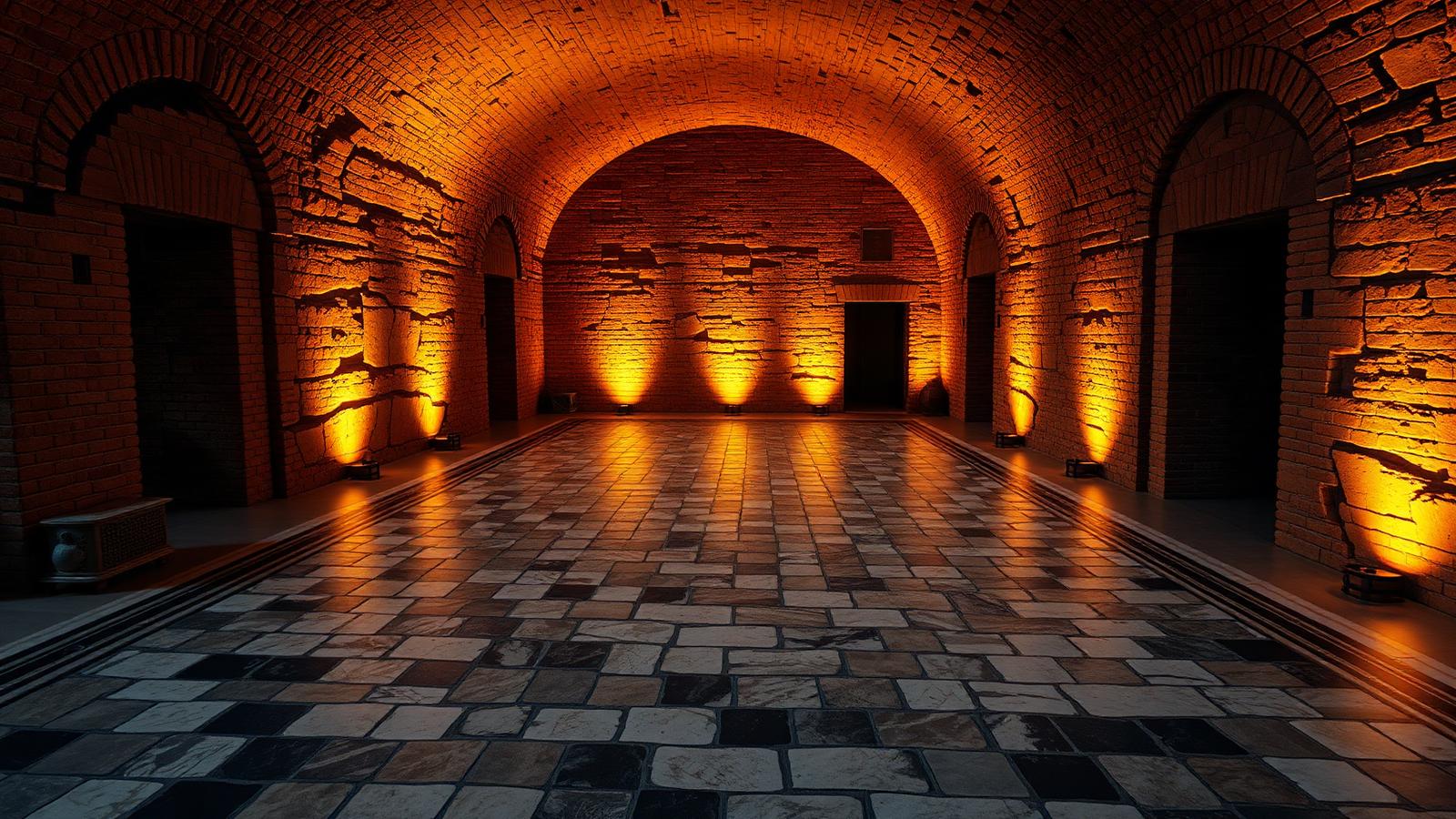
 Multimedia underground domus
Domus Romane at Palazzo Valentini
Two aristocratic 2nd–4th century AD Roman houses brought to life by Piero Angela and Paco Lanciano's award-winning light-projection reconstructions, beneath a 16th-century palazzo behind Trajan's Column.
60–75 minCheck official site5 full languages2nd–4th c. ADVia IV Novembre 119/A, 00187 Roma RMOpen on MapPlan Your Visit
Compare tickets, tours and stays — booking ahead usually gives more choice
Get TicketsBook a TourHotels NearbyDomus Romane at Palazzo Valentini is Rome's most cinematic underground archaeological experience — two aristocratic 2nd–4th century AD Roman houses (domus), discovered in 2005 beneath the basement of the 16th-century Palazzo Valentini and brought to life by Piero Angela and Paco Lanciano's award-winning multimedia design. Synchronised light projections rebuild the ruined walls in real time, refurnish the empty rooms with their original couches, frescoes and household shrines, and recreate the missing tesserae of the original opus sectile mosaic floors — an honest and educational format that clearly distinguishes what is real archaeology from what is digital reconstruction. The 60–75 minute timed visit walks you across raised glass walkways above the original floors, through a private thermal-bath complex with intact hypocaust, the foundations of a peristyle courtyard, and a closing CGI reconstruction of the adjacent Forum of Trajan. The tour runs in small timed groups in five full language versions (with partial support in others); advance booking is strongly recommended and prices should be checked on the official Palazzo Valentini site.
Why visit Domus Romane at Palazzo Valentini?
Most Roman ruins ask you to imagine what was. Domus Romane at Palazzo Valentini shows you — projecting the missing walls, frescoes, furniture and floors back into existence around your feet. It is the most narratively complete underground experience in Rome, and the original prototype of a multimedia format now imitated everywhere.
- Piero Angela & Paco Lanciano's signature design: the original 2010 prototype of synchronised light-projection archaeology, by Italy's most beloved science populariser and his engineer-collaborator.
- Original opus sectile & opus tessellatum mosaics: aristocratic-grade floors in coloured cut marble from across the Empire, preserved roughly in situ at their 2nd–3rd century level.
- Complete private thermal baths with hypocaust: caldarium, tepidarium and frigidarium with intact underfloor heating — a clear status marker reserved for the wealthiest senatorial families.
- Behind Trajan's Column: the perfect anchor for an Imperial Fora morning — Trajan's Column 2 min away, Trajan's Market 3 min, the Roman Forum 7 min, all on foot.
- Genuine educational honesty: the projections clearly distinguish surviving fabric from digital reconstruction — you always know what you're really looking at.
Quick facts
Built
2nd–4th c. AD; museum opened 2010
Entry
Check official site — booking recommended
Visit time
60–75 minutes
Format
Synchronised multimedia, 5 full languages
Capacity
Small groups, fixed timed slots
Location
Via IV Novembre 119/A — behind Trajan's Column
Table of Contents
Jump to any section of the itinerary
A brief history
In the late 2nd century AD, immediately after the completion of Trajan's Forum (113 AD), wealthy senatorial families built two adjacent private houses (domus) on the lower slope of the Quirinal Hill — taking advantage of the prestige of being right next door to the most monumental imperial complex in Rome. The buildings spanned roughly 1,800 m² and were laid out around a porticoed inner courtyard (peristyle), with reception rooms, sleeping quarters, kitchens, slave quarters and a private thermal-bath complex.
In the late 3rd century the houses received a major luxury upgrade — new opus sectile mosaic floors in coloured cut marble imported from across the Empire (Numidian giallo antico, Phrygian pavonazzetto, Spartan rosso antico, Egyptian porphyry), fresh frescoed wall decoration, an expanded thermal complex with caldarium and tepidarium, and a sophisticated hypocaust underfloor heating system. The site reached its decorative peak during the late-imperial period of Constantine and the Christianisation of Rome.
From the 5th century AD the houses fell into disuse following the sack of Rome by Alaric (410) and Genseric (455), and the broader collapse of the Western Empire. Roof tiles and marbles were gradually stripped; the rooms filled with rubble. By the 8th–11th centuries medieval workshops and storerooms were built on top of the buried Roman walls, and the original domus disappeared from memory.
In 1585 Cardinal Michele Bonelli (nephew of Pope Pius V) commissioned the construction of a Renaissance palazzo on the site, designed by Domenico Paganelli da Faenza. The palazzo passed in 1827 to Cardinal Vincenzo Macchi, briefly to the banker Vincenzo Valentini (giving the building its current name) and from 1873 became the headquarters of the new Provincia di Roma — the function it still serves today as the Metropolitan City of Rome.
In 2005, during structural renovation of the palazzo's basement, workers uncovered the first mosaic floor. Emergency excavations directed by the Soprintendenza Speciale per i Beni Archeologici di Roma revealed two intact aristocratic Roman houses. On 8 October 2010 the site opened to the public with the innovative multimedia presentation designed by Piero Angela and Paco Lanciano. The format — synchronised light projections that 'rebuild' the empty rooms in real time — has since been widely imitated but originated here. Piero Angela passed away in 2022; the site's multimedia content and programming continue to be refreshed from time to time, so check the official Palazzo Valentini site for what's currently on offer.
Domus Romane through the centuries
Late 2nd c. ADFirst Roman domus built
Two adjacent aristocratic houses are constructed on the lower slope of the Quirinal Hill, immediately north of the new Forum of Trajan (completed 113 AD). Owners are wealthy senatorial-class families taking advantage of the prestige of the imperial Fora.
Late 3rd c. ADMajor refurbishment
Both houses receive a luxury upgrade — new opus sectile mosaic floors in coloured cut marble, fresh frescoed wall decoration, an expanded private thermal bath complex with caldarium and tepidarium, and a hypocaust underfloor heating system. The site reaches its decorative peak.
4th c. ADLate-imperial peak
The houses remain in use throughout the 4th century — the period of Constantine and the Christianisation of Rome. The owners are likely senatorial Christians, comfortable with both the old aristocratic lifestyle and the new religion.
5th–6th c.Gradual abandonment
After the sack of Rome by Alaric (410 AD) and Genseric (455 AD), and the broader collapse of the Western Empire, the houses fall into disuse. Roof tiles and marbles are gradually stripped; the rooms fill with rubble.
8th–11th c.Medieval reuse
Medieval builders construct simple workshops, storerooms and houses on top of the buried Roman walls, reusing Roman foundations and material. The original domus disappear from memory.
16th c.Cardinal Bonelli builds the palazzo
In 1585 Cardinal Michele Bonelli (nephew of Pope Pius V) commissions the construction of a Renaissance palazzo on the site, designed by Domenico Paganelli da Faenza. The Roman remains are entirely buried beneath the new foundations.
1827Cardinal Macchi acquires the palace
The palazzo passes to Cardinal Vincenzo Macchi and is enlarged. It briefly belongs to the banker Vincenzo Valentini in the mid-19th century — giving the building its current name.
1873Seat of the Provincia di Roma
After Italian unification the palazzo becomes the headquarters of the new Provincia di Roma (today the Metropolitan City of Rome) — the function it still serves today. The basement remains unexcavated.
2005Archaeological discovery
During structural renovation of the palazzo's basement, workers uncover the first mosaic floor. Emergency excavations directed by the Soprintendenza Speciale per i Beni Archeologici di Roma reveal two intact aristocratic Roman houses spanning roughly 1,800 m².
2010Multimedia museum opens
On 8 October 2010 the site opens to the public with an innovative multimedia presentation designed by Piero Angela and Paco Lanciano — synchronised light projections, virtual reconstructions and immersive narration that 'rebuild' the empty rooms in real time. The format is widely imitated but originated here.
2018–2024International recognition
The site receives the Italian Ministry of Culture's award for innovation in cultural heritage and the European Heritage Awards / Europa Nostra prize. A second-stage upgrade adds new projections in the peristyle and thermal areas.
2022Remembering Piero Angela
Piero Angela, co-creator of the site's multimedia design, passes away. The Domus Romane remains a lasting example of his approach to bringing archaeology to a general audience.
The multimedia experience — Piero Angela's signature method
Synchronised projections
Computer-controlled light projectors throw images onto the surviving walls and floors in perfect synchronisation with the audio narration. Walls grow back to their original height, frescoes reappear on bare plaster, missing mosaic tesserae fill in around the surviving fragments.
Honest reconstruction
Crucially, the projections always make the boundary between real fabric and digital reconstruction visible — you can see exactly which mosaic tiles are 1,800 years old and which are projections. Educational integrity is built into the format.
Narrative arc
The 60-minute visit follows a single narrative arc — from the empty ruins, through the gradual reconstruction of the rooms, to a CGI reconstruction of the adjacent Forum of Trajan as it appeared in 200 AD. The medium of the experience is the message: archaeology made cinematic without losing rigour.
Piero Angela (1928–2022) was Italy's most beloved science populariser, host of RAI's Quark and SuperQuark for over 40 years. The Palazzo Valentini multimedia experience was his and engineer Paco Lanciano's first major archaeological project; they later applied the same method to the Forum of Augustus and Forum of Caesar night-time projections.
What to see at Domus Romane
Original mosaic floors
- Geometric and figurative mosaics in opus sectile (cut coloured marble panels) and opus tessellatum (small tesserae) — the artistic centrepiece of the site, preserved roughly in situ at their original 2nd–3rd century floor level.
- Remarkable polychrome marbles imported from across the Empire: Numidian giallo antico (yellow), Phrygian pavonazzetto (purple-veined white), Spartan rosso antico (red) and Egyptian porphyry — proof of the owners' senatorial-class wealth.
- Patterns include geometric meanders, floral medallions and figurative panels with mythological scenes — visible from the raised glass walkways that protect them from foot traffic.
- The synchronised multimedia projections complete the missing tesserae digitally, showing visitors how the floors looked when fully intact.
Private thermal baths & hypocaust
- A complete private bath complex — caldarium (hot room), tepidarium (warm room) and frigidarium (cold room) — built into the southern wing of one of the houses. A clear status marker reserved for the very wealthy.
- The hypocaust underfloor heating system is exceptionally well preserved: short brick pillars (suspensurae) supported the floor while hot air from a wood furnace circulated underneath. The same engineering principle underlies all Roman thermal architecture.
- Original lead water-pipes and clay drainage channels survive in situ — a rare chance to see the plumbing infrastructure of an aristocratic Roman house.
- Multimedia projections illustrate water filling the basins, steam rising and bathers moving through the rooms — one of the most effective sequences in the tour.
Light-projection reconstructions
- Synchronised light projections rebuild ruined walls in real time, showing visitors the original height, openings and decorative scheme of each room — the signature Piero Angela / Paco Lanciano technique that originated at this site in 2010.
- Frescoed walls are 'restored' digitally onto their surviving plaster fragments — visitors see exactly which patches are real and which are reconstruction, an honest and educational approach.
- Furniture, statues and household objects are projected into their original positions — couches, tables, bronze braziers, oil lamps, the lares (household-god) shrine.
- A virtual visit to the adjacent Trajan's Forum is integrated at the end of the tour, showing the relationship between the private aristocratic world and the public imperial monumental complex next door.
Peristyle courtyard & service rooms
- The remains of a porticoed inner courtyard (peristyle) — the centrepiece of any aristocratic Roman house. Foundations of the columns, the central impluvium pool and the surrounding garden beds are clearly visible.
- Adjacent service rooms: kitchens with surviving cooking-hearth structures, storerooms with amphora fragments, slave quarters and circulation corridors that reveal the working backbone of the household.
- Multimedia narration explains the social structure of a Roman domus — paterfamilias, matrona, freedmen, slaves, clients — and reconstructs a typical morning of cliental visits.
- Don't miss the surviving threshold mosaics with cave canem ('beware of the dog') iconography in one of the entrance corridors — a small but striking domestic detail.
Stratigraphic 'time machine' & don't-miss details
- A vertical excavation 'window' in one corner shows the layered fill on top of the Roman levels: 5th-century rubble, medieval workshop floors, Renaissance foundations of Cardinal Bonelli's 1585 palazzo. A textbook lesson in urban stratigraphy.
- Original Roman lead pipes and brick courses still bearing the imperial brick stamps (figlinae) that allow modern archaeologists to date them to specific years between 110 and 290 AD.
- The closing multimedia segment recreates the Forum of Trajan in CGI — a remarkable reconstruction of the surrounding monumental complex as it appeared in 200 AD.
- Look up: glimpses of the 16th-century palazzo's vaulted basement ceiling are visible from several points along the route — the literal weight of 1,500 years of Roman urban history pressing down on the walkway.
Who lived here — senatorial families on the Quirinal
The owners of the Domus Romane are not named in any surviving inscription, but their identity can be inferred from the site itself. The location — on the lower slope of the Quirinal Hill, immediately north of the brand-new Forum of Trajan completed in 113 AD — was one of the most prestigious residential addresses in 2nd-century Rome. The size of the houses (~1,800 m² combined), the quality of the marbles imported from across the Empire, the presence of a private thermal-bath complex and the figurative quality of the mosaics together place the owners firmly in the senatorial aristocracy: the top 0.05% of imperial Roman society.
The late-3rd century luxury refurbishment is particularly telling — that is the period of the Crisis of the Third Century, when most of the Empire was suffering political instability, monetary collapse and barbarian incursions. To carry out a major decorative upgrade in this period required extraordinary wealth, political stability and confidence in Rome's continuing centrality. Only senatorial families with extensive landed estates outside Italy and active participation in the imperial administration could afford it.
By the early 4th century, when the houses were still in active use, the owners were almost certainly Christians — the Christianisation of the senatorial aristocracy is the great social phenomenon of Constantine's age. The mosaic patterns are decorative-geometric rather than mythological-pagan, consistent with a household that had quietly adopted the new religion without making it the centrepiece of its public art. The Domus Romane thus document one of the most significant social transitions in Roman history: the moment when the ruling class of the world's greatest pagan empire became Christian.
Palazzo Valentini above — from Cardinal Bonelli to the Metropolitan City
The 16th-century Palazzo Valentini that sits on top of the Roman houses is itself an under-appreciated piece of Renaissance Rome. It was begun in 1585 for Cardinal Michele Bonelli — a Dominican friar and nephew of Pope Pius V (who had given him the cardinal's hat at age 25, unconscionable nepotism even by 16th-century standards). The architect Domenico Paganelli da Faenza designed a sober rusticated facade typical of late-Counter-Reformation Roman taste, with the cardinal's coat of arms over the main door.
In 1827 the palazzo passed to Cardinal Vincenzo Macchi, who enlarged it. After Macchi's death it briefly belonged to the banker Vincenzo Valentini — the Polish-born financial agent of Tsar Nicholas I in Rome — who gave the building its current name despite owning it for less than a decade.
In 1873, three years after Italian unification ended the Papal States, the new Italian state acquired the palazzo and made it the headquarters of the newly created Provincia di Roma — the regional administrative authority for the Lazio area. Today, with the Provincia restructured as the Metropolitan City of Rome Capital (Città Metropolitana di Roma Capitale), the palazzo continues to serve as a working government building. The Domus Romane visitor entrance is a discreet side gate at Via IV Novembre 119/A — most visitors don't realise they are walking into Rome's regional government headquarters.
Domus Romane walking itinerary
A 4-hour, 7-stop walk anchored on the Domus Romane and covering the entire Imperial Fora complex — Trajan's Column, Trajan's Market, the open-air Forum of Augustus and Forum of Caesar, and lunch at Piazza Venezia. Total distance ~1 km, completely flat, in the heart of monumental Rome.
Walking route map


 📍
📍
📍
📍
📍
📍
📍
+− Leaflet | © OpenStreetMap contributors
📍
📍
📍
📍
📍
📍
📍
+− Leaflet | © OpenStreetMap contributorsClick on markers for stop details. Numbers indicate the walking order.
1StartPiazza Venezia (start)
Major transport hubStart at Piazza Venezia, served by 8 bus lines (40, 60, 64, 70, 87, 170, 492) and tram 8 from Trastevere. Palazzo Valentini is 3 minutes' walk north on Via IV Novembre.
23 minPalazzo Valentini entrance
Behind Trajan's ColumnWalk north on Via IV Novembre. Enter at number 119/A — the side gate of the Renaissance palazzo. Show your booking, collect your audio headset, store bags in the cloakroom.
370 minDomus Romane multimedia tour
Light-projection magic60–75 minute timed multimedia visit through the underground domus — mosaics, peristyle, thermal baths, and the signature Piero Angela / Paco Lanciano light-projection reconstructions.
415 minTrajan's Column
Free spiral reliefExit and walk 2 minutes south-west to Trajan's Column — a 30-metre marble column with a continuous spiral relief of Trajan's Dacian Wars (101–106 AD). Free to view from the railings.
590 minTrajan's Market & Museum of the Imperial Fora
Imperial Fora museumCross Via IV Novembre to the brick-vaulted multi-storey complex of Trajan's Market and the Museum of the Imperial Fora. €11.50 — one of the most complete pieces of Roman urban infrastructure anywhere.
630 minImperial Fora archaeological promenade
Free monumental walkWalk south-east along Via dei Fori Imperiali, passing the Forum of Augustus, Forum of Caesar and the Temple of Mars Ultor. Free open-air viewing — the best monumental walk in central Rome.
760 minLunch at Piazza Venezia
Roman classicsReturn to Piazza Venezia for lunch. Trattoria Vecchia Roma, Caffè Doria or La Prosciutteria on Via Cesare Battisti — €18–35 a head depending on choice.
Domus Romane vs Domus Aurea — which underground experience to choose?
| Feature | Domus Romane | Domus Aurea |
|---|---|---|
| Period | Late 2nd–4th c. AD aristocratic houses | 65–68 AD imperial palace of Nero |
| Type of site | Two private senatorial-class domus | Single imperial residence (~80 ha originally) |
| Format | Synchronised multimedia, fixed 60-min route | Guided + 25-min VR headset segment |
| Original art preserved | Mosaic floors, fragments of frescoes | Painted vaults (Volta Dorata, Sala Ottagona) |
| Days open | Wed–Mon (closed Tue) | Sat–Sun only |
| Price | Check official site | Check official site |
| Visit duration | 60–75 minutes | 75–90 minutes |
| Best for | Storytelling & visual reconstruction | Authentic frescoes & VR immersion |
Verdict: choose Domus Romane for the most polished, narrative-driven multimedia experience and a perfect Imperial Fora morning; choose Domus Aurea for the rare opportunity to walk inside Nero's actual palace and experience original 1st-century painted vaults plus a VR headset segment. Visitors with time should do both — they are the two best underground archaeology experiences in Rome.
Best time to visit
Time of day
Morning
Best — choose an available morning English-language session; it tends to be well-paced and exits in time to walk straight into Trajan's Market for the second half of the morning. Specific English times change with the seasonal timetable, so check when booking.
Late afternoon (16:00–17:30)
Excellent — fewer visitors and the visit finishes with golden-hour light on Trajan's Column for photos.
Indoor year-round
Climate-controlled throughout — perfect rainy-day Rome activity.
Best days & seasons
Wednesday & Thursday
Quietest days. Avoid Friday and Saturday afternoons when school groups concentrate.
March–May & October–November 2026
Ideal weather, manageable crowds, and the surrounding Imperial Fora are at their photogenic peak.
Avoid Tuesdays
The site has recently been closed on Tuesdays (different from most Roman museums which close Monday). Always verify current hours on the official Palazzo Valentini site.
Getting there
Bus to Piazza Venezia (best)
8 bus lines stop at Piazza Venezia (40, 60, 64, 70, 87, 170, 492). From there walk north on Via IV Novembre for 3 minutes — Palazzo Valentini is at number 119/A.
Metro Line B — Colosseo or Cavour
Get off at Colosseo and walk 10 minutes north-west via Via dei Fori Imperiali, or Cavour and walk 8 minutes south-west. Both are scenic walks past the Imperial Fora.
Tram 8 from Trastevere
Tram 8 runs from Trastevere to Piazza Venezia in 10 minutes. The terminus is 3 minutes' walk from the Domus Romane entrance.
Walking from Termini
20 minutes south-west via Via Nazionale and Largo Magnanapoli. A pleasant downhill walk past the Markets of Trajan and the Torre delle Milizie.
Common mistakes to avoid
Visiting on Tuesday
The site has recently been closed on Tuesdays, with a seasonal schedule around 10:00–18:00 and the last tour about 16:30 on other days — but always verify current hours on the official Palazzo Valentini site before booking flights or trains.
Trying to walk up without a booking
Tours run in small timed groups and popular language slots can sell out in peak season. Booking ahead via the official site is strongly recommended.
Booking the wrong language
Not every time slot runs in every language. When booking, filter by language first then by time — it's easy to accidentally book an Italian-only session and end up listening to a narration you can't follow.
Arriving exactly on time
Arrive a little early to collect your audio headset and store bags — as with most timed-entry sites, late arrival can mean missing your slot, so check the specific policy when you book.
Skipping the Imperial Fora afterwards
Trajan's Column is 2 minutes away and Trajan's Market is across the street. The whole 'imperial Rome' complex makes sense only when you do them together. Block half a day, not just an hour.
Photographing the projections
Smartphone photos of the moving light projections look like mush and pull you out of the experience. Set the phone down and watch — this is the rare Roman site where the medium really is the message.
Insider tips from locals
Choose an available morning English-language session
Weekday mornings tend to be quieter than weekends. An early English-language session is typically small, well-paced and exits in time to walk straight into Trajan's Market for the second half of the morning. Specific English times change with the seasonal timetable, so check availability when booking.
Combine with the Imperial Fora night walk
Most evenings 19:00–22:00 from spring through autumn, the floodlit Imperial Fora are open to the public free of charge along Via dei Fori Imperiali. Do the Domus Romane in the morning and walk the same monuments at night — radically different atmospheres of the same imperial complex.
Pair with the Forum of Augustus & Forum of Caesar projections
The same Piero Angela / Paco Lanciano team designed the summer night-time projection shows on the walls of the Forum of Augustus and the Forum of Caesar (€25, April–November). Booking all three creates a coherent multimedia exploration of imperial Rome by a single creative team.
Eat at La Prosciutteria on Via Cesare Battisti
Two minutes' walk from Palazzo Valentini, La Prosciutteria serves wooden boards of cured meats, cheeses, bread and pickles (€15–20) with an excellent local-wine selection. Quicker and far better value than the Piazza Venezia tourist restaurants.
Look up at Palazzo Valentini's facade
Before entering, walk around the building to admire the 16th–19th century facade — the rusticated ground floor, the cardinal's coat of arms over the main door on Via IV Novembre, and the classical 19th-century enlargement. The palazzo itself is an under-appreciated piece of Renaissance Rome.
Check for special evening openings
The site occasionally runs special extended-hours or evening events. Check the official Palazzo Valentini site or Coopculture for any current special programming before you visit.
Where to Stay Near Domus Romane at Palazzo Valentini
Looking for convenient accommodation near Domus Romane at Palazzo Valentini? Stay within walking distance to make the most of your visit.
Hotels Near This AttractionTop Rated HotelsBudget-Friendly OptionsLuxury HotelsCentral locations with easy access to Domus Romane at Palazzo Valentini and other attractionsFrequently Asked Questions
Related Attractions
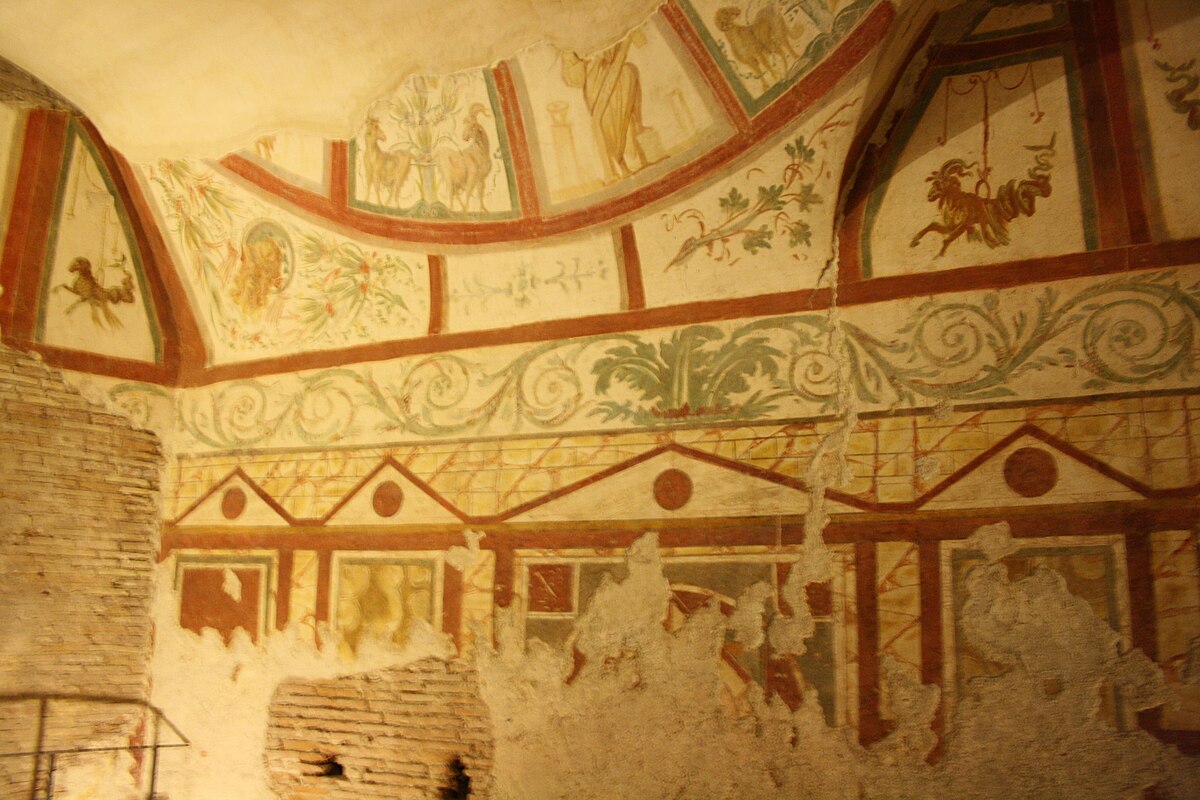
Case Romane del Celio
Late Roman houses with well-preserved frescoes beneath the Caelian Hill
Explore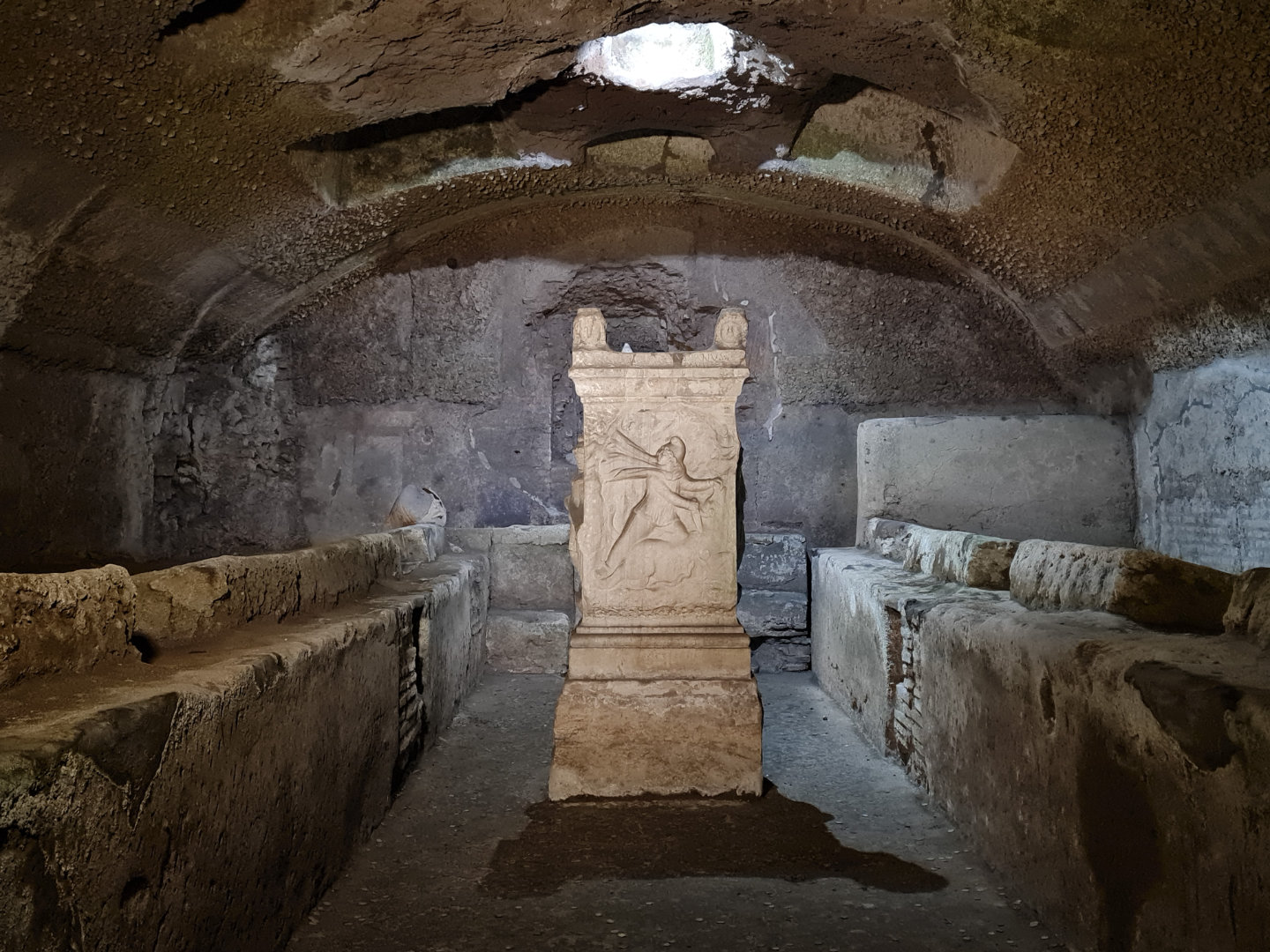
Mithraeum under San Clemente
Ancient Roman temple to Mithras hidden three levels below
Explore
Catacombs of Saint Sebastian
Ancient Christian burial site on the Appian Way—12km of passages
Explore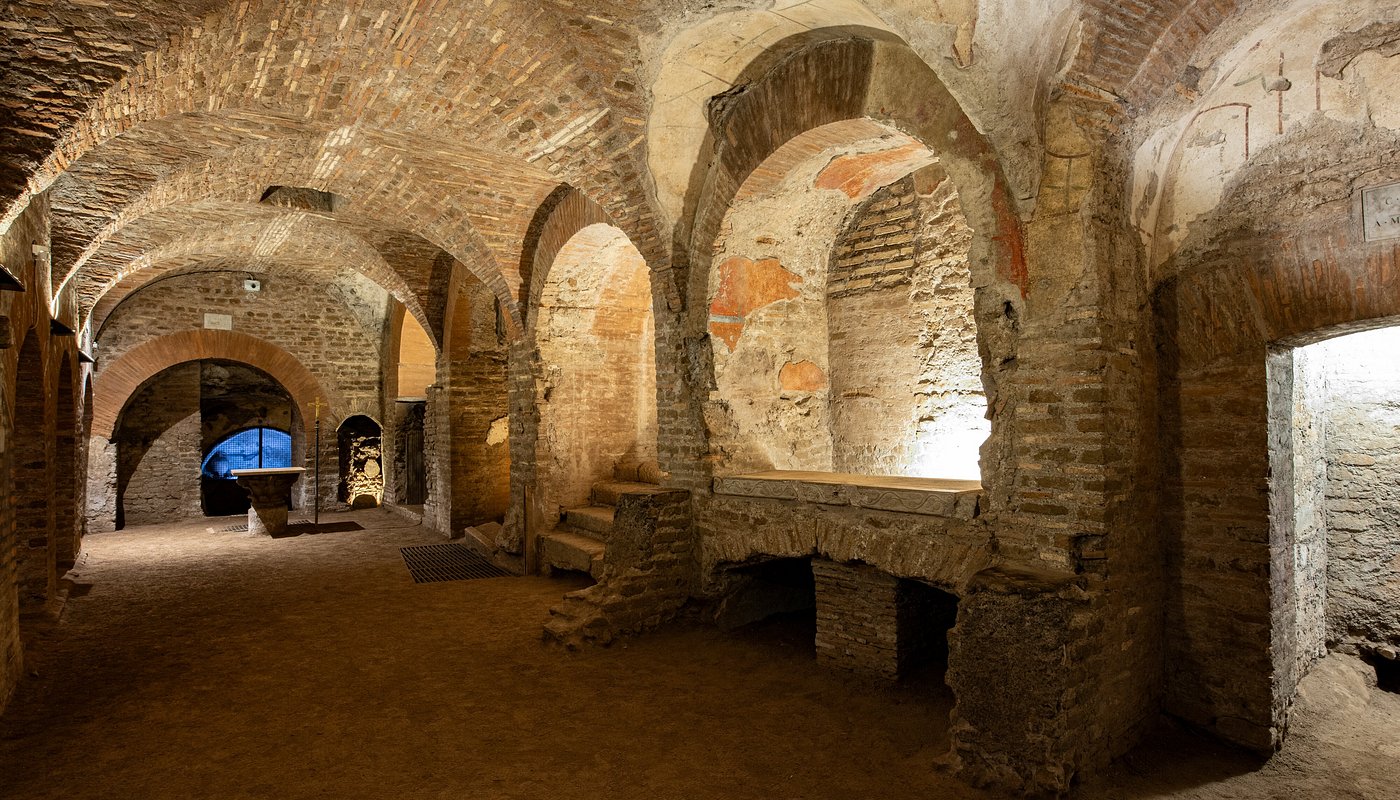
Catacombs of Priscilla
Rare early Christian frescoes including an early image identified as the Virgin and Child
Explore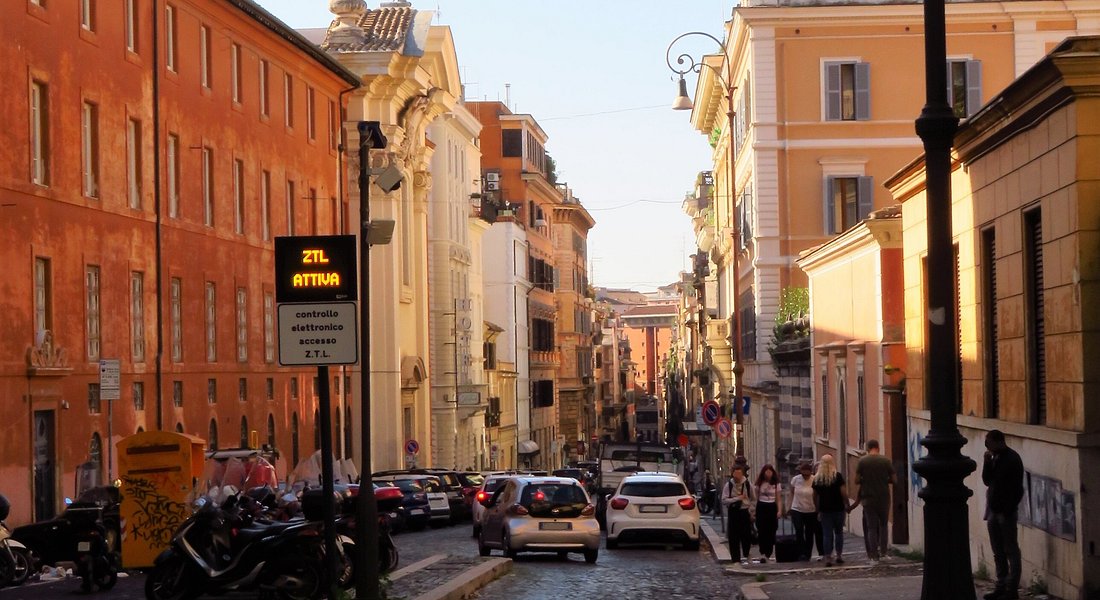
Monti Neighborhood
Rome's trendiest ancient neighborhood with vintage shops
Explore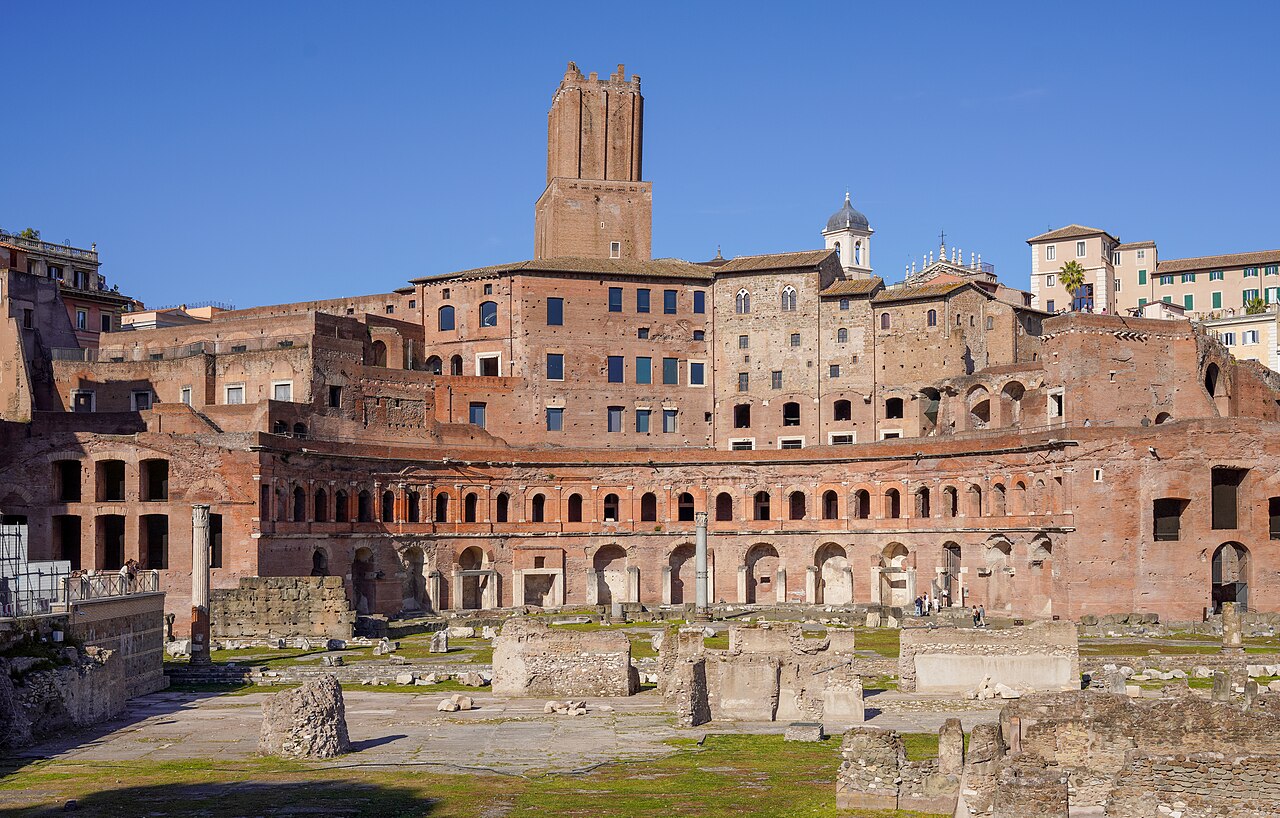
Trajan's Market
A vast multilevel Roman complex beside Trajan's Forum—now the Museum of the Imperial Fora
ExploreQuick Planning Guide
⏱️ Time Needed
60–75 minutes
💰 Cost
Check official Palazzo Valentini site for current prices
🎫 Reservation
Advance booking strongly recommended
♿ Accessibility
Partial — call +39 06 32810 48h ahead
📅 Best Time
An available morning English-language session
👨👩👧👦 Family Friendly
Yes — ages 8+, immersive multimedia
🌡️ Weather
Indoor; constant temperature year-round
Nearby Attractions
Trajan's Column2 min walk
Trajan's Market & Imperial Fora Museum3 min walk
Capitoline Museums5 min walk
Roman Forum7 min walk
Piazza Venezia3 min walk
Featured In These Itineraries
Hidden Gems of Rome5 Day Rome ItineraryFree Rome ItineraryEssential Tips
- ✓ Recently closed Tuesdays, seasonal hours around 10:00–18:00, last tour ~16:30
- ✓ Advance booking strongly recommended — tours run in small timed groups
- ✓ Filter by English language when booking
- ✓ Arrive a little early for your timed slot
- ✓ Pair with Trajan's Column & Imperial Fora
- ✓ Always check prices and hours on the official Palazzo Valentini site