Table of Contents
- 1. A Typical Day at the Colosseum
- 2. Types of Gladiators (Complete Guide)
- 3. How Gladiator Fights Actually Worked
- 4. Myths vs Reality: Thumbs Down & More
- 5. Animal Hunts: Scale & Species
- 6. Famous Gladiators
- 7. Why Did the Games End?
- 8. FAQ
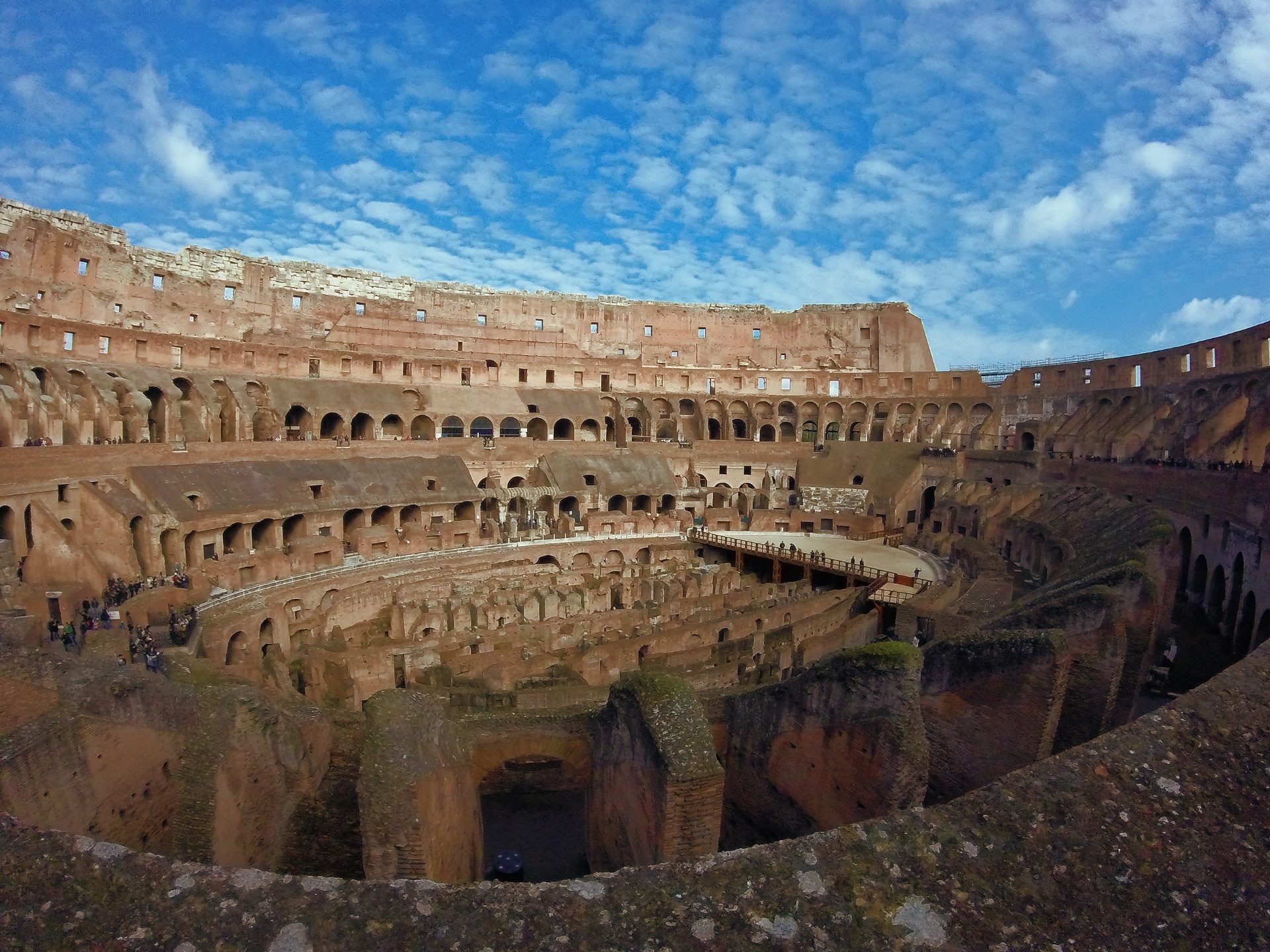
Want to see where gladiators waited beneath the arena? Compare Colosseum Underground tours.
Colosseum Underground toursA Typical Day at the Colosseum
Games days followed a structured schedule, running from dawn to dusk:
MorningAnimal Hunts (Venationes)
Exotic animals fought each other or were hunted by trained venatores. Elaborate stage sets recreated forests and landscapes using trap doors and lifts.
MiddayPublic Executions (Noxii)
Condemned criminals were executed, sometimes through elaborate mythological reenactments. Many spectators left for lunch during this 'lesser' spectacle.
AfternoonGladiatorial Combat (Munera)
The main event. Carefully matched pairs of gladiators fought in bouts with strict rules, referees, and crowd interaction. This is what everyone came to see.
Types of Gladiators
Gladiators were categorized by their weapons, armor, and fighting style. Fights were carefully matched between complementary types — never two identical fighters:
Murmillo
Weapons: Gladius (short sword), large rectangular shield
Armor: Heavy helmet with fish crest, arm guard
Style: Tank-like fighter — slow but heavily protected. Named after a type of fish.
Retiarius
Weapons: Weighted net, trident, dagger
Armor: Almost none — just a shoulder guard
Style: Fast and agile. Threw the net to entangle opponents, then attacked with the trident. The 'showman' of the arena.
Secutor
Weapons: Gladius, large shield
Armor: Smooth egg-shaped helmet (to avoid net tangles)
Style: Specifically designed to fight the Retiarius. Name means 'pursuer.'
Thraex (Thracian)
Weapons: Curved sword (sica), small rectangular shield
Armor: Wide-brimmed helmet, greaves on both legs
Style: Agile slashing attacks. Their curved blade could reach around shields.
Hoplomachus
Weapons: Spear, short sword, small round shield
Armor: Full helmet, greaves
Style: Based on Greek hoplite warriors. Used spear at range, switched to sword up close.
Provocator
Weapons: Gladius, large shield
Armor: Breastplate, helmet with visor
Style: The only gladiator type that fought others of the same type. 'Challenger.'
Classic matchup: The most popular pairing was Retiarius vs Secutor — speed and skill against brute force. The Retiarius was lightly armored but deadly with his net and trident, while the Secutor was heavily armored but encumbered.
How Gladiator Fights Actually Worked
Gladiator fights were far more structured than Hollywood suggests. They had rules, referees, and economic constraints:
Pre-fight ritual
Gladiators paraded around the arena, showed their weapons to the crowd, and saluted the sponsor. The famous 'We who are about to die salute you' (Ave, Caesar, morituri te salutant) was probably only said once — not a standard greeting.
The fight
Bouts were supervised by referees (summa rudis) who enforced rules, separated fighters, and ensured fairness. Ancient sources and modern reconstructions suggest most bouts lasted roughly 10-15 minutes of active combat, though exact durations aren't recorded.
Defeat & mercy
A wounded or exhausted gladiator could raise his index finger to signal surrender (ad digitum). The sponsor — guided by the crowd — then decided: missio (mercy/spare) or iugula (death).
Death wasn't the norm
Killing a gladiator was expensive — a good fighter could cost a small fortune. Sponsors typically had to compensate the gladiator school (ludus) for any fighter killed. Historians estimate most bouts ended with a living loser, though fatality rates likely varied by era and event.
Myths vs Reality
Myth: Thumbs down = death
Reality: The exact meaning of Roman thumb gestures is debated. Sources mention 'pollice verso' (turned thumb) but don't specify direction. A concealed thumb may have meant 'spare' (sheathe the sword), while an extended thumb meant 'kill.'
Myth: Most fights ended in death
Reality: Historians estimate only a minority of fights — often cited as somewhere around 1 in 5 to 1 in 10 — resulted in death, though the true ratio is debated. Gladiators were expensive; killing one meant the sponsor typically had to pay compensation to the training school.
Myth: 'We who are about to die salute you'
Reality: This phrase was reportedly said once — by condemned prisoners before a naval battle in AD 52, not by gladiators. It was not a standard arena greeting.
Myth: Christians were fed to lions here
Reality: There's no reliable historical evidence that Christians were specifically executed in the Colosseum. While persecutions happened elsewhere, the Colosseum connection is a later medieval tradition used to sacralize the building.
Myth: Gladiators were untrained brutes
Reality: Gladiators trained for months at professional schools (ludi) with specialized coaches. They ate specific diets, received medical care, and learned choreographed techniques. They were closer to professional athletes than random fighters.
| Popular belief | More accurate explanation |
|---|---|
| Every loser was killed | Trained gladiators were valuable; many survived multiple bouts |
| All gladiators were enslaved | Some free people volunteered (auctorati) |
| Spartacus fought here | He died more than a century before the Colosseum was built |
| Gladiators normally fought lions | Animal hunts were separate spectacles with different performers |
| Thumbs down meant death | The exact Roman gesture and its meaning remain debated |
Who fought whom — the roles were not interchangeable
- Gladiators fought trained human opponents.
- Venatores hunted animals in the morning spectacles.
- Bestiarii were associated with animal spectacles or punishments.
- Damnati ad bestias were condemned people exposed to animals — not performers.
Animal Hunts: Scale & Species
Animal hunts (venationes) were morning spectacles featuring exotic animals from across the Roman Empire. The scale was staggering:
LionsTigersElephantsBearsRhinocerosesHippopotamusesCrocodilesLeopardsOstrichesGiraffesWolvesWild boarThe environmental toll: Historians estimate hundreds of thousands — possibly more than a million — animals were killed across the Colosseum's roughly 450-year history, though precise numbers can't be verified. Evidence suggests the North African elephant, Barbary lion, Atlas bear, and Nile hippo were driven to regional extinction partly due to Roman arena demand. Animals were captured across Africa, Asia, and Europe.
Famous Gladiators
Spartacus (died 71 BC)
A Thracian gladiator who escaped from a training school near Capua and led a massive slave revolt (73–71 BC) with 70,000+ followers. Eventually defeated by Crassus's legions. He fought before the Colosseum existed but remains the most famous gladiator in history.
Flamma (2nd century AD)
A Syrian gladiator who won 21 of 34 fights and was offered the rudis (wooden sword of freedom) FOUR times — and refused each time, choosing to keep fighting. His tombstone in Sicily records his remarkable career.
Emperor Commodus (r. AD 180–192)
The emperor himself fought as a gladiator (as a Secutor), scandalizing Roman society. He fought wounded or restrained opponents to ensure victory. He was eventually assassinated — strangled in his bath by a wrestling partner.
Priscus & Verus (AD 80)
Two gladiators who fought during the Colosseum's inauguration. Their bout was so evenly matched and spectacular that Emperor Titus awarded BOTH fighters the rudis — they earned their freedom simultaneously. The poet Martial recorded the event.
Why Did the Games End?
The end of gladiatorial combat was gradual, driven by multiple factors:
AD 325Emperor Constantine issued the first known edict against gladiatorial combat, though enforcement was weak.AD 399Emperor Honorius closed the gladiator training schools (ludi).AD 404Honorius officially banned gladiatorial combat after the monk Telemachus was killed trying to stop a fight in the arena.AD 438All references to gladiatorial combat were removed from Roman law.AD 523The last recorded animal hunts in the Colosseum — marking the true end of 450 years of spectacles.🏨 Staying Near the Colosseum?
We researched and ranked the 10 best hotels within walking distance of the Colosseum — from luxury boutiques to affordable gems, all rated 9.0+ by guests.
All rated 9.0+ Within 200m–1.8kmRead: 10 Best Hotels Near the ColosseumA Day in the Life of a Colosseum Gladiator
A gladiator's daily routine around AD 100 likely looked nothing like Hollywood. Evidence from ancient sources and archaeology suggests a typical day began at dawn in a barracks cell of the Ludus Magnus, with a high-carbohydrate breakfast of barley porridge and beans — gladiators were nicknamed hordearii ('barley eaters'), and studies of gladiator bones from Ephesus suggest the diet helped build protective subcutaneous fat. Mornings were spent in pair-drills with a wooden practice sword (rudis) against a training post, followed by technical sparring with a trainer (doctor). Afternoons were reserved for medical care, meals, and rest.
On fight day the gladiator walked from the Ludus Magnus through an underground tunnel directly into the Colosseum's hypogeum, was armed by the venue, and ascended via a wooden lift onto the arena sand without being seen by the crowd until that moment. Careers were often short: historians estimate a typical fighter had only a handful of bouts spread across a few years, though a lucky few had much longer runs. Surviving gladiators could in principle earn enough prize money to buy their freedom and the symbolic wooden sword (rudis) at retirement — but most never reached that point. The few who did became celebrities comparable to modern professional athletes.
Frequently Asked Questions
Did gladiators always fight to the death?
No. Historians estimate only a minority of bouts — often cited as somewhere around 1 in 5 to 1 in 10 — ended in death, though the exact ratio is debated. Gladiators were expensive; killing one typically meant the sponsor had to compensate the training school.
Were gladiators slaves or free men?
Both. Most were enslaved or condemned criminals, but some free men voluntarily became gladiators for fame and money. Emperor Commodus even fought in the arena.
What types of gladiators existed?
12+ types including Murmillo (sword/shield), Retiarius (net/trident), Secutor (pursuer), Thraex (curved sword), and Hoplomachus (spear). Each had unique weapons and armor.
What did thumbs up/down really mean?
The exact meaning is debated. Hollywood's interpretation is likely wrong. A concealed thumb may have meant 'spare' and an extended thumb 'kill.'
How many animals were killed?
Historians estimate hundreds of thousands — possibly more than a million — animals were killed across the roughly 450 years of arena games, though precise figures are impossible to verify. Species included lions, elephants, rhinos, hippos, and crocodiles. Evidence suggests some species were driven to regional extinction.
Who was the most famous gladiator?
Spartacus (led a slave revolt, pre-Colosseum) and Flamma (refused freedom 4 times) are the most famous. Emperor Commodus also fought as a gladiator.
Where did gladiators train before fighting in the Colosseum?
In purpose-built schools (ludi) just metres from the arena. The largest was the Ludus Magnus, immediately east of the Colosseum and connected to it by an underground tunnel so gladiators could be moved out of public sight. Its oval practice arena is still visible today from Via Labicana. Three smaller schools — the Ludus Dacicus, Ludus Gallicus, and Ludus Matutinus (for animal fighters) — sat within a few hundred metres. Each was run by a lanista who owned, trained, fed, and rented out his fighters.
Could spectators bet on gladiator fights?
Officially no — Roman law banned gambling outside the Saturnalia festival — but in practice betting was rampant. Ancient sources describe bookmakers (sponsores) circulating in the upper tiers, taking wagers on individual bouts and on which fighter style would win (Murmillo vs Retiarius was a classic match-up). Graffiti from Pompeii's amphitheatre records bets and odds in detail, suggesting the Colosseum operated the same informal economy on a much larger scale.
Continue Reading
History of the Colosseum: Simple GuideWho Built the Colosseum and Why?How It Was Built: Engineering SecretsWhat to See: Every Level & HighlightColosseum Tickets Guide 2026Colosseum Attraction PageMore Colosseum Stories & Practical Tips
Keep exploring — the full AllTrips Colosseum visitor library.
Before You Visit the Colosseum
The 10-minute checklist that prevents 90% of mistakes.
Best Way to Visit the Colosseum
Routes and timing by traveler type, layover, and budget.
Colosseum Engineering Secrets
How Romans built it — and what modern stadiums copied.
History of the Colosseum
AD 72 to 2026 — the full timeline in one read.
Missed Your Entry Slot?
What to do in the first 15 minutes — and what not to.
Visiting the Colosseum in the Rain
Why bad weather can be the best visit you'll have.
Colosseum Tickets Guide
Every ticket type, price and what's actually included.