 DistrictFree Entry
EUR District
Mussolini's monumental Rationalist district — Rome's most surreal architectural day trip.
2–3 hoursRationalistIconic PhotosLake & ParkEUR (Q.32), 00144 Roma RMOpen on MapPlan Your Visit
Compare tickets, tours and stays — booking ahead usually gives more choice
Book a TourHotels NearbyWhy visit EUR District?
Six kilometres south of the Colosseum lies a different Rome — a planned monumental district of white travertine, perfect arches and wide axial boulevards built for a 1942 World's Fair that never happened. EUR (Esposizione Universale Roma) is the purest showcase of Italian Rationalist architecture in the world, anchored by the iconic Square Colosseum (now Fendi's global headquarters), the Marconi Obelisk and Pier Luigi Nervi's Olympic Palasport dome reflected in an artificial lake fringed with Japanese cherry blossoms.
- Square Colosseum: 216 perfect arches, white Tivoli travertine, now Fendi HQ (exterior freely viewable) — the most photographed 20th-century building in Italy.
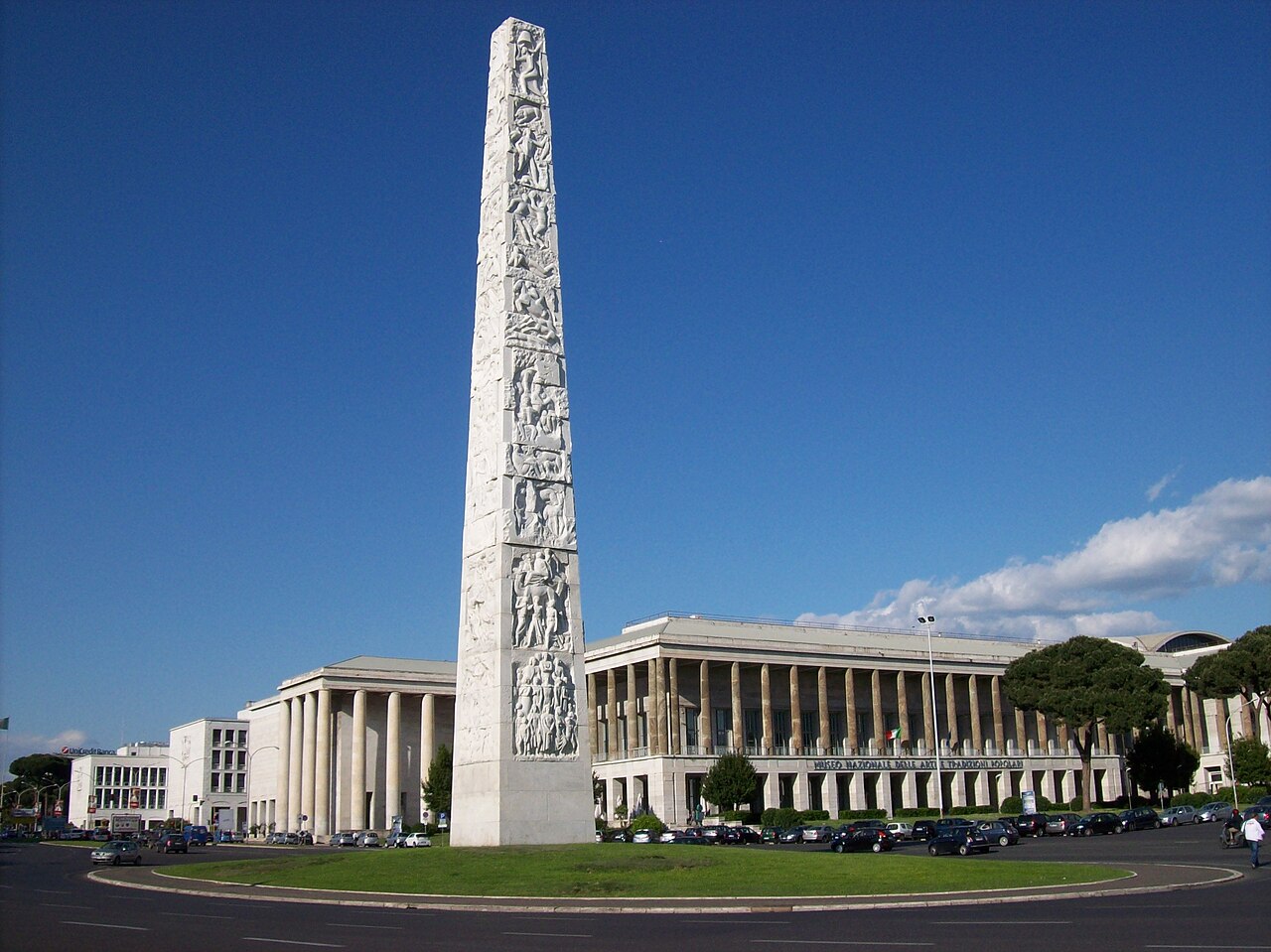
- Marconi Obelisk: 45-metre carved Carrara-marble monument anchoring the vast Piazza Marconi at EUR's geometric centre.
- EUR Lake: a 1.5 km artificial lake with paddleboats, lakeside cafés and the Japanese cherry-blossom garden gifted by Japan in 1959.
- Cinema-set Rome: backdrop for Fellini's '8½', Antonioni's 'L'Eclisse', Bond's 'Spectre' and Nolan's 'Tenet'.
- Uncrowded: while central Rome heaves, EUR's monumental boulevards belong to architecture pilgrims, joggers and Roman families.
Quick facts
Built
1937–1942 / 1950s
Style
Rationalist / Stripped Classicism
Famous For
Square Colosseum (Fendi HQ)
Entry
District free; museums ticketed
Visit Time
2–3 hours
Metro
EUR Magliana / Fermi / Palasport (B)
Location
Southern Rome (Rione Q.32)
Best Day
Sat–Sun (less business traffic)
Best Hour
Golden hour (marble glows)
Table of Contents
Jump to any section of the itinerary
A brief history of EUR
EUR was conceived in 1935 as the venue for the 1942 World's Fair (E42) — Mussolini's planned celebration of the twentieth anniversary of the Fascist march on Rome and a global showcase for Italy's recently invaded Ethiopian empire. A team of leading Italian architects led by Marcello Piacentini (with Giuseppe Pagano, Ettore Rossi, Luigi Piccinato and Luigi Vietti) drew up a master plan for a new monumental quarter on agricultural land six kilometres south of central Rome — a planned axial city of wide boulevards, vast piazzas and white-travertine monumental buildings, fusing classical Roman grandeur with the simplified geometric language of European Modernism.
Construction began in 1937 and accelerated through 1938–1942. The signature buildings — the Palazzo della Civiltà Italiana (the Square Colosseum, by Guerrini, La Padula and Romano), the Palazzo dei Congressi (Adalberto Libera), the Basilica dei Santi Pietro e Paolo, and the museum cluster around Piazza Marconi — were rising in their final form when Italy entered WWII in June 1940. The Fair was cancelled. EUR was abandoned half-finished, partly bombed, and after 1944 served briefly as a refugee camp and Allied military depot.
In 1951, the new democratic Italian Republic decided to finish EUR rather than abandon it — redesigning the district as a modern business and residential quarter, adding the artificial lake and the broad residential boulevards, and crowning the project with the sports facilities for the 1960 Rome Olympics. Pier Luigi Nervi's Palazzo dello Sport dome and Palazzetto dello Sport are masterpieces of post-war reinforced-concrete engineering and remain in use today. The Olympics finally fulfilled EUR's destiny as an international showcase, twenty years late.
From the 1990s, major Italian banks, insurance companies and ministries relocated to EUR — by the 2000s its weekday population was in the tens of thousands and its weekend population almost zero. In 2015, fashion house Fendi opened its global headquarters in the restored Square Colosseum — a private corporate building whose exterior architecture is freely visible from the street, with occasional ground-floor exhibitions staged from time to time — renewing global attention on EUR's architecture. In 2026, EUR is both a working business district and one of Rome's most distinctive day trips — a Rationalist counterpart to the Forum that everyone forgets exists until they step off Metro B at EUR Magliana.
EUR through the decades
1935World's Fair announced
Mussolini announces that Rome will host the 1942 Esposizione Universale (E42) to celebrate the 20th anniversary of the Fascist march on Rome and showcase Italy's empire to the world.
1937Master plan & construction
A team led by Marcello Piacentini (with Giuseppe Pagano, Ettore Rossi, Luigi Piccinato, Luigi Vietti) designs the new district 6 km south of central Rome. Construction begins on cleared agricultural land.
1938–1942Monumental buildings rise
Palazzo della Civiltà Italiana (Square Colosseum), Palazzo dei Congressi, the Basilica of Saints Peter & Paul and the museum group take shape in white travertine — the purest expression of Italian Rationalism.
1942World's Fair cancelled
Italy's entry into WWII forces cancellation of E42. EUR is left half-finished and partly bombed; for years it serves as a refugee camp and a depot for Allied troops.
1951–1959Reconstruction & Olympic completion
Post-war Italy decides to finish EUR rather than abandon it, redesigning it as a modern business and residential district. The artificial lake, the boulevards and the Olympic sports facilities are added.
1960Rome Olympics
EUR hosts the wrestling, fencing, basketball and gymnastics events. Pier Luigi Nervi's Palazzo dello Sport, Velodrome and the Palazzetto dello Sport become icons of post-war Italian engineering.
1990sBusiness district maturation
Major Italian banks, insurance companies and ministries relocate to EUR — by the late 1990s it is one of the city's main office districts, with a daytime population in the tens of thousands.
2015Fendi moves into the Square Colosseum
Luxury fashion house Fendi opens its global headquarters in the Palazzo della Civiltà Italiana, restoring the building and occasionally opening the ground floor for temporary exhibitions, renewing global attention to EUR's architecture. The interior remains private Fendi offices.
2026Architectural pilgrimage destination
Frequent Metro B service, walking guides, fashion shoots and cinema crews bring a steady flow of architecture pilgrims. EUR remains both a working business district and one of Rome's most distinctive day-trip destinations.
What to see in EUR
Palazzo della Civiltà Italiana — the Square Colosseum
- EUR's signature building (1938–1943) — six rows of nine arches on each face, totalling 216 perfectly identical arches.
- Faced entirely in white travertine marble from Tivoli; the four corner inscription is a quote from Mussolini's 1935 Ethiopia speech.
- Since 2015 the global headquarters of fashion house Fendi — a private company HQ. The exterior is freely viewable from the street at any time; interiors, including any rooftop terrace, are private and not open to the public.
- Occasional ground-floor exhibitions are sometimes staged by Fendi — these are temporary and not a standing public attraction, so check the current programme before planning a visit.
- Routinely cited as one of the most photographed 20th-century buildings in Italy; its geometry is often compared to de Chirico's earlier metaphysical cityscapes, and it appears in numerous films.
Marconi Obelisk & Piazza Marconi
- A 45-metre white Carrara-marble obelisk dedicated to Guglielmo Marconi, inventor of long-distance radio (sculptor Arturo Dazzi, completed 1959).
- The four faces are carved in low relief with scenes celebrating Italian innovation, science and labour — one of the largest modern obelisks in Europe.
- Anchors the vast Piazza Marconi, the geometric centre of EUR, with broad boulevards radiating outward in classic monumental fashion.
- Surrounded by the Pigorini Ethnographic Museum, the Museum of Roman Civilization and the Palazzo dell'Arte Antica — the cultural heart of the district.
Laghetto dell'EUR — the artificial lake
- A man-made lake (1.5 km perimeter) created in the 1950s for the 1960 Olympics, with paddleboats, ducks and shaded jogging paths.
- The Japanese-style cherry-blossom garden (Passeggiata del Giappone) gifted by Japan in 1959 is glorious in late March/early April.
- Lakeside cafés, gelaterias and a sunset bar scene — the most relaxed corner of EUR and the perfect counterpart to its monumental architecture.
- The water reflects the dome of the Palasport dello Sport (Pier Luigi Nervi, 1960 Olympics) — a postcard composition at golden hour.
EUR's museum cluster
- Museum of Roman Civilization (Museo della Civiltà Romana) — home to the famous 1:250 scale model of 4th-century Rome (the Plastico). Closed for works under the official Musei in Comune service charter; no confirmed reopening date, so check the current status before visiting.
- Museo delle Civiltà — combining the former Pigorini National Museum of Prehistory & Ethnography and the Museum of Asian Art.
- Planetarium and Astronomy Museum — small but charming, operating in EUR with its own admission ticket; check current hours.
- Palazzo della Civiltà del Lavoro (Square Colosseum) — occasional Fendi exhibitions on the ground floor when programmed; exterior architecture is always free to view.
Other key Rationalist landmarks
- Palazzo dei Congressi (1938–1954, Adalberto Libera) — the soaring barrel-vaulted convention hall opposite the Square Colosseum.
- Basilica dei Santi Pietro e Paolo — the great copper-domed church on the highest point of EUR (1955), visible across southern Rome.
- Palazzo dello Sport — Pier Luigi Nervi's masterpiece dome built for the 1960 Olympics, an icon of post-war Italian engineering.
- INPS, INA and Uffici Statali buildings — the rhythmic Rationalist office blocks that frame Viale della Civiltà del Lavoro.
Photogenic corners
- Square Colosseum from the corner of Quadrato della Concordia at golden hour — long shadows, glowing travertine, a film-set composition.
- Piazza Marconi axis looking south down Viale Asia toward the Basilica dei Santi Pietro e Paolo.
- EUR Lake at sunset with the Palasport dome reflected in the water and cherry blossoms in early April.
- The vaulted entrance staircase of the Palazzo dei Congressi — favourite of fashion editorials and cinema crews.
Palazzo della Civiltà Italiana — the Square Colosseum
The Palazzo della Civiltà Italiana — universally known as the Square Colosseum (Colosseo Quadrato) — is EUR's signature building and one of the most recognisable Italian buildings of the 20th century. Designed in 1937 by the architectural trio Giovanni Guerrini, Ernesto La Padula and Mario Romano for the cancelled 1942 World's Fair, it was largely complete by 1943 but not officially inaugurated until 1953.
The architects took the most universal of Roman motifs — the arch — and stripped it to absolute geometric purity: six storeys × nine arches per face = 216 perfect, identical arches, framed in pristine white Tivoli travertine cladding over a reinforced-concrete frame, the whole sitting on a raised plinth approached by long ceremonial staircases. The corner inscription quotes a 1935 Mussolini speech claiming Italians as 'a people of poets, artists, heroes, saints, thinkers, scientists, navigators, transmigrators' — preserved in its original Fascist-era form as historical evidence.
Its repetitive arches, empty plazas and severe geometry evoke the metaphysical cityscapes Giorgio de Chirico had painted decades earlier, and it has since appeared in dozens of films (Antonioni, Bertolucci, Sam Mendes, Christopher Nolan). Since 2015, after a major restoration, it has housed the global headquarters of fashion house Fendi on a long-term lease from the Italian state.
The interior — including the upper floors and any rooftop terrace — is Fendi's private office space and not open to the public. Fendi occasionally opens the ground floor for temporary exhibitions on Italian craftsmanship, contemporary art and design; these are occasional events, not a standing attraction, so check the current programme before visiting. The building's exterior architecture, however, is always freely viewable from the surrounding streets and Piazza della Civiltà del Lavoro.
Marconi Obelisk & Piazza Marconi
The Obelisco a Marconi is a 45-metre white Carrara-marble obelisk dedicated to the Italian inventor of long-distance radio, Guglielmo Marconi (1874–1937, Nobel Prize 1909). Designed by sculptor Arturo Dazzi and inaugurated in 1959 for the Olympics, it is one of the largest modern obelisks in Europe.
The four faces are carved in low relief with allegorical scenes celebrating Italian innovation, science, labour and the conquest of communication — a deliberate echo of the carved imperial Roman columns of Trajan and Marcus Aurelius. The monument anchors Piazza Guglielmo Marconi, the geometric centre of EUR — a vast rectangular plaza from which the broad boulevards radiate outward.
Around the piazza stand the four monumental cultural buildings designed in 1939–1940: the Museum of Roman Civilization, the Pigorini Ethnographic Museum, the Palazzo dell'Arte Antica and the Palazzo delle Tradizioni Popolari (now part of the Museo delle Civiltà). The whole composition is the most monumental urban set-piece in Rome built after antiquity — even more axial and symmetrical than Bernini's St Peter's Square.
EUR Lake & the Japanese Garden
The Laghetto dell'EUR is an artificial lake created in the 1950s as the centrepiece of EUR's post-war redesign, with a 1.5 km perimeter, paddleboats, ducks, shaded jogging paths and a string of lakeside cafés and gelaterias. It is the most relaxed corner of EUR and the perfect counterpart to the monumental dryness of the boulevards above.
On the western shore, the Passeggiata del Giappone ('Japan Walk') was a Japanese gift to Rome in 1959, a gesture of post-war friendship. Its rows of Japanese cherry trees bloom for 7–10 days in late March / early April — the unofficial start of spring in Rome and one of the city's most photographed seasonal sights.
From the eastern shore, the great ribbed concrete dome of Pier Luigi Nervi's Palazzo dello Sport (1956–1960, 100-metre span) reflects in the water — a postcard composition at golden hour. The lake is also a favourite of Roman families on weekend afternoons, of joggers at dawn, and of food trucks and aperitivo bars on summer evenings.
Museums of EUR
Museum of Roman Civilization
Home to the famous Plastico di Roma Imperiale — a 1:250 scale model of 4th-century Rome showing every monument, hill, aqueduct and temple. Closed for works, per the official 2026 Musei in Comune service charter, with no confirmed reopening date. Check current status before planning a visit.
Museo delle Civiltà
Combines the former Pigorini National Museum of Prehistory & Ethnography (one of the most important prehistoric collections in Italy) and the Museum of Asian Art. Ticketed admission, typically Tue–Sun — check the official website for current prices and hours.
Planetarium & Astronomy Museum
Small but charming, operating in EUR with its own ticketed admission and show schedule. Check the official website for current hours and prices before visiting.
Fendi ground-floor exhibitions
Occasional temporary exhibitions on Italian craftsmanship, contemporary art and design, staged on the ground floor of the Square Colosseum when programmed — not a permanent attraction. Check Fendi's current schedule before visiting; the exterior of the building is always free to view.
Suggested walking route
A 2–3 hour self-guided route from EUR Magliana metro to EUR Palasport metro, covering the architectural highlights and finishing at the lake. Total walking distance: approximately 2.5 km on flat, wide sidewalks.
1Metro EUR Magliana
StartExit Metro B at EUR Magliana and walk five minutes east on Viale della Civiltà del Lavoro. The Square Colosseum reveals itself at the end of the avenue — one of Rome's most theatrical first views.
Best entrance to EUR2Palazzo della Civiltà Italiana (Square Colosseum)
40 minWalk a full circle of the monument (216 arches in total) and climb the perimeter steps. The building is Fendi's private headquarters — admire the exterior architecture from the street; there is no public rooftop access, though occasional ground-floor exhibitions are sometimes open when programmed.
EUR's iconic masterpiece3Palazzo dei Congressi
15 minCross Quadrato della Concordia to Adalberto Libera's barrel-vaulted Palace of Congresses (1938–1954) — equally important architecturally and the favourite of fashion photographers.
Libera's vaulted hall4Piazza Guglielmo Marconi & Obelisk
20 minWalk south on Viale della Civiltà del Lavoro to the vast Piazza Marconi, anchored by the 45-metre carved obelisk to Guglielmo Marconi. The Pigorini and Roman Civilization museums frame the square.
Geometric heart of EUR5Basilica dei Santi Pietro e Paolo
20 minClimb 5 minutes uphill to the great copper-domed basilica (1955) — the highest point of EUR with a panoramic view back toward the Square Colosseum and out across southern Rome.
EUR's monumental dome6EUR Lake & Japanese Garden
45 minWalk down to the artificial lake. Stroll the 1.5 km perimeter past paddleboats, the Passeggiata del Giappone cherry-blossom path, and Pier Luigi Nervi's Palasport dome reflected in the water. Coffee at one of the lake bars.
The peaceful counterpart7Metro EUR Palasport
EndFinish at EUR Palasport metro on the lake's eastern side — 15 minutes back to the Colosseum and central Rome. Time your exit for sunset views over the water if you can.
Return to central RomeEUR vs other Rome neighborhoods
| Feature | EUR | Centro Storico | Trastevere | Monti |
|---|---|---|---|---|
| Era | 1937–1960 | Antiquity – 19th c | Medieval | Medieval / 19th c |
| Atmosphere | Monumental, surreal, modernist | Layered antiquity, dense | Postcard medieval | Bohemian-designer |
| Crowds | Low (tourists), medium (workers M–F) | Very high | High evenings | Medium |
| Distance from Colosseum | Metro B, 6 stops (15 min) | On site | 20 min walk | 5 min walk |
| Best for | Architecture, photography, lake walks | Major monuments | Dinner + nightlife | Vintage + aperitivo |
| Walking distance | Spread over ~2 km | Compact | Compact | Compact |
| Best day | Saturday or Sunday | Any day | Any night | Thursday–Saturday |
Verdict: EUR is the only Rome neighbourhood where 20th-century monumental architecture takes the lead role — a Rationalist counterpart to the Forum and Capitoline. Choose EUR for architecture, photography, lake walks and a different Rome on a half-day. For the classic Rome experience, the centro storico, Trastevere and Monti remain the core.
Best time to visit
Time of day
09:00–11:00 — quietest hour
Soft east light on the white travertine, empty boulevards, joggers on the lake. The most peaceful window for photography.
17:00–sunset — golden hour
The Square Colosseum glows pink and orange. Walk the lake afterwards as the sky changes. The most beautiful 90 minutes in EUR.
Avoid 13:00–16:00 in summer
The treeless boulevards become brutally hot and the marble reflects sunlight blindingly. Take a long lakeside lunch instead.
Avoid Mondays for museums
Most EUR museums close on Monday. Check each museum's current opening days and hours before visiting.
Best day & season
Saturday morning (locals' magic window)
Office workers gone, Roman families out, low tourist numbers — the most photogenic day to walk EUR.
Sunday afternoon (lake day)
The lake fills with families, paddleboats and gelato. The most relaxed atmosphere in EUR.
Late March / early April (cherry blossoms)
The Passeggiata del Giappone blooms for 7–10 days — the unofficial start of spring in Rome.
Avoid mid-August
Office workers gone, museums on reduced hours, but the heat is fierce on treeless boulevards. Lake area tolerable in early evening only.
Getting there
Metro Line B — three EUR stations (easiest)
Take Metro B (direction Laurentina). EUR Magliana is closest to the Square Colosseum; EUR Fermi is closest to Piazza Marconi; EUR Palasport is closest to the lake. From the Colosseum it is about 15 minutes underground.
From Termini Station
Six metro stops on Line B (direction Laurentina) — about 17 minutes underground. The first train each morning leaves around 05:30, last around 23:30 (Friday/Saturday 01:30).
Bus 30 from Piazza Venezia
Express bus 30 runs from Piazza Venezia south down Via Cristoforo Colombo to EUR — about 20–25 minutes, useful as an alternative to the metro.
E-scooter / bike share
EUR's wide flat boulevards are ideal for e-scooters and dock-less bikes. From EUR Magliana to EUR Palasport via the Square Colosseum and the lake is a 15-minute scoot.
Address
EUR (Q.32), 00144 Rome. The district stretches roughly 2 km north–south between EUR Magliana and EUR Laurentina metro stations, and 1 km east–west between Via Cristoforo Colombo and the Tre Fontane Abbey.
Common mistakes to avoid
Visiting on a hot August afternoon
EUR has wide treeless boulevards and the white travertine reflects sunlight blindingly. In July–August, come at 9:00 or after 18:00, never in the middle of the day.
Trying to walk it from central Rome
EUR is 6 km south of the Colosseum. The metro takes 15 minutes; walking takes nearly two hours along busy roads. Always use Metro B.
Underestimating the distances inside EUR
From the Square Colosseum to the lake is roughly 2 km of monumental boulevards. Wear comfortable shoes or chain a metro stop in the middle (Fermi → Palasport).
Going on a Monday for the museums
Most EUR museums close on Monday. If museums are part of your plan, come Tuesday–Sunday and check current opening hours (the Museum of Roman Civilization has been closed for renovation for years).
Expecting to go inside the Square Colosseum
Palazzo della Civiltà Italiana is Fendi's private headquarters. There is no standing public rooftop or interior access — only occasional exhibitions when programmed. Most visitors should plan to admire the exterior architecture, which is freely viewable from the street.
Treating EUR as a half-hour stop
EUR rewards a slow visit. To see the Square Colosseum, Piazza Marconi, the basilica and the lake properly is a comfortable 2–3 hour walk. Build in time for a lakeside coffee.
Insider tips from locals
Sunset on the lake
Walk the 1.5 km perimeter of the EUR Lake at sunset — the white marble of the Palasport dome glows pink and the cherry-blossom path empties of joggers. The most peaceful 30 minutes in southern Rome.
Cherry blossoms in late March
The Passeggiata del Giappone on the lake's western shore was a Japanese gift to Rome in 1959. Its cherry trees bloom for 7–10 days in late March / early April — the unofficial start of spring in Rome.
Combine with the Tre Fontane Abbey
The 12th-century Cistercian Abbey of the Three Fountains (free) is a 15-minute walk from EUR Magliana metro — a forested medieval contrast to EUR's modernism, and famous for the monks' eucalyptus chocolate.
Watch for occasional Fendi exhibitions
Fendi has occasionally used the Square Colosseum's ground floor for temporary exhibitions on Italian craftsmanship, contemporary art and design since 2015. There is no permanent public schedule — check the current programme before your visit; the exterior remains freely viewable year-round.
Saturday morning is locals' favourite
EUR is a business district Monday–Friday: come at the weekend and the boulevards belong to families, joggers, photographers and Roman couples on the lake. Saturday morning is the magic window.
Coffee break at Palombini
Caffè Palombini (Piazzale Adenauer) is the historic EUR caffè since 1955 — bombolone pastries, classic espresso, and an outdoor terrace with a perfect view of the surrounding Rationalist office blocks.
Practical visitor tips
Golden hour magic
The white travertine glows spectacularly at sunset. Arrive 1.5–2 hours before dusk for the best Square Colosseum photography as the marble turns gold then pink.
Lake lunch break
After the monuments, relax at a lakeside café or Caffè Palombini on Piazzale Adenauer. The Japanese cherry-blossom garden (late March) is the most peaceful corner of southern Rome.
Three metro stops, not one
EUR has three Metro B stations: EUR Magliana (Square Colosseum), EUR Fermi (Piazza Marconi), EUR Palasport (lake). Use them strategically — get off near your start, walk south, exit from the next stop.
Spot the film locations
EUR has appeared in Fellini's '8½' and 'Boccaccio '70', Antonioni's 'L'Eclisse', Bond's 'Spectre' (2015) and Nolan's 'Tenet' (2020). The Square Colosseum and Piazza Marconi are the most filmed corners.
Where to Stay Near EUR District
Looking for convenient accommodation near EUR District? Stay within walking distance to make the most of your visit.
Hotels Near This AttractionTop Rated HotelsBudget-Friendly OptionsLuxury HotelsCentral locations with easy access to EUR District and other attractionsFrequently Asked Questions
What is EUR and why was it built?
EUR (Esposizione Universale Roma) is a planned monumental district 6 km south of central Rome, originally designed in 1937 to host the 1942 World's Fair (E42) celebrating the twentieth anniversary of the Fascist march on Rome. The Fair was cancelled when Italy entered WWII, and the half-finished district was completed in the 1950s as a business and residential quarter — and as the venue for the 1960 Rome Olympics. Today EUR is both a working office district and one of Rome's most distinctive architectural day trips.
What is the Square Colosseum?
The Palazzo della Civiltà Italiana — nicknamed the 'Square Colosseum' (Colosseo Quadrato) — is EUR's signature building, designed in 1937 by Giovanni Guerrini, Ernesto La Padula and Mario Romano. Six rows of nine arches on each face produce 216 perfectly identical arches, all faced in white Tivoli travertine. The four corner inscription quotes a 1935 Mussolini speech. Since 2015 it has housed the global headquarters of fashion house Fendi. The building is a private corporate HQ — the exterior architecture is freely viewable from the street, while the interior, including any rooftop terrace, is not open to the public; Fendi occasionally stages temporary exhibitions on the ground floor, with no fixed public schedule.
Where exactly is EUR?
EUR is in southern Rome, about 6 km south of the Colosseum and immediately north of the Tre Fontane Abbey. The official rione is Q.32 EUR. Three Metro B stations serve it: EUR Magliana (closest to the Square Colosseum), EUR Fermi (closest to Piazza Marconi) and EUR Palasport (closest to the lake).
How do I get to EUR from central Rome?
Easiest: Metro Line B (direction Laurentina). From the Colosseum or Termini, EUR is 6–9 stops, about 15 minutes underground. The three EUR stations spread along the district let you walk one direction and exit from the next station. Trains and trams from Stazione Ostiense are also possible. Driving is straightforward and parking is free or cheap on weekends — but the metro is faster.
What architectural style is EUR?
EUR is the purest surviving showcase of Italian Rationalism (Razionalismo italiano) — the Fascist-era style that combined classical Roman monumentality (arches, colonnades, axial symmetry, white travertine cladding) with the simplified geometric volumes and clean lines of European Modernism. It is sometimes called 'Stripped Classicism' in English. The leading architects were Marcello Piacentini, Giuseppe Pagano, Adalberto Libera, Giovanni Guerrini, Ernesto La Padula and Mario Romano.
Is EUR worth visiting in 2026?
Yes — for architecture enthusiasts, photographers, film lovers and travellers who already know classical Rome and want to see something unique. The Square Colosseum, the Marconi Obelisk, Pier Luigi Nervi's Olympic dome and the lake form a coherent monumental experience unlike anywhere else in the city. Skip it if your time in Rome is limited to 2–3 days and you have not yet seen the Colosseum, Forum, Vatican and Pantheon.
How long do I need at EUR?
Two to three hours is a comfortable visit covering the Square Colosseum, Piazza Marconi, the Basilica of Saints Peter & Paul and the lake at a relaxed pace. Add another 1–2 hours if you want to enter the museums (when reopened) or have a long lakeside lunch. Architecture obsessives can easily spend a full day.
Is EUR free?
Yes — exploring the district, photographing the exterior architecture and walking the lake are entirely free. Museums, occasional exhibitions and other ticketed attractions in EUR each have their own admission — check current prices and hours with the individual venue before visiting. Metro fares apply separately.
When is the best time to visit EUR?
Saturday or Sunday morning, ideally in spring or autumn. Weekends are quieter (EUR is a business district Monday–Friday) and the morning light on the white travertine is beautiful. Late March through early April adds the cherry blossoms on the lake. Avoid hot summer afternoons when the treeless boulevards become brutal.
Can I go inside the Square Colosseum?
Palazzo della Civiltà Italiana is Fendi's private corporate headquarters — the upper floors and any rooftop terrace are not open to the public. Fendi occasionally stages temporary exhibitions on the ground floor, but this is not a standing, permanently open attraction; check the current programme before visiting. The exterior architecture is always freely viewable from the surrounding streets and piazza.
What is Pier Luigi Nervi's Palasport?
The Palazzo dello Sport (1956–1960) is a circular reinforced-concrete arena designed by engineering genius Pier Luigi Nervi for the 1960 Rome Olympics, with a soaring ribbed dome 100 metres in diameter — at the time one of the world's largest. It still hosts concerts and major events and is widely considered a masterpiece of post-war Italian engineering. Best viewed from across EUR Lake.
What films were shot in EUR?
EUR's surreal, futuristic architecture has attracted directors for over sixty years. Highlights include Federico Fellini's '8½' (1963) and 'Boccaccio '70' (1962), Michelangelo Antonioni's 'L'Eclisse' (1962, the famous final montage), Bernardo Bertolucci's 'The Conformist' (1970), Sam Mendes's 'Spectre' (2015) and Christopher Nolan's 'Tenet' (2020). The Piazza Marconi and the Square Colosseum are the most-filmed locations.
Is EUR family-friendly?
Yes. The wide flat sidewalks and lake area are stroller-friendly, kids love the paddleboats and the cherry blossoms, and the scale model of ancient Rome at the Museum of Roman Civilization — currently closed for works with no confirmed reopening date — is incredible for all ages when it reopens. Luneur Park (Italy's oldest amusement park, recently restored) is a 10-minute walk from EUR Palasport metro.
Are there good restaurants in EUR?
EUR is more office canteens and chain venues than destination restaurants — but there are a few standouts: Caffè Palombini (Piazzale Adenauer, classic since 1955), Domenico dal 1968 (Via Marotta) for cucina romana, La Pergola dell'Olimpico for lakeside Italian, and the lakeside cafés for a casual coffee or aperitivo. For a serious dinner, walk to Garbatella (15 min) or come back to central Rome.
What is the connection between EUR and Fascism?
EUR was conceived, designed and largely built by the Fascist regime as a propaganda showcase — its name (Esposizione Universale Roma) refers to the 1942 World's Fair Mussolini intended as the climax of his Empire-building project. Many of the building inscriptions and reliefs date from this period and remain visible (notably the Square Colosseum's quote from a 1935 Mussolini speech). Italy preserves these inscriptions in their original form as historical evidence rather than removing them — a deliberate post-war choice. The district was completed in the 1950s under the democratic Republic, which redesigned it as a business district and Olympic venue.
What can I do near EUR?
Combine a half-day in EUR with: the medieval Tre Fontane Abbey (15 min walk from EUR Magliana — free, Cistercian, famous for the monks' eucalyptus liqueur and chocolate); Luneur Park (Italy's oldest amusement park, 10 min from EUR Palasport); the Catacombs of Domitilla and the Via Appia Antica (20 min by bus); or take Metro B north to the Garbatella neighbourhood for a contrasting 1920s garden-suburb walk.
Related Attractions
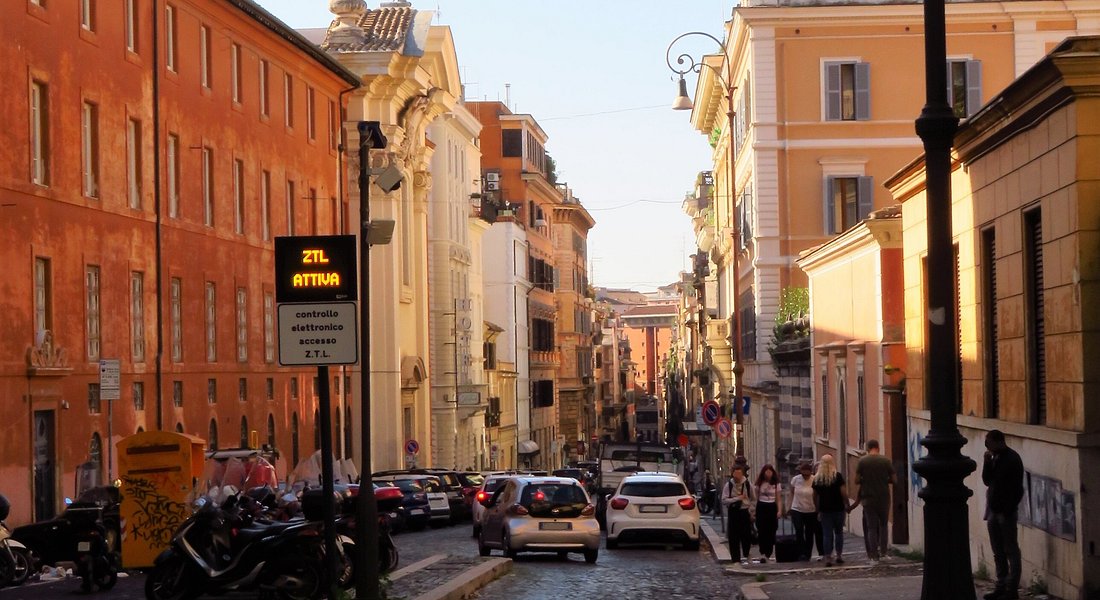
Monti Neighborhood
Rome's trendiest ancient neighborhood with vintage shops
Explore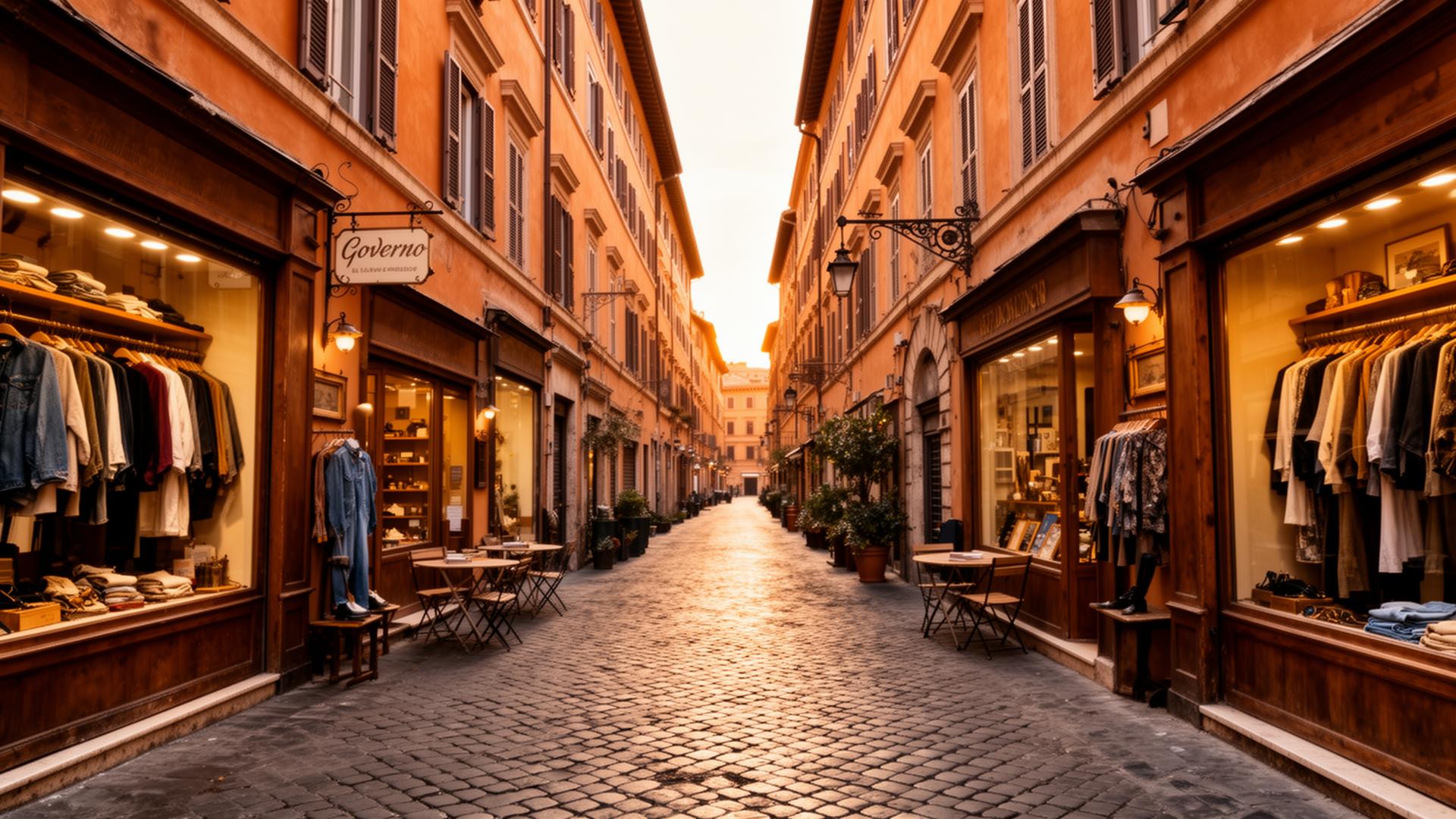
Via del Governo Vecchio
Rome's best street for vintage shopping
Explore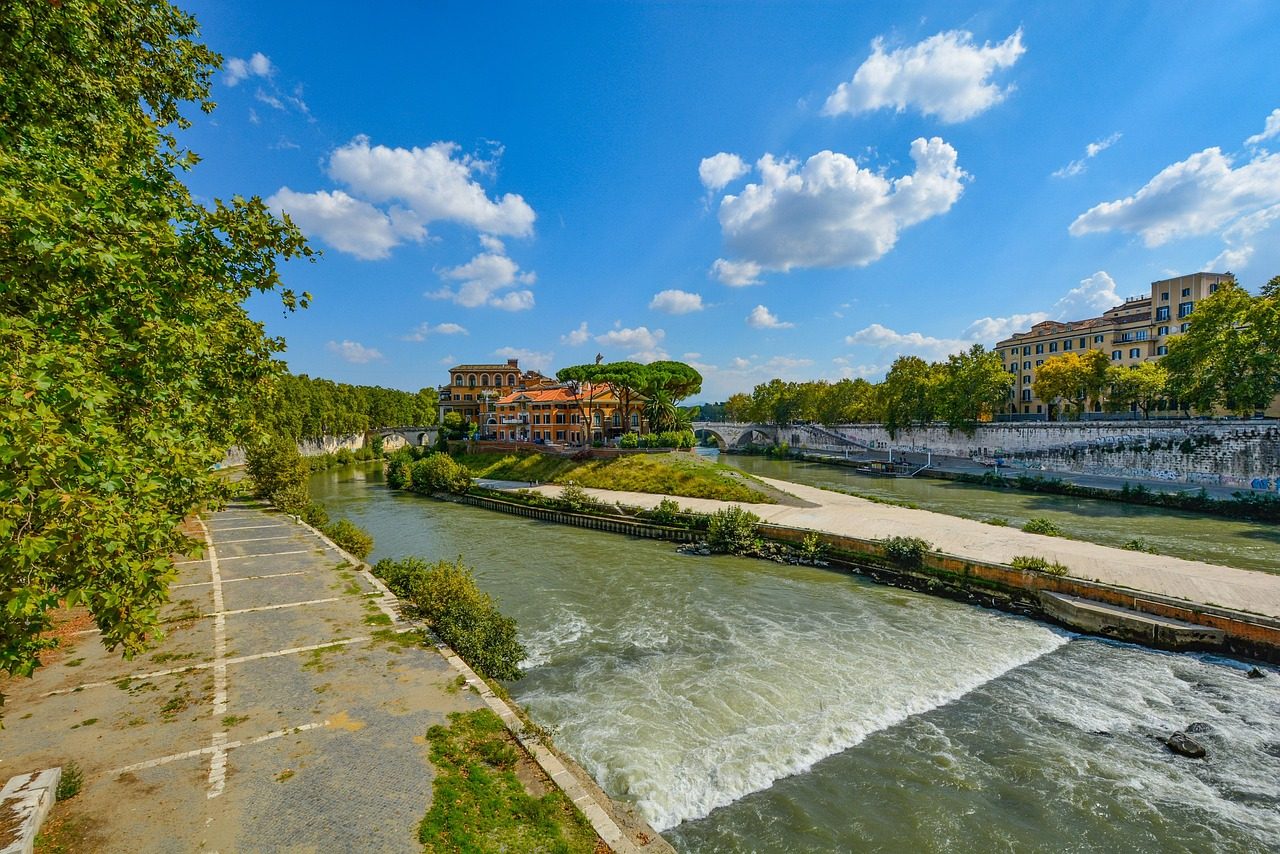
Tiber Island
Ancient boat-shaped island with 2,500 years of history
Explore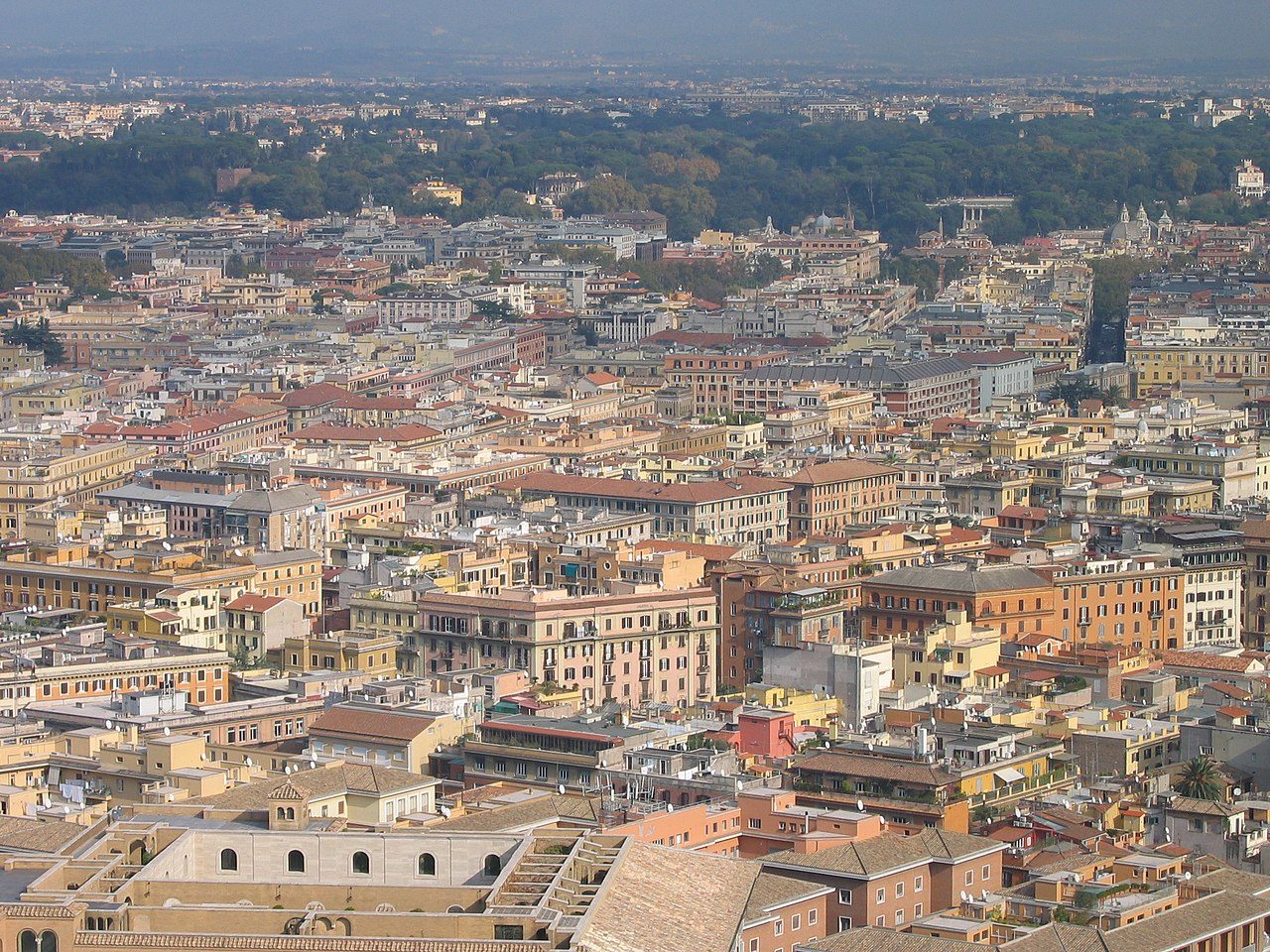
Prati & Borgo
Elegant neighborhood near Vatican with great restaurants
Explore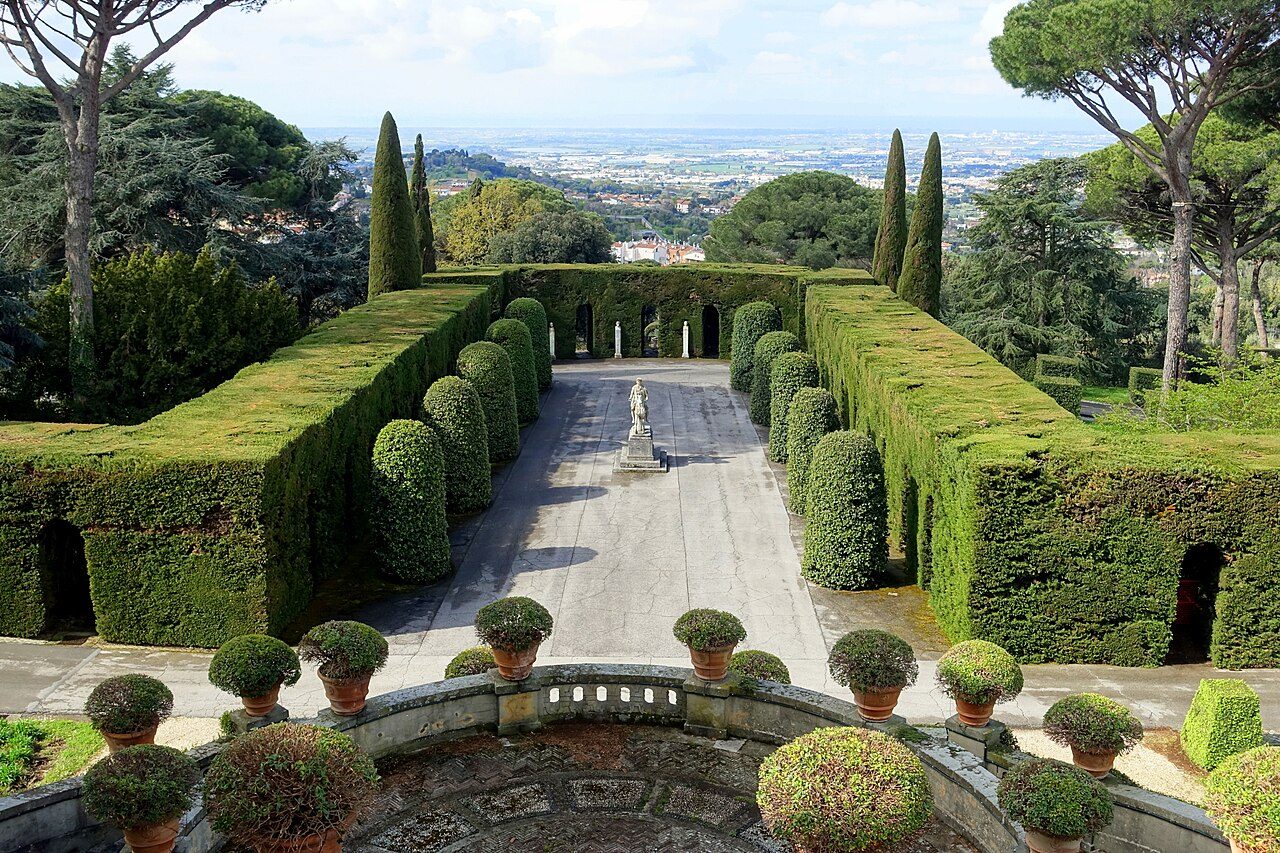
Castel Gandolfo
Pope's summer residence with Lake Albano views
Explore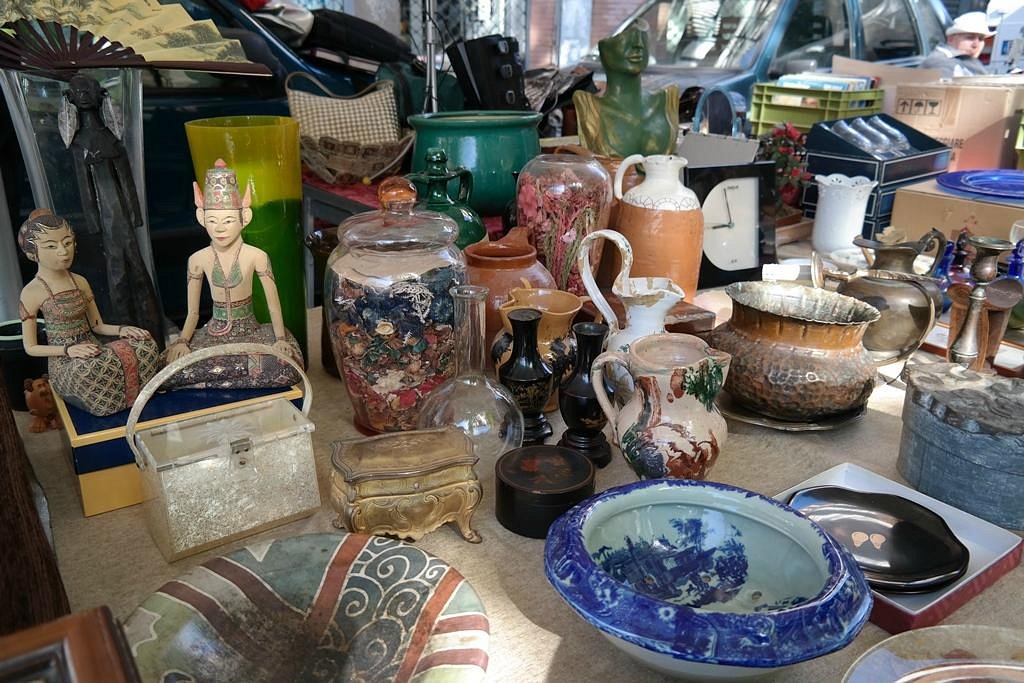
Porta Portese Flea Market
Rome's legendary Sunday flea market
ExploreQuick Planning Guide
⏱️ Time Needed
2–3 hours
💰 Cost
District & architecture free; museums ticketed
🎫 Reservation
Museums only
♿ Accessibility
Flat, wide sidewalks
📅 Best Time
Weekend morning or sunset
👨👩👧👦 Family Friendly
Yes — lake area is great
Nearby Attractions
Square ColosseumPalazzo della Civiltà Italiana
EUR Lake & Japanese GardenBasilica dei Santi Pietro e PaoloTre Fontane Abbey15-minute walk
Featured In These Itineraries
Hidden Gems of RomeRome Like a Local5-Day RomeEssential Tips
- ✓ Metro B — three EUR stations
- ✓ Saturday or Sunday is best
- ✓ Wear comfy shoes — distances are wide
- ✓ Golden hour for photography