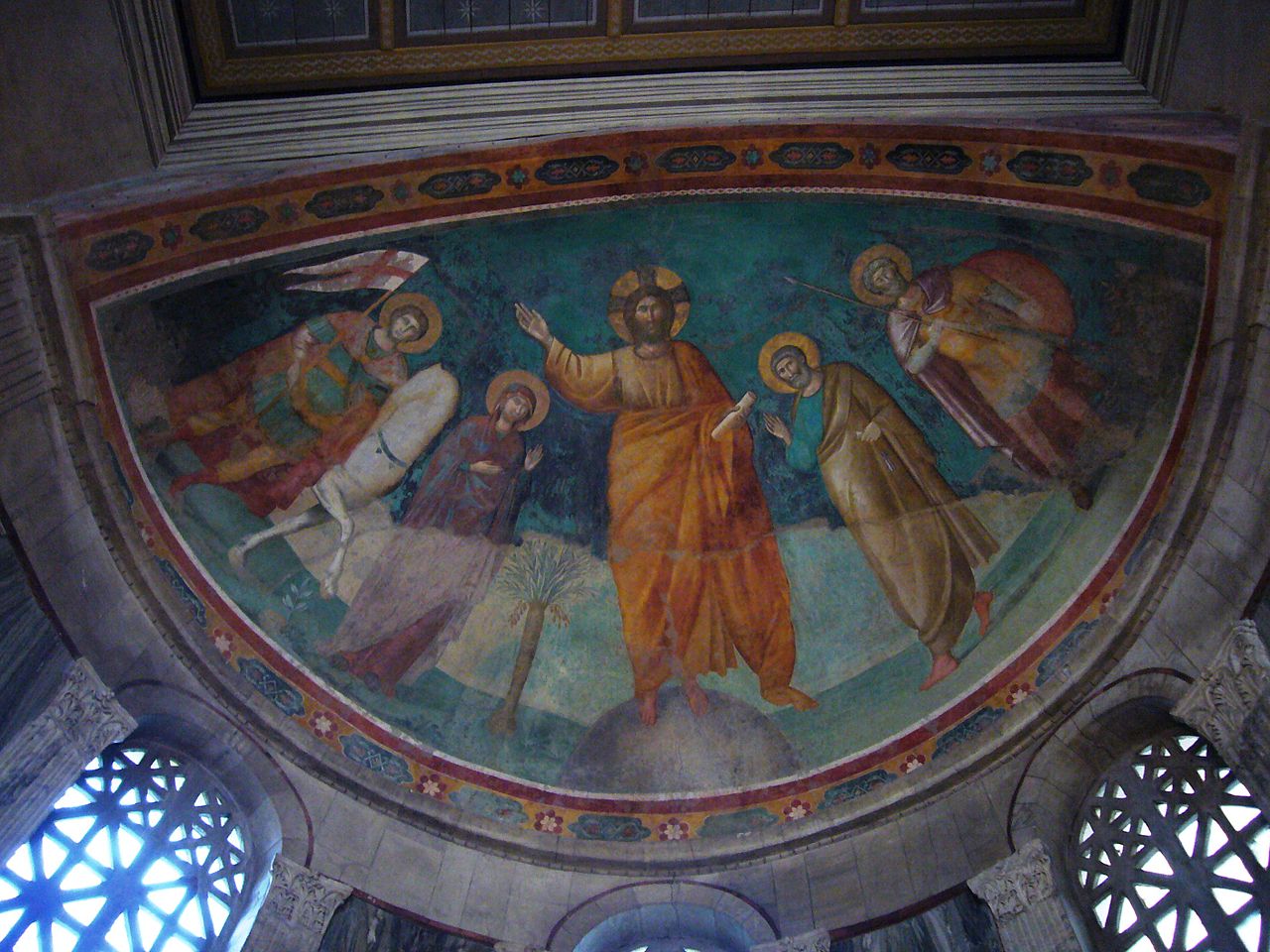
 Free church + two Roman arches
San Giorgio in Velabro
A 7th-century early-medieval basilica in the ancient Forum Boarium beside the quadrifrons Arch of Janus and the 204 AD Arch of the Argentarii — with a Cavallini-school apse fresco, the relics of St. George of Cappadocia and one of central Rome's most peaceful piazzas.
30–45 minFreeChurch + 2 arches204 ADVia del Velabro 19, 00186 Roma RMOpen on MapPlan Your Visit
Compare tickets, tours and stays — booking ahead usually gives more choice
Get TicketsBook a TourHotels NearbySan Giorgio in Velabro is one of central Rome's most atmospheric early-medieval pearls — a 7th-century basilica in the ancient Forum Boarium, the cattle market between the Capitoline, Palatine and Aventine hills where Roman legend says Romulus and Remus were washed ashore as infants. The church sits beside two extraordinary Roman monuments: the Arch of Janus (a four-way Roman arch, or quadrifrons, 4th century AD, whose function and dedication remain debated), and the Arch of the Argentarii — a small honorific gateway erected by local merchants in AD 204 (the moneylenders and cattle merchants of the Forum Boarium), in honour of the emperor Septimius Severus and his family, attached directly to the side of the church and preserving a striking example of damnatio memoriae (the empty rectangle where Caracalla chiselled out his murdered brother Geta in 211 AD). Inside, a single-aisle Romanesque interior with mismatched antique columns, a 12th-century Cosmatesque pavement, the relics of St. George of Cappadocia beneath the main altar, and a remarkable late-13th-century apse fresco attributed to the school of Pietro Cavallini (c. 1295). Entry is completely free and the church sees relatively few visitors, so it is rarely crowded.
Why visit San Giorgio in Velabro?
Most Roman churches you visit for one reason. San Giorgio in Velabro you visit for four — an early-medieval basilica, a Cavallini-school fresco, Rome's only surviving ancient quadrifrons arch, and a striking example of damnatio memoriae — all in a single 80-metre stretch of pavement, all completely free, and almost entirely empty of tourists.
- 7th-century early-medieval basilica: single-aisle Romanesque interior with sixteen mismatched antique columns reused as spolia, restored to its austere medieval character by Antonio Muñoz in 1924–1926.
- Cavallini-school apse fresco (c. 1295): one of the very few surviving works of late-Duecento Roman monumental painting — Christ enthroned with the Virgin, St. Peter, St. Sebastian and St. George.
- Arch of Janus (4th c. AD): Rome's only surviving four-way (quadrifrons) Roman arch, with 48 niches that likely held statuary (though this is conjectural) — its exact function remains debated.
- Arch of the Argentarii (204 AD): a striking example of damnatio memoriae — the empty rectangle where Caracalla erased his murdered brother Geta in 211 AD.
- Free, accessible, rarely crowded: far fewer visitors than the Colosseum's 7.5 million, with the densest cluster of free monuments in central Rome immediately around it.
Quick facts
Built
7th-c. church + 4th-c. AD arch
Entry
Free (donations welcomed)
Visit time
30–45 minutes
Monuments
Church + Arch of Janus + Argentarii
Bus
Bocca della Verità (3 min walk)
Location
Via del Velabro 19
Table of Contents
Jump to any section of the itinerary
A brief history
The site begins as the Velabrum — the marshy depression between the Capitoline, Palatine and Aventine hills that the Tiber annually flooded before the Cloaca Maxima drained it in the 6th century BC. According to Roman legend, Romulus and Remus were washed ashore here as infants in the basket their wicked uncle had abandoned them in. By the imperial period the Velabrum had become a working market district — the Forum Boarium for cattle and the Forum Holitorium for vegetables.
In 204 AD the moneylenders (argentarii) and cattle merchants of the Forum Boarium erected the Arch of the Argentarii, a small honorific gateway, in honour of the emperor Septimius Severus, his wife Julia Domna and their sons Caracalla and Geta — attached to what would later become the side wall of the church. Seven years later, in 211 AD, Caracalla murdered his brother Geta in their mother's arms and ordered his image chiselled out of every public monument in the Empire. The empty rectangle on the relief is the most striking surviving example of Roman political erasure.
In the 4th century AD, probably under Constantine I or Constantius II, the four-way (quadrifrons) Arch of Janus was built nearby — Rome's only surviving ancient arch of this type, though its exact function and dedication remain debated. The first church on the site followed in the 7th century, consecrated by Pope Leo II (682–683) and dedicated initially to Saint Sebastian. In the 8th century Pope Zachary (741–752) transferred the relics of St. George of Cappadocia here and rededicated the church to him.
Pope Gregory IV (827–844) enlarged the church and added an apse; the present 12th-century Romanesque bell tower and Cosmatesque pavement date to a major medieval restoration. Around 1295 the apse was decorated with the remarkable fresco of Christ enthroned with the Virgin, St. Peter, St. Sebastian and St. George — long attributed to the great Roman painter Pietro Cavallini and now considered the work of his school. The Frangipane family converted the Arch of Janus next door into a fortified tower; its upper storey was demolished in 1827.
In 1924–1926 the architect Antonio Muñoz stripped away later baroque additions and restored the church to its austere early-medieval Romanesque character — one of the model restorations of early-20th-century Italian medievalism. On the night of 27 July 1993, on the same night that a second bomb damaged San Giovanni in Laterano, a Cosa Nostra car bomb exploded directly in front of the church portico, almost completely destroying it. A meticulous five-year restoration completed in 1999 reconstructed the portico stone by stone using the original travertine fragments.
San Giorgio in Velabro through the centuries
Legendary eraRomulus and Remus washed ashore
According to Roman legend, the infants Romulus and Remus were washed ashore in the Velabrum — the marshy depression between the Capitoline, Palatine and Aventine hills that the Tiber annually flooded before the Cloaca Maxima drained it in the 6th century BC.
204 ADArch of the Argentarii built
The moneylenders (argentarii) and cattle merchants of the Forum Boarium erect the Arch of the Argentarii, a small honorific gateway, in honour of the emperor Septimius Severus, his wife Julia Domna and their sons Caracalla and Geta — attached to the side of what would much later become the church of San Giorgio.
211 ADDamnatio memoriae of Geta
After Caracalla murders his brother Geta in their mother's arms (211 AD), he orders Geta's image and inscription chiselled out of every public monument in the Empire. The empty rectangle on the relief of the Arch of the Argentarii is the most striking surviving example of Roman political erasure.
4th c. ADArch of Janus built
Probably under Constantine I or Constantius II, the four-way (quadrifrons) Arch of Janus is built in the Forum Boarium; its exact function and dedication remain debated. Rome's only surviving ancient arch of this type, with 48 niches that likely held statuary, though this is conjectural.
7th c.First church on the site
Pope Leo II (682–683) consecrates an early-medieval basilica on the site, dedicated initially to Saint Sebastian. The church is built using columns and architectural elements salvaged from the abandoned imperial monuments around the Forum Boarium.
8th c.Pope Zachary brings the relics
Pope Zachary (741–752) transfers the relics of St. George of Cappadocia to the church and rededicates it to him. The relics — including, according to tradition, the saint's head — are placed beneath the main altar, where they remain today.
12th c.Romanesque restoration & bell tower
Pope Gregory IV (827–844) had already enlarged the church and added an apse; the present Romanesque bell tower and the Cosmatesque pavement date to a major 12th-century restoration. The Frangipane family converts the Arch of Janus next door into a fortified tower.
c. 1295Cavallini-school apse fresco
The apse semi-dome is decorated with a fresco of Christ enthroned with the Virgin, St. Peter, St. Sebastian and St. George — long attributed to Pietro Cavallini, now considered the work of his school. One of the great surviving works of late-13th-century Roman painting.
1827Arch of Janus upper storey demolished
The medieval Frangipane fortification on top of the Arch of Janus is demolished by the Papal authorities, who mistakenly believe it to be a non-Roman addition. The arch loses its upper storey and assumes its current truncated profile.
1924–1926Antonio Muñoz restoration
The architect Antonio Muñoz strips away later baroque additions and restores the church to its austere early-medieval Romanesque character — opening the antique columns of the nave, exposing the original brick facade and reconstructing the portico. The restoration becomes a model for early-20th-century medievalist restoration in Italy.
27 July 1993Cosa Nostra car bomb
On the same night that a second bomb damages San Giovanni in Laterano, a Cosa Nostra car bomb explodes directly in front of the Arch of the Argentarii and the church portico. The portico is almost completely destroyed; the facade, bell tower and apse are severely damaged. A meticulous five-year restoration completed in 1999 reconstructs the portico stone by stone using the original travertine fragments.
What to see at San Giorgio in Velabro
The 7th-century basilica
- Single-aisle early-medieval interior, austere and luminous, restored to its Romanesque character by Antonio Muñoz in 1924–1926 — one of the most atmospheric small churches in central Rome.
- Sixteen mismatched antique columns (each unique in marble, height and capital) reused from Roman imperial buildings around the Forum Boarium — a textbook example of medieval spolia.
- Surviving fragments of the 12th-century Cosmatesque pavement in the central nave — geometric patterns of polychrome marble and glass tesserae.
- The 12th-century Romanesque bell tower (campanile) — one of the most elegant in Rome, with mullioned windows and brick decoration.
Cavallini-school apse fresco (c. 1295)
- The semi-dome of the apse preserves a remarkable late-13th-century fresco depicting Christ enthroned with the Virgin Mary, St. Peter, St. Sebastian and St. George — long attributed to Pietro Cavallini and now considered the work of his school.
- One of the very few surviving works of late-Duecento Roman monumental painting — Cavallini was the master who taught Giotto's generation and whose surviving frescoes at Santa Cecilia in Trastevere are landmarks of pre-Renaissance Italian art.
- The figures of St. Sebastian and St. George reflect the church's double dedication (originally Sebastian, then George after the 8th-century relic translation).
- The fresco can be hard to read in natural light alone, especially later in the day; a torch or phone light can help pick out details.
Arch of Janus (4th c. AD)
- Rome's only surviving four-way Roman arch (quadrifrons), with openings on all four faces — possibly built under Constantine I or Constantius II, though the arch's exact date, function and dedication remain debated.
- Originally clad in marble revetment (stripped during the medieval period) over a brick-and-concrete core; the brick now visible is the original imperial-era construction.
- 48 niches on the four faces likely held statuary, possibly of gods and emperors, though this is conjectural. The empty niches give the arch its distinctive honeycombed appearance.
- Its function is debated — it may have served as a covered passage or shelter, though this is not established with certainty. It is often fenced and access can vary. Converted into a fortified tower by the Frangipane family in the 12th century; the upper storey was demolished in 1827.
Arch of the Argentarii (204 AD)
- The Arch of the Argentarii is a small honorific gateway erected by local merchants in AD 204 — the moneylenders (argentarii) and cattle merchants of the Forum Boarium — in honour of the emperor Septimius Severus and his family.
- Attached directly to the side of the church — one of the very few Roman monuments physically integrated into a medieval building anywhere in the city.
- A striking example of damnatio memoriae: after Caracalla murdered his brother Geta in 211 AD, he ordered Geta's image and inscription chiselled out of the relief. The empty rectangle is still clearly visible.
- Inner faces preserve scenes of the imperial family sacrificing — the figures of Septimius Severus, Julia Domna and Caracalla are intact; Geta has been erased from history.
Don't-miss details
- The relics of St. George of Cappadocia rest in a marble urn beneath the main altar — a major pilgrimage site for the English community of Rome (St. George being the patron of England), particularly on his feast day of 23 April.
- The portico in front of the church — meticulously reconstructed stone by stone after the 1993 Cosa Nostra car bomb almost completely destroyed it. Look for the slight differences in travertine colour where original and reconstructed blocks meet.
- The medieval Schola Cantorum (clergy enclosure) in front of the apse, with surviving 12th-century carved marble screens.
- Check with the parish for current mass times, including any English-language services.
The Cavallini-school apse fresco — late-13th-century Roman painting
The semi-dome of the apse preserves a remarkable fresco painted around 1295 depicting Christ enthroned in majesty, flanked by the Virgin Mary, St. Peter, St. Sebastian and St. George. For most of the 20th century it was attributed to Pietro Cavallini (c. 1259 – c. 1330), the great Roman painter whose surviving works at Santa Cecilia in Trastevere (Last Judgement, 1293) and Santa Maria in Trastevere (mosaic cycle, 1291) make him one of the founders of pre-Renaissance Italian painting and the master of the generation that taught Giotto.
Modern scholarship is more cautious: the Velabro apse is now considered the work of his school rather than the master himself, but the artistic quality is exceptional. The figures are monumentally composed, the drapery falls in classicising folds that anticipate the Renaissance, and the colour palette — gold ground, deep blue, terracotta red — is characteristic of the Cavallini circle.
The choice of saints reflects the church's double dedication: St. Sebastian (the original 7th-century dedicatee) and St. George (after Pope Zachary's 8th-century relic translation). St. Peter appears as the patron of the Roman church itself. The fresco is one of the very few surviving works of late-Duecento Roman monumental painting and a milestone in the long Roman tradition that runs from late-antique apse mosaics through to the Sistine Chapel.
For most of the 20th century the fresco has been hard to read in natural light alone — the apse windows are small and the colours have darkened with age. Walk all the way to the front of the church, look up into the semi-dome and give it five quiet minutes — few other visitors will.
Damnatio memoriae of Geta — Caracalla's erasure of his brother
The Arch of the Argentarii — the small marble gate attached to the side of the church — was erected in 204 AD by the moneylenders (argentarii) and cattle merchants of the Forum Boarium in honour of the emperor Septimius Severus, his wife Julia Domna, and their two sons and joint heirs Caracalla and Geta. The inscription named all four members of the imperial family; the inner reliefs showed them sacrificing together as the model imperial family.
On the death of Septimius Severus in February 211 AD, Caracalla and Geta succeeded him as joint emperors — an arrangement that lasted just ten months. In December 211 AD, in their mother Julia Domna's private apartments in the imperial palace on the Palatine, Caracalla had Geta murdered in her arms. He immediately ordered the most thorough damnatio memoriae in Roman history — Geta's name was chiselled out of every inscription in the Empire, his image cut from every relief and statue, his coins withdrawn from circulation, and his memory officially condemned by the Senate.
On the Arch of the Argentarii the chisel marks are still clearly visible: the empty rectangle in the inner relief where Geta's image once stood, and the gouged-out section of the inscription where his name appeared. The figures of Septimius Severus, Julia Domna and Caracalla survive intact — Geta has been erased from history at the level of a single physical relief. It is the most striking surviving example of Roman political erasure anywhere in the city, and you can stand twenty centimetres from it for free.
Caracalla himself was assassinated in April 217 AD by his own praetorian guard while urinating beside a road in modern Turkey. Within a generation the empty rectangle on the Velabro arch had become a poignant reminder of the futility of the erasure — Geta's name was still remembered, and Caracalla's reputation had collapsed along with it.
The 1993 Cosa Nostra bombing — and the meticulous restoration
On the night of 27 July 1993, between 23:14 and 00:08, two car bombs exploded in central Rome — one at San Giovanni in Laterano and one directly in front of the Arch of the Argentarii, the church facade and portico of San Giorgio in Velabro. The attack was the work of Cosa Nostra, the Sicilian Mafia, in retaliation for the prosecution of leading mafiosi by Italian magistrates after the assassinations of Giovanni Falcone and Paolo Borsellino the previous year.
The Velabro portico was almost completely destroyed. The travertine columns shattered; the entablature collapsed; the church facade and bell tower were severely damaged; the apse was cracked. The Arch of the Argentarii, twenty metres from the explosion, was scarred but structurally survived. By a miracle no one was killed.
A meticulous five-year restoration, completed in 1999, reconstructed the portico stone by stone using the original travertine fragments — each piece numbered, catalogued and returned to its original position. The result is so seamless that visitors today are usually unaware the building has been bombed. Look closely at the column bases and the lower courses of the facade to see the slight differences in travertine colour where original and reconstructed blocks meet — the only visible scar.
The bombing remains a sensitive subject in the parish; the Crociferi friars who care for the church do not display any commemorative plaque, preferring (in the words of the parish priest) "to let the building itself be the witness."
San Giorgio in Velabro walking itinerary
A 3-hour, 7-stop walk anchored on San Giorgio in Velabro and covering the entire Forum Boarium — San Nicola in Carcere, the Arch of Janus, the Arch of the Argentarii, the round Temple of Hercules Victor and the Temple of Portunus, the Bocca della Verità, and lunch at Roscioli or in the Jewish Ghetto. Total distance ~1.2 km, completely flat, in the heart of monumental Rome.
Walking route map


 📍
📍
📍
📍
📍
📍
📍
+− Leaflet | © OpenStreetMap contributors
📍
📍
📍
📍
📍
📍
📍
+− Leaflet | © OpenStreetMap contributorsClick on markers for stop details. Numbers indicate the walking order.
1StartSan Nicola in Carcere (start)
Free Roman temples belowStart at San Nicola in Carcere on Via del Teatro di Marcello (free church on three Republican-era Roman temples). 5 minutes' walk from Piazza Venezia.
27 min walk + 10 minArch of Janus
Free open-air archWalk 7 minutes south. The surviving ancient four-way (quadrifrons) arch (4th c. AD) — Rome's only surviving example of this type — appears in the small piazza beside the church. It is often fenced, so access varies; view it from the piazza.
35 minArch of the Argentarii
Damnatio memoriaeAttached to the side of San Giorgio in Velabro: a small honorific gateway erected by local merchants in AD 204, with a striking example of the damnatio memoriae of Geta clearly visible.
430 minSan Giorgio in Velabro church
Free Cavallini schoolFree entry. Opening hours can vary around services and parish activities; verify locally. Single-aisle Romanesque interior, antique columns, Cosmatesque pavement, the relics of St. George and the Cavallini-school apse fresco (c. 1295).
520 minForum Boarium — Temples of Hercules & Portunus
Two free templesWalk 3 minutes south to the Forum Boarium — the round Temple of Hercules Victor and the rectangular Temple of Portunus, both 2nd century BC and free to view from the outside.
615 minBocca della Verità & Santa Maria in Cosmedin
Mouth of TruthWalk 2 minutes south to the Bocca della Verità in the portico of Santa Maria in Cosmedin — the famous 'Mouth of Truth' marble mask, free to view from the railings or €2 to photograph from the portico.
760 minLunch at Roscioli or in the Ghetto
Atmospheric lunchWalk 10 minutes north to Roscioli (Via dei Giubbonari 21) for one of Rome's best deli lunches, or to the Jewish Ghetto (Nonna Betta or Ba'Ghetto on Via del Portico d'Ottavia) for Roman-Jewish classics — €25–35 a head.
San Giorgio in Velabro vs San Nicola in Carcere — which Forum Boarium church to visit?
| Feature | San Giorgio in Velabro | San Nicola in Carcere |
|---|---|---|
| Date of church | 7th c., restored 1924–26 | 11th c. (1099) |
| Roman monuments | Arch of Janus (4th c. AD) + Argentarii (204 AD) | 3 Republican temples (3rd–2nd c. BC) below |
| Stratigraphy | Side-by-side (church + arches) | Vertical (church above temple podiums) |
| Entry | Completely free | Church normally free; irregular underground access may require a donation |
| Star artwork | Cavallini-school apse fresco (c. 1295) | Embedded temple columns + Cosmatesque |
| Relics | St. George of Cappadocia | St. Nicholas of Myra |
| Visit duration | 30–45 minutes | 30 min church, 75 min with underground |
| Best for | Atmosphere, 13th-c. painting, open-air arches | Republican Rome stratigraphy |
Verdict: do both — they are 5 minutes apart and complement each other perfectly. San Nicola in Carcere is the Republican-era stratigraphic site (three temples beneath an 11th-century church); San Giorgio in Velabro is the early-medieval atmospheric site (a 7th-century basilica beside two Roman arches with a Cavallini-school fresco). Combined they make the densest free-monument hour in central Rome.
Best time to visit
Time of day
Late afternoon (16:00–17:30)
Best — the church reopens at 16:00 after the lunch break and golden-hour light through the small high apse windows hits the Cavallini-school fresco at the perfect angle.
Mid-morning (10:00–12:00)
Excellent for combining with San Nicola in Carcere first and a Ghetto lunch afterwards.
Expect a long midday closure
A lengthy midday closure is common at this church; verify locally before travelling and plan for a morning or late-afternoon visit.
Avoid 18:00 weekdays / 11:00 Sundays
Mass times — visit only if you wish to attend the service quietly.
Best days & seasons
Tuesday, Wednesday & Thursday
Quietest days. Saturday afternoons can attract small groups visiting the Forum Boarium walking route.
23 April — Feast of St. George
Special English-community mass; church decorated with white-and-red roses. Atmospheric but busier than usual.
March–May & October–November 2026
Ideal weather, perfect for the open-air Arch of Janus and the entire Forum Boarium walk.
English-language mass
Confirm current times with the parish — services vary.
Getting there
Bus to Bocca della Verità (best)
Buses 23, 44, 81, 83, 170, 280, 716 or 781 stop at Bocca della Verità / Lungotevere Aventino. The church is 3 minutes' walk north on Via del Velabro.
Bus to Piazza Venezia
16+ bus lines stop at Piazza Venezia. From there walk south on Via del Teatro di Marcello past San Nicola in Carcere — 8 minutes total.
Metro Line B — Circo Massimo
Get off at Circo Massimo and walk 8 minutes north via Via di Santa Maria in Cosmedin. A scenic walk past the Bocca della Verità.
Walking from Trastevere
10 minutes east via Ponte Palatino. The most scenic approach if combining with a Trastevere morning.
Common mistakes to avoid
Assuming fixed opening hours
Opening hours can vary around services and parish activities; verify locally before travelling. A long midday closure is usual in Roman parish churches.
Missing the damnatio memoriae
The empty rectangle on the Arch of the Argentarii is one of the most historically loaded details in central Rome — and almost no visitors notice it. Look at the inner faces of the gate for the family-sacrifice relief and identify the chiselled-out Geta.
Walking past the Cavallini fresco
The apse fresco is in shadow for most of the day and easy to miss. Walk all the way to the front of the church and look up into the apse semi-dome — it is the single most important artwork in the building.
Confusing the two arches
The Arch of Janus (large, surviving ancient quadrifrons, freestanding in the piazza) and the Arch of the Argentarii (small, attached to the side of the church) are completely different monuments from different periods. The Argentarii is technically not even an arch.
Skipping the exterior detail of the bombing
The 1993 Cosa Nostra car bomb almost destroyed the portico and severely damaged the facade. The reconstruction is so meticulous it is nearly invisible — but knowing the story changes how you see the building.
Arriving without small change
The church is free to enter but maintenance is supported entirely by donations in a box near the entrance. Bring €2–5 in coins or a small note — the building is fragile and the parish is small.
Insider tips from locals
Visit at 16:00 sharp on a Wednesday
The church reopens at 16:00 after the lunch break. Late golden-hour light through the small high windows of the apse hits the Cavallini-school fresco at exactly the right angle — one of the most beautiful 30 minutes anywhere in central Rome. Wednesday is the quietest day of the week.
St. George's feast day — 23 April
On 23 April the English Catholic community of Rome celebrates a special mass at San Giorgio in Velabro (St. George being the patron of England). The church is decorated with white-and-red roses and the atmosphere is exceptional. Arrive by 10:30 for a 11:00 service.
Photograph the south portico from inside the Arch of the Argentarii
Standing under the Arch of the Argentarii and looking through it toward the church portico gives one of the most photographically perfect framing compositions in central Rome — the Roman-Severan-era marble framing the medieval Romanesque facade.
Do San Nicola in Carcere first, San Giorgio second
The two free Forum Boarium churches are best visited as a pair, north to south: San Nicola in Carcere in the late morning, lunch in the Ghetto, then San Giorgio in Velabro and the Forum Boarium temples in the late afternoon. The pair is the densest free-monument hour in central Rome.
Enter through the side door
The main door on the portico is sometimes closed even during opening hours. Look for the small side door on the south side, usually open and used by the Crociferi friars. Enter quietly — the church is small and any conversation is easily overheard.
Ask about English-language mass times
The parish occasionally offers English-language services; ask locally or check with the diocese for current times. The combination of the Cavallini-school apse fresco and the Romanesque interior make any service here atmospheric.
Where to Stay Near San Giorgio in Velabro
Looking for convenient accommodation near San Giorgio in Velabro? Stay within walking distance to make the most of your visit.
Hotels Near This AttractionTop Rated HotelsBudget-Friendly OptionsLuxury HotelsCentral locations with easy access to San Giorgio in Velabro and other attractionsFrequently Asked Questions
Related Attractions
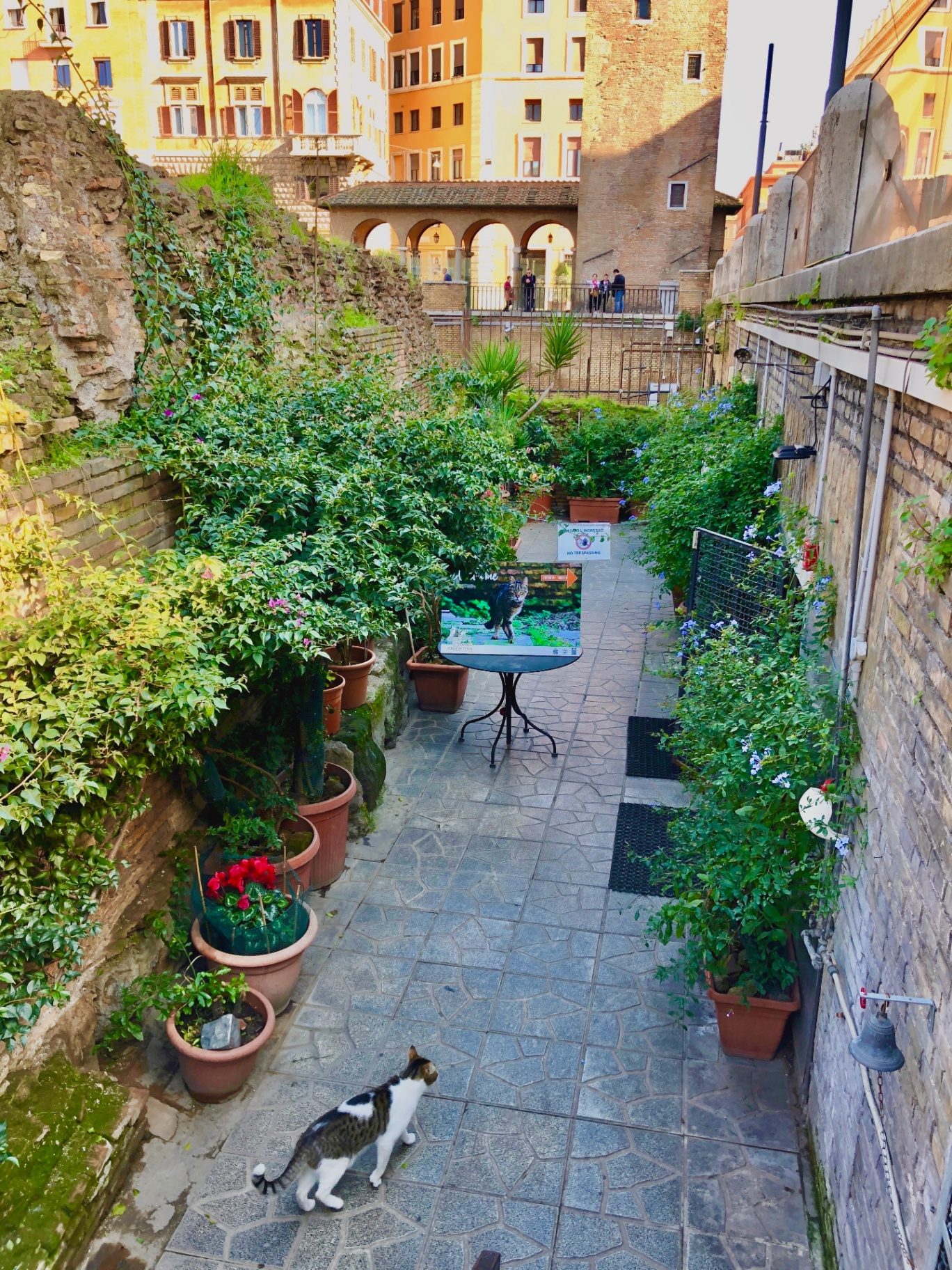
Largo di Torre Argentina
Ancient temples with 130+ rescue cats—history meets heart
Explore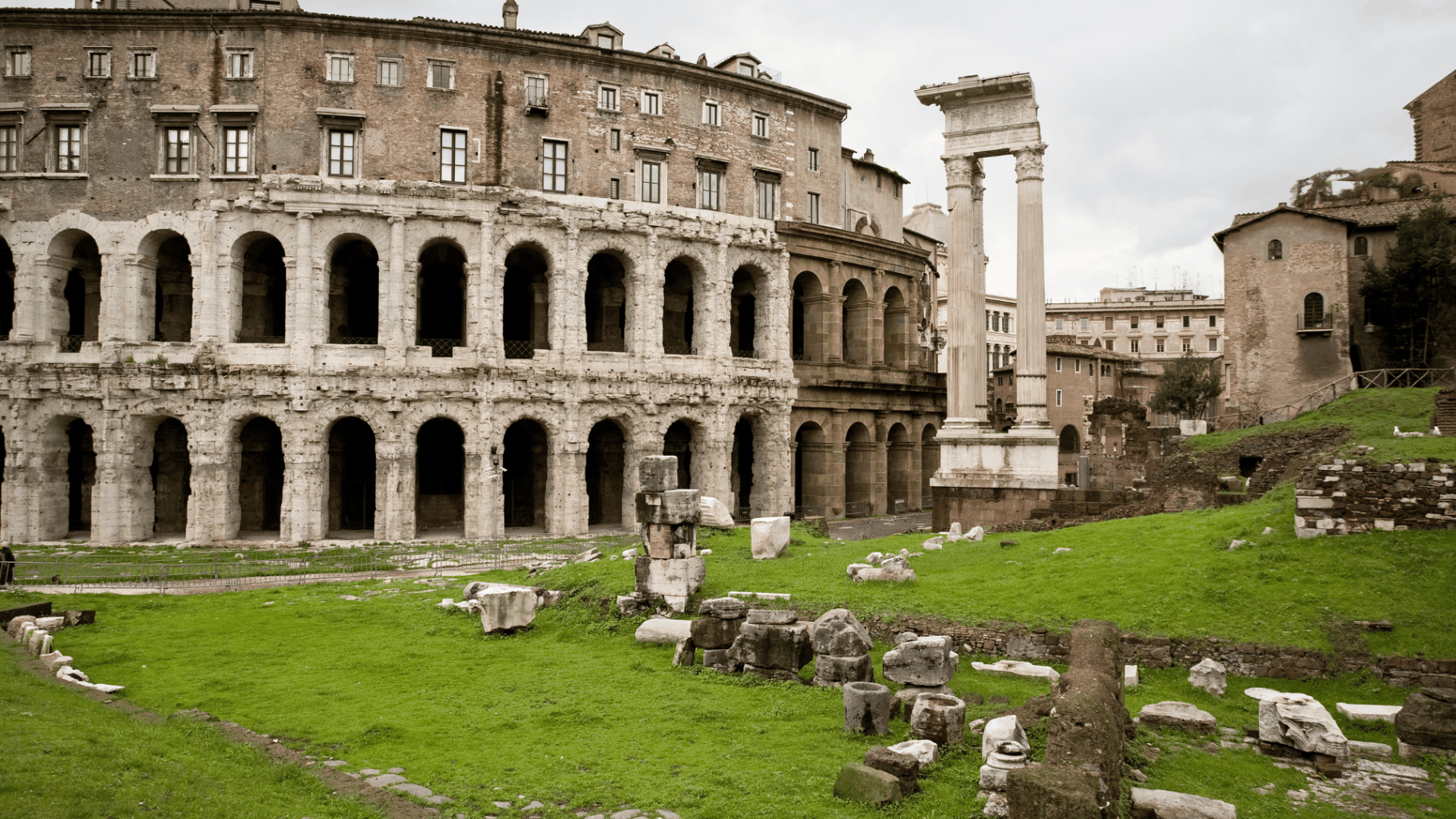
Theatre of Marcellus
Ancient Roman theater that inspired the Colosseum
Explore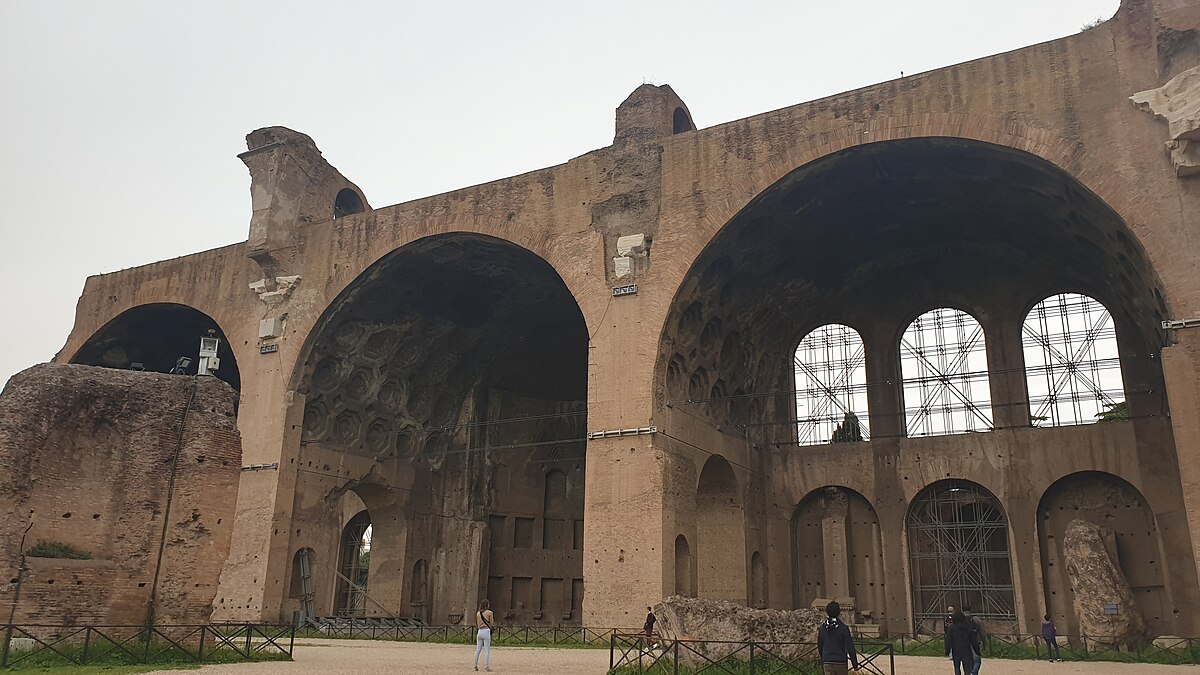
Basilica of Maxentius
The Roman Forum's largest building, with vast surviving concrete vaults
Explore
Temple of Venus and Roma
Rome's largest ancient temple—Emperor Hadrian's masterpiece
Explore
Zoomarine
Italy's premier marine theme park on Rome's southern coast — journey time varies
Explore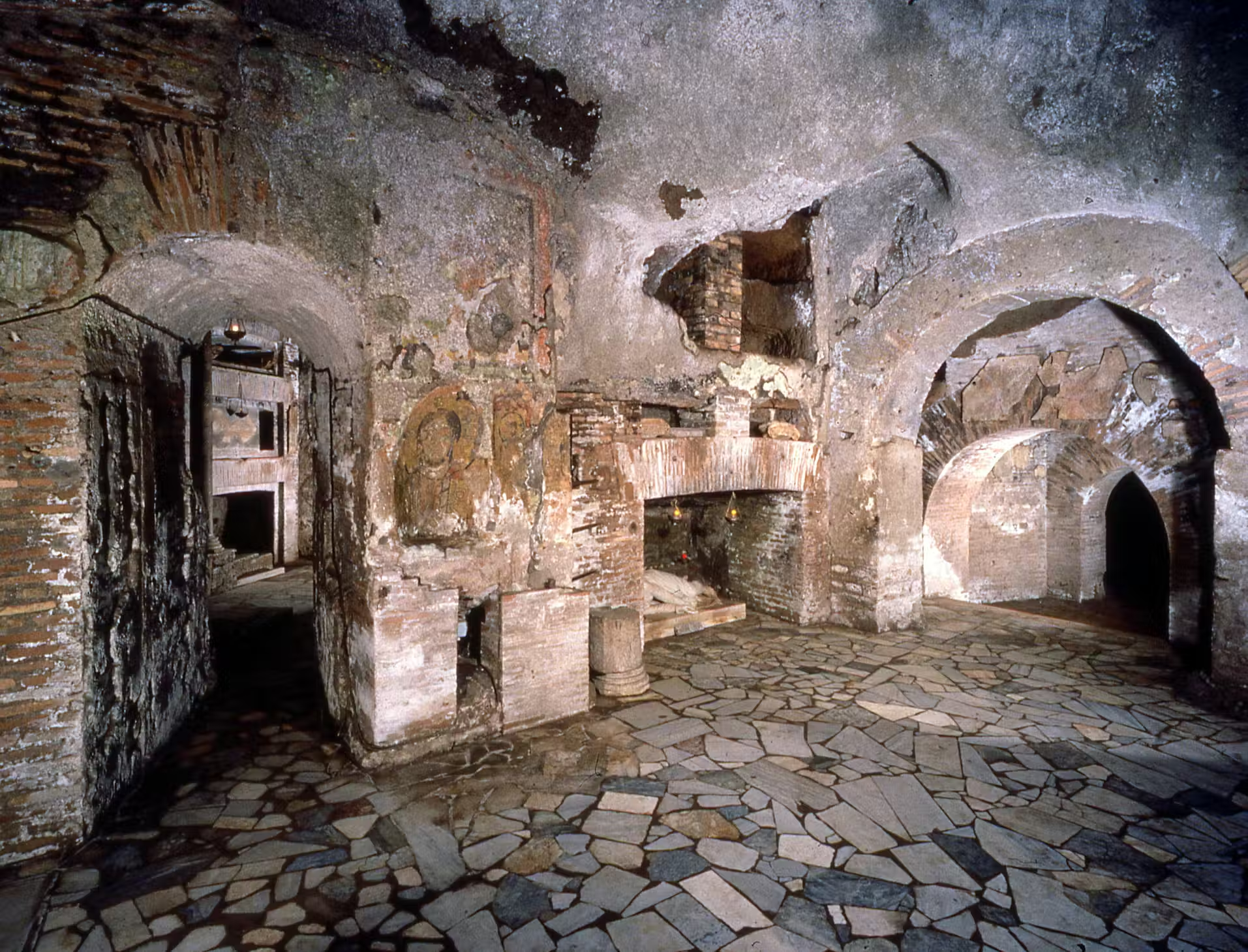
Catacombs of Saint Callixtus
Rome's largest Christian catacombs—20km of tunnels, 16 popes
ExploreQuick Planning Guide
⏱️ Time Needed
30–45 minutes
💰 Cost
Free (donations welcomed)
🎫 Reservation
No booking — walk-up always possible
♿ Accessibility
Fully accessible at street level
📅 Best Time
Wednesday afternoon, 16:00–17:30
👨👩👧👦 Family Friendly
Yes — open-air arches engaging for kids
🌡️ Weather
Indoor church + outdoor arches
Nearby Attractions
Arch of Janusin the same piazza
Arch of the Argentariiattached to church
Bocca della Verità3 min walk
Forum Boarium temples5 min walk
San Nicola in Carcere5 min walk
Featured In These Itineraries
Free Rome ItineraryHidden Gems of Rome5 Day Rome ItineraryEssential Tips
- ✓ Free entry; hours vary around services — verify locally
- ✓ A long midday closure is common; verify locally before travelling
- ✓ Bring €2–5 cash for donation box
- ✓ Look up — Cavallini fresco in apse
- ✓ Find the damnatio memoriae of Geta