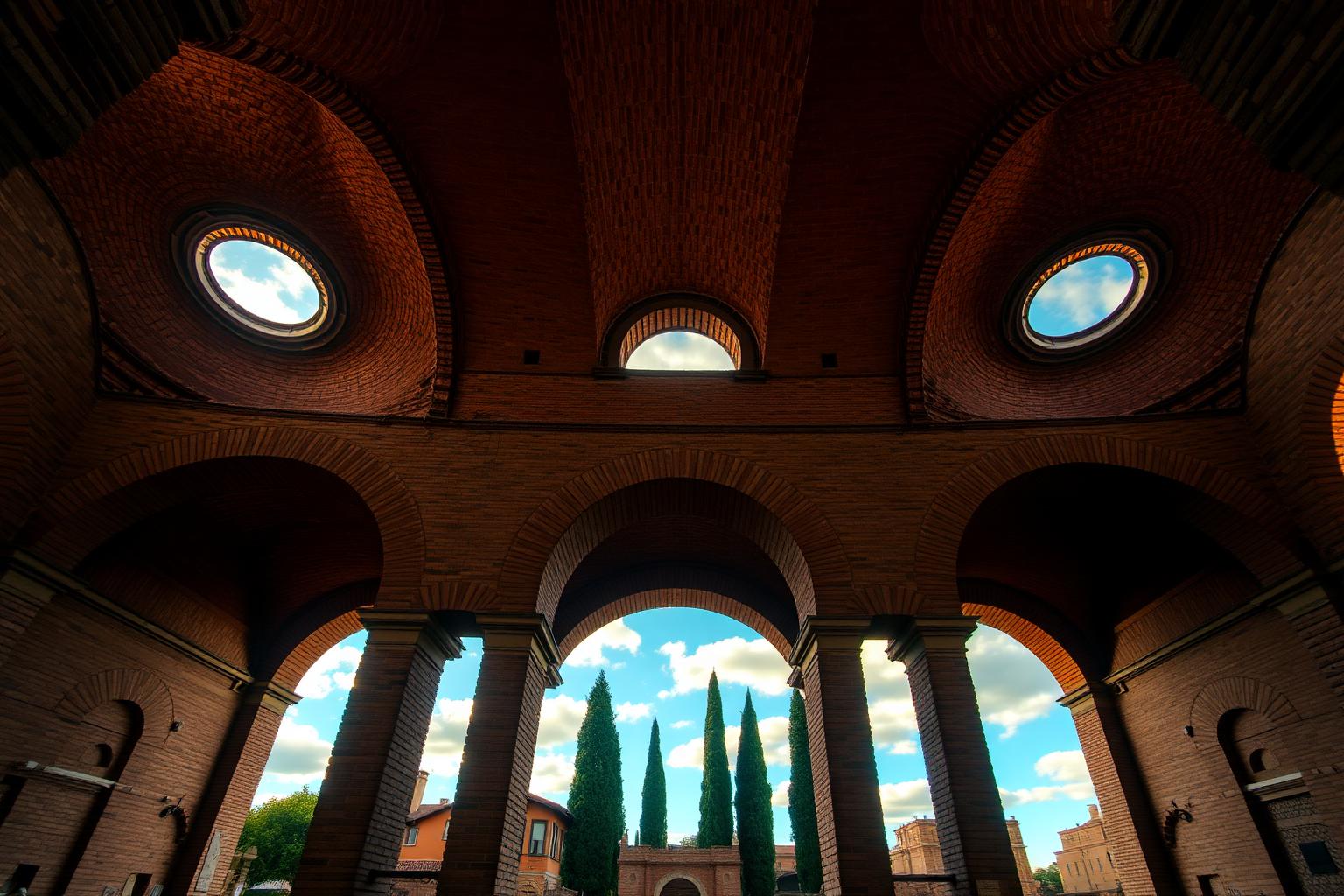
 Forum's largest building
Basilica of Maxentius
The Roman Forum's colossal masterpiece of late-antique engineering — three surviving coffered barrel vaults whose vast concrete vaults influenced later monumental architecture and Renaissance conceptions of large interior space.
30–45 min24h Colosseum, Roman Forum and Palatine ticket — €18308–312 AD100 × 65 mVia Sacra, Roman Forum, 00186 Roma RMOpen on MapPlan Your Visit
Compare tickets, tours and stays — booking ahead usually gives more choice
Get TicketsBook a TourHotels NearbyThe Basilica of Maxentius and Constantine is the largest building in the Roman Forum and the architectural masterpiece of late-antique Rome — a 100 × 65 metre civic basilica begun by Emperor Maxentius in 308 AD and completed by Constantine after his victory at the Milvian Bridge in 312 AD. Three colossal coffered barrel vaults, each 24.5 metres high, still stand as the most impressive single ruin in the Forum, the surviving third of an interior that originally enclosed 6,500 m² and held a 12-metre acrolithic seated statue of Constantine — the head, hand and foot of which now stand in the courtyard of the Capitoline Museums. Bramante, Sangallo and Michelangelo all studied this building when designing the new St Peter's Basilica two centuries later.
Why visit the Basilica of Maxentius?
While every Forum visitor photographs the Arch of Titus and the Temple of Saturn, the basilica is the building that actually changed the future of Western architecture — and yet half of them walk past without realising what it is.
- Largest building in the Forum: 100 × 65 metres, originally 35 metres high — the biggest single interior space in ancient Rome after the Pantheon.
- Engineering masterpiece: the three surviving coffered barrel vaults are the largest intact examples of Roman concrete groin-vault construction anywhere on earth.
- Influenced Renaissance monumental architecture: Renaissance architects including Bramante studied Roman vaulting traditions such as this basilica when designing the new St Peter's two centuries later.
- Constantine's colossal statue site: the western apse held a 12-metre acrolithic seated statue — the surviving head, hand and foot are 15 minutes away in the Capitoline Museums.
- Most dramatic photograph in the Forum: three towering brick vaults framed by cypress trees against the Mediterranean sky.
Quick facts
Built
308–312 AD
Begun by
Maxentius, completed by Constantine
Original size
100 × 65 m, nave 35 m high
Entry
24h Colosseum, Roman Forum and Palatine ticket — €18 (2026)
Visit time
30–45 minutes
Influence
Influenced Renaissance monumental architecture
Table of Contents
Jump to any section of the itinerary
A brief history
Marcus Aurelius Valerius Maxentius (c. 278–312 AD) became Roman Emperor in October 306 when the Praetorian Guard proclaimed him Augustus in Rome. His six-year reign was extraordinarily ambitious in monumental construction — the suburban villa-circus-mausoleum complex on the Appian Way, the Temple of Romulus on the Sacred Way, and — most importantly — the colossal new civic basilica at the eastern end of the Roman Forum, on the site of the old Horrea Piperataria spice warehouses burnt under Nero.
Construction began in 308 AD. The original Maxentian plan was longitudinal: a 100 × 65 metre rectangle with the main entrance on the east, a single apse on the west, and three vaulted aisles — a central nave 35 metres high flanked by two side aisles 24.5 metres high. The roof was supported not by columns (as in earlier Roman basilicas) but by massive concrete groin vaults springing from eight enormous brick piers, freeing the walls for huge thermal windows. The interior was clad in polychrome marble veneer with gilded bronze coffer rosettes overhead — the most spectacular civic interior in Roman history.
On 28 October 312 AD, with construction still incomplete, Maxentius marched out to face Constantine at the Milvian Bridge, was defeated and drowned in the Tiber. Constantine took over the project and finished it — but redirected it to his own glory. He added a new monumental porch on the south facing the Via Sacra, opened a second apse on the north, and installed a 12-metre acrolithic seated statue of himself in the original western apse. The basilica was rededicated as the Basilica Constantiniana; both emperors are now jointly credited because both built it.
For four centuries the basilica functioned as a court of the Praefectus Urbi, a meeting hall and an imperial audience chamber — one of the last great Roman civic buildings still in use after the Empire collapsed in the West. Then on 9 September 847 AD a massive earthquake devastated Rome. The central nave and the south aisle collapsed completely. Only the north aisle — buttressed by the Velia hill behind — survived. Two-thirds of the basilica was lost in a single afternoon.
In 1487 workmen digging in the western apse uncovered the head, hand and foot of Constantine's colossal statue. Pope Innocent VIII transferred them to the Palazzo dei Conservatori on the Capitoline, where they remain. From 1506 onward Bramante, Sangallo and Michelangelo all studied the surviving vaults, coffers and piers as Renaissance architects drew on Roman vaulting traditions such as this basilica when designing the new St Peter's Basilica. In 1614 Pope Paul V removed the last 14.3-metre Corinthian column standing inside the basilica and re-erected it in front of Santa Maria Maggiore, where it still stands.
In 1960 the basilica hosted the wrestling events of the Rome Olympics. The site has since undergone periodic conservation work; check the official Parco Archeologico del Colosseo site for current access arrangements.
The Basilica of Maxentius through the centuries
70 BC – 64 ADSite of the Horrea Piperataria
Before the basilica, the eastern Forum site held the Horrea Piperataria — the great spice and pepper warehouses of Rome, built under the Republic and burnt in the great fire of 64 AD under Nero.
75 ADTemplum Pacis built next door
Vespasian builds the colossal Templum Pacis (Temple of Peace) immediately north of the future basilica site, setting the precedent for monumental architecture in this part of the Forum.
306 ADMaxentius proclaimed emperor
On 28 October 306 AD the Praetorian Guard proclaim Marcus Aurelius Valerius Maxentius emperor in Rome. He launches the most ambitious imperial building programme in Rome since Trajan two centuries earlier.
308 ADConstruction begins
Maxentius begins the Basilica Nova on the eastern Velia plateau, on the site of the Horrea Piperataria. The original orientation is east–west, with the main entrance on the east and the apse on the west.
28 Oct 312 ADBattle of the Milvian Bridge
Constantine defeats and kills Maxentius at the Milvian Bridge. The basilica is still under construction. Constantine takes over the project and redirects it to his own glory.
312–313 ADConstantine completes the basilica
Constantine adds a new monumental south porch facing the Via Sacra, opens a new northern apse and installs his own colossal seated statue (12 m, acrolithic) in the western apse — the building becomes the Basilica Constantiniana.
4th–8th c.Civic and judicial use
The basilica continues as a court of the Praefectus Urbi, a meeting hall and an imperial audience chamber. It is one of the last great Roman civic buildings still in use after the western Empire collapses.
9 Sept 847 ADThe great earthquake
A massive earthquake devastates Rome. The central nave and the south aisle of the basilica collapse completely. Only the north aisle — buttressed by the Velia hill behind — survives.
10th–15th c.Medieval ruin & church
The surviving aisle houses a small church (Santa Maria Nova). Marble veneer, gilded bronze coffer rosettes and the colossal Constantine statue are stripped or buried. The basilica becomes a quarry for the lime kilns of medieval Rome.
1487Constantine's statue rediscovered
Workmen dig up the head, hand and foot of Constantine's colossal acrolithic statue in the western apse. Pope Innocent VIII transfers them to the Palazzo dei Conservatori on the Capitoline, where they remain.
1506 onwardsBramante studies the basilica
Bramante, Sangallo and Michelangelo all studied the surviving vaults, whose vast concrete volumes influenced later monumental architecture and Renaissance conceptions of large interior space. The 35-metre coffered vault of Bramante's plan is a direct quotation of Maxentius.
1614Last interior column removed
Pope Paul V removes the last 14.3-metre Corinthian column standing inside the basilica and re-erects it in front of Santa Maria Maggiore — where it still stands as the Column of the Madonna.
OngoingConservation & site management
The Parco Archeologico del Colosseo continues periodic conservation work on the surviving structure. Check the official site for current access and any special openings.
Architecture & engineering
Opus latericium & groin vaults
A concrete core (opus caementicium) faced with thin red bricks. The structural breakthrough is the groin vault: by intersecting two barrel vaults at right angles the Romans concentrated all the load onto four corner piers, freeing the walls for huge thermal windows and eliminating the columned colonnades of earlier basilicas.
Coffered ceilings (lacunaria)
Each barrel vault is decorated with deep octagonal coffers — both decorative and structural. The recesses reduced the dead weight of the concrete vault by an estimated 25% while creating the dramatic geometric pattern overhead. Each coffer originally held a gilded bronze rosette set in white stucco.
Polychrome decoration
Walls clad in porphyry, giallo antico and africano marble veneer attached with bronze cramps; floors in opus sectile geometric patterns; vaults painted and gilded. The interior was dazzlingly bright — nothing like the bare brick we see today, which is the structural skeleton stripped of every decorative surface in the medieval centuries.
What to see at the Basilica of Maxentius
The three surviving barrel vaults
- The north aisle: three colossal coffered barrel vaults each 25 m deep, 17 m wide and 24.5 m high — only one third of the original three-aisled basilica.
- The vault interiors are made of opus caementicium (Roman concrete) faced with thin red bricks (opus latericium) — the brickwork is largely original from 308–312 AD and astonishingly intact after 1,700 years.
- Imagine two more bays of equal size: a central nave 35 m high and 80 m long, plus a matching south aisle — all collapsed in the earthquake of 847 AD.
- From the Via Sacra path you see the three vaults aligned, framed by the cypress trees of the Velia — the most photographed view in the eastern Forum.
Coffered ceilings & decoration
- Each barrel vault is decorated with deep octagonal coffers (lacunaria) — a structural-decorative system that reduced the dead weight of the concrete vault while creating a dramatic geometric pattern overhead.
- Originally each coffer held a gilded bronze rosette in its centre — long since stripped. The fixing holes are still visible.
- The walls were entirely clad in polychrome marble veneer (porphyry, giallo antico, africano) attached with bronze cramps — all stripped in the medieval centuries for the lime kilns. The cramp holes pock the brickwork.
- Traces of the original white stucco mouldings survive in protected corners of the vaults, hinting at the dazzlingly bright original interior.
Constantine's colossal statue site
- The western apse — entered through the original Maxentian western entrance — once held Constantine's 12-metre acrolithic seated statue. The apse itself is no longer accessible but its position is marked.
- Acrolithic technique: only the exposed flesh (head, hands, feet) was carved in marble; the body was a wooden frame draped in gilded bronze. This kept the statue light enough to transport and install.
- The surviving fragments — the 2.6 m head with its piercing carved irises, a hand, a foot, a knee, an elbow and a forearm — are now in the courtyard of the Palazzo dei Conservatori on the Capitoline.
- A complete 3D-printed reconstruction of the full statue was unveiled in the same courtyard in 2024 and is part of the Capitoline Museums tour.
The two apses and the two entrances
- The original Maxentian plan was longitudinal, with the main entrance on the east and a single apse on the west holding the imperial statue.
- Constantine added a second monumental entrance on the south, facing the Via Sacra, and a second apse on the north — converting the basilica into a centralised cross-axial space, an architectural innovation that anticipates Hagia Sophia by 200 years.
- The northern apse (clearly visible from the Via Sacra) still survives almost to its full height and shows fixing holes for marble veneer.
- Look for the springing points of the lost central nave — the massive piers on the south side of the surviving aisle still carry traces of where the central vaults sprang.
Architectural details to notice
- The brick stamps (bolli laterizi) in the masonry are dated to the years 307–313 AD, allowing archaeologists to track the building campaign month by month — the most precise dating of any Roman monument.
- Three large semicircular oculi (round windows) high in the surviving wall are the original clerestory windows of the north aisle — they admitted enough light to illuminate 6,500 m² without artificial lighting.
- Fragments of the original opus sectile marble floor (geometric patterns in coloured stone) survive in protected corners and are sometimes shown during conservation seasons.
- On the slope just below the basilica stands a 14.3-metre Corinthian column — a replacement marker for the original removed by Pope Paul V in 1614 and now in front of Santa Maria Maggiore.
The Colossal Statue of Constantine
The architectural focus of the completed basilica was the colossal seated statue of Constantine installed in the western apse around 313 AD. Twelve metres tall — equivalent to a four-storey building — it represented the emperor enthroned in the manner of a god, holding an orb in one hand and probably a sceptre or labarum in the other.
The technique was acrolithic: only the exposed flesh (head, hands, feet, knees, elbows) was carved in white marble; the body and drapery were a wooden frame covered in gilded bronze sheets. This reduced weight dramatically — without it, the statue could never have been moved and installed. The same technique is used today for many large monumental sculptures.
In 1487 workmen digging in the western apse uncovered eight of the marble fragments: the 2.6-metre head with its piercing carved irises looking heavenward, a hand, a foot, a knee, an elbow, a forearm, a kneecap and a finger. Pope Innocent VIII immediately transferred them to the courtyard of the new Palazzo dei Conservatori on the Capitoline Hill, where they remain — perhaps the most famous fragments of any Roman statue.
In 2024 the Capitoline Museums unveiled a complete 3D-printed reconstruction of the full statue — head, body, throne, drapery — in a side courtyard. Standing in the original basilica's western apse and then visiting the reconstruction the same afternoon is genuinely moving: the building and its statue, separated for 1,200 years, brought back into mental alignment.
Renaissance influence on St Peter's Basilica
When Pope Julius II commissioned Donato Bramante to design the new St Peter's Basilica in 1506, the question facing every Renaissance architect in Rome was the same: how do you cover a vast interior space without the columned colonnades of an early Christian basilica? The answer was already standing 800 metres away in the Forum.
Bramante and other Renaissance architects studied Roman vaulting traditions, including the Basilica of Maxentius, when designing large interior spaces: a vast central space crossed by groin vaults springing from massive piers, lit by thermal windows in the clerestory, with coffered barrel vaults overhead. Antonio da Sangallo the Younger continued this approach, and ultimately Michelangelo — who took over the project in 1547 — preserved the same fundamental idea while wrapping it in a classical Greek-cross plan.
Renaissance and later architects clearly drew on Roman vaulting traditions such as this basilica when conceiving large domed interiors across Europe. Visiting St Peter's and then walking down the Via dei Fori Imperiali to the Forum gives a sense of that architectural lineage.
Basilica of Maxentius walking itinerary
A 2.5-hour, 7-stop walk covering the basilica from every angle, the Palatine Hill panoramic viewpoint and Constantine's surviving statue fragments at the Capitoline Museums. Total distance ~2 km, mostly flat with one short climb up the Clivus Palatinus.
Walking route map


 📍
📍
📍
📍
📍
📍
📍
+− Leaflet | © OpenStreetMap contributors
📍
📍
📍
📍
📍
📍
📍
+− Leaflet | © OpenStreetMap contributorsClick on markers for stop details. Numbers indicate the walking order.
1StartColosseum metro station (Line B)
Easy starting pointGet off at Colosseo metro (Line B). Walk west on Via dei Fori Imperiali for 200 m to the Forum entrance opposite the Colosseum on Largo della Salara Vecchia.
210 minForum entrance & Arch of Titus
Forum entranceShow your 24h Colosseum, Roman Forum and Palatine ticket (€18) and walk straight up the Via Sacra past the Arch of Titus. The basilica is the colossal brick ruin immediately on your left.
310 minIconic south view of the three vaults
Best photo spotStop at the corner of the Via Sacra opposite the basilica's south side. From here all three coffered barrel vaults align with the morning sun behind you — the standard postcard shot.
410 minNorthern apse & Velia path
Constantinian apseWalk along the north side of the basilica past the surviving northern apse added by Constantine. Look up into the 24.5-metre coffered vaults from directly underneath.
55 minOriginal column marker
Lost columnOn the slope just below, find the 14.3-metre Corinthian column position (the original was moved by Pope Paul V in 1614 to Santa Maria Maggiore).
620 minPalatine Hill panoramic view
Iconic silhouetteWalk south up the Clivus Palatinus 5 minutes to the Domus Tiberiana terrace. From here you see the basilica's full surviving silhouette — the iconic textbook image.
760 minCapitoline Museums (Constantine's head)
Statue fragmentsTake the Forum exit on Via dei Fori Imperiali and walk 15 min to the Capitoline Hill. In the Palazzo dei Conservatori courtyard (€16) see the surviving fragments of Constantine's 12-metre colossal statue.
Basilica of Maxentius vs Basilica Julia — which to focus on?
| Feature | Basilica of Maxentius | Basilica Julia |
|---|---|---|
| Date built | 308–312 AD (Maxentius & Constantine) | 54 BC (Caesar), rebuilt under Augustus & Diocletian |
| Length | 100 m | 101 m |
| Width | 65 m | 49 m |
| Plan | Three vaulted aisles, two apses, no columns inside | Five colonnaded aisles, flat timber roof |
| Surviving today | Three colossal coffered vaults of north aisle (~24.5 m high) | Foundations and column stumps only — no elevation |
| Construction | Concrete & brick (opus latericium), groin vaults | Marble, limestone, timber roof |
| Function | Civic court, business hall, imperial audience | Civic court, banking, public administration |
| Renaissance influence | Studied by Renaissance architects for its vaulting | Negligible — too little survived to study |
Verdict: spend your time at the Basilica of Maxentius. The Basilica Julia is historically older but virtually nothing survives above foundation level; the Basilica of Maxentius is the only Roman civic basilica anywhere on earth where you can still stand under intact 24-metre vaults.
Best time to visit
Time of day
Morning (09:30–11:00)
Best — eastern light enters the surviving north aisle through the three clerestory oculi and lights the coffered vaults from inside. The standard postcard photograph.
Late afternoon (16:00–17:30)
Warm light on the exterior brickwork from the Via Sacra side. Good for the iconic silhouette photograph from the Palatine Hill.
Avoid August midday
Almost no shade in the Forum and temperatures regularly exceed 38°C. Visit before 11:00 or wait for September.
Best days & seasons
Tuesday & Wednesday mornings
Quietest days at the Forum. Book a 09:00 slot online at parcocolosseo.it to be among the first inside.
First Sunday of the month
Free entry. Arrive 08:30 — the queue at Largo della Salara Vecchia builds quickly.
March–May & October–November 2026
Ideal weather, soft light, full opening hours, manageable crowds.
Timed-entry tickets in peak season
Book a timed-entry slot for the 24h Colosseum, Roman Forum and Palatine ticket online at parcocolosseo.it to avoid queues.
Getting there
Metro Line B — Colosseo (best)
Get off at Colosseo metro (Line B). Walk west on Via dei Fori Imperiali for 200 m to the Forum entrance opposite the Colosseum on Largo della Salara Vecchia. Total: 5 minutes from metro to basilica.
Bus 75, 87, 117
Multiple bus lines stop at Via dei Fori Imperiali directly opposite the Forum entrance. Bus 75 runs from Termini and Trastevere; Bus 117 is the small electric route via Piazza del Popolo and Spagna.
Walking from city centre
From Piazza Venezia walk east along Via dei Fori Imperiali — 10 minutes, completely flat, with the Imperial Fora on your left and right. The basilica is the colossal brick ruin visible above the Forum.
Forum entrance points
Three Forum entrances accept the 24h Colosseum, Roman Forum and Palatine ticket (€18): Largo della Salara Vecchia (opposite the Colosseum, recommended), Via di Monte Tarpeo (on the Capitoline side), and Via di San Gregorio (on the Palatine side, less crowded).
Common mistakes to avoid
Thinking it was a Christian church
The Basilica of Maxentius is a Roman civic basilica — a secular law court and business hall, not a church. The Christian use of the word 'basilica' for churches is a later borrowing modelled on these Roman public buildings.
Buying a separate ticket
There is no separate ticket. The basilica is fully visible from the Via Sacra and is already included in the official 24h Colosseum, Roman Forum and Palatine ticket (€18). Timed-entry tickets are recommended in peak season.
Photographing only the side closest to the path
The most dramatic view is from the south corner of the Via Sacra showing all three coffered vaults aligned. Walk 30 m further west and turn back — that is the postcard view.
Missing Constantine's head at the Capitoline
The colossal statue that originally stood in the western apse is the same trip's most famous artefact. Combine your Forum visit with the Capitoline Museums in the afternoon — the head, hand and foot are 15 minutes away.
Confusing it with the Basilica Julia
Two large basilicas survive in the Forum. The Basilica Julia (south side, by the Temple of Saturn) is just foundations and column stumps. The Basilica of Maxentius (eastern end, by the Arch of Titus) is the colossal brick ruin with three vaults.
Skipping the Palatine viewpoint
The iconic photograph of the basilica's full surviving silhouette is taken from the Domus Tiberiana terrace on the Palatine Hill — only 5 minutes uphill from the basilica itself. Most visitors never bother.
Insider tips from locals
Enter at 09:00 sharp
Book a 09:00 Forum slot online. For the first 20 minutes you have the entire eastern Forum to yourself — and the morning sun lights the basilica's coffered vaults from the perfect angle.
Free first Sunday of the month
The Forum (and therefore the Basilica of Maxentius) is free on the first Sunday of every month. Arrive 08:30 — the queue at Largo della Salara Vecchia builds quickly.
Combine with Constantine's head in the afternoon
Buy the Capitoline Museums ticket (€16) in the afternoon. In the Palazzo dei Conservatori courtyard you see the surviving fragments of the same colossal statue that originally stood in the basilica's western apse. The connection is genuinely moving.
Interior access is limited
The interior of the surviving aisle is not generally open to visitors; it is normally viewed from the Via Sacra path. Check the official Parco Archeologico del Colosseo site for any current special access.
Best photo: from the south corner at 10:30
Stand at the south-east corner of the basilica on the Via Sacra around 10:30. The three coffered vaults are evenly lit from the south-east and frame perfectly between two cypress trees on the Velia.
Timed-entry tickets recommended in peak season
Book a timed-entry slot for the 24h Colosseum, Roman Forum and Palatine ticket online at parcocolosseo.it, especially in peak season, to avoid queues at the entrance.
Where to Stay Near Basilica of Maxentius
Looking for convenient accommodation near Basilica of Maxentius? Stay within walking distance to make the most of your visit.
Hotels Near This AttractionTop Rated HotelsBudget-Friendly OptionsLuxury HotelsCentral locations with easy access to Basilica of Maxentius and other attractionsFrequently Asked Questions
Related Attractions

Porta Maggiore
Monumental 1st-century aqueduct arches later incorporated into the Aurelian Walls
Explore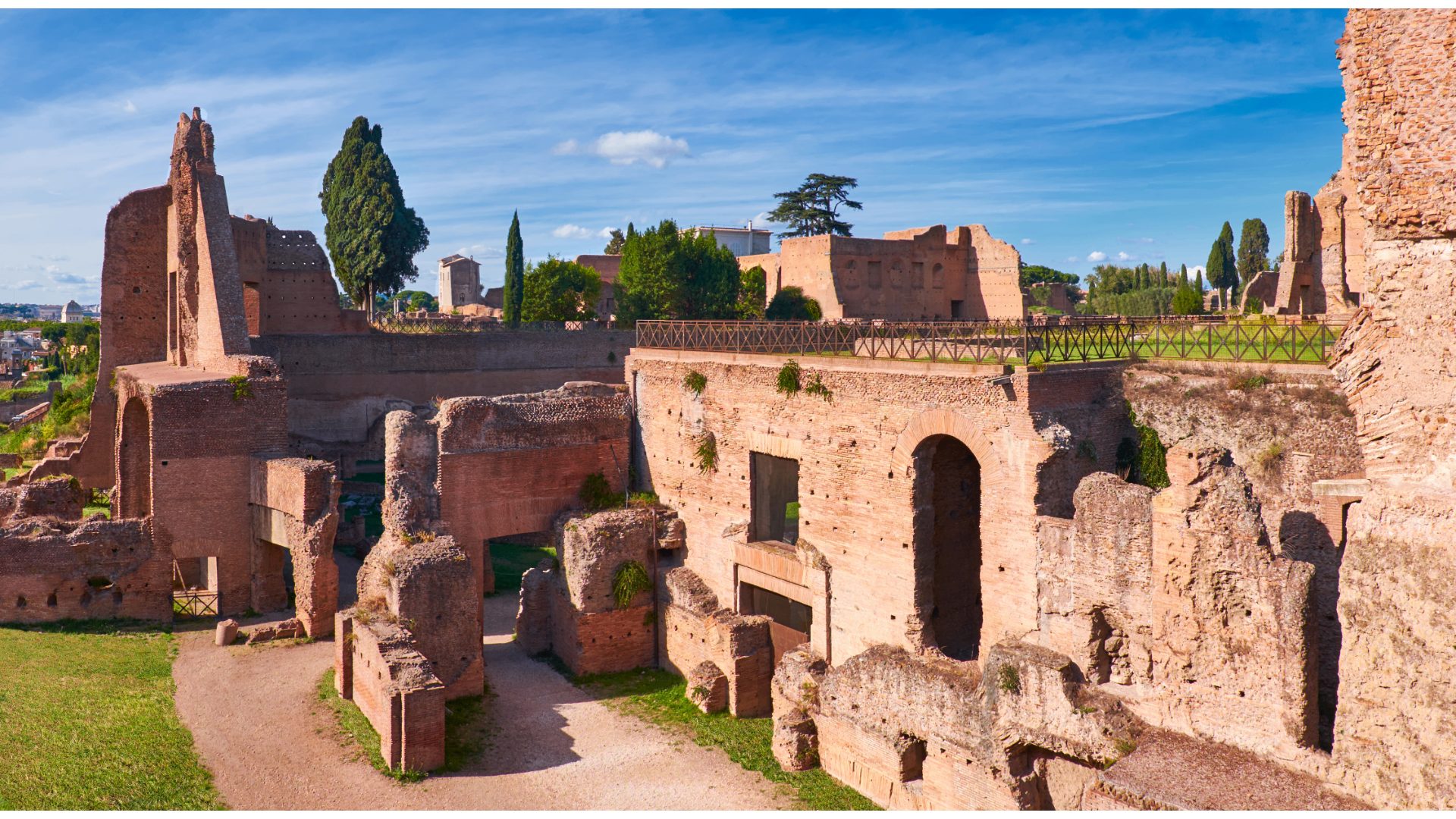
Palatine Hill
Legendary birthplace of Rome and luxurious home of emperors
Explore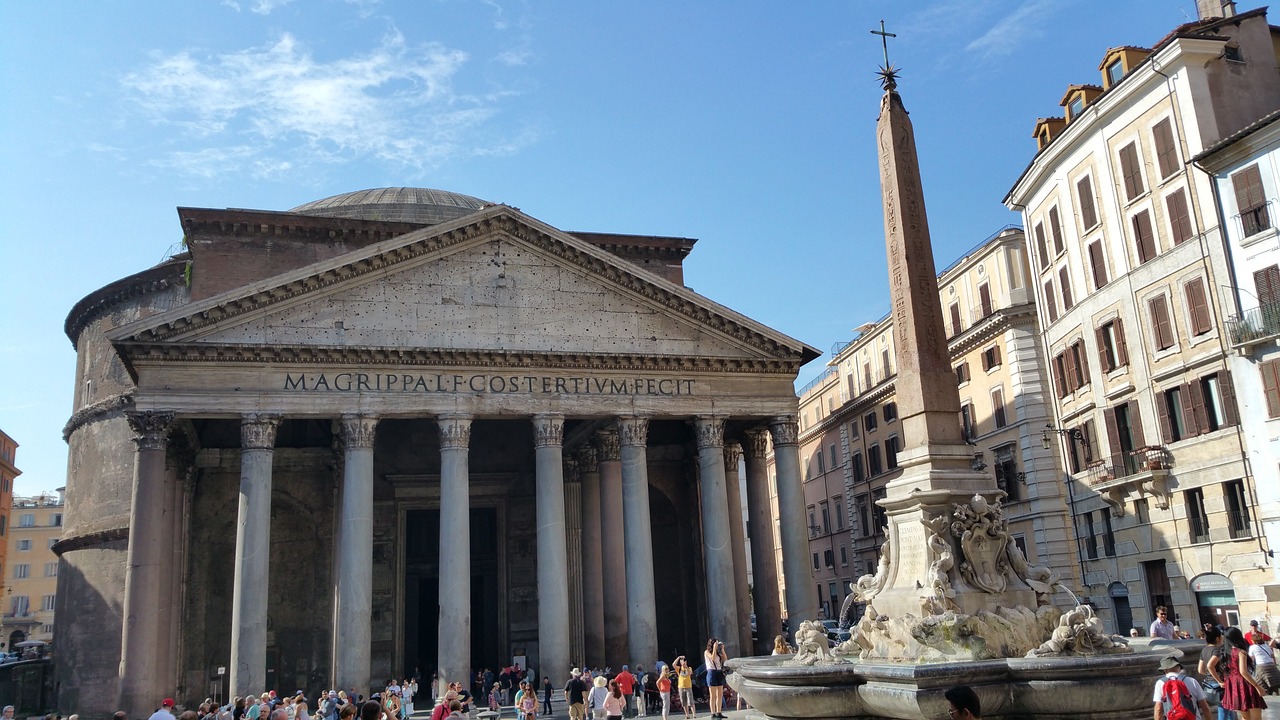
Pantheon
Best-preserved Roman building with the world's largest unreinforced concrete dome
Explore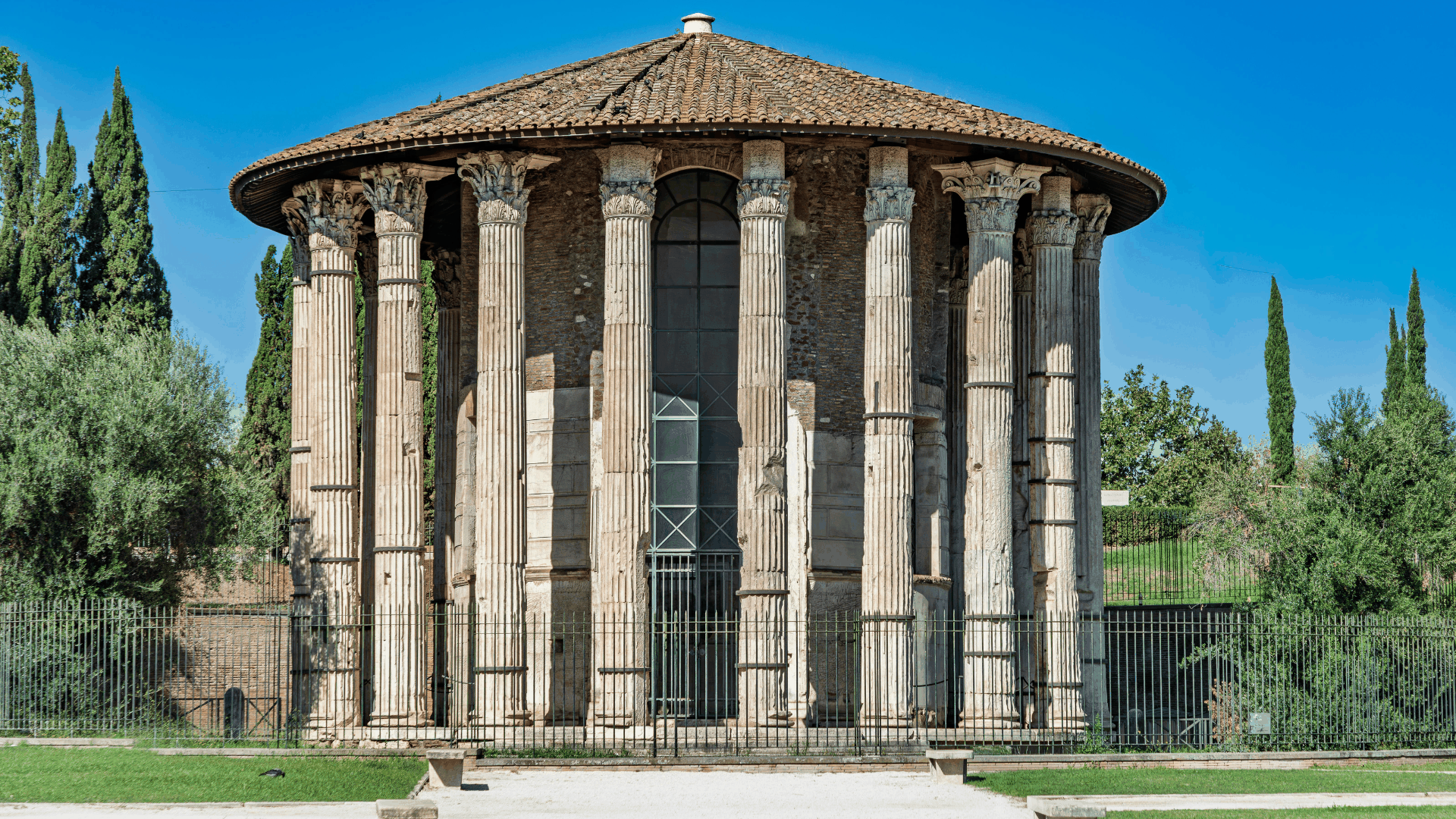
Temple of Hercules Victor
Rome's oldest surviving marble building—beautifully preserved round temple
Explore
Lateran Palace
Original papal residence for 1,000 years
Explore
Capuchin Crypt
Haunting ossuary with 3,700 friars' bones arranged artistically
ExploreQuick Planning Guide
⏱️ Time Needed
30–45 minutes
💰 Cost
Included in the 24h Colosseum, Roman Forum and Palatine ticket (€18 in 2026)
🎫 Reservation
Recommended — book your slot online
♿ Accessibility
Viewable from main Via Sacra path
📅 Best Time
09:30–11:00 weekday mornings
👨👩👧👦 Family Friendly
Yes — impressive scale, room to roam
🌡️ Weather
Open-air; bring water in summer
Nearby Attractions
Arch of Titus50 m
Roman Forumwithin
Palatine Hill5 min walk
Colosseum10 min walk
Capitoline Museums — Constantine's head15 min
Featured In These Itineraries
Classic Rome 3 Days5 Day Rome ItineraryOne Day in RomeEssential Tips
- ✓ Best photos in the morning light
- ✓ Compare scale to nearby Temple of Romulus
- ✓ Look for the octagonal coffer pattern overhead
- ✓ Visit Constantine's head at the Capitoline afterwards
- ✓ Book a 09:00 Forum slot to beat the crowds