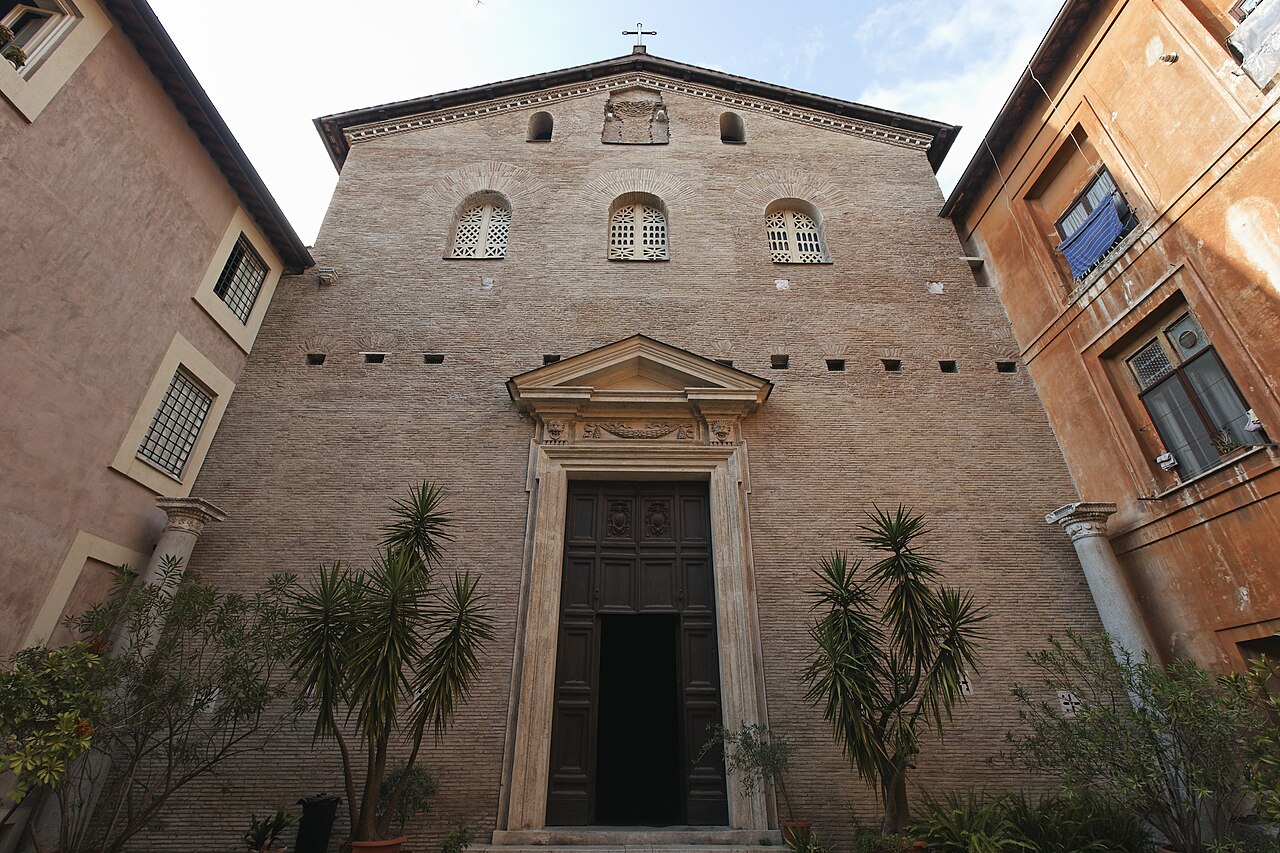
 Byzantine Basilica — free entry
Santa Prassede
Rome's hidden Byzantine treasure — Pope Paschal I's 9th-century golden mosaics and the Chapel of San Zeno ('Garden of Paradise'), 2 minutes from Santa Maria Maggiore.
30–45 min visitFree entryChapel of San ZenoBring €5 in changeVia di Santa Prassede 9/A, 00184 Roma RMOpen on MapPlan Your Visit
Compare tickets, tours and stays — booking ahead usually gives more choice
Get TicketsBook a TourHotels NearbySanta Prassede is a 9th-century Byzantine-style basilica on the Esquiline Hill in Rome, two minutes' walk from Santa Maria Maggiore, rebuilt by Pope Paschal I between 817 and 824 as the climax of the great Carolingian-era programme of restoring the early Christian churches of Rome. It contains the most complete cycle of Byzantine golden mosaics in the city — the apse with Christ flanked by Saints Peter and Paul presenting Praxedes and Pudentiana to the Saviour, the triumphal arch with the Heavenly Jerusalem from the Book of Revelation, and above all the small Chapel of San Zeno (822), the one of the few spaces in Rome so extensively covered with Byzantine mosaics, built by Paschal I as the mausoleum of his mother Theodora and traditionally called 'the Garden of Paradise'. Free entry. Generally open mornings and late afternoons, with a long midday closure. Hours vary around services; verify locally. Coin-operated lights may be available to see the gold tesserae well.
Why visit Santa Prassede?
Behind an unassuming brick facade on a small Esquiline side street lies one of Rome's greatest hidden artistic treasures — a 9th-century basilica whose Byzantine-influenced golden mosaics rival those of Ravenna and contain, in the tiny Chapel of San Zeno, the single most concentrated experience of Byzantine art anywhere in the city. Built by the great Carolingian-era patron Pope Paschal I (817–824), the church is at once a martyrs' shrine (more than 2,300 catacomb relics), a pilgrimage destination (the column traditionally venerated as the Column of the Flagellation, brought to Rome in the thirteenth century according to tradition) and one of the most rewarding free art experiences in Rome.
- Chapel of San Zeno (822): the one of the few spaces in Rome so extensively covered with Byzantine mosaics, built as the mausoleum of Pope Paschal I's mother Theodora and traditionally called 'the Garden of Paradise'. With the lights on, one of the most spectacular sights in Rome.
- Apse mosaic (817–824): Christ Pantocrator with Saints Peter and Paul presenting Praxedes and Pudentiana — closely modelled on the 6th-century apse of SS. Cosmas and Damian. Look for Pope Paschal I himself with the square halo of the living donor.
- Triumphal arch — the Heavenly Jerusalem: Christ enthroned, the twenty-four elders of the Apocalypse, the symbols of the Evangelists, the saints inside the gates of the New Jerusalem. The most complete medieval Apocalypse mosaic in Rome.
- Column of the Flagellation: the small porphyry column traditionally identified as part of the column to which Christ was scourged, traditionally brought to Rome in the thirteenth century according to tradition. A pilgrimage relic venerated for centuries.
- Free, central, almost empty: 2 minutes from Santa Maria Maggiore, 10 minutes from Termini, free entry, and relatively few tourists — a rewarding 'hidden gem' in central Rome.
Quick facts
Built
817–824 AD
Style
Carolingian-Byzantine
Famous for
Golden mosaics
Don't miss
Chapel of San Zeno
Entry 2026
Free
Lights
Coins may be needed
Visit time
30–45 minutes
Location
2 min from S. Maria Maggiore
Table of Contents
Jump to any section of the itinerary
A brief history
By tradition, the early Christian sisters Praxedes and Pudentiana — daughters of the Roman senator Pudens, baptised by Saint Peter — collected the blood of martyrs in a sponge at this site on the Esquiline Hill in the second century. Whether or not the tradition is historically secure, the two sisters are venerated together as among the earliest Roman virgin saints, and a Christian community certainly existed at the site by the 4th century.
In 489, Pope Symmachus founded the original 'titulus Praxedis' (parish church) on the site of an earlier Christian house-church. The early titulus survived the troubled centuries of the early medieval period, but by the late 8th century it was in poor condition. The new political and artistic energy that flowed into Rome after Charlemagne's coronation as Holy Roman Emperor in 800 made possible the great Carolingian-era programme of restoring the early Christian churches of Rome under Popes Adrian I, Leo III and above all Paschal I.
Between 817 and 824, Pope Paschal I — the great Carolingian-era patron of Roman art — completely rebuilt Santa Prassede on a new site slightly south of the original, and commissioned the spectacular Byzantine-influenced mosaic programme of the apse, triumphal arch and choir arch that survives today. In 822, in the south aisle of the church, he built the small Chapel of San Zeno as the mausoleum of his mother Theodora — the one of the few spaces in Rome so extensively covered with Byzantine mosaics. The 9th-century inscription above the door describes the chapel as 'the Garden of Paradise' (Hortus Paradisi).
In the same decade, Paschal I — fearing the destruction of the Roman catacombs by Lombard raids on the outskirts of the city — transferred the remains of more than 2,300 early Christian martyrs from the catacombs into Santa Prassede. The translation made the church one of the great Roman martyrs' shrines and one of the principal pilgrimage destinations of the medieval city. In 1223, Cardinal Giovanni Colonna — papal legate to the Holy Land during the Fifth Crusade — brought to the Chapel of San Zeno the small porphyry Column of the Flagellation, a major pilgrimage relic for 800 years.
The church was given to the Vallombrosan Benedictines in 1198 and has been served by them continuously ever since. Counter-Reformation cardinals (Alessandro de' Medici, the future Pope Leo XI; Ludovico de Torres) restored the church and added the side chapels in the 16th and 17th centuries; major mosaic conservation followed under Pope Gregory XVI in 1832; in 1918 restoration in the Chapel of San Zeno revealed previously hidden 13th-century frescoes beneath later whitewash; and a sustained modern conservation campaign in the 2000s recovered the original brilliant gold and azure of the tesserae.
In 2026 the church remains an active parish of the Diocese of Rome, served by the Vallombrosan Benedictines — free entry, the daily liturgy and the Chapel of San Zeno continue as they have for centuries.
Santa Prassede through the centuries
c. 150 ADSaints Praxedes & Pudentiana
By tradition, the early Christian sisters Praxedes (Prassede) and Pudentiana — daughters of the Roman senator Pudens, baptised by Saint Peter — collect the blood of martyrs in a sponge at this site on the Esquiline Hill. The two sisters are venerated together as among the earliest Roman virgin saints.
489 ADFirst titulus church
Pope Symmachus founds the original 'titulus Praxedis' (parish church) on the site of an earlier Christian house-church, near the great Roman Esquiline residential quarter.
780sCarolingian reforms reach Rome
Charlemagne's coronation as Holy Roman Emperor in 800 brings new political and artistic energy to Rome. The papacy under Adrian I and Leo III begins a programme of restoring the early Christian churches that had decayed during the 7th and 8th centuries.
817–824Pope Paschal I rebuilds the church
Pope Paschal I (817–824) — the great Carolingian-era patron of Roman art — completely rebuilds Santa Prassede on a new site slightly south of the original. He commissions the spectacular Byzantine-style mosaic programme of the apse, triumphal arch and choir arch that survives today.
822Chapel of San Zeno
Paschal I builds the small Chapel of San Zeno in the south aisle as a mausoleum for his mother Theodora — the one of the few spaces in Rome so extensively covered with Byzantine mosaics. The 9th-century inscription above the door describes the chapel as 'the Garden of Paradise'.
9th centuryTranslation of the catacomb relics
Paschal I, fearing destruction of the Roman catacombs by Lombard raids, transfers the relics of more than 2,300 martyrs from the catacombs into Santa Prassede. A 9th-century plaque on the right of the nave records the names. The church becomes one of the great Roman martyrs' shrines.
1198–1216Cardinal Colonna and the Column
Cardinal Giovanni Colonna, papal legate to the Holy Land during the Fifth Crusade, brings to Santa Prassede the small porphyry column traditionally identified as part of the Column of the Flagellation — the column to which Christ was tied during his scourging. Installed in the Chapel of San Zeno; the traditional dating is the thirteenth century.
16th–17th c.Counter-Reformation interventions
Cardinal Alessandro de' Medici (later Pope Leo XI) and Cardinal Ludovico de Torres restore the church and add the side chapels and the polychrome marble decoration of the nave. The original 9th-century mosaics survive these interventions essentially intact.
1832Pope Gregory XVI restoration
Major 19th-century restoration of the apse and triumphal arch mosaics under Pope Gregory XVI. The original tesserae are conserved; some areas of damaged background gold are repaired.
1918Discovery of medieval frescoes
Restoration in the Chapel of San Zeno reveals previously hidden 13th-century frescoes beneath later whitewash, including a Madonna and Child with the donor Cardinal Colonna.
2000sModern conservation
Sustained conservation campaign on the apse mosaics, the triumphal arch and particularly the Chapel of San Zeno — recovering the original brilliant gold and azure of the tesserae.
2026Living parish church
Santa Prassede remains an active parish of the Diocese of Rome, served by the Vallombrosan Benedictines since 1198. Free entry, the daily liturgy and the Chapel of San Zeno continue as they have for 1200 years.
What to see at Santa Prassede
Chapel of San Zeno (822)
- The one of the few spaces in Rome so extensively covered with Byzantine mosaics — every wall, vault and arch surface in shimmering gold and jewel tones.
- Built by Pope Paschal I in 822 as the mausoleum of his mother Theodora — the 9th-century inscription above the door calls it 'the Garden of Paradise'.
- Look for Theodora with the square halo on the left wall (square halos in 9th-century Roman mosaics indicate the person was alive when the mosaic was made).
- Coin-operated light boxes outside the chapel may require small change — the gold tesserae literally erupt with light. Do not skip this.
Apse Mosaic (817–824)
- Christ Pantocrator in the centre, flanked by Saints Peter and Paul presenting Praxedes and Pudentiana to the Saviour.
- On the right, Pope Paschal I himself — with the square halo of the living donor — offers the model of the church to Christ.
- Below the main scene runs a frieze of twelve sheep (the Apostles) approaching the central Lamb of God against gold ground.
- The composition is closely modelled on the 6th-century apse of SS. Cosmas and Damian in the Roman Forum — a deliberate evocation of late-antique Christian Rome.
Triumphal Arch — the Heavenly Jerusalem
- The triumphal arch carries one of the great mosaic programmes of medieval Rome — the New Jerusalem descending from heaven (Revelation 21).
- Christ enthroned at the top, flanked by angels; below, the twenty-four elders of the Apocalypse offer their crowns; the four symbols of the Evangelists hover at the corners.
- Inside the gates of the New Jerusalem stand crowds of saints and martyrs identified by name in 9th-century Latin inscriptions.
- The single most complete iconographic statement of the Apocalypse in Rome — and one of the few surviving Carolingian-era examples in Europe.
Column of the Flagellation & Sacred Relics
- Inside the Chapel of San Zeno: the small porphyry column traditionally identified as part of a column traditionally venerated as the one to which Christ was tied during his scourging, brought to Rome by Cardinal Giovanni Colonna in the thirteenth century according to tradition.
- Relics of Saints Praxedes and Pudentiana (the early Christian sisters to whom the church is dedicated).
- The remains of more than 2,300 martyrs transferred from the Roman catacombs by Pope Paschal I in the 9th century — names recorded on the great marble plaque in the right aisle.
- Fragments of the True Cross and other relics in the small treasury chapel (occasional opening only).
Chapel of San Zeno — how the 'Garden of Paradise' works
The Chapel of San Zeno, in the south aisle of Santa Prassede, is the rich concentration of Byzantine art in Rome, and one of the most striking small spaces in the city. It was built in 822 by Pope Paschal I as the mausoleum of his mother Theodora, and the 9th-century inscription above the door describes the chapel as 'the Garden of Paradise' (Hortus Paradisi). The dedication to San Zeno (Saint Zeno of Verona) reflects a personal devotion of Paschal I.
The chapel is essentially a perfect cube — about 4.5 metres on each side — covered on every wall, vault and arch surface with shimmering gold and jewel-toned mosaics. The square plan, the central groin vault and the four supporting columns give it the structure of a small Byzantine martyrium. The decorative programme is correspondingly Byzantine in inspiration — flat hieratic figures against gold ground, jewel-tone draperies, formal frontal compositions, with strong stylistic links to the contemporary art of Byzantium itself (8th- and 9th-century mosaics survive in Constantinople and Thessaloniki for direct comparison).
The principal figures: on the vault, four angels supporting a central medallion of Christ Pantocrator; on the walls, the Virgin and Christ Child enthroned, Christ between Saints Peter and Paul, Saints Praxedes and Pudentiana, Saints Agnes and Pudentiana, and on the left wall Theodora herself with the square halo of the living donor — Pope Paschal I's mother, depicted at the moment of the chapel's dedication. Below the main scenes runs a frieze of small marble revetment, original 9th-century work.
The single most important practical advice: coin-operated light boxes outside the chapel may require small change. Without the lights the mosaics read as flat dim brown. With the lights on, the gold tesserae erupt and the chapel becomes one of the most spectacular sights in Rome — an authentic, immediate experience of the visual world of 9th-century Byzantium, exactly as the patrons intended. Inside the chapel, against the back wall, stands the small porphyry Column of the Flagellation, traditionally brought to Rome by Cardinal Giovanni Colonna in the thirteenth century, and venerated as a pilgrimage relic for centuries since.
The apse and triumphal arch — Paschal I's mosaic programme
The great mosaic programme of the apse and triumphal arch (817–824) is the climax of post-Iconoclasm Byzantine-influenced Roman mosaic art and the single most important Carolingian-era artistic monument in Rome. It is also, despite later restoration, one of the best-preserved 9th-century large mosaics anywhere in Europe.
The apse centres on Christ Pantocrator, standing against a deep blue sky scattered with red and gold clouds. On either side, Saints Peter and Paul present the early Christian sisters Praxedes and Pudentiana to the Saviour. On the right, Pope Paschal I himself — with the square halo of the living donor and a model of the rebuilt church — offers the building to Christ. Above the figures runs the hand of God the Father with a wreath; below runs a frieze of twelve sheep (the Apostles) approaching the central Lamb of God against gold ground. The composition is closely modelled on the 6th-century apse of SS. Cosmas and Damian in the Roman Forum — a deliberate evocation of late-antique Christian Rome and a self-conscious statement of continuity with the great age of papal patronage.
The triumphal arch above the apse carries a different and arguably more spectacular composition — the New Jerusalem descending from heaven (Revelation 21). Christ enthroned at the top, flanked by angels; below him, the twenty-four elders of the Apocalypse offer their crowns; the four symbols of the Evangelists hover at the corners; inside the gates of the New Jerusalem stand crowds of saints and martyrs identified by name in 9th-century Latin inscriptions. The single most complete iconographic statement of the Apocalypse anywhere in Rome and one of the few surviving Carolingian-era examples in Europe.
The whole programme was paid for by Pope Paschal I personally and was the climax of his short seven-year reign (817–824). It is one of three great mosaic programmes he commissioned in Rome — the others being Santa Maria in Domnica on the Caelian Hill (818) and Santa Cecilia in Trastevere (820–822). The three churches together represent the climax of post-Iconoclasm Byzantine-influenced Roman mosaic art and Paschal I's claim to be the first great medieval pope of Rome.
Who was Pope Paschal I?
Pope Paschal I (817–824) was the great Carolingian-era patron of Roman art and one of the most important medieval popes of Rome. Born Pasquale Massimi into a Roman noble family and educated at the Lateran, he became pope in the brief golden age between Charlemagne's coronation as Holy Roman Emperor in 800 and the slow disintegration of the Carolingian Empire in the second half of the 9th century.
His seven-year reign (817–824) was unusually short but extraordinarily productive. He rebuilt three of the great early Christian churches of Rome — Santa Prassede (817–824), Santa Maria in Domnica on the Caelian Hill (818) and Santa Cecilia in Trastevere (820–822) — each with a spectacular new Byzantine-influenced mosaic programme and each containing a portrait of Paschal I himself with the square halo of the living donor. The three churches together represent the climax of post-Iconoclasm Roman mosaic art and Paschal I's claim to be the first great medieval pope of Rome.
Paschal I was also a great collector and protector of the relics of Roman martyrs. Fearing the destruction of the suburban catacombs by Lombard raids on the outskirts of the city, he organised the systematic transfer of the remains of more than 2,300 early Christian martyrs from the catacombs into Santa Prassede, where their names are recorded on a great marble plaque in the right aisle. He also rediscovered and translated the body of Saint Cecilia from the Catacombs of San Callisto into Santa Cecilia in Trastevere in 821 — the foundation event of one of the great Roman martyr cults.
Paschal I died in May 824 and was buried at Santa Prassede — the church he had rebuilt and decorated as the climax of his reign. His three great Roman mosaic programmes, all surviving substantially intact more than 1200 years later, are the single most important monument of the Carolingian-era papacy and the principal evidence we have for the visual world of post-Iconoclasm Byzantine-Roman art.
Santa Prassede vs other early-Christian Roman churches
| Feature | Santa Prassede | Santa Maria Maggiore | Santa Maria in Cosmedin |
|---|---|---|---|
| Built / rebuilt | 817–824 (Paschal I) | 432–440 (Sixtus III) | 8th century, rebuilt 12th c. |
| Famous for | Chapel of San Zeno + apse + arch mosaics | 5th-c. nave & 13th-c. apse mosaics | Mouth of Truth (Bocca della Verità) |
| Mosaic period | 9th century (Carolingian-Byzantine) | 5th + 13th centuries | Mostly fresco, no major mosaic |
| Don't miss | San Zeno 'Garden of Paradise' | Sixtus III nave + Bethlehem crypt | Mouth of Truth + crypt |
| Entry 2026 | Free (coins may be needed for lights) | Free | Free (Mouth of Truth queue) |
| Visit length | 30–45 minutes | 45–60 minutes | 20–30 minutes |
| Crowds | Generally quiet | Heavy (papal basilica) | Heavy (Mouth of Truth queue) |
| Best for | Byzantine art & 9th-century history | Papal basilica & 5th-century art | Roman atmosphere + photo-op |
Verdict: Santa Prassede is one of the great hidden gems of Rome — visit it after Santa Maria Maggiore (2 minutes' walk uphill) and pair it with Santa Pudenziana (5 minutes downhill) for an unbeatable hour of early Christian and Carolingian mosaic art.
Best time to visit
Time of day
Late afternoon (best)
The warm late-afternoon light hits the gold tesserae of the apse at a good angle. Coins for the lights may be useful. The church is generally quiet then and you can take your time in the Chapel of San Zeno.
Morning (quietest)
Weekday mornings — the church tends to be genuinely empty and the morning light pours into the nave from the south. Easy access to the Chapel of San Zeno without other visitors blocking the view.
Midday (closed)
Generally open mornings and late afternoons, with a long midday closure. Hours vary around services; verify locally. The single most common visiting mistake is to arrive during the long midday closure. Plan around it — Santa Maria Maggiore stays open and is 2 minutes away.
Best days & seasons
Tuesday–Friday (best)
Quietest days. Avoid Sunday morning Mass. Saturday late afternoon can fill briefly with parish events.
21 July — Saint Praxedes's feast
The patronal feast — solemn Mass with the relics exposed. The most atmospheric day in the church's calendar.
Sunday Vespers
The Vallombrosan Benedictines sometimes celebrate sung Vespers on Sunday afternoons — extraordinary Latin chant under Paschal I's mosaics. Check current timing.
Year-round (indoor)
Comfortable in any weather — among the best rainy-day options in central Rome.
Getting there
Walking from Santa Maria Maggiore (best)
From Santa Maria Maggiore walk south on Via Merulana for 2 minutes — Via di Santa Prassede is the small side street on the left. From Termini Station walk south-west on Via Cavour for 10 minutes. From the Colosseum walk north on Via Cavour for 15 minutes. From Santa Pudenziana (the sister church) walk uphill on Via Urbana for 5 minutes.
Metro
Closest stations: Cavour (Line B) — 8 minutes' walk uphill on Via Cavour and Via Urbana; Termini (Lines A & B) — 10 minutes' walk south-west; Vittorio Emanuele (Line A) — 10 minutes' walk east.
Bus
Buses 16, 70, 71, 75, 105, 360, 590, 649, 714 all stop at Santa Maria Maggiore or along Via Merulana, 2–5 minutes' walk.
Find the entrance
The unassuming brick facade is on the small side street Via di Santa Prassede, just off Via Merulana, 2 minutes south of Santa Maria Maggiore. Address: Via di Santa Prassede 9/A, 00184 Rome. The plain exterior gives no hint of the treasures inside.
Common mistakes to avoid
Not lighting the Chapel of San Zeno
Without the coin-operated lights (which may require small change) the San Zeno mosaics can read as flat and dim, losing much of their effect. With the lights on, the gold tesserae come alive. Bring small change if you can.
Missing the chapel entirely
The Chapel of San Zeno is in the right (south) aisle, easy to walk past if you head straight for the apse. It is small, low and behind a discreet entrance. Slow down on entering the church and look right — the chapel is the artistic climax of the visit, not the main apse.
Confusing Santa Prassede with Santa Pudenziana
The two sister churches dedicated to the early Christian sisters Praxedes and Pudentiana are 5 minutes' walk apart on the Esquiline. Santa Pudenziana (on Via Urbana, just downhill) contains the famous late 4th-century apse mosaic of Christ enthroned — the oldest large mosaic in Rome. Visit both: an unbeatable hour of early Christian art.
Looking only at the apse
The apse mosaic of Christ with Praxedes and Pudentiana is the obvious highlight, but the triumphal arch above it carries the great Heavenly Jerusalem composition (24 elders, evangelists, saints) — arguably more spectacular than the apse itself. Step back into the nave and look up at the arch first.
Visiting during the midday closure
Like many Roman churches, Santa Prassede closes for a long midday break. Generally open mornings and late afternoons, with a long midday closure. Hours vary around services; verify locally. Many first-time visitors arrive at midday and find the church locked. Verify current hours before you go.
Not bringing a small zoom or wide-angle phone lens
The chapel is tiny — phone-camera wide-angle is essential for capturing the full mosaic coverage of any single wall. The apse and triumphal arch are far above eye level — a small zoom or the 2x lens on a recent phone is essential for reading the Latin inscriptions and identifying the figures.
Insider tips from locals
Pair with Santa Pudenziana for an early-Christian hour
Santa Pudenziana — the church of Praxedes's sister Pudentiana — is 5 minutes' walk downhill on Via Urbana and contains the famous late 4th-century apse mosaic of Christ enthroned (the oldest large mosaic in Rome). Visit Santa Prassede first (15:30–16:15), then walk down to Santa Pudenziana (16:30–17:00). A rewarding 'early Christian Rome' hour with relatively few tourists.
Combine with Santa Maria Maggiore
Santa Maria Maggiore is 2 minutes' walk uphill from Santa Prassede — the great papal basilica of the Esquiline with its own celebrated 5th- and 13th-century mosaics. Visit S. Maria Maggiore first for the 5th-century nave and the Bethlehem crypt, then walk to Santa Prassede for the 9th-century Carolingian-Byzantine programme. The two together give you 800 years of Roman mosaic art in 90 minutes.
Bring some coins
There may be coin-operated light boxes at the Chapel of San Zeno, the main apse and the triumphal arch. Bring some small change if you can, though arrangements can vary.
Visit at 16:00 for the warm light
The afternoon light pouring through the nave windows around 16:00–17:00 hits the gold tesserae of the apse at the perfect angle — even without the coin-box lights you get a soft warm glow that 9th-century viewers would have recognised. Combine with the lights for the full effect.
Read the 9th-century inscriptions
Almost every figure in the apse and the triumphal arch is identified by a 9th-century Latin name inscription in white tesserae against gold. With a phone zoom and basic Latin you can read most of them — the experience of identifying a 9th-century saint by name is one of the great pleasures of Roman mosaic visiting and almost nobody bothers to do it. Bring a small Latin saints list.
Sunday Vespers under the mosaics
The Vallombrosan Benedictines who serve the church sometimes celebrate sung Vespers on Sunday afternoons — extraordinarily atmospheric Latin chant under Paschal I's mosaics. Check the parish notice board for current timing.
Practical visitor tips
Bring some coins
Light boxes at the Chapel of San Zeno, apse and triumphal arch may need coins. Without the lights the gold mosaics can look flat and dim; with them the chapel becomes far more striking.
Spot the square halos
Square halos in 9th-century Roman mosaics indicate the person was alive when the mosaic was made. Find Pope Paschal I in the apse and his mother Theodora in the Chapel of San Zeno — both with square halos.
Photograph the chapel from the centre
The Chapel of San Zeno is tiny — wait for other visitors to clear, then stand in the centre and shoot all four walls. Wide-angle lens or phone wide-angle essential. No flash — the gold tesserae respond beautifully to ambient light.
Easy-to-miss entrance
The church faces a small side street with an unassuming brick facade. Look for Via di Santa Prassede 9/A, off Via Merulana 2 minutes south of Santa Maria Maggiore. The plain exterior gives no hint of the treasures inside.
Where to Stay Near Santa Prassede
Looking for convenient accommodation near Santa Prassede? Stay within walking distance to make the most of your visit.
Hotels Near This AttractionTop Rated HotelsBudget-Friendly OptionsLuxury HotelsCentral locations with easy access to Santa Prassede and other attractionsFrequently Asked Questions
What is Santa Prassede?
Santa Prassede (the Basilica of Saint Praxedes) is a 9th-century Byzantine-style basilica on the Esquiline Hill in Rome, two minutes' walk from Santa Maria Maggiore. Rebuilt by Pope Paschal I between 817 and 824 in the great Carolingian-era programme of restoring the early Christian churches of Rome, it contains the most complete cycle of Byzantine golden mosaics in the city. Its Chapel of San Zeno (822) is the one of the few spaces in Rome so extensively covered with Byzantine mosaics and is traditionally called 'the Garden of Paradise'. Free entry.
Where is Santa Prassede located?
The church is at Via di Santa Prassede 9/A, 00184 Rome, on the Esquiline Hill. From Santa Maria Maggiore it is a 2-minute walk south; from Termini Station 10 minutes; from the Colosseum 15 minutes; from Cavour metro (Line B) 8 minutes. The entrance is on a small side street — look for the unassuming brick facade off Via Merulana.
How much does it cost to visit in 2026?
Entry to the church is completely free. Coin-operated light boxes for the mosaics — at the Chapel of San Zeno, the apse and the triumphal arch — may require small change. Without the lights the gold mosaics can read as flat and dim, so it's worth bringing some coins.
What are the opening hours?
Generally open mornings and late afternoons, with a long midday closure. Hours vary around services; verify locally. Briefly closes during Mass services.
What is the Chapel of San Zeno?
The Chapel of San Zeno, in the south aisle of the church, is the one of the few spaces in Rome so extensively covered with Byzantine mosaics. Pope Paschal I built it in 822 as the mausoleum of his mother Theodora, and the 9th-century inscription above the door describes it as 'the Garden of Paradise'. Every wall, vault and arch surface is covered in shimmering gold and jewel-toned mosaics depicting Christ, the Virgin, the apostles and the saints. With the coin-operated lights on, the chapel becomes one of the single most spectacular sights in Rome. The chapel also contains the porphyry column traditionally venerated as the Column of the Flagellation, brought to Rome in the thirteenth century according to tradition.
What are square halos and where do I find them?
In 9th-century Roman mosaic iconography, square halos (rather than round ones) indicate that the person depicted was alive when the mosaic was made. At Santa Prassede there are two square-halo figures: Pope Paschal I himself, in the apse mosaic, offering the model of the rebuilt church to Christ; and his mother Theodora, in the Chapel of San Zeno, on the left wall as you enter. Spotting the square halos is one of the great rituals of any visit to Santa Prassede.
What is the Column of the Flagellation?
Inside the Chapel of San Zeno is a small dark porphyry column, traditionally identified as part of the column to which Christ was tied during his scourging by Pontius Pilate's soldiers (the Flagellation). Cardinal Giovanni Colonna, papal legate to the Holy Land during the Fifth Crusade, brought the column, traditionally venerated as the Column of the Flagellation, to Rome in the thirteenth century according to tradition. Whether or not the identification is historically secure, the column has been a major Roman pilgrimage relic for 800 years and is the reason many medieval visitors came to Santa Prassede.
Who was Pope Paschal I?
Pope Paschal I (817–824) was the great Carolingian-era patron of Roman art. Born into a Roman noble family and educated at the Lateran, he became pope in the brief golden age between Charlemagne's coronation (800) and the slow disintegration of the Carolingian Empire. During his short seven-year reign he rebuilt three of the great early Christian churches of Rome — Santa Prassede (817–824), Santa Maria in Domnica on the Caelian (818) and Santa Cecilia in Trastevere (820–822) — each with a spectacular new mosaic programme. The three churches together represent the climax of post-Iconoclasm Byzantine-influenced Roman mosaic art and Paschal I's claim to be the first great medieval pope of Rome. He was buried at Santa Prassede.
What is the apse mosaic about?
The apse mosaic of Santa Prassede (817–824) is closely modelled on the 6th-century apse of SS. Cosmas and Damian in the Roman Forum — a deliberate evocation of late-antique Christian Rome. Christ Pantocrator stands in the centre against a deep blue sky scattered with red and gold clouds; on either side, Saints Peter and Paul present the early Christian sisters Praxedes and Pudentiana to the Saviour; on the right, Pope Paschal I himself, with a square halo and a model of the rebuilt church, offers the building to Christ. Below runs a frieze of twelve sheep (the Apostles) approaching the central Lamb of God.
What about the triumphal arch?
The triumphal arch above the apse carries one of the great medieval mosaic programmes of Rome — the New Jerusalem descending from heaven (Revelation 21). Christ enthroned at the top, flanked by angels; below him, the twenty-four elders of the Apocalypse offer their crowns; the four symbols of the Evangelists hover at the corners; inside the gates of the New Jerusalem stand crowds of saints and martyrs identified by name in 9th-century Latin inscriptions. The single most complete iconographic statement of the Apocalypse anywhere in Rome and one of the few surviving Carolingian-era examples in Europe.
Why are there relics of so many martyrs?
In the 9th century, Pope Paschal I — fearing the destruction of the Roman catacombs by Lombard raids on the outskirts of the city — transferred the remains of more than 2,300 early Christian martyrs from the catacombs into Santa Prassede. Their names are recorded on a great marble plaque in the right aisle of the church. The translation made Santa Prassede one of the great Roman martyrs' shrines and one of the principal pilgrimage destinations of the medieval city — second only to St Peter's and St Paul's outside the Walls.
Is the church wheelchair accessible?
Santa Prassede is partially wheelchair accessible. The main entrance has one or two shallow steps that may require assistance; the nave is at floor level once inside. The Chapel of San Zeno has a single shallow step at the entrance that can be challenging for some wheelchairs. The apse area is at floor level. The crypt requires steps and is not wheelchair accessible. Companions and the Vallombrosan custodians are generally helpful with assistance.
Is photography allowed?
Yes — photography for personal use is permitted (no flash, no tripod, no commercial use). The Chapel of San Zeno is tiny and best photographed by waiting for other visitors to clear, then standing in the centre and shooting each wall in turn with a wide-angle lens or phone. The apse and triumphal arch require a small zoom or the 2x lens on a recent phone for the figure inscriptions. With the coin-box lights on, the gold tesserae photograph beautifully.
How does Santa Prassede compare with Santa Pudenziana?
The two churches dedicated to the early Christian sisters Praxedes and Pudentiana are 5 minutes' walk apart on the Esquiline Hill and complementary. Santa Prassede (817–824, on Via di Santa Prassede off Via Merulana) contains the great Carolingian-Byzantine 9th-century mosaic programme — apse, triumphal arch and Chapel of San Zeno. Santa Pudenziana (5th century, on Via Urbana just downhill) contains the famous late 4th-century apse mosaic of Christ enthroned among the apostles — the oldest large mosaic in Rome. Visit both — the single best 90 minutes of early Christian and Carolingian Roman art.
When are the best times to visit?
Generally open mornings and late afternoons, with a long midday closure. Hours vary around services; verify locally. Sunday afternoons sometimes include sung Vespers under the mosaics. Avoid midday and Mass times; check current hours before you go.
What should I combine with Santa Prassede?
An ideal Esquiline Hill half-day. Santa Maria Maggiore (2 min north — the great papal basilica with its own 5th- and 13th-century mosaics, free), Santa Pudenziana (5 min downhill on Via Urbana — the late 4th-century Christ enthroned mosaic, free), Santa Prassede (the Carolingian-Byzantine programme), San Pietro in Vincoli (10 min south — Michelangelo's Moses and the chains of Saint Peter, free), and the Colosseum and Roman Forum beyond. The four early Esquiline churches together form a rewarding 'early Christian Rome on foot' afternoon and are all completely free.
Related Attractions
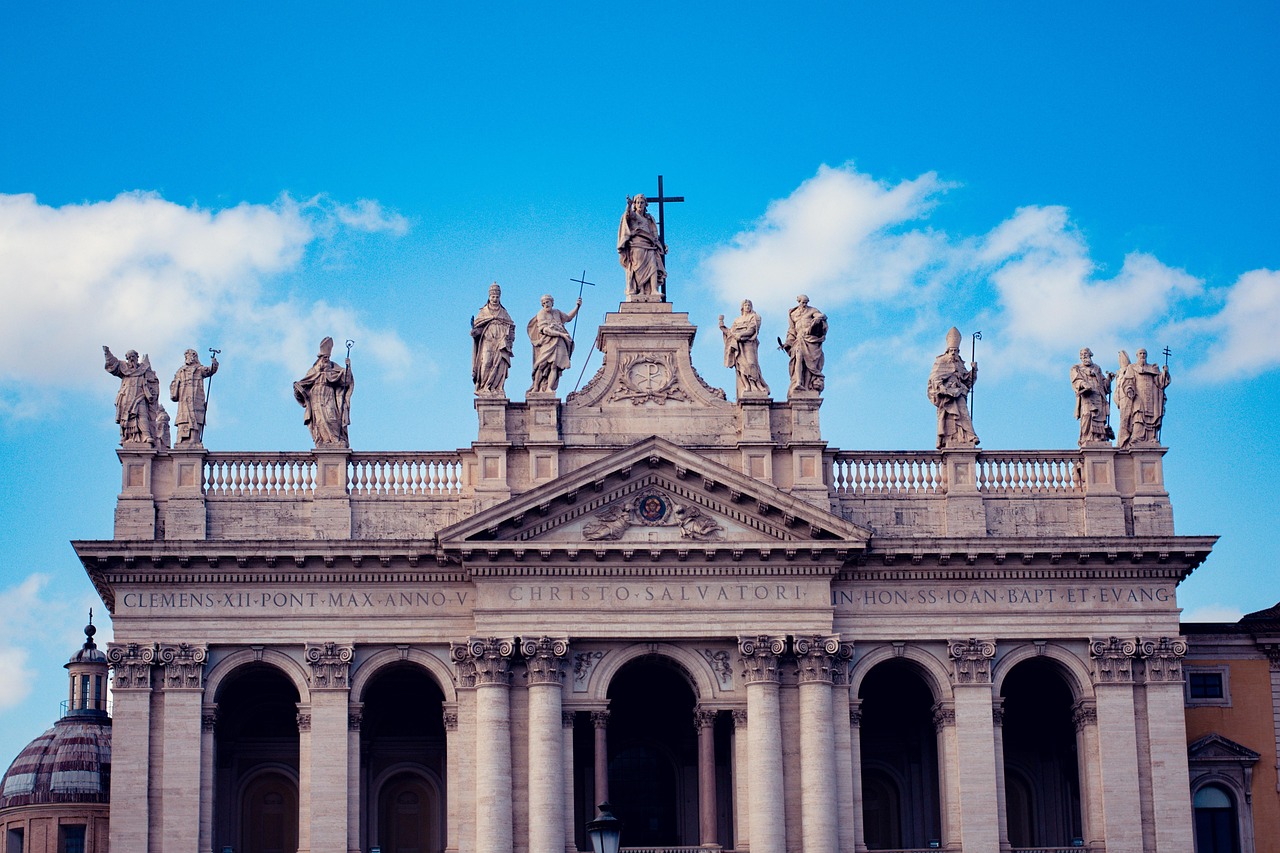
Basilica di San Giovanni in Laterano
Rome's official cathedral—the Pope's seat since 324 AD
Explore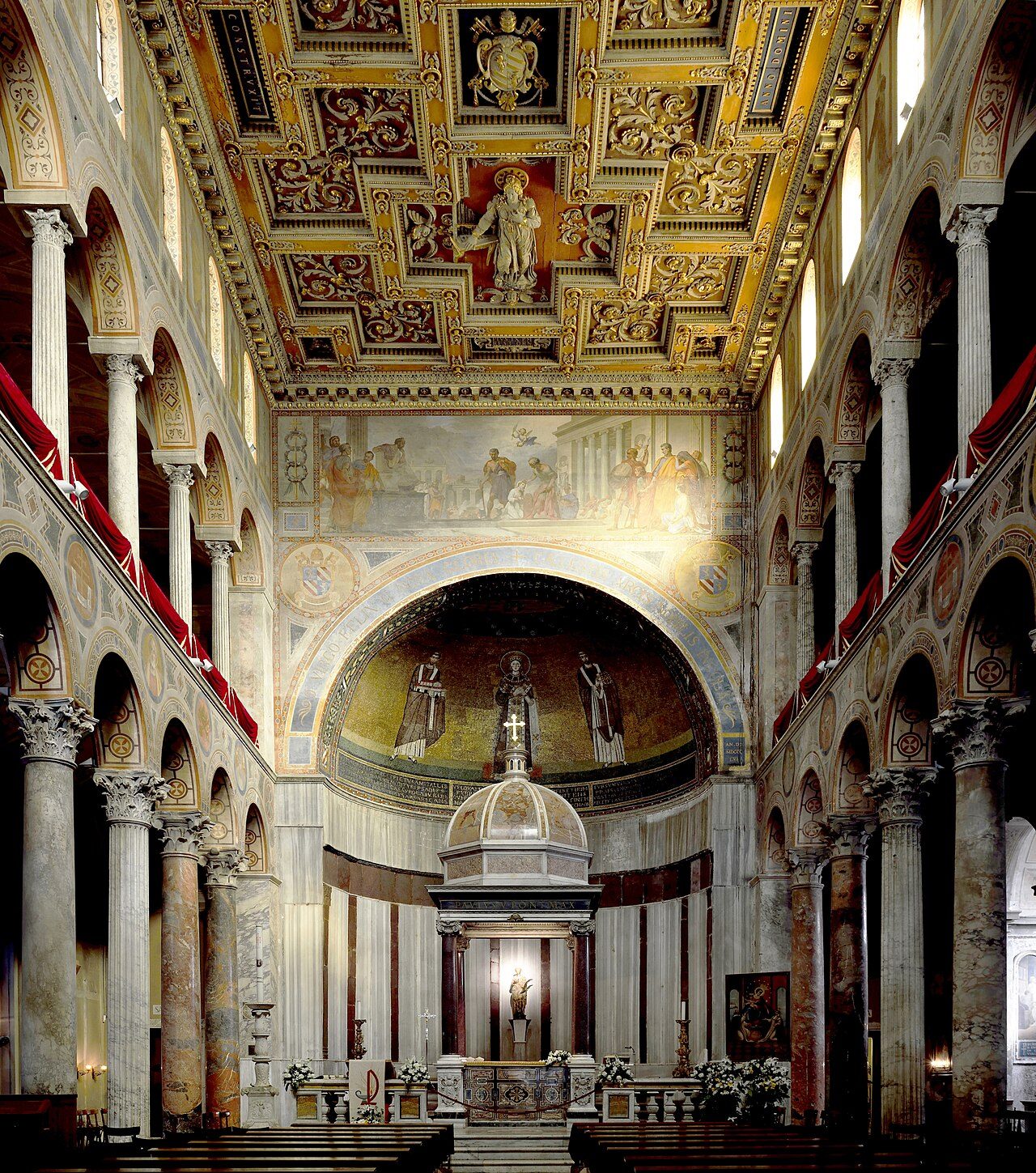
Basilica of St. Agnes
Free 7th-century pilgrimage church with Byzantine mosaics, near ticketed catacombs
Explore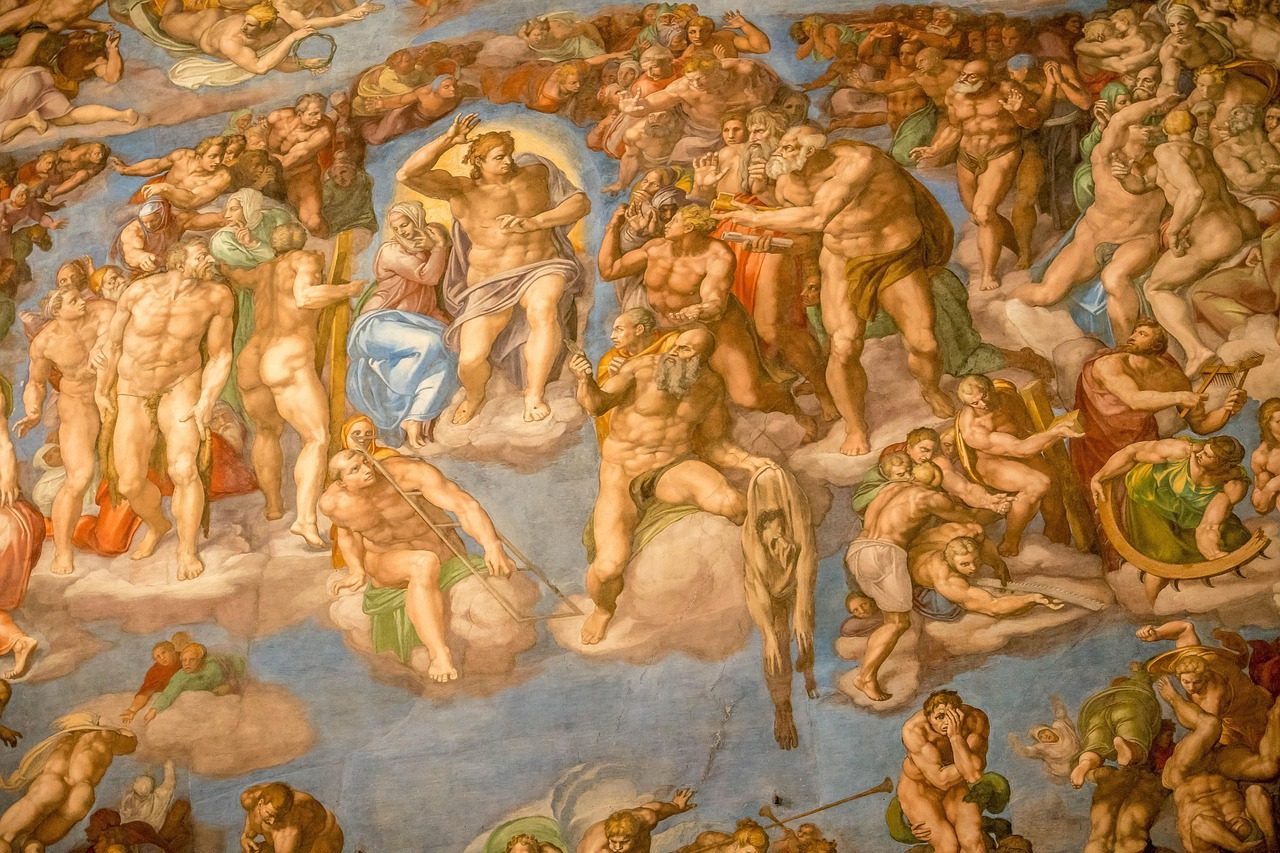
Vatican Museums
World's most visited cultural attraction—home to Sistine Chapel
Explore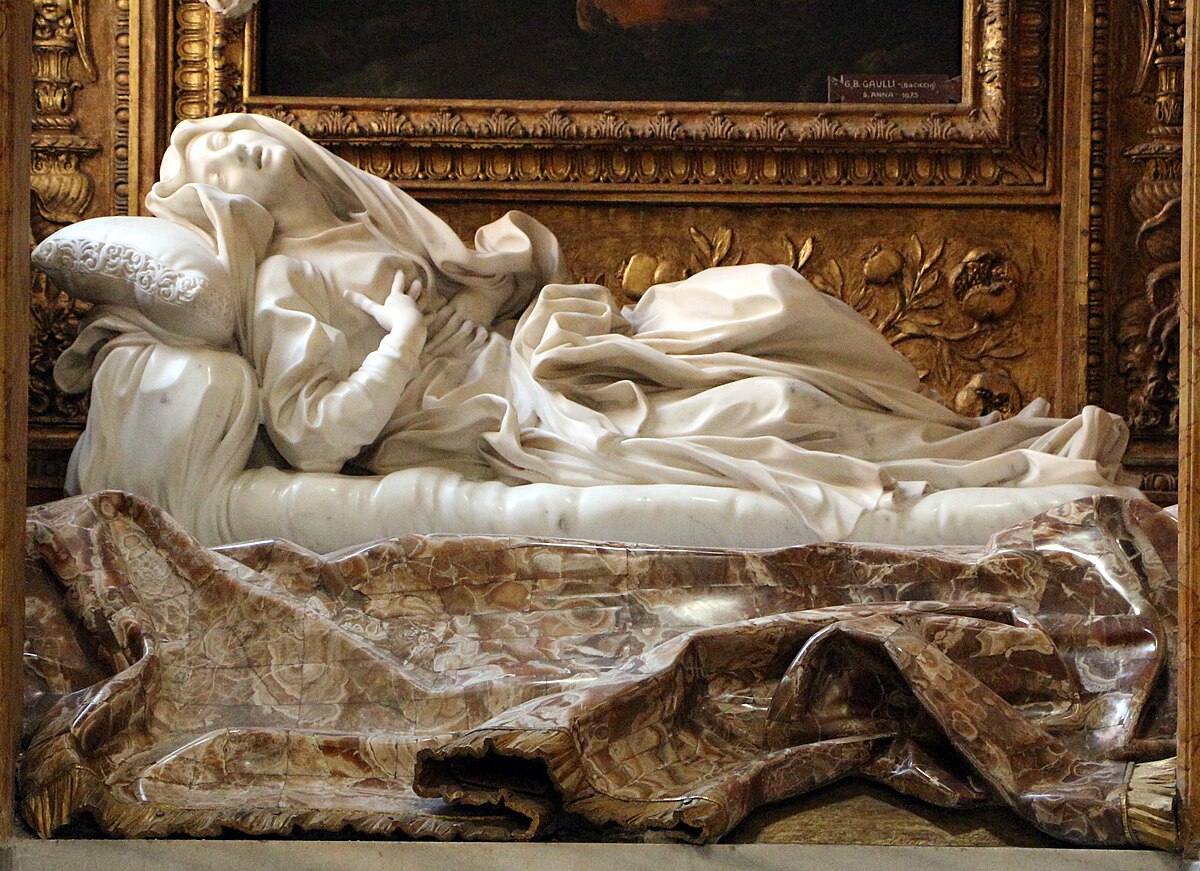
San Francesco a Ripa
Hidden Trastevere church with Bernini's stunning sculpture
Explore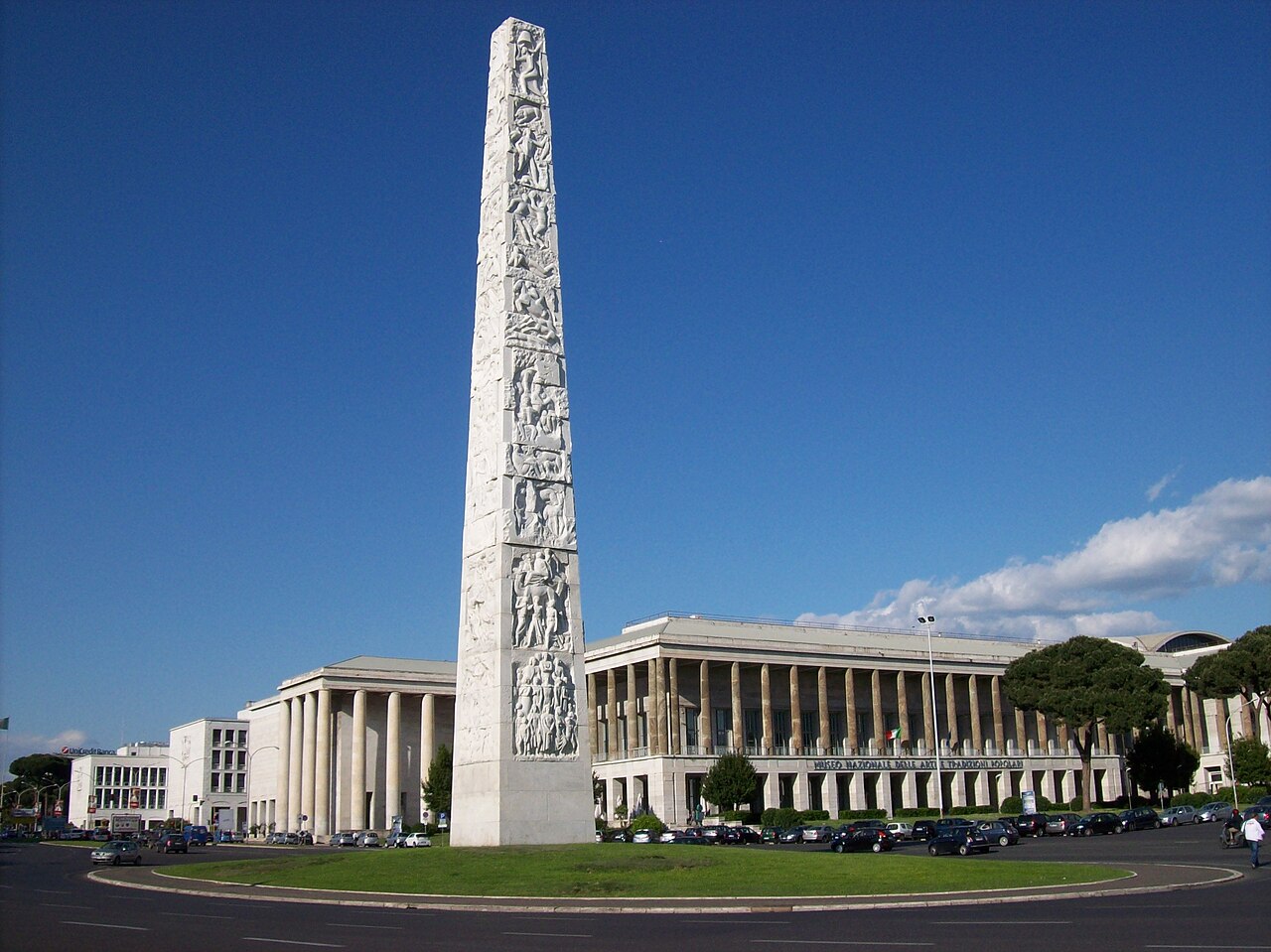
EUR District
Mussolini-era rationalist architecture with Square Colosseum
Explore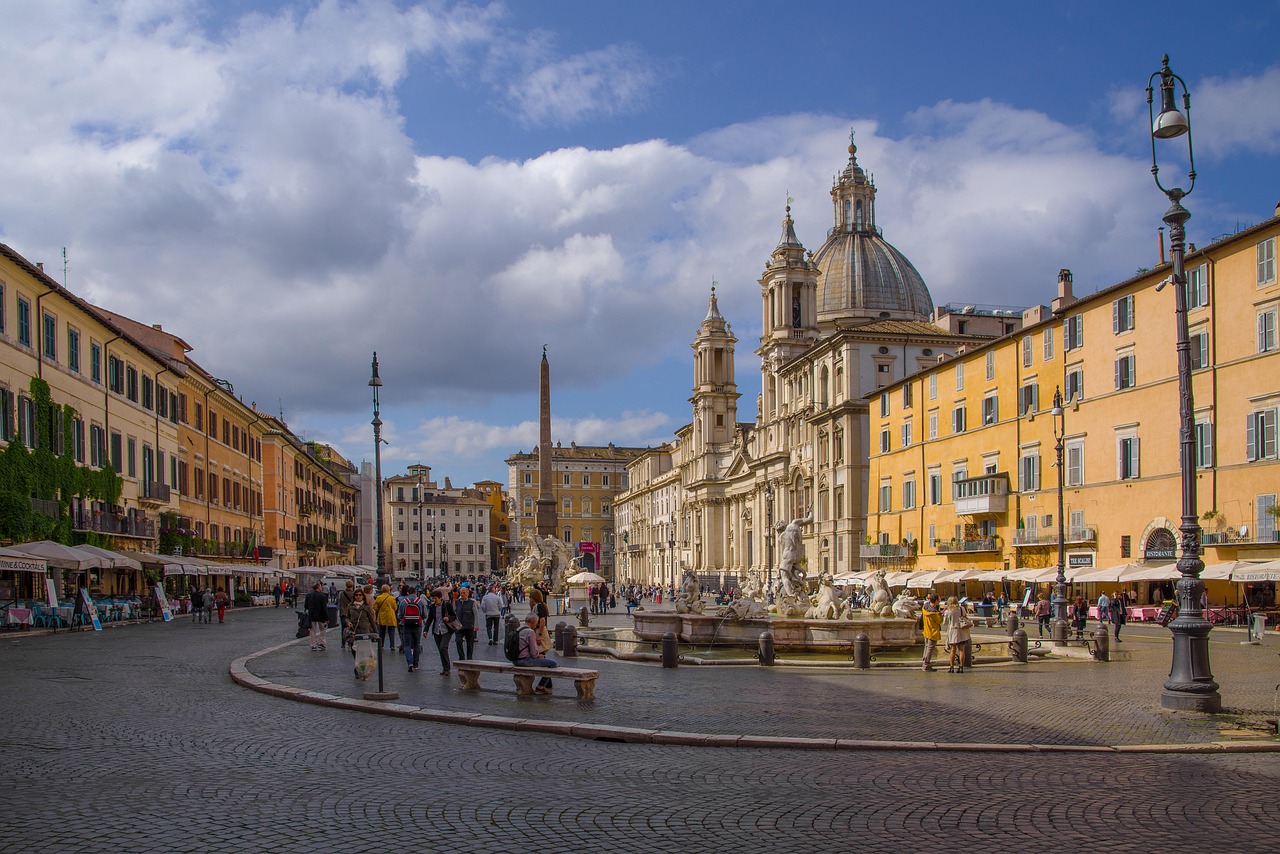
Piazza Navona
Rome's most beautiful baroque square with Bernini fountains
ExploreQuick Planning Guide
⏱️ Time Needed
30–45 minutes
💰 Cost
Free (coins may be needed for lights)
🎫 Reservation
Not required
♿ Accessibility
Partially accessible
📅 Best Time
09:30–11:30 or 15:30–17:30
👨👩👧👦 Family Friendly
Yes — children love the gold chapel
Nearby Attractions
Santa Maria Maggiore2-minute walk
Santa Pudenziana — sister church5-minute walk
San Pietro in Vincoli — Michelangelo's Moses10-minute walk
Termini Station10-minute walk
Cavour Metro8-minute walk
Colosseum15-minute walk
Featured In These Itineraries
Hidden Gems of RomeFree Rome ItineraryClassic Rome in 3 DaysEssential Tips
- ✓ Bring some coins for the light boxes
- ✓ Don't miss the Chapel of San Zeno (south aisle)
- ✓ Spot the square halos of Paschal I & Theodora
- ✓ Avoid the long midday closure — check current hours
- ✓ Pair with Santa Pudenziana 5 min away