 Renaissance Basilica — free entry
San Pietro in Vincoli
Michelangelo's Moses (1513–1515) and chains traditionally venerated as those of Saint Peter — one of the supreme Renaissance sculptures and the relic that built the basilica, 10 minutes' walk uphill from the Colosseum.
30–45 min visitFree entryMichelangelo's MosesSaint Peter's chainsPiazza di San Pietro in Vincoli 4/A, 00184 Roma RMOpen on MapPlan Your Visit
Compare tickets, tours and stays — booking ahead usually gives more choice
Get TicketsBook a TourHotels NearbySan Pietro in Vincoli (the Basilica of Saint Peter in Chains) is a 5th-century Roman basilica on the Oppian Hill, founded between 432 and 440 by the Empress Licinia Eudoxia to house chains traditionally venerated as those that bound Saint Peter in Jerusalem and Rome — preserved today in a golden reliquary beneath the high altar. Above all, it is the home of Michelangelo's Moses (1513–1515) and the Tomb of Pope Julius II — one of the supreme works of Renaissance sculpture and the definitive monument of Michelangelo's career-long struggle with what his biographer called 'the tragedy of the tomb'. Free entry, open daily 08:00–12:30 and 15:00–19:00, ten minutes' walk uphill from the Colosseum via the covered Borgia stairway off Via Cavour.
Why visit San Pietro in Vincoli?
San Pietro in Vincoli is one of the more easily accessible places to see a major Michelangelo sculpture — free, open daily, in a small basilica with no booking required, with the Moses at close range and viewable from any angle. It is also one of the great early Christian foundations of Rome, with a 5th-century plan, 20 ancient Roman columns, chains traditionally venerated as those of Saint Peter beneath the high altar and a beautiful 1706 coffered wooden ceiling. Ten minutes' walk uphill from the Colosseum via the covered Borgia stairway. The single most rewarding free Renaissance experience in Rome.
- Michelangelo's Moses (1513–1515): the supreme statement of Michelangelo's early High Renaissance sculptural style — extraordinary anatomical detail, the famous 'horns' (rays of divine light), and the statue that, according to a later, undocumented legend, Michelangelo struck with his hammer, crying 'Why don't you speak?'
- Tomb of Pope Julius II (final 1545 version): the much-reduced version of Michelangelo's most ambitious sculptural project — the 'tragedy of the tomb' that haunted him for 40 years. Includes Moses plus the also-by-Michelangelo Leah and Rachel.
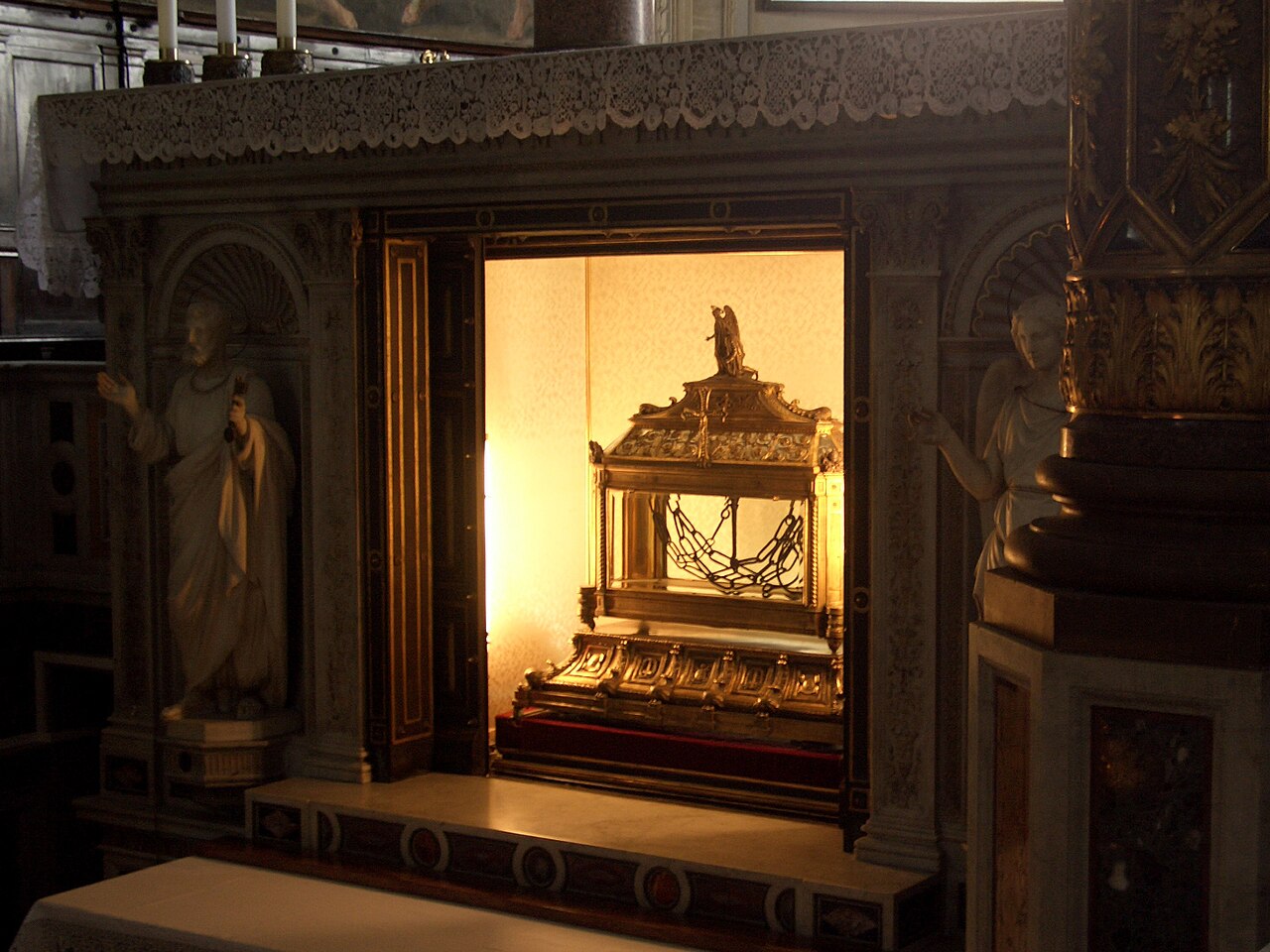
- Chains venerated as Saint Peter's: the relic tradition holds built the basilica — chains said to have bound Peter in Jerusalem and Rome, and, by tradition, miraculously fused in the 5th century, displayed beneath the high altar.
- The 5th-century basilica: Empress Eudoxia's foundation of 432–440 — 20 ancient Roman fluted columns of grey-veined marble, the 1706 coffered wooden ceiling, the 7th-century Byzantine apse mosaic of Saint Sebastian.
- Free, central, almost always open: 10 minutes from the Colosseum, free entry, no booking required, open daily — one of the easiest major Michelangelo works to see without an admission ticket.
Quick facts
Built
432–440 AD
Style
Early Christian basilica
Famous for
Michelangelo's Moses
Don't miss
Tomb of Julius II
Relic
Chains venerated as St Peter's
Entry 2026
Free
Visit time
30–45 minutes
Location
10 min from Colosseum
Table of Contents
Jump to any section of the itinerary
A brief history
By tradition, around 64 AD the Apostle Peter was imprisoned in Rome at the Mamertine Prison and chained before his martyrdom under Nero. The Roman chains, preserved by the early Christian community, became one of the principal relics of the early Church. The Jerusalem chains — those that, by Acts 12, had bound Peter during his imprisonment by Herod Agrippa around 44 AD — were preserved separately in the Holy Land.
Between 432 and 440, the Empress Licinia Eudoxia — daughter of the Byzantine emperor Theodosius II of Constantinople and wife of the Western Roman emperor Valentinian III — founded the basilica on the Oppian Hill specifically to house the chains. By tradition, she had received the Jerusalem chains as a gift from her mother (the Empress Aelia Eudocia, who had brought them from Jerusalem in 438) and built the basilica with her dowry while living at the imperial palace on the Palatine. The basilica is one of the great surviving 5th-century Roman foundations and a direct material link to the last decades of the Western Roman Empire.
In the 5th century, by tradition, when Eudoxia presented the Jerusalem chains to Pope Leo I (440–461), he placed them next to the Roman chains kept in Rome — and the two sets of chains miraculously fused into a single chain. The relic still preserved today beneath the high altar is the result of this 5th-century miracle. The feast of Saint Peter ad Vincula on 1 August became one of the principal feasts of the medieval Roman calendar.
In 1471, Cardinal Giuliano della Rovere — the future Pope Julius II — was made titular cardinal of San Pietro in Vincoli and began a major Renaissance renovation, including the elegant porch on the facade. In 1503 he was elected pope, and in 1505 he summoned the young Michelangelo to Rome and commissioned an enormous free-standing 40-figure marble tomb for himself for the new St Peter's Basilica. The project — the so-called 'tragedy of the tomb' — went through more than 40 years of redesigns, scope reductions and political interruptions.
Between 1513 and 1515, after the death of Julius II, Michelangelo carved the Moses for a much-reduced version of the tomb. In the late 1530s he carved the flanking figures of Leah and Rachel. The much-reduced final version of the tomb was finally installed in 1545 against the wall of the right transept of San Pietro in Vincoli — not in St Peter's, as originally intended. The basilica thus became the home of one of the supreme works of Renaissance sculpture by accident, as the consequence of one of the greatest unfulfilled artistic projects of the European Renaissance.
The Counter-Reformation cardinal Antonio Carafa restored the church in 1577 and added the wooden coffered ceiling. The relics of the seven Maccabean martyrs were rediscovered beneath the high altar in 1876. Sustained 20th- and 21st-century conservation campaigns have preserved the Moses, the Tomb and the chains. In 2026 the basilica remains an active parish, served by the Canons Regular of the Lateran — free entry, the daily liturgy and the Moses continue as they have for almost 1600 years.
San Pietro in Vincoli through the centuries
c. 64 ADSaint Peter in Rome
By tradition, the Apostle Peter is imprisoned in Rome and chained at the Mamertine Prison before his martyrdom under Nero. The Roman chains will become one of the principal relics of the early Christian Church.
432–440Basilica founded by Eudoxia
The Empress Licinia Eudoxia, daughter of Theodosius II of Constantinople and wife of the Western Roman emperor Valentinian III, founds the basilica on the Oppian Hill specifically to house chains venerated as those of Saint Peter. The 5th-century church survives in its essential plan.
5th centuryThe miracle of the chains
By tradition, when Eudoxia presents the Jerusalem chains to Pope Leo I (440–461), he places them next to the Roman chains kept in Rome. The two sets of chains miraculously fuse into a single chain — the relic still preserved beneath the high altar.
682–683Pope Leo II rebuilding
First major rebuilding under Pope Leo II — the apse and mosaic decoration are renewed, including the small Byzantine-style mosaic of Saint Sebastian (one of the oldest surviving images of the saint depicted as a mature bearded figure rather than the usual young martyr).
1471Cardinal della Rovere
Cardinal Giuliano della Rovere — the future Pope Julius II — is made titular cardinal of San Pietro in Vincoli. He begins a major renovation of the church and adds the elegant Renaissance porch on the facade (attributed to Baccio Pontelli).
1503Della Rovere becomes Pope Julius II
Cardinal della Rovere is elected Pope Julius II — the warrior-pope who will commission the new St Peter's Basilica, the Sistine Chapel ceiling and the Stanze, and who will become Michelangelo's most demanding patron.
1505The original tomb commission
Julius II summons Michelangelo to Rome and commissions an enormous free-standing tomb for himself for the new St Peter's Basilica — a three-storey, 40-figure marble monument intended to be the most ambitious Christian tomb since antiquity. The 'tragedy of the tomb' has begun.
1513–1515Michelangelo carves the Moses
After the death of Julius II in 1513, Michelangelo carves the Moses for a reduced version of the tomb. The figure — originally intended as one of dozens of figures on the upper level of the giant tomb — becomes the supreme statement of his early High Renaissance sculptural style.
1532–1545Final reduced tomb
After more than 40 years and at least five successive design reductions, the much-reduced tomb is finally installed against the wall of the right transept of San Pietro in Vincoli (the cardinal's titular church) in 1545 — not in St Peter's, as originally intended.
1577Counter-Reformation interventions
Cardinal Antonio Carafa restores the church and adds the wooden coffered ceiling. The 5th-century basilica plan and the 20 ancient Roman columns of the nave are preserved.
1876Discovery of the Maccabean tombs
Excavations beneath the high altar reveal what church tradition identifies as the relics of the seven Maccabean martyrs (the Old Testament brothers martyred under Antiochus IV around 167 BC), translated to Rome from Constantinople in the 5th century.
20th centuryModern conservation
Sustained 20th-century conservation campaigns on the Moses and the Tomb of Julius II — including the celebrated 2003 restoration that recovered the original surface polish of the marble. The chains relic is conserved in its golden reliquary beneath the altar.
2026Living parish church
San Pietro in Vincoli remains an active parish, served by the Canons Regular of the Lateran. Free entry, the daily liturgy, the chains and the Moses continue as they have for almost 1600 years.
What to see at San Pietro in Vincoli
Michelangelo's Moses (1513–1515)
- Carved between 1513 and 1515 — the supreme statement of Michelangelo's early High Renaissance sculptural style and one of the great works of European art.
- Extraordinary anatomical realism — visible veins in the muscular forearms, the precise weight of the drapery, the distinct texture of beard, hair, skin and stone.
- The famous 'horns' on Moses's head are rays of divine light — a result of Saint Jerome's medieval Latin translation of the Hebrew word 'qaran' (radiated/horned) in Exodus 34:29.
- According to a later legend — not documented in Michelangelo's own lifetime — the sculptor struck the statue's knee with his hammer, crying 'Why don't you speak?', so lifelike did the figure appear. The story is treated by historians as apocryphal rather than fact.
Tomb of Pope Julius II (final 1545 version)
- The much-reduced final version of what Michelangelo originally designed in 1505 as a free-standing 40-figure marble monument for the new St Peter's Basilica.
- Three registers of figures: at the centre of the lower level the Moses; on either side his sisters Leah (the active life, with mirror) and Rachel (the contemplative life, with prayer book) — both also by Michelangelo.
- The reclining figure of Julius II at the top of the tomb is by Michelangelo's pupils, not the master himself; the architectural framework was substantially modified during the 40-year saga.
- Famously called by Michelangelo's biographer Ascanio Condivi 'the tragedy of the tomb' — the project he never escaped from and which haunted him for 40 of his 89 years.
Saint Peter's Chains
- Chains traditionally venerated as those that bound the Apostle Peter during his imprisonments in Jerusalem (Acts 12) and Rome (the Mamertine Prison, before his martyrdom under Nero around 64 AD) — their authenticity cannot be verified, but they have been venerated for centuries.
- Displayed in a golden reliquary case in a glass-fronted niche directly beneath the high altar — the spiritual and architectural centre of the basilica.
- By tradition, when the Empress Eudoxia presented the Jerusalem chains to Pope Leo I in the 5th century, the two sets of chains miraculously fused into a single chain — the relic still preserved today.
- The feast of Saint Peter ad Vincula ('Peter in chains') on 1 August was one of the principal feasts of the medieval Roman calendar.
The 5th-Century Basilica
- 20 magnificent ancient Roman fluted columns of grey-veined marble — spolia from earlier Roman buildings — divide the nave from the side aisles.
- The 17th-century coffered wooden ceiling (Giovanni Battista Parodi, 1706) commemorates the Miracle of the Chains in its central panel.
- The 7th-century Byzantine-style apse mosaic of Saint Sebastian (right side aisle) — one of the oldest surviving images of the saint as a mature bearded figure.
- The crypt beneath the high altar contains what church tradition identifies as the relics of the seven Maccabean martyrs, rediscovered in 1876.
Michelangelo's Moses — how the supreme Renaissance sculpture works
The Moses (1513–1515) is the supreme statement of Michelangelo's early High Renaissance sculptural style — and one of the great works of European art. It depicts the prophet at the moment he descends from Mount Sinai with the tablets of the Ten Commandments and finds the Israelites worshipping the golden calf. The figure is caught between divine command and explosive moral fury: the right hand grips the long beard with terrifying tension; the left arm clutches the tablets of the Law against the side; the knees turn slightly outward as if Moses is about to rise from the seat to act.
The anatomical detail is extraordinary — visible veins in the muscular forearms; distinct textures of beard, hair, skin and the rough stone of the seat; the precise weight and fall of the heavy drapery over the legs. Every part of the figure is independently observed and convincingly carved, and yet the whole composition is held together by the dynamic spiral of the body and the frozen explosive energy of the moment depicted.
The famous 'horns' on Moses's head are not horns but rays of divine light radiating from his face after his encounter with God on Mount Sinai. Exodus 34:29 says that when Moses came down from Mount Sinai 'he wist not that the skin of his face shone'. The Hebrew word 'qaran' that describes the shining can mean either 'radiated' or 'horned'; Saint Jerome's 4th-century Latin Vulgate translation chose 'horned' (cornutam facie), which became the standard medieval iconography. By Michelangelo's time, depicting Moses with horns was a 1100-year-old established Christian art tradition. The horns are therefore not Michelangelo's personal interpretation but the standard iconographic convention of the period.
The reception history of the Moses is itself extraordinary. Vasari ranked it as 'the supreme creation of modern sculpture'. A later legend — not documented in Michelangelo's lifetime — holds that the sculptor struck the knee of the finished statue with his hammer, crying 'Perché non parli?' ('Why don't you speak?'), so lifelike did the figure appear. Historians treat the anecdote as apocryphal rather than fact. Sigmund Freud devoted one of his most famous essays to the Moses (1914), arguing that the figure depicts not the moment of explosive fury but the moment immediately after, when Moses has mastered his fury through reason. Twentieth-century art historians from Wölfflin to Tolnay have written entire books on the figure. It remains, almost 500 years after its completion, one of the single most discussed and most photographed sculptures in the world.
Tomb of Julius II — the 'tragedy of the tomb'
In 1505, the new pope Julius II — formerly Cardinal Giuliano della Rovere, titular cardinal of San Pietro in Vincoli since 1471 — summoned the 30-year-old Michelangelo to Rome and commissioned an enormous free-standing tomb for himself for the new St Peter's Basilica. The original 1505 design was for a three-storey, free-standing marble monument with more than 40 over-life-size figures — intended to be the most ambitious Christian tomb since antiquity, and in scale and ambition closer to a small mausoleum than to a conventional papal tomb.
The project went through more than 40 years of redesigns, scope reductions and political interruptions — what Michelangelo's biographer Ascanio Condivi famously called the 'tragedy of the tomb'. Julius II himself diverted Michelangelo to the Sistine Chapel ceiling (1508–1512), then died in 1513 before the tomb was anywhere near complete. The della Rovere heirs renegotiated the contract repeatedly with successive design reductions in 1513, 1516, 1532 and 1542 — each version smaller, simpler and less ambitious than the last. Successive popes (Leo X, Clement VII, Paul III) demanded Michelangelo's services for the Medici Chapel in Florence, the new St Peter's, the Last Judgement and the Pauline Chapel frescoes.
The much-reduced final version was finally installed in 1545 — 40 years after the original commission and 32 years after the death of the patron — against the wall of the right transept of San Pietro in Vincoli (the cardinal's titular church) rather than in St Peter's, as originally intended. The final tomb has three registers of figures: at the centre of the lower level the Moses, flanked by Leah (the active life, with mirror) and Rachel (the contemplative life, with prayer book) — both also by Michelangelo himself. The reclining figure of Julius II at the top is by Michelangelo's pupils, not the master himself.
The 'tragedy' was both personal and historical. For Michelangelo, the tomb was the project he never escaped from — he returned to it repeatedly across 40 of his 89 years, and it was the source of his bitterest professional disappointments. For the history of European art, however, the unfulfilled ambition of the original 1505 design produced two of the supreme sculptural achievements of the Renaissance — the Moses and the so-called Slaves (the unfinished figures intended for the lower register, now in the Louvre and the Galleria dell'Accademia in Florence). The 'tragedy of the tomb' is therefore at once the greatest unfulfilled artistic project of the European Renaissance and the source of some of its supreme masterpieces.
Saint Peter's chains — the relic and the miracle
Chains traditionally venerated as those that bound the Apostle Peter during his imprisonments are, by tradition, the reason the basilica was built — though their authenticity cannot be independently verified — and they remain its spiritual and architectural centre. There are two strands of tradition. The first is the Jerusalem chains, those that, by Acts 12, had bound Peter during his imprisonment by Herod Agrippa around 44 AD, when an angel miraculously freed him and led him out of the prison. The second is the Roman chains, those that bound him at the Mamertine Prison in Rome around 64 AD before his martyrdom under Nero.
The Jerusalem chains were preserved in the Holy Land and brought to Constantinople in the 5th century by the Empress Aelia Eudocia, mother-in-law of the Western Roman emperor Valentinian III. By tradition, around 438 she sent them as a gift to her daughter the Empress Licinia Eudoxia in Rome, who in turn presented them to Pope Leo I. The Roman chains had been preserved by the early Christian community in Rome since the 1st century.
When Pope Leo I (440–461) placed the Jerusalem chains next to the Roman chains, the two sets of chains miraculously fused into a single chain — the relic still preserved today in a golden reliquary in a glass-fronted niche directly beneath the high altar. The basilica was built around the relic between 432 and 440 — the chains, not the building, are the original sacred object. Pilgrims have venerated them for almost 1600 years.
To see the chains: walk to the centre of the church, climb the few steps to the high altar, and look down through the glass into the niche. The reliquary is gold and crystal; the chains themselves are visible inside, dark iron with the characteristic links of late-antique Roman prison restraint. The single most directly tactile relic of the early Christian Church on display anywhere in Rome — and the original reason a 5th-century empress built a basilica on this spot.
The 5th-century basilica — Eudoxia's church
Beyond the Michelangelo and the chains, San Pietro in Vincoli is itself one of the great surviving 5th-century Roman foundations. Built by the Empress Licinia Eudoxia between 432 and 440, the basilica preserves its original 5th-century plan: a wide three-aisled nave divided by 20 ancient Roman fluted columns of grey-veined marble (Doric capitals on Ionic-style fluted shafts), a transept and an apse at the east end. The columns are spolia — re-used from earlier Roman buildings — and are characteristic of the late-antique Christian basilica style.
The decorative interior we see today is largely the result of the 1577 Counter-Reformation restoration by Cardinal Antonio Carafa and the early-18th-century restoration by Cardinal Annibale Albani. The magnificent coffered wooden ceiling is by Giovanni Battista Parodi (1706), with the central panel depicting the Miracle of the Chains — the moment in the 5th century when the Jerusalem and Roman chains miraculously fused before Pope Leo I. Almost no visitor looks up at this ceiling, but it is one of the great Roman late-Baroque interior decorations and frames the entire basilica visually.
In the right side aisle, look for the small 7th-century Byzantine-style mosaic of Saint Sebastian — one of the oldest surviving images of the saint depicted as a mature bearded figure rather than the usual young martyr pierced with arrows. The mosaic dates to the rebuilding of the apse under Pope Leo II (682–683) and is one of the few surviving pieces of post-classical Roman mosaic on the Oppian Hill.
The crypt beneath the high altar was excavated in 1876 and revealed what church tradition identifies as the relics of the seven Maccabean martyrs — the Old Testament brothers martyred under Antiochus IV around 167 BC, translated to Rome from Constantinople in the 5th century. The crypt is occasionally accessible during major feasts and is one of the lesser-known relics of early Christian Rome.
Moses vs other major Michelangelo works
| Feature | Moses | David | Pietà | Sistine Chapel |
|---|---|---|---|---|
| Date | 1513–1515 (Rome) | 1501–1504 (Florence) | 1498–1499 (Rome) | 1508–1512 (Rome) |
| Material | Marble sculpture | Marble sculpture | Marble sculpture | Fresco ceiling |
| Subject | Old Testament prophet | Biblical king | Christ and the Virgin | Genesis & prophets |
| Patron | Pope Julius II's tomb | Florentine Republic | Cardinal de Bilhères | Pope Julius II |
| Where to see | San Pietro in Vincoli (free) | Galleria Accademia, Florence (€16) | St Peter's Basilica (free) | Sistine Chapel/Vatican Museums (€20) |
| Crowds | Moderate, manageable | Very heavy, advance booking | Heavy, behind glass since 1972 | Extremely heavy, timed entry |
| Best for | Power, age, presence | Youth, beauty, civic ideal | Pathos, devotion, finish | Scale, narrative, ambition |
Verdict: the Moses is one of the more easily accessible major Michelangelo sculptures to see — free, open daily, in a small basilica with no booking required, with the figure at close range and viewable from any angle. Combined with Christ the Redeemer at Santa Maria sopra Minerva and the Pietà at St Peter's, it gives you three free Michelangelo sculptures in central Rome on a single day.
Best time to visit
Time of day
Early morning (best)
Arriving soon after opening, before tour buses typically arrive later in the morning, makes quieter moments with the Moses more likely, though not guaranteed. The morning light from the right-side windows hits the Moses at a good angle.
Late afternoon
After the midday closure (hours vary seasonally — verify locally), the warm afternoon light and generally quieter, more atmospheric conditions. Good for the chains relic.
Midday closure
Hours vary seasonally and around services, so verify locally — a long midday closure is common and catches out many visitors. Plan around it: visit the Domus Aurea, the Colosseum or have lunch in Monti during the closure window.
Best days & seasons
Tuesday–Friday (best)
Quietest weekdays. Avoid Sunday morning Mass; Saturday late afternoon can fill briefly with parish events.
1 August — Saint Peter ad Vincula
The patronal feast of the church — the chains relic is exposed for veneration with a solemn high Mass. The single most atmospheric day in the church's calendar and historically one of the great medieval Roman pilgrimage days.
Year-round (indoor)
Comfortable in any weather — among the best rainy-day options in eastern Rome. Pair with the Colosseum and Roman Forum for a full eastern-Rome day.
Avoid summer 12:00–15:30
In July and August the midday closure tends to run longer, though exact hours vary and should be verified locally — and this is also when most tourists try to visit. Plan for early morning.
Getting there
Walking from the Colosseum (best)
From the Colosseum walk north on Via degli Annibaldi for 5 minutes to Via Cavour, then take the covered Salita dei Borgia stairway (look for the stone arch at Via Cavour 86) for the final 5 minutes' climb to Piazza San Pietro in Vincoli. The most atmospheric route — shaded medieval stairs named after the Borgia family.
Metro
Closest stations: Cavour (Line B) — 5 minutes' walk uphill via the Borgia stairway; Colosseo (Line B) — 10 minutes' walk uphill; Termini (Lines A & B) — 15 minutes' walk south.
Bus
Buses 75, 117 stop at Via Cavour 5 minutes' walk away. Buses 51, 75, 85, 87, 117, 118 all stop at the Colosseum, 10 minutes' walk downhill.
Find the entrance
The basilica faces the small Piazza di San Pietro in Vincoli on the Oppian Hill, behind the Engineering Faculty of La Sapienza University. Address: Piazza di San Pietro in Vincoli 4/A, 00184 Rome. The Renaissance porch on the facade (attributed to Baccio Pontelli, 1480s) is the obvious main entrance.
Common mistakes to avoid
Arriving during the 12:30–15:00 closure
Like many Roman churches, San Pietro in Vincoli closes for a long midday break (typically around 12:30–15:00, though hours vary seasonally and around services — verify locally). The single most common visiting mistake is to arrive at midday and find the church locked. Plan around it — visit in the morning or later in the afternoon. Combine with the Colosseum, Domus Aurea or Roman Forum for the rest of the day.
Visiting the tomb without looking at the side figures
Almost every visitor stares only at Moses in the centre of the lower register. The two figures flanking Moses — Leah (the active life, on the right) and Rachel (the contemplative life, on the left) — are also by Michelangelo himself, and are essentially unrecognised masterpieces. Slow down and look at all three figures together as Michelangelo intended.
Looking for Julius II's actual tomb
Despite the name 'Tomb of Julius II', Pope Julius II is not actually buried at San Pietro in Vincoli. He was buried in St Peter's Basilica next to his uncle Sixtus IV, where his tomb has subsequently been lost. The 'Tomb of Julius II' here is a tomb monument without the body — a memorial cenotaph that nevertheless contains four works by Michelangelo (Moses, Leah, Rachel and the original lower architectural framework).
Not understanding the 'horns' of Moses
The horns on Moses's head, which puzzle every first-time visitor, are not horns but rays of divine light radiating from his face after his encounter with God on Mount Sinai (Exodus 34:29). The Hebrew word 'qaran' can mean either 'radiated' or 'horned'; Saint Jerome's 4th-century Latin Vulgate translation chose 'horned' (cornutam), which became the standard medieval iconography. Michelangelo is following 1500 years of established Christian art tradition, not making a personal choice.
Skipping the chains beneath the altar
The chains venerated by tradition as those of Saint Peter — the relic from which the church takes its name and, by tradition, the reason for the basilica's existence — are displayed in a golden reliquary in a glass-fronted niche beneath the high altar. Many first-time visitors look only at the Moses in the right transept and walk out without ever seeing the chains. Walk to the centre of the church and look down through the glass before you leave.
Underestimating the climb
The basilica sits on the Oppian Hill, a steep climb up from the Colosseum. The most pleasant route is the covered stairway (Salita dei Borgia) off Via Cavour — clearly signposted, scenic, and shaded. Trying to reach the church by walking around the hill on the road is much longer and exposes you to traffic. Allow 10–12 minutes for the climb.
Insider tips from locals
Take the covered Borgia stairway
The 'Salita dei Borgia' covered stairway off Via Cavour (look for the stone arch at Via Cavour 86) is the most atmospheric route up to the church — a shaded medieval staircase named after the Borgia family that climbs directly to Piazza San Pietro in Vincoli. Much more pleasant than the road route from the Colosseum and 5 minutes faster.
Visit at 08:00 for the empty church
The basilica opens at 08:00. Arrive at 08:05–08:15, before the first tour buses arrive at around 09:00, and quieter moments with the Moses are often possible, though this is not guaranteed. The morning light from the right-side windows hits the Moses at the perfect angle. The single most magical Michelangelo experience in Rome that costs nothing.
Combine with the Domus Aurea
The Domus Aurea — Nero's vast underground Golden House — is 5 minutes' walk on the same Oppian Hill (timed-entry tickets only, book in advance). After visiting the Moses (08:00–09:00), walk over to the Domus Aurea for the 09:30 timed entry. The single most rewarding 'Oppian Hill' morning in Rome.
Look up at the wooden ceiling
Almost no visitor looks up at the magnificent 1706 coffered wooden ceiling by Giovanni Battista Parodi, with the Miracle of the Chains in the central panel. The carved and gilded ceiling is one of the great Roman late-Baroque interior decorations and frames the entire basilica visually. Stop in the centre of the nave and look up.
Attend the 1 August feast
1 August is the feast of Saint Peter ad Vincula — the patronal feast of the church, when the chains relic is exposed for veneration with a solemn high Mass. The single most atmospheric day in the church's calendar, and historically one of the great medieval Roman pilgrimage days.
Aperitivo in Monti
After the church, walk 5 minutes north into Monti — the small bohemian neighbourhood between Via Cavour and the Forum — for aperitivo at La Bottega del Caffè (Piazza Madonna dei Monti) or Ai Tre Scalini (Via Panisperna). The most atmospheric early-evening hour in central Rome and 5 minutes from one of the great Michelangelo masterpieces.
Practical visitor tips
Take the Borgia stairs
From Via Cavour 86, look for the covered medieval stairway (Salita dei Borgia) — the most atmospheric route up to the church. 5 minutes of shaded stairs to Piazza San Pietro in Vincoli.
Avoid the lunch closure
The church typically closes for a midday break (hours vary seasonally and around services — verify locally). Visit in the morning for the light on the Moses, or later afternoon for warmer light. Arriving mid-afternoon without checking is the single most common mistake.
Best Moses photos
Morning light from the right-side windows illuminates the Moses at the best angle (08:00–10:00). Wait for tour groups to clear, then shoot from below and slightly to the side to capture the famous knee and beard.
Look at all three figures
Moses is in the centre of the lower register, but the two flanking figures — Leah (active life) and Rachel (contemplative life) — are also by Michelangelo and are essentially unrecognised masterpieces.
Where to Stay Near San Pietro in Vincoli
Looking for convenient accommodation near San Pietro in Vincoli? Stay within walking distance to make the most of your visit.
Hotels Near This AttractionTop Rated HotelsBudget-Friendly OptionsLuxury HotelsCentral locations with easy access to San Pietro in Vincoli and other attractionsFrequently Asked Questions
What is San Pietro in Vincoli?
San Pietro in Vincoli (the Basilica of Saint Peter in Chains) is a 5th-century Roman basilica on the Oppian Hill, founded between 432 and 440 by the Empress Licinia Eudoxia to house chains traditionally venerated as those that bound Saint Peter in Jerusalem and Rome. Above all, it is the home of Michelangelo's Moses (1513–1515) and the Tomb of Pope Julius II — one of the supreme works of Renaissance sculpture and the definitive monument of Michelangelo's career-long struggle with what his biographer called 'the tragedy of the tomb'. Free entry, 10 minutes' walk uphill from the Colosseum.
Where is San Pietro in Vincoli located?
The basilica is at Piazza di San Pietro in Vincoli 4/A, 00184 Rome, on the Oppian Hill. From the Colosseum it is a 10-minute uphill walk via the covered Borgia stairway off Via Cavour; from Cavour metro (Line B) 5 minutes' walk; from the Roman Forum 15 minutes; from Termini Station 15 minutes; from Santa Maria Maggiore 15 minutes downhill.
How much does it cost to visit in 2026?
Entry to the basilica is completely free. There is no ticket and no booking required. The Moses, the Tomb of Julius II and the chains relic can all be viewed without payment. Donations are appreciated but not required. Modest dress is required (covered shoulders and knees), as in every active Roman church.
What are the opening hours?
Typical hours are around 08:00–12:30 and 15:00–19:00, but like many Roman churches, hours vary seasonally and around services — verify locally before visiting. A long midday closure (roughly 12:30–15:00) is common, so plan around it rather than arriving mid-afternoon. Best visiting hours are generally early morning (best Moses lighting) and later afternoon. Mass times restrict tourist circulation briefly.
Why is Michelangelo's Moses here?
In 1505, the new pope Julius II — formerly Cardinal Giuliano della Rovere, titular cardinal of San Pietro in Vincoli since 1471 — commissioned Michelangelo to carve an enormous free-standing 40-figure marble tomb for the new St Peter's Basilica. The project went through more than 40 years of redesigns, scope reductions and political interruptions (the so-called 'tragedy of the tomb'). When the much-reduced final version was finally installed in 1545, it was placed not in St Peter's but in San Pietro in Vincoli, the cardinal's titular church. The Moses, carved in 1513–1515, was originally intended as one of dozens of figures on the upper level of the giant tomb; in the final version it became the central figure of the lower register.
What is special about Michelangelo's Moses?
The Moses (1513–1515) is the supreme statement of Michelangelo's early High Renaissance sculptural style. It depicts the prophet at the moment he descends from Mount Sinai with the tablets of the Ten Commandments and finds the Israelites worshipping the golden calf — caught between divine command and explosive moral fury. The anatomical detail is extraordinary: visible veins in the forearms, distinct textures of beard, hair, skin and stone, the precise weight of the drapery. Michelangelo's biographer Vasari ranked it as 'the supreme creation of modern sculpture'. Sigmund Freud devoted one of his most famous essays to the Moses (1914). According to a later legend — not documented in Michelangelo's own lifetime — the sculptor struck the statue's knee with his hammer, crying 'Why don't you speak?', so lifelike did the figure appear. The story is treated by historians as apocryphal rather than fact.
Why does Moses have horns?
The famous 'horns' on Moses's head are not horns but rays of divine light radiating from his face after his encounter with God on Mount Sinai. Exodus 34:29 says that 'when Moses came down from Mount Sinai... he wist not that the skin of his face shone'. The Hebrew word 'qaran' that describes the shining can mean either 'radiated' or 'horned'; Saint Jerome's 4th-century Latin Vulgate translation chose 'horned' (cornutam facie), which became the standard medieval iconography. By Michelangelo's time, depicting Moses with horns was a 1100-year-old established Christian art tradition. The horns are therefore not Michelangelo's personal interpretation but the standard iconographic convention of the period.
Are Leah and Rachel also by Michelangelo?
Yes. The two figures flanking Moses on the lower register of the tomb — Leah on the right (the active life, identified by her mirror and crown) and Rachel on the left (the contemplative life, identified by her prayer book) — are also by Michelangelo himself, carved in the late 1530s for the final version of the tomb. They are slighter and more refined than the Moses, in the late mannerist style of the Last Judgement period, and are essentially unrecognised masterpieces. Almost every visitor stares only at the Moses; slow down and look at all three Michelangelo figures together as he intended.
Is Pope Julius II actually buried here?
No. Despite the name 'Tomb of Julius II', Pope Julius II is not actually buried at San Pietro in Vincoli. He was buried in 1513 in the old St Peter's Basilica next to his uncle Sixtus IV, where the tomb has subsequently been lost during the rebuilding of St Peter's. The 'Tomb of Julius II' in San Pietro in Vincoli is therefore a tomb monument without the body — a memorial cenotaph. It nevertheless contains three works by Michelangelo himself (Moses, Leah, Rachel) plus the original lower architectural framework, and is the principal surviving fragment of Michelangelo's most ambitious sculptural project.
What are the chains venerated at San Pietro in Vincoli?
Chains traditionally venerated as those that bound the Apostle Peter during his imprisonments in Jerusalem (Acts 12, when an angel freed him) and Rome (the Mamertine Prison, before his martyrdom under Nero around 64 AD) — their authenticity cannot be independently verified, but the tradition is ancient. They are displayed in a golden reliquary case in a glass-fronted niche directly beneath the high altar. By tradition, when the Empress Eudoxia presented the Jerusalem chains to Pope Leo I in the 5th century, the two sets of chains miraculously fused into a single chain — the relic still preserved today. The feast of Saint Peter ad Vincula on 1 August was one of the principal feasts of the medieval Roman calendar and is, by tradition, the reason the basilica was built.
Who was Empress Eudoxia?
Licinia Eudoxia (422–462) was the daughter of the Byzantine emperor Theodosius II of Constantinople and the wife of the Western Roman emperor Valentinian III. By tradition, she received the chains venerated as those of Saint Peter as a gift from her mother (the Empress Aelia Eudocia, who had brought them from Jerusalem in 438) and built the basilica between 432 and 440 specifically to house them. She lived at the imperial palace on the Palatine Hill while the basilica was under construction; her dowry funded the project. The basilica is one of the great surviving 5th-century Roman foundations and a direct material link to the last decades of the Western Roman Empire.
Is the basilica wheelchair accessible?
San Pietro in Vincoli is partially wheelchair accessible. The main entrance from Piazza San Pietro in Vincoli has a few shallow steps that may require assistance. The covered Borgia stairway from Via Cavour is not wheelchair accessible — wheelchair users should approach from Largo Venosta on the upper road. Once inside, the nave is at floor level and the Moses is immediately visible from the wheelchair-accessible right transept. The chains relic in the niche beneath the altar can be viewed from a wheelchair position.
Is photography allowed?
Yes — photography for personal use is permitted (no flash, no tripod, no commercial use). The Moses is the most photographed Michelangelo sculpture in Rome after the Pietà. Best results: arrive at 08:00–09:00 for the morning light from the right-side windows, wait for tour groups to clear, shoot from below and slightly to the side to capture the famous knee and beard. The chains relic in the glass niche beneath the altar is harder to photograph because of the glass — a polarising filter or careful angle helps avoid reflections.
How does San Pietro in Vincoli compare with other Michelangelo sites in Rome?
Rome contains four major Michelangelo works: the Pietà in St Peter's Basilica (1498–1499, free, behind glass since 1972); the Sistine Chapel ceiling and Last Judgement in the Vatican Museums (1508–1512 and 1536–1541, €20 timed entry); Christ the Redeemer in Santa Maria sopra Minerva (1521, free, near the Pantheon); and the Moses + Tomb of Julius II in San Pietro in Vincoli (1513–1545, free). The Moses is among the more accessible major Michelangelo sculptures to see — free, open daily, in a small church with no booking required, with the figure at close range and viewable from any angle. Visit all four for the complete Michelangelo Rome experience.
When are the best times to visit?
Three windows. (1) Weekday mornings soon after opening — quieter moments with the Moses are often possible before tour groups arrive, though this cannot be guaranteed, and the morning light from the right-side windows is good. (2) Later weekday afternoons — warm afternoon light and a generally quieter church. (3) 1 August — the feast of Saint Peter ad Vincula, with the chains exposed for veneration. Avoid the long midday closure (hours vary seasonally and around services — verify locally) and Sunday morning Mass.
What should I combine with San Pietro in Vincoli?
An ideal Oppian Hill / eastern Rome morning. Colosseum (10 min downhill — book skip-the-line tickets in advance), Roman Forum and Palatine (15 min downhill — combined ticket with the Colosseum), Domus Aurea (5 min east — Nero's underground Golden House, timed-entry tickets), Santa Maria Maggiore (15 min uphill — the great papal basilica with 5th-century mosaics), Santa Pudenziana and Santa Prassede (10–15 min uphill — Roman Byzantine mosaics). The single most rewarding 'eastern Rome / early-Christian Michelangelo' day in the city.
Related Attractions
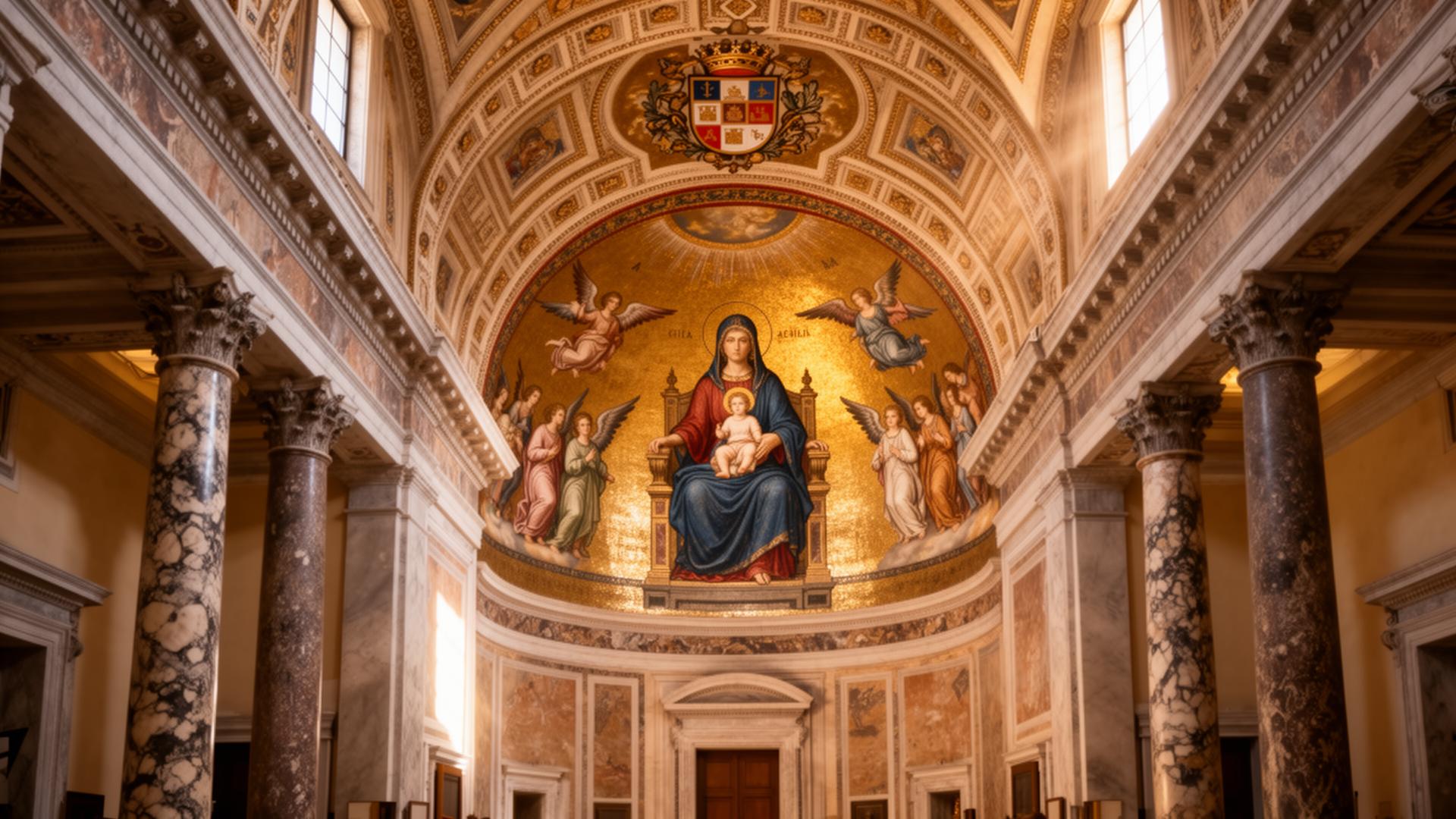
Basilica Santa Maria in Domnica
9th-century basilica with stunning Byzantine mosaics
Explore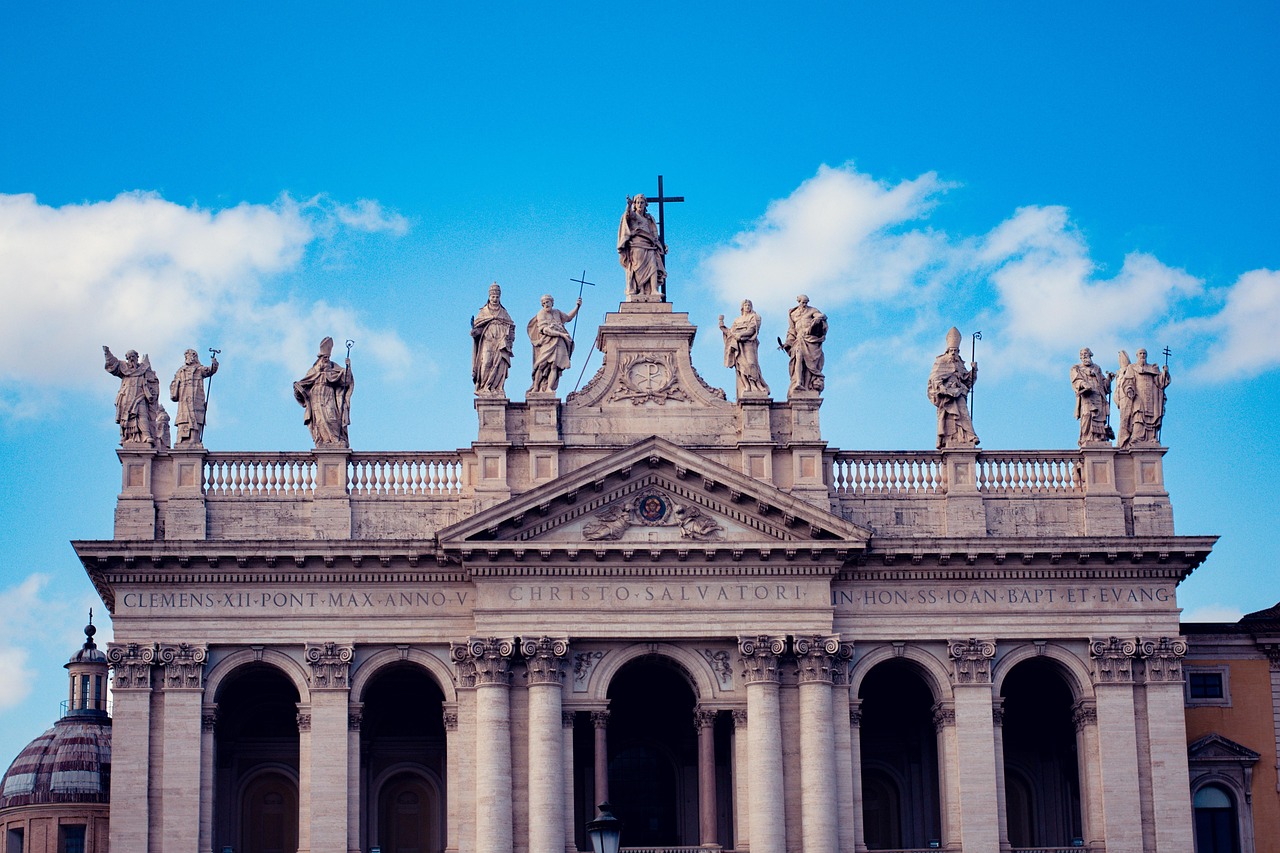
Basilica di San Giovanni in Laterano
Rome's official cathedral—the Pope's seat since 324 AD
Explore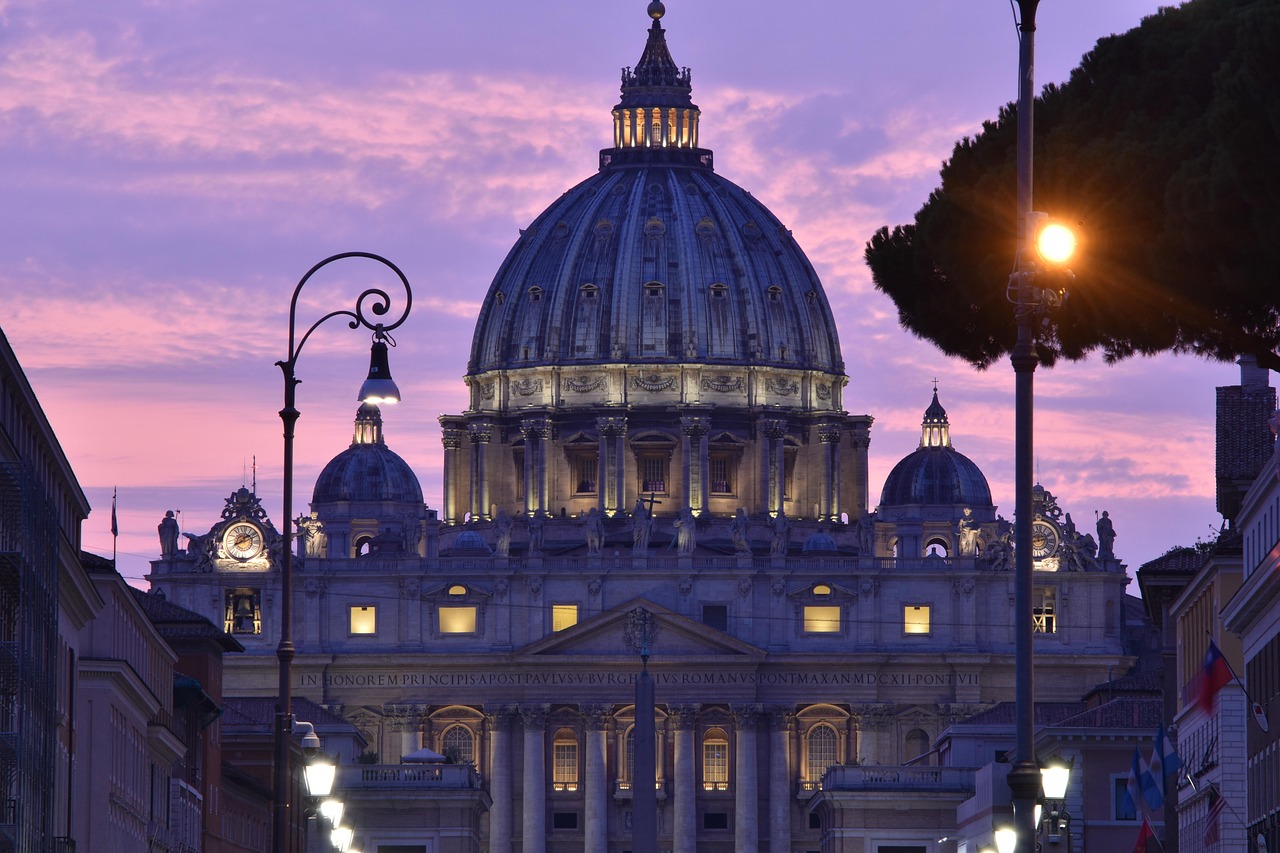
St. Peter's Basilica
World's largest church with Michelangelo's Pietà and dome views
Explore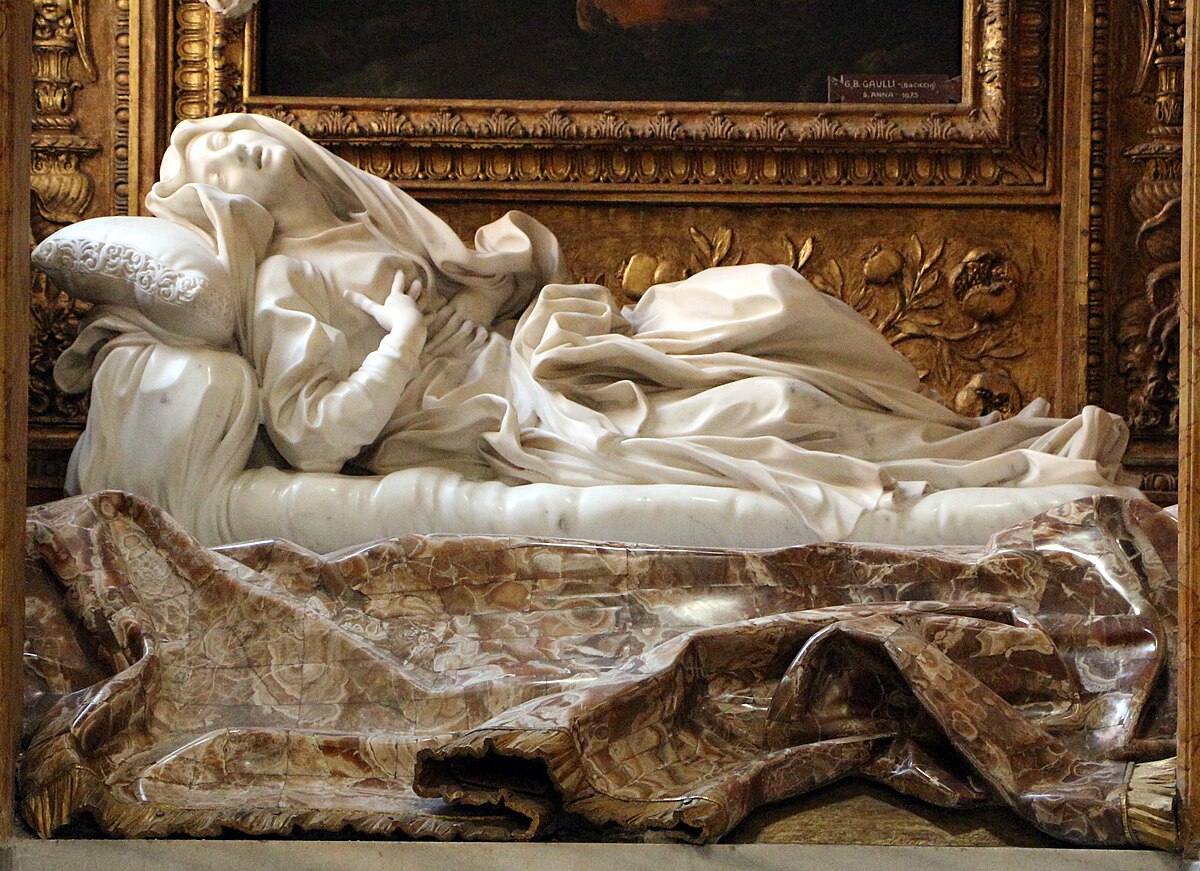
San Francesco a Ripa
Hidden Trastevere church with Bernini's stunning sculpture
Explore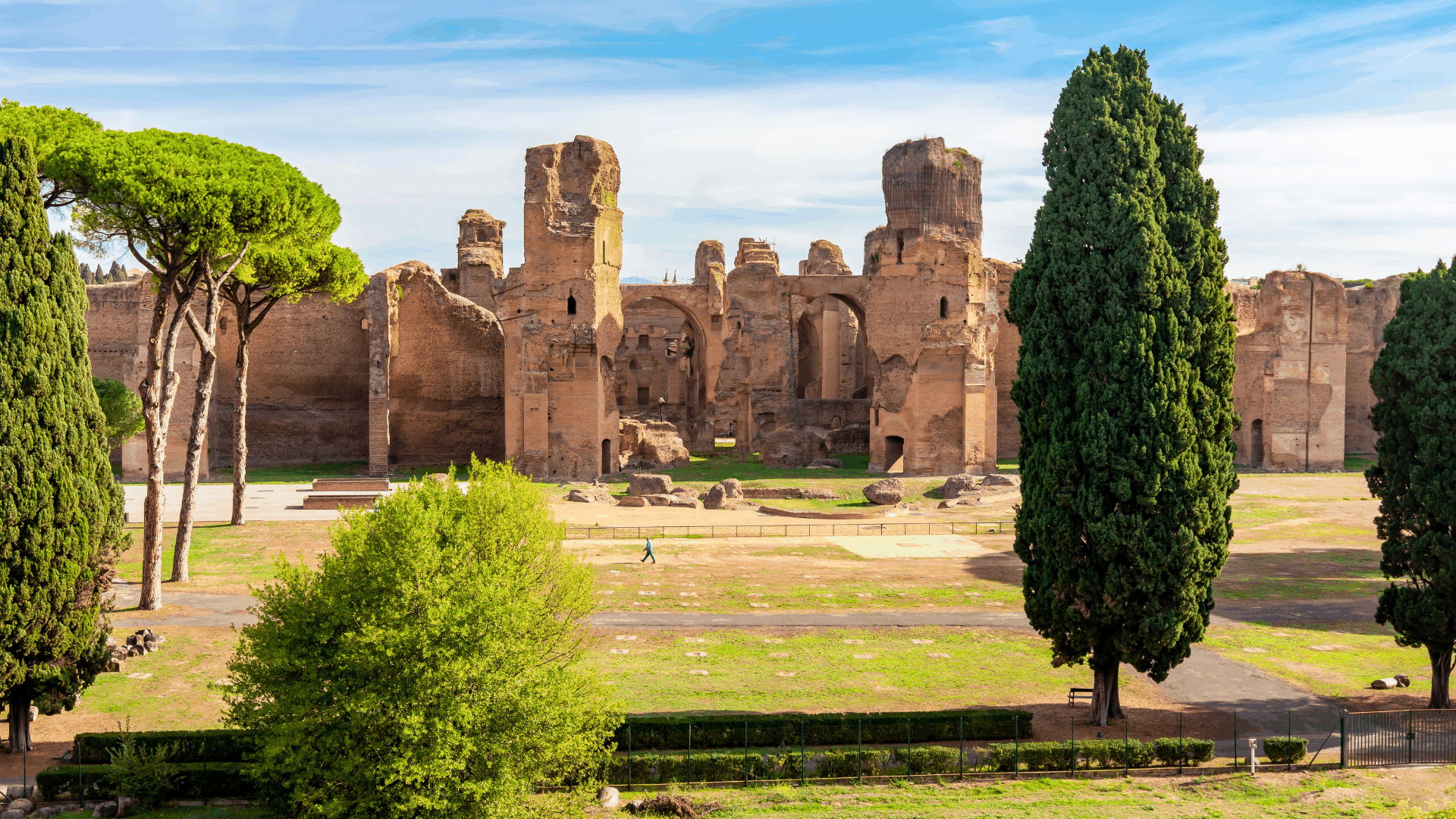
Baths of Caracalla
Ancient Rome's most magnificent public baths with towering ruins
Explore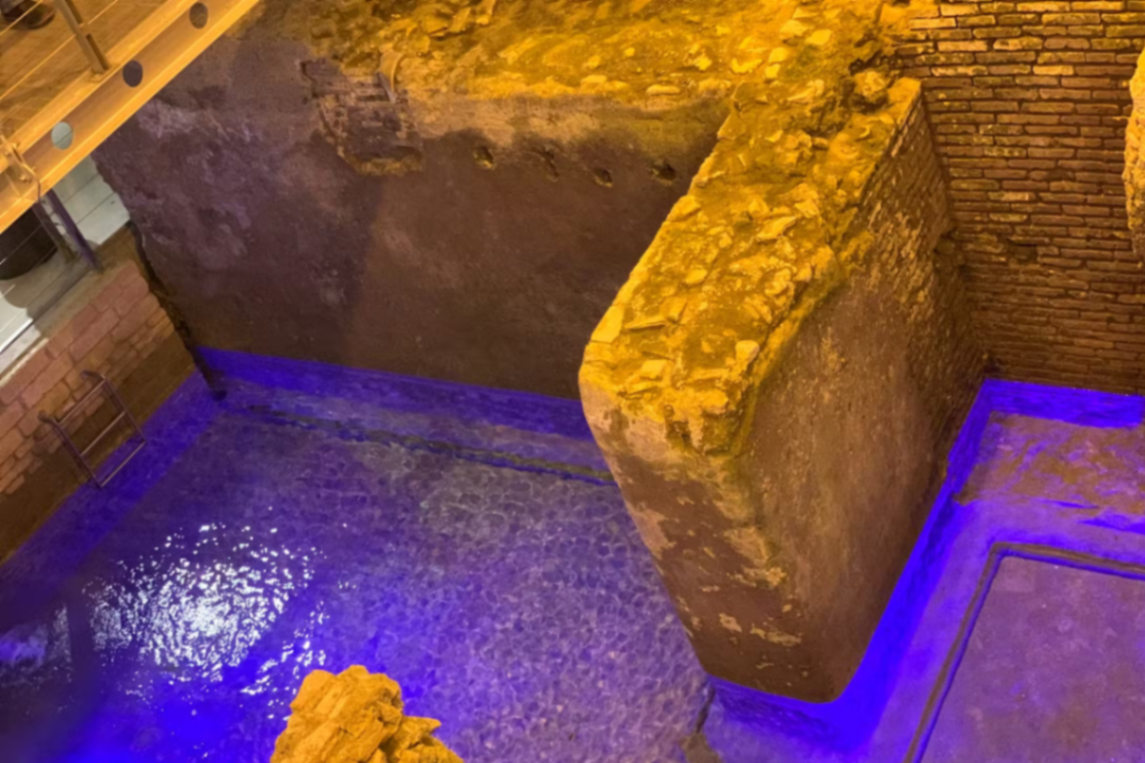
Vicus Caprarius
Ancient ruins linked to the Aqua Virgo aqueduct beneath the Trevi district
ExploreQuick Planning Guide
⏱️ Time Needed
30–45 minutes
💰 Cost
Free
🎫 Reservation
Not required
♿ Accessibility
Partially accessible (steps at main entrance)
📅 Best Time
Early morning or late afternoon (typical hours; verify locally)
👨👩👧👦 Family Friendly
Yes — children love the Moses
Nearby Attractions
Colosseum10-minute walk downhill
Domus Aurea5-minute walk
Roman Forum15-minute walk
Santa Maria Maggiore15-minute walk
Cavour Metro5-minute walk
Monti neighbourhood5-minute walk
Featured In These Itineraries
Classic Rome in 3 DaysHidden Gems of Rome5 Day Rome ItineraryEssential Tips
- ✓ Closed for a midday break (hours vary seasonally — verify locally)
- ✓ Take the covered Borgia stairway from Via Cavour
- ✓ Moses is in the right transept
- ✓ Look for the chains beneath the high altar
- ✓ Combine with the Colosseum or Domus Aurea