 Underground Rome — beneath the Trevi
Vicus Caprarius
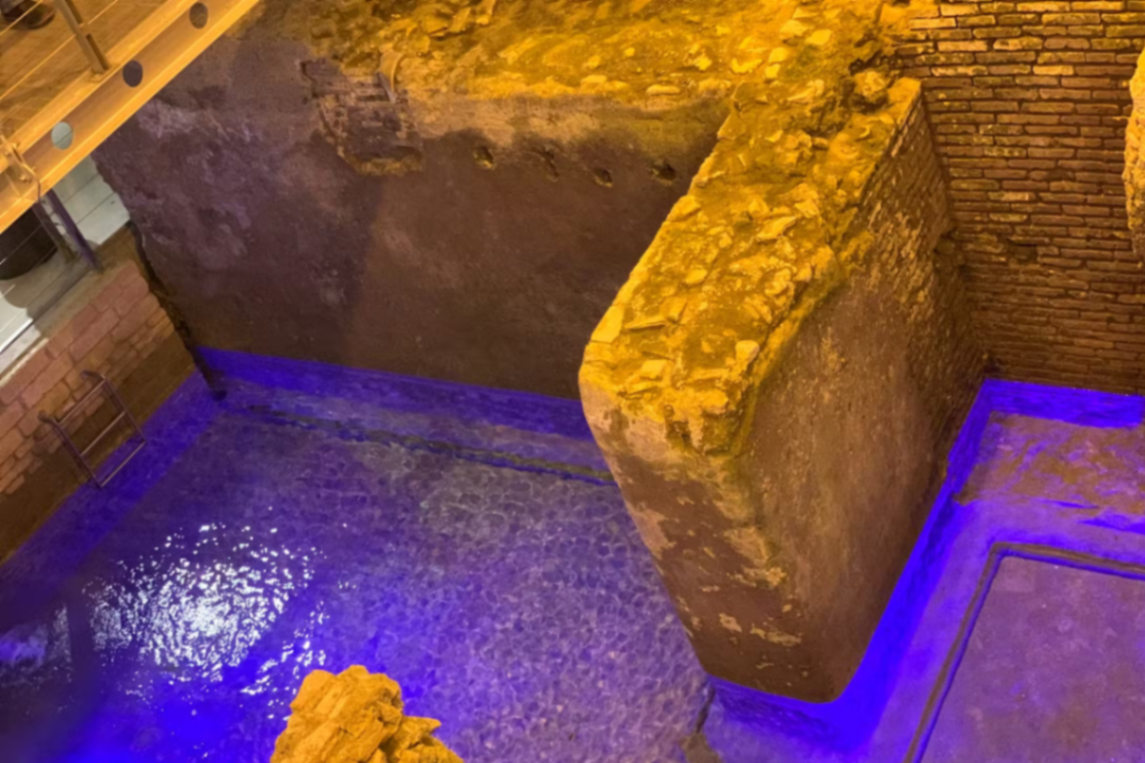
The Water City — a Roman insula, a 4th-century domus and a still-in-use Aqua Virgo aqueduct, 9 metres beneath the Trevi Fountain.
30–45 min visit€4 entry (from)Live ancient aqueduct9m below the TreviVicolo del Puttarello 25, 00187 Roma RMOpen on MapPlan Your Visit
Compare tickets, tours and stays — booking ahead usually gives more choice
Get TicketsBook a TourHotels NearbyVicus Caprarius — the 'Water City' (Città dell'Acqua) — is the small underground archaeological site located 9 metres beneath the streets just behind the Trevi Fountain. It contains the remains of a 1st-century AD Roman insula (apartment building) that was extensively rebuilt in the early 4th century into a luxurious aristocratic domus, plus a still-active branch of the Aqua Virgo aqueduct that continues to deliver water to this spot and connects to the Trevi Fountain above. Discovered by accident in 1999 during the renovation of the historic Cinema Trevi, the site opened to the public in 2001 and is now one of Rome's lowest-priced and most rewarding underground experiences. €4 entry, Tuesday–Sunday 11:00–17:00 (last entry 16:30), 30–45 minute visit, reservation recommended (mandatory at weekends and on public holidays).
Why visit Vicus Caprarius?
While millions throw coins into the Trevi Fountain above, almost no one realises that just metres below their feet lies an ancient Roman neighbourhood — complete with 2,000-year-old water still flowing through its channels. Vicus Caprarius, the 'Water City', is the most direct and human-scale glimpse of imperial Rome you can have in the historic centre: not a temple, not a basilica, but an actual apartment building, an actual street, an actual aqueduct.
- The same water as the Trevi Fountain: the Aqua Virgo branch flowing live through the site is the very water that emerges 50 metres west as the Trevi Fountain. The single most direct visual connection between an ancient aqueduct and a modern Roman landmark.
- An actual Roman apartment building: the original 1st-century insula and its 4th-century conversion to a senatorial domus — a uniquely clear example of how late-antique Rome transformed working-class blocks into aristocratic palaces.
- A remarkably long-lived water system: the Aqua Virgo, completed in 19 BC, is one of Rome's more resilient ancient aqueducts — its channel has been interrupted, restored and modified over the centuries, but this district has remained connected to it for most of its history.
- Outstanding value: €4 full price (reduced and free categories available) — one of the lowest-priced archaeological sites in Rome, and 30–45 minutes from the doorstep of the Trevi Fountain.
- Quiet, cool, central: rarely crowded, climate-controlled at 14–16°C year-round, and a fraction of the visitors of any major site. A perfect refuge from the scrum at the Trevi above.
Quick facts
Built
1st c. AD (insula)
Converted
4th c. AD into domus
Aqueduct
Aqua Virgo remains
Depth
9m below street level
Entry 2026
€4 (€2.50 reduced)
Visit time
30–45 minutes
Discovered
1999 (cinema dig)
Location
50m from Trevi Fountain
Table of Contents
Jump to any section of the itinerary
A brief history
In 19 BC, Augustus's son-in-law and right-hand man Marcus Agrippa completed the Aqua Virgo, a 21-kilometre aqueduct that brought fresh spring water from the eastern Roman Campagna into the Campus Martius to supply his new public baths. Unusually for a Roman aqueduct, the Aqua Virgo runs almost entirely underground, which helped it survive the medieval period better than Rome's surface aqueducts — though its flow was interrupted at points and the channel required repair and restoration over the centuries, notably under Pope Nicholas V in the 15th century.
Through the 1st century AD, a typical Roman insula — a multi-storey apartment building of the kind that housed most of urban Rome's population — was built directly above one of the Aqua Virgo's branches. Ground-floor rooms opened onto the small street called Vicus Caprarius ('the goat-keepers' street'); upper floors held rented apartments of decreasing comfort and increasing fire-risk as you climbed.
In the early 4th century AD, as central Rome's population thinned and aristocrats acquired entire blocks for private residences, the insula was extensively rebuilt and combined with neighbouring properties to form a single luxurious domus: marble wall-facings in pavonazzetto, giallo antico and africano, polychrome mosaic floors, decorative water features fed by a private branch of the Aqua Virgo. The remarkable mid-4th-century imperial-quality marble portrait head later recovered from the site suggests the domus belonged to a senatorial family of the highest rank — possibly connected to the Constantinian imperial family itself.
After the Visigothic (410) and Vandal (455) sacks of Rome, the central neighbourhoods emptied. The domus was gradually abandoned and buried under metres of accumulated rubble. The Aqua Virgo's flow was disrupted during this period, and in 1453 Pope Nicholas V restored the aqueduct as part of his rebuilding of Renaissance Rome. In 1732–1762 Pope Clement XII commissioned Nicola Salvi's monumental baroque facade for the Aqua Virgo's terminal display: the Trevi Fountain, completed in 1762 by Giuseppe Pannini, fed by the same water that flows through the as-yet-undiscovered Vicus Caprarius 50 metres east.
In 1999, the historic Cinema Trevi at Vicolo del Puttarello — built in the 1950s directly above the buried Roman site — was being renovated for conversion to a multi-screen complex. Workers excavating the basement broke through into the upper rooms of the Roman insula, untouched since late antiquity. After two years of meticulous excavation and conservation, the cinema project was redesigned to incorporate the find, and in 2001 Vicus Caprarius — Città dell'Acqua opened to the public as a small museum: 9 metres below street level, climate-controlled, with an active aqueduct flowing through it.
The Water City through the centuries
19 BCAqua Virgo built
Marcus Agrippa, Augustus's son-in-law and right-hand man, completes the Aqua Virgo aqueduct to supply his new public baths in the Campus Martius. The 21-km underground aqueduct passes through this district.
1st century ADInsula constructed
A multi-storey Roman apartment building (insula) is built directly above the Aqua Virgo branch. Ground-floor rooms open as small shops (tabernae); upper floors hold rented apartments housing the working population of imperial Rome.
Early 4th century ADConversion to domus
As central Rome's population thins and aristocrats acquire whole blocks for private residences, the insula is extensively rebuilt and combined with neighbouring properties into a single luxurious domus with marble wall-facings, polychrome mosaic floors and a private water feature fed by the Aqua Virgo.
Mid-4th century ADImperial-quality portrait
The marble portrait head later recovered from the site is sculpted in this period — most plausibly a member of the Constantinian imperial family, suggesting the domus belonged to a senatorial family of the highest rank.
5th century ADDecline and abandonment
After the Visigothic (410) and Vandal (455) sacks of Rome, the central neighbourhoods empty. The domus is gradually abandoned. The Aqua Virgo's flow is disrupted at points in this period, though the channel survives to be restored later.
Medieval periodBuried but never demolished
Earth and rubble accumulate over the abandoned domus to a depth of several metres. New medieval houses are built directly on top, oblivious to the imperial structures preserved beneath. The street name 'Vicus Caprarius' survives in the regional cadastres but the location is forgotten.
1453Aqua Virgo restored
Pope Nicholas V restores the Aqua Virgo as part of his rebuilding of Renaissance Rome, repairing and reconnecting sections of the channel and giving it new monumental terminals — the first version of what will eventually become the Trevi Fountain.
1732–1762Trevi Fountain built
Pope Clement XII commissions Nicola Salvi's monumental baroque facade for the Aqua Virgo's terminal display. The Trevi Fountain — completed in 1762 by Giuseppe Pannini — is essentially the world's most famous aqueduct outlet, connected to the same aqueduct network as the as-yet-undiscovered Vicus Caprarius nearby.
1950sCinema Trevi built
The historic Cinema Trevi, a small neighbourhood cinema, is built at Vicolo del Puttarello directly above the buried Roman site. For half a century Romans watch films exactly 9 metres above an undiscovered insula and a live ancient aqueduct.
1999Discovery
Renovation of the Cinema Trevi for conversion to a multi-screen complex requires deep excavation of the basement. Workers break through into the upper rooms of the Roman insula, untouched since late antiquity. The archaeological superintendency takes over the site.
1999–2001Excavation and conservation
Two years of meticulous excavation reveal the full extent of the insula, the 4th-century domus conversion, the active aqueduct branch and over 800 coins, pottery fragments, marble facings and the imperial-quality portrait head. The cinema project is redesigned to incorporate the museum.
2001Museum opens
Vicus Caprarius — Città dell'Acqua opens to the public as a small underground museum: 9m below street level, climate-controlled, with an active aqueduct flowing through it, and the low entry price at opening (below €3) among Rome's archaeological sites.
What to see at Vicus Caprarius
The Roman Insula
- Original 1st-century AD brick-faced concrete walls (opus latericium and opus reticulatum) of a multi-storey apartment building.
- Entrance hall and several ground-floor rooms — likely small shops (tabernae) opening onto the ancient Vicus Caprarius street.
- Surviving fragments of the staircase that led to the upper rented apartments.
- Black-and-white geometric mosaic floor fragments characteristic of imperial-period domestic flooring.
The 4th-Century Domus
- Polychrome marble wall-facings (pavonazzetto, giallo antico, africano) from the early 4th-century aristocratic conversion.
- Surviving sections of polychrome mosaic floor in the principal rooms.
- Private decorative water feature fed directly from a branch of the Aqua Virgo.
- Architectural fragments showing the moment in late antiquity when central Rome's apartment blocks were merged into senatorial palaces.
The Live Aqua Virgo Aqueduct
- Water from the Aqua Virgo visible at the site — part of the same aqueduct system that supplies the Trevi Fountain, though the exact channel has been repaired and modified over the centuries.
- Original Roman castellum aquae (settling tank) with surviving terracotta drainage pipes (fistulae aquariae).
- The single most direct way in Rome to see how an ancient aqueduct actually delivered water to the city.
- An aqueduct with an unusually long working history — largely underground and among the more resilient of Rome's ancient water systems, though its flow was interrupted and restored at points over the centuries.
The Museum Finds
- Over 800 coins recovered from the excavations — chronologically spanning from the 1st to the 5th century AD.
- Imperial-quality marble portrait head, early 4th century, plausibly identified as a member of the Constantinian family.
- Pottery fragments, oil lamps, terracotta wares and personal objects from daily Roman life.
- Architectural sculpture, capitals and decorative fragments from the 4th-century domus conversion.
The Aqua Virgo — an aqueduct still in use today
The Aqua Virgo, completed by Marcus Agrippa in 19 BC to supply his new public baths in the Campus Martius, is one of the more resilient of Rome's eleven ancient aqueducts. Several of the others were destroyed or fell into disrepair during the late antique and medieval periods; the Aqua Virgo, almost entirely underground for its 21-kilometre length from the Salone springs in the eastern Roman Campagna to the Campus Martius, avoided the worst of that damage, though its flow was still interrupted at times and the system underwent repair, restoration and modification over the centuries — most notably Pope Nicholas V's 15th-century restoration.
The traditional name comes from the founding legend recorded by Frontinus in the late 1st century AD: surveyors searching for a water source in the eastern Campagna were guided to the springs by a young girl (virgo). Whether the legend reflects an actual incident or a Roman folk-etymology, the name stuck — the Aqua Virgo, the 'Virgin Aqueduct'.
The branch visible at Vicus Caprarius sits on part of the original Roman distribution network that brought Salone spring water into this district — though the specific channel has been repaired and modified across the centuries rather than running unaltered since antiquity. The water ultimately emerges 50 metres west of the site as the Trevi Fountain: Salvi's 18th-century baroque facade is essentially the world's most famous monumental aqueduct outlet, and the whole Trevi Fountain is dedicated, in its sculptural programme, to the legend of the Aqua Virgo's discovery.
In Vicus Caprarius you can see what an aqueduct actually looks like at the delivery point: a settling tank (castellum aquae) where the water was held to allow sediment to drop out, terracotta drainage pipes (fistulae aquariae) that carried the cleaned water to the apartments above, and the live flow itself — clear, cold, audible in the quiet of the underground site. It is a tangible demonstration of this district's long connection to the aqueduct, even though the system has been rebuilt and modified many times since antiquity.
From insula to domus — how the building changed in the 4th century
The original 1st-century AD building at Vicus Caprarius was a typical Roman insula — a multi-storey apartment block of the kind that housed the overwhelming majority of imperial Rome's million-strong urban population. The ancient sources describe insulae as crowded, fire-prone and often dangerously tall: ground-floor rooms opened onto the street as small shops (tabernae) or modestly comfortable single-family apartments; upper floors were rented as smaller and cheaper apartments, with the topmost storeys (often timber-framed lofts) being the cheapest, the most cramped and the first to burn in a fire.
By the early 4th century AD, however, central Rome's population was already thinning. The administrative capital had moved north to Milan and would shortly move further still to Constantinople; many of the city's working population had migrated for opportunity or been displaced by the recurrent epidemics of the 3rd century. The senatorial aristocracy that remained acquired entire blocks of newly empty insulae and rebuilt them as private palaces — the domus. Vicus Caprarius is one of the clearest examples in Rome of this transformation.
The 4th-century rebuild combined the original insula with one or two neighbouring properties into a single residence. The internal walls were stripped of their plain plaster and faced with imported polychrome marbles — pavonazzetto from Phrygia, giallo antico from Numidia, africano from Karystos. The floors were laid with polychrome mosaics replacing the older black-and-white geometric work. A private branch of the Aqua Virgo was tapped to feed a decorative water feature in the principal reception room — the kind of conspicuous water display that signalled aristocratic rank in late antique Rome.
The imperial-quality marble portrait head recovered during the 1999 excavations is the strongest evidence of the rank of the family. Slightly over life-size, with sharply individualised features and a short military haircut characteristic of the Tetrarchic and early Constantinian period, it is most plausibly identified as a member of the Constantinian imperial family. Whoever lived in the Vicus Caprarius domus in the 4th century moved in the highest circles of late antique Rome.
The 1999 discovery — when a cinema renovation found ancient Rome
The historic Cinema Trevi at Vicolo del Puttarello was a small 1950s neighbourhood cinema, beloved of Roman cinephiles, that had been built directly above the buried Roman site without anyone realising it. For nearly half a century Romans watched films exactly 9 metres above an undiscovered Roman insula and a live ancient aqueduct.
In 1999, the cinema was being renovated for conversion into a multi-screen complex. The new technical rooms required deep excavation of the basement — and when the workers broke through into a previously unknown void, they found themselves staring into the upper rooms of the Roman insula, untouched since late antiquity, complete with marble facings still on the walls and the live Aqua Virgo flowing audibly past.
The Soprintendenza Speciale per i Beni Archeologici di Roma was called immediately. The cinema project was suspended, then redesigned to incorporate the find as a publicly accessible museum. Two years of meticulous excavation followed: the full extent of the insula was traced, the 4th-century domus conversion documented, the active aqueduct branch protected, and over 800 coins, pottery fragments, marble facings and the imperial-quality portrait head recovered.
In 2001, Vicus Caprarius — Città dell'Acqua opened to the public as a small underground museum, with an entry price deliberately set low to make it one of the most accessible underground sites in Rome (€4 full price in 2026). It is one of the best modern examples of the Italian model of incorporating major archaeological finds directly into the everyday urban fabric — a working museum integrated into a working neighbourhood, 50 metres from one of the most famous monuments on earth.
Vicus Caprarius vs other underground Rome sites
| Feature | Vicus Caprarius | Stadio di Domiziano | Domus Aurea | San Clemente |
|---|---|---|---|---|
| Era of main monument | 1st–4th c. AD insula/domus | 80 AD (Domitian's stadium) | 64–68 AD (Nero's palace) | 2nd–4th c. (Mithraeum + basilica) |
| Depth | 9m below street level | 4.5m below piazza | 9m below Oppian Hill | 10m, three levels |
| Visit format | Self-guided + audio guide; reservation required weekends/holidays | Closed for restoration | Educational visit with VR, or limited admission-only option | Self-guided + audio guide; timed booking required |
| Entry 2026 | €4 (€2.50 reduced) | N/A — closed | €26 with educational visit & VR (limited €18 admission-only without VR) | €10 |
| Visit length | 30–45 minutes | N/A — closed | 75 minutes | 60–90 minutes |
| Open days | Tue–Sun 11:00–17:00 | Closed for restoration | Friday–Sunday, last admission 15:30 | Mon–Sat split schedule; Sun/holidays 12:00–18:00 |
| Wheelchair access | None — steep staircase | Unavailable while closed | Limited | None — 60+ steps |
| Best for | Aqueduct + daily life + budget | Currently unavailable | Imperial luxury + VR | Layered urban Rome + frescoes |
Verdict: Vicus Caprarius is the best 'first underground site' for travellers short on time — €4, 30–45 minutes, in the absolute heart of the historic centre and directly tied to the Trevi Fountain (reservation mandatory at weekends and public holidays, recommended on weekdays). The Stadio di Domiziano is currently closed for restoration; add San Clemente (deepest stratigraphy) and the Domus Aurea (largest, with educational visit and VR) if you have a longer trip — together they make a complete 'Underground Rome' tour.
Best time to visit
Time of day
11:00 opening (best)
Walk straight in, the site is essentially empty, and you finish in time to see the Trevi Fountain at noon before the worst lunchtime crowds arrive.
16:00 (before last entry at 16:30)
Excellent backup. Quiet, atmospheric, and you emerge in time to walk to the Trevi Fountain for the golden hour — when the travertine turns pink and the daytime crowds finally start thinning.
12:30–14:00 (avoid only if combining)
The site itself is never crowded, but the Trevi Fountain above is at its absolute worst at lunchtime. If you are combining the two, do Vicus Caprarius at 11:00 and the Trevi at noon, or both after 16:00.
Best days & seasons
Year-round (climate-controlled)
The site is naturally cool and humid at 14–16°C year-round — refreshing in summer, slightly chilly in winter. Bring a light layer December–February.
July–August (best refuge)
On a 35°C August afternoon Vicus Caprarius is one of the most refreshing 45 minutes you can spend in central Rome.
Saturday morning combo
Pair an 09:30 Galleria Colonna visit with an 11:00 Vicus Caprarius opening for a perfect Saturday morning hidden-Rome circuit.
Closed Mondays
Tuesday–Sunday only. Don't include in a Monday itinerary.
Getting there
Walking from the Trevi (best)
From the Trevi Fountain, walk east along Via di San Vincenzo for 30 metres, then turn right into the very narrow Vicolo del Puttarello. The entrance to Vicus Caprarius is on the left, at number 25 — an unmarked modern doorway with only a small banner reading 'Città dell'Acqua' or 'Vicus Caprarius'. Easy to miss; most first-time visitors walk past it twice.
Metro
Closest stations: Barberini (Line A, 5 min walk south-east) and Spagna (Line A, 10 min walk north). From Termini, take Metro Line A to Barberini.
Bus
Buses 52, 53, 62, 63, 71, 80, 83, 85, 100, 160 all stop within 5 minutes of the entrance — most usefully along Via del Tritone or Largo Chigi.
Find the entrance
The entrance is at Vicolo del Puttarello 25, a tiny side-street roughly 50 metres east of the Trevi Fountain. Look for the small 'Città dell'Acqua' banner. Average tourists walk past it without noticing.
Common mistakes to avoid
Walking past the entrance
The doorway at Vicolo del Puttarello 25 is unmarked except for a small banner reading 'Città dell'Acqua' or 'Vicus Caprarius'. From the Trevi Fountain, walk east along Via di San Vincenzo and turn right into the very narrow Vicolo del Puttarello — the entrance is on the left. Most first-time visitors walk past it twice.
Visiting the Trevi first
The Trevi Fountain makes far more visual sense after seeing Vicus Caprarius. Visit the underground site first to see the ancient aqueduct remains, then walk to the Trevi — Salvi's baroque facade is essentially the monumental terminal display of the same aqueduct system you have just seen underground.
Expecting a large museum
Vicus Caprarius is small — 30 to 45 minutes of total visit time. It is one of Rome's most rewarding short stops, but if you arrive expecting a Domus Aurea-scale experience you will be disappointed. Calibrate accordingly: this is a 'before lunch' stop, not a 'half a day'.
Bringing a stroller or wheelchair
Access is via a steep modern staircase only — no lift. Visitors with mobility difficulties cannot currently access the site. The Stadio di Domiziano under Piazza Navona is currently closed for restoration, with no reopening date announced.
Going on a Monday
The site is closed every Monday. It is open Tuesday to Sunday only, 11:00–17:00 with last entry at 16:30. Don't include it in a Monday itinerary.
Not booking ahead on weekends
Reservation is mandatory on weekends and public holidays and strongly recommended on weekdays — arriving without one on a Saturday or Sunday can mean being turned away. Book in advance through an official or authorised ticketing partner.
Skipping the small museum displays
Most visitors focus on the architectural ruins and the live aqueduct, but the small upstairs museum displays are exceptional — particularly the 4th-century imperial-quality portrait head and the 800+ coins. Read the panels: they explain the insula-to-domus transformation that the architectural ruins alone do not make obvious.
Insider tips from locals
Visit before sunset for the Trevi golden hour
Arrive at Vicus Caprarius by 16:00 (last entry 16:30), finish around 16:45, then walk the 50 metres to the Trevi Fountain in time for the golden hour — when the light turns Salvi's travertine pink and the crowds finally start thinning. The two together make one of Rome's most rewarding 90-minute experiences.
Combine with Galleria Colonna on a Saturday
The Galleria Colonna (5 minutes east) is one of Rome's hidden Baroque masterpieces but is open only on Saturday mornings, 09:00–13:15. Combining a 09:30 Galleria Colonna visit with an 11:00 Vicus Caprarius opening makes for a perfect Saturday morning hidden-Rome circuit, finishing with lunch in Via della Panetteria.
Lunch at Antica Birreria Peroni or Trattoria Al Moro
Skip the tourist menus directly around the Trevi. Antica Birreria Peroni (Via San Marcello 19, 5 min south) is a 1906 institution with reliable Roman classics; Trattoria Al Moro (Vicolo delle Bollette 13, 3 min south of the Trevi) is a Felliniesque favourite with proper cacio e pepe and amatriciana.
Pair with the Trevi Fountain underground experience
A separate small underground tour ('Trevi Fountain Underground' or 'Vicus Caprarius + Trevi Underground') visits the rear of the Trevi Fountain machinery and a small gallery of recovered architectural fragments. Combined with Vicus Caprarius it makes a genuine 'Trevi Underground' double — book in advance for these guided slots.
Best on a hot summer day
The site is climate-controlled and naturally cool — a constant 14–16°C year-round. On a 35°C August afternoon it is one of the most refreshing 45 minutes you can spend in central Rome. Bring a light layer in winter, when the contrast goes the other way.
Buy the printed visitor guide
The €4 ticket includes the printed visitor guide in your language. Take 5 minutes to read the introductory section before descending — the architectural ruins make far more sense once you understand the insula-to-domus transformation, and the audio guide (€3.50 extra) is worth it for the aqueduct section in particular.
Practical visitor tips
Find the Entrance
The doorway at Vicolo del Puttarello 25 is unmarked except for a small banner. From the Trevi, walk east along Via di San Vincenzo and turn right into the narrow alley — the entrance is on the left.
Photography Tips
Lighting is atmospheric but dim. Use phone night mode. The flowing aqueduct photographs beautifully — long exposure on a steady surface gives the silky-water effect.
Ancient Water System
The Aqua Virgo branch visible at the site connects to the same aqueduct network that supplies the Trevi Fountain — a water system with a long history of use, restoration and modification.
Combine with the Trevi
Visit Vicus Caprarius first, then walk to the Trevi Fountain — Salvi's baroque facade makes complete sense once you have seen the actual ancient aqueduct.
Where to Stay Near Vicus Caprarius
Looking for convenient accommodation near Vicus Caprarius? Stay within walking distance to make the most of your visit.
Hotels Near This AttractionTop Rated HotelsBudget-Friendly OptionsLuxury HotelsCentral locations with easy access to Vicus Caprarius and other attractionsFrequently Asked Questions
What is Vicus Caprarius?
Vicus Caprarius — nicknamed 'The Water City' (Città dell'Acqua) — is an underground archaeological site located 9 metres beneath the streets just behind the Trevi Fountain. It contains the remains of a 1st-century AD Roman residential quarter: an insula (multi-storey apartment building) that was transformed in the 4th century into a luxurious aristocratic domus, plus a branch of the Aqua Virgo aqueduct. Water visible in the archaeological area demonstrates the site's close connection with the Aqua Virgo system that supplies the Trevi Fountain. The ancient aqueduct has undergone interruptions, repairs and later modifications, so uninterrupted flow through this exact channel should not be claimed.
Where is Vicus Caprarius located?
The entrance is at Vicolo del Puttarello 25, a tiny side-street roughly 50 metres east of the Trevi Fountain. The doorway is unmarked and easy to miss — look for a small banner reading 'Città dell'Acqua' or 'Vicus Caprarius'. From the Trevi Fountain, walk east along Via di San Vincenzo and turn right into Vicolo del Puttarello — the entrance is on the left.
How much do tickets cost in 2026?
€4 full price, €2.50 reduced (specified categories such as students and over-65s), €1 for ages 14–17, free for under 14. The audio guide is an additional €3.50. It is one of the best-value archaeological sites in Rome.
What can you see underground?
You walk 9 metres below modern street level among the original brick-faced concrete (opus latericium and opus reticulatum) walls of a Roman insula. You can see the entrance hall, several rooms of the ground-floor apartments, parts of the staircase, fragments of black-and-white mosaic floors, marble wall facings from the 4th-century domus conversion, terracotta drainage pipes (fistulae aquariae), the small museum displays of recovered finds (over 800 coins, 3rd-century pottery, sculptural fragments and a remarkable marble portrait head), and — most strikingly — water from the Aqua Virgo aqueduct visible in an ancient settling tank (castellum aquae), demonstrating the site's close connection with the aqueduct system that supplies the Trevi Fountain.
What is the connection to the Trevi Fountain?
The Aqua Virgo aqueduct, completed by Marcus Agrippa in 19 BC to supply his baths in the Campus Martius, has fed this district since antiquity, though its flow was interrupted at points and the system was restored and modified over the centuries (notably in the 15th century). The branch visible at Vicus Caprarius is part of the aqueduct network connected to the Trevi Fountain — Salvi's 18th-century baroque facade is essentially the monumental terminal display of an aqueduct whose earlier remains you can see here. Water visible in the archaeological area demonstrates the site's close connection with the Aqua Virgo system that supplies the Trevi Fountain. The ancient aqueduct has undergone interruptions, repairs and later modifications, so uninterrupted flow through this exact channel should not be claimed. Visiting Vicus Caprarius before the Trevi gives you a fuller sense of the water's long history in roughly 90 minutes.
Why is the site called 'Vicus Caprarius'?
<em>Vicus</em> in Latin means a small urban street or neighbourhood; <em>Caprarius</em> probably refers to 'goat-keepers' or to a personal name (Caprarius / Caprarii). Together it likely meant 'the goat-keepers' street' or 'Caprarius's street' — a 1st-century working-class neighbourhood name preserved by chance in the regional cadastres of imperial Rome (the <em>Regionary Catalogues</em>). When the site was excavated in 1999, the name from the catalogues was applied to it. It is one of very few ancient Roman street names recovered with reasonable confidence.
When are the opening hours?
Tuesday to Sunday 11:00–17:00 (last entry 16:30). Closed Mondays. Closed 25 December and 1 January. Reservation is mandatory on weekends and public holidays, and strongly recommended on weekdays. Average visit time is 30–45 minutes. The microclimate is cool and humid year-round (constant 14–16°C) — a refreshing escape in summer, but bring a light layer in winter.
How was Vicus Caprarius discovered?
In 1999, the historic Cinema Trevi (a small 1950s neighbourhood cinema at Vicolo del Puttarello) was being renovated for conversion into a multi-screen complex. When workers excavated below the cinema's basement to install new technical rooms, they broke through into a previously unknown void — the upper rooms of the Roman insula, untouched since late antiquity. The archaeological superintendency was called immediately, the cinema project was redesigned to incorporate the find, and after two years of meticulous excavation and conservation the site opened to the public in 2001 as a small museum.
Is it worth visiting?
Yes — particularly if you have any interest in Underground Rome, ancient daily life or the Trevi Fountain. At €4 full price (with reduced and free categories available) it is one of the lowest-priced archaeological sites in the city, the visit is short and self-contained (30–45 minutes), the ancient aqueduct remains are genuinely evocative, and the location near the Trevi Fountain makes it an effortless add-on to any historic-centre itinerary. It is the most direct way to understand what 'ancient Rome' looked like at the level of an actual neighbourhood — apartment building, street, water supply — rather than monumental temples and basilicas.
Is the site good for children?
Yes for ages 8+. The visible ancient aqueduct remains, the dim atmospheric lighting, the fact that you are walking inside an actual Roman apartment building 9 metres underground, and the brevity of the visit (30–45 minutes) all work well for older children. For under-8s the steep staircase down, the dim lighting and the lack of interactive exhibits make it less suitable. No strollers — the entrance is via a steep modern staircase only.
Is Vicus Caprarius wheelchair accessible?
Unfortunately no. Access to the underground level is via a steep modern staircase (approximately 35 steps) with no lift. The walkways below are partly uneven brick and concrete and the spaces are narrow. Visitors with significant mobility difficulties or wheelchair users cannot currently access the site. The Stadio di Domiziano under Piazza Navona, which previously offered lift access, is currently closed for restoration with no reopening date announced.
Can I take photos inside?
Yes — photography for personal use is permitted (no flash, no tripod, no commercial use). The lighting is atmospheric but quite dim. For best results use a phone with strong night-mode capability (iPhone 12+, Pixel 6+) or a small mirrorless camera with a fast lens. The flowing water of the aqueduct is the iconic shot — long exposure on a steady surface gives the silky-water effect.
What was the insula and how did it become a domus?
The original 1st-century AD building was a typical Roman <em>insula</em> — a multi-storey apartment building of the kind that housed most of urban Rome's population. Ground-floor rooms opened onto the street as small shops (tabernae); upper floors held rented apartments of decreasing comfort and increasing fire-risk as you climbed. In the early 4th century AD, as central Rome's population thinned and aristocrats acquired entire blocks for private residences, the insula was extensively rebuilt and combined with neighbouring properties to form a single luxurious <em>domus</em>: marble wall-facings, polychrome mosaic floors, decorative water features fed by a private branch of the Aqua Virgo. The site is one of the clearest examples in Rome of the 4th-century 'aristocratisation' of the historic centre.
What is the marble portrait head on display?
Among the finds recovered during the 1999–2001 excavations was a striking marble portrait head, slightly over life-size, of a man in mid-life with sharply individualised features and a short military haircut. Stylistically it is dated to the early 4th century AD and is most plausibly identified as a portrait of a member of the imperial Constantinian family — possibly one of Constantine's relatives or co-emperors. The head is one of very few high-quality late-imperial portraits ever recovered from a domestic context in Rome and is the highlight of the museum's small display.
How does Vicus Caprarius compare to other underground Rome sites?
Vicus Caprarius is the smallest, cheapest and quickest of Rome's underground sites — 30–45 minutes, €4, with reservation mandatory at weekends and recommended on weekdays. The Stadio di Domiziano under Piazza Navona is currently closed for restoration, with no reopening date announced. The Mithraeum under San Clemente is deeper and stratigraphically richer (€10, timed booking required, Monday–Saturday split schedule, Sundays/holidays 12:00–18:00). The Domus Aurea on the Oppian Hill is the largest, with an educational visit and VR for €26 (a limited €18 admission-only option without VR is also available), Friday–Sunday, last admission 15:30. Vicus Caprarius is the best 'first underground site' for travellers short on time, and the most directly connected to a famous landmark above (the Trevi Fountain).
How does Vicus Caprarius fit into a Rome itinerary?
An ideal mid-morning or late-afternoon stop. Combine with the Trevi Fountain (50 metres west), the Galleria Colonna (5 minutes east — open Saturday mornings only, one of Rome's hidden Baroque masterpieces), the Quirinale Palace (10 minutes east), the Pantheon (10 minutes west), the Spanish Steps (10 minutes north) and the Trevi Fountain underground experience (different ticket, also nearby). A classic 90-minute 'Trevi underground' loop: enter Vicus Caprarius at 11:00 opening, emerge at 11:45, view the Trevi Fountain at 12:00, lunch in Via della Panetteria at 13:00.
Related Attractions
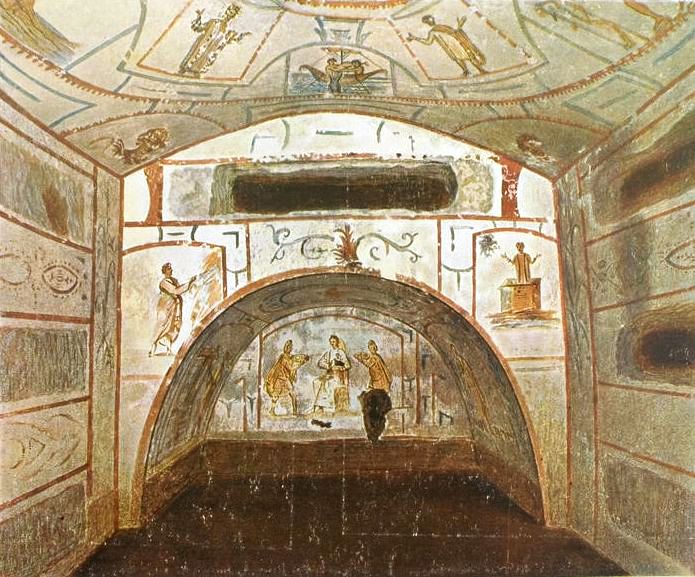
Catacombs of Marcellinus & Peter
900+ painted biblical scenes—Rome's finest early Christian frescoes
Explore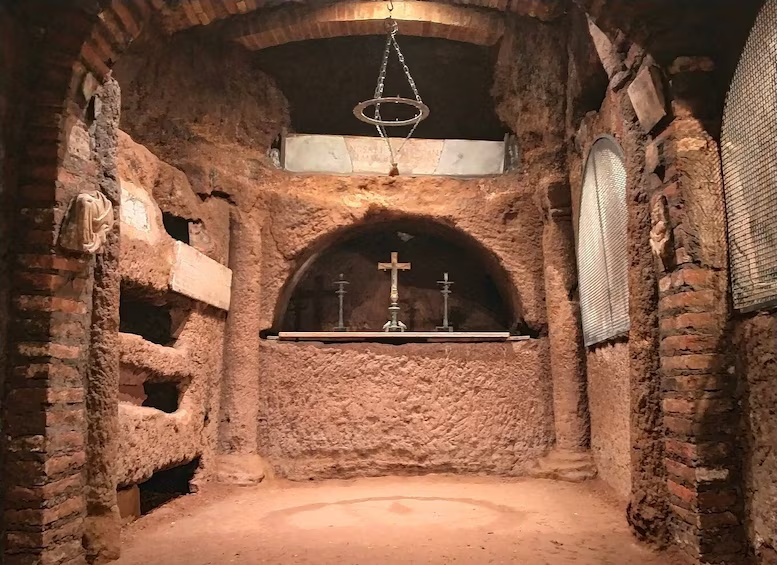
Catacombs of Sant'Agnese
Early Christian catacombs with Saint Agnes's tomb and 4th-century mosaics
Explore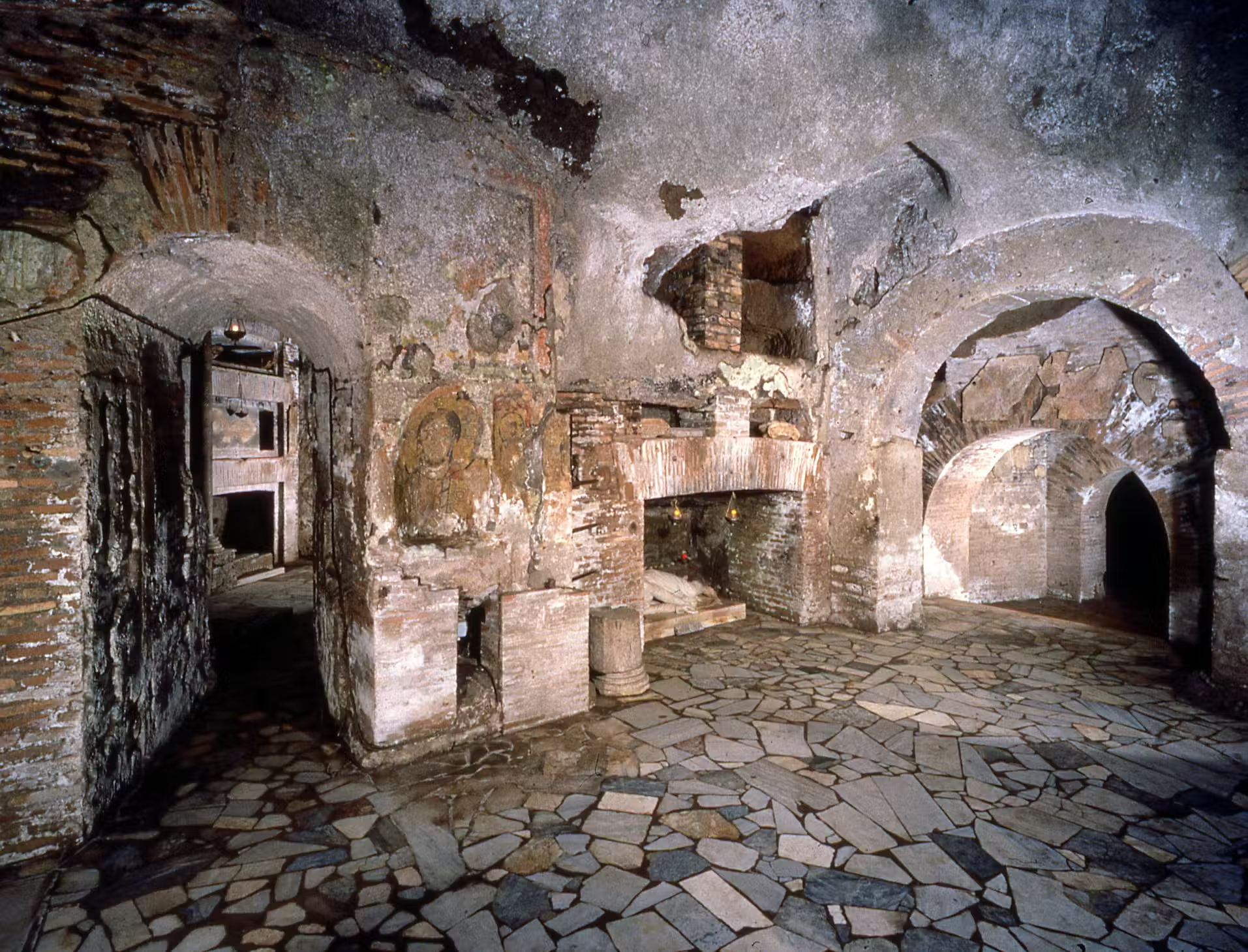
Catacombs of Saint Callixtus
Rome's largest Christian catacombs—20km of tunnels, 16 popes
Explore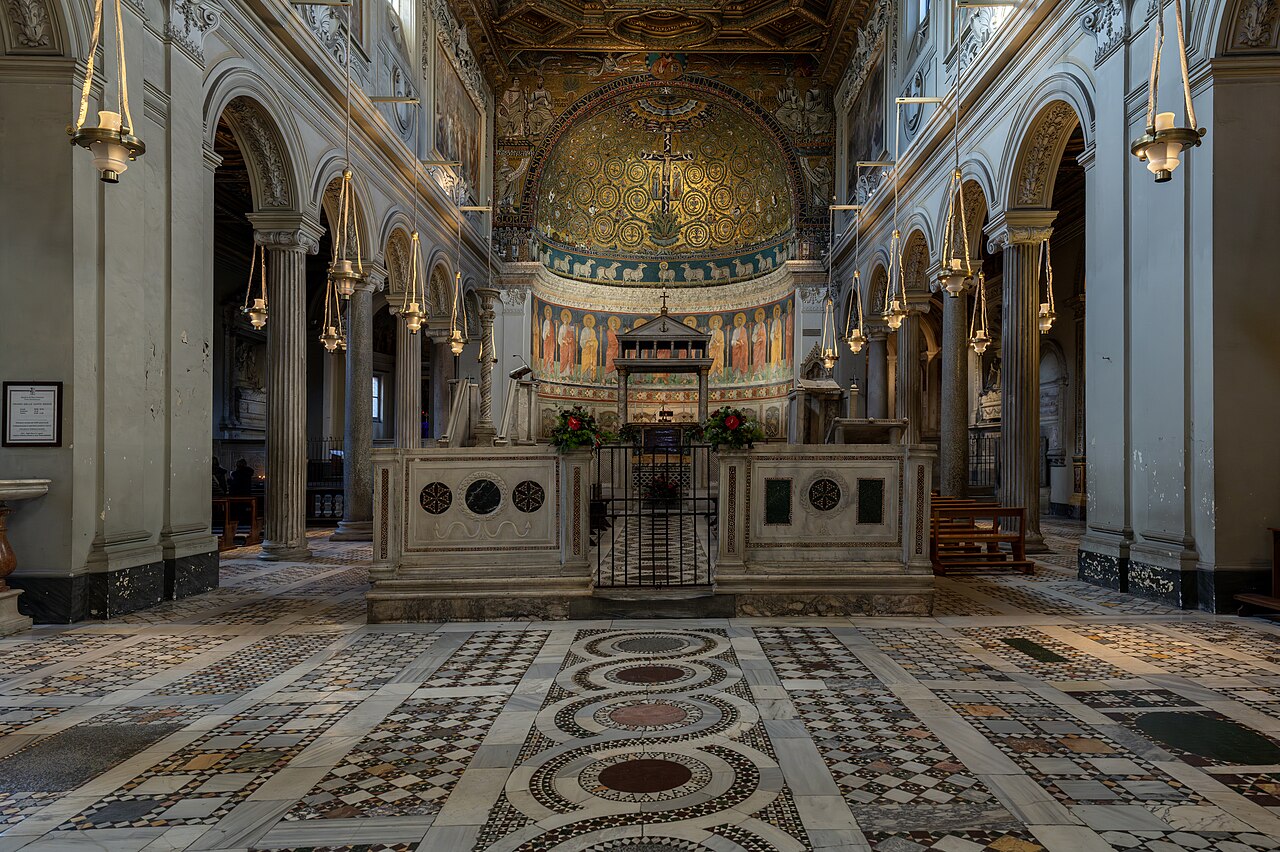
Santa Maria in Via Lata Underground
Ancient Roman ruins beneath Via del Corso where Saints Paul and Luke lived
Explore
Pyramid of Cestius
Rome's only ancient Egyptian-style pyramid—36-meter marble tomb, c. 18–12 BC
Explore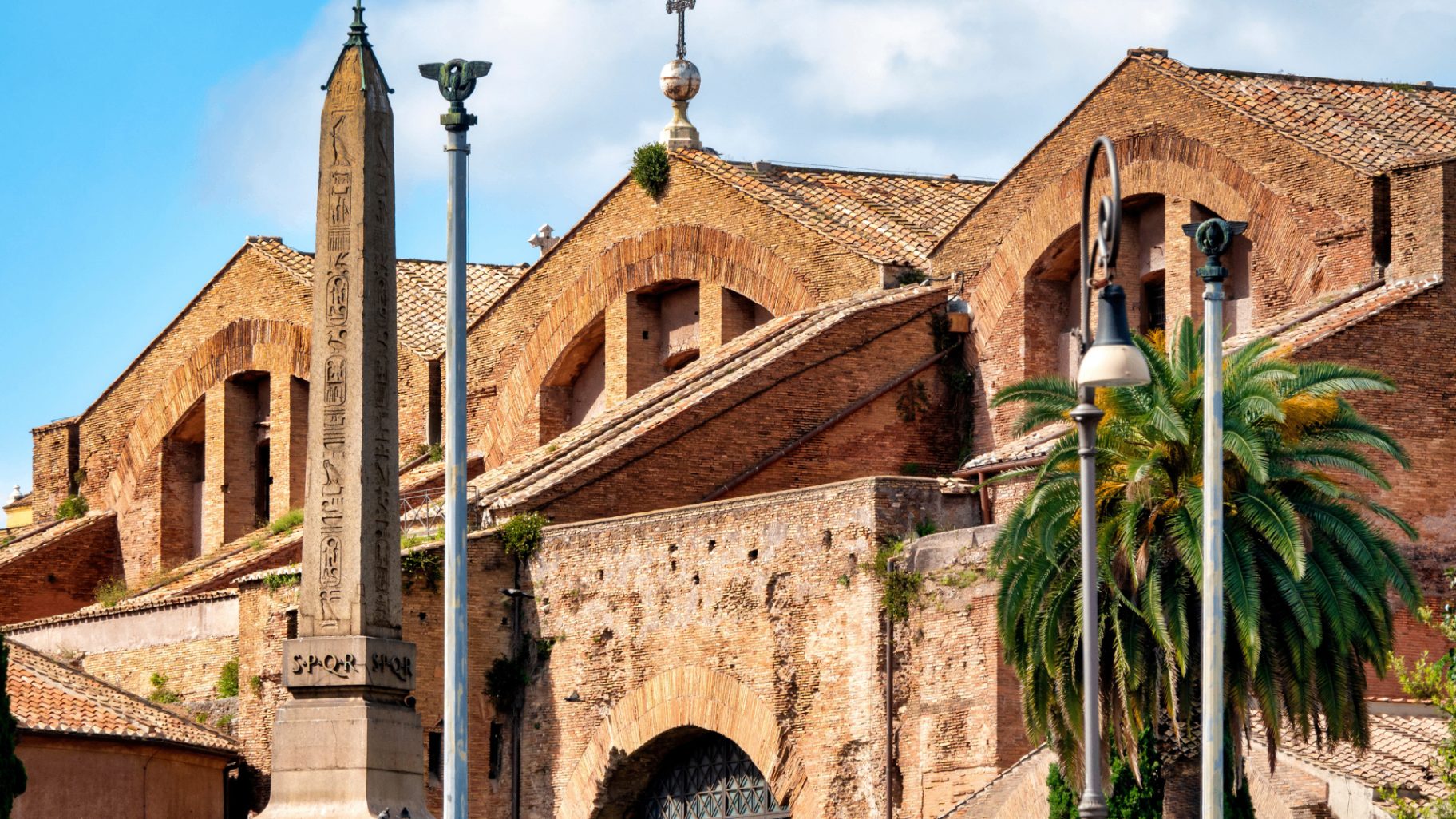
Baths of Diocletian
Ancient Rome's largest baths, now housing the National Roman Museum
ExploreQuick Planning Guide
⏱️ Time Needed
30–45 minutes
💰 Cost
€4 full, €2.50 reduced, €1 ages 14–17, under 14 free
🎫 Reservation
Mandatory weekends/holidays; recommended weekdays
♿ Accessibility
None — steep stairs only
📅 Best Time
11:00 opening or 16:00
👨👩👧👦 Family Friendly
Good for ages 8+
🌡️ Weather
Indoor, cool 14–16°C year-round
Nearby Attractions
Trevi Fountain50m / 1-min walk
Galleria Colonna5-min walk, Sat AM only
Quirinale Palace10-min walk
Pantheon10-min walk
Spanish Steps10-min walk
Piazza Barberini5-min walk
Featured In These Itineraries
Hidden Gems of RomeClassic Rome in 3 DaysFree Rome 2 DaysEssential Tips
- ✓ Entrance unmarked — Vicolo del Puttarello 25
- ✓ Closed Mondays — open Tue–Sun 11:00–17:00, last entry 16:30
- ✓ Book ahead — mandatory at weekends/holidays, recommended weekdays
- ✓ Visit underground first, then the Trevi above
- ✓ Constant 14–16°C — best on hot summer days
- ✓ Not wheelchair accessible — steep stairs