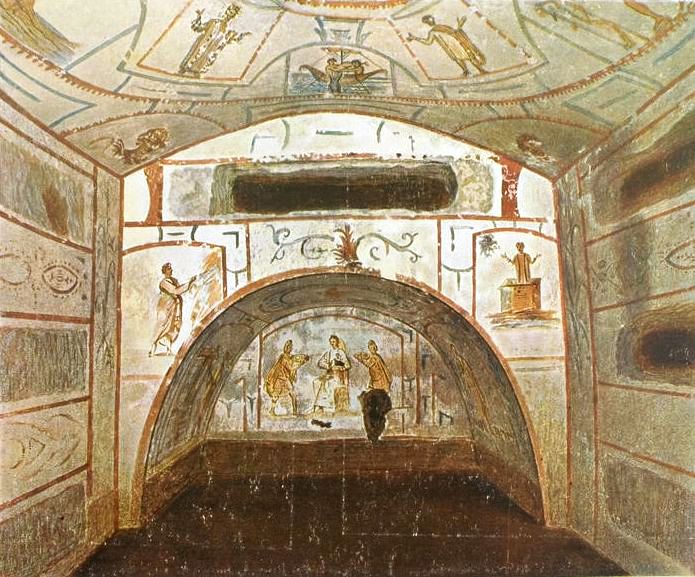
 Ancient Christian Site
Catacombs of Saints Marcellinus and Peter
The catacombs preserve one of Rome's richest surviving collections of third- and fourth-century Christian frescoes. They sit beneath the imperial mausoleum of Constantine's mother Helena.
40–45 min tourPrice at booking3rd c. ADVia CasilinaVia Casilina, 641, 00177 RomaOpen on MapPlan Your Visit
Compare tickets, tours and stays — booking ahead usually gives more choice
Get TicketsBook a TourHotels NearbyBy AllTrips Editors••8 min readThe Catacombs of Saints Marcellinus and Peter (Italian: Catacombe dei Santi Marcellino e Pietro) on Rome's ancient Via Labicana hold a rich collection of early Christian frescoes from the 3rd and 4th centuries, depicting Christ, the apostles, Old Testament heroes and the first iconography of the Roman Church. Above them rises the towering Mausoleum of Helena (Tor Pignattara), built by Emperor Constantine for his mother. Advance reservation is mandatory because access is by guided tour — and entirely worth the planning.
📋 In This Guide
Duration
40–45 min
Cost
Shown at booking
Photos
Outside only
Type
Christian catacomb
Why Visit the Catacombs of Marcellinus and Peter?
The catacombs preserve one of Rome's richest surviving collections of third- and fourth-century Christian frescoes. Where San Callisto offers scale and Domitilla offers an intact basilica, this is a place that rewards visitors interested in early Christian art — chamber after chamber of well-preserved fresco, painted between 280 and 380 AD on the cusp of Christianity becoming the imperial religion. Few tourists get here, and that is exactly the point.
Rich Fresco Collection
The catacombs preserve one of Rome's richest surviving collections of third- and fourth-century Christian frescoes. Christ, apostles, Old Testament cycles, the orant figures, the symbolic banquets of paradise.
Mausoleum of Helena
Above the catacombs rises the imperial tomb Constantine built for his mother — once clad in purple porphyry, the surviving brick rotunda is colossal.
Archaeological Interest
Mass-burial chambers discovered in 2003 remain of significant interest to archaeologists studying early Christian and late Roman burial practices.
Almost No Tourists
Booking-only, off the Appian Way circuit — you'll often have entire painted chambers to yourselves with a specialist guide.
What to See on the Tour
Christ in Majesty
The defining 4th-century image — Christ enthroned between Peter and Paul, with Marcellinus and Peter the exorcist among the saints. A blueprint for 1,500 years of Christian iconography.
Old Testament Cycles
Daniel in the lions' den, Jonah swallowed by the whale, Noah's ark, the Three Hebrew Children in the furnace — the great prefigurations of resurrection.
The Orant Figures
Painted figures with arms raised in prayer — the visual archetype of the early Christian soul, repeated dozens of times in different chambers.
Banquet Scenes
Symbolic meals of bread, fish and wine — the heavenly banquet of paradise and the earthly Eucharistic celebrations of the early church combined.
Tombs of the Martyrs
The original burial niches of Marcellinus the priest and Peter the exorcist, beheaded under Diocletian in 304 AD and recovered by the Christian woman Lucilla.
Mausoleum of Helena (above)
A colossal 4th-century imperial brick rotunda — once dressed in purple porphyry, now nicknamed Tor Pignattara for the amphorae embedded in its dome.
Eighteen Centuries of Painted Faith
From a 3rd-century Roman cemetery to the burial site of an empress, lost for a thousand years and rewritten by 21st-century DNA science.
Late 2nd c. ADFirst Christian Burials
Roman Christians begin using the soft tufa of the Via Labicana for burial, expanding rapidly through the 3rd century into one of Rome's largest underground cemeteries.
304 ADMarcellinus & Peter Martyred
Marcellinus the priest and Peter the exorcist are beheaded in a forest under Diocletian's Great Persecution. According to tradition, their executioner later converted to Christianity. The bodies are recovered by a Christian noblewoman, Lucilla, and buried here.
315–325 ADConstantine Builds Above
Newly converted Emperor Constantine constructs a circular cemetery basilica and the imperial mausoleum for his mother Helena directly over the catacombs — the rare combination of imperial tomb and Christian shrine.
4th c. ADGolden Age of Frescoes
Numerous cubicula are painted in the decades after Constantine's Edict of Milan — one of Rome's richest surviving collections of early Christian art, marking the moment Christianity becomes a public religion.
9th c. ADRelics Translated
Pope Gregory IV moves the relics of Marcellinus and Peter to Frankfurt in 827, gifted to Einhard, biographer of Charlemagne. The catacombs gradually fall silent.
1593Antonio Bosio Rediscovers
The 'Christopher Columbus of the Catacombs' — Antonio Bosio — rediscovers and explores the complex, beginning the systematic study of Christian Rome.
2003Mass Graves Discovered
Pontifical archaeologists uncover a series of mass-burial chambers in the catacombs, opening new avenues of research into Roman-era burial practices and public health.
Tickets & Booking
🎟️ Guided Tour Pricing
The guided-tour price is shown during official booking with the Pontifical Commission for Sacred Archaeology (PCAS). The tour lasts approximately 40–45 minutes, with reduced rates typically available for students and children.
📅 Reservation Required
Advance reservation is mandatory because access is by guided tour. Visits follow set opening hours and are closed Thursdays, plus annual closures 1–15 August and 1–15 September.
🕰️ Opening Hours
April–October: 10:00–13:00 and 16:00–19:00. November–March: 10:00–13:00 and 15:00–18:00. Closed Thursdays.
🌐 Tour Languages
Italian, English, French, German and Spanish on request — confirm language availability when you book.
Best Time to Visit
Time of Day
Weekday mornings ⭐ Best: Smaller groups and freshest guides.
Afternoons: Also available — but there are no walk-ups, so book ahead regardless of time slot.
Official hours: 10:00–13:00 and 16:00–19:00 (Apr–Oct) or 10:00–13:00 and 15:00–18:00 (Nov–Mar); closed Thursdays.
Always confirm: Reconfirm your reservation ahead of the visit, especially around the 1–15 August and 1–15 September closures.
Season
Spring (Mar–May) ⭐ Best: Pleasant weather for walking the Centocelle archaeological park afterwards.
Autumn (Sep–Nov): Soft golden light, mild temperatures, fewer pilgrim groups.
Summer: The 15°C underground is a relief from the heat — note the site is closed 1–15 August.
Winter: Quietest; check for Christmas and Epiphany closures.
Rules & What to Bring
📵 No Photography Underground
Strictly forbidden — no flash, no phones. Light damages the irreplaceable 4th-century pigments. Check with your guide about photography rules above ground.
🧥 Bring a Light Layer
15°C / 59°F year-round underground — even welcome in July, essential in winter.
👟 Flat, Comfortable Shoes
Uneven tufa floors, several staircases and low passages in places. No heels, no flip-flops.
👗 Modest Dress
Cover shoulders and knees out of respect for the sacred burial site — particularly if you visit the church on the surface.
Marcellinus & Peter vs Other Roman Catacombs
| Catacomb | Cost | Booking | Highlight | Crowds |
|---|---|---|---|---|
| Marcellinus & Peter | Shown at booking | Required — guided tour only | Rich fresco collection, Mausoleum of Helena | Low |
| San Callisto | €10 | Walk-up OK | Crypt of the Popes, Saint Cecilia | High (coach tours) |
| San Sebastiano | €10 | Walk-up OK | Triclia of Peter & Paul, basilica above | Medium |
| Domitilla | €10 | Walk-up OK | Intact 4th-century underground basilica | Medium |
| Priscilla | €10 | Walk-up OK | Earliest known image of the Madonna | Low |
Marcellinus & Peter offers a rewarding, less-visited alternative to the Appian Way catacombs — but you must plan ahead. The Appian Way catacombs are the easier first-time choice; Marcellinus & Peter suits visitors with more time to plan.
Common Mistakes to Avoid
Trying to walk up
Walk-up entry is not permitted under any circumstances. The single most common mistake — pre-booking is non-negotiable.
Booking too late
Since access is by guided tour only, reserve as soon as your trip dates are fixed to secure your preferred time and language.
Confusing it with the Appian Way catacombs
These are on Via Casilina (east of Rome), NOT the Appian Way. Bus 118 will not take you here — use Bus 105, Bus 409, or Metro Line C to Mirti.
Skipping the Mausoleum of Helena
The colossal imperial rotunda directly above is included in the visit — most people don't realise and miss it entirely.
Sneaking a phone photo
Guides watch closely and the rule is enforced — protecting irreplaceable 1,700-year-old pigments from camera light is non-negotiable.
Underestimating the journey
Allow 45 minutes each way from the historic centre. Build a half-day around it — don't squeeze it between the Colosseum and dinner.
Nearby Colosseum & Forum Tickets
Metro Line C connects Via Casilina back to San Giovanni, which is served by Lines A and C. Reaching the Colosseum by metro requires further transfers (Line A to Termini, then Line B to Colosseo), so many visitors prefer a bus or taxi — but you can still pair a Marcellinus & Peter morning with a Colosseum afternoon. Skip-the-line options below.
Colosseum Priority Entrance
Best for: First-time visitors
~2 hoursSkip-the-line access to the Colosseum with entry to Roman Forum and Palatine Hill included. Perfect for first-time visitors.
- Skip-the-line entry
- Colosseum access
- Roman Forum included
- Palatine Hill included
🎟️ Compare Prices:
TiqetsKlookTrip.comColosseum Guided Tour
Best for: History enthusiasts
~3 hoursExpert-led tour with professional guide sharing gladiator history, architecture secrets, and ancient Roman stories.
- Professional English-speaking guide
- Skip-the-line entry
- In-depth historical commentary
- Small group experience
🎟️ Compare Prices:
TiqetsKlookTrip.comColosseum Arena & Underground
Best for: Unique experience seekers
~3.5 hoursWalk where gladiators fought on the arena floor and explore the underground chambers where they awaited their fate.
- Arena Floor access
- Underground chambers access
- Roman Forum & Palatine Hill
- Expert guided tour included
🎟️ Compare Prices:
TiqetsKlookTrip.comPair Your Visit With
Catacombs of San CallistoThe largest Christian catacombs in Rome — easier walk-up access on the Appian Way, complementary to Marcellinus & Peter's artistic focus.
Catacombs of San SebastianoThe original 'catacomb' by name — Peter & Paul's Triclia and a free basilica with Bernini's last sculpture.
ColosseumMetro C reaches San Giovanni (Lines A and C); the Colosseum needs extra transfers (Line A to Termini, then Line B) — still an easy ancient-Rome afternoon.
Must-See Highlights
A rich collection of early Christian frescoes from the 3rd and 4th centuriesChrist in Majesty between Peter and Paul — a defining 4th-century imageDaniel in the lions' den, Jonah and the whale, the Three Hebrew Children — Old Testament cyclesThe Mausoleum of Helena (Tor Pignattara) — Constantine's mother's imperial tomb directly aboveExcavated mass-burial chambers of significant interest to archaeologistsAd Duas Lauros imperial estate — Constantine's basilica, baths and gardens nearby18,000 m² of underground galleries — among Rome's largest catacombs by extentThe original burial niches of Marcellinus the priest and Peter the exorcistGetting There
🚇 Metro C (best)
Take Metro Line C to Mirti station, then a 12–15 minute walk south to Via Casilina 641. €1.50, about 30 minutes from the centre.
🚌 Bus 105
Direct from Termini along Via Casilina — about 35–40 minutes, drops you within five minutes' walk of the entrance.
🚌 Bus 409
Also listed in official transport guidance as a direct route along Via Casilina — check current routing before you travel.
Where to Stay Near Catacombs of Saints Marcellinus and Peter
Looking for convenient accommodation near Catacombs of Saints Marcellinus and Peter? Stay within walking distance to make the most of your visit.
Hotels Near This AttractionTop Rated HotelsBudget-Friendly OptionsLuxury HotelsCentral locations with easy access to Catacombs of Saints Marcellinus and Peter and other attractionsFrequently Asked Questions
What makes the Catacombs of Marcellinus and Peter special in 2026?
The catacombs preserve one of Rome's richest surviving collections of third- and fourth-century Christian frescoes. They sit directly beneath the imperial Mausoleum of Helena, mother of Constantine the Great, and their mass-burial chambers are of major interest to archaeologists studying early Christian Rome.
How do I book a visit?
Advance reservation is mandatory because access is by guided tour only, arranged through the Pontifical Commission for Sacred Archaeology (PCAS). The catacombs are NOT on the standard Appian Way tourist circuit — you must reserve via the Commission or a licensed operator. Walk-ups are not accepted.
How much does it cost in 2026?
The guided-tour price is shown during official booking with the Pontifical Commission for Sacred Archaeology. Reduced rates are typically available for students and children — check current pricing at the time of reservation.
Who were Marcellinus and Peter?
Marcellinus was a priest and Peter an exorcist of the Roman Church, executed together during the Diocletian persecution in 304 AD. According to tradition they were beheaded in a forest and forced to dig their own graves to hide the burial site — a Christian woman named Lucilla later discovered and recovered the bodies.
Can I take photos inside?
No. Photography is strictly forbidden underground to protect the fragile 1,700-year-old frescoes from light damage. Check current rules with your guide before photographing anything above ground.
Are the catacombs wheelchair accessible?
No. The route involves multiple staircases and uneven tufa floors, with low passages in places. Visitors with mobility issues should consider the Catacombs of Domitilla, which feature a partially accessible 4th-century underground basilica.
How do I get to Via Casilina from central Rome?
Official guidance points to Bus 105 or Bus 409, or Metro Line C to Mirti followed by a 10–15 minute walk — total around 30 minutes. The catacombs are 3 km east of the Aurelian Walls, off the original Via Labicana.
Should I see Marcellinus & Peter or the Appian Way catacombs?
Different experiences: San Callisto and San Sebastiano on the Appian Way are larger, easier to book and tourist-friendly. Marcellinus & Peter are far less visited, require advance booking, and reward you with a rich collection of early Christian frescoes plus the imperial Mausoleum of Helena. Choose Marcellinus & Peter if early Christian art is your priority.
Related Attractions
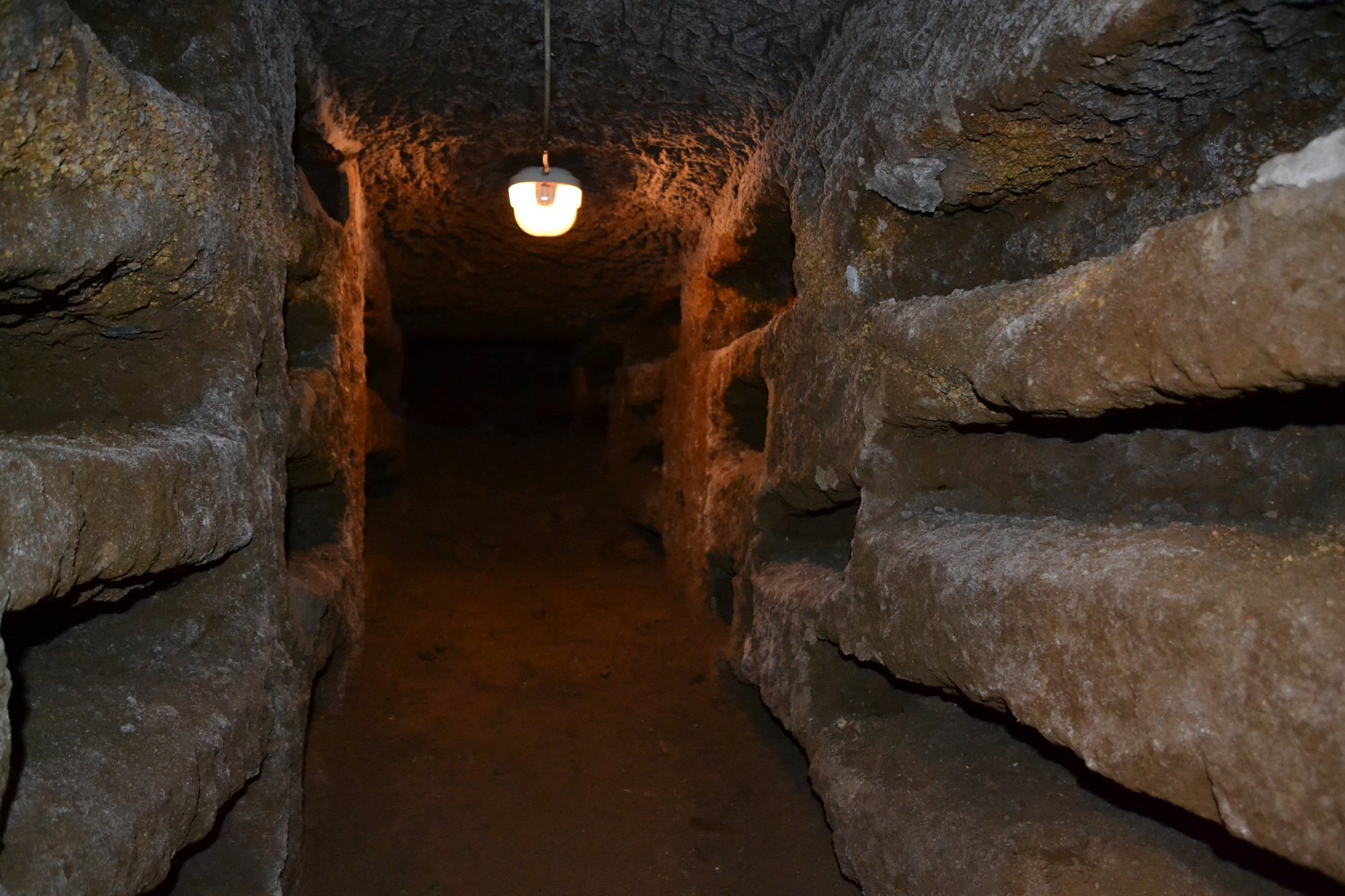
Catacombs of San Pancrazio
Intimate catacombs beneath Janiculum Hill with fewer crowds
Explore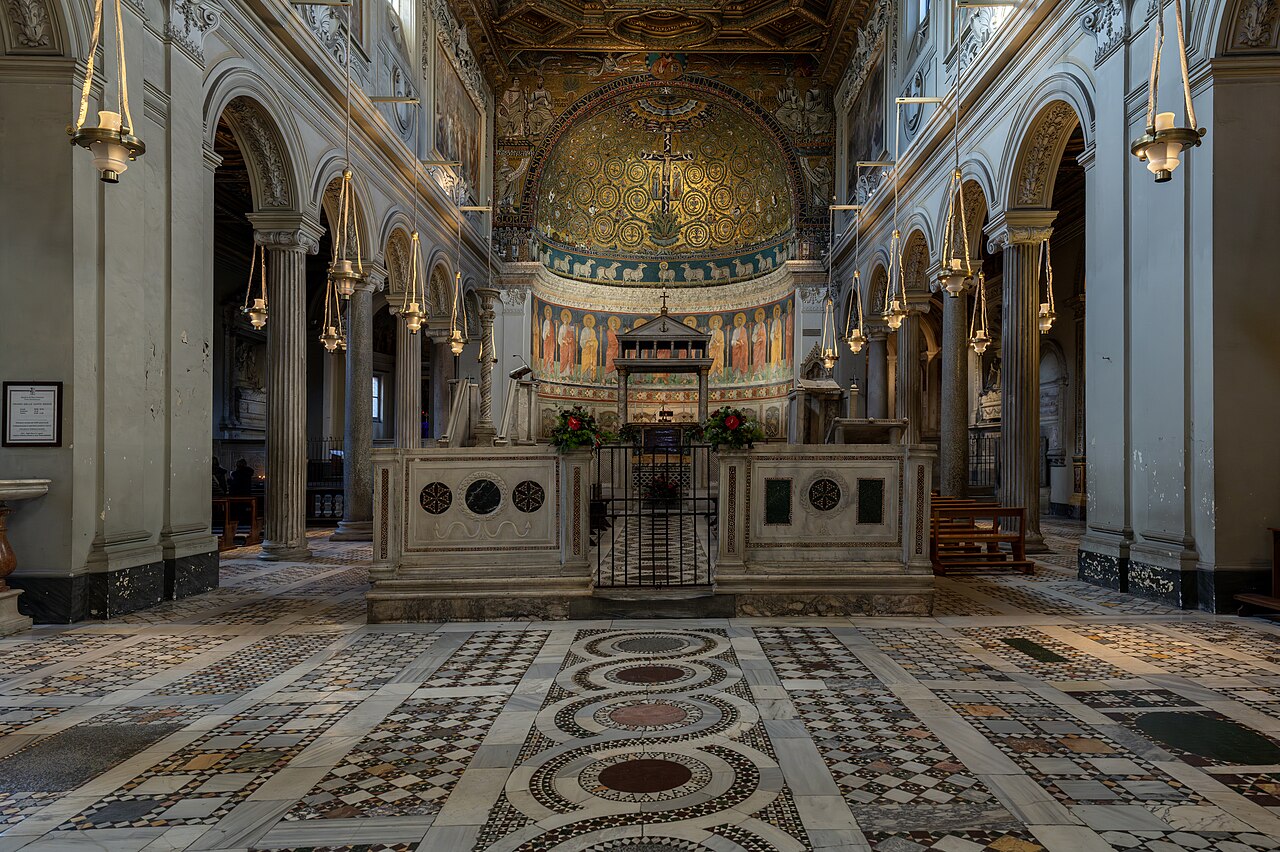
Basilica San Clemente
Descend through 2,000 years—medieval mosaics to Mithraic temple
Explore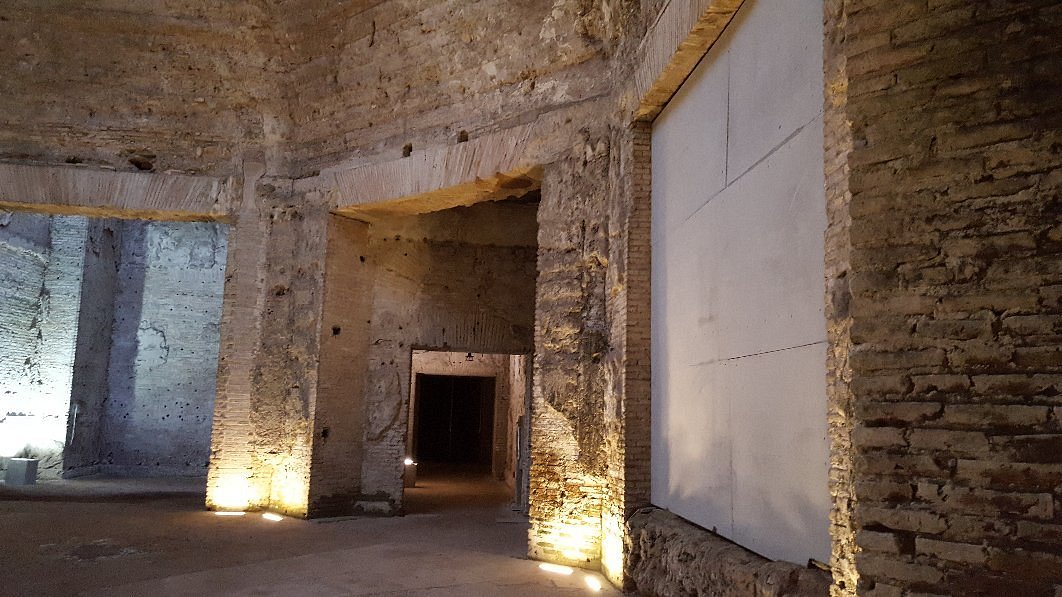
Domus Aurea
Nero's buried Golden House — Friday to Sunday visits, VR tour available
Explore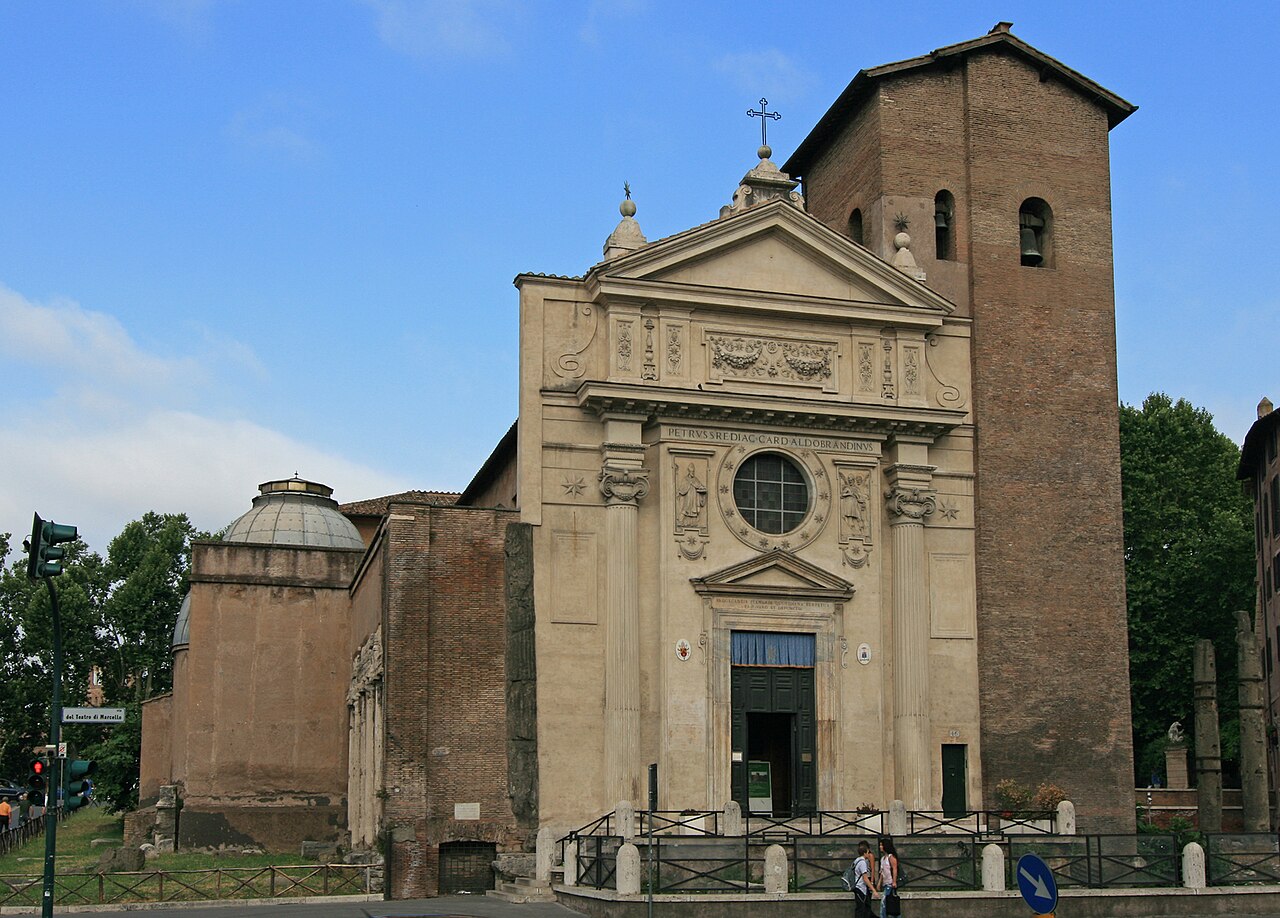
San Nicola in Carcere
Medieval church over three Republican temples; underground access varies
Explore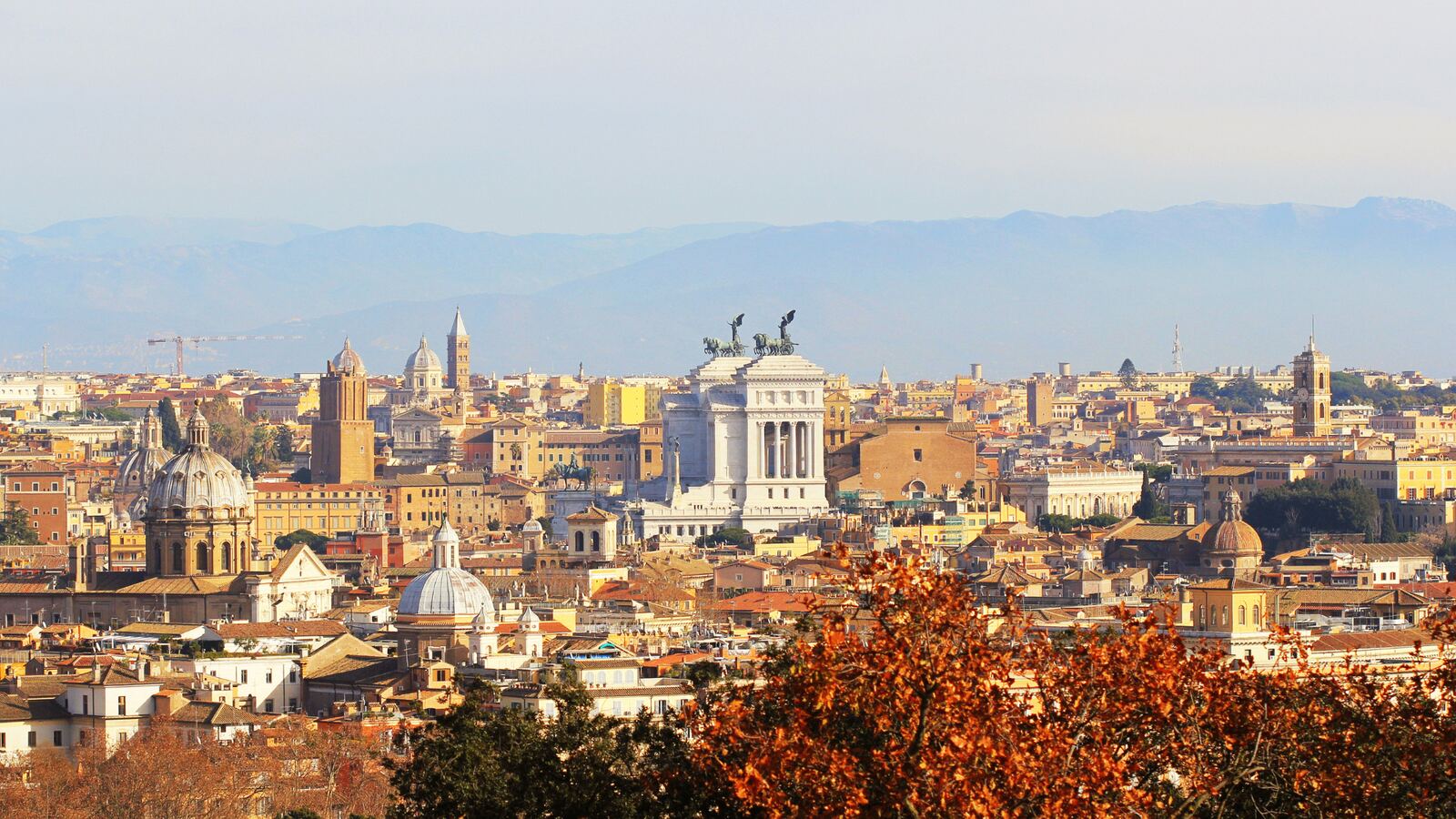
Janiculum Hill
Rome's best panoramic views with noon cannon
Explore
Villa d'Este
Renaissance masterpiece with 500+ fountains in Tivoli
ExploreQuick Planning Guide
⏱️ Time Needed
1–1.5 hours (incl. Mausoleum of Helena)
💰 Cost
Shown during official booking
🎫 Reservation
Required — access is by guided tour only
♿ Accessibility
Not wheelchair accessible
📅 Best Time
Weekday mornings
👨👩👧👦 Family Friendly
Recommended 10+
🌡️ Weather
Underground 15°C year-round
Nearby Attractions
Mausoleum of Helena / Tor Pignattaraabove
Centocelle Archaeological ParkAd Duas Lauros imperial estatePorta MaggioreMetro C
Basilica of Santa Croce in GerusalemmeFeatured In These Itineraries
Hidden Gems of Rome5 Day Rome ItineraryClassic Rome ItineraryEssential Tips
- ✓ Booking required — never walk up
- ✓ Guided tour lasts approximately 40–45 minutes
- ✓ Bring a light jacket — 15°C underground year-round
- ✓ No photography permitted underground
- ✓ Combine with the Mausoleum of Helena above