 Free Viewpoint
Janiculum Hill
Rome's best free panorama, the noon cannon, Garibaldi and the Acqua Paola fountain.
1–2 hoursFreeBest ViewsCannon at 12:00Piazzale Giuseppe Garibaldi, 00165 Roma RMOpen on MapPlan Your Visit
Compare tickets, tours and stays — booking ahead usually gives more choice
Book a TourHotels NearbyWhy visit Janiculum Hill?
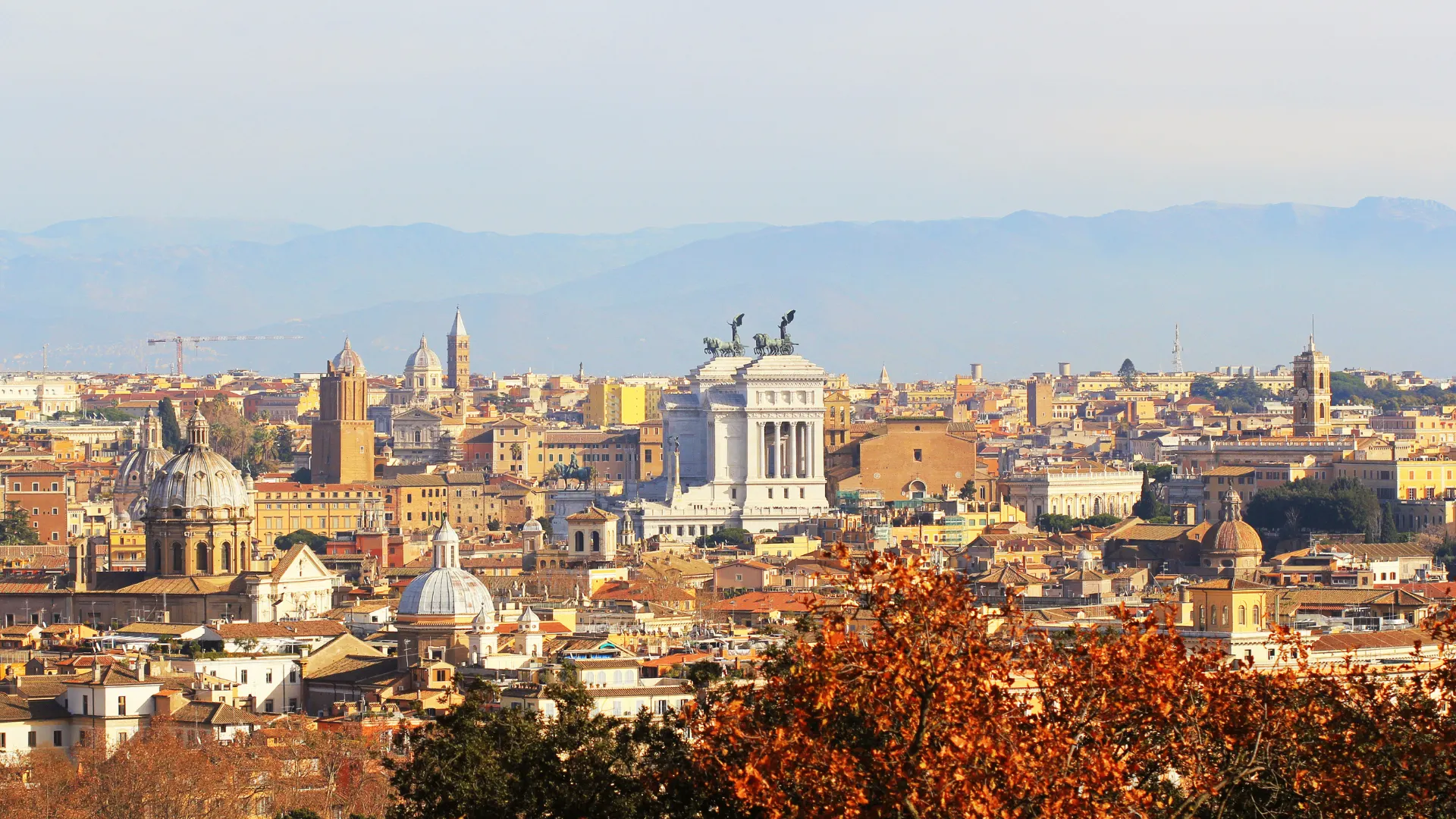
Janiculum Hill (Gianicolo) offers one of Rome's finest panoramas — a sweeping view from the dome of St Peter's across the terracotta rooftops to the distant Alban Hills. Come at noon for the famous cannon blast, a Roman tradition dating to 1847 that once synchronised the bells of every church in the city (moved to the Janiculum in 1904). Unlike the crowded Spanish Steps or Pincian Hill, the Janiculum still feels like a local secret, and the roads and main terrace are free to access — though it is best explored in daylight, as parts of the hill are poorly lit and relatively isolated after dark.
- One of Rome's finest free panoramas: a 180° terrace from St Peter's dome to the Alban Hills, almost always quieter than the Pincio or Aventine.
- The noon cannon since 1847: a field gun fires a single blank at exactly 12:00 every day, moved to the Janiculum in 1904 — a distinctive Roman ritual.
- Garibaldi's hill: the site of the heroic 1849 defence of the Roman Republic, marked by Gallori's massive 1895 equestrian monument and 84 marble busts of his fighters.
- Acqua Paola fountain: the 1612 Baroque 'Fontanone' from the opening sequence of La Grande Bellezza, four minutes from the cannon.
- Free and family-friendly: ponies, a carousel, and pine-shaded benches everywhere — one of the best Roman family outings.
Quick facts
Elevation
82 meters
Famous For
One of Rome's finest panoramas
Noon Cannon
Daily 12:00 since 1847
Entry
Free; roads/terrace generally accessible
Visit Time
1–2 hours
Location
West of Trastevere
Historic Site
1849 defence of Roman Republic
Best Time
11:45 AM or sunset
Family Friendly
Ponies, carousel, open space
Table of Contents
Jump to any section of the itinerary
A brief history of the Janiculum
The Janiculum (Mons Ianiculum) takes its name from Janus, the two-faced Roman god of beginnings, transitions and doorways. Although it was never one of the canonical Seven Hills of Rome (which all sit on the east bank of the Tiber), the long ridge on the west bank was sacred to Janus from the earliest period and dotted with archaic shrines. Throughout the Republic and Empire it served as Rome's western strategic outpost — the watchtower from which approaching enemies were first spotted.
In 1610–1612, Pope Paul V Borghese commissioned Giovanni Fontana and Flaminio Ponzio to build the great Fontana dell'Acqua Paola — the spectacular Baroque show-fountain that crowns the southern flank of the hill. It is the mostra terminale (display terminus) of the restored ancient Acqua Traiana aqueduct, originally built by the emperor Trajan in 109 AD to bring water from Lake Bracciano to the Janiculum and Trastevere. The fountain's five marble arches were partly built from stone looted from the Forum of Nerva and the old St Peter's basilica.
In 1644, Pope Urban VIII Barberini extended Rome's defensive walls along the Janiculum ridge — the impressive bastions and the Porta San Pancrazio gate still stand. These same walls became the front line of the most heroic episode in 19th-century Roman history. In April–June 1849, Giuseppe Garibaldi led the volunteer army of the short-lived Roman Republic against a French expeditionary force sent by Napoleon III to restore Pope Pius IX. The bloodiest fighting took place at Villa Corsini, just outside the walls; on 3 June 1849 the young poet Goffredo Mameli — author of the Italian national anthem — was mortally wounded on the slope. The Republic fell on 30 June, but the heroic defence became the founding myth of the Risorgimento.
In 1847, Pope Pius IX had already ordered a daily midday cannon blast (originally fired from Castel Sant'Angelo) to synchronise the bells of every church in Rome. In 1904, after Italian unification, the gun was moved to the Janiculum — where it still fires at exactly 12:00 every single day. In 1895, Emilio Gallori's massive bronze equestrian monument to Garibaldi was unveiled on Piazzale Garibaldi, on the very ground where Garibaldi himself had fought. In 1911, the Italian community of Buenos Aires gifted the city the Faro di Roma, a real working lighthouse designed by Manfredo Manfredi to mark the 50th anniversary of Italian unification. In 1932, Mario Rutelli's spectacular equestrian statue of Anita Garibaldi — pistol in one hand, baby in the other — was added nearby.
In 2026, the Janiculum remains exactly what it has been for almost two centuries: a free, deeply Roman space — with roads and the main terrace generally accessible, one of the city's finest panoramas, the daily noon ritual, the great Baroque fountain, and the open-air shrine to the founders of modern Italy.
The Janiculum through the centuries
Ancient RomeSacred grove of Janus
The hill takes its name from Janus, the two-faced god of beginnings; archaic religious rituals on the wooded ridge predate the Republic.
RepublicStrategic outpost
The hill is the key defensive position protecting Rome from the west bank of the Tiber — fortified with watchtowers throughout the Republic.
109 BCPons Aemilius
Rome's first stone bridge across the Tiber connects the city to the foot of the Janiculum, anchoring the hill into the urban fabric.
1612Fontana dell'Acqua Paola
Pope Paul V Borghese inaugurates the great Baroque show-fountain as the mostra terminale of the restored Acqua Traiana aqueduct.
1644Aurelian / Janiculum walls extended
Pope Urban VIII Barberini extends the city walls along the Janiculum ridge; the Porta San Pancrazio gate and bastions still stand today.
1847Noon cannon tradition begins
Pope Pius IX orders a daily midday cannon shot from Castel Sant'Angelo to synchronise the bells of all Rome's churches; in 1904 the cannon is moved to the Janiculum.
30 April 1849First battle for the Roman Republic
Garibaldi's volunteers, defending the short-lived Roman Republic, repel a far larger French expeditionary force at the Janiculum walls.
3 June 1849Battle of Villa Corsini
The bloodiest day of the defence: Garibaldi loses many of his closest officers, including the young Goffredo Mameli, author of the Italian national anthem, mortally wounded on the slope.
30 June 1849Fall of Rome
After two months of siege the Janiculum walls finally fall; Garibaldi leads his survivors out of Rome on the famous retreat to San Marino.
1895Garibaldi monument unveiled
Emilio Gallori's massive bronze equestrian statue is inaugurated on Piazzale Garibaldi on the spot where Garibaldi fought.
1911Faro di Roma gifted
The Italian community of Buenos Aires gifts Manfredo Manfredi's lighthouse to Rome for the 50th anniversary of Italian unification.
1932Anita Garibaldi monument
Mario Rutelli's spectacular equestrian statue of Garibaldi's wife Anita — pistol in one hand, baby in the other, galloping at full speed — is unveiled nearby.
2026A free landmark for everyone
The roads and main terrace remain generally accessible and free, though gardens, viewpoints, museums and facilities keep their own hours — among the most beloved free landmarks in Rome.
What to see on Janiculum Hill
The Panoramic Terrace (Piazzale Garibaldi)
- Unobstructed 180° view of Rome's historic centre — the single best free panorama anywhere in the city.
- Identify, left to right: the Vittoriano, the Quirinale, the Pantheon's flat saucer dome, Sant'Ivo's spiral, the Synagogue's square dome and St Peter's enormous dome to the right.
- On clear days the Alban Hills (Castelli Romani) and Monte Soratte are visible 30–40 km away on the horizon.
- Best at sunrise (soft pink light on the domes), sunset (golden hour), or 30 minutes after rain when the atmosphere is washed clean.
The Noon Cannon (Cannone del Gianicolo)
- A field gun fires a single blank charge at exactly 12:00 every day — a tradition dating to 1847, moved to the Janiculum in 1904.
- Originally established by Pope Pius IX to synchronise the bells of all Rome's churches at midday.
- An army detachment carries out a short preparation beforehand, which is worth arriving a little early to watch.
- The boom is loud — covering ears is recommended for small children. The echo rolls across the entire city for several seconds.
Monument to Giuseppe Garibaldi
- Massive bronze equestrian statue by Emilio Gallori, unveiled in 1895 — Garibaldi turns his head pointedly toward the Vatican.
- Honours the hero of the Risorgimento and commander of the 1849 defence of the short-lived Roman Republic.
- On the same hilltop where the heaviest fighting against the French expeditionary army took place in June 1849.
- The Passeggiata del Gianicolo behind it is lined with marble busts of 84 of his fighters — a unique open-air monument to Italian unification.
Fontana dell'Acqua Paola (Il Fontanone)
- Stunning Baroque show-fountain (1610–1612) commissioned by Pope Paul V Borghese as the terminus of the restored ancient Acqua Traiana aqueduct.
- Designed by Giovanni Fontana and Flaminio Ponzio — five great arches in white marble plundered from the ancient Forum of Nerva.
- Featured in the famous opening sequence of Paolo Sorrentino's Oscar-winning 2013 film 'La Grande Bellezza'.
- Beautifully illuminated at night — among the most romantic spots in Rome after dark.
Faro di Roma (Manfredi Lighthouse, 1911)
- A real working lighthouse on a Roman hill — gifted to Rome by the Italian community of Buenos Aires for the 50th anniversary of Italian unification.
- Designed by Manfredo Manfredi — bronze and travertine, with the colours of the Italian flag (red, white, green) flashing in rotation on special evenings.
- Stands behind the Garibaldi monument with its own panoramic terrace — usually quieter than the main piazzale.
- A short walk from the cannon — easy to combine in the same visit.
Passeggiata del Gianicolo & family attractions
- Pine-shaded promenade running along the ridge — busts of Garibaldi's volunteers, benches, fountains, and uninterrupted city views the entire way.
- Teatro dei Burattini di Carlo Piantadosi — historic Pulcinella puppet theatre with a long tradition of performances; check the current programme, as shows are not guaranteed every weekend.
- Pony rides, a small carousel and play areas around Largo Berchet — a favourite Roman family Sunday outing.
- Acqua Paola lookout, the Tasso oak (where the Renaissance poet Torquato Tasso reputedly meditated) and the Spanish Royal Academy at the southern end.
The Noon Cannon — how the 1847 ritual works
The Cannone del Gianicolo is one of the most distinctive daily rituals in any European capital. A field gun is fired with a single blank charge at exactly 12:00 every day, from the lower terrace just below Piazzale Garibaldi. The tradition began in 1847, when Pope Pius IX ordered a daily midday cannon shot from Castel Sant'Angelo so that the bells of every church in Rome could be synchronised to the same instant — solving a long-standing Roman scheduling problem in which different parishes rang noon at slightly different times.
In 1904, after the unification of Italy and the relocation of state functions, the gun was transferred from Castel Sant'Angelo to its present position on the Janiculum. With brief interruptions during the World Wars, it has fired continuously ever since. The ceremony today is performed by a detachment of the Italian Army Artillery, who carry out a short preparation beforehand, with the captain giving the order to fire at the very second the noon time signal reaches the terrace.
The boom is genuinely loud — at close range it produces a flat, percussive thump that rolls across the entire city for several seconds before echoing back from the eastern hills. The best viewing positions are along the railing of the upper terrace, looking down at the gun emplacement; the ceremonial loading beforehand is itself worth watching and easily one of the most memorable free experiences in Rome.
Garibaldi and the 1849 defence of the Roman Republic
In February 1849, after Pope Pius IX fled to Gaeta following the assassination of his prime minister, the people of Rome proclaimed the Roman Republic — a short-lived constitutional democracy led by a triumvirate that included Giuseppe Mazzini. Within weeks, Napoleon III of France sent an expeditionary force of around 7,000 troops to restore the Pope. The defence of the city fell to Giuseppe Garibaldi and his volunteer army of around 5,000, including the famous Italian Legion he had brought back from his guerrilla campaigns in South America.
The decisive fighting happened on the Janiculum. The first French assault on 30 April 1849 was repulsed at the city walls — Garibaldi's most celebrated tactical victory. A two-month siege followed, with a second French assault on 3 June 1849 at Villa Corsini, just outside the walls. The fighting was savage; Garibaldi's closest officers fell one after another, including the 21-year-old Goffredo Mameli, author of the Italian national anthem 'Il Canto degli Italiani' — wounded on 3 June, he died of gangrene in early July. The Janiculum walls finally fell on 30 June 1849; the Republic surrendered, and Garibaldi led his survivors out of Rome on the famous overland retreat to San Marino.
Although the Republic lasted only five months, the defence of Rome became the founding myth of the Risorgimento. When Italian unification was finally achieved twelve years later (and Rome itself joined the Kingdom of Italy in 1870), the Janiculum became the natural site for the great national monuments — Gallori's massive Garibaldi equestrian statue (1895), Rutelli's spectacular Anita Garibaldi (1932), and the long Passeggiata del Gianicolo lined with marble busts of 84 of Garibaldi's fighters. Standing on the terrace today, the entire 19th-century Italian story is visible in stone in every direction.
Fontana dell'Acqua Paola — the great 'Fontanone'
The Fontana dell'Acqua Paola (1610–1612) is the great Baroque show-fountain that crowns the southern flank of the Janiculum, four minutes' walk south of the cannon. It was commissioned by Pope Paul V Borghese as the mostra terminale of the restored ancient Acqua Traiana aqueduct — the imperial aqueduct originally built by Trajan in 109 AD to bring water from Lake Bracciano, 40 km away, to the Janiculum and Trastevere. The restoration of an ancient aqueduct was one of the standard ways a Renaissance pope advertised his greatness, and Paul V's name appears in giant Latin letters across the entablature.
The architects were Giovanni Fontana (brother of Domenico Fontana, who had moved the Vatican obelisk for Sixtus V) and Flaminio Ponzio. The five great marble arches were partly built using stone looted from the ancient Forum of Nerva and from the old St Peter's basilica then being demolished — a typical Counter-Reformation gesture of imperial continuity. The huge granite basin in front was added later, in 1690, by Carlo Fontana to receive the volume of water arriving from the aqueduct.
The fountain became globally famous in 2013 as the opening shot of Paolo Sorrentino's Oscar-winning film 'La Grande Bellezza', in which a Japanese tourist collapses while photographing the Fontanone — a moment that has become a tourist pilgrimage in its own right. Visit at night, when the fountain is floodlit against the deep navy Roman sky — among the most romantic spots in the city.
Faro di Roma — the 1911 lighthouse on a Roman hill
The Faro di Roma (also called the Faro Manfredi) is a real working lighthouse — improbably installed on a Roman hill 25 km from the sea. It was inaugurated in 1911 as a gift from the Italian community of Buenos Aires to mark the 50th anniversary of Italian unification (1861–1911). The architect was Manfredo Manfredi, who designed it in bronze and travertine in the dignified late-Risorgimento manner. On certain civic occasions it flashes the colours of the Italian flag — green, white and red — in rotation, visible across the entire city.
The lighthouse stands on its own small terrace just behind the Garibaldi monument and is usually quieter than the main Piazzale Garibaldi — a peaceful place to read the inscription and look out over Trastevere with the city stretched below. The combination of a working lighthouse, a Baroque aqueduct fountain and a daily Napoleonic-era cannon, all on the same Roman hill, is the kind of incongruous historical layering that makes the Janiculum so loved by Romans.
Passeggiata del Gianicolo — the open-air shrine to Italian unification
The Passeggiata del Gianicolo is the long, pine-shaded promenade that runs along the spine of the hill from Piazzale Garibaldi north toward the Vatican. Lined on both sides with 84 marble busts of Garibaldi's fighters from the 1849 defence and the later Risorgimento campaigns, it is one of the most extraordinary open-air monuments to a 19th-century war anywhere in Europe. Each bust is named — read a few of them and the entire human geography of Italian unification, from Sicilian peasants to Lombard aristocrats to British and Polish volunteers, comes to life.
The promenade also contains the Tasso oak — an ancient holm oak under which, by tradition, the Renaissance poet Torquato Tasso meditated in his final illness in 1595, before dying in the nearby monastery of Sant'Onofrio al Gianicolo. At the southern end stands the Spanish Royal Academy, housed in the small church of San Pietro in Montorio — best known for containing in its courtyard Bramante's Tempietto (1502), one of the founding masterpieces of the High Renaissance and one of the most perfect small buildings in the world.
Janiculum vs other Rome viewpoints
| Feature | Janiculum | Pincio | Aventine | St Peter's dome |
|---|---|---|---|---|
| View span | 180° centre, St Peter's to Alban Hills | 120° from Vatican to Spanish Steps | Narrow keyhole / orange garden | 360° from inside the dome |
| Cost | Free | Free | Free | €8–€10 dome climb |
| Crowds | Quiet (locals) | Very busy | Busy (Instagram) | Very long queue |
| Open | Roads/terrace generally accessible; gardens & facilities have set hours | 24/7 | Sunrise–sunset | 07:30–18:00 |
| Best for | Sunset, cannon, locals | Quick view + Spanish Steps | Photo of keyhole | Pilgrimage + height |
| Family appeal | High (open space, ponies) | Medium (gardens) | Low | Low (climb) |
Verdict: the Janiculum offers the widest free panorama in Rome — broader than the Pincio, less crowded than the Aventine keyhole, and free, unlike the dome of St Peter's. It is the only major viewpoint with a daily ritual (the cannon) and an entire 19th-century historical narrative (Garibaldi and 1849) attached.
Best time to visit
Time of day
Around noon (the cannon)
Arrive a little early to watch the gun crew prepare and to claim a railing-side spot. Fire at exactly 12:00.
Sunset (golden hour)
The single most photographed moment on the hill. Check the day's sunset time and arrive 30 minutes early. Stay another 30 minutes for blue hour.
Sunrise (quietest)
Soft pink light on the domes, no crowds, and the city waking up. Best for photographers willing to set an early alarm.
After dark
The main terrace and Acqua Paola are illuminated and popular with locals for an evening passeggiata, but parts of the hill are poorly lit and relatively isolated after dark — stick to well-lit main routes.
Best days & seasons
Sunday morning (liveliest)
Roman families with children, pony rides, snack bars open (puppet shows only when programmed). The most authentically local atmosphere.
Weekday mornings (quietest)
Tuesday–Friday before 11:00 — almost empty terrace, ideal for unhurried photography.
Spring & autumn (best weather)
April–June and September–October give the clearest air, longest visibility to the Alban Hills and most comfortable temperatures.
Avoid August midday
The hill is exposed and the climb from Trastevere is brutal. Take bus 115 or visit at dawn.
Getting there
Bus 115 (easiest)
Bus 115 connects Trastevere (Piazza Trilussa) with the Janiculum and Piazzale Garibaldi; check current ATAC times before travelling. Saves the steep climb, especially in summer.
Walking up from Trastevere
From Piazza Santa Maria in Trastevere, follow Via Garibaldi or the atmospheric Salita di Sant'Onofrio for 15–20 minutes uphill. Steep but very picturesque — passes the Acqua Paola fountain on the way.
Walking from the Vatican
From St Peter's Square, walk south along Via di Porta Cavalleggeri and Via delle Mura Aurelie up to Porta San Pancrazio (about 25 minutes uphill). Hugs the 17th-century Janiculum walls — one of the most peaceful walks in central Rome.
Tram 8
Tram 8 from Largo di Torre Argentina drops you at Piazza Trilussa in Trastevere; from there bus 115 or the climb on foot.
Address
Piazzale Giuseppe Garibaldi, 00165 Rome. The terrace, the cannon, the Garibaldi monument and the Faro are all within 2 minutes' walk of each other; the Acqua Paola fountain is 4 minutes south down Via Garibaldi.
Common mistakes to avoid
Arriving at noon for the cannon
The cannon fires AT noon, not after — you need to be on the terrace by 11:50 at the latest. Arriving at 12:01 means you've already missed it.
Going to the wrong terrace
The cannon is fired from the lower terrace under Piazzale Garibaldi, not the main piazzale itself. Look for the gun emplacement just below the balustrade — a railing-side spot has the best view.
Confusing it with the Aventine keyhole
Janiculum (Gianicolo) is the long ridge above Trastevere on the west bank; the Aventine is south of the Circus Maximus. They are completely different hills.
Walking up in the heat of the day
The climb from Trastevere is steep and sun-exposed. In summer, take bus 115 up and walk down — never the reverse.
Skipping the Acqua Paola fountain
The Fontanone is a 4-minute walk south of the cannon — many visitors miss it entirely. It's one of Rome's most spectacular Baroque set pieces and free.
Missing sunset
Janiculum faces east — the sun sets behind you, lighting the city in front in spectacular pink and gold. It's one of the great free experiences in Rome.
Insider tips from locals
Watch the gun crew prepare
Arrive a little before noon and watch the crew prepare the gun. The preparation is brief and informal rather than a long ceremony.
Bring earplugs for kids
The boom is genuinely loud at close range. Cover small children's ears or stand 30–40 m back from the gun emplacement.
Combine with Trastevere lunch
Walk down via the Salita di Sant'Onofrio or Via Garibaldi for lunch in Trastevere — gravity makes this the only sensible direction in summer.
Puppet show tradition
Teatro dei Burattini at Largo Berchet has a long tradition of free Pulcinella shows — check the current programme before you go, as performances are not guaranteed every visit.
Photograph the Fontanone at blue hour
Around 30 minutes after sunset the floodlit fountain glows against a deep navy sky — among the most romantic photos you can take in Rome.
Avoid the cannon in heavy rain
Ceremony is sometimes shortened or skipped in storms — check Roma Capitale's social media if the weather looks bad.
Practical visitor tips
Time the cannon
Arrive a little before noon to secure a railing spot. The crew prepares the gun shortly beforehand; the firing itself takes only a moment.
Sunset magic
Return at golden hour for spectacular photos. The dome of St Peter's glows orange and the city lights begin twinkling as darkness falls behind you.
Family activities
Puppet shows (Teatro dei Burattini) are a long-standing tradition — check the current programme. Pony rides, a carousel and open spaces make it perfect for children.
The best approach
Take bus 115 up from Trastevere and walk down through the neighbourhood — gravity is your friend, especially in summer heat.
Where to Stay Near Janiculum Hill
Looking for convenient accommodation near Janiculum Hill? Stay within walking distance to make the most of your visit.
Hotels Near This AttractionTop Rated HotelsBudget-Friendly OptionsLuxury HotelsCentral locations with easy access to Janiculum Hill and other attractionsFrequently Asked Questions
Why is Janiculum Hill famous in 2026?
Janiculum Hill (Gianicolo in Italian) offers one of Rome's finest panoramas — a sweeping 180° vista from the dome of St Peter's across the entire historic centre to the Alban Hills. It is also historically the site of the heroic 1849 defence of the short-lived Roman Republic by Giuseppe Garibaldi, commemorated by the massive equestrian statue at the centre of Piazzale Garibaldi. The roads and main terrace are free and generally accessible, and far less crowded than the Spanish Steps or Pincio.
What is the noon cannon and when does it fire?
Every day at exactly 12:00 a field gun fires a single blank charge from the lower terrace of the Janiculum — a tradition dating to 1847, when it was originally established by Pope Pius IX to synchronise the bells of every church in Rome at midday; it was moved to the Janiculum in 1904. Arrive a little before noon to secure a good spot and watch the gun crew prepare; the preparation is short and informal rather than a guaranteed extended ceremony.
Is Janiculum Hill free?
Yes, there is no entry gate, ticket or booking. Janiculum's principal roads, monuments and viewpoints are normally accessible at all hours, but individual gardens, museums, toilets and facilities have separate schedules. The Acqua Paola fountain, the Garibaldi monument, the Faro lighthouse and the Passeggiata del Gianicolo are all free public space.
How do I get to Janiculum Hill from Trastevere?
Three options. (1) Bus 115 climbs from Piazza Trilussa up to Piazzale Garibaldi — check current ATAC frequency, which varies by day and season; easiest, especially in summer. (2) Walk up via Via Garibaldi or the Salita di Sant'Onofrio in 15–20 minutes (steep but very atmospheric). (3) From the Vatican, walk south via Via delle Mura Aurelie along the 17th-century Janiculum walls in about 25 minutes.
How do I get there from the Vatican?
From St Peter's Square, walk south along Via di Porta Cavalleggeri and follow Via delle Mura Aurelie / Via Garibaldi up to Porta San Pancrazio (about 25 minutes uphill). The route hugs the 17th-century city walls and is one of the most peaceful and historically rich walks in Rome.
What can I see beyond the views and Garibaldi statue?
Plenty. The Fontana dell'Acqua Paola (the great 1612 Baroque 'Fontanone' featured in 'La Grande Bellezza'), the Faro di Roma (the 1911 lighthouse gifted by Italian Argentinians), the Anita Garibaldi monument, the Passeggiata del Gianicolo with its busts of Garibaldi's 84 fighters, the Teatro dei Burattini puppet theatre, the Tasso oak, and the Spanish Royal Academy housed in San Pietro in Montorio with Bramante's perfect little Tempietto.
Is Janiculum Hill good for families with children?
Excellent. The noon cannon is a thrill for kids; a historic Pulcinella puppet theatre has long performed here, though shows are not guaranteed — check the current programme; there are pony rides, a small carousel, fountains to splash, and acres of pine-shaded space to run around. It is one of the favourite Sunday-morning spots for Roman families with young children.
When is the best time to visit Janiculum Hill?
For the cannon: arrive a little before noon. For photography: sunrise gives soft pink light on the domes with no crowds; sunset gives golden hour magic with St Peter's glowing orange. Clear days after rain offer the best long-distance visibility to the Alban Hills. Weekday mornings are quietest; weekend afternoons are liveliest with families.
How much time should I plan?
1–2 hours covers the main sights comfortably: cannon (15 min), terrace and photos (20 min), Garibaldi monument and Passeggiata (20 min), Acqua Paola and Faro (30 min). Add another hour if you walk down through Trastevere afterwards.
Can I visit the Janiculum at night?
The roads and main terrace are generally accessible after dark, and the Acqua Paola fountain is illuminated and looks spectacular at night. However, parts of the hill — including stretches of the Passeggiata and paths away from the main piazzale — are poorly lit and relatively isolated after dark. Stick to the main terrace and well-lit routes, and consider visiting with company in the evening.
What was the Battle of the Janiculum in 1849?
In April–June 1849 Garibaldi's volunteers defended the short-lived Roman Republic against a French expeditionary army sent to restore Pope Pius IX. The decisive fighting took place along the Janiculum walls and at Villa Corsini just outside them. The Republic fell on 30 June 1849, but the heroic defence — and Garibaldi's escape across Italy — became the founding myth of Italian unification, achieved 12 years later.
Who designed the Acqua Paola fountain?
The Fontana dell'Acqua Paola (1610–1612) was designed by Giovanni Fontana and Flaminio Ponzio for Pope Paul V Borghese, as the mostra terminale of the restored ancient Acqua Traiana aqueduct. Its five great arches were built using marble looted from the ancient Forum of Nerva and the old St Peter's Basilica.
What is the Faro di Roma?
A real working lighthouse, designed by Manfredo Manfredi and inaugurated in 1911. It was a gift from the Italian community of Buenos Aires for the 50th anniversary of Italian unification. On certain civic occasions it flashes the green-white-red of the Italian flag in rotation, visible across the city.
Is Janiculum Hill accessible for wheelchairs?
The main terrace at Piazzale Garibaldi is reasonably flat and accessible by car or bus 115. The Passeggiata along the ridge is paved and mostly level. The footpath approaches from Trastevere are steep with cobblestones and stairs and are not wheelchair-friendly — the bus is the practical option.
Where should I stay near Janiculum Hill?
Trastevere (at the foot of the hill) for atmospheric medieval streets and nightlife; the Vatican / Borgo area (north of the hill) for proximity to St Peter's; Monteverde Vecchio (just behind the Janiculum) for a quieter residential feel. All three put the Janiculum within easy reach on foot or by bus.
How does Janiculum compare with other Rome viewpoints?
It is the widest free panorama in Rome — broader than the Pincio, less crowded than the Aventine keyhole, and free, unlike the dome of St Peter's. The Pincio is closer to the historic centre but faces north and feels more urban; Janiculum faces east across the entire city and is the photographer's choice for sunset and the only viewpoint with a daily ritual (the cannon) and an entire 19th-century historical narrative attached.
Related Attractions
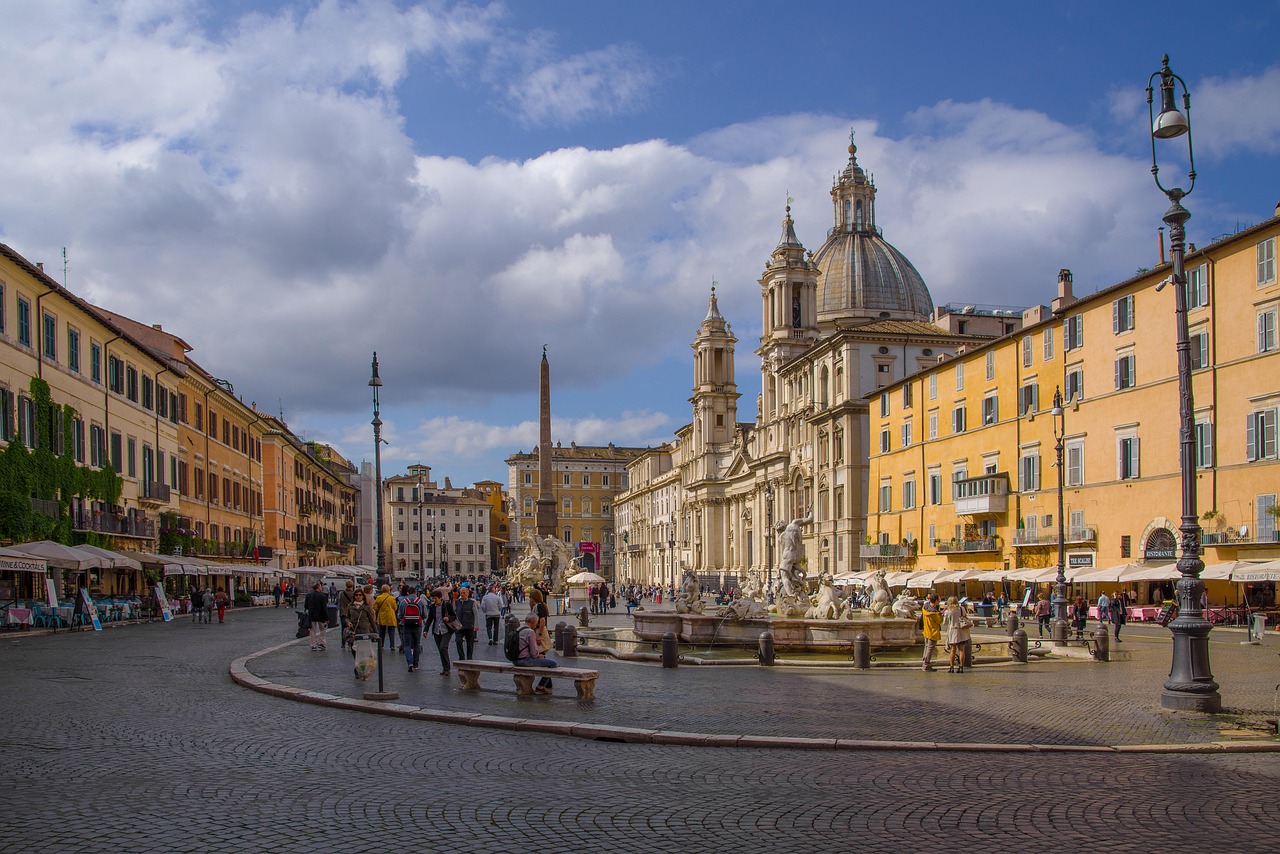
Piazza Navona
Rome's most beautiful baroque square with Bernini fountains
Explore
Museo delle Mura
Free museum inside Porta San Sebastiano—walk atop the ancient Aurelian Walls
Explore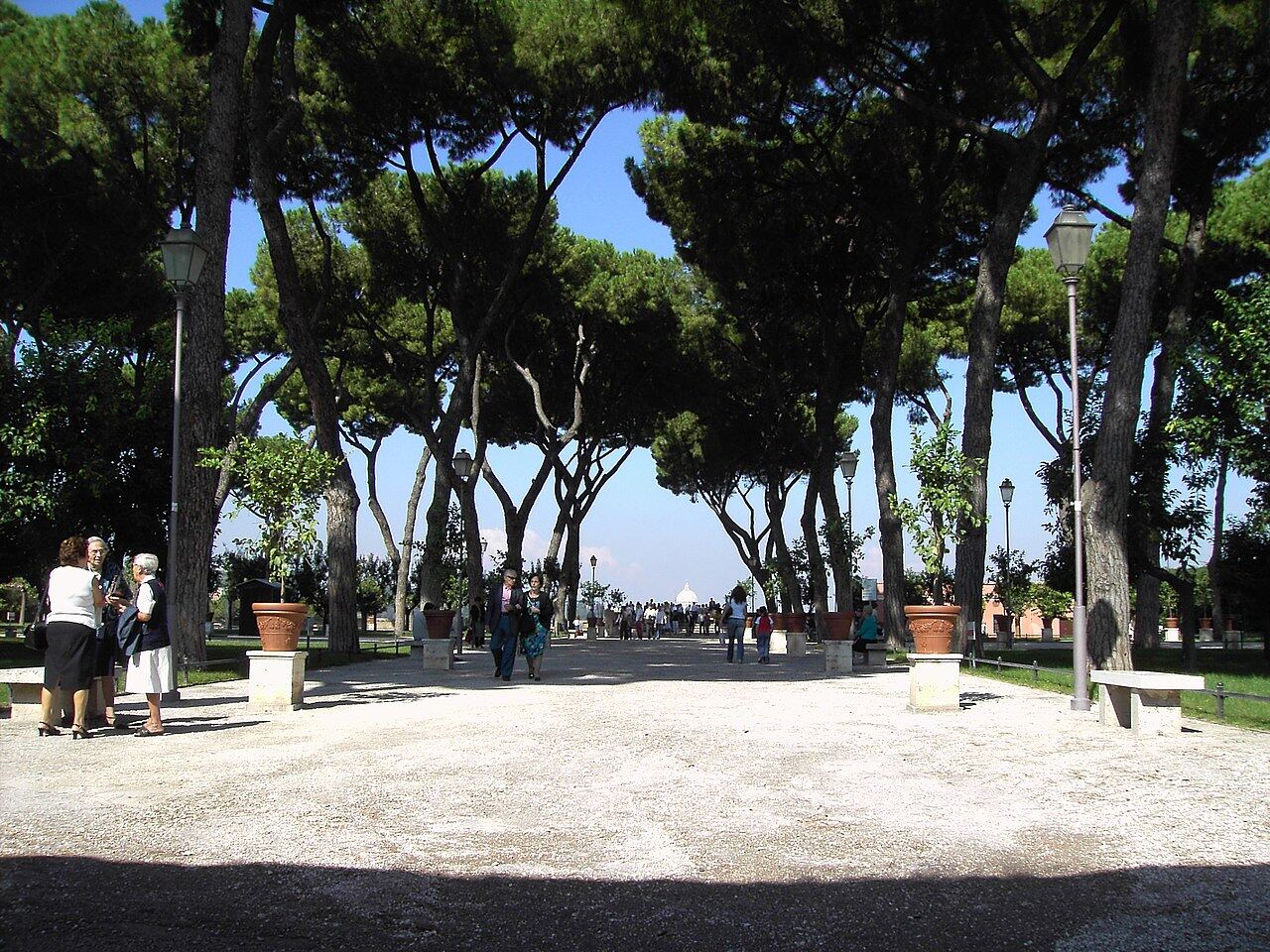
Aventine Hill: Orange Garden
Secret garden with the most beautiful sunset views
ExploreAventine Keyhole
Rome's most famous secret view—see St. Peter's perfectly framed through the keyhole
Explore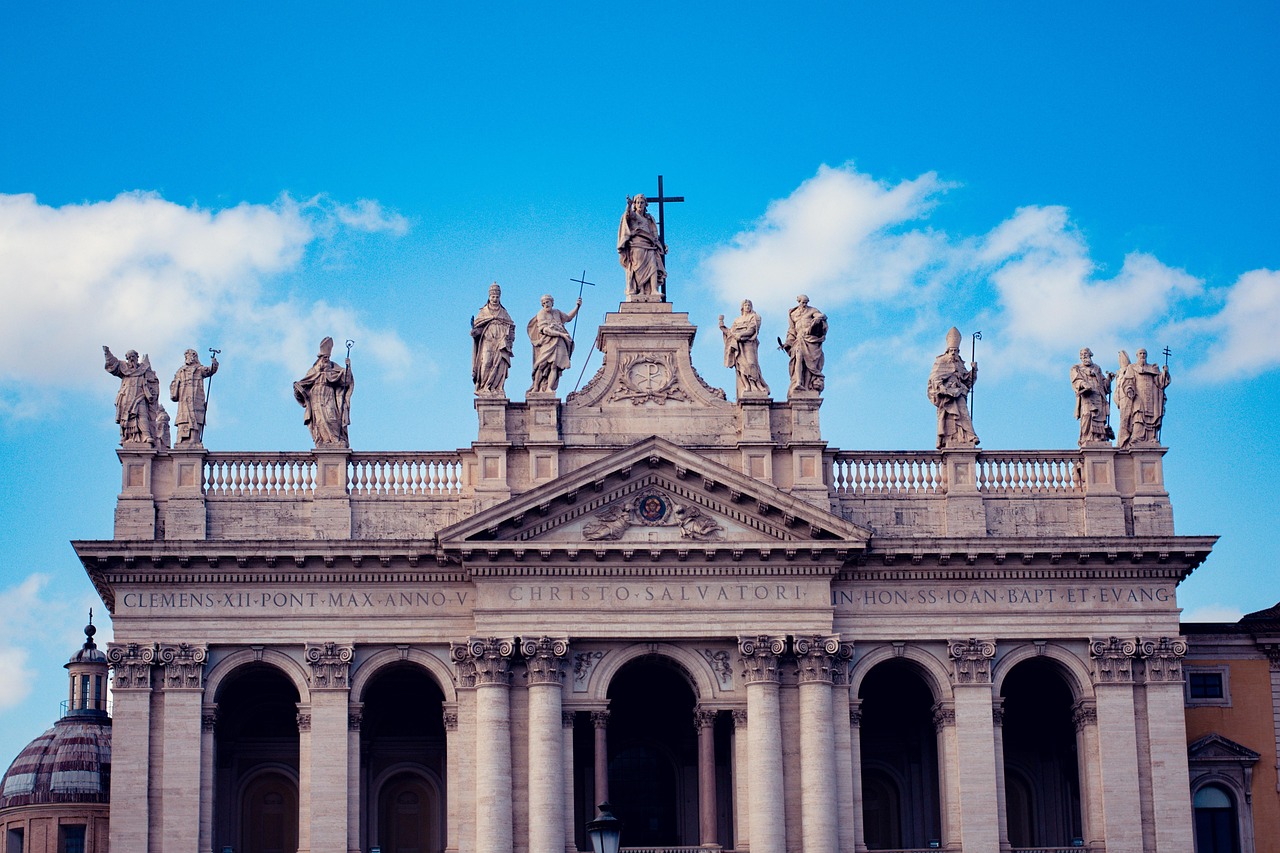
Basilica di San Giovanni in Laterano
Rome's official cathedral—the Pope's seat since 324 AD
Explore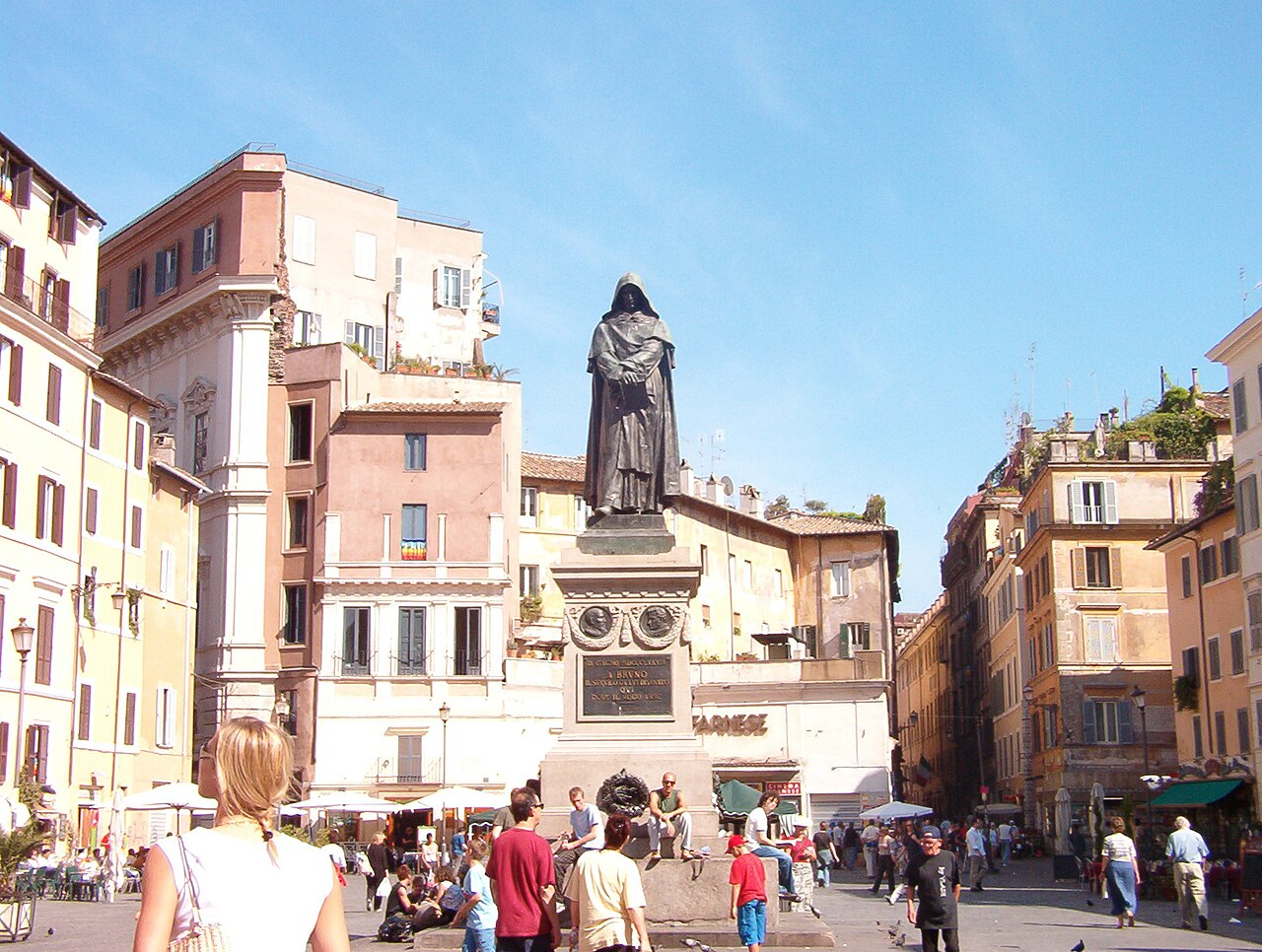
Campo de' Fiori Market
Rome's most vibrant outdoor market and piazza
ExploreQuick Planning Guide
⏱️ Time Needed
1–2 hours
💰 Cost
Free
🎫 Reservation
Not required
♿ Accessibility
Steep climb or bus 115
📅 Best Time
Around noon for cannon
👨👩👧👦 Family Friendly
Very family-friendly
Nearby Attractions
Trastevere10-minute walk down
Fontana dell'Acqua Paolaon hill
Vatican City25-minute walk
Villa Farnesina15-minute walk
You May Also Like
TrastevereFontanoneVilla Doria PamphiljOrto BotanicoFeatured In These Itineraries
Rome Like a LocalRome with KidsGardens & VillasEssential Tips
- ✓ Arrive a little before noon for the cannon
- ✓ Sunset views are magical
- ✓ Puppet shows are traditional — check programme
- ✓ Walk down through Trastevere