 Baroque Fountain
Trevi Fountain
Rome's largest Baroque fountain — free to view from the piazza, €2 open-dated ticket for the inner monumental area
Free from outside€2 inner areaMust VisitPiazza di Trevi, 00187 Roma RMOpen on MapHotels NearbyPlan Your Visit
Compare tickets, tours and stays — booking ahead usually gives more choice
Get TicketsBook a TourHotels NearbyTime needed
20–30 min
Inner area
€2 · open-dated
Built
1732–1762
Height
26.3 m
Trevi Fountain — Local Map
Everything on this map is within a 15-minute walk of the fountain.


 📍
+− Leaflet | © OpenStreetMap contributors
📍
+− Leaflet | © OpenStreetMap contributorsBy AllTrips Rome Editorial Team · Last verified August 2026 · Fact-checked against the official Rome tourism portal (turismoroma.it) visitor rules for the Trevi Fountain.
Trevi Fountain Rome: Complete Visitor Guide
Trevi Fountain is still free to see. The €2 ticket is only required for tourists and non-residents who want to enter the inner monumental area closest to the basin. You can view and photograph the fountain from the surrounding piazza without paying.
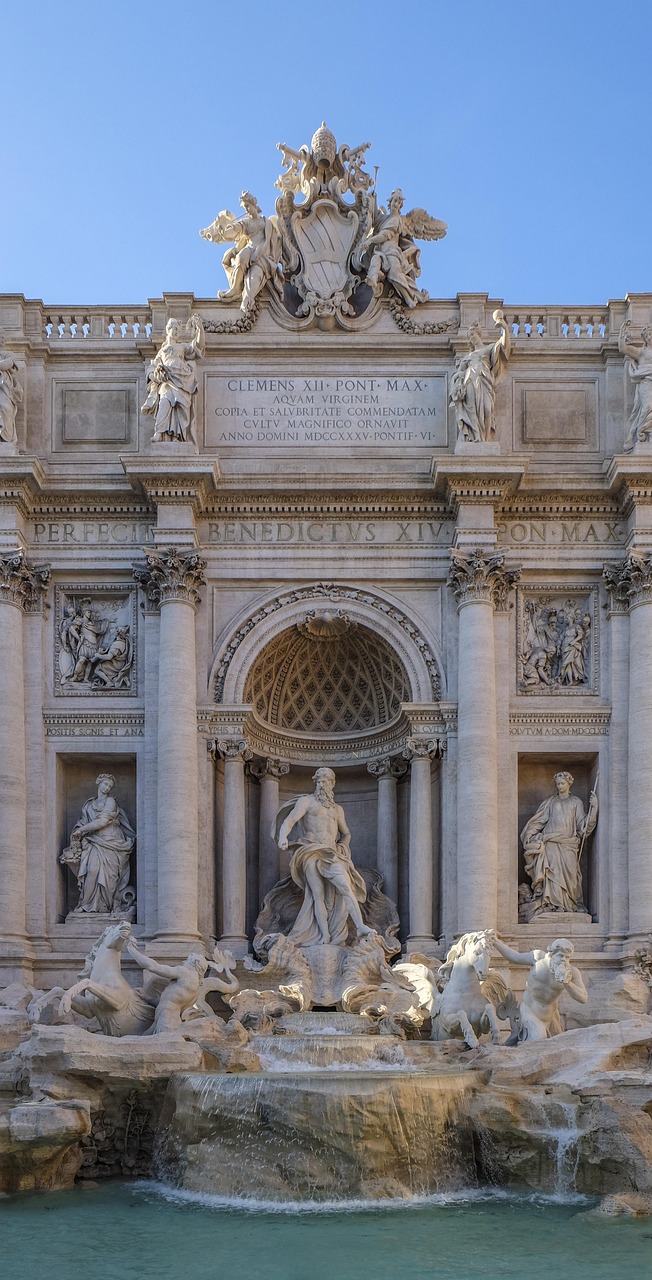
Rome's largest Baroque fountain, completed in 1762, is centred on the sea god Oceanus riding a shell-shaped chariot pulled by seahorses and Tritons. Beyond its scale and artistry, it's the heart of one of Rome's most beloved traditions — tossing a coin over your left shoulder to guarantee your return.
Built
1732-1762
Style
Baroque
Height
26.3 meters
Width
49.15 meters
Designer
Nicola Salvi
Watch: How Well Do You Know the Trevi Fountain?
9 facts · 60-second narrated tourHistory of Trevi Fountain
Built between 1732 and 1762, the Trevi Fountain was designed by Italian architect Nicola Salvi. It stands at the end of the Aqua Virgo aqueduct, which has been bringing water to Rome since 19 BC. The name "Trevi" comes from "tre vie" (three roads), the three streets that meet at the piazza.
19 BC
Original Aqua Virgo aqueduct constructed
1732
Nicola Salvi begins current design
1762
Fountain completed under Giuseppe Pannini
1998
Major restoration completed
The central figure is the sea god Oceanus, riding a shell-shaped chariot pulled by seahorses and led by two Tritons — representing the calm and stormy states of the sea. Coin-tossing became a global tradition in the 20th century; Reported annual collections in recent years have been around €1.4 million, used to fund Caritas food programmes and shelters for the city's poor; totals vary with visitor numbers.
Timeline of Trevi Fountain
From ancient aqueduct to Baroque masterpiece, the Trevi Fountain's story spans over 2,000 years.
19 BCAqua Virgo Aqueduct
Marcus Agrippa constructs the Aqua Virgo aqueduct to supply water to Rome's public baths. The fountain marks its terminus.
1629Bernini's Design
Pope Urban VIII commissions Bernini to redesign the fountain, but funding runs out and the project is abandoned.
1732Salvi's Vision
Pope Clement XII selects Nicola Salvi's design in a competition. Construction begins on the current Baroque masterpiece.
1762Completion
After Salvi's death, Giuseppe Pannini completes the fountain. The central Oceanus figure is finished by Pietro Bracci.
1954Three Coins in the Fountain
Jean Negulesco's Hollywood film 'Three Coins in the Fountain' introduces the coin-toss tradition to a global audience.
1960La Dolce Vita
Anita Ekberg wades through the fountain in Federico Fellini's 'La Dolce Vita,' cementing Trevi as a cinematic icon.
2015Major Restoration
A 17-month, €2.2 million restoration brings the fountain back to its original glory, funded by fashion house Fendi.
How Well Do You Know the Trevi Fountain?
Save · pin · share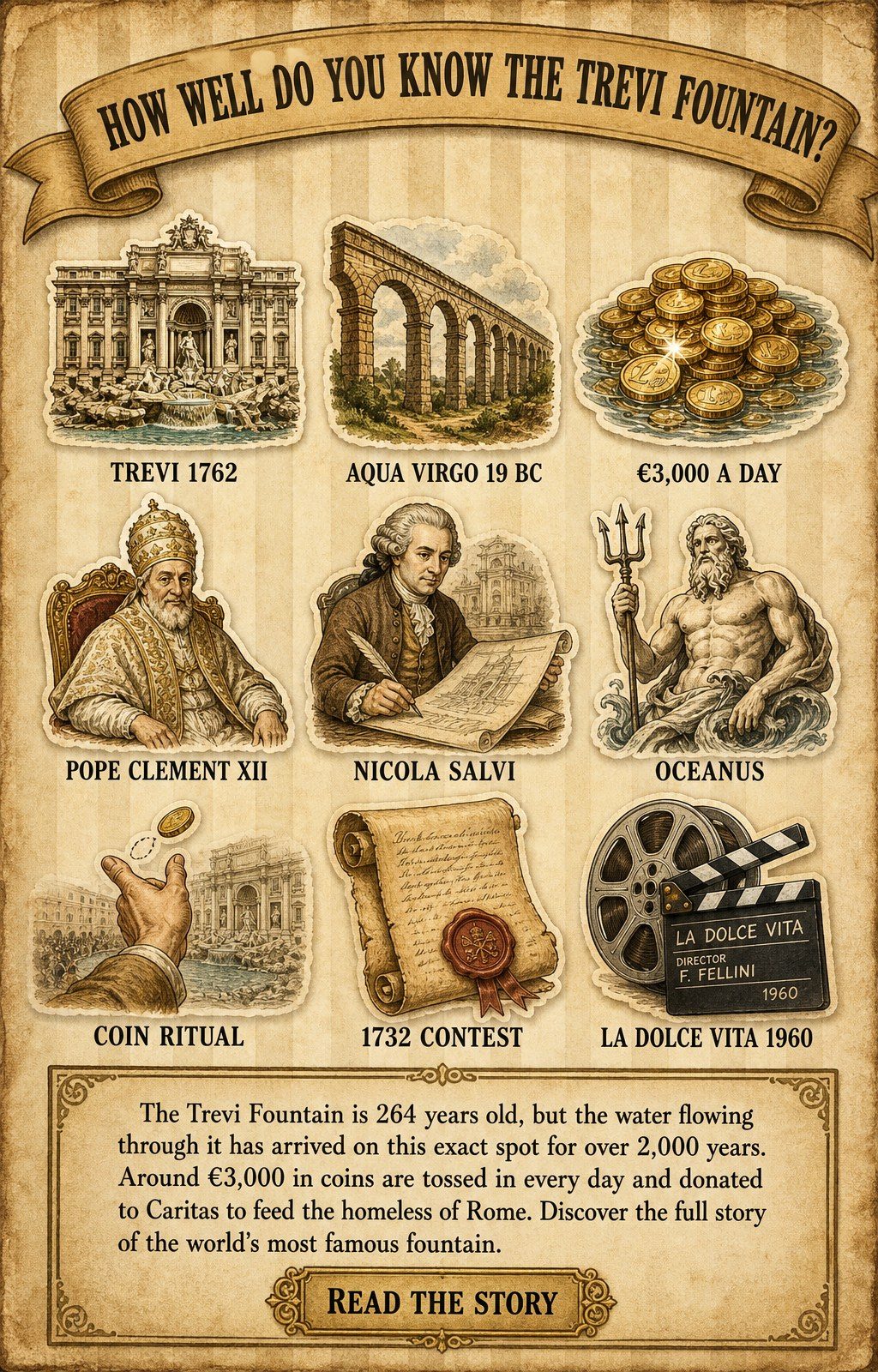 alltrips.net
Engineering Deep-Dive: How the Trevi Was Built
The Trevi is a feat of 18th-century hydraulic and stone-cutting engineering, fused with a working 1st-century BC aqueduct. Here's how Salvi and Pannini engineered Rome's grandest fountain.
Aqua Virgo aqueduct
Built in 19 BC by Marcus Agrippa, the 21 km Aqua Virgo flows almost entirely underground at a gentle 0.18% gradient. It still feeds the fountain, which moves roughly 120 litres of water per second — most of it recirculated by modern systems.
Travertine from Tivoli
Salvi specified white travertine quarried 30 km away in Tivoli — the same stone used for the Colosseum — for its weather resistance and warm tone under low sun.
Carrara marble figures
Oceanus, the Tritons, and the allegorical statues of Abundance and Health are carved from Carrara marble, set against the rougher travertine reef for dramatic contrast.
Palazzo Poli facade fusion
The fountain is grafted onto the front of the existing Palazzo Poli — Salvi treated the palace as a triumphal-arch backdrop, an unprecedented merging of architecture and sculpture.
Hydraulic distribution
A hidden chamber behind Oceanus splits the flow into 24 jets and cascades, regulated by bronze valves replaced during the 2015 Fendi-funded restoration.
Reef-style basin
The basin floor mimics a natural sea reef, sculpted from travertine with crustaceans and plants — a Baroque innovation that hides the masonry seams of the pool.
Legends of Trevi Fountain
The Trevi Fountain is steeped in legend and tradition, with stories that have captivated visitors for centuries.
The Coin Toss Tradition
Legend says that if you throw a coin into the fountain using your right hand over your left shoulder, you're guaranteed to return to Rome someday.
- 1 coin: Return to Rome
- 2 coins: Find love with an Italian
- 3 coins: Marriage to that person
Recent reported annual collections have been around €1.4 million, funding Caritas food programmes and shelters for the city's poor; totals vary year to year.
The Legend of the Virgin
The ancient Aqua Virgo aqueduct that feeds the fountain gets its name from a beautiful legend.
In 19 BC, Roman soldiers searching for water in the countryside met a young virgin maiden who led them to a pure spring. Emperor Agrippa built the aqueduct to bring this water to Rome.
The "Virgin Water" has been flowing to this spot for over 2,000 years!
The Fountain of Love
On the right side of the fountain, you'll find a smaller fountain called the "Fontanella degli Innamorati" (Lovers' Fountain).
Legend has it that couples who drink from this fountain together will remain faithful to each other forever.
Look for the small drinking spouts on the right side of the main basin!
Hollywood Magic
The fountain became a global icon after Anita Ekberg's famous midnight wade in Federico Fellini's "La Dolce Vita" (1960).
Other films featuring the fountain include "Roman Holiday" (1953) with Audrey Hepburn and "Three Coins in the Fountain" (1954), which first popularised the coin-toss ritual worldwide.
Note: entering the water today carries a fine starting at €450, plus possible damage charges.
Entry Rules & the €2 Ticket (2026)
There are no time slots. The €2 ticket is open-dated — no set date, no set time. It is non-refundable and non-transferable. Buying it in advance lets you use the dedicated ticket-holder line at the entrance rather than queuing to pay at the door.
Current opening hours
Tue–Thu, Sat–Sun: 09:00–22:00
Monday & Friday: 11:30–22:00
Last entry: 21:00
Certain Mondays may open at 14:00 for coin-collection or maintenance — check the official calendar. Outside paid hours the fountain is fully visible for free from the surrounding piazza.
Who enters free
• Residents of Rome and Metropolitan Rome
• Children under 6
• People with disabilities + one companion
• Licensed tour guides on duty
• Roma MIC Card holders
Unlike the Pantheon, the first Sunday of the month is not free for tourists at Trevi — the €2 fee still applies.
How to buy
1. Buy the €2 ticket on the official Rome tourism portal in advance, or
2. Buy on arrival by card at the entrance on Via della Stamperia.
3. Ticket holders enter via Via della Stamperia and exit via Via dei Crociferi.
Buying online doesn't reserve a time — it simply gets you into the shorter ticket-holder line.
Official inner-area ticket
€2€2 open-dated ticket (no date or time). Non-refundable, non-transferable. Lets you use the dedicated ticket-holder line at Via della Stamperia instead of buying at the entrance.
- Open date — use any day during visiting hours
- Access to the inner monumental basin area
- Ticket-holder queue on Via della Stamperia
- Coin toss at the basin edge
Free — view from outside
FreeYou can see and photograph the fountain from Via dei Crociferi and the surrounding piazza at any hour, without paying. Free entry to the inner area is granted to Rome residents, children under 6, disabled visitors + one companion, licensed tour guides and MIC card holders.
- Full view from surrounding piazza 24/7
- Rome / Metropolitan Rome residents
- Children under 6
- Disabled visitors + one companion
- Licensed tour guides · MIC card
Trevi Fountain tours & underground experiences
Prefer a guided walk, or want to see the Roman ruins beneath the fountain? These experiences bundle Trevi access with wider walking tours or the Vicus Caprarius underground site.
Trevi & Historic Centre Tours
Best for: First-time visitors
~1–2 hoursGuided experiences around the Trevi Fountain and Rome's historic centre. These typically bundle fountain access with a walking route through nearby landmarks.
- Trevi Fountain area covered
- Live English-speaking guide
- Guided city walking tour
- Nearby historic centre stops
🎟️ Compare Prices:
TiqetsKlookTrip.comTrevi Underground & Archaeological Tours
Best for: History enthusiasts
~40–45 minutesTours that include access to the archaeological layers beneath the Trevi Fountain area, such as the Vicus Caprarius with its ancient Roman domus and aqueduct remains.
- Underground archaeological access
- Ancient Roman domus & aqueduct ruins
- Expert guided commentary
- Small group experience
🎟️ Compare Prices:
TiqetsKlookTrip.comCombined Trevi & City Walking Tours
Best for: Complete experience seekers
~2 hoursLonger guided experiences that pair the Trevi Fountain area with a broader historic centre route, often covering Piazza Navona, the Pantheon, and the Spanish Steps.
- Underground domus access
- Extended city walking tour
- Pantheon & Piazza Navona often included
- Live guide in multiple languages
🎟️ Compare Prices:
TiqetsKlookTrip.comCoin Toss Tradition: Toss one coin with your right hand over your left shoulder to return to Rome. Two coins to find love. Three coins for marriage.
Where to Stay Near Trevi Fountain
Looking for convenient accommodation near Trevi Fountain? Stay within walking distance to make the most of your visit.
Hotels Near Trevi FountainTop Rated Nearby HotelsBudget-Friendly OptionsLuxury HotelsCentral locations with easy access to Trevi Fountain and other attractionsOpening Hours & Best Time to Visit
Quietest mornings
Tue–Thu and weekends open at 09:00 — arriving at opening gives the calmest paid-access window. Mon & Fri start at 11:30.
Illuminated evenings
After 21:00 the fountain glows against dark travertine — crowds thin as the last-entry cut-off (21:00) passes.
Quietest months
November–February deliver the smallest crowds; avoid mid-July and mid-August middays.
What to See
Must-See Features
- Oceanus on his shell-chariot — the central sculptural masterpiece
- Two Tritons and seahorses — one calm, one wild, representing the sea's moods
- Coin toss tradition — right hand over left shoulder
- Palazzo Poli backdrop — Baroque architecture fused with sculpture
- Evening illumination — warm LED lighting after dark
- Movie fame — 'Three Coins in the Fountain' (1954) and 'La Dolce Vita' (1960)
Nearby Attractions
- Pantheon — about 8–10 min walk (€7 standard entry)
- Spanish Steps — 10-minute walk, free
- Piazza Navona — 12 min walk, free
- Piazza Colonna & Piazza Barberini — 5–7 min
- Vicus Caprarius (underground) — 90 seconds from the fountain
Rules & Official Fines at Trevi Fountain (2026)
Rome's local police (Polizia Locale) actively patrol the piazza and the inner area. Fine ranges below are the official published categories.
Entering, wading in or drawing water from the basin
From €450Sitting, loitering, eating or drinking near the fountain
€40–€240Climbing on the fountain or throwing prohibited objects
€40–€240Damaging or defacing the monument
Criminal penaltiesBest Photo Times by Season
Trevi faces roughly south-southeast, so morning light hits the facade head-on. Because tickets are open-dated, aim for opening (09:00 Tue–Thu / Sat–Sun; 11:30 Mon & Fri) or blue hour for the best photographs.
| Season | Sunrise | Sunset | Best Arrival Time |
|---|---|---|---|
| Winter (Dec–Feb) | 07:35 | 16:50 | 09:00 arrival · golden light ~16:30 |
| Spring (Mar–May) | 06:30 | 20:00 | 09:00 arrival · blue hour ~20:15 |
| Summer (Jun–Aug) | 05:40 | 20:50 | 09:00 arrival · illuminated after 21:00 |
| Autumn (Sep–Nov) | 07:00 | 18:30 | 09:00 arrival · golden light ~18:00 |
Trevi vs Other Famous Rome Fountains
Rome has more than 2,000 fountains, but only a handful rival Trevi for scale and history. Use this table to plan a Baroque fountain crawl.
| Fountain | Built | Style | Entry | Why Visit |
|---|---|---|---|---|
| Trevi Fountain | 1762 | Late Baroque | €2 open-dated | Largest, most iconic, coin toss tradition |
| Fontana dei Quattro Fiumi | 1651 | High Baroque (Bernini) | Free | Bernini masterpiece in Piazza Navona, four world rivers |
| Fontana del Tritone | 1643 | Baroque (Bernini) | Free | Triton blowing a conch in Piazza Barberini, 7 min from Trevi |
| Fontana delle Tartarughe | 1588 | Late Renaissance | Free | Hidden in the Jewish Ghetto, four turtles being lifted by youths |
| Fontana della Barcaccia | 1629 | Early Baroque (Bernini) | Free | Sinking-boat fountain at base of the Spanish Steps |
| Fontana del Moro | 1575 | Renaissance + Bernini | Free | South end of Piazza Navona, dolphin-wrestling Moor |
Hidden Below: Vicus Caprarius
A short walk from the Trevi Fountain, an unmarked door on Vicolo del Puttarello hides the Vicus Caprarius — City of Water, an archaeological site discovered during a 1999 cinema renovation.
Nine metres beneath modern Rome you can walk through a 1st-century insula (apartment block), a luxurious 4th-century domus, and a still-flowing branch of the Aqua Virgo aqueduct — the same 19 BC channel that feeds the Trevi Fountain today.
Self-guided entry costs €4 and takes roughly 20 minutes. Guided visits cost €8 and last about 40 minutes. Reservations are mandatory on weekends and holidays and highly recommended on weekdays via the official site. A perfect escape from the crowds above.
8 Common Mistakes to Avoid
1. Assuming you need a timed slot
There are no 30-minute time slots. The €2 ticket is open-dated — buy it whenever, use it whenever during visiting hours.
2. Paying to see the fountain
Viewing from the surrounding piazza is free. The €2 is only for entering the inner monumental area next to the basin.
3. Visiting at midday
11:00–17:00 is the worst window — harsh light, tour groups and pickpockets peak.
4. Sitting on the fountain edge
Sitting, loitering or eating in the inner area carries fines of €40–€240.
5. Wading in the water
Entering the basin triggers a fine starting at €450, plus possible criminal charges for damage.
6. Bringing a big backpack
The inner terrace is tight and busy — a large bag slows the ticket-holder queue and attracts pickpockets.
7. Skipping Vicus Caprarius
Most visitors miss the Roman ruins 9 m below the piazza — only ~20 minutes and €4 self-guided.
8. Only visiting once
The fountain looks completely different at 09:00 vs 22:00 — visit twice if you can.
Accessibility at Trevi Fountain
Wheelchair & stroller access
The upper piazza gives a full view of Oceanus from street level. The inner basin area has steps and is not step-free — the €2 paid zone is not considered fully accessible.
Nearest metro
Barberini (Line A), 7-minute walk. Spagna (Line A) is about 10 minutes away and has lift access towards the Spanish Steps area, though availability can vary.
Restrooms
Closest paid public toilets are on Via del Lavatore (€1) and inside cafes around Via dei Crociferi (free with purchase).
Quiet hours
22:00–07:00 are generally the quietest hours; the fountain remains visible from outside after the paid area closes.
Local Insider Tips
- Look up at the inscription above Oceanus — it credits Pope Clement XII, who funded the project from a state lottery.
- On the right side, the small "Lovers' Fountain" (Fontanella degli Innamorati) is said to bring faithful love to couples who drink from it together.
- The Aqua Virgo aqueduct still feeds the Trevi after 2,000 years — the same water flows out of nasoni drinking fountains across central Rome.
- Coin collection and maintenance can affect Monday opening times — check the official calendar before visiting.
- For the best gelato nearby, skip the tourist counters next to the fountain and walk 4 minutes to Il Gelato di San Crispino on Via della Panetteria.
- Even without the €2 ticket, the view from the upper piazza and Via dei Crociferi is free and excellent for photography.
Frequently Asked Questions
Do I need a ticket to visit Trevi Fountain in 2026?
You only need a ticket if you want to walk down into the inner viewing area right next to the basin. Rome charges non-residents €2 for that access. Viewing the fountain from the surrounding piazza and streets is still completely free at any hour.
Is the €2 Trevi access a timed slot?
No. The €2 access to the controlled inner perimeter is not sold as a timed entry with a fixed slot; it is a managed entrance with a queue at Via della Stamperia and a daily timetable. It is not a platform, terrace or guaranteed session length.
What are Trevi Fountain's current opening hours?
The inner paid area is open Tuesday–Thursday and weekends 09:00–22:00, and Monday & Friday 11:30–22:00, with last entry at 21:00. The fountain itself is visible 24/7 from the surrounding piazza and is illuminated late into the evening.
Who can enter the Trevi inner area for free?
Residents of Rome and Metropolitan Rome, children under 6, people with disabilities plus one companion, licensed tour guides on duty, and Roma MIC Card holders all enter free. Unlike the Pantheon, the first Sunday of the month is not a free day for tourists at Trevi.
How do I buy the €2 Trevi ticket?
You can buy the €2 ticket on the official Rome tourism portal in advance, or by card at the entrance on Via della Stamperia on the day. Buying online doesn't reserve a time slot — it just gets you into the ticket-holder line. Ticket holders exit via Via dei Crociferi.
Where does the money thrown into Trevi Fountain go?
Coins are collected regularly and handed to Caritas Rome, a Catholic charity that funds food programmes, supermarket vouchers and shelters for the city's poor. Recent reporting puts the annual total at roughly €1.4 million; figures vary by source and year.
What are the fines at Trevi Fountain?
Loitering, eating, drinking, sitting on the monument or climbing on it carry fines in the €40–€240 range. Entering or drawing water from the basin starts at €450, plus any damage costs. Rome's local police actively patrol the piazza.
Is Trevi Fountain wheelchair accessible?
The upper piazza offers a full street-level view of the fountain. The inner €2 area has steps down to the basin and is not fully step-free, so it isn't considered wheelchair-accessible.
How do you correctly throw a coin into Trevi Fountain?
Stand with your back to the fountain, hold the coin in your right hand and toss it over your left shoulder into the water. One coin promises a return to Rome, two coins bring romance, and three coins predict marriage.
Who is the central figure at Trevi Fountain?
The central statue is Oceanus, the Titan of the ocean, riding a shell-chariot pulled by seahorses and flanked by two Tritons — one calming the horse, one taming a wild one. He is often confused with Neptune but the correct figure is Oceanus.
What is the underground Vicus Caprarius beneath Trevi Fountain?
The Vicus Caprarius ("City of Water") is an archaeological site 9 metres below street level next to the fountain. It preserves a Roman insula, a luxury domus and part of the Aqua Virgo aqueduct that still feeds Trevi today. Self-guided entry is €4; weekend visits require advance booking.
How far is the Pantheon from Trevi Fountain?
The Pantheon is an 8–10 minute walk south of Trevi. Standard Pantheon admission is €7 (timed entry) and the first Sunday of the month is free.
Related Attractions
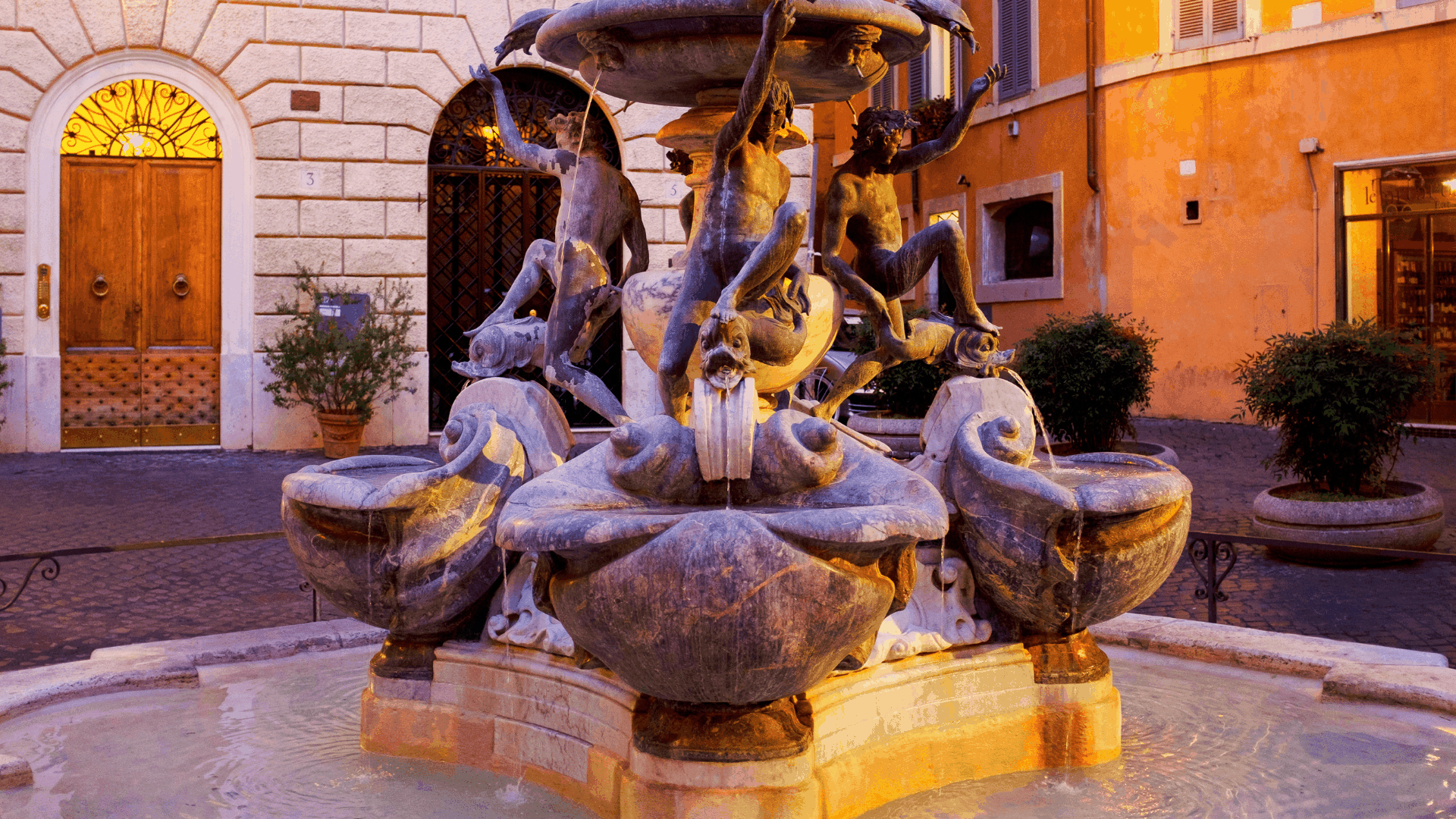
Fontana delle Tartarughe
Enchanting Renaissance turtle fountain in Jewish Ghetto
Explore
Piazza della Rotonda
Elegant square fronting the Pantheon
Explore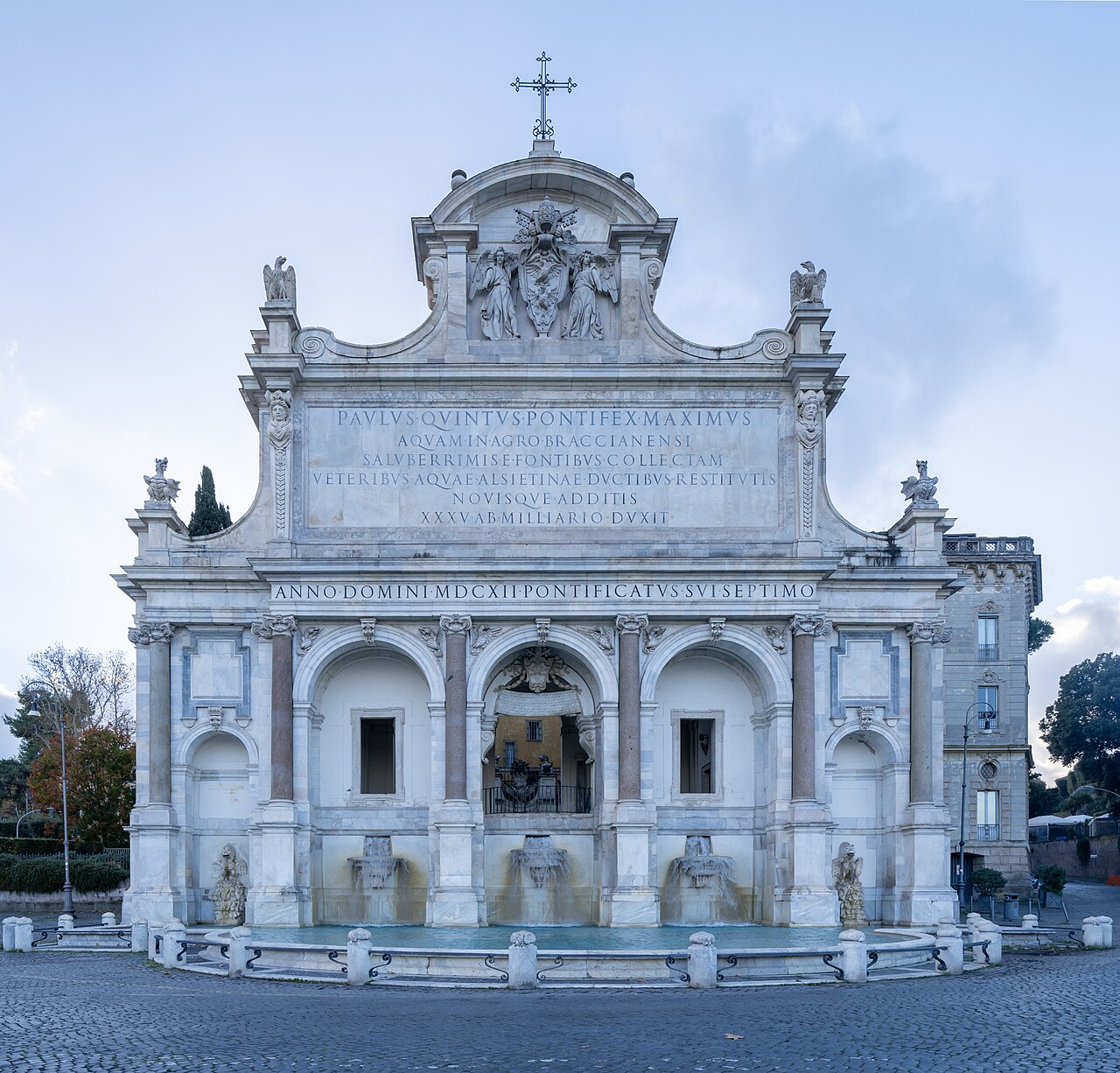
Fontana dell'Acqua Paola
The magnificent 'Fontanone' on Janiculum Hill
Explore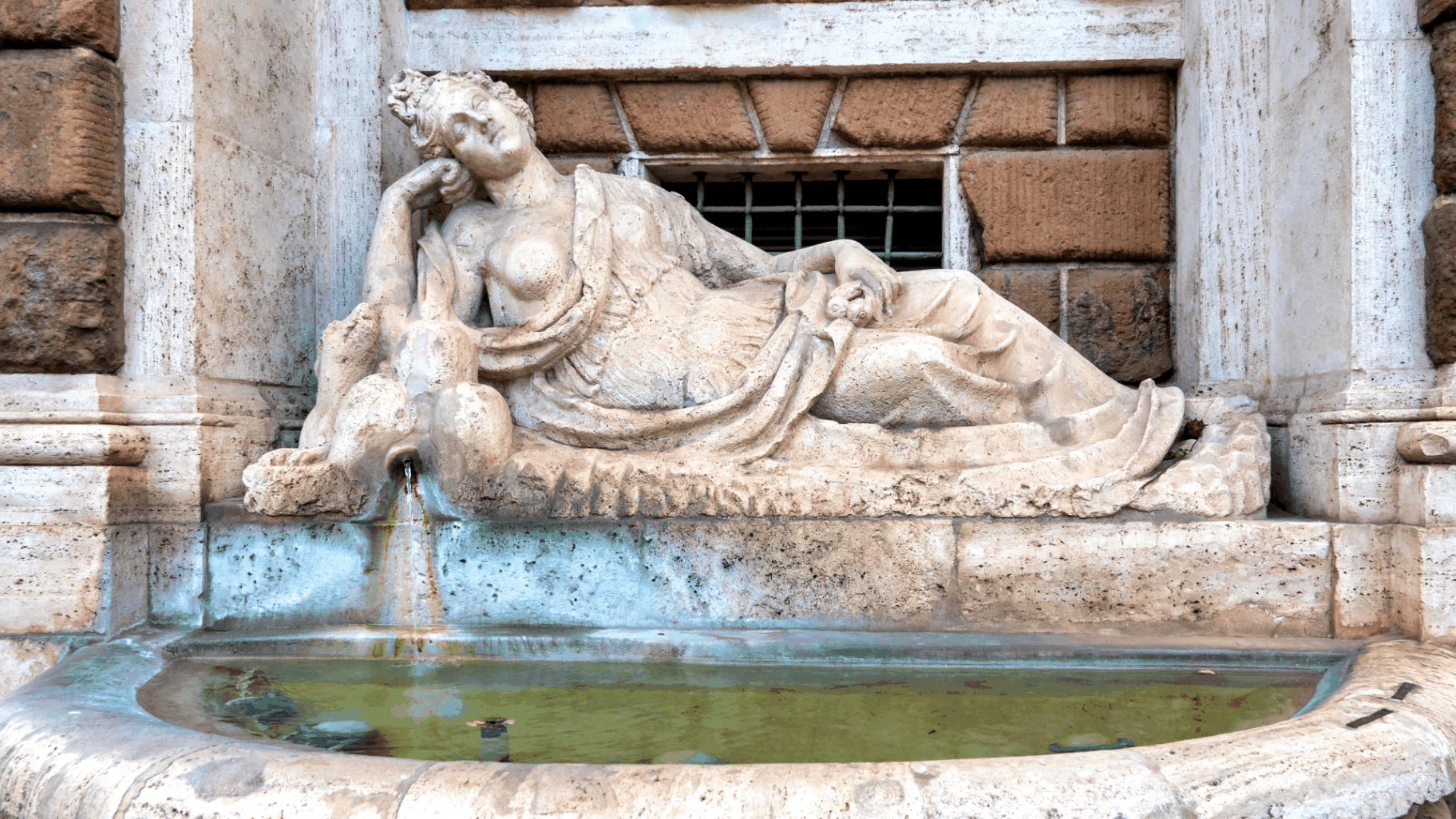
Quattro Fontane
Four corner fountains with views of three obelisks
Explore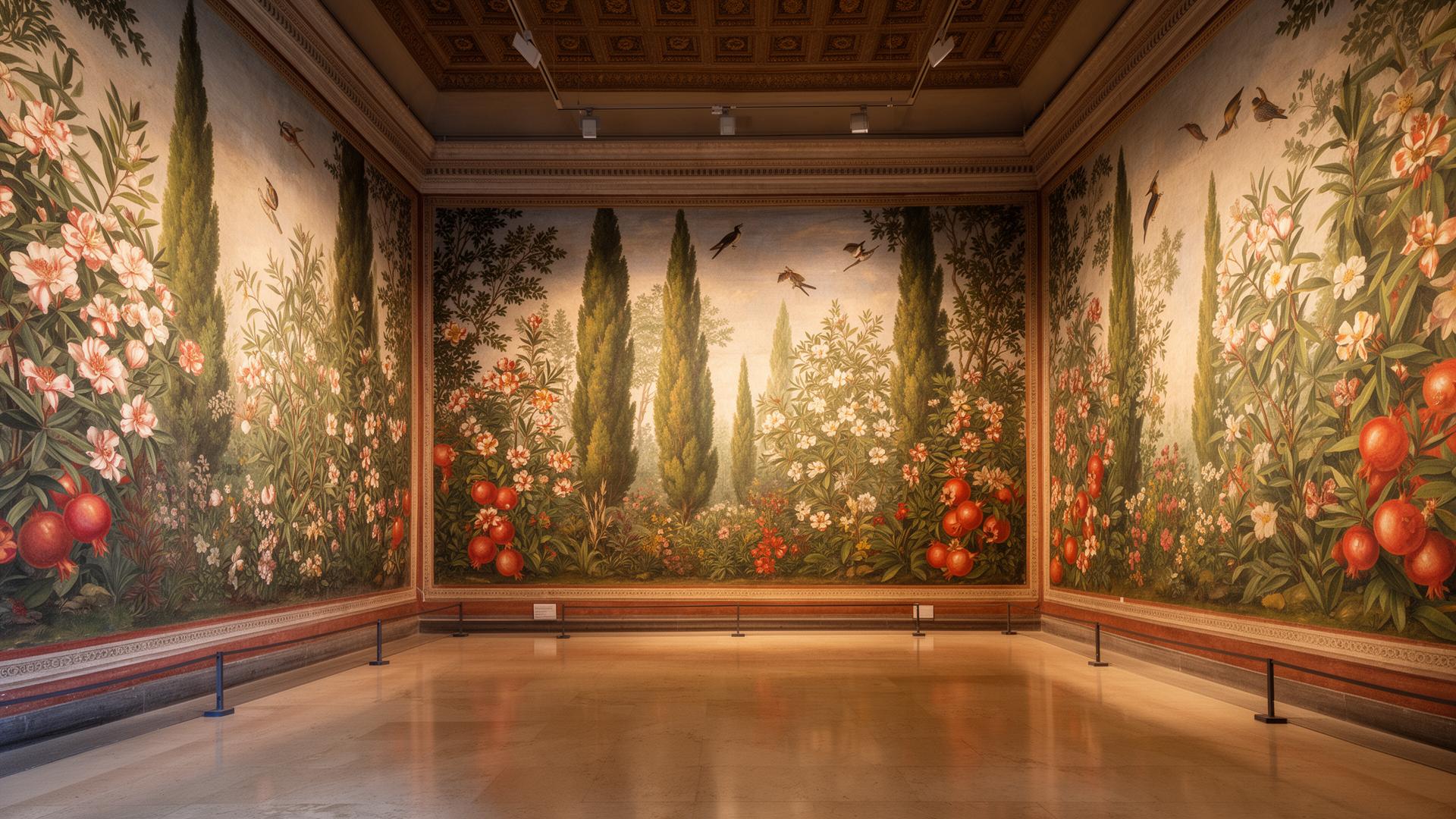
Palazzo Massimo alle Terme
Rome's finest ancient art museum with stunning frescoes and mosaics
Explore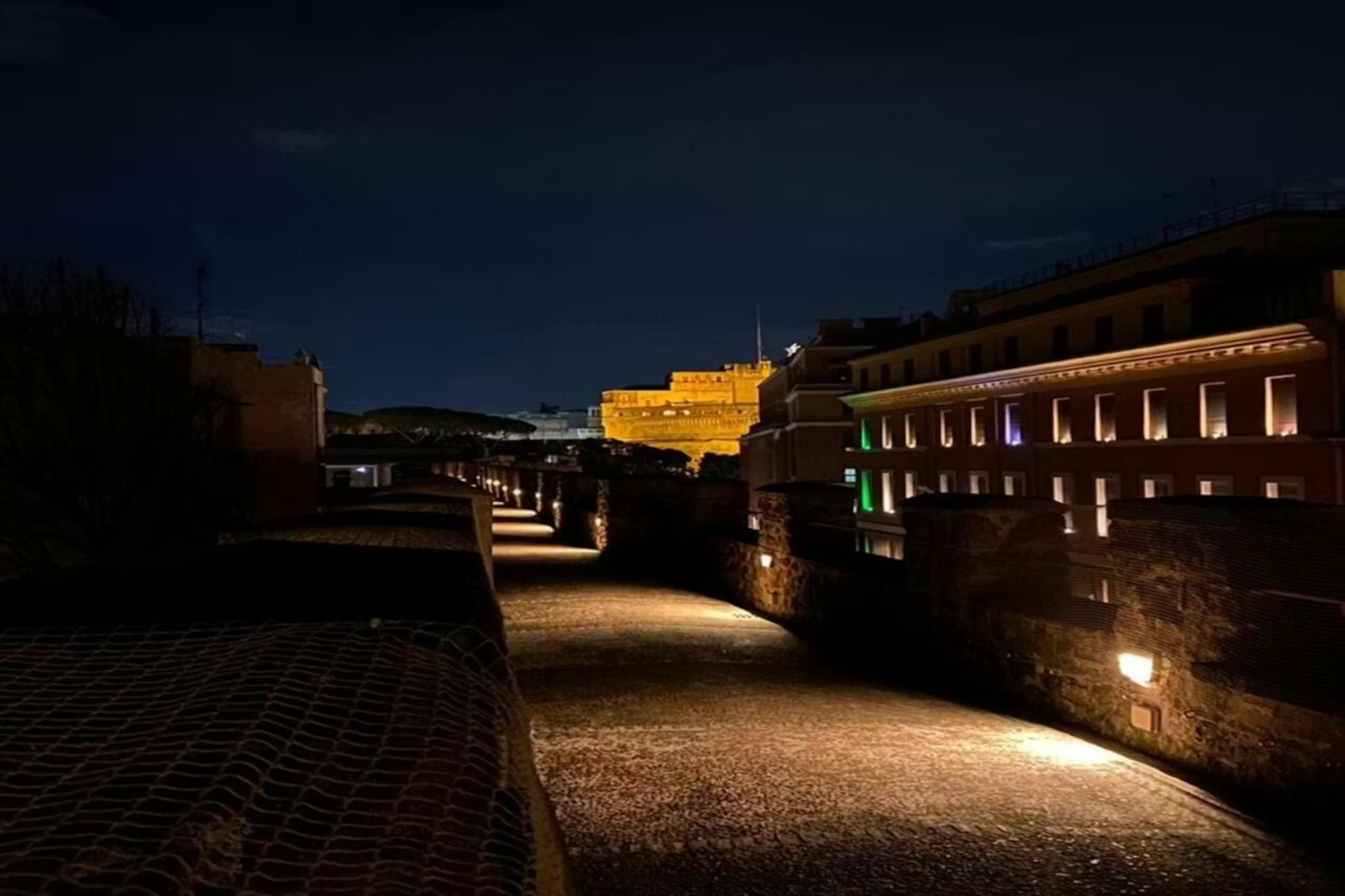
Passetto di Borgo
Secret 800m papal escape corridor connecting Vatican to Castel Sant'Angelo
ExploreQuick Planning Guide
⏱️ Time Needed
20–30 minutes
💰 Cost
Free to view · €2 for inner area
🎫 Reservation
Open-dated ticket, no time slot
♿ Accessibility
Steps to reach the inner perimeter
📅 Best Time
Tue–Thu / Sat–Sun around 09:00 or after 21:00
👨👩👧👦 Family Friendly
Yes (under 6 free · kids love the coin toss)
Nearby Attractions
Pantheon — about 8–10 min walk€7 standard entry
Spanish Steps — 10-minute walk, freePiazza Navona — 12 min walk, freePiazza Colonna & Piazza Barberini — 5–7 minVicus Caprarius(underground) — 90 seconds from the fountain
You May Also Like
PantheonSpanish StepsPiazza BarberiniQuattro FontaneFeatured In These Itineraries
One Day in RomeClassic Rome 3-DayFree Rome ItineraryEssential Tips
- ✓ Free to see from the surrounding piazza — no ticket needed
- ✓ €2 inner-area ticket is open-dated (no reserved time)
- ✓ Tue–Thu and weekends open 09:00; Monday & Friday open 11:30
- ✓ Toss the coin with right hand over left shoulder
- ✓ Return after 21:00 for the illuminated view with thinner crowds