 Baroque FountainsFree Entry
Quattro Fontane
Rome's historic crossroads—four elegant late-Renaissance fountains at a point traditionally described as where three obelisks are visible
Free15-20 min3 Obelisk ViewsVia delle Quattro Fontane, 00184 Roma RMOpen on MapPlan Your Visit
Compare tickets, tours and stays — booking ahead usually gives more choice
Book a TourHotels NearbyTable of Contents
Jump to any section of the itinerary
Why Visit the Quattro Fontane?
The Quattro Fontane marks one of Rome's most ingenious pieces of urban planning. Pope Sixtus V created this intersection as part of his grand redesign of Rome, placing four fountains at the corners and aligning the streets so that three distant obelisks are visible from a single point. It's a hidden gem that reveals the theatrical genius of Baroque Rome.
Three Obelisk Vista
Traditionally described as the only point in Rome where three ancient obelisks are visible simultaneously
Four Corner Fountains
Elegant Late Renaissance fountains depicting rivers and goddesses
Baroque Urban Planning
A masterpiece of Counter-Reformation city design by Pope Sixtus V
Gateway to Borromini
Adjacent to San Carlo alle Quattro Fontane, Borromini's Baroque gem
Visit Time
15-20 minutes
Cost
Free
Built
1588-1593
Fountains
4 Corner
Best For
3 Obelisk Views
Location
Via Quattro Fontane
The Four Fountains
Tiber & Arno (The Rivers)
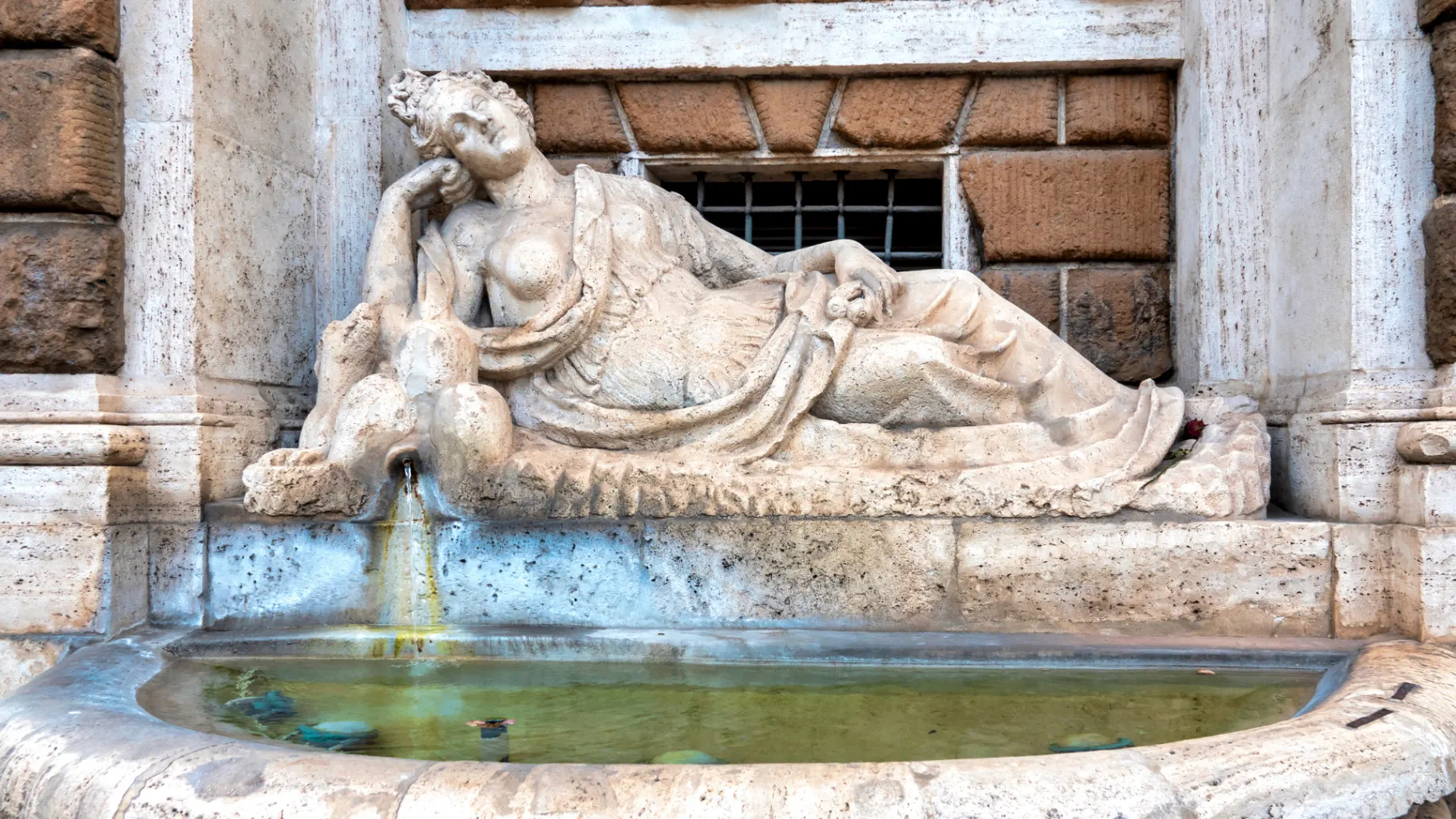
Two of the fountains represent Italy's great rivers. The Tiber is shown as a muscular male figure with a she-wolf and Romulus and Remus, symbolizing Rome. The Arno represents Florence, depicted with a lion (the Marzocco) and cornucopia. Together the two river figures represent the pairing of Rome and Florence within the fountain's iconography.
Diana & Juno (The Goddesses)
The two female figures represent Roman goddesses. Diana, goddess of the hunt, reclines with a dog and quiver of arrows, symbolizing Fidelity. Juno, queen of the gods, is accompanied by a peacock, representing Strength. Both figures lie languidly with water trickling from urns beside them.
The Niche Design
Each fountain is set into a corner niche cut at 45 degrees, allowing the intersection's corners to be smoothed while providing intimate alcoves for the sculptures. The travertine frames and decorative foliage relief above each figure create elegant Mannerist compositions.
The Three Obelisk Views
Quirinal Obelisk (North)
Looking toward Piazza del Quirinale, you see the obelisk flanked by the Dioscuri statues, with the Presidential Palace behind.
Esquiline Obelisk (South)
Looking toward Santa Maria Maggiore, the obelisk marks one of Rome's four great papal basilicas.
Sallustiano Obelisk (West)
Looking west toward Trinità dei Monti, the Sallustian Obelisk rises above the Spanish Steps.
History of the Quattro Fontane
1585Sixtus V's Vision
Pope Sixtus V begins his ambitious plan to reorganize Rome with new streets connecting major basilicas.
1588Construction Begins
The four fountain niches are carved into the building corners at this important crossroads.
1593Fountains Completed
The four reclining figures—Tiber, Arno, Diana, and Juno—are installed.
1634San Carlino Begun
Borromini begins his masterpiece San Carlo alle Quattro Fontane on the corner.
1667Church Completed
Borromini finishes San Carlino's facade, creating the perfect Baroque ensemble.
PresentHidden Gem
One of Rome's most photogenic yet overlooked Baroque treasures.
Common Mistakes to Avoid
Standing on the wrong corner for the obelisk views
Consequence: You miss the famous triple-obelisk vista that defines this crossroads.
Solution: Observe from the pavement corners rather than stepping into the intersection, looking down each of the four streets from a safe vantage point.
Visiting at midday with heavy traffic
Consequence: Buses and cars block sightlines and make photography nearly impossible.
Solution: Come at sunrise or on a Sunday morning, when Via delle Quattro Fontane is often quieter, though traffic patterns can vary.
Skipping San Carlo alle Quattro Fontane next door
Consequence: You miss Borromini's tiny Baroque masterpiece, arguably more important than the fountains themselves.
Solution: Plan 20 extra minutes to step inside San Carlino — entry is free or by small donation.
Confusing these with the Trevi or Four Rivers fountain
Consequence: You arrive expecting a single grand monument and feel underwhelmed.
Solution: Reset expectations: this is four small corner niches, not a single show fountain.
Not looking up at the buildings
Consequence: You miss the elegant Mannerist façades and the way the niches are carved into the corners.
Solution: Each fountain is integrated into a palazzo corner — step back and admire the architecture above.
Walking past without identifying which figure is which
Consequence: All four reclining figures blur together and the symbolism is lost.
Solution: Use our Four Fountains guide above: she-wolf = Tiber, lion = Arno, dog = Diana, peacock = Juno.
Insider Tips
Combine with a Borromini mini-tour
Pair the Quattro Fontane with San Carlino, Borromini's masterpiece next door, for a focused look at his work — the contrast with Bernini's Quirinale is unforgettable.
Photograph at golden hour facing west
Late afternoon light catches the Sallustiano obelisk above Trinità dei Monti, giving the best of the three vistas.
Stop for coffee at Palazzo Barberini's café
Two minutes downhill, the gallery's courtyard café is calm, cheap by Rome standards, and lets you reset before the climb to Quirinale.
Visit on a free-museum Sunday
On the first Sunday of the month Palazzo Barberini is free — combine it with the fountains for a half-day art crawl.
Walk down to Trevi, not up
From here it's downhill to the Trevi Fountain through quiet side streets — far more pleasant than fighting the crowd uphill.
Look for the worn travertine basins
The original basins are still in place and show 400+ years of water erosion — a tactile reminder of the fountains' long history, though they are decorative rather than drinking fountains.
Where to Stay Near Quattro Fontane
Looking for convenient accommodation near Quattro Fontane? Stay within walking distance to make the most of your visit.
Hotels Near This AttractionTop Rated HotelsBudget-Friendly OptionsLuxury HotelsCentral locations with easy access to Quattro Fontane and other attractionsFrequently Asked Questions
What are the Quattro Fontane?
The Quattro Fontane (Four Fountains) are four Late Renaissance fountains positioned at each corner of the intersection of Via delle Quattro Fontane and Via del Quirinale. Each fountain features a reclining figure: two represent rivers (Tiber and Arno), and two represent goddesses (Diana and Juno).
Why is this intersection famous?
It's traditionally described as the only spot in Rome where you can see three ancient obelisks at once! Looking down the four streets, you can see the Quirinal, Esquiline and Sallustian obelisks near Piazza del Quirinale, Santa Maria Maggiore, and Trinità dei Monti. This was intentional urban planning by Pope Sixtus V.
What's nearby at the Quattro Fontane?
The intersection is surrounded by Baroque treasures: San Carlo alle Quattro Fontane (Borromini's masterpiece), Palazzo Barberini (National Gallery of Ancient Art), and the Quirinal Palace gardens. It's a key stop on any Baroque Rome tour.
Who created the Quattro Fontane?
The fountains were commissioned by Pope Sixtus V and built between 1588-1593. The sculptors remain anonymous, but the project was part of Sixtus V's grand plan to reorganize Rome's street layout and create monumental vistas connecting major basilicas.
What's the best time to visit?
Early morning tends to offer good light for photography and lighter traffic, though this can vary. The fountains face in different directions, so lighting changes throughout the day. It's generally a busy intersection, and Sunday mornings are often calmer.
Related Attractions
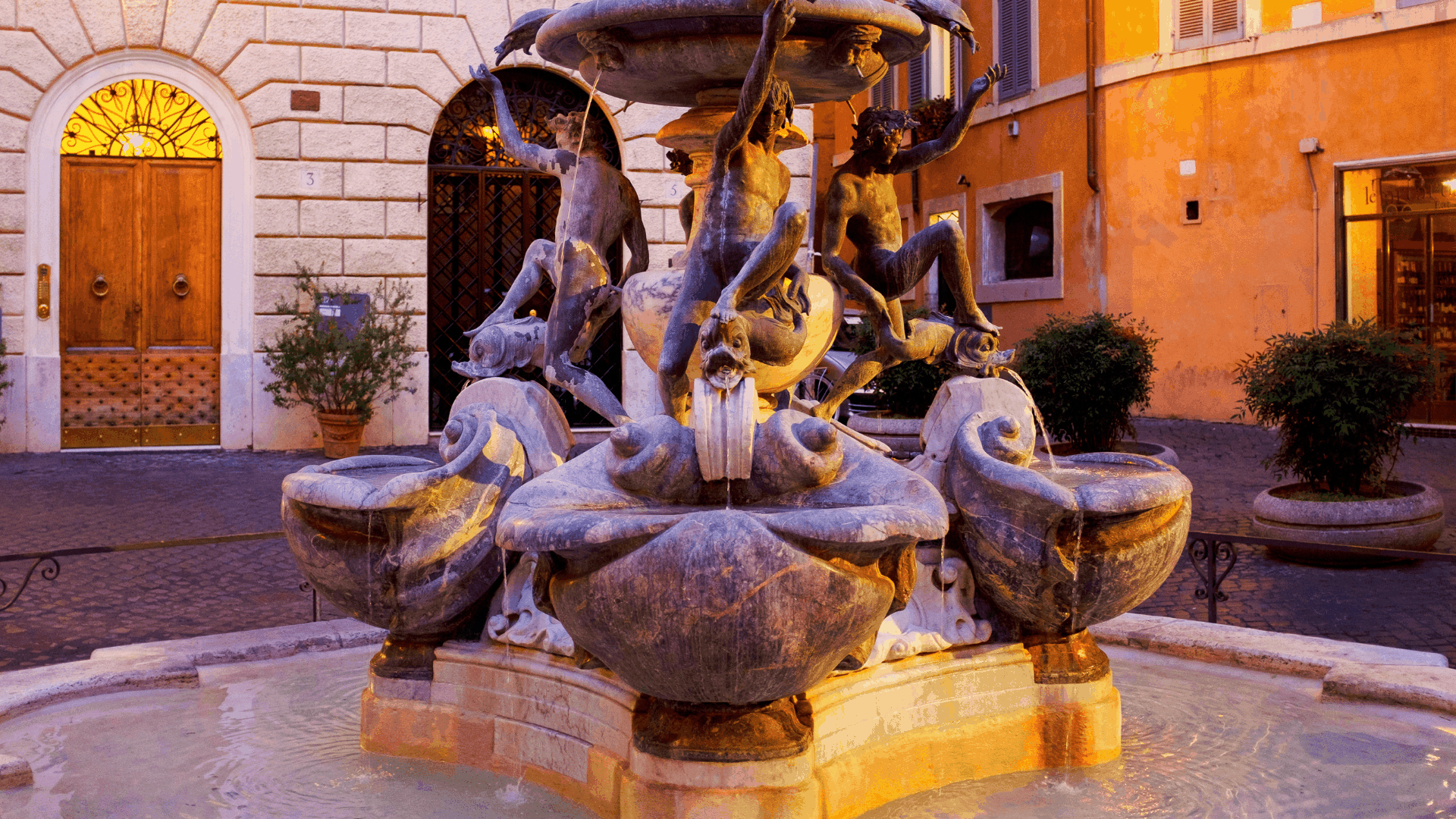
Fontana delle Tartarughe
Enchanting Renaissance turtle fountain in Jewish Ghetto
Explore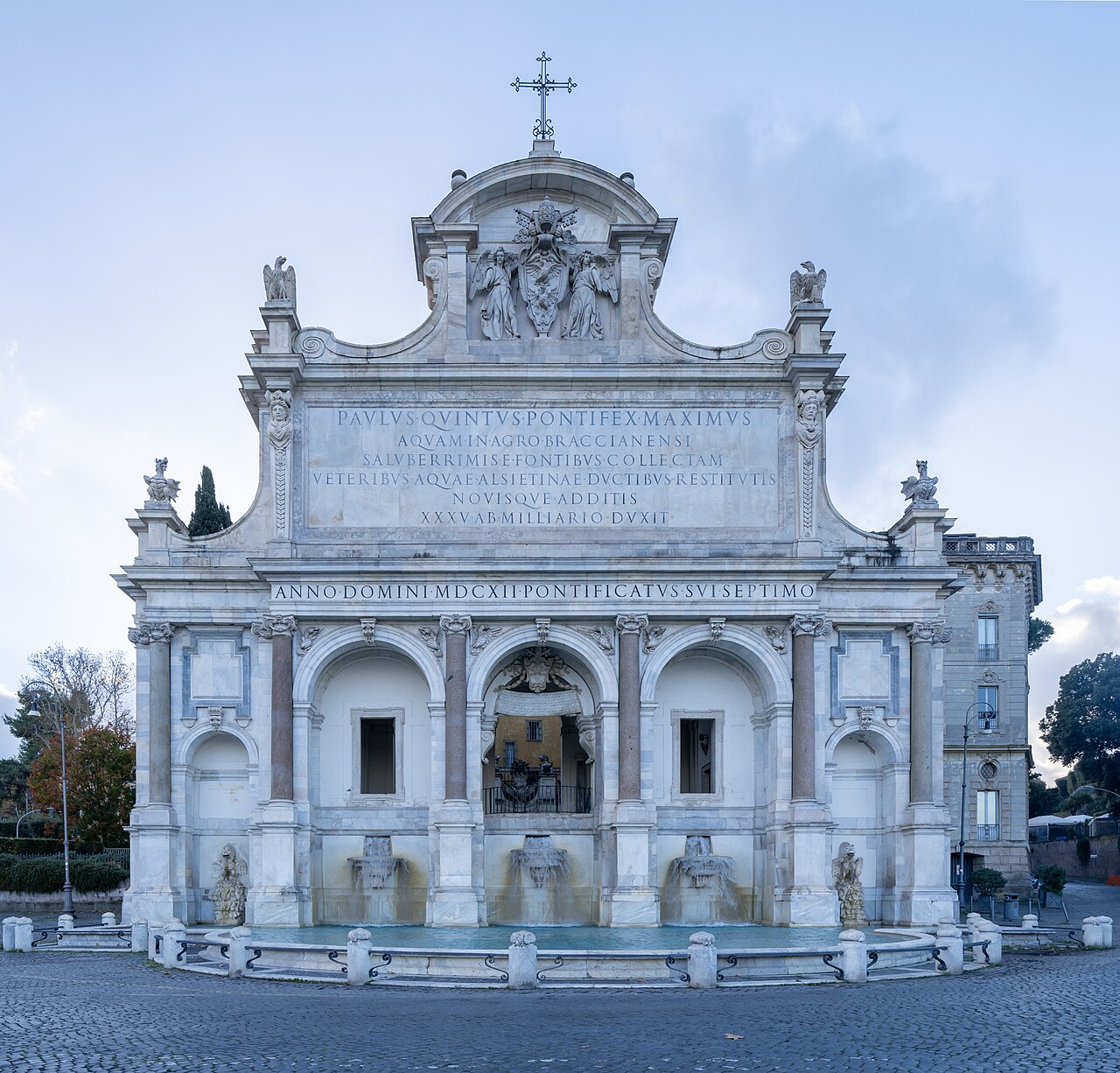
Fontana dell'Acqua Paola
The magnificent 'Fontanone' on Janiculum Hill
Explore
Piazza della Rotonda
Elegant square fronting the Pantheon
Explore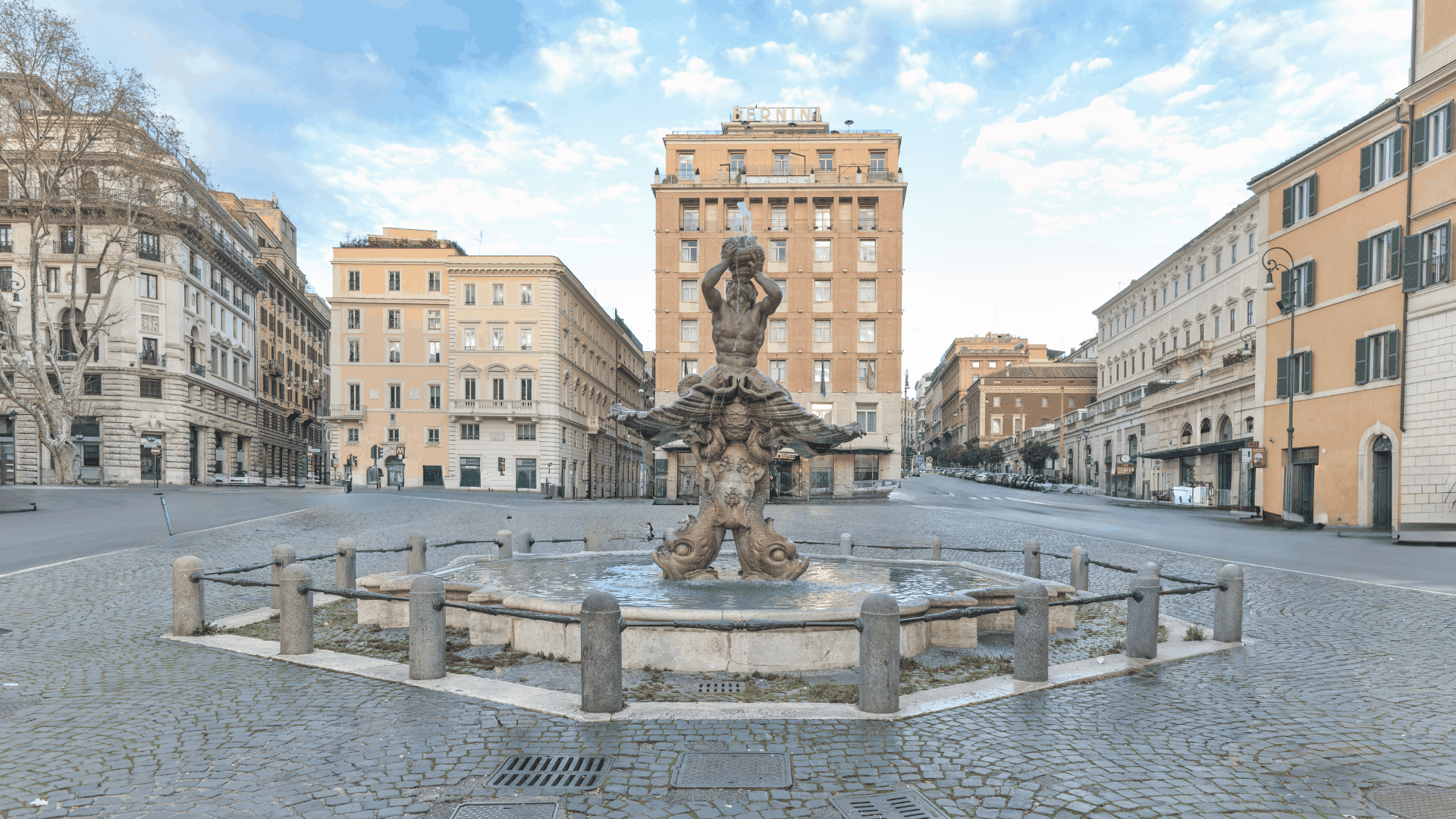
Piazza Barberini
Bernini's Triton Fountain—gateway to Via Veneto
Explore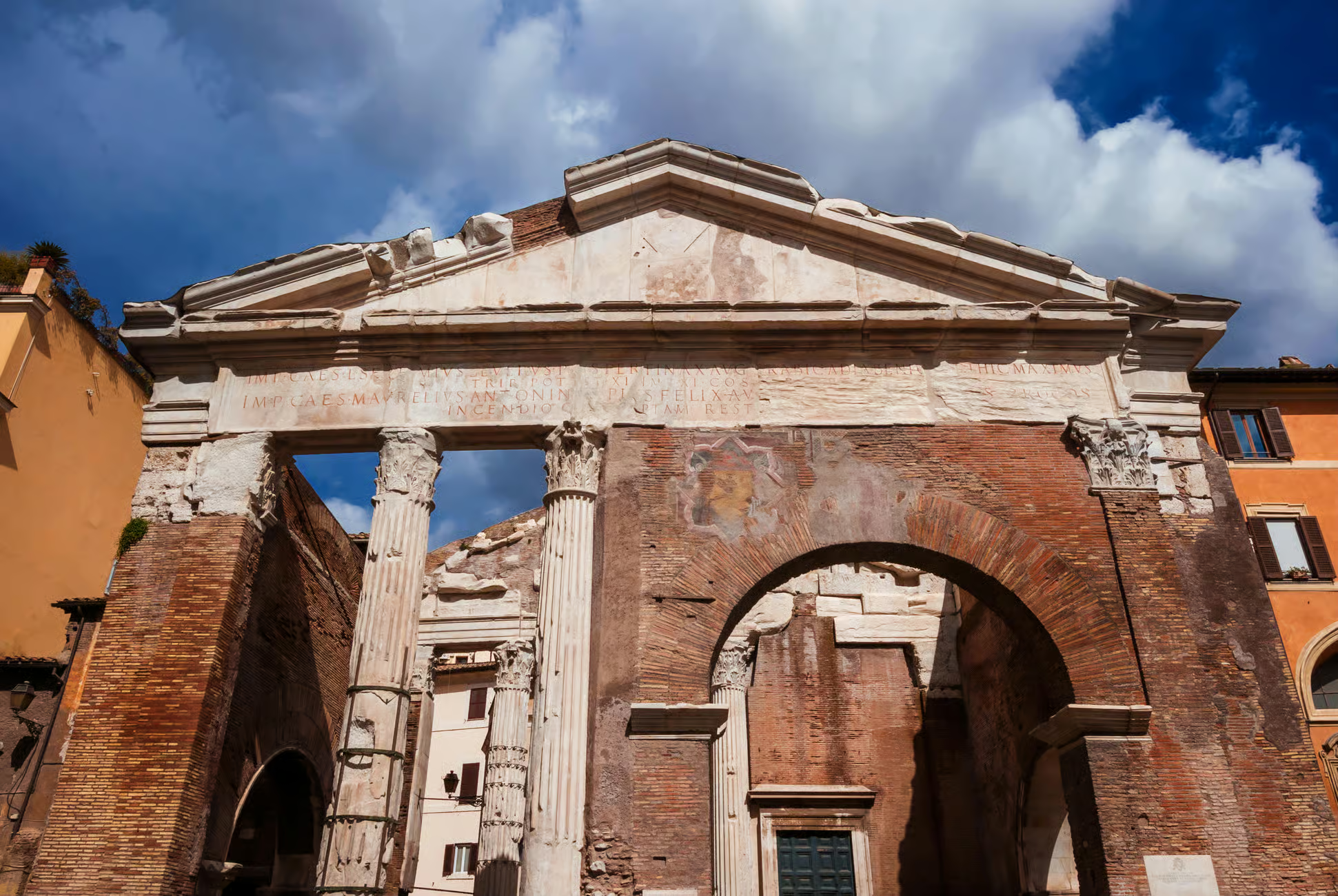
Jewish Ghetto
Historic Jewish quarter with unique cuisine and heritage
Explore
Pompeii Day Trip
Roman city preserved by Vesuvius; personalised tickets and a 20,000-visitor daily limit — book ahead
ExploreQuick Planning Guide
⏱️ Time Needed
15-20 minutes
💰 Cost
Free
🎫 Reservation
Not needed
♿ Accessibility
Street-level, accessible
📅 Best Time
Early morning
👨👩👧👦 Family Friendly
Yes
Nearby Attractions
San Carlo alle Quattro Fontaneadjacent
Palazzo Barberini2-minute walk
Quirinal Palace5-minute walk
Trevi Fountain10-minute walk
Featured In These Itineraries
Hidden Gems RomeFree Rome ItinerarySanta Maria MaggioreEssential Tips
- ✓ View the three obelisks from the pavement corners
- ✓ Visit San Carlino church next door
- ✓ Busy intersection—watch traffic
- ✓ Photos often best in early morning