The Arch of Constantine is the easiest sight immediately beside the Colosseum; Colle Oppio, San Clemente and Celio offer nearby alternatives. Choose one according to your interests, and check your ticket before paying separately for the Roman Forum and Palatine Hill.
Want a connected plan rather than one nearby stop? Follow our half-day itinerary around the Colosseum, which includes farther highlights.
Which nearby sight should you choose afterward?
After a long Colosseum visit, another major attraction is not automatically the best choice. Pick the Arch of Constantine for the simplest outdoor stop, Colle Oppio for a change of setting, or San Clemente if you are curious about the layers beneath modern Rome. These places answer different interests, not a checklist you must complete.
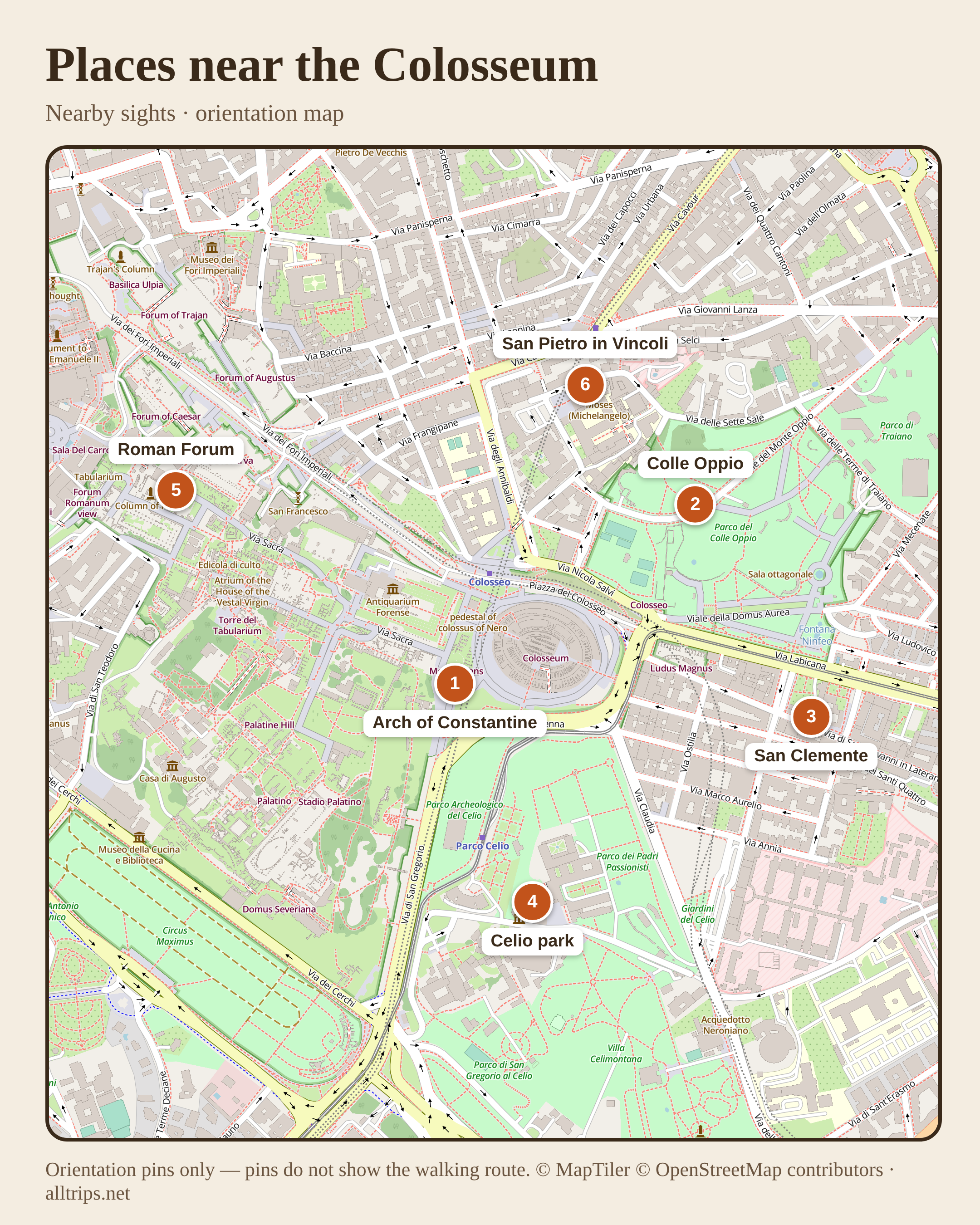
The six map pins below are nearby options grouped around the amphitheatre. They are not a timed walking route or a strict distance ranking: the best approach depends on your exit, crossings and current access. Campidoglio and Monti belong in the wider around-the-Colosseum half-day plan rather than this close-sights shortlist.
1. Arch of Constantine: the easiest immediate stop
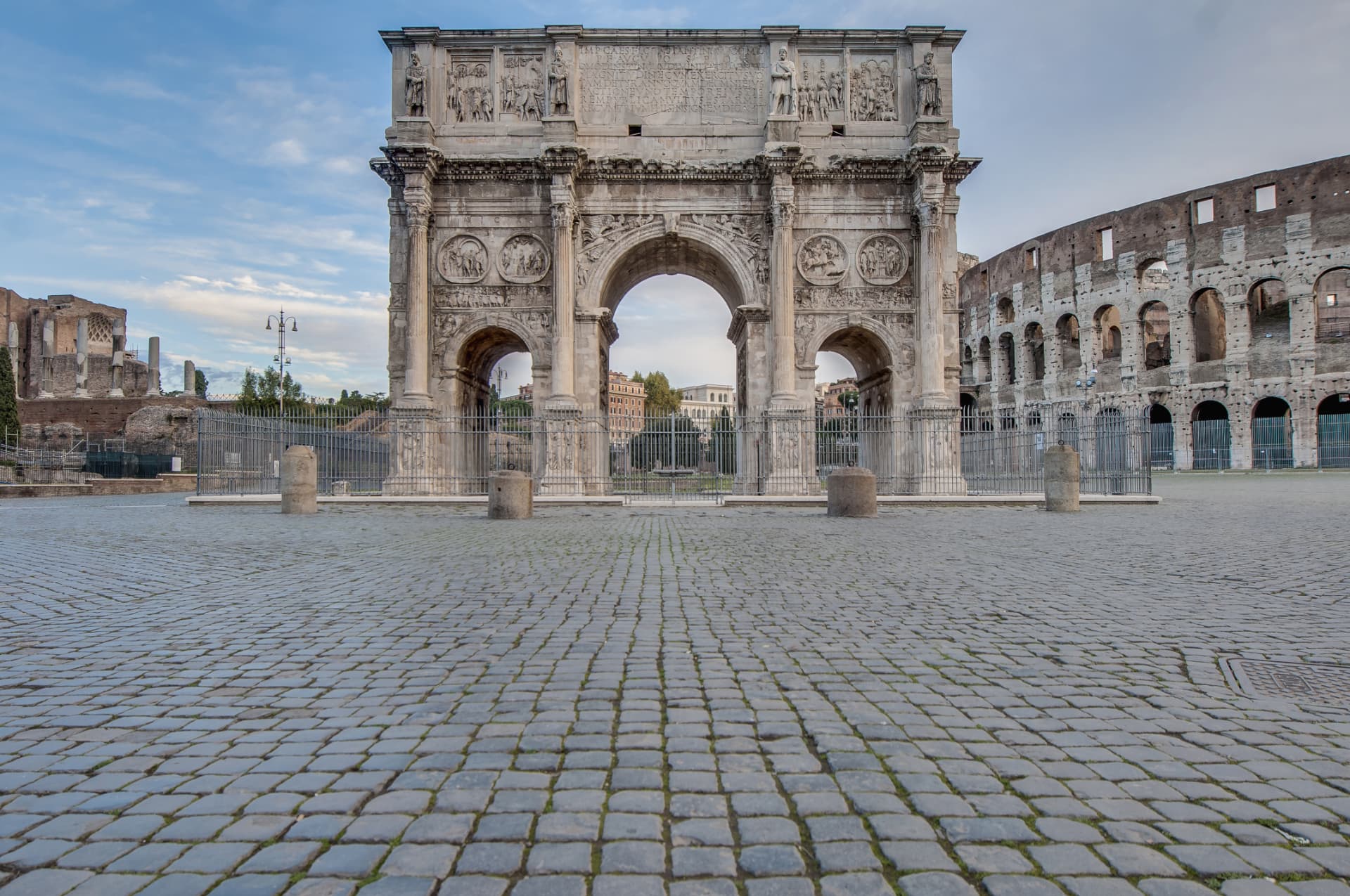
The arch stands beside the Colosseum and makes the most straightforward answer to “what can I see nearby?” Compare its central opening with the two smaller passages and notice how sculpted scenes cover the monument. Seeing the two landmarks together helps put the amphitheatre within the ceremonial landscape of ancient Rome.
You view the arch from surrounding public space; it does not have a standard interior sightseeing visit. No Colosseum ticket is needed just to look at it from outside. Stay behind barriers, and avoid blocking people moving through the busy area.
2. Colle Oppio: a different view of the Colosseum area
The Oppian Hill lies on the northeastern side of the Colosseum. Its park setting offers a change from the monument forecourt and a useful way to see how the amphitheatre sits below the surrounding streets and hills. Choose it for outdoor space rather than expecting a guaranteed empty viewpoint.
Use open public paths and check any posted park-access notices. The Domus Aurea is a separately managed archaeological visit beneath the hill, not something you enter automatically by arriving in the park. If that is your real interest, use our Domus Aurea guide and check its official booking arrangements.
Check Domus Aurea tour pricesAffiliate link — we may earn a commission.
3. San Clemente: layers of Rome in one place
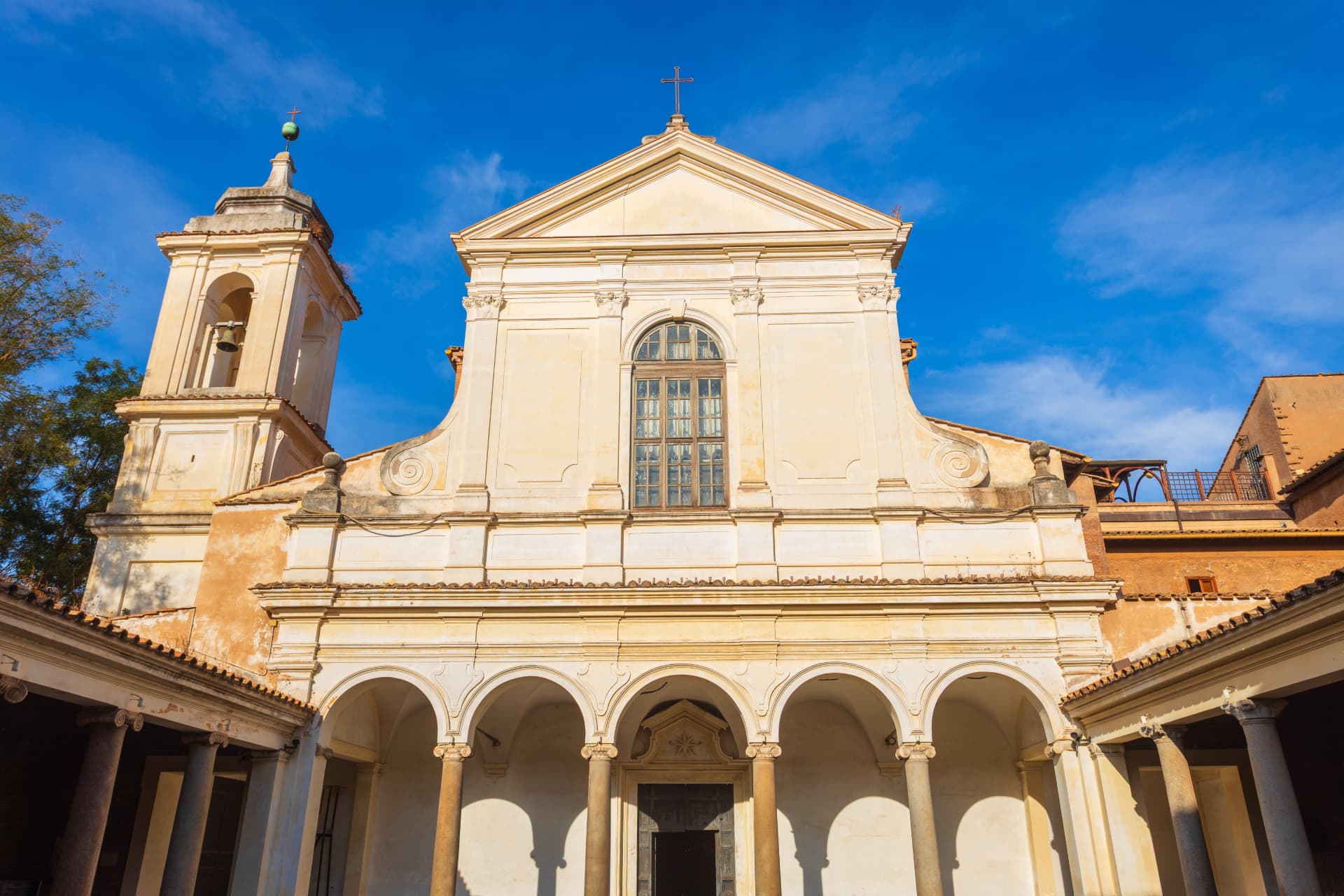
Basilica San Clemente is a strong choice when you want something more intimate after the Colosseum. The upper church, earlier basilica and Roman remains below reveal different periods of the city occupying the same site. The archaeology includes a Mithraic sanctuary, making this a genuinely different subject rather than more amphitheatre history.
The photo shows the church exterior, not the excavations. Treat the lower-level visit as a separate admission decision: it is not included simply because you have a Colosseum ticket. Check the basilica’s current visitor information before going, and respect religious services and restrictions on access.
Check San Clemente excavation ticketsAffiliate link — we may earn a commission.
4. Celio Hill: a quieter archaeological alternative
South of the amphitheatre, Celio offers green spaces, archaeological remains and a different perspective on the surrounding hills. The Celio archaeological park is a useful option for visitors who prefer a smaller-scale setting over immediately joining another major monument queue.
Do not treat every site on the hill as one attraction. Park access, the Museo della Forma Urbis and the Case Romane del Celio have distinct arrangements. Check the official park information and the particular venue you want; a map pin is not a guarantee that all interiors are open or included.
Check Case Romane del Celio ticketsAffiliate link — we may earn a commission.
5. Roman Forum and Palatine: check what you already bought
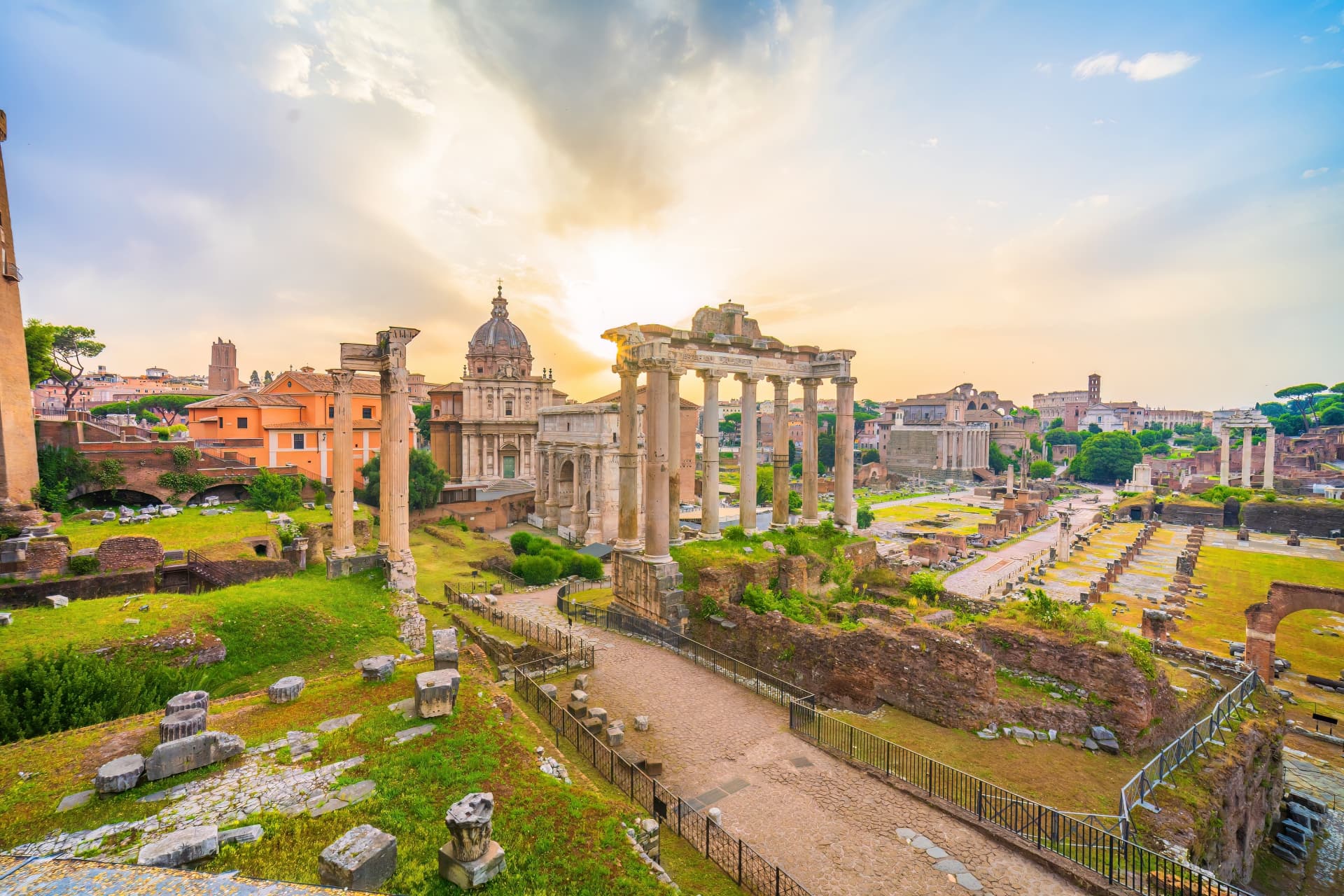
If your chosen product includes the Roman Forum and Palatine Hill, use those inclusions before buying another ticket. But do not assume every Colosseum product includes the same areas, validity period or number of admissions: read the actual product description and your booking confirmation.
Entering the archaeological park is a substantial visit, not a quick nearby photo stop. The Forum is rewarding for civic and religious remains; the Palatine adds palace ruins and elevated perspectives. If you only want an exterior view, public viewpoints are a different experience from walking among the ruins.
Check Roman Forum and Palatine ticket pricesAffiliate link — we may earn a commission.
6. San Pietro in Vincoli: a focused art stop
San Pietro in Vincoli is best chosen for Michelangelo’s Moses, part of the monument to Pope Julius II. It gives an art-focused reason to leave the Colosseum area rather than simply adding another church to a list.
It is farther uphill than the arch and may be less appealing if you want the shortest possible outing. Religious use and visitor access take priority over your plan; check current information and be prepared to substitute an outdoor stop if you arrive during restricted access.
Map of nearby places: choose one, not a compulsory route
Numbers match the six chapters. These pins identify the sights, not ticket gates, step-free entrances or a prescribed walking route. Check each venue’s access information separately.
PNG · 2160 × 2700 pixels
Which nearby visits need their own admission?
The Arch of Constantine exterior and public viewpoints are not paid interior visits. Colosseum products, San Clemente excavations, Domus Aurea and other museums each have their own inclusions and access rules.
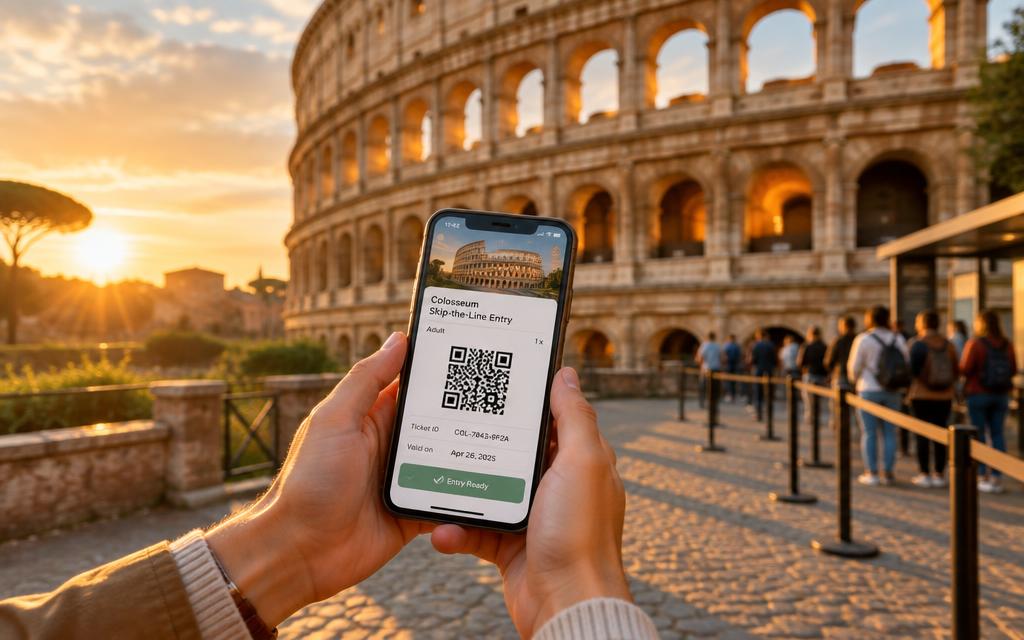
Start with the official Colosseum ticket catalogue. Compare any partner listing against the exact areas you want, its entry slot, meeting point and cancellation terms. Partner stock is not guaranteed when official tickets are sold out, and “skip the line” does not remove security checks.
 Tiqets
Skip-the-line and last-minute tickets — ideal when official slots are gone for today or tomorrow.
Check prices Klook
Guided tours and sold-out dates — bundle the ticket with a live guide and skip the planning.
Check prices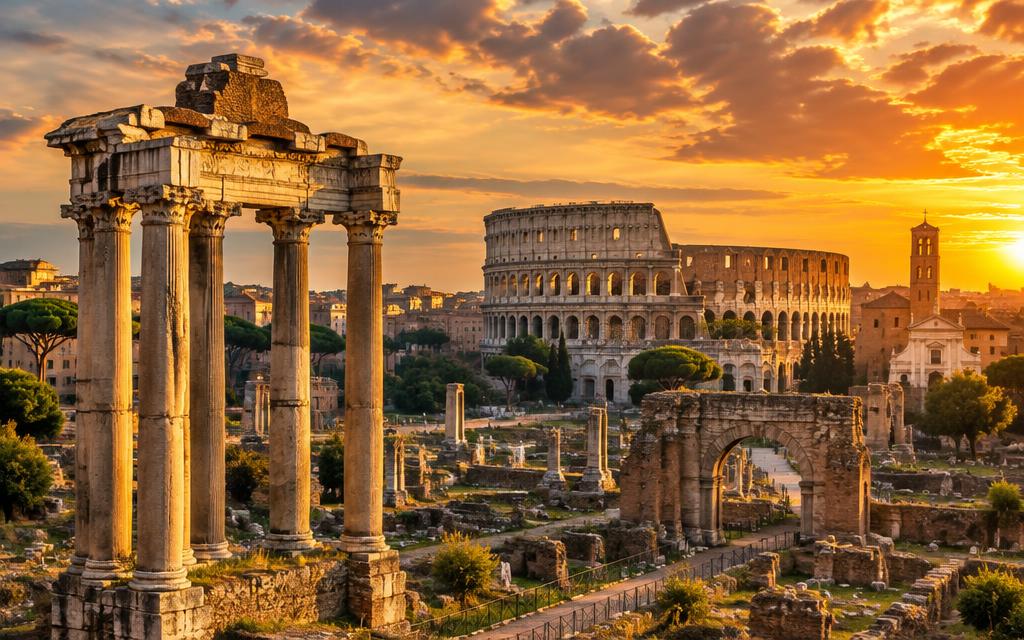 Trip.com
Compare bundles and combo tickets — Colosseum plus Forum, Vatican or hop-on buses in one booking.
Check pricesAffiliate links: we may earn a commission at no extra cost to you. Check each listing's cancellation terms before paying.
Frequently asked questions
What is the closest sight to the Colosseum?
The Arch of Constantine stands immediately beside the Colosseum. It is an outdoor monument viewed from the surrounding public space, not an interior attraction included in a ticket.
Can I see nearby sights without a Colosseum ticket?
Yes. The Colosseum exterior, Arch of Constantine and street-level archaeological viewpoints can be viewed without entering the paid archaeological area. Parks and churches have their own access arrangements.
Does my Colosseum ticket cover every nearby attraction?
No. Some products combine the Colosseum with the Roman Forum and Palatine Hill, but inclusions and validity depend on the product. San Clemente excavations, Domus Aurea and the Capitoline Museums are separate visits.
Official sources and further reading
Access and ticket distinctions reviewed against official visitor sources on 19 October 2026. Opening arrangements can change; use the links below for your visit date.
- Colosseum Archaeological Park: tickets
- Turismo Roma: Basilica San Clemente
- Turismo Roma: San Pietro in Vincoli
- Turismo Roma: Celio archaeological park
- Turismo Roma: Campidoglio and Piazza Venezia
- Turismo Roma: Monti
Explore the Ancient Rome attractions map for a wider overview, or continue with our Colosseum-to-Trevi route if you want a different destination.