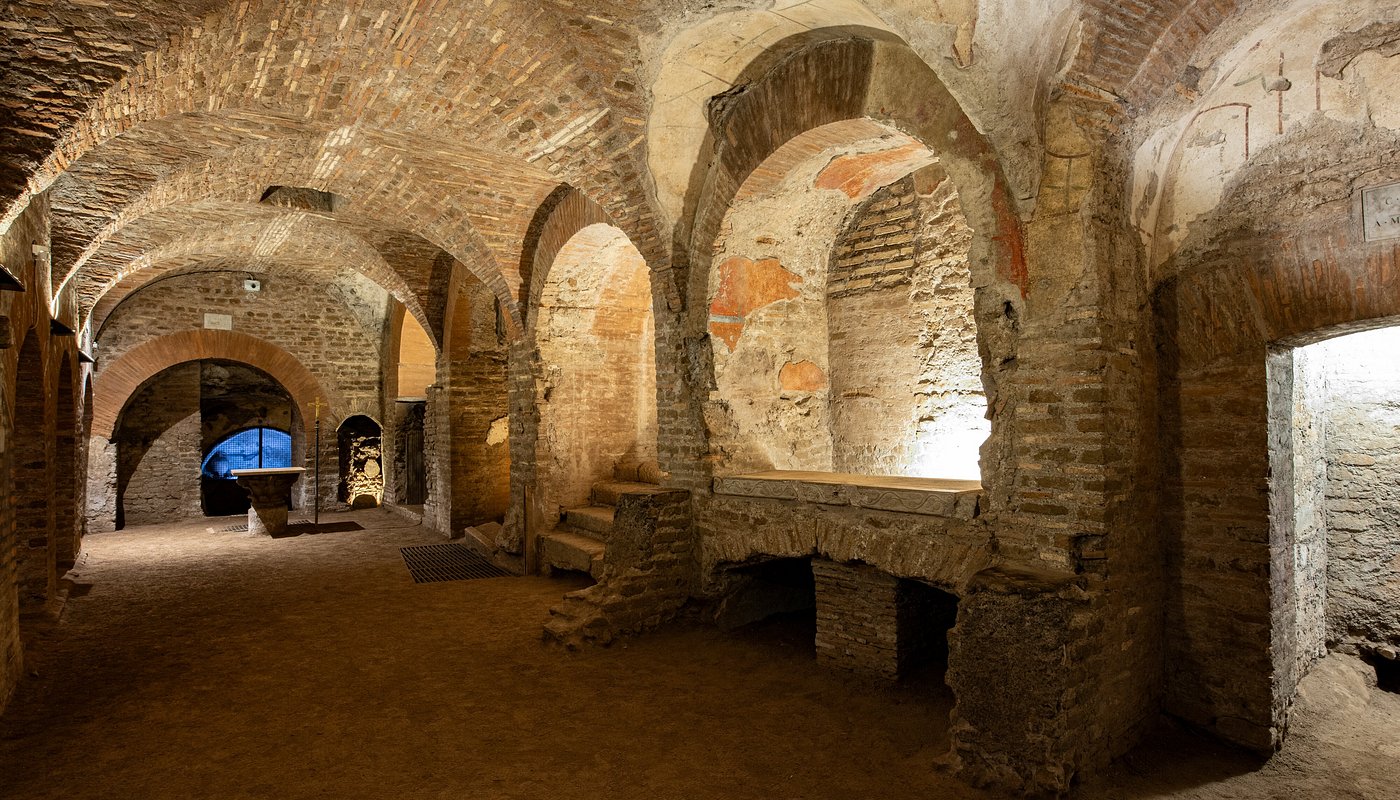
 Queen of the Catacombs — Underground Rome
Catacombs of Priscilla
Home to one of the earliest surviving images of the Virgin Mary — 13 km of early Christian tunnels on Via Salaria.
45-min tour€10 entrySacred siteOne of the earliest Madonna imagesVia Salaria 430, 00199 Roma RMOpen on MapPlan Your Visit
Compare tickets, tours and stays — booking ahead usually gives more choice
Get TicketsBook a TourHotels NearbyThe Catacombs of Priscilla — nicknamed Regina Catacumbarum, the Queen of the Catacombs — are an extraordinary early Christian burial complex on Rome's Via Salaria, in use from the 2nd to the 5th century AD. Beneath a quiet north-Rome convent garden, 13 kilometres of multi-level tunnels carved into the soft tufa rock contain more than 40,000 burials, the tombs of seven early popes, and some of the most important early Christian art ever discovered — including one of the earliest surviving images generally identified as the Virgin and Child, usually dated to the third century, painted around 230–240 AD on the wall of the Cubiculum of the Velatio. Combined with the famous Greek Chapel frescoes (the earliest known Adoration of the Magi) and the enigmatic Velatio cycle of a young woman in three life stages, the site is widely considered the single most artistically important catacomb in Rome. €10 entry includes a mandatory guided tour (approximately 45 minutes); all visitors must book in advance. Tuesday–Sunday 09:30–13:00 and 14:00–17:00 (last tours 12:00 and 16:00); closed Mondays and also closed 17–31 August 2026. Operated by the Benedictine sisters of Priscilla.
Why visit the Catacombs of Priscilla?
Priscilla is the most artistically important catacomb in Rome — and one of the quietest. While coach tours fill the larger Appian Way catacombs, Priscilla on the opposite side of the city remains an intimate site managed by a small community of Benedictine sisters, with the highest-quality early Christian frescoes anywhere in the world. If you visit only one catacomb in Rome, this is the one.
- One of the earliest images of the Madonna: a small fresco painted around 230–240 AD in the Cubiculum of the Velatio — the earliest known image of the Virgin Mary, predating standardised Marian iconography by 200 years.
- The Greek Chapel: the finest cycle of early Christian frescoes in existence — the earliest known Adoration of the Magi (the foundation of all Christmas art), Daniel among the lions, Susanna, the Three Hebrew Youths and a Eucharistic banquet scene.
- The Velatio fresco: a haunting early-3rd-century cycle of a young woman in three life stages — orant, bride and mother — and one of the earliest depictions of a woman as a teacher in Christian art.
- Seven popes buried here: Marcellinus, Marcellus, Liberius, Siricius, Celestine I, Vigilius and Silverius — making Priscilla a foundational pilgrimage site for the early papacy.
- Quiet and atmospheric: a fraction of the visitors of the Appian Way catacombs, with a small community of Benedictine sisters managing the site and a deeply reverent atmosphere underground.
Quick facts
Period
2nd–5th century AD
Length
13 km, multi-level
Burials
40,000+
Popes buried
7 (incl. Marcellus)
Entry 2026
€10 (€5 children)
Tour length
~45 minutes
Open
Tue–Sun (closed Mon)
Location
Via Salaria 430
Table of Contents
Jump to any section of the itinerary
A brief history
The Catacombs of Priscilla begin in the late 1st century AD as a private burial ground belonging to the Acilii Glabriones, one of the earliest Roman senatorial families to convert to Christianity. The site is named after a noblewoman of the family, Priscilla — possibly the wife of Manius Acilius Glabrio, a consul executed under Domitian in 95 AD on charges that included Christianity (the earliest documented persecution of a Roman senator for the faith).
In the 2nd century the burial ground expanded into a communal site for the growing Christian community of Rome, with galleries cut into the soft tufa rock on multiple levels. By the 3rd century the catacombs had become one of the largest Christian cemeteries in the city — with the Greek Chapel decorated with the finest cycle of early Christian frescoes anywhere in the world, including the earliest known Adoration of the Magi. Around 230–240 AD an unknown artist painted the small fresco of the Virgin Mary holding the infant Jesus on the wall of the Cubiculum of the Velatio — one of the earliest surviving images generally identified as the Virgin and Child, usually dated to the third century.
Through the 3rd and 4th centuries Priscilla became a major pilgrimage destination as the tombs of martyrs and popes accumulated. Seven popes were buried here — Marcellinus, Marcellus, Liberius, Siricius, Celestine I, Vigilius and Silverius — earning Priscilla its nickname Regina Catacumbarum (Queen of the Catacombs). After Constantine legalised Christianity in 313 AD burials continued, but as the centuries passed and Rome declined, churchyard burial became standard and the catacombs were gradually abandoned in the 5th century.
In the 8th and 9th centuries the popes systematically transferred the relics of the martyrs to the basilicas of central Rome to protect them from raiders, and the entrances to the catacombs were sealed. They were forgotten for nearly a millennium until 1578, when workers digging on Via Salaria accidentally broke through into the galleries and sparked a wave of 'sacred archaeology' across Rome. Antonio Bosio, the 'Columbus of the catacombs', systematically explored Priscilla in the early 17th century; his monumental Roma Sotterranea (published posthumously 1632–1635) coined the nickname Regina Catacumbarum and founded the modern study of early Christian archaeology.
In 1852 Pope Pius IX established the Pontificia Commissione di Archeologia Sacra to oversee the catacombs, and Giovanni Battista de Rossi began the first scientific excavations at Priscilla. The site has been continuously studied ever since. A decade-long Vatican-funded restoration completed in 2013 reopened the Greek Chapel with updated lighting and new walkways. Day-to-day operation has been entrusted since the early 20th century to the Benedictine sisters of Priscilla, a contemplative monastic community founded specifically to care for the site.
The Catacombs of Priscilla through the centuries
Late 1st c. ADAcilia family burial ground
The Acilii Glabriones, one of the earliest Roman senatorial families to convert to Christianity, establish a private burial ground on land donated by a noblewoman named Priscilla — the namesake of the catacombs.
2nd century ADChristian community burials begin
As the Christian community in Rome grows, the catacombs expand into a communal burial site. Galleries are carved into the soft tufa rock on multiple levels.
c. 230–240 ADAn early image of the Madonna is painted
An unknown artist paints a seated woman with a child on the wall of the Cubiculum of the Velatio — one of the earliest surviving images generally identified as the Virgin and Child, usually dated to the third century.
3rd century ADGreek Chapel frescoes
The Cappella Greca is decorated with the finest early Christian frescoes in Rome — the Adoration of the Magi (one of the earliest in Christian art), Daniel among the lions, Susanna, the Three Hebrew Youths and the Velatio cycle.
3rd–4th c. ADSeven popes buried here
Popes Marcellinus, Marcellus, Liberius, Siricius, Celestine I, Vigilius and Silverius are buried at Priscilla. The site becomes a major pilgrimage destination as martyrs' tombs gain veneration.
313 ADEdict of Milan
Constantine legalises Christianity. Catacomb burials continue but Christians can now also build above-ground basilicas and bury their dead in churchyards.
5th century ADBurials cease
As Rome declines and burial practices change in favour of churchyard interment, catacomb burials cease. The entrances are gradually forgotten.
8th–9th c.Relics translated
Popes systematically transfer the relics of martyrs from the catacombs to the basilicas of central Rome to protect them from raiders. The catacombs are sealed and forgotten for centuries.
1578Accidental rediscovery
Workers digging on Via Salaria accidentally break through into the catacombs, sparking a wave of 'sacred archaeology' across Rome.
1593–1635Antonio Bosio's Roma Sotterranea
Antonio Bosio, the 'Columbus of the catacombs', systematically explores Priscilla and other Roman catacombs. His monumental Roma Sotterranea (published posthumously, 1632–1635) coins the nickname Regina Catacumbarum and founds the modern study of early Christian archaeology.
1852Pontifical Commission founded
Pius IX establishes the Pontificia Commissione di Archeologia Sacra to oversee the scientific study and conservation of the catacombs. Giovanni Battista de Rossi, the founder of modern Christian archaeology, begins systematic excavation at Priscilla.
2013Restoration & opening of new areas
After a decade-long restoration funded by the Vatican, several previously closed areas — including the Greek Chapel — reopen to the public with climate-controlled lighting and new walkways.
2013Restoration of the Greek Chapel
A decade-long Vatican-funded restoration reopens the Greek Chapel with updated lighting and new walkways.
What to see at the Catacombs of Priscilla
The Oldest Madonna
- World's earliest known painting of the Virgin Mary, c. 230–240 AD, in the Cubiculum of the Velatio.
- Mary seated, holding the infant Jesus on her lap, with a male prophet figure (Balaam or Isaiah) pointing to a star.
- Predates the Council of Ephesus (431 AD) by 200 years — before Marian iconography was standardised.
- The single most important reason scholars and Christian pilgrims visit Priscilla.
Greek Chapel Frescoes
- Adoration of the Magi — one of the earliest Christmas depictions in Christian art (3rd century AD).
- Old Testament cycle: Moses striking the rock, Daniel among the lions, Susanna and the Elders, the Three Hebrew Youths in the furnace.
- A communal banquet scene representing the Eucharistic agape (love feast).
- Red stucco decorative frames in the Pompeian Fourth Style — combining Roman pagan technique with Christian content.
The Velatio Fresco
- A young woman shown in three life stages — orant praying, bride being veiled, mother teaching her child.
- Possibly the earliest depiction of a Christian veiling ceremony, or a portrait of a deceased Christian woman in her three social roles.
- One of the earliest images in Christian art of a woman as a teacher.
- Subject of intense scholarly debate for over a century — the modern interpretation has shifted significantly since 1990.
Early Christian Symbols
- The fish (ichthys) — secret symbol of Christ used during persecution; the Greek letters spell out 'Jesus Christ, Son of God, Saviour'.
- The anchor — symbol of hope and Christian salvation, often combined with the fish.
- The Chi-Rho monogram of Christ's name — later adopted by Constantine after the Battle of the Milvian Bridge (312 AD).
- Peacocks symbolising resurrection and eternal life — a motif borrowed from Roman pagan funerary art and reinterpreted.
One of the earliest images of the Madonna — the fresco of c. 230–240 AD
On the wall of the Cubiculum of the Velatio, in a small underground burial chamber some 10 metres below the modern street level of Via Salaria, an unknown 3rd-century Roman painter created what would become the most studied small fresco in the history of Christian art. Mary sits, holding the infant Jesus on her lap; beside her stands a male figure — almost certainly the prophet Balaam (Numbers 24:17, "a star will come out of Jacob") or Isaiah — pointing upward to a star above the Virgin's head.
The fresco is dated stylistically and archaeologically to c. 230–240 AD — making it the oldest known image of the Madonna and Child in any medium, by a margin of more than a century. It predates the formal definition of Mary as Theotokos ('Mother of God') at the Council of Ephesus in 431 AD by two hundred years, and it predates the standard Byzantine Marian iconography by nearly three centuries. It is the visual evidence that Marian devotion was already established in the Roman Christian community in the early 3rd century — long before it was formally codified by the Church.
Stylistically the fresco belongs squarely to late Roman wall painting — Mary's pose, drapery and the seated frontal composition are descended directly from Roman matronly portraits. There is nothing yet of the gold backgrounds or hieratic stylisation of later Byzantine Marian art. The painter was almost certainly a working Roman fresco artist who had been hired to decorate a Christian tomb chamber and applied the same techniques he would have used for a pagan portrait — but with a new subject. The result is intimate, naturalistic, and deeply moving precisely because it has not yet become an icon.
The fresco has been delicately conserved and is viewed today by torchlight as part of the standard guided tour. It is small — perhaps 50 cm across — and easily missed if you are not looking. The guide will pause and direct your eye to it. Take a moment. You are looking at one of the earliest surviving images of one of the most painted subjects in the history of art.
The Greek Chapel — the finest early Christian frescoes
The Cappella Greca is a small 3rd-century funerary chamber, carved out as a triple-arched cubiculum with stone benches around the walls — almost certainly used both as a burial chamber and as a place where the Christian community gathered for the funerary refrigerium (commemorative meal). It takes its name from two Greek inscriptions on its walls. The decorative programme is the single finest cycle of early Christian frescoes in existence and arguably the foundational document of all later Christian iconography.
The Old Testament scenes painted here — Moses striking the rock (the source of the saving water of baptism), Daniel among the lions (deliverance from death), Susanna and the Elders (innocence vindicated), and the Three Hebrew Youths in the furnace (faith preserved in fire) — are the standard typological 'rescue scenes' that early Christians used to express the hope of salvation. They appear in catacombs across the Roman Empire, but rarely with the artistic quality found here.
The most historically important scene in the chamber is the Adoration of the Magi — three figures in Persian costume bringing gifts to the Virgin and Child. It is one of the earliest known depictions of the Adoration in Christian art and the direct ancestor of every Adoration scene painted afterwards: by Giotto, Botticelli, Leonardo, Dürer, Caravaggio. The composition with three figures (rather than two or four) was not yet fixed by scripture in the 3rd century — Matthew's Gospel specifies neither the number nor the names of the Magi. The Greek Chapel is one of the visual sources from which the standard 'three kings' iconography emerged.
The decorative scheme uses red stucco frames in the Pompeian Fourth Style — combining traditional Roman pagan wall-painting technique with the new Christian content. The chamber was reopened to the public in 2013 after a decade-long restoration with new climate-controlled lighting and walkways. It is the highlight of the standard tour route.
The Velatio fresco — a woman in three life stages
The Cubiculum of the Velatio takes its name from the central scene on its rear wall — a young woman being veiled (Latin velare, 'to veil'). She appears three times in the chamber's painted programme: in the centre, as an orant with arms raised in prayer; on the right, as a bride being veiled by an older man; on the left, as a mother teaching her child, seated, with a scroll on her lap. The cycle is dated to the early 3rd century AD and is one of the most enigmatic surviving images of early Christian Rome.
Traditionally the cycle was interpreted as the earliest depiction of a Christian wedding — the velatio nuptialis, the veiling of a bride. More recent scholarship reads the three scenes instead as a single portrait of the deceased woman buried in the cubiculum, shown in her three social roles: as a member of the Christian community in prayer, as a wife, and as a mother. The reading shifted decisively in the 1990s with the work of art historian Janet Tulloch, who pointed out that the 'mother teaching her child' scene shows the woman in a posture that in 3rd-century Roman visual language is reserved for teachers and rhetors — making the Velatio cycle one of the earliest depictions of a woman as a teacher in Christian art.
The interpretation has implications for the role of women in the early Roman church — a topic of intense scholarly debate since the 1990s. The Velatio cubiculum has been variously read as evidence of women deacons, women catechists, or simply of the prominence of women in the patrician Christian families that founded the catacombs. The most cautious reading is that the cycle commemorates a single Christian woman of the Acilia family who was both teacher and mother — but the broader implications about women's leadership in the early church remain open.
The fresco is also where the oldest known image of the Virgin Mary (above) is painted, on a side wall — possibly because the deceased woman had a particular Marian devotion, or because the cubiculum was a small focal point of early Marian veneration in 3rd-century Rome. The two frescoes together make this single small chamber one of the most important rooms in the entire history of Christian art.
Catacombs of Priscilla vs other Roman catacombs
| Feature | Priscilla | San Callisto | Domitilla |
|---|---|---|---|
| Location | Via Salaria (north Rome) | Appian Way (south Rome) | Appian Way area (south Rome) |
| Era | 2nd–5th century AD (oldest) | 2nd–5th century AD | 1st–5th century AD |
| Size | 13 km, multi-level | 20 km, four levels | 17 km, four levels |
| Entry 2026 | €10 (€5 children) | €10 (€7 reduced) | €10 (€7 reduced) |
| Famous for | One of the earliest surviving images generally identified as the Virgin and Child, Greek Chapel, 7 popes | Crypt of the Popes, St Cecilia | Largest catacomb, original 4th-c. basilica |
| Crowds | Quiet, no coach groups | Busy with coach tours | Moderate |
| Open days | Tue–Sun (closed Mon) | Thu–Tue (closed Wed) | Wed–Mon (closed Tue) |
| Best for | Art history, oldest fresco art | Papal history, large-scale catacomb | Archaeology, longest galleries |
Verdict: if you only do one catacomb in Rome, do Priscilla — the artistic quality and the quiet atmosphere are unmatched. If you do two, add San Callisto on the Appian Way for the Crypt of the Popes and the larger-scale catacomb experience. Domitilla is the largest catacomb and includes the only original 4th-century basilica built directly over a martyr's tomb — the third choice if you are deeply interested in early Christian archaeology.
Best time to visit
Time of day
09:00 first tour (best)
The lowest humidity, smallest group, most attentive guide. Book the English-language 09:00 Tuesday or Wednesday slot to walk straight in.
14:00 reopening after lunch
Excellent backup. The morning groups are gone; afternoon visitors arrive gradually.
15:30–16:30 last tours
Quieter, but the fresco-viewing light from the climate lamps is at its dimmest after a full day of cycles.
Best days & seasons
February–April, October–November (best)
Mild weather above ground, no school groups, easy walk-up booking.
Tuesday–Thursday
By far the quietest days. Avoid Saturdays and Sundays in high season unless you book ahead.
July–August
The 35°C–14°C contrast makes the underground a welcome refuge — but bring a light layer; the chill is sharp.
January (closed)
The site closes for the entire month for major conservation. Check catacombepriscilla.com before any winter visit.
Getting there
Metro Line B1 — Sant'Agnese / Annibaliano (best)
Take Metro Line B1 to Sant'Agnese-Annibaliano, then a 12-minute walk west along Via Nemorense to Via Salaria. Alternatively Bologna (Line B), 15 minutes' walk. The catacombs are at Via Salaria 430.
Bus from the centre
Buses 63 and 92 from Termini, bus 310 from Piazza Venezia, bus 86 from the Vatican area — all stop on Via Salaria within 100m of the entrance. Allow 25–30 minutes from Termini in normal traffic.
Walking
From the historic centre Priscilla is too far to walk (4 km). From the Borghese Gallery / Villa Borghese it is a pleasant 30-minute walk through Trieste — the best on-foot approach if you have already spent the morning at the Galleria.
Taxi & rideshare
From the centre allow 15–20 minutes by taxi (€15–18 from Termini, €20–25 from the Vatican). The entrance is on Via Salaria 430 with a small sign — ask for "Catacombe di Priscilla" or "Monastero delle Benedettine di Priscilla".
Common mistakes to avoid
Visiting on a Monday
The catacombs are closed all day Monday for conservation. The Appian Way catacombs (San Callisto, San Sebastiano, Domitilla) also have rotating closure days — check before planning a 'catacombs day' so you don't arrive at a closed gate.
Trying to take photos
Photography and video are strictly forbidden inside, including phone photos, to protect the fragile frescoes from flash and humidity. The rule is firmly enforced. Buy the official guidebook in the bookshop and use the high-quality images on catacombepriscilla.com.
Booking the wrong language slot
Tours run in five languages but the schedule shifts daily. If you only speak English, check the next English-language slot before paying — sometimes there is a 30–40 minute wait. Booking online ahead lets you pick a confirmed language and time.
Wearing inappropriate clothing
14–16°C / 57–61°F year-round with high humidity. Bring a light jacket even in August. Closed sturdy shoes are essential — the floor is uneven tufa rock and slightly damp. Avoid heels and open sandals.
Visiting 17–31 August
The site is closed 17–31 August 2026. Confirm dates on catacombepriscilla.com before planning a visit in that window, and consider San Sebastiano or Domitilla as alternatives.
Combining only with Colosseum
Priscilla is in north Rome on Via Salaria — a long way from the Forum and Colosseum in the south. Don't try to combine it with a Colosseum visit on the same morning. Combine instead with Villa Ada (next door), Quartiere Coppedè (20 min walk) or Sant'Agnese fuori le mura (15 min walk) for a logical north-Rome morning.
Insider tips from locals
Take the 09:00 first tour of the day
The first slot of the day has the lowest humidity, the smallest group and the most attentive guide. Book the English-language 09:00 Tuesday or Wednesday slot on catacombepriscilla.com to walk straight in past any walk-up queue.
Combine with Quartiere Coppedè & Sant'Agnese
After the catacombs, walk 20 minutes south to the Quartiere Coppedè — a fairy-tale 1920s Art Nouveau micro-neighbourhood almost no tourists know about. Then 15 minutes east to Sant'Agnese fuori le mura with the adjacent Mausoleum of Santa Costanza, whose 4th-century mosaics are among the finest in Rome.
Lunch at Trieste's neighbourhood trattorias
The Trieste-Salario neighbourhood is residential and almost completely free of tourists. Walk 10 minutes for honest Roman cooking at Trattoria Monti (Marche tradition, booking essential), or Pizzeria L'Elementare for excellent Roman pizza al taglio. Skip the cafés directly outside the catacombs.
Buy the official guidebook in the bookshop
Since photography is forbidden, the €10 official illustrated guidebook published by the Pontifical Commission for Sacred Archaeology is the only way to take the imagery home. Available in the on-site bookshop in English, Italian, French, German and Spanish.
Stay in the upper basilica afterwards
Above ground, the small Basilica of San Silvestro contains the surface chapel built over the catacombs and a small but excellent museum of finds. Most visitors miss it — give it 15 minutes after the underground tour for context.
Wear a light scarf for shoulders
The catacombs are an active sacred site managed by Benedictine sisters. The atmosphere is reverent and the dress code is enforced — no bare shoulders or short shorts (women or men). A light scarf to cover shoulders avoids any issue and is welcome in the cool underground.
Practical visitor tips
Book English Tours Ahead
Tours run at specific times in each language. Book online or arrive 15 minutes early to confirm an English-speaking group and avoid waiting for the next slot.
Dress Appropriately
Underground a constant 14–16°C — bring a light jacket. Wear sturdy closed shoes; the tufa floor is uneven. Modest dress (covered shoulders) is required at this sacred site.
Small Groups Best
Visit Tuesday–Thursday mornings for smaller groups. Weekend afternoons can have larger pilgrim groups that fill the narrow passages quickly.
Learn Before You Go
The tour covers a lot quickly. Reading about early Christian symbols, the early Madonna fresco and the Velatio fresco beforehand transforms what you see.
Where to Stay Near Catacombs of Priscilla
Looking for convenient accommodation near Catacombs of Priscilla? Stay within walking distance to make the most of your visit.
Hotels Near This AttractionTop Rated HotelsBudget-Friendly OptionsLuxury HotelsCentral locations with easy access to Catacombs of Priscilla and other attractionsFrequently Asked Questions
What are the Catacombs of Priscilla?
The Catacombs of Priscilla are an ancient Christian burial complex on Rome's Via Salaria, in use from the 2nd to the 5th century AD. They stretch 13 km on multiple levels carved into the soft tufa rock, contain over 40,000 burials and include some of the earliest Christian art in the world — most famously one of the earliest surviving images generally identified as the Virgin and Child, usually dated to the third century (c. 230–240 AD). They are nicknamed Regina Catacumbarum (Queen of the Catacombs) for the quality of their frescoes and the number of early popes and martyrs buried here. Today they are managed by the Benedictine sisters of Priscilla.
What is the early image of the Virgin Mary at Priscilla?
Painted around 230–240 AD on the wall of the Cubiculum of the Velatio in the Catacombs of Priscilla, this small fresco shows the Virgin Mary seated, holding the infant Jesus on her lap, with a male figure beside her (probably the prophet Balaam or Isaiah pointing to a star). It is the oldest known depiction of the Madonna and Child in any medium and predates by more than a century the standardised Marian iconography that emerged after the Council of Ephesus (431 AD). Its survival is the single most important reason scholars and pilgrims visit Priscilla.
How much do tickets cost in 2026?
Entry is €10 for adults, €5 for children 7–15, and free for children under 7. Tickets include the mandatory guided tour (approximately 45 minutes) in your chosen language. All visitors must book in advance via catacombepriscilla.com. The site is operated by the Benedictine sisters of Priscilla under the Pontificia Commissione di Archeologia Sacra.
Are guided tours mandatory?
Yes — the catacombs can only be visited as part of a guided tour (approximately 45 minutes) with an official guide, included in the ticket price. All visitors must book in advance. Tours run in Italian, English, French, Spanish and German (check the daily schedule when booking). Group sizes are capped at around 25 people for conservation reasons.
When are the catacombs open?
Tuesday to Sunday, 09:30–13:00 and 14:00–17:00, with last tours starting at 12:00 and 16:00. Closed Mondays, 1 January, Easter Sunday and 25 December. The site is also closed 17–31 August 2026 — confirm exact dates on catacombepriscilla.com before planning a visit in that window.
Where are the Catacombs of Priscilla located?
The entrance is at Via Salaria 430, in the Trieste-Salario neighbourhood, about 4 km north of the historic centre. The closest metro is Sant'Agnese-Annibaliano (Line B1), 12 minutes' walk away, or Bologna (Line B), 15 minutes' walk. Buses 63 and 92 from Termini and bus 310 from Piazza Venezia stop directly outside. By taxi from the centre allow 15–20 minutes (around €15–18).
How is Priscilla different from the Appian Way catacombs?
The Appian Way catacombs (San Callisto, San Sebastiano, Domitilla) are larger and more famous but also far more crowded — they receive most coach-tour traffic. Priscilla is older (2nd-century origins), has the highest-quality early Christian art (one of the earliest Madonna images, the Greek Chapel, the Velatio), is on the opposite side of Rome (north, on Via Salaria, not south on the Appian Way) and is much quieter. Many art historians consider Priscilla the single most artistically important catacomb in Rome.
What is the Greek Chapel?
The Cappella Greca (Greek Chapel) is a small 3rd-century funerary chamber decorated with some of the finest early Christian frescoes in existence. It takes its name from two Greek inscriptions on its walls. The frescoes include Old Testament scenes (Moses striking the rock, Daniel among the lions, Susanna and the elders, the Three Hebrew Youths in the furnace) and one of the earliest known depictions of the Adoration of the Magi — a key precursor of all later Christmas iconography. The decorative scheme uses red stucco frames in the Pompeian Fourth Style.
What is the Velatio fresco?
The Cubiculum of the Velatio (named after the Latin verb velare, 'to veil') contains a famous early-3rd-century fresco showing a young woman in three life stages: as an orant (praying with arms raised), as a bride being veiled (the velatio of the title), and as a mother teaching her child. Long interpreted as the earliest depiction of a Christian wedding, modern scholars increasingly read it as a portrait of a deceased Christian woman in her three social roles — and as one of the earliest depictions of a woman as a teacher in Christian art.
Why are the Catacombs of Priscilla called the 'Queen of the Catacombs'?
The nickname Regina Catacumbarum (Queen of the Catacombs) was coined in the 16th century by the Roman archaeologist Antonio Bosio, the 'Columbus of the catacombs', because of three things: (1) the exceptional quality and antiquity of the frescoes — including one of the earliest images of the Madonna; (2) the number of early popes and martyrs buried here (Marcellinus, Marcellus, Liberius, Siricius, Celestine I, Vigilius, Silverius — seven popes in total); (3) the foundational role of the noble Acilia family (the Acilii Glabriones), one of the earliest Roman senatorial families to convert to Christianity, who established the original burial ground.
Is photography allowed inside?
No — photography and video are strictly forbidden inside the catacombs to protect the fragile frescoes from flash damage and humidity from camera handling. This rule is firmly enforced. The official site sells high-quality photographs and a guidebook in the bookshop on exit, and the official catacombepriscilla.com website has a comprehensive image gallery. Photography is permitted in the surface garden and the Basilica of San Silvestro.
Are the Catacombs of Priscilla good for children?
Yes for ages 8 and up. The approximately 45-minute guided tour, the underground setting, the early Christian symbols (fish, anchor, dove) and the story of how Christians worshipped in secret are genuinely engaging for children. Younger children (under 6) may find the dim lighting, narrow corridors and concentration on adult-paced commentary tiring. Children under 7 are admitted free, but be honest with the guide about whether your child can stay quiet through the tour.
What is the temperature underground?
A constant 14–16°C / 57–61°F year-round, with high humidity. Bring a light jacket or hoodie even in August — the contrast with a 35°C Roman summer day is sharp. Closed sturdy shoes are essential; the floor is uneven brick and tufa rock and can be slightly damp. The site is unheated in winter — dress in layers.
Are the Catacombs wheelchair accessible?
Unfortunately no. The underground levels are reached by a steep staircase, and the corridors below are narrow with uneven tufa floors and low headroom in places. There is no lift. Visitors with severe mobility limitations or claustrophobia should contact catacombepriscilla.com before booking. The surface Basilica of San Silvestro and the garden are accessible at street level.
How does the visit fit into a Rome itinerary?
The Catacombs of Priscilla make an excellent half-morning, especially combined with the nearby Villa Ada (one of Rome's largest parks, free), the Quartiere Coppedè (an extraordinary 1920s Art Nouveau neighbourhood, 20 minutes' walk south) and the Basilica of Sant'Agnese fuori le mura with the adjacent Mausoleum of Santa Costanza (15 minutes' walk east, with breathtaking 4th-century mosaics). Arrive at 09:00, finish by 11:30, walk through Villa Ada, lunch in Trieste, then back to the centre.
Who manages the site today?
The Catacombs of Priscilla are owned by the Holy See and managed by the Pontificia Commissione di Archeologia Sacra (Pontifical Commission for Sacred Archaeology, founded 1852) on behalf of the Vatican. Day-to-day operation, guided tours and conservation are run by the Benedictine sisters of Priscilla, a contemplative monastic community founded specifically to care for the site, who live in the surface monastery at Via Salaria 430. The arrangement combines scientific archaeological oversight with continuous religious presence.
Related Attractions

MagicLand
One of Italy's largest amusement parks and the largest in central and southern Italy—roller coasters for all ages
Explore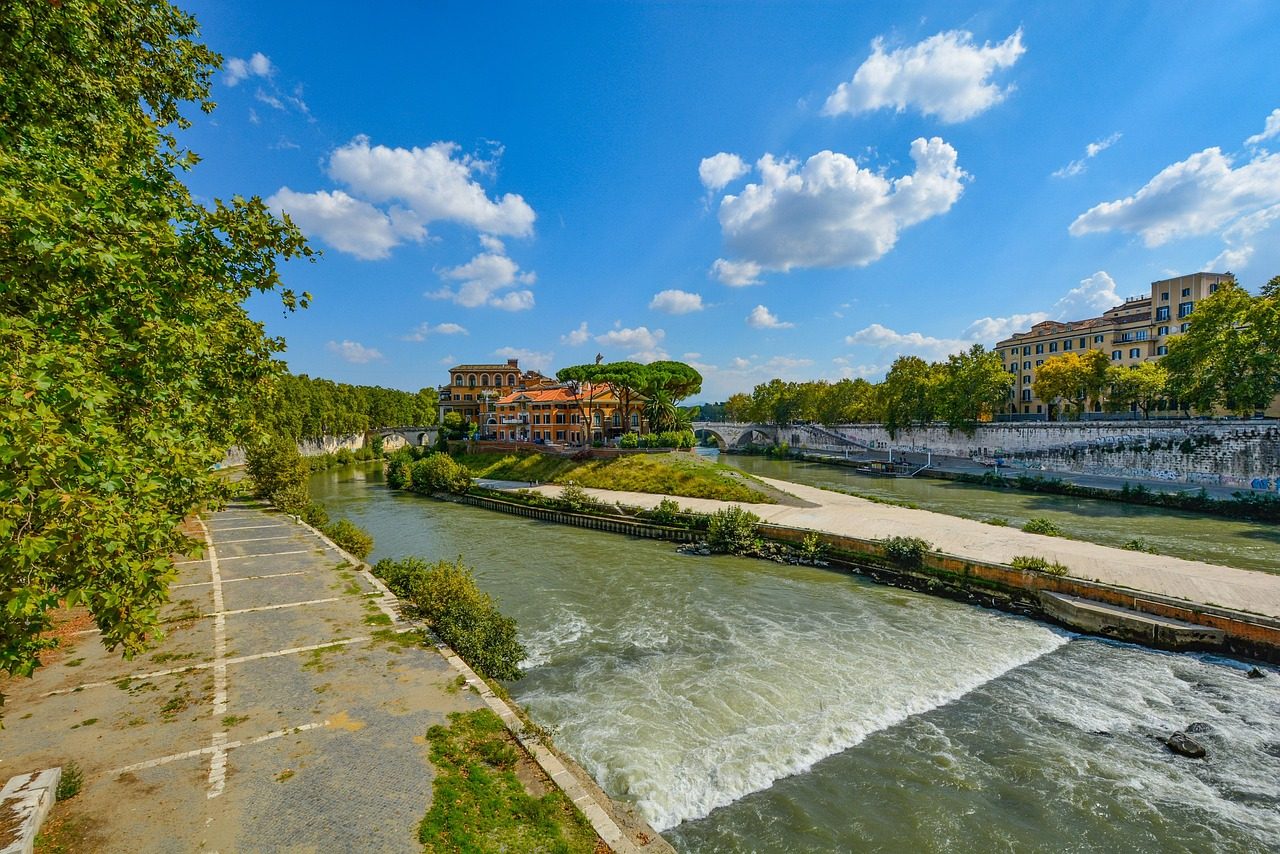
Tiber Island
Ancient boat-shaped island with 2,500 years of history
Explore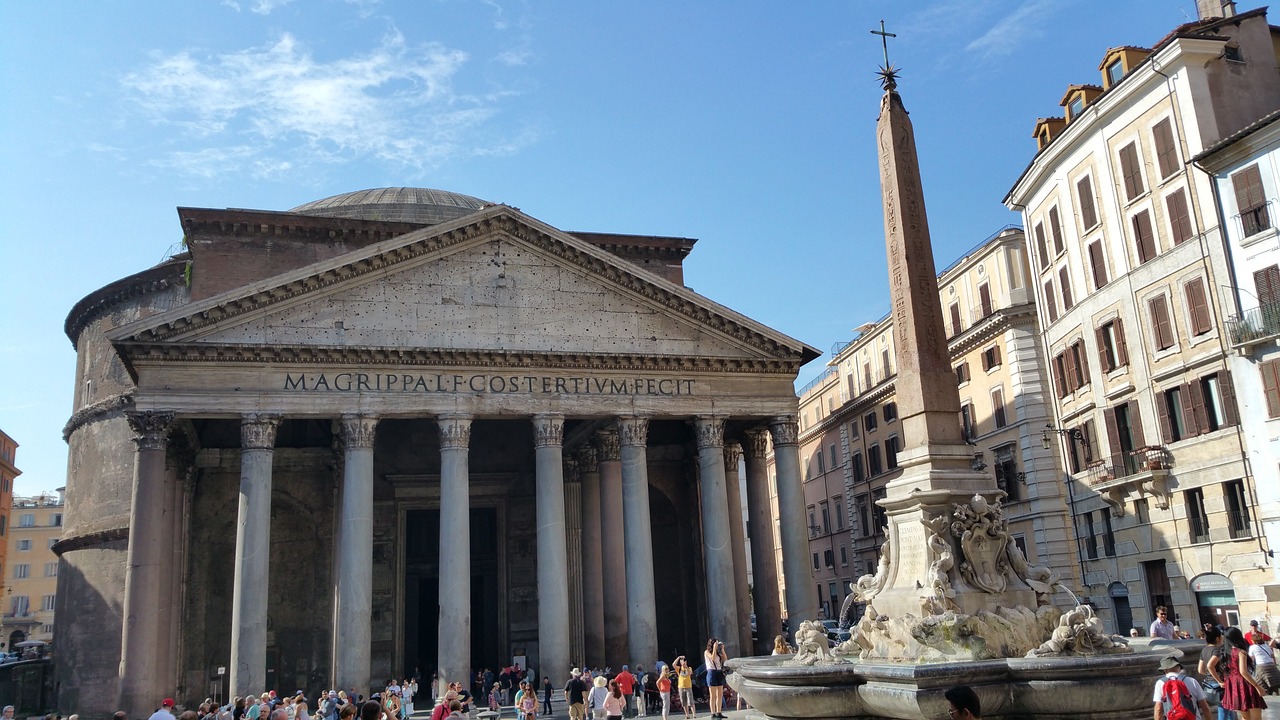
Pantheon
Best-preserved Roman building with the world's largest unreinforced concrete dome
Explore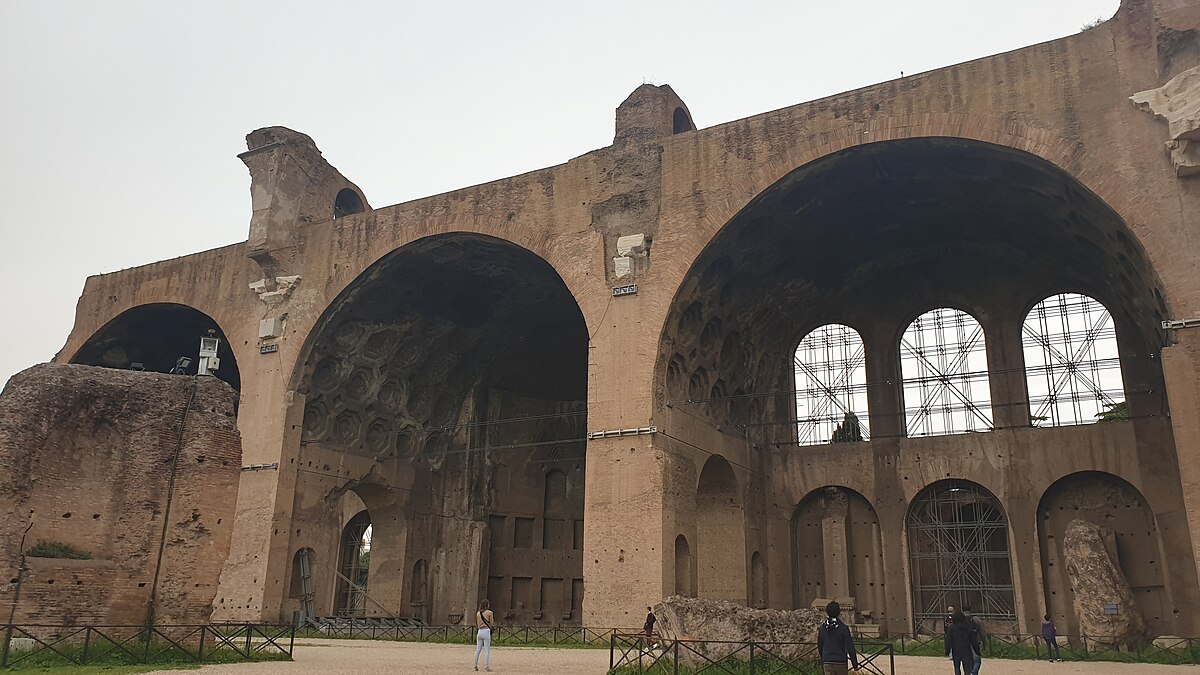
Basilica of Maxentius
The Roman Forum's largest building, with vast surviving concrete vaults
Explore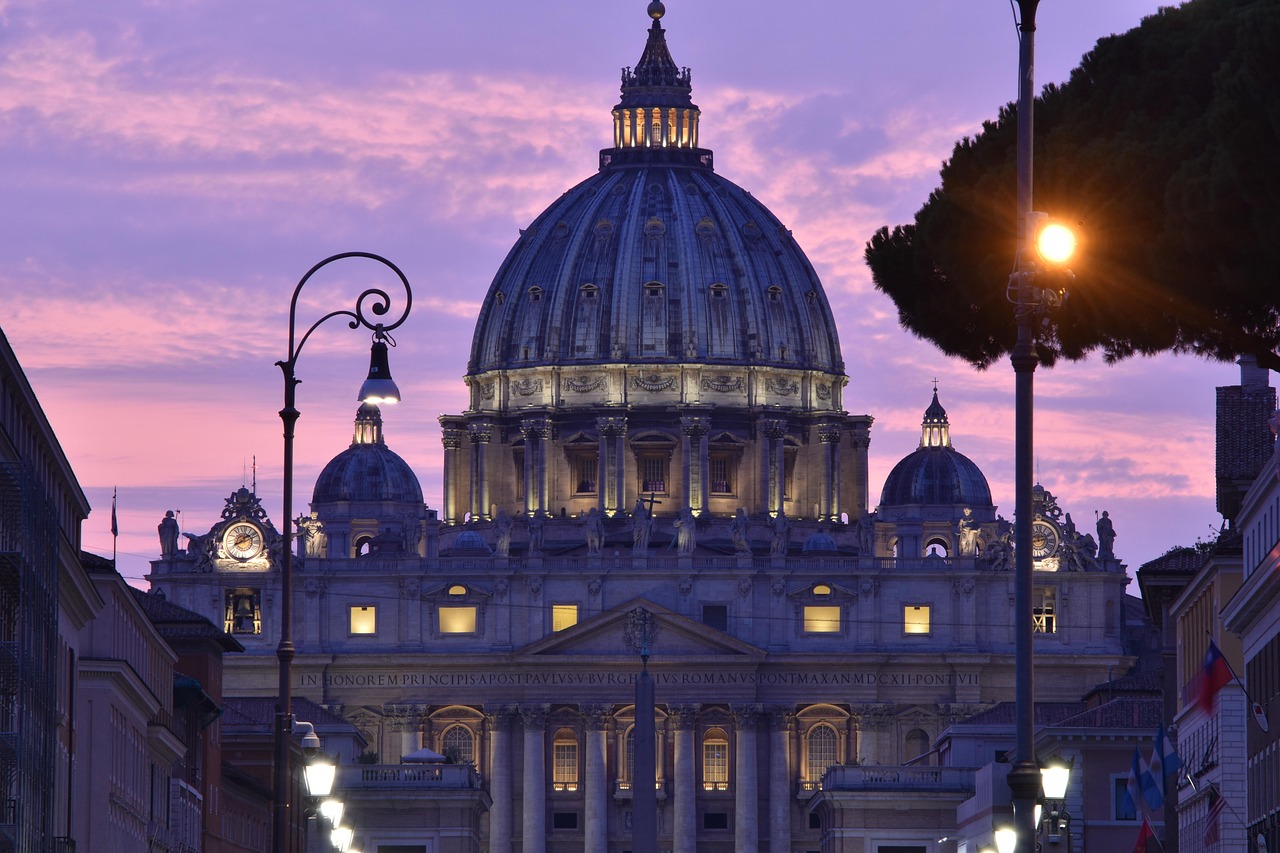
St. Peter's Basilica
World's largest church with Michelangelo's Pietà and dome views
Explore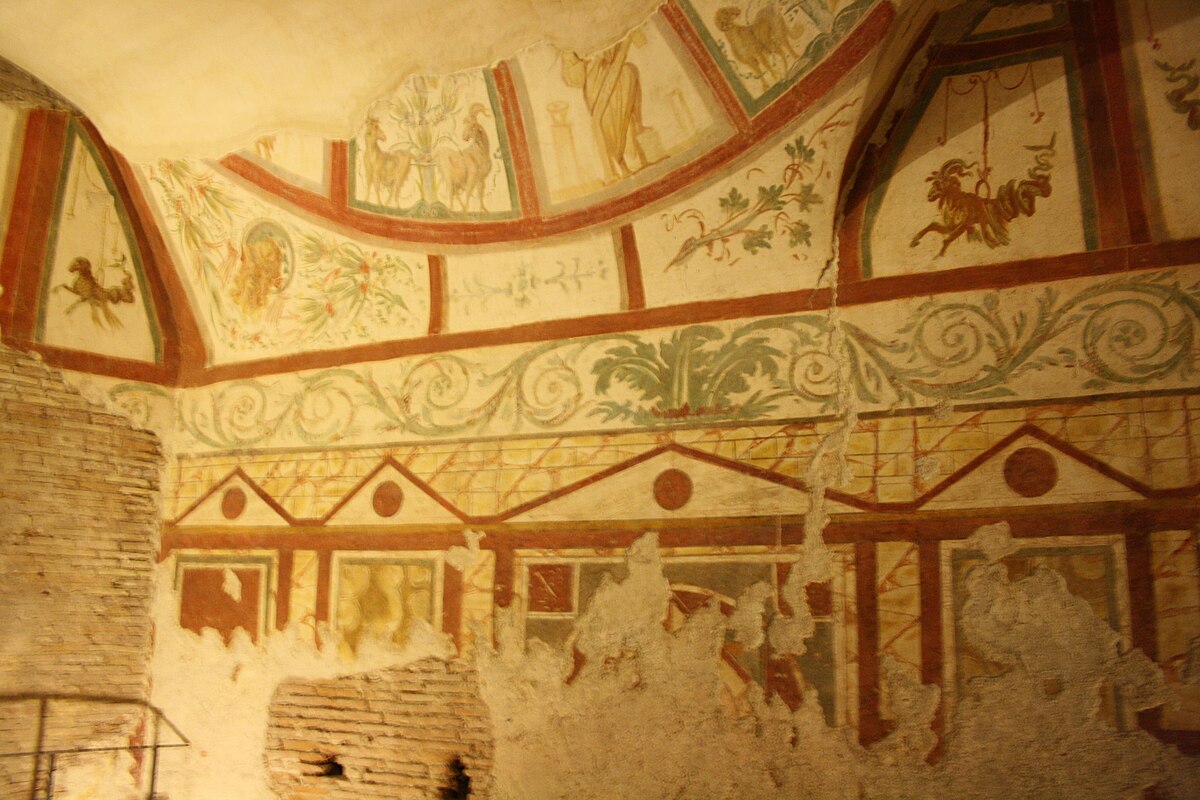
Case Romane del Celio
Late Roman houses with well-preserved frescoes beneath the Caelian Hill
ExploreQuick Planning Guide
⏱️ Time Needed
60 minutes (45-min tour + surface)
💰 Cost
€10 adult, €5 children 7–15, under 7 free
🎫 Reservation
Recommended weekends & high season
♿ Accessibility
Limited — steep stairs, narrow tunnels
📅 Best Time
09:00 first tour (smallest group)
👨👩👧👦 Family Friendly
Ages 8+ ideal
🌡️ Weather
Underground constant 14–16°C, humid
Nearby Attractions
Villa Ada park10-minute walk
Quartiere Coppedè — 1920s Art Nouveau20-minute walk
Sant'Agnese fuori le mura + Santa Costanza mosaics15-minute walk
MACRO contemporary art museum20-minute walk
Villa Torlonia — Mussolini's residence15-minute bus
Featured In These Itineraries
Hidden Gems of RomeRome Rainy Day4 Days in RomeEssential Tips
- ✓ Guided tours only — included in ticket
- ✓ Bring a jacket — 14–16°C underground
- ✓ No photography allowed inside
- ✓ Closed Mondays and 17–31 August 2026
- ✓ Cover shoulders — sacred site